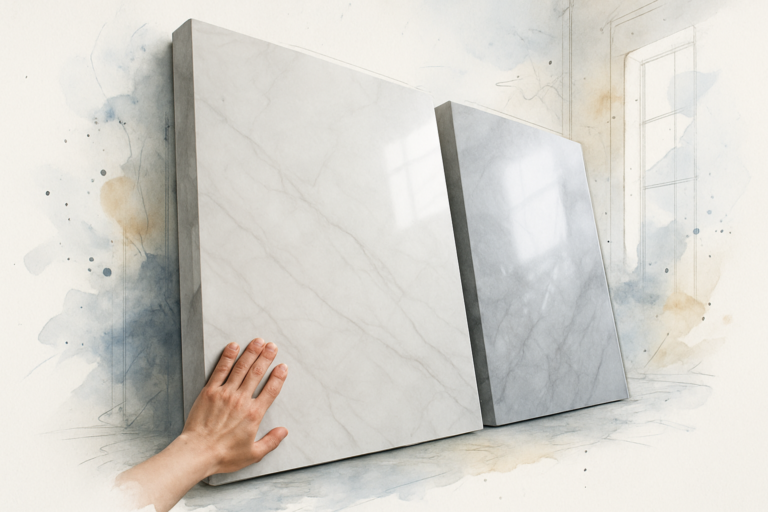
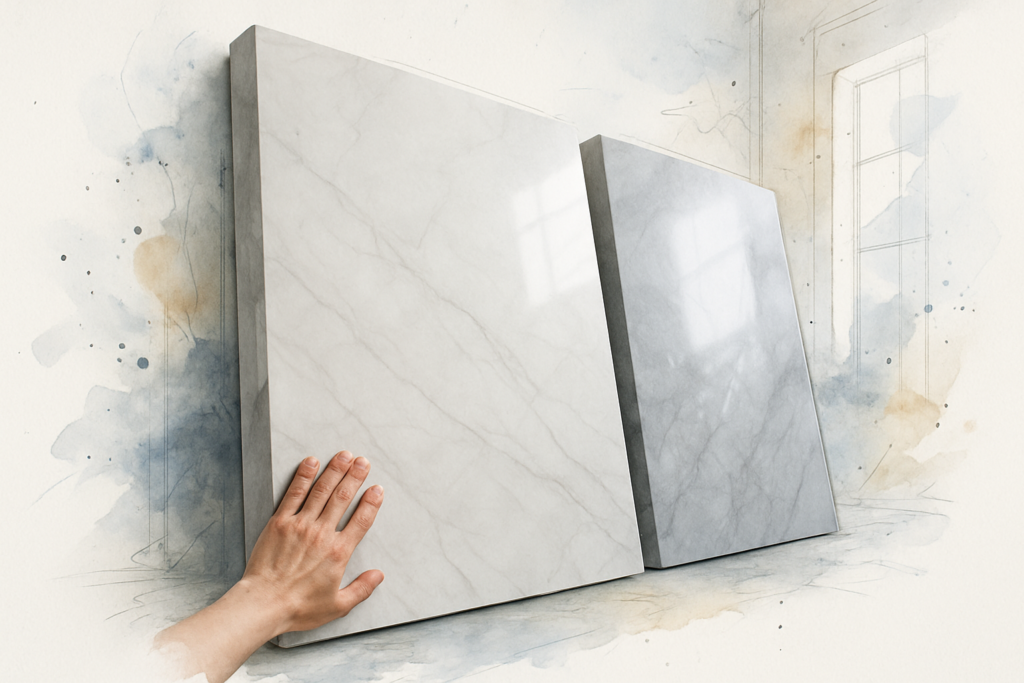
Direct Answer: Perla Venata is a Brazilian quartzite with soft white-gray tones and silver veining. It resists etching better than marble, but it still needs sealing and in-person slab verification before you commit.
Perla Venata quartzite is one of the most requested stones in showroom conversations right now. Buyers are drawn to its soft white-gray background and fine, silver-toned veining, the look of marble, but with a reputation for holding up better. On the Monterey Peninsula, where designers working in Carmel-by-the-Sea and Pebble Beach are consistently reaching for light, coastal palettes, it keeps coming up as the countertop stone that anchors the whole room without reading as stark or cold.
But popularity creates its own problems. The more a stone gets passed around in forums and contractor conversations, the more the name gets applied loosely. Slabs marketed as Perla Venata can vary in ways that matter, mineral content, background tone, porosity, and buyers who rely on the name alone sometimes end up surprised after fabrication. That’s the real risk here, and it’s worth understanding before you get to the slab yard.
This article focuses on three things: what Perla Venata actually is and how it performs, how to verify you’re getting the real material, and why batch selection matters more on this stone than most buyers expect.
What Perla Venata Quartzite Actually Is
Perla Venata is sourced from Brazil, where it forms through a geological process called metamorphism. Sandstone gets compressed under intense heat and pressure over millions of years, and the result is a much harder, more interlocked crystalline material. This is what separates true quartzite from marble, marble starts as limestone, while quartzite starts as sandstone.
In practical terms, that difference matters most when it comes to etching. Marble is calcium carbonate, which reacts visibly with acids, lemon juice, wine, tomato sauce, leaving a dull mark on a polished surface. True quartzite doesn’t etch the same way. Perla Venata, when it’s the genuine article, handles acidic spills significantly better than Calacatta or Statuario marble would.
But there’s an important qualifier: harder than marble does not mean maintenance-free. Quartzite is still porous to varying degrees, and Perla Venata sits in a middle range. It needs a quality sealer applied correctly, and it needs to be resealed periodically. Buyers who assume quartzite means zero maintenance are the ones who call back frustrated six months later. If you want a deeper look at how natural stone performs under real conditions, natural stone countertops: what nobody tells you before you choose is worth reading before you finalize anything.
The Verification Step Most Buyers Skip
A real question comes up in buyer forums and occasionally in showroom conversations: is the Perla Venata slab you’re looking at actually quartzite? Some stones sold under this name have been found to contain more calcite than a true quartzite would, which pushes them closer to marble territory in terms of etch sensitivity.
There’s a simple field test for this. Place a few drops of a mild acid, lemon juice works, on a hidden corner of the slab. Wait two or three minutes, then wipe it clean. If the surface shows a dull or matte mark where the drops sat, the stone has etched, which signals higher calcite content. If the surface looks unchanged, you’re likely dealing with genuine quartzite.
This isn’t something to be alarmed about, most Perla Venata on the market is the real thing. But when you’re spending anywhere in the range of $50 to $80 or more per square foot for premium imported quartzite (and pricing does vary depending on slab size, origin, and current market conditions, a showroom consultation will give you a far more accurate number), doing a quick check on the actual slab is just smart buying. The Marble Institute of America has published guidance on distinguishing quartzite from calcite-rich stones for exactly this reason. Ask at the showroom, knowledgeable staff should be comfortable talking through this with you.
For more on how quartzite and marble actually compare in real use, marble, quartzite, granite, or porcelain, how to actually decide breaks it down clearly.
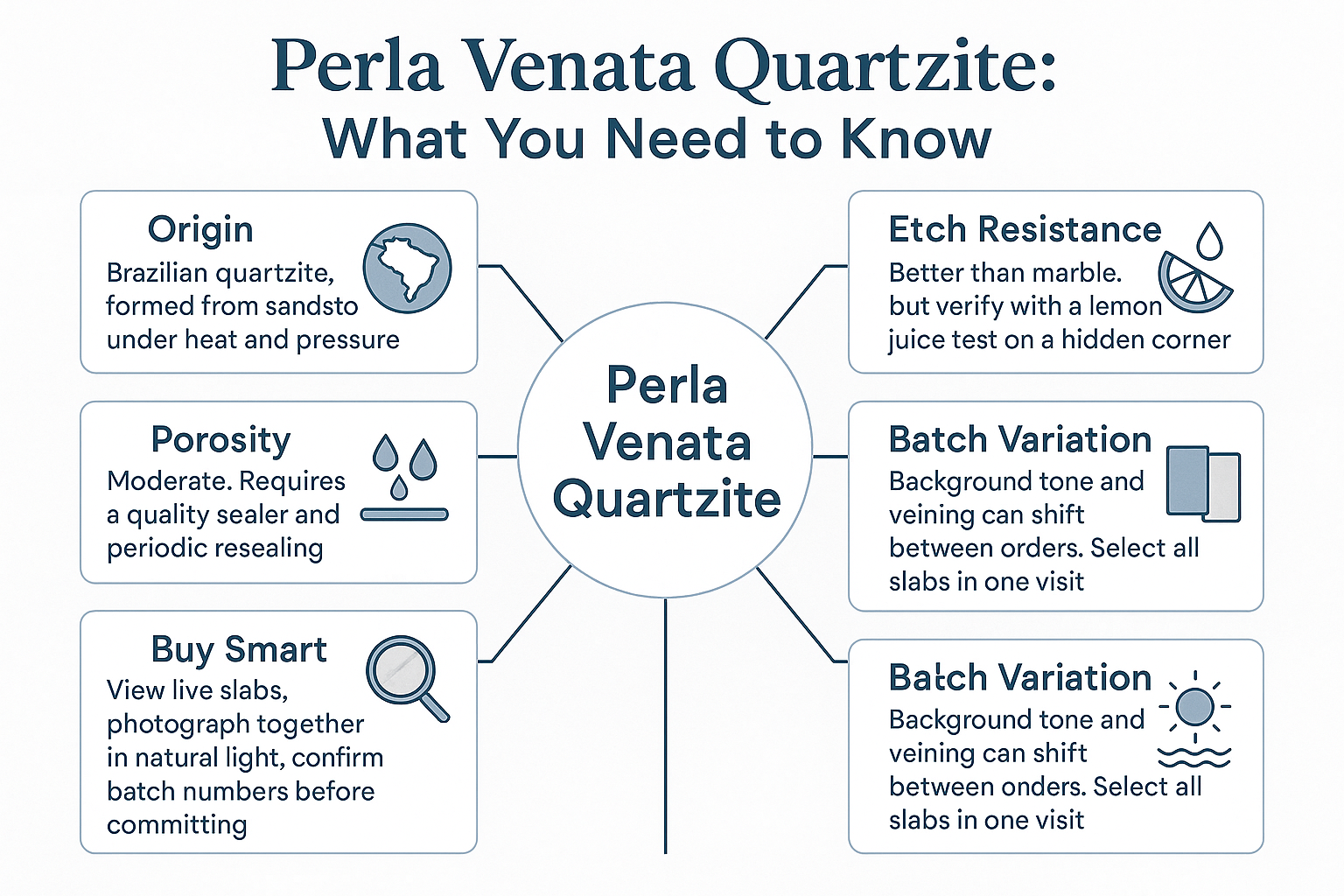
Perla Venata at a Glance: What You’re Actually Choosing
This visual summarizes the key material facts, performance expectations, and selection considerations for Perla Venata quartzite, the things worth knowing before you visit a showroom.
Why Batch Variation Is a Bigger Deal Than Most Buyers Expect
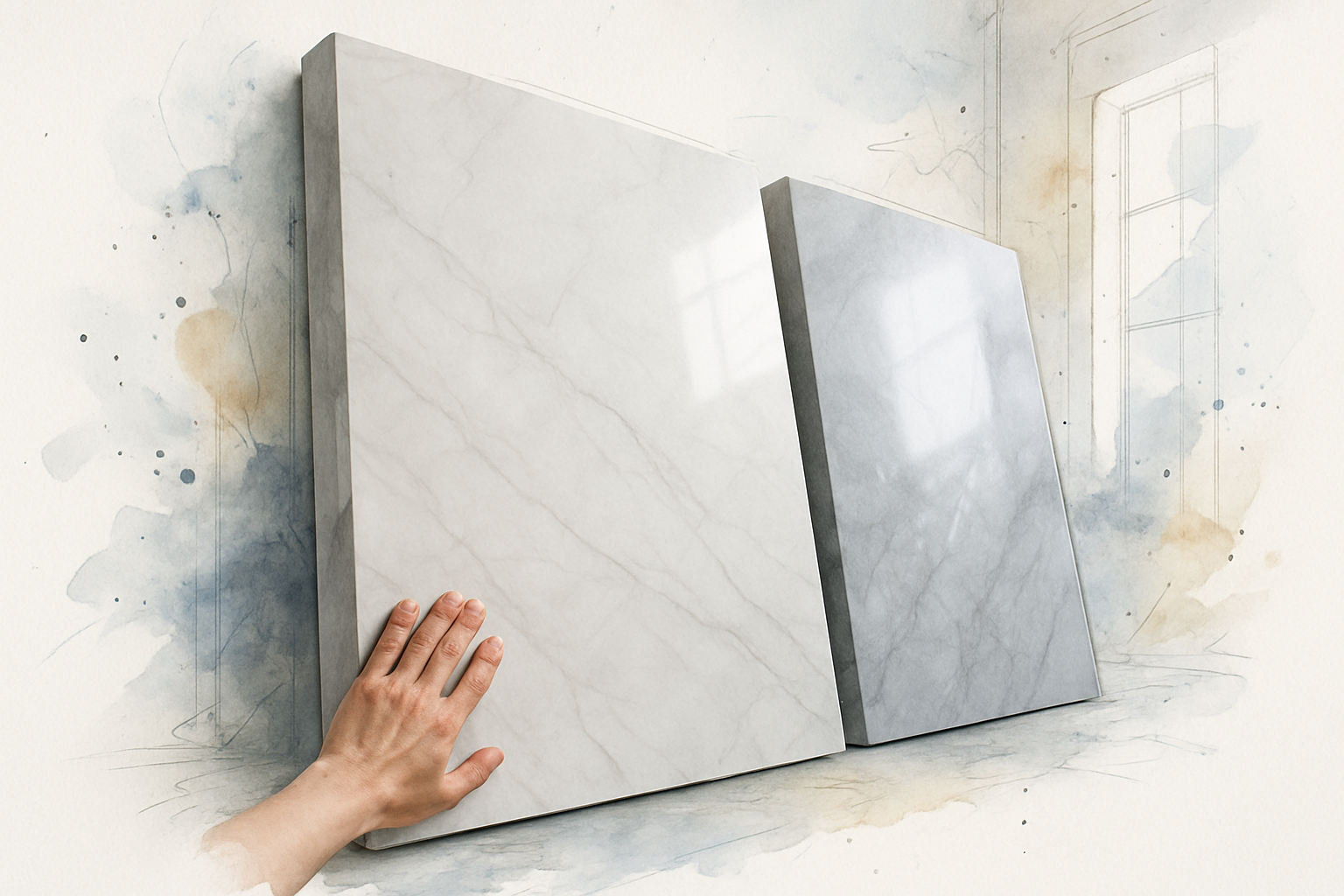
Perla Venata is not a uniform product. It comes from natural stone, quarried in multiple regions across Brazil, and the slabs available under that name at any given time can differ in ways that aren’t obvious in a photo.
Some slabs run cooler, a crisper white-gray with finer veining. Others lean warmer, with a slightly cream or taupe cast and bolder vein movement. On a single countertop run, the difference might not be noticeable. But on a project with multiple surfaces, batch variation becomes a real aesthetic problem.
Think about a kitchen with an island plus perimeter counters, or a master bath with two separate vanities. If those slabs come from different quarry pulls, even under the same product name, they may not read as a cohesive set. One surface ends up looking warmer, one cooler, and the room feels slightly off in a way that’s hard to pinpoint but impossible to ignore once you see it.
The practical answer is straightforward:
- Select all slabs in the same visit, from live inventory, so you’re comparing actual stone rather than guessing from catalog images
- Photograph the slabs side by side in natural light before committing, showroom lighting can flatten the tone differences that daylight reveals
- Confirm batch or lot numbers so any additional material ordered later can be matched as closely as possible
- Account for overage when calculating your square footage, having an extra partial slab from the same batch is far less painful than sourcing a replacement later
This is exactly why buyers who come in having already seen Perla Venata online, or having spec’d it with their fabricator, still need to view the actual slabs. One customer put it this way in a review: “I was a super precise customer as I was on the hunt for the perfect Taj Mahal Quartzite slabs and I was picky about all of the colors and veining but Reba was very informative and patient with me.” That mindset, specific, opinionated about tone and veining, not willing to guess, is the right one for a stone like this. Why does brand-new quartzite sometimes stain, and how do you prevent it? covers the related question of what happens after installation if sealing or selection goes wrong.
Perla Venata vs. Common Alternatives, Quick Reference
If you’re still narrowing down material options, this comparison covers the factors that matter most for kitchen and bath applications on the Central Coast.
| Material | Etch Risk | Porosity | Maintenance Level | Coastal Aesthetic Fit |
|---|---|---|---|---|
| Perla Venata Quartzite | Low to moderate (verify with test) | Moderate, seal required | Medium | Strong, cool, luminous tones |
| Calacatta Marble | High, etches readily | Moderate to high | Higher | Strong, but shows wear over time |
| Taj Mahal Quartzite | Low | Low to moderate | Medium | Warm white, slightly different palette |
| White Granite | Very low | Low | Low | Clean look, less movement in the stone |
| Large-Format Porcelain Slab | None | None, non-porous | Very low | Consistent, no variation between slabs |
Where Perla Venata Works Best, and Where to Be Honest About It
For Carmel-by-the-Sea and Pebble Beach interiors, Perla Venata has become a go-to for good reason. The stone’s cool, luminous character reads beautifully against whitewashed oak cabinetry, natural linen textiles, and bleached wood floors, the palette that defines a lot of coastal California design at this level. Several buyers sourcing for whole-home remodels in this area have specifically chosen it because the countertop needed to feel light and airy without being stark white. Perla Venata hits that balance.
But it helps to be clear about where the material is being asked to perform. In a kitchen with heavy daily cooking, a household with young children, or a surface that will regularly see citrus, wine, and olive oil without immediate cleanup, the sealing protocol matters more than it would for a lightly used powder room vanity. The stone can handle these environments, but only with proper prep and periodic maintenance, not as an afterthought.
For bathrooms specifically, Perla Venata is a strong performer. The etch risk from personal care products is generally lower than in kitchens, and the stone’s veining often becomes a visual focal point in a master bath setting. If you’re comparing it to something like travertine for a coastal bathroom, is travertine a smart choice for a coastal California bathroom? lays out the tradeoffs worth considering.
For outdoor applications, exterior counters, alfresco kitchen surfaces, quartzite generally performs well in California’s climate, but Perla Venata’s lighter tones will show more if a sealer breaks down and staining occurs. Which stone surfaces hold up to California weather outdoors? covers this in more detail.
Frequently Asked Questions About Perla Venata Quartzite
Is Perla Venata really quartzite, or is it closer to marble?
Most Perla Venata on the market is genuine quartzite, meaning it’s sandstone that transformed under heat and pressure into a hard, crystalline material with low calcite content. But the name has been applied loosely to some stones with higher calcite content, which behave more like marble and etch more easily. The lemon juice test described above is the fastest way to check. Do it on a hidden corner of the actual slab before you commit.
Does Perla Venata quartzite need to be sealed?
Yes. Perla Venata is not impervious to staining, particularly if left unsealed or if a poor-quality sealer is used. A professional-grade penetrating sealer should be applied before first use and reapplied periodically depending on use patterns. Ask about sealer recommendations when you’re selecting your slab, the right sealer for the stone’s specific porosity makes a real difference.
How much does Perla Venata quartzite cost?
Pricing depends on slab size, origin, finish, and current inventory. In the general Northern California market, premium imported quartzite like Perla Venata can run somewhere in the $50 to $80 or more per square foot range for material alone, but that number shifts based on the specific slab and the project scope. Fabrication and installation are separate costs handled by your fabricator. For an accurate number on available inventory, contact a showroom directly.
Can I order additional slabs later if I need more material?
You can try, but it’s a real risk with a stone like this. Batch variation means slabs quarried at different times can differ noticeably in tone and veining, even under the same product name. The safest approach is to select all slabs in one visit from live inventory, account for overage in your original order, and confirm lot numbers so any future match attempt has a reference point.
Is Perla Venata a good choice for a kitchen with kids and heavy daily use?
It can be, but go in with realistic expectations. Perla Venata handles acidic spills better than marble, but it still needs prompt cleanup and a well-maintained sealer. A household with consistent heavy use should plan for more frequent resealing than a lighter-use application. If the kitchen sees near-daily exposure to citrus, tomato, or wine, it’s worth discussing with your showroom consultant before deciding between quartzite and an alternative like granite or porcelain.
Do I need to see the slabs in person, or can I order from photos?
For a stone with this much natural variation, in-person selection is strongly recommended. Photos flatten tone differences that are obvious in natural light. Multiple buyers who called after seeing Perla Venata online were specifically checking to confirm the slab matched what they expected before making the trip, and the ones who came in to view actual inventory consistently made faster, more confident decisions. How to make the most of a stone showroom visit in the Bay Area has practical advice for getting the most out of that appointment.
Ready to See Perla Venata Slabs in Person?
Carmel Stone Imports carries live slab inventory at showroom locations in Carmel-by-the-Sea and Palo Alto, so you can evaluate actual stone, not catalog images, before committing to your project. If you’re working on a kitchen or bath remodel on the Monterey Peninsula or in the Bay Area and want to check current availability or set up a slab selection appointment, call (650) 800-7840 or email info@carmelimports.com.