
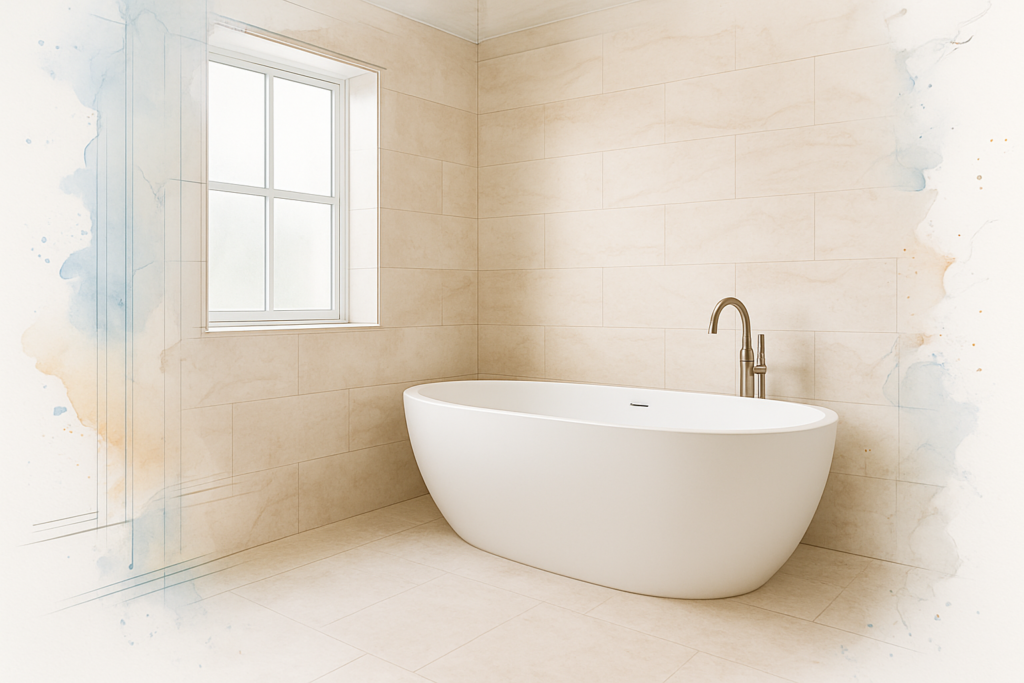
Direct Answer: Travertine can work beautifully in a coastal California bathroom, but only with the right finish, proper filling, and a realistic sealing schedule. It rewards the prepared buyer.
Travertine keeps coming up in bathroom remodel conversations along the Monterey Peninsula — and for good reason. Its warm, layered tones and natural texture feel right at home in the coastal Mediterranean-influenced architecture you see from Carmel-by-the-Sea to Pacific Grove. But it also generates more questions than almost any other stone, because buyers have heard enough cautionary stories to be genuinely uncertain.
The honest answer is that travertine in a bathroom is neither the disaster some people warn against, nor the zero-maintenance dream a few showrooms would have you believe. The material itself is sound. The finish, the filling, and the sealing schedule are what determine whether it succeeds or frustrates.
This article focuses on the three things that actually matter when you’re weighing travertine for a wet area: how the stone is prepared before it ever goes in a bathroom, which finishes work underfoot, and how the real-world upkeep compares to porcelain tile that mimics the look.
What ‘Honed and Filled’ Actually Means — and Why It Matters in a Shower
Travertine is a sedimentary limestone formed around natural springs. During formation, gases escape and leave behind small voids — pits and pores that run through the surface and sometimes through the body of the slab. In a dry application like a living room floor, those voids are often left open or filled with grout for an earthy, rustic look. In a wet area like a shower, open voids are a problem: they collect water, soap residue, and eventually mold.
Honed and filled is the processing specification that addresses this. It means the stone has been ground to a flat, matte surface (honed) and the natural voids have been filled — typically with a grout or epoxy compound in a complementary color — before the tile is finished and shipped. A properly filled travertine tile enters your shower as a much more closed, stable surface than its raw quarried form.
Two things are worth understanding here:
- Fill quality varies by origin and supplier. Italian travertine from the Tivoli region, for example, is known for finer, more consistent fill than lower-grade material from other sources. The country of origin matters.
- Filled does not mean permanently sealed. The fill closes the voids, but the stone itself is still porous and needs a penetrating sealer applied before installation and maintained on a schedule afterward.
- Re-filling can become necessary over time in high-use shower environments, particularly around the floor where foot traffic and cleaning products are concentrated.
When you’re selecting travertine for a bathroom, confirming that the tile is genuinely honed and filled — and asking about the fill material — is one of the first questions worth asking at the showroom.
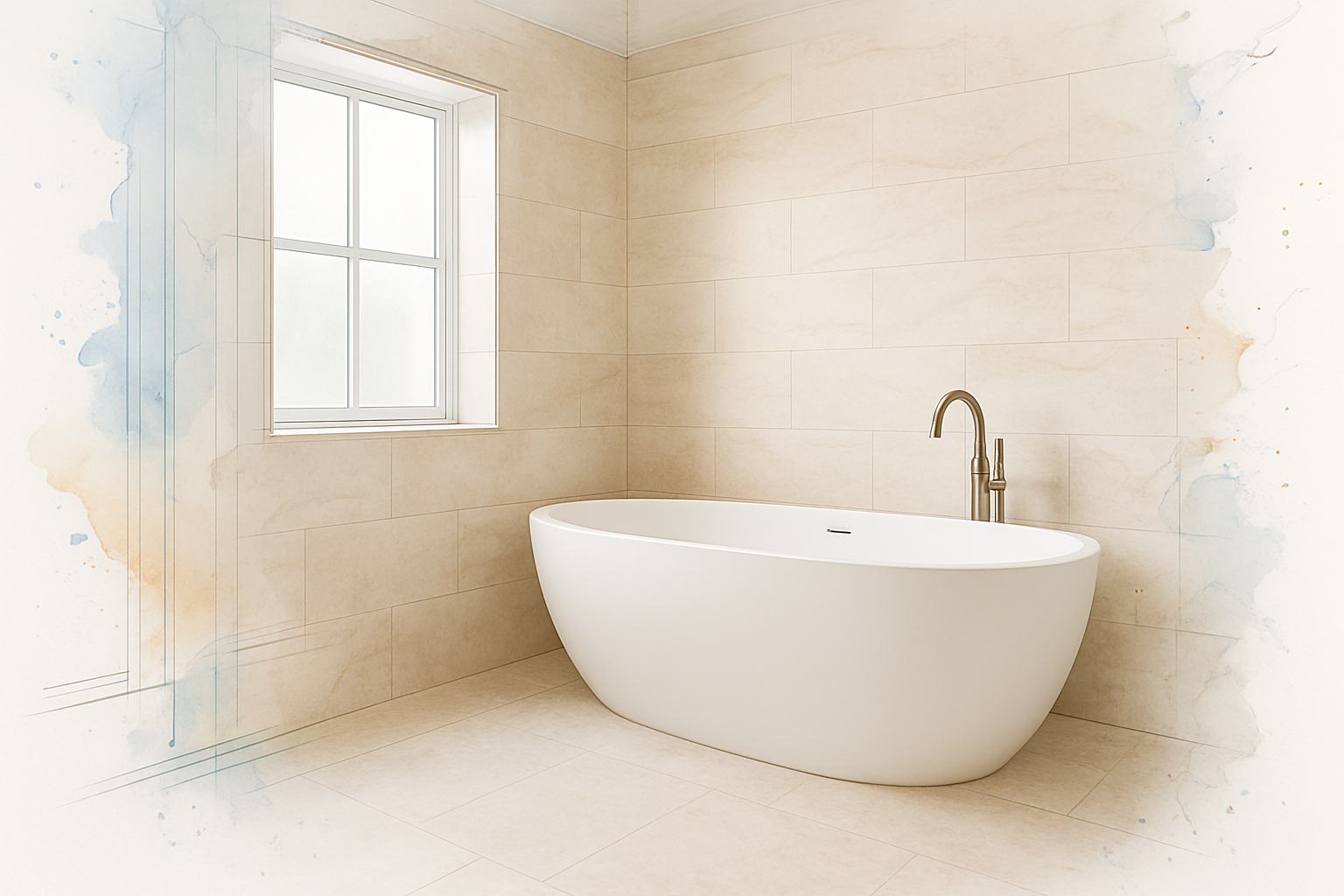
Which Travertine Finishes Are Actually Safe Underfoot in a Wet Bathroom
This is the question that comes up most often when homeowners are choosing travertine for a bathroom floor — and it deserves a straight answer.
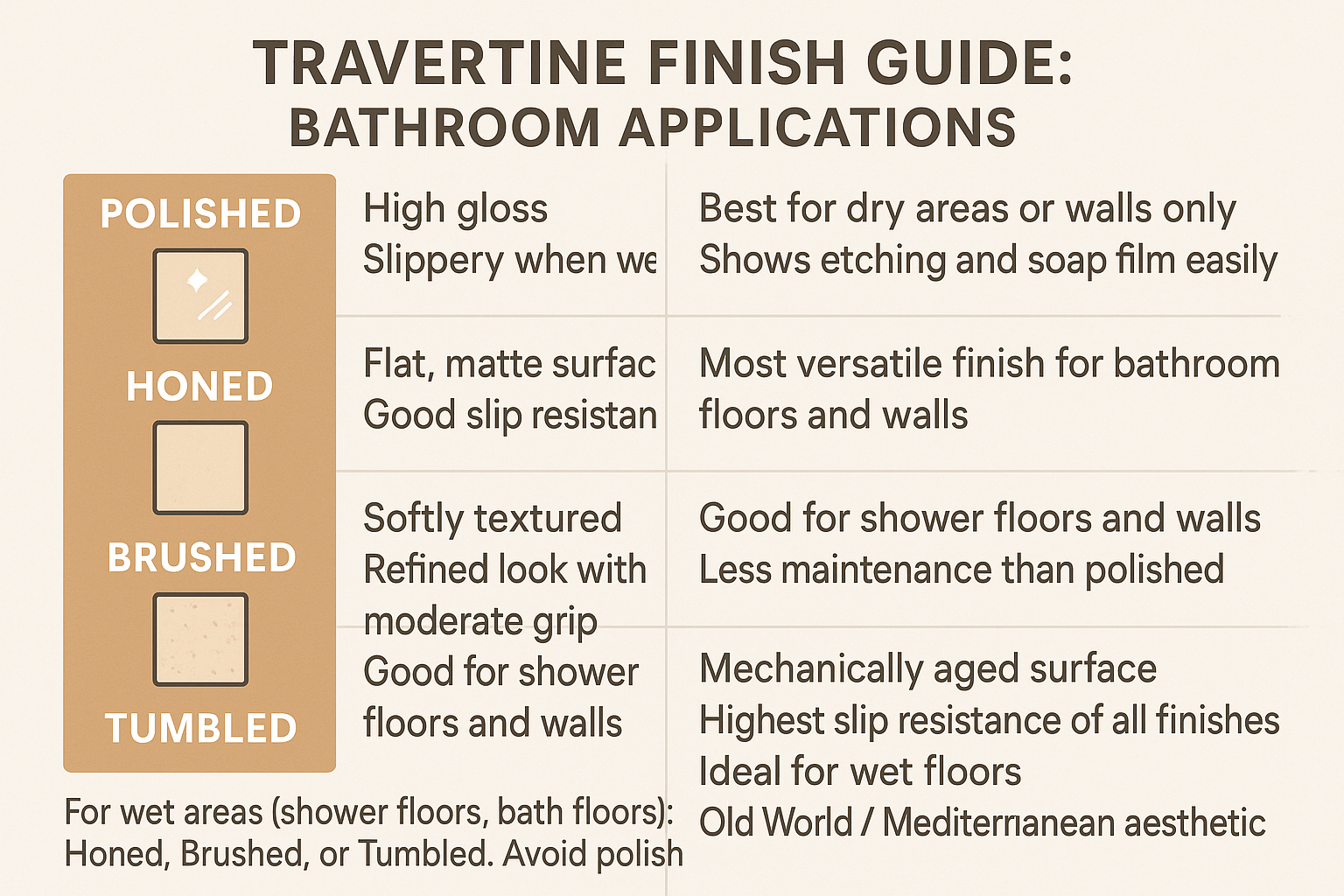
Polished travertine is slippery when wet. The same high-gloss surface that looks dramatic in a lobby becomes a liability in a shower or around a freestanding tub. For bathroom floors specifically, polished travertine is a finish to avoid.
The finishes that perform better underfoot in wet areas are:
- Honed — ground to a flat, matte surface with moderate texture. Good slip resistance for most bathroom floors, especially when the fill is properly maintained.
- Tumbled — stone that has been mechanically tumbled to create a worn, aged edge and a naturally uneven surface. The texture provides excellent grip underfoot and suits Old World or rustic design directions. It’s one of the most slip-resistant travertine finishes available.
- Brushed — a middle ground between honed and tumbled, with a softly textured surface that reads as refined but still provides traction.
For shower walls, polished travertine is less of a safety concern since traction doesn’t apply — but the maintenance burden increases because polished surfaces show water spots, soap film, and etching more visibly than honed finishes.
If you’re doing a full bathroom remodel and want travertine on both floors and walls, honed on the floor and walls is a consistent, low-risk choice. Tumbled floor tile paired with honed wall tile is another combination that reads as intentional and works well in Carmel’s coastal craftsman and Mediterranean-style homes.
Travertine Finish Guide for Bathroom Applications
This infographic compares the four main travertine finishes across the factors that matter most in a bathroom setting.
Honest Maintenance: What You’re Actually Signing Up For
Several callers to stone suppliers in this region ask some version of the same question: how much work is this, really? With travertine in a bathroom, the honest answer is: more than porcelain, less than you might fear — if you stay on schedule.
The core of travertine maintenance in a wet area comes down to sealing. A penetrating impregnating sealer should be applied before the tile is installed, and then refreshed on a regular schedule. In a high-use master bath shower in a home near the coast, many stone professionals suggest annual resealing as a starting point, though the actual frequency depends on how often the shower is used and which sealer was applied. A simple water-bead test — pour a small amount of water on the surface and see if it beads up or absorbs — will tell you when a resealer is overdue.
Day-to-day, travertine in a bathroom asks for:
- pH-neutral cleaners only — acidic cleaners (including many common bathroom sprays) will etch the surface over time
- Squeegee or dry-off after use in the shower, which reduces hard water buildup and slows the need for deep cleaning
- Prompt attention to grout and fill lines — if the fill material in a floor tile begins to look worn or discolored, addressing it early prevents moisture from working into the voids beneath
This is not a heroic maintenance burden, but it is a real one. If the homeowner isn’t willing to use the right cleaner and reseal occasionally, travertine is going to show that neglect. For buyers who want to install and largely forget, porcelain tile is the more forgiving material.
Travertine vs. Porcelain Lookalike: Weighing the Real Trade-offs
The market for porcelain tile that mimics travertine has grown significantly, and some of it is genuinely convincing at a glance. Here’s how the two materials compare across the factors that matter most in a bathroom setting.
| Factor | Natural Travertine | Porcelain Lookalike |
|---|---|---|
| Authenticity / Feel | Genuine stone variation; no two tiles identical | Printed pattern repeats; can look uniform up close |
| Slip Resistance (honed/tumbled) | Good to excellent depending on finish | Varies by tile rating; check COF (coefficient of friction) |
| Maintenance | Annual sealing, pH-neutral cleaners required | Very low — wipe clean, no sealing needed |
| Durability in Wet Areas | Good with proper fill and sealing | Excellent — non-porous, impervious to water |
| Aging Over Time | Develops patina; can be honed and refreshed | Surface wear is permanent; cannot be refinished |
| Design Authenticity | Pairs naturally with stone-heavy, Mediterranean architecture | Convincing from a distance; different feel in person |
| Typical Cost Range | Higher — varies by origin, finish, and format | Generally lower, but large-format porcelain can be comparable |
Why San Francisco and Monterey Peninsula Homes Are a Natural Fit
Travertine has a long history in California architecture — particularly in the Mediterranean Revival, Spanish Colonial, and Craftsman styles that define older neighborhoods from Pacific Heights and Sea Cliff in San Francisco to the historic cottages of Carmel-by-the-Sea.
In a Pacific Heights Edwardian or a Sea Cliff home with thick plaster walls and arched doorways, travertine’s warm ivory and walnut tones read as native to the architecture in a way that porcelain rarely replicates convincingly. The material isn’t making a design statement so much as continuing a visual conversation the building already started.
This is also why the comparison to porcelain lookalikes is worth taking seriously in person, not just on paper. Several homeowners who’ve come through showrooms on the Peninsula describe the same experience: the porcelain tile photographs well and looks reasonable online, but standing in a bathroom tiled in natural travertine versus its porcelain equivalent produces a noticeably different feeling. The mass, the temperature underfoot, the slight variation between tiles — these are things a photograph doesn’t communicate.
If you’re working on a remodel in an older home in Noe Valley, Russian Hill, or anywhere on the Monterey Peninsula where the architecture has a Mediterranean or Old World influence, travertine is worth seeing in person before you decide. The showroom experience of standing in front of actual slabs and tiles — not catalog images — is genuinely different, and it’s often where the decision becomes clear.
For a broader look at how travertine compares to other natural stone options for a similar project, this material comparison guide walks through the key differences in plain terms.
Frequently Asked Questions About Travertine in Bathrooms
Can travertine actually be used in a shower, or is that a bad idea?
Yes, travertine can be used in a shower — but the preparation and finish matter enormously. The tile should be honed and filled so the natural voids are closed, a penetrating sealer should be applied before installation, and a pH-neutral cleaner should be used consistently. With those three things in place, travertine in a shower is a realistic long-term choice. Without them, moisture can work into the stone and the fill material over time.
How often does travertine in a bathroom need to be resealed?
In a regularly used shower or bathroom floor in a California coastal home, annual resealing is a reasonable starting point. The actual interval depends on the sealer used, how often the space is used, and how diligent the day-to-day cleaning is. The easiest way to check: pour a small amount of water on the surface. If it soaks in rather than beading, it’s time to reseal. A stone maintenance professional can advise on the right product for your specific installation.
What’s the difference between travertine and a porcelain tile that looks like travertine?
The core difference is that one is a natural sedimentary stone quarried from the earth, and the other is a manufactured ceramic product with a printed surface that mimics stone. Porcelain lookalikes require almost no maintenance and are impervious to water — real advantages in a wet area. Natural travertine has variation that no printing process fully replicates, develops a patina over time, and can be refinished if the surface wears. The right choice depends on how much maintenance you’re willing to do and how important material authenticity is to you.
Is tumbled travertine actually slippery?
Tumbled travertine is one of the least slippery travertine finishes you can choose for a bathroom floor. The mechanical tumbling process creates a naturally uneven, worn surface with real texture — which translates to grip underfoot, even when wet. It’s a good choice for shower floors and bathroom floors in homes with children or older adults.
Does the country of origin matter when I’m buying travertine?
It does. Italian travertine — particularly from the Tivoli quarrying region near Rome — is widely regarded as producing finer, more consistent fill material and more predictable coloring than lower-grade travertine from some other origins. Turkish travertine is also common and can be high quality, but the range is wider. When in doubt, ask your supplier specifically where the stone was quarried and what the fill composition is.
I have a contractor referring me to Carmel Stone Imports — do I need to know what I want before I visit?
No — and you don’t need to. Many customers arrive having done research but without a firm decision made, and that’s actually the right time to visit. Bring photos of your bathroom, your cabinet or vanity finish if you have it, and any tile or material samples you’re already working with. The slab selection process is a conversation, not a transaction.
Ready to See Travertine in Person Before You Decide?
Carmel Stone Imports carries live travertine inventory across its Carmel-by-the-Sea and Palo Alto showrooms — including honed and filled formats in several origins and finishes — so you can see and touch the actual material, not a catalog photo. If you’re in the middle of a bathroom remodel on the Monterey Peninsula or anywhere in the Bay Area and want to talk through your options before committing, reach the team by phone at (650) 800-7840 or by email at info@carmelimports.com to schedule a slab selection appointment.