
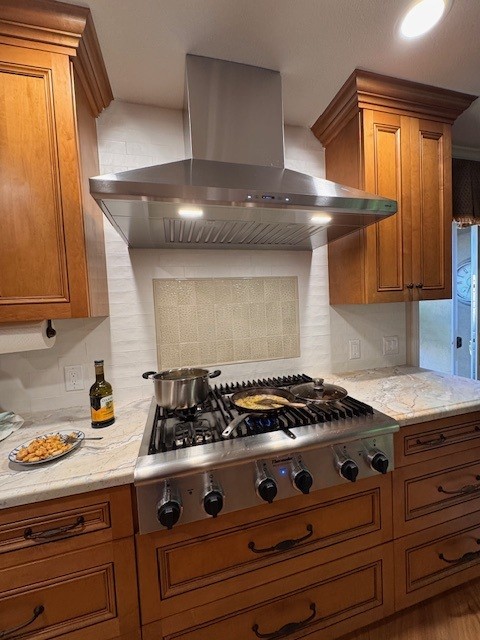
Direct Answer: Chantilly quartzite gives you a quiet white-and-gray marble look with more durability. Before committing, confirm the slab’s actual density, how many slabs from that block are in stock, and the finish in person.
You want the look of soft white marble in a kitchen that actually gets cooked in. Someone told you quartzite is the answer, and after a few evenings of searching, Chantilly quartzite keeps showing up.
It makes sense. Chantilly reads quiet and linear, white with fine gray veining, instead of a bold statement stone. For a Carmel-by-the-Sea remodel or a Peninsula kitchen with pale cabinets, that restraint is the whole point.
But the assumption behind the search, that quartzite means marble looks with granite toughness, needs checking on a real slab, not a website photo. That is where most of these decisions go sideways, and it is what this guide walks through.
Why Chantilly Quartzite Gets Shortlisted for the Marble Look
Most people who land on Chantilly are not stone shoppers. They are homeowners two months into a kitchen remodel who already fell for Calacatta or Statuario and then got nervous about lemon juice and red wine.
Chantilly appeals because it does not shout:
- Pale white to soft cream background rather than stark gallery white
- Fine, mostly linear gray veining instead of heavy pooling movement
- Reads calm from across a room, which suits open-plan Monterey Peninsula kitchens with a lot of natural light
- Pairs with painted cabinetry without fighting it
That quietness is also why it gets compared to marble more often than to other quartzites. Side by side with a bolder stone, Chantilly looks like the safe version of the look you wanted.
The honest caveat: quiet does not automatically mean durable. A white stone with soft veining can be very hard, or it can be closer to a dolomitic marble wearing a quartzite trade name. Learning to tell the difference is worth more than any photo gallery. If you are still weighing categories, this breakdown of marble, quartzite, granite, and porcelain is a good starting point.
The Real Risk: Two Slabs With the Same Name Are Not Always the Same Stone
Named quartzites come out of the ground in blocks. Blocks from the same quarry, sometimes from the same wall, can differ in hardness and porosity.
With white marble-look stones, that variation matters more than it does with a dark granite. Some slabs sold in the quartzite category are more dolomitic, meaning they carry more calcite and behave closer to marble around acid.
In a kitchen, that shows up as an etch, not a stain. Etching is a dull spot where the polish got eaten by lemon juice, wine, vinegar, or a splash of tomato sauce left overnight. It is a surface change, not a dark mark soaking in.
So what do you actually ask?
- “Which block did this slab come from?” Suppliers track batches, and slabs from one block behave alike.
- “Has this material been tested for absorption or density?” Industry test methods for water absorption and abrasion exist, and the Natural Stone Institute publishes the standards suppliers and fabricators reference.
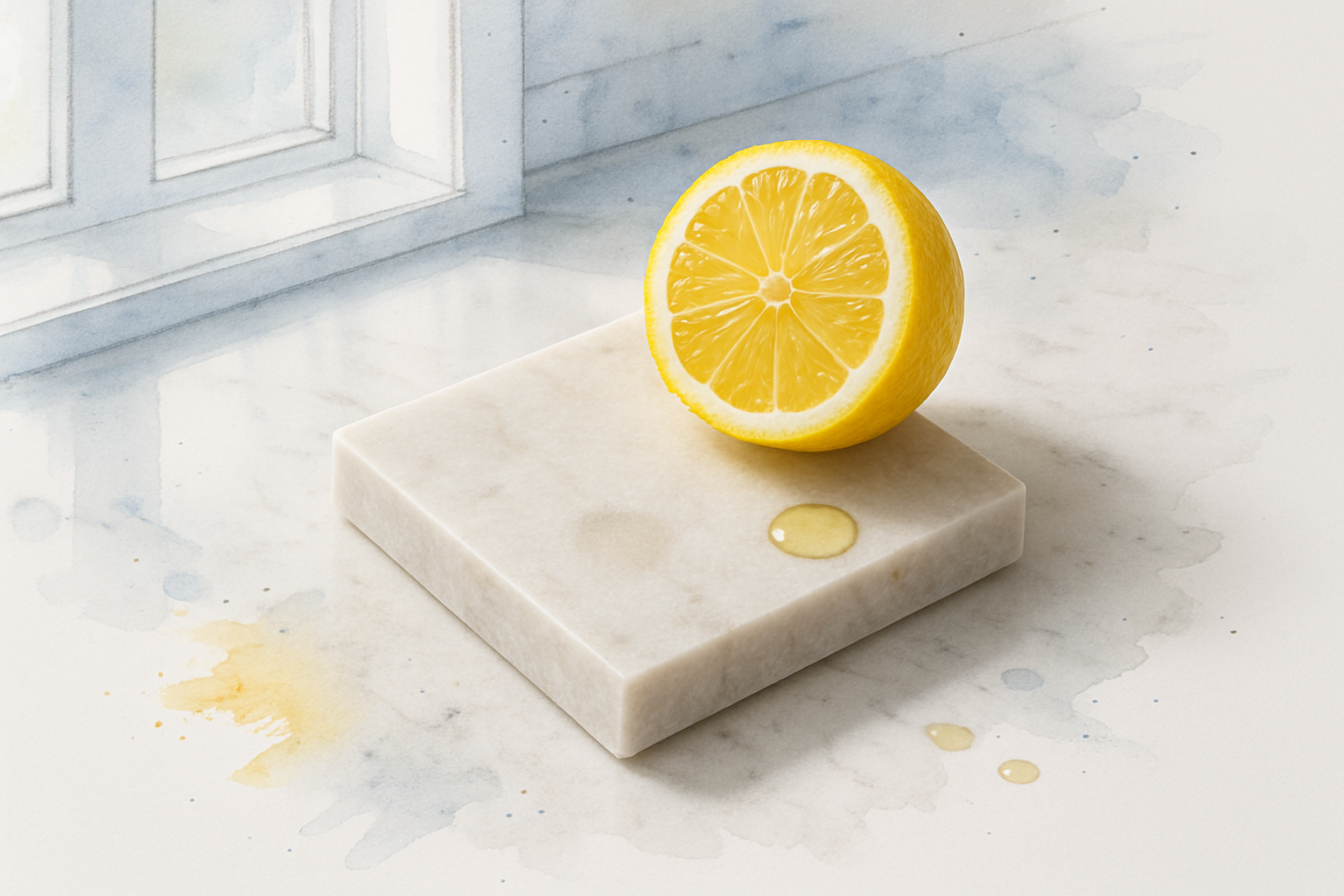
- “Can I take a sample home?” Then put lemon and oil on it and wait. The mechanics of sample testing are covered here, and they take about 24 hours.
If a Chantilly slab does etch slightly, that is not automatically a no. Plenty of Pebble Beach and Carmel kitchens live happily with stone that develops character. The mistake is finding out after install. Dolomite behaves differently than marble, and knowing which side of the line your slab sits on changes how you seal and clean it.
“I Saw It on Your Website. Do You Actually Have It in Stock?”
That question, almost word for word, is the single most common thing callers ask stone suppliers. Roughly a third of incoming calls are someone checking whether a specific material is on hand right now in the size and finish they need.
Here is why it comes up so often with named quartzites. Material arrives in batches cut from a single block, so a name on a website means the variety is carried, not that three matching slabs are sitting in the yard today.
A batch of Chantilly might show up in a container through the Port of Oakland, get split between locations, and sell down over a few months. The next batch will look related but not identical.
What that means for your timeline:
- Confirm inventory before you drive. A trip from San Francisco or San Jose to Palo Alto or Carmel is a long way to go for an empty rack.
- Ask how many slabs are in the current batch, not just whether the material exists.
- Special order and import timelines commonly run in the range of 90 – 120 days, sometimes longer depending on the quarry and shipping.
- An in-stock batch is often the difference between a kitchen finished this year and one that slips into next.
Pricing works the same way. Two slabs under one name can quote very differently based on block quality, thickness, and finish, which this article on quartzite pricing gets into. Get a number on the actual slab you are looking at.
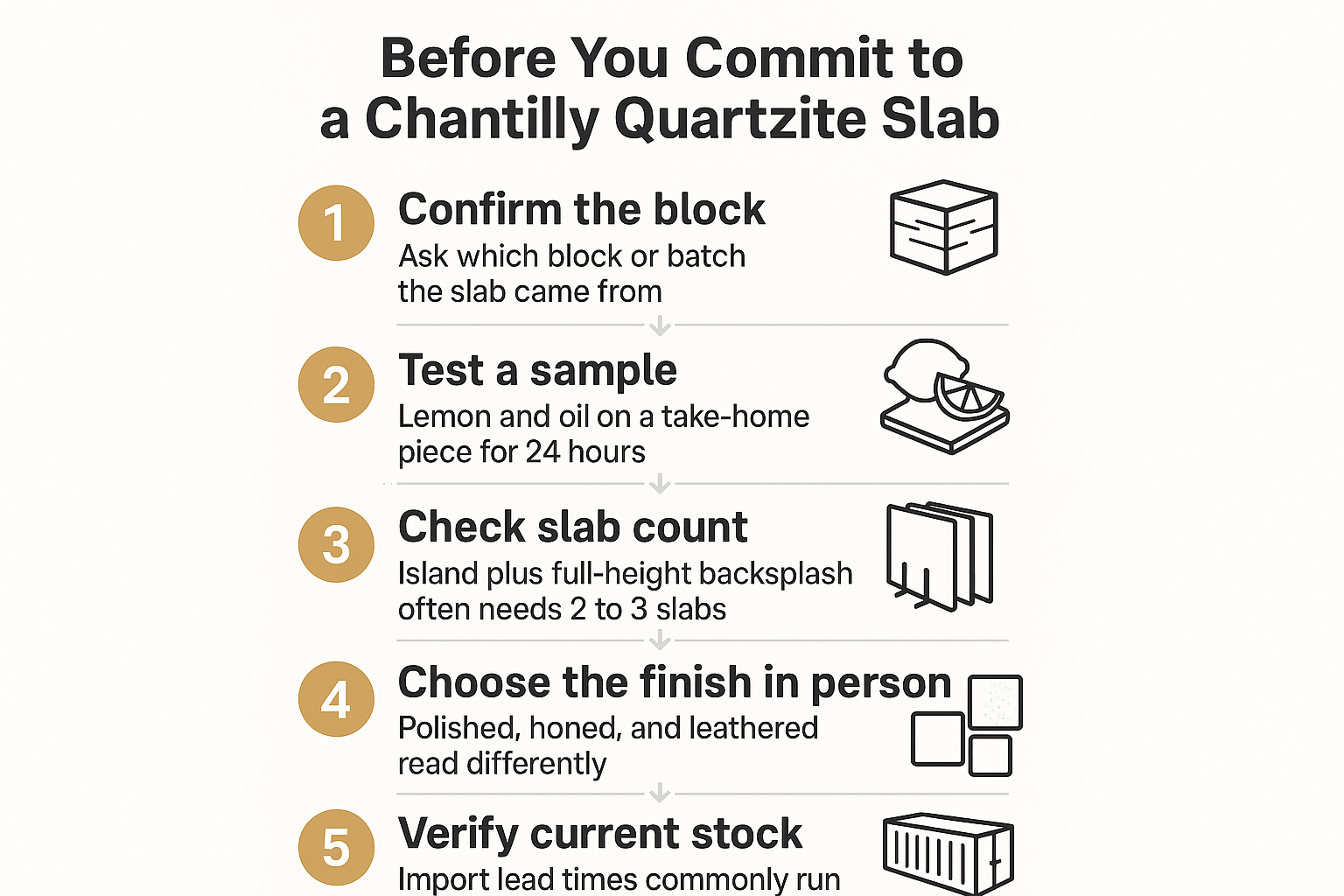
Five Things to Confirm Before You Commit
A short checklist of what to nail down on a Chantilly slab before it leaves the rack.
Slab Count and Matching: Raise It Before You Fall in Love
The marble look usually comes with an ambitious layout. Designers and homeowners in the Bay Area regularly come in naming a specific stone and asking for two to three slabs, because the plan is an island plus a full-height backsplash.
That plan only works if the slabs come from the same block. Otherwise the backsplash and the island read as two different stones standing next to each other.
So the conversation to have at the selection appointment, before you commit emotionally to one gorgeous slab:
- How many slabs remain in this batch? Two is a different project than four.
- Are they all from the same block? Ask directly.
- Do you want bookmatched veining? Say so up front. Bookmatching requires consecutive slabs cut in sequence, and it cannot be arranged after your fabricator has templated.
- How long can the slabs be held? Holding a slab while your fabricator confirms measurements is a normal request.
The same planning logic applies across movement-heavy stones, and planning a kitchen around slab count and matching walks through the sequence in more detail.
How Finish Changes the Same Chantilly Slab
One slab can look like three different stones depending on how the surface is finished. Here is how each reads in a working kitchen.
| Finish | How Chantilly Reads | Worth Knowing |
|---|---|---|
| Polished | Veining sharpens, background brightens, light bounces off the surface | Shows water spots and any etching most clearly; best in lower-traffic spots or formal kitchens |
| Honed | Softer, more matte, veining recedes slightly and the stone looks closer to limestone | Hides water spotting better; some stones absorb a little more once the polish is gone, so sealing matters |
| Leathered | Matte with a subtle texture you can feel, color deepens a shade | Popular direction in Peninsula and Silicon Valley kitchens right now; very forgiving day to day |
Why Seeing It Under Showroom Light Changes the Decision
Monterey Peninsula light is not Palo Alto light, and neither is your kitchen at 7pm with the pendants on. A pale stone shifts noticeably between all three.
The habit worth copying: one local buyer arrived with samples of a painted cabinet door, a tile floor, and a subway tile wall so everything could be judged together against the slab. That fifteen minutes prevents the most expensive kind of regret.
When you are standing in front of the racks:
- Hold your cabinet door sample flat against the slab, not next to it
- Look at the slab from 8 – 10 feet back, which is how you will actually see the island
- Check the ends and the bottom edge, not just the showy middle
- Ask to see the same material in a different finish if the yard has it
Learning to read the stone itself is a skill, and how to read a slab before you say yes covers what veining and movement are telling you.
One more thing about in-person selection. Live inventory means the specific slab you tag is the slab that ships to your fabricator, and staff who have worked the same floor for years tend to flag a new arrival when they know what a client is hunting for. As one Bay Area customer put it: “After a lot of searching for a specific leathered quartzite for our kitchen island, we found the most beautiful slab at Carmel Stone Imports!” – Tracy M.
Frequently Asked Questions About Chantilly Quartzite
Will Chantilly quartzite etch like marble?
It depends on the block. Harder, more quartz-rich slabs shrug off acid; more dolomitic slabs can dull where lemon juice or wine sits. That is why a 24-hour sample test on the actual material matters more than a general answer about the variety.
How many slabs do I need for an island and a full-height backsplash?
Most kitchens in that configuration land at two to three slabs, and they should come from the same block to read as one stone. Your fabricator will confirm the exact yardage after templating, but flag the quantity at the selection appointment so matching slabs can be held together.
Does Chantilly quartzite need sealing?
Usually yes, and the schedule depends on the finish and the density of your particular slab. Honed and leathered surfaces often want attention sooner than polished. Brand-new quartzite can stain if it goes into service unsealed, which surprises a lot of homeowners.
What does Chantilly quartzite cost in the Bay Area?
Costs vary a lot, so treat any single number carefully. In this market, marble-look quartzites generally sit above granite and below premium Italian marble, with the spread driven by block quality, thickness, and finish. Ask for a quote on the specific slab you are considering rather than the variety name.
Can I see actual Chantilly slabs instead of photos?
Yes, and you should. Call ahead to confirm what is currently in the racks at the Carmel or Palo Alto showroom, since named quartzites arrive in batches and sell through. Take-home samples are available for most materials.
Who cuts and installs the slab once I pick it?
Your own fabricator handles templating, cutting, and installation. The showroom side is material selection, sample review, and delivery coordination, and referrals to local fabricators are available if you do not have one yet.
Want to See Chantilly and Its Alternatives Side by Side?
Marble-look quartzites are hard to judge from a screen, and the block a slab came from tells you more than the name does. Slabs can be viewed and compared in person at the Carmel showroom on Carmel Rancho Lane or the Palo Alto location, and staff can confirm what is currently in the racks before you make the drive. Carmel Stone Imports supplies the material and coordinates delivery; cutting and installation are handled by your own fabricator. Reach the team at (650) 800-7840 or info@carmelimports.com.