
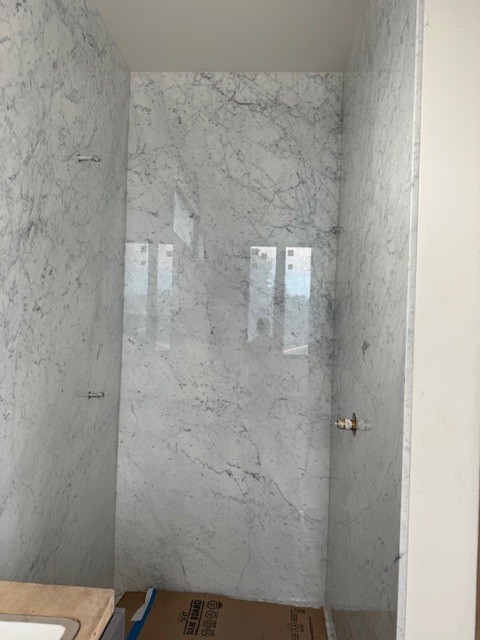
Direct Answer: Yes. Most suppliers will place a slab on a short, dated hold while your fabricator templates and confirms slab count. Ask for it in writing rather than assuming the slab will wait.
You found the slab. Your fabricator needs about a week to get out to the house, template the cabinets, and tell you whether the job takes two slabs or three. And the whole time, one question is sitting in the back of your head: will that slab still be there when the numbers come in?
That exact question opens a large share of calls to stone suppliers, usually before anyone talks about price. Buyers will not commit time or money until they know the material exists in the size they need.
The short answer is yes, a slab can typically go on a short, time-bound hold while measurements get confirmed. But the hold has to be asked for, dated, and written down. Below is how that works, what your fabricator is doing during the gap, and why the calendar moves faster on natural stone than most people expect.
Yes, a Slab Can Usually Be Held. You Have to Ask for It.
Holds are a normal part of how slab suppliers operate. The terms vary by company, so treat the policy as something to confirm, not assume.
When you ask, get these four things settled in the same conversation:
- How long the hold runs. Often a matter of days to a couple of weeks, depending on the supplier and the material.
- The exact end date, in writing, by email or text.
- Whether a deposit is required to hold, and whether it applies to the purchase.
- What happens when the window closes. Does it quietly release, or does someone call you first?
A hold is not a purchase. It is a pause on the rack so the same two or three slabs stay together while your fabricator does the math.
The mistake that costs people their material is silence. A buyer walks the yard, falls for a bundle, says they will circle back after the template, and never asks anyone to tag it. Two weeks later the slabs are on a truck to a shop in San Jose.
One homeowner who had already placed two soapstone slabs on hold called back the next morning just to lock in a time to bring her husband in for a second look. That is the right instinct. Tag it first, decide second.

What Your Fabricator Is Actually Doing During That Gap
Most homeowners do not know why the delay exists, so it feels like stalling. It is not. It is the responsible order of operations.
Here is the sequence once you pick material:
- Template. The fabricator measures the real cabinet run or vanity, not the plan drawing. Walls are rarely square and cabinets shift during install.
- Layout. They lay your pieces onto a digital image of the actual slab and figure out how everything nests.
- Seam placement. Where seams land depends on slab length, sink cutouts, and vein direction.
- Yield. Whether the island comes out of one piece or needs two, and whether the backsplash comes off the same block.
Yield is the whole ballgame. It turns “I think we need two” into a firm number, and it is exactly why the answer changes when a slab measures 118 inches instead of 130. Twelve inches sounds like nothing until your island is 116 inches and the cutout eats the rest.
If you want to understand the math before you ever call a fabricator, how yield, seams, and slab sizes work together is worth reading first. It will make the template conversation go faster.
Who Handles What: Supplier vs. Fabricator
A fair number of buyers arrive at a stone showroom assuming cutting and install come with the slab. They do not. Getting this straight early saves weeks of confusion.
| Task | Stone Supplier | Fabricator or Contractor |
|---|---|---|
| Stocking and selling the slab | Yes | No |
| Slab photos and exact dimensions | Yes | No |
| Placing a slab on hold | Yes | No |
| Templating the kitchen or vanity | No | Yes |
| Cutting, seams, and edge profiles | No | Yes |
| Sink and cooktop cutouts | No | Yes |
| Delivery to the fabrication shop | Coordinated by supplier | Receives the material |
| Installation in the home | No | Yes |
Why the Clock Is Real With Natural Stone
With a manufactured product, you can reorder the same color next month. Natural stone does not work that way.
Slabs cut from the same quarry block share the same pattern and color range. Once they split up, the look is gone. The Natural Stone Institute is direct about this: stone varies from slab to slab, and no two blocks match. The two slabs you picked are the two slabs that will match each other.
Inventory also moves. Across Central Coast and Peninsula warehouses, new containers land through the Port of Oakland on a rolling basis, and what sits on a rack in September may be committed by October. That is the point of live inventory: the yard reflects what is physically there today, not a catalog page.
Timing matters more in some months than others. October and March are the peak stretches for countertop shopping in California, which means fall selections move off the rack faster than a July pick. If you are choosing in autumn, a hold is not paranoia.
And if the slab has to be ordered rather than pulled from stock, the calendar changes entirely. Import timelines can run 90 to 120 days, which is why in-stock versus special order timing is the first thing to settle when a job starts in six weeks.
The Hold Window, Step by Step
This is the sequence from showroom visit to delivery, and where the hold fits inside it.

If You Are a Designer or Contractor, Ask for Two Things at Once
Trade professionals make up a large share of slab inquiries, and they are usually juggling a client approval on top of a measurement. The hold buys the days that approval takes.
Photo requests are one of the most common openers on any slab call, and for good reason. Photos of the actual slabs, not catalog images, are what move a client approval forward. A designer presenting Pietra Piasentina to a client in Atherton needs the real face of the real slab.
So make one ask instead of two. In the same conversation, request:
- The hold, with a dated end point
- High-resolution photos of the specific slabs, shot wet or dry as needed
- Exact dimensions and thickness
- Lead time and current stock status
That gives you a single package to send your client, which is usually the difference between approval this week and approval in three. It also means you are not asking your supplier for a favor twice.
For projects where the veining itself is the selling point, it helps to know what to look for in the slab face before you photograph it for a client.
Peninsula Timelines vs. Monterey Timelines
The two markets behave differently, and the right hold length follows the market.
In the Palo Alto, Menlo Park, and San Jose corridor, most kitchen jobs are replacements in homes built in the early 1960s. There is usually a contractor on a schedule and a permit already in motion, so the template happens fast and the hold stays short.
On the Monterey Peninsula, including Carmel-by-the-Sea, Pebble Beach, and Pacific Grove, the pattern is different. Buyers are often making a once-and-done choice for a home they plan to keep, frequently with a decorator involved and a slower calendar.
That slower pace is exactly when an open-ended assumption about availability backfires. Two weeks of thinking it over is reasonable. Two weeks of not telling anyone you are thinking it over is how a slab disappears.
What a Workable Hold Looks Like, and What to Do If It Is Already Gone
A hold that actually protects you has four traits: it is short, clearly dated, confirmed in writing, and tied to a known next step, usually the template date.
Ask what happens when the window ends. Some suppliers release automatically. Some call first. Some will extend once if your fabricator is booked out. Knowing which applies is worth thirty seconds on the phone.
If the exact slab is already committed, do not restart your search from zero. Ask for the closest in-stock alternative with photos in the same conversation. Buyers who see a comparable option right away usually keep their project on schedule instead of losing a month.
Once the count is confirmed, the supplier can coordinate delivery straight to your fabricator’s shop. That is the part buyers tend to be most relieved about, and it shows up in reviews: one customer noted that service was “superb from the moment I walked in as a random customer all the way to purchasing over phone and email and arranging delivery to our stone fabricator.”
You still hire the fabricator yourself. A good supplier will hand over a few referral names rather than blur the line. If that division of labor is still fuzzy, this breakdown of supplier, fabricator, and installer roles sorts it out.
Frequently Asked Questions About Holding a Slab
How long can a slab stay on hold?
It depends on the supplier and the material, but holds are generally measured in days to a couple of weeks, not months. Tie the length to your template date and ask for the end date in writing.
Do I need to pay a deposit to hold a slab?
Sometimes. Policies vary, so ask directly whether a deposit is required, whether it is refundable, and whether it applies to the final purchase. Never assume a verbal hold with no deposit is locked in.
Can I hold a slab before I have hired a fabricator?
You can ask, but it is a harder sell. Holds work best when there is a real date attached, like a scheduled template. If you have not lined up a fabricator yet, ask the supplier for referral names so you can book the measurement and give the hold a deadline.
What if my fabricator says I need a third slab after the hold started?
Tell the supplier the same day. If a matching third slab from the same bundle is still on the rack, you want it tagged before someone else takes it. Slabs from the same block are the only ones that will truly match, and once the bundle is broken up the look cannot be reordered.
Does the supplier deliver the slabs to my fabricator?
Delivery coordination to the fabrication shop is standard at most stone suppliers, including delivery to shops around Monterey, Salinas, and the Peninsula. The cutting, edge work, and installation are handled by the fabricator and contractor you hire separately.
Seeing the Slab Before You Commit
Slabs can be viewed in person without an appointment at the Carmel and Palo Alto showrooms, and staff can pull specific material and send photos before you make the drive over from Pacific Grove or Menlo Park. A slab selection appointment can be arranged by calling (650) 800-7840 or emailing info@carmelimports.com. Most of the sales team at Carmel Stone Imports has been there well over a decade, so buyers on a multi month remodel tend to work with the same person from the first walk-through through delivery to the fab shop.