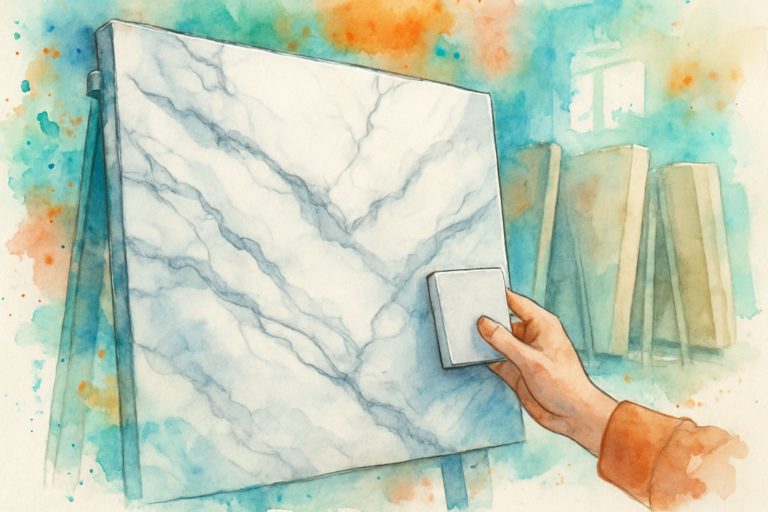
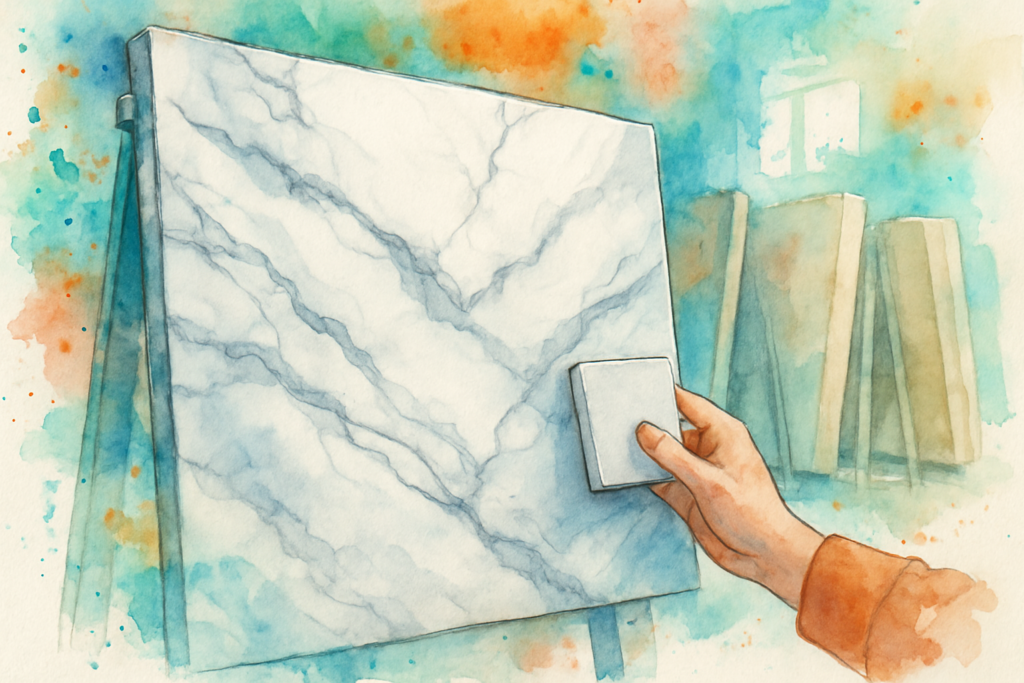
Direct Answer: Dolomite resembles marble visually but is harder and slightly more acid-resistant. It still etches from citrus and wine, so it’s not maintenance-free — finish choice and honest expectations matter before you select a slab.
A lot of homeowners walk into a stone showroom looking at marble-look slabs and end up in front of dolomite without knowing it. The veining is dramatic, the color is clean, and the price often sits in a similar range to Italian marble. But dolomite is its own material with its own quirks — and if nobody explains that before you commit, you’re going to be surprised after installation.
This comes up constantly in Carmel-by-the-Sea and across the Monterey Peninsula, where high-end kitchen and bathroom remodels are the norm and buyers expect their stone to hold up. Dolomite can absolutely hold up — but not in the same way marble does, and not without the right finish and maintenance routine.
If you’re researching dolomite countertops, trying to understand whether a slab labeled “quartzite” might actually be dolomite, or weighing finish options before a slab selection appointment, this article covers the decisions that actually matter.
What Makes Dolomite Different from Marble
Both marble and dolomite are metamorphic rocks with calcite-based chemistry, which is why they look so similar and why the confusion is so common. The difference comes down to mineral composition. Dolomite contains a significant proportion of dolomite mineral (calcium magnesium carbonate) alongside calcite, which makes it measurably harder than standard marble.
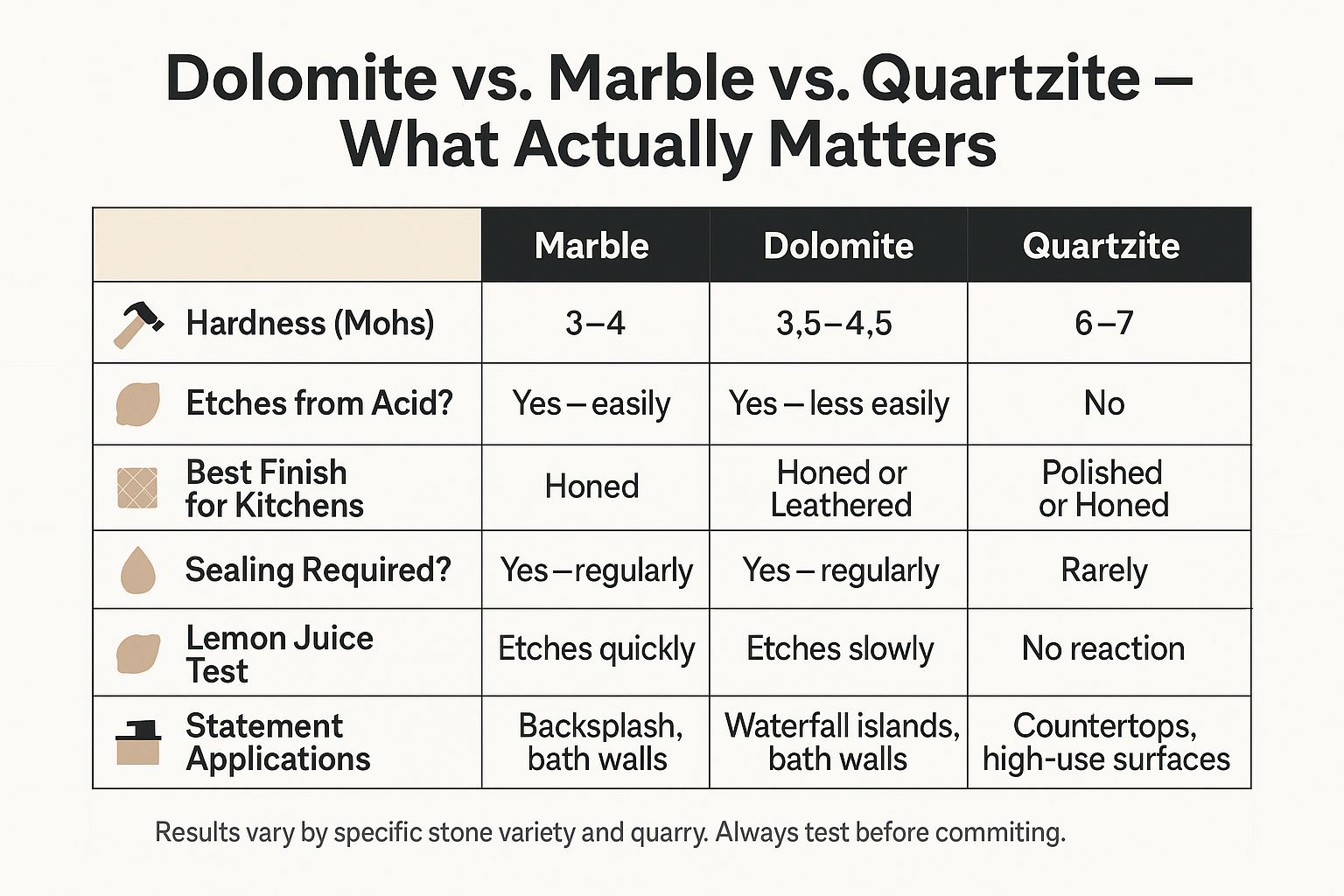
On the Mohs hardness scale, marble typically falls around 3 to 4. Dolomite lands closer to 3.5 to 4.5, which puts it in between marble and true quartzite. That half-point of additional hardness actually matters in daily use — dolomite resists scratching and wear better than soft Italian marbles like Calacatta or Statuario.
But the acid sensitivity is still real. Wine, lemon juice, tomato sauce, vinegar-based cleaners — all of these will etch a dolomite surface. Etching looks like a dull spot or faint ring where the acid dissolved a thin layer of the stone. It’s not a stain, and it won’t rinse off. If you’re planning a kitchen countertop and expecting marble-level carefree use, dolomite won’t solve that problem.
For a deeper look at how dolomite fits into the broader stone family, what dolomite stone actually is is worth reading before you make any decisions.
The Finish Question Nobody Thinks to Ask
Most buyers pick a stone based on color and veining, then accept whatever finish comes standard on the slab. That’s a mistake with dolomite, because finish affects how etching shows up — and it’s often the difference between a surface that’s annoying to live with and one that ages gracefully.
A polished finish amplifies the stone’s reflectivity and depth. It looks incredible in a showroom. But on a kitchen countertop, every etch mark shows up clearly against that mirror-like surface. One dropped lemon half leaves a visible dull patch.
A honed finish — matte, smooth, no sheen — absorbs that contrast. Etch marks still happen, but they’re much harder to see against a surface that was never glossy to begin with. This is why designers specifying dolomite for active kitchens in Atherton, Pacific Heights, or Pebble Beach almost always call for honed. The stone looks intentional rather than damaged.
A leathered or brushed finish goes further — it introduces a subtle texture that hides both etching and everyday wear even better than honed. It’s less common on dolomite than on granite or quartzite, but worth asking about if low-maintenance is a priority.
If you’re deciding between natural stone surfaces and want to see how marble slab selection works in person versus online, that comparison applies directly to dolomite too — finish especially looks different in person than in photos.
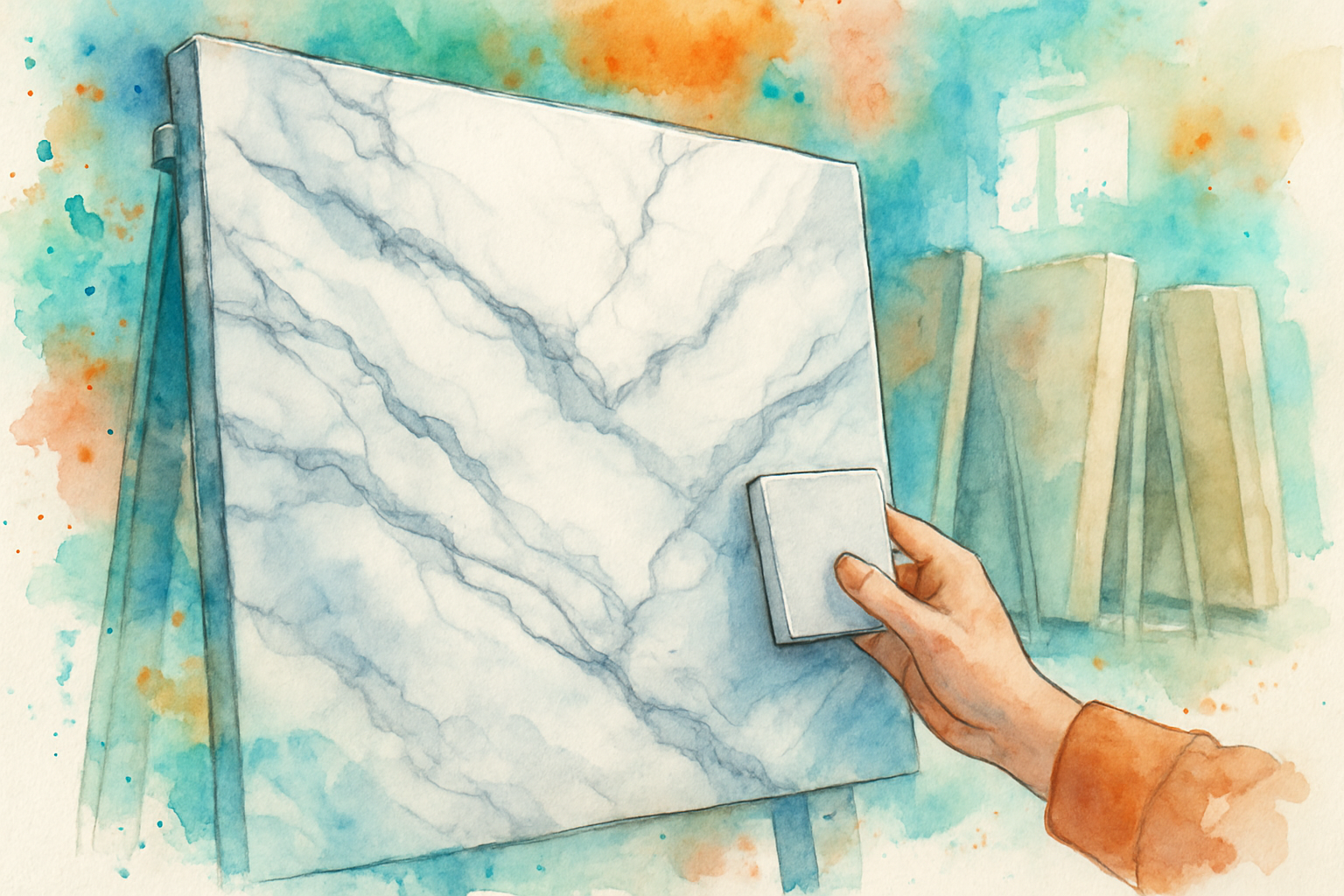
When ‘Quartzite’ on the Label Is Actually Dolomite
This is one of the most common sourcing problems in the premium stone market right now. Taj Mahal, White Princess, and a handful of other popular marble-look slabs are sometimes sold as quartzite — but some of what’s in circulation is actually dolomite, or a dolomite-quartzite blend with properties closer to dolomite.
Why does it happen? True quartzite is significantly harder (Mohs 6 to 7), doesn’t etch from acids, and requires almost no sealing. It commands a premium. Dolomite, which visually overlaps with quartzite, can be mislabeled either intentionally or because the quarry’s own classification is ambiguous. Intermediate stones exist in geology.
The way to confirm what you’re actually buying:
- Ask for the country of origin and quarry name. True Taj Mahal quartzite comes from a specific region of Brazil. If nobody can tell you where the stone was quarried, that’s a problem.
- Do a lemon juice test on a hidden corner. Apply a few drops and wait 10 minutes. If you see a dull ring or color change, the stone contains calcite and will etch. True quartzite won’t react at all.
- Request a petrographic or acid test report. Reputable importers often have lab documentation on their inventory. If the supplier can’t produce any documentation, ask why.
- Work with a supplier who can explain provenance. Buying from a showroom with live, identified inventory is very different from selecting off a catalog image.
For more context on how these three materials compare, the real difference between these three stone surfaces lays it out clearly.
Dolomite vs. Marble vs. Quartzite: Quick Reference
This comparison covers the three properties that matter most for countertop and bathroom surface decisions: hardness, acid sensitivity, and finish recommendation.
Dolomite by Application: What to Expect
Dolomite performs differently depending on where it’s used. This table sets realistic expectations for the most common applications in kitchen and bathroom remodels.
| Application | Dolomite Performance | Key Consideration |
|---|---|---|
| Kitchen countertop | Good — with honed or leathered finish | Will etch from acids; seal every 12–18 months |
| Waterfall island | Excellent visual impact | Vertical surfaces etch less; honed finish preferred |
| Bathroom vanity top | Very good | Lower acid exposure; polished finish is workable |
| Bathroom feature wall | Excellent | Minimal etch risk; dramatic veining shows well |
| Shower walls | Moderate — requires diligent sealing | Grout joints and water infiltration are the bigger concerns |
| Outdoor surfaces | Not recommended | Calcite content degrades with freeze-thaw cycles and rain |
Where Dolomite Shines in High-End Remodels
Despite the maintenance conversation, dolomite has earned its place in some of the most impressive kitchens and bathrooms up and down the California coast. The dramatic veining — wide, bold movements across a white or grey field — is difficult to replicate in engineered stone without it looking artificial.
Waterfall islands are the most popular application right now in Bay Area luxury remodels. The veining wraps the edge continuously, and a honed dolomite surface on that format reads as quietly expensive without looking overdone. Bathroom feature walls — the full slab behind a freestanding tub or a floor-to-ceiling surround in a Pebble Beach master bath — are a close second.
Dolomite is not a countertop material for people who want zero maintenance. But for clients who are willing to seal the surface once or twice a year and wipe up acids promptly, it delivers a natural stone look that engineered options genuinely can’t match.
If you’re weighing dolomite against quartz or porcelain for a high-use kitchen, granite, quartz, or porcelain — how do you actually decide walks through the practical tradeoffs without steering you toward any single answer.
For more on whether dolomite makes sense for your specific project, is dolomite a good choice for countertops or bathroom surfaces goes deeper on the application-by-application breakdown.
Frequently Asked Questions About Dolomite Stone
Is dolomite better than marble for a kitchen countertop?
It’s more resistant to etching than marble, but it’s not acid-proof. If your kitchen sees a lot of cooking with citrus, wine, or vinegar, dolomite will still show wear over time. The honest answer is that quartzite or porcelain are better performers in a hard-working kitchen. Dolomite is a strong choice if the visual is a priority and you’re willing to maintain it.
How do I know if a slab labeled ‘quartzite’ is actually dolomite?
Do a lemon juice test on a small hidden area. Apply a few drops, wait 10 minutes, and wipe clean. If you see any dullness or color shift, the stone contains calcite and will etch — which means it’s not true quartzite. Also ask your supplier for the quarry name and country of origin. Reputable importers can tell you exactly where a slab came from.
What’s the best finish for dolomite in a kitchen?
Honed is the most forgiving. Etch marks are much less visible on a matte surface than on polished stone. Leathered finishes hide wear even better. Polished dolomite looks stunning but shows every imperfection — it’s better suited for bathroom vanities or low-traffic surfaces where acid exposure is minimal.
How often does dolomite need to be sealed?
Most dolomite countertops benefit from sealing every 12 to 18 months, depending on use. A simple water test tells you when it’s time: pour a small amount of water on the surface and wait a few minutes. If it absorbs into the stone rather than beading up, it’s time to reseal. Your stone supplier can recommend a penetrating sealer appropriate for the specific material.
Can dolomite be used outdoors on a patio or outdoor kitchen?
No — not on the Central Coast or anywhere with temperature swings or rain exposure. Dolomite’s calcite content makes it vulnerable to weathering. For outdoor applications, look at granite, quartzite, or porcelain. We have a full breakdown of which stone surfaces hold up to California weather outdoors if you’re planning an outdoor project.
Can I see dolomite slabs in person before deciding?
Yes, and you should. Dolomite veining varies significantly from slab to slab — catalog images don’t capture the movement, color range, or surface variation you’ll actually live with. Viewing live inventory in a showroom is the only way to know what you’re selecting.
Ready to See Dolomite Slabs in Person?
Carmel Stone Imports carries live dolomite inventory across its Carmel-by-the-Sea and Palo Alto showrooms — actual slabs you can view, compare finishes on, and take samples home from before committing to anything. If you want to talk through whether dolomite is the right fit for your specific project, call (650) 800-7840 or email info@carmelimports.com to schedule a slab selection appointment.