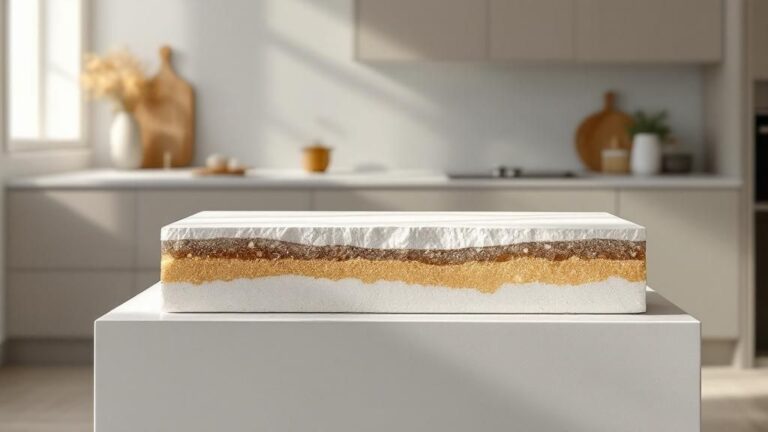
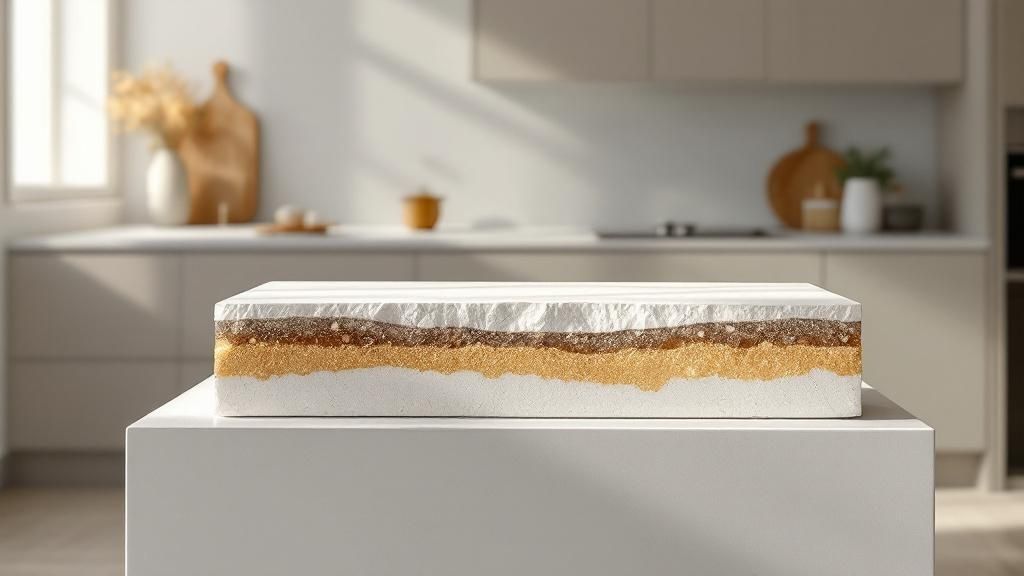
If you've ever admired a flawless, gleaming countertop that looks like perfect marble but seems impossibly durable, you were probably looking at engineered stone. This guide explains what engineered stone is, how it's made, and why it's a top pick for modern homes from the Bay Area to Monterey. It offers the best of both worlds: stunning looks with superior consistency and toughness.
What Exactly Is Engineered Stone?
So, what’s the secret behind this powerhouse material? Think of it as a high-tech recipe that improves upon what nature already created.
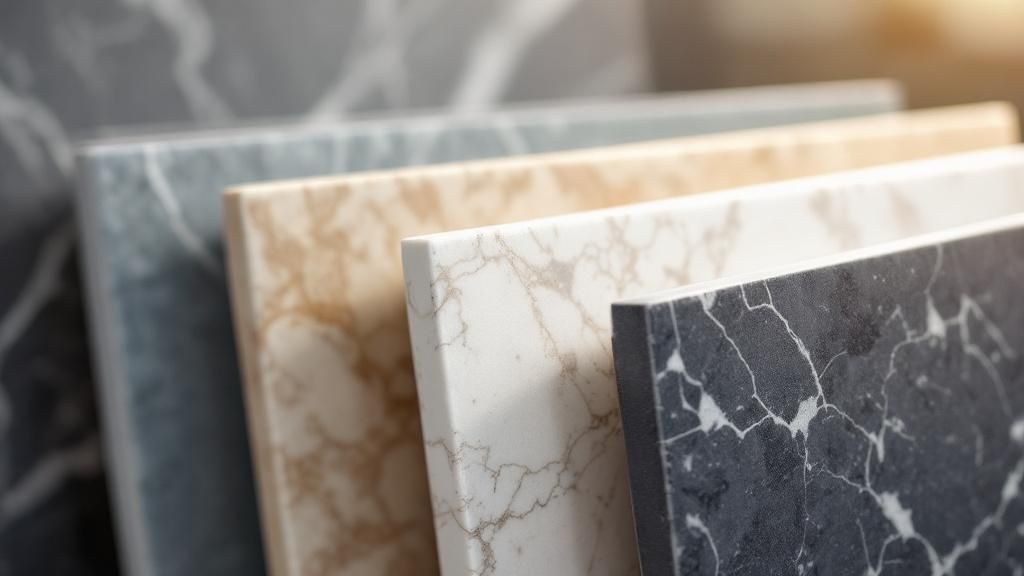
At its core, engineered stone is a man-made slab composed of roughly 90% ground-up natural quartz, one of the hardest minerals on Earth. This quartz aggregate is then blended with polymer resins and pigments to create a strong, stable slab. According to industry analysis from imarcgroup.com, the global market for this material is expected to grow significantly, proving its rising popularity.
This precise process produces a surface that's incredibly dense and completely non-porous. Unlike natural stone quarried from the earth, which can have hidden fissures, every slab of engineered stone boasts a uniform strength and look. That’s a massive advantage for projects here in Palo Alto, where a sleek, consistent finish is often the goal.
Its Key Ingredients
The magic of engineered stone comes from its simple but effective blend of components. Each ingredient has a specific job to do.
- Crushed Quartz: This forms the strong backbone of the slab. It provides outstanding hardness and makes the surface resistant to scratches and chips.
- Polymer Resins: These act as a super-strong glue that binds the quartz crystals together. This creates a non-porous surface that shrugs off stains and moisture.
- Pigments: Added into the mix, these allow for an almost endless variety of colors and patterns. You can find everything from crisp whites to dramatic blacks that mimic natural marble.
This unique combination makes sure that engineered stone doesn't just look amazing—it performs beautifully for years. It's no wonder homeowners in coastal communities like Carmel love its resilience. It easily handles daily wear and tear while keeping its polished, elegant appearance.
Engineered Stone at a Glance
Here's a quick table to summarize what makes engineered stone such a popular material.
| Characteristic | Description |
|---|---|
| Composition | Approximately 90% natural quartz mixed with polymer resins and pigments. |
| Durability | Highly resistant to scratches, chips, and stains due to its hardness and non-porous surface. |
| Appearance | Offers consistent color and pattern, with a vast range of design options. |
| Maintenance | Low-maintenance; does not require sealing like many natural stones. |
| Porosity | Non-porous, making it hygienic and resistant to bacteria and moisture. |
Ultimately, engineered stone is designed to deliver consistent, reliable performance without compromising on aesthetics.
How Engineered Stone Is Made
Ever wondered how engineered stone gets its incredible strength and flawless appearance? The process is a bit like baking a high-tech cake, where every ingredient is measured to create a perfect result every time.
The main ingredient is crushed natural quartz, which makes up about 90% of the mix. This quartz is combined with strong polymer resins, which act as a binder. Finally, pigments are added to give the stone its vibrant, consistent color.
From Raw Mix to Polished Slab
Once blended, the thick mixture is poured into a slab-sized mold. This is where the magic happens. The mold is subjected to intense pressure and vibration, which forces all the particles tightly together and removes air pockets.
After compaction, the slab is sent into a curing oven and baked at a high temperature. This step permanently fuses the quartz crystals into a solid block. The final product is a uniform material free of the natural fissures you'd find in quarried stone—a huge plus for Bay Area homeowners looking for a low-maintenance finish.
This graphic gives you a quick look at the key steps that turn raw materials into a finished slab.
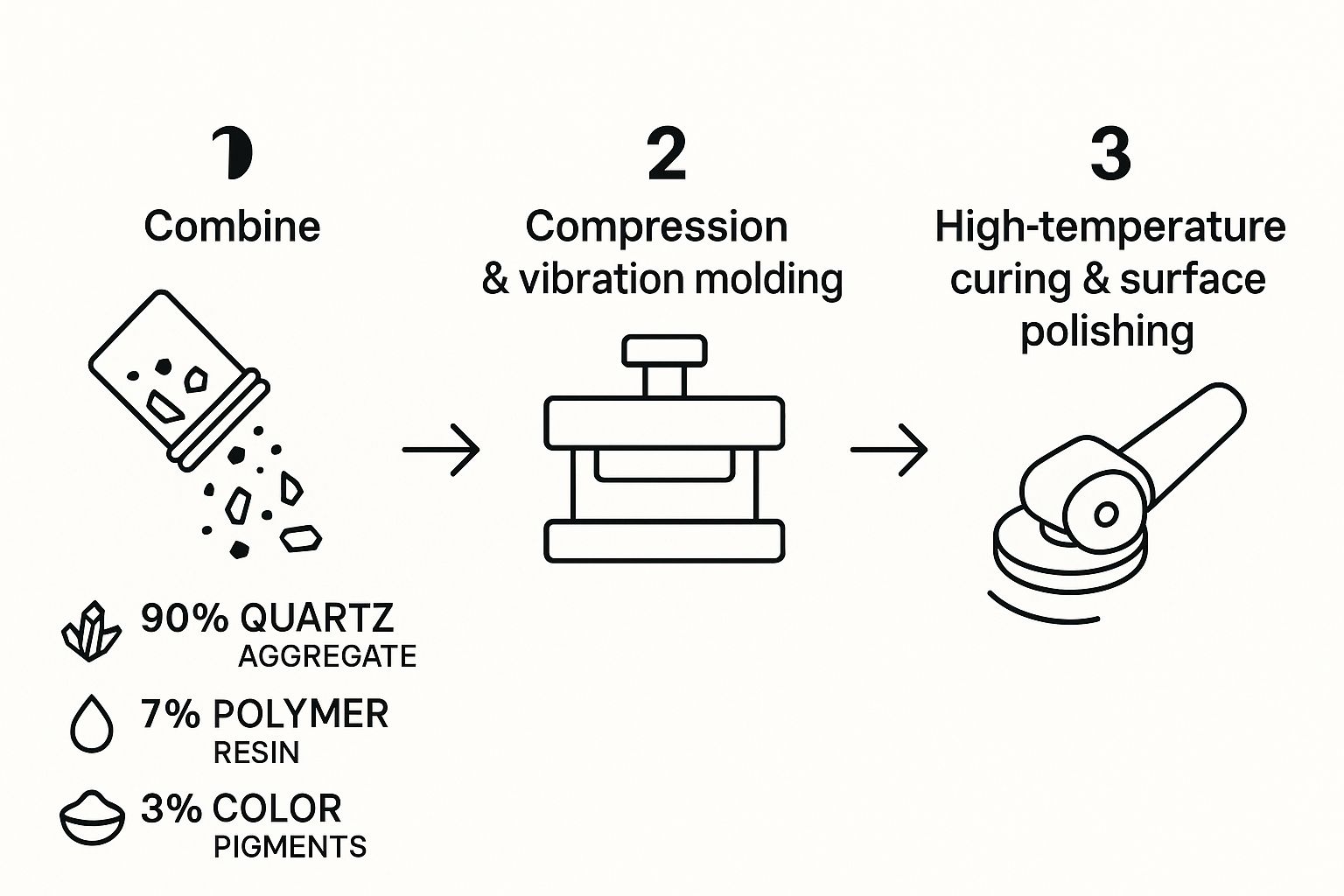
This tightly controlled process guarantees that every piece has the same structural integrity and visual consistency. It’s how engineered stone delivers such a reliable, beautiful surface.
Pros and Cons of Engineered Stone
Every material has its trade-offs, and engineered stone is no exception. It brings a fantastic combination of aesthetic appeal and performance to the table. Let's break down what makes it so popular, along with a few practical things to keep in mind.
The Advantages of Engineered Stone
Engineered stone really shines when you need a surface built for modern life. Its benefits go far beyond just looking good. One of its biggest selling points is its non-porous surface, making it incredibly resistant to stains from coffee, wine, or oil.
It’s also exceptionally hygienic because bacteria and germs have nowhere to hide. On top of that, it's remarkably durable, holding up beautifully against daily scratches and chips. This toughness makes it a smart investment for high-traffic zones.
Here are a few more reasons people love it:
- Design Flexibility: Engineered stone offers a massive spectrum of colors and patterns. You can get anything from a solid white for a sleek San Francisco kitchen to designs that capture the luxurious veining of marble.
- Rock-Solid Consistency: Every slab is consistent in its color and pattern. This ensures a clean, seamless look across large areas like a kitchen island.
- Low Maintenance: This is a big one for busy homeowners. Engineered stone never needs to be sealed, saving you time and money.
Practical Considerations
While the list of pros is long, there are a couple of limitations to be aware of. First is its relationship with high heat. The resins can be damaged by direct contact with extremely hot pots, so it's best to always use trivets.
Another point is its use outdoors. The resins can be sensitive to long-term exposure to direct UV sunlight, which might cause some colors to fade. For this reason, engineered stone is almost always recommended for indoor applications.
Engineered Stone vs. Natural Stone: A Quick Comparison
To see how engineered stone stacks up against natural options, here’s a quick side-by-side look. This can help you visualize the key differences.
| Feature | Engineered Stone | Granite | Marble |
|---|---|---|---|
| Composition | ~90% quartz & ~10% resins/pigments | 100% natural igneous rock | 100% natural metamorphic rock |
| Durability | Extremely high scratch/chip resistance | Very durable, but can chip | Softer, more prone to scratches/etching |
| Stain Resistance | Non-porous, highly stain-resistant | Porous, requires sealing to resist stains | Very porous, stains easily without sealant |
| Heat Resistance | Good, but needs trivets for high heat | Excellent, can handle hot pans directly | Good, but can be scorched by extreme heat |
| Maintenance | No sealing required, easy to clean | Requires periodic sealing (annually) | Requires frequent sealing and careful cleaning |
| Design Consistency | Very consistent color and pattern | Unique veining, varies from slab to slab | Unique veining, varies significantly |
This table highlights why so many people find the low-maintenance durability of engineered stone so appealing. For even more detail, our comparison of natural stone vs. engineered stone offers more insights to guide your decision.
Where to Use Engineered Stone in Your Home
When most people think of engineered stone, they picture a kitchen countertop. While it shines in that role, its versatility extends far beyond just one room. This material’s blend of beauty and brawn makes it a smart choice for many areas throughout your home, especially in busy households from Palo Alto to the Monterey coast.
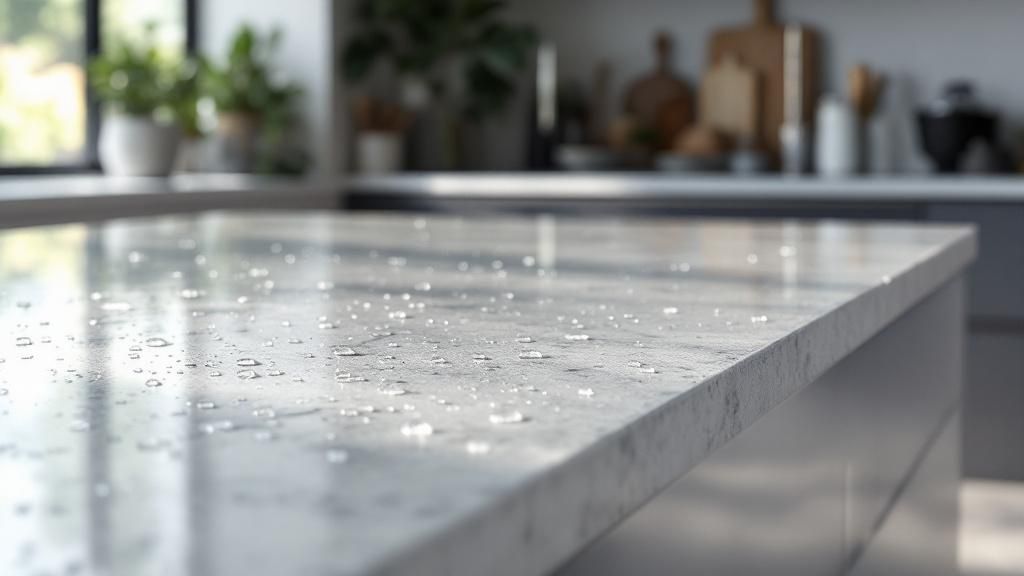
Because it’s non-porous and hygienic, engineered stone is a natural fit for any space that sees a lot of moisture. Imagine its potential in bathrooms, where it can create a stunning, easy-to-clean vanity top or a seamless shower surround.
Popular Applications Beyond the Kitchen
Engineered stone can elevate the look and function of almost any room. Its consistent patterns open the door for creative designs that are practical and beautiful.
Here are a few inspiring ideas to get you started:
- Elegant Bathroom Vanities: It’s an ideal material for bathroom countertops because it repels water and resists stains from makeup or soap.
- Stunning Shower Walls: Create a grout-free, spa-like retreat with large slabs of engineered stone, eliminating the chore of cleaning mold.
- Sophisticated Fireplace Surrounds: Use it to craft a dramatic, modern focal point in your living room with a sleek, durable frame.
- Hardworking Laundry Rooms: A tough engineered stone counter can handle detergents and sorting without scratching or staining.
The growing demand for quartz countertops shows just how popular this material has become. If you're weighing options, check out our guide on sintered stone vs. quartz to figure out which surface best fits your project.
Simple Care for Lasting Beauty
One of the biggest draws of engineered stone is just how easy it is to live with. It’s incredibly low maintenance. That non-porous surface means spills like red wine or coffee can’t soak in, making cleanup a breeze.
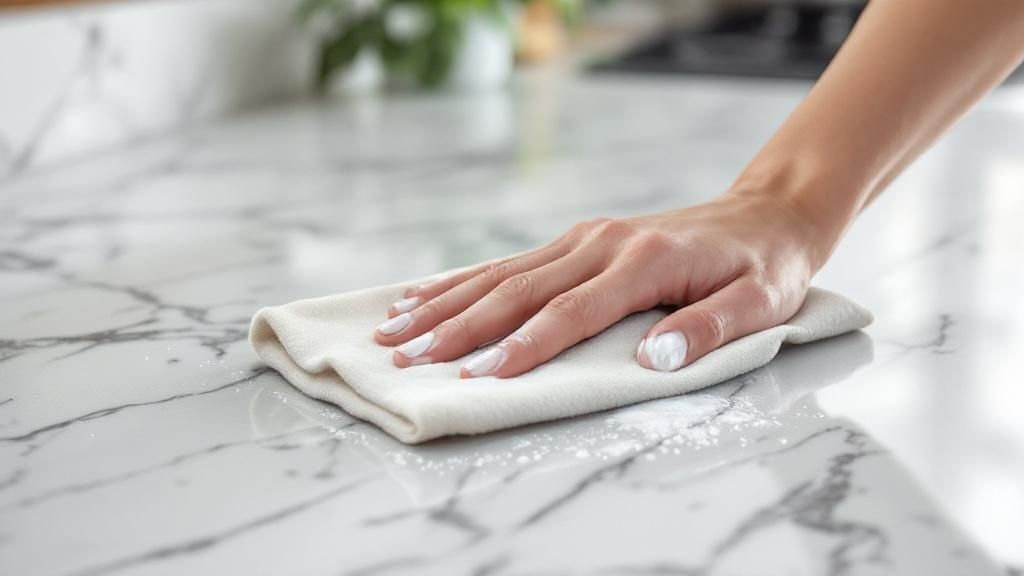
For day-to-day tidying, a soft cloth with warm water and a drop of mild soap is all you’ll need. This simple routine is enough to keep your surfaces looking brand new.
Daily Care and What to Avoid
Keeping your engineered stone looking great is more about what not to do. The list of don'ts is short and simple.
- Avoid Harsh Chemicals: Stay away from bleach, oven cleaners, and abrasive scouring pads that can dull the polished surface.
- Use Trivets for Heat: The resins can be damaged by extreme heat. Always place a trivet under hot pots and pans.
- Wipe Up Spills Promptly: It’s good practice to clean up messes quickly, especially acidic things like lemon juice or vinegar.
The single greatest maintenance advantage? Engineered stone never needs sealing. While knowing how to seal natural stone is critical for marble or granite, you can skip this chore with engineered stone. General stone cleaning methods can also provide useful tips for overall upkeep.
Find Your Perfect Engineered Stone
Now that you know engineered stone's benefits, the next step is seeing it for yourself. Pictures can only do so much. Discovering the perfect surface means getting up close with the colors and textures that will bring your vision to life.
Visiting one of our showrooms in Palo Alto, Sand City, or Carmel is the best way to appreciate the details in each slab. Our team of experts is here to guide you. We can help you find a material that complements your style, whether it’s for a modern San Jose kitchen or a tranquil Monterey bathroom.
Making the right choice can feel like a huge task, but our guide on how to choose countertops is packed with tips to get you started. Let's start the conversation and turn your vision into a stunning reality.
Frequently Asked Questions
Here are clear, straightforward answers to common questions we hear from homeowners about engineered stone.
1. Is engineered stone the same as quartz?
Essentially, yes. While "engineered stone" is the broader term, the product most people mean for countertops is engineered quartz. It is made from about 90% natural quartz crystals mixed with a high-performance resin binder.
2. Is engineered stone cheaper than granite?
It depends. Their prices often overlap, so one isn't automatically cheaper. Some entry-level granite may cost less, but high-quality engineered stone is usually priced similarly to mid-range and high-end granite slabs.
3. Can I use engineered stone for an outdoor kitchen?
We strongly recommend against using it for outdoor projects. The resins that bind the quartz are not designed for long-term exposure to direct sunlight. Over time, UV rays can cause the colors to fade or yellow.
4. How does engineered stone get its color and pattern?
Pigments are added during the manufacturing process to create a wide range of colors. Modern technology allows for patterns that beautifully mimic the veining of natural marble, giving you the look of natural stone with enhanced performance.
5. Is engineered stone hard to keep clean?
Not at all. Its non-porous surface is a huge advantage, making it highly stain-resistant. Most spills wipe away easily with just simple soap and water. Our guide on caring for your countertops and your health has more cleaning details.
Ready to see the beauty of engineered stone in person? The expert team at Carmel Stone Imports is here to help you find the perfect surface for your project. Visit one of our showrooms or contact us today to get started.