Choosing the right countertop is about finding that sweet spot between beautiful design and everyday practicality. This guide explores the quartzite countertops pros and cons to help you decide if this popular stone is right for your California home. It offers stunning natural beauty and serious durability, but it needs regular sealing and comes with a premium price tag.
This natural stone is perfect for homeowners who want one-of-a-kind patterns and are comfortable with a little upkeep. We'll cover everything you need to know.
Is Quartzite the Right Choice for Your Home?
Picking out a new countertop is a major investment. It shapes your home's entire look and feel. For homeowners in Palo Alto and across the Bay Area, quartzite has become a top contender. It gives you the sophisticated look of marble with the ruggedness of granite.
This guide gives you a straightforward, balanced look so you can decide with confidence. We’ll get into what makes quartzite so popular, from its visual appeal to its strength. We'll also be honest about the maintenance needs to give you a complete picture.
Key Factors at a Glance
Before we dive in, here’s a quick rundown of quartzite’s main features. Think of this table as a cheat sheet for what you can expect from this incredible natural stone.
| Feature | What to Expect | Best For |
|---|---|---|
| Aesthetics | Unique, natural veining and subtle, earthy tones. Each slab is one-of-a-kind. | Homeowners who want a natural, luxurious centerpiece for their kitchen. |
| Durability | Extremely hard (a 7 on the Mohs scale), making it very resistant to scratches and chips. | High-traffic kitchens in family homes where daily wear and tear is a given. |
| Maintenance | Requires annual sealing to protect against stains due to its porous nature. | Owners who are okay with a simple, yearly maintenance routine to protect their investment. |
| Cost | A premium material, often priced higher than many other countertop options. | Budgets that can accommodate a high-end, long-term investment in quality. |
The Pros of Quartzite: Beauty and Strength
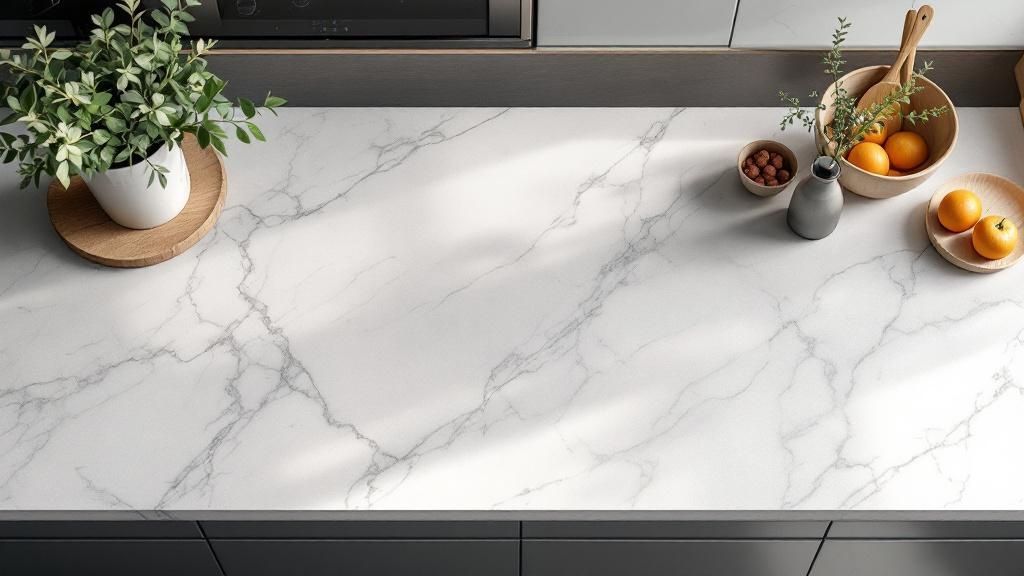
When homeowners fall for quartzite, it’s for two big reasons: its stunning natural beauty and its serious strength. Every slab is a unique piece of art shaped by the earth. It comes with one-of-a-kind veining and subtle, elegant colors.
Unlike factory-made surfaces, no two quartzite countertops are ever exactly the same. This means you get a truly custom look for your kitchen or bathroom.
But it's not just a pretty face. Quartzite is a metamorphic rock forged under incredible heat and pressure. This process makes it an exceptionally hard and dense material, perfect for a busy home.
Resilience in High-Traffic Kitchens
For a busy family home, especially in active areas like Monterey or San Jose, a countertop needs to handle daily life. Quartzite’s natural hardness makes it a champion against common kitchen hazards.
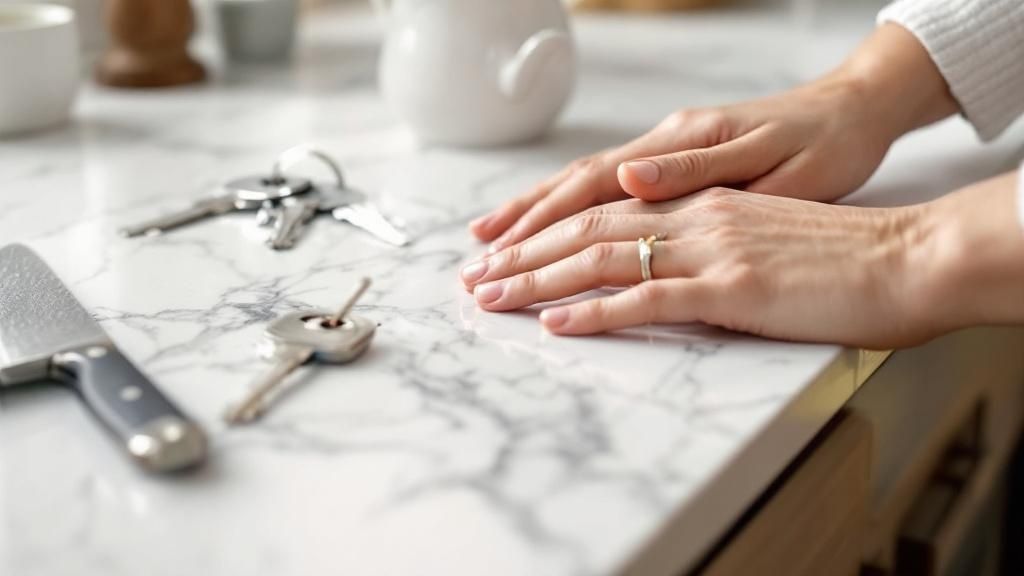
- Scratch Resistance: It scores a 7 on the Mohs scale of hardness. This means it’s tougher than glass and stands up well to nicks and scrapes.
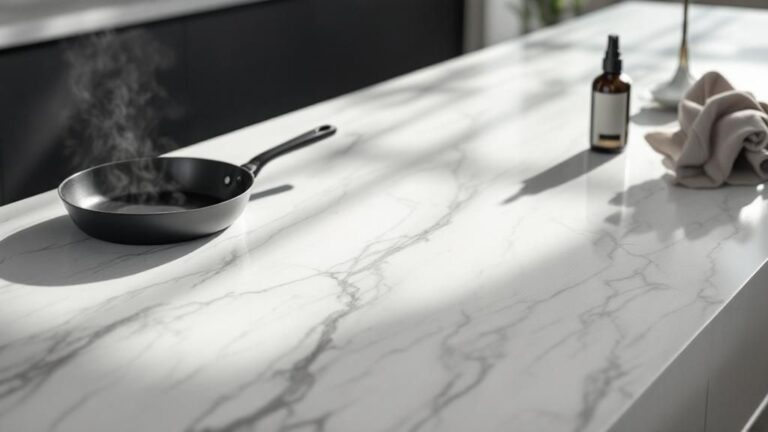
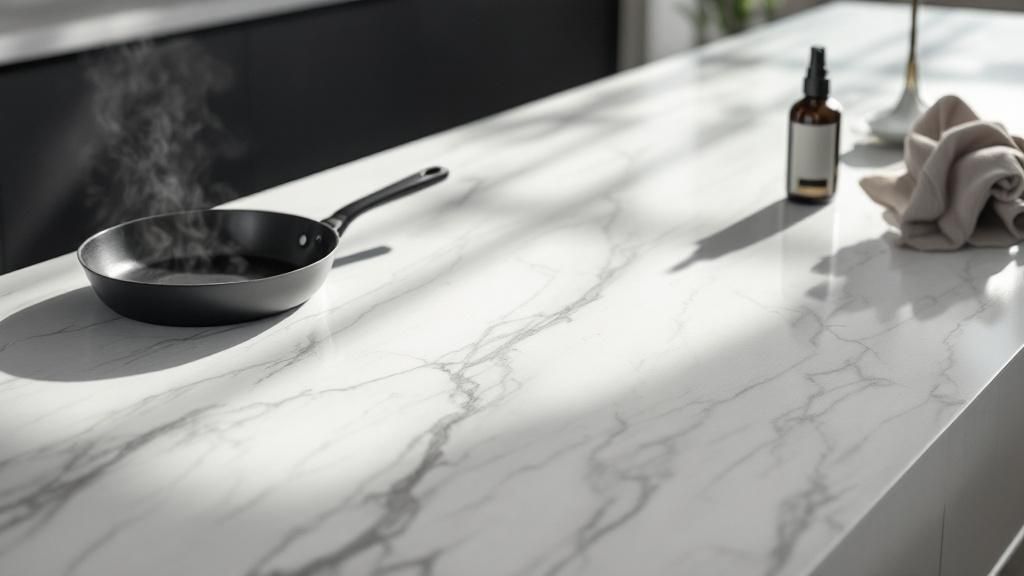
- Heat Tolerance: You can put a hot pan directly on the surface without worry. It won’t scorch or melt, a huge advantage over many engineered materials.
- UV Resistance: If your kitchen gets lots of California sunshine, quartzite is a fantastic choice. It won’t fade or change color when exposed to direct sunlight.
Quartzite’s blend of luxury looks and rugged performance has made it a top choice. According to market data, the natural stone countertop segment continues to grow, showing a strong homeowner preference for authentic materials. This powerful combination makes it a smart, long-term investment for any home.
The Cons of Quartzite: Practical Considerations
It’s easy to get swept away by quartzite's good looks. But before you commit, we need to talk about the practical side of owning this stone. Getting the complete picture is the only way to know if it’s truly the right fit for you.
The biggest factor to understand is porosity. Quartzite is a natural stone with tiny pores that can soak up liquids. A spilled glass of red wine or a splash of olive oil could become a permanent stain if you're not careful.
Sealing and Maintenance Needs
To prevent stains, quartzite countertops need to be sealed right after installation. A sealer acts as an invisible shield that repels moisture. You’ll typically need to reapply it about once a year to keep that barrier strong.
Beyond sealing, a little daily care goes a long way. Quartzite can be sensitive to acids from things like lemon juice or vinegar. These spills should be wiped up right away to prevent etching, which is a subtle dulling of the stone’s finish.
A huge part of maintenance is just keeping the counters clear. Integrating some smart kitchen clutter solutions will help keep your stunning new workspace functional and ready to be admired.
Cost and Professional Installation
Let’s be direct: quartzite is a premium material. Its price reflects its journey from a quarry to your kitchen. It is generally more expensive than many other popular choices, like some granites and engineered quartz.
Finally, this stone is incredibly heavy and hard. Installation is strictly a job for pros with specialized tools. Make sure you factor the cost of professional installation into your overall budget.
Comparing Quartzite and Engineered Quartz
One of the first hurdles for homeowners is the quartzite vs. quartz confusion. They sound almost the same but are very different materials. Understanding this is key to weighing the quartzite countertops pros and cons.
Quartzite is 100% natural stone. It’s quarried directly from the earth, so every slab is unique. For anyone in Monterey wanting a one-of-a-kind statement piece, you can't beat natural quartzite.
Engineered quartz is a man-made surface. These slabs are made by combining about 93% ground quartz crystals with polymer resins and pigments. This process creates a non-porous and highly consistent product.
Key Differences at a Glance
The choice often boils down to what you value more: natural beauty or easy maintenance. Natural quartzite delivers unique organic patterns. Engineered quartz gives you uniform colors you can count on.
To give you some context, this infographic shows how natural quartzite stacks up against granite.
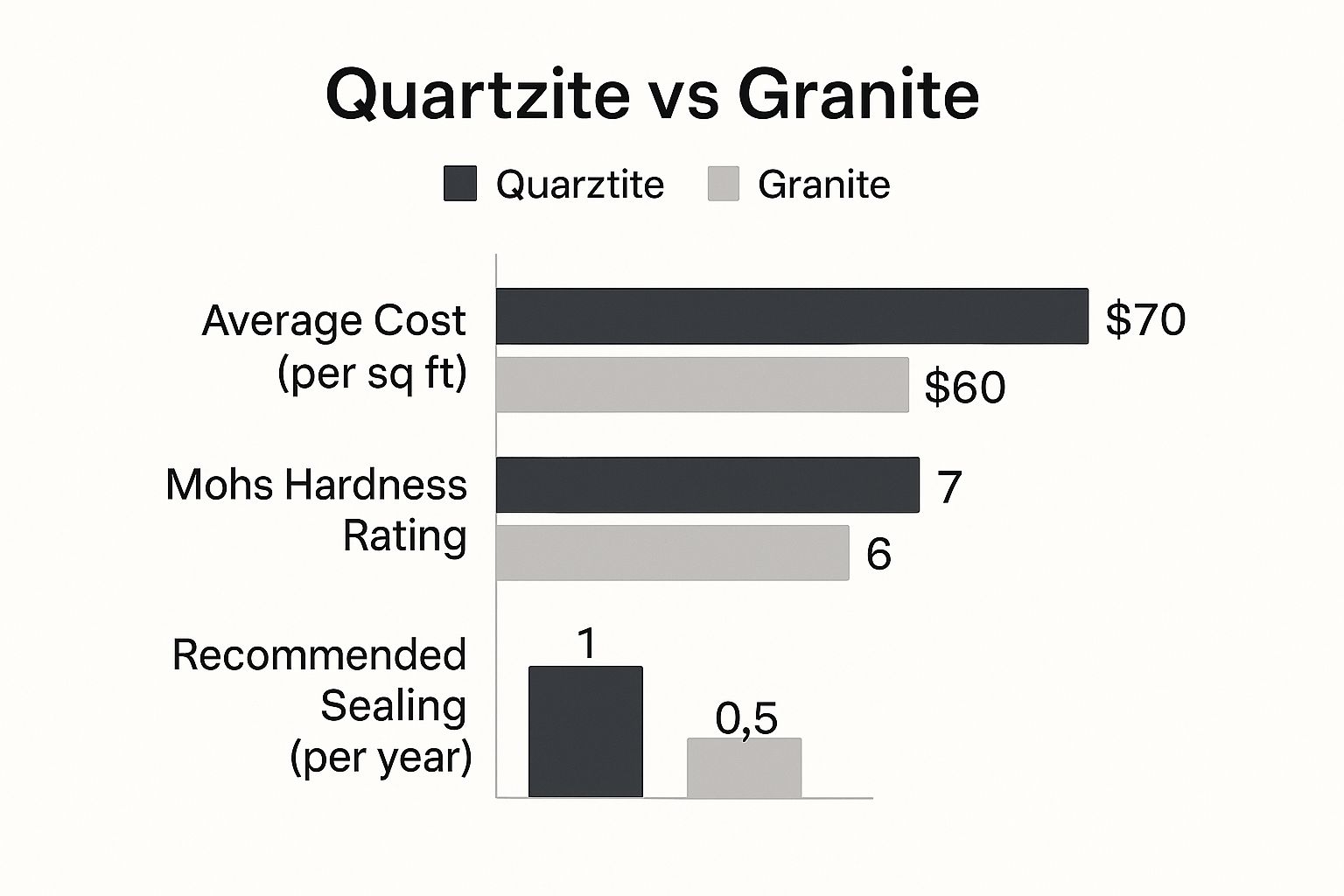
While quartzite can be pricier, its superior hardness gives it a real edge in scratch resistance. For a deeper dive, check out our guide on granite vs. quartzite countertops.
Quartzite vs Quartz: Head-to-Head
Let's put these two side-by-side. Here’s a quick breakdown of where each material shines.
| Feature | Natural Quartzite | Engineered Quartz |
|---|---|---|
| Material Origin | 100% natural stone, quarried from the earth | Man-made composite (approx. 93% quartz, 7% resins) |
| Aesthetics | Unique, one-of-a-kind patterns and veining | Consistent, uniform appearance and color |
| Porosity | Porous; requires regular sealing to prevent stains | Non-porous; does not require sealing |
| Heat Resistance | Excellent; can handle hot pots and pans directly | Good, but can be damaged by sudden high heat |
| Scratch Resistance | Extremely high (harder than granite) | Very high, but can be scratched by sharp objects |
| Maintenance | Requires periodic sealing and careful cleaning | Low maintenance; easy to clean with soap and water |
The right choice depends entirely on your lifestyle and design goals. Choose natural quartzite for its unique artistry. Opt for engineered quartz if you want zero maintenance and a consistent look.
Maintaining Your Quartzite Countertops
Keeping your beautiful quartzite countertops looking new is straightforward. While it’s not as "set-it-and-forget-it" as some engineered surfaces, the routine is simple. A little proactive care will ensure your natural stone stays stunning.
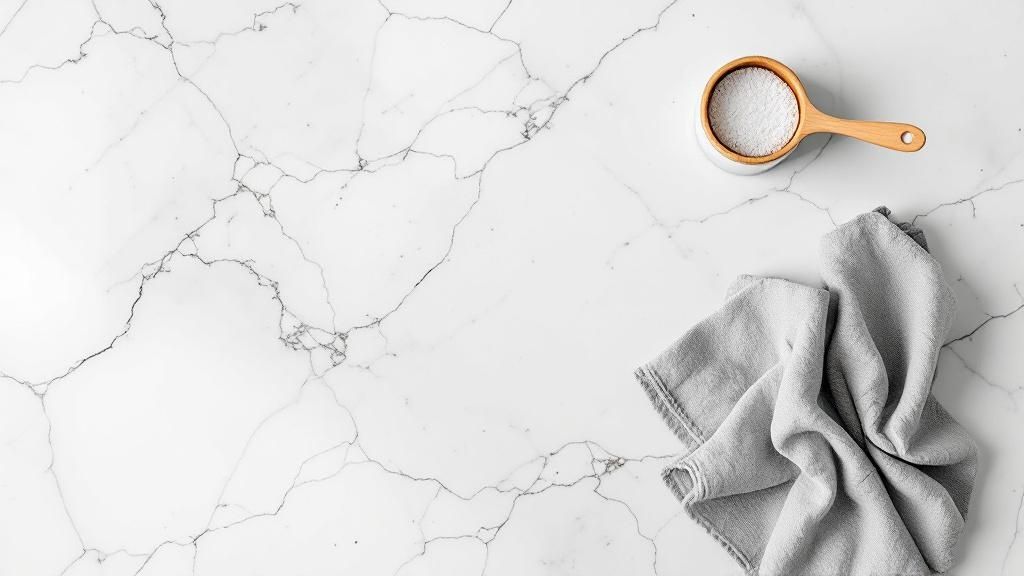
For daily cleaning, use a soft cloth, warm water, and a pH-neutral cleaner. Stay away from abrasive pads or harsh chemicals like bleach or ammonia. The single most important habit is to wipe up spills right away, especially acidic ones like wine or citrus juice.
The Importance of Sealing
Because quartzite is porous, sealing is the most critical step in its upkeep. A high-quality sealer stops liquids from seeping in and leaving a stain.
Most countertops will need a fresh coat of sealer about once a year. The timing can change depending on the slab and how much you use your kitchen.
Not sure if it's time to reseal? Just splash a few drops of water onto the counter. If the water beads up, your sealer is working. If it soaks in and darkens the stone, it’s time to reapply. Our guide on how to seal natural stone breaks it down.
Quick Tip: Use trivets for hot pans and always use a cutting board. These simple habits provide an extra layer of defense, keeping your surface looking brand new.
Combining these good habits with annual sealing makes quartzite care easy. It also helps to brush up on general kitchen cleanliness tips for a spotless home.
So, How Do You Choose?
After weighing all the pros and cons, the right choice boils down to your lifestyle. For a design-focused homeowner in the Bay Area who wants a unique centerpiece, quartzite is an incredible option. If you appreciate natural artistry and are fine with simple annual sealing, its beauty easily outweighs the upkeep.
But if you have a busy family and want a surface you never have to think about, engineered quartz might be better. Its zero-maintenance appeal is a big reason why the United States countertop market is so large. You can read the full countertop market report on futuremarketinsights.com to learn more.
Aligning Your Choice with Your Goals
To nail down your decision, ask yourself a few key questions:
- Aesthetic Priority: Do you want the unique, organic look of natural stone or a consistent, uniform pattern?
- Maintenance Commitment: Are you okay with annual sealing, or is a zero-upkeep surface a must-have?
- Sustainability Focus: The origin of your materials might also be a deciding factor. If that's important, explore more about eco-friendly building materials.
The best way to know for sure is to see the material in person. We encourage you to visit a Carmel Stone Imports showroom. There’s nothing like seeing full quartzite slabs firsthand and getting expert advice for your project.
Frequently Asked Questions
Here are answers to common questions we hear from homeowners in the Bay Area who are considering quartzite for their homes.
1. How does quartzite durability compare to granite?
Both are very durable, but quartzite is generally harder. On the Mohs scale, true quartzite scores a 7, while granite is typically between 6 and 6.5. This makes quartzite slightly more resistant to scratches.
2. How often do I really need to seal quartzite countertops?
The general rule is once a year, but it depends on your specific stone and kitchen usage. Do the water test: if water beads on the surface, your sealer is fine. If it soaks in, it’s time to reseal.
3. Can I put a hot pan directly on quartzite?
Yes. Quartzite is formed under intense heat and is naturally resistant to high temperatures. You can set a hot pot down without worrying about scorching the stone.
4. What is the difference between "hard" and "soft" quartzite?
"Hard" quartzite is genuine metamorphic rock that is very durable. "Soft" quartzite is often mislabeled marble, which looks similar but will scratch and etch much more easily. Always buy from a reputable supplier like Carmel Stone Imports to ensure you get the real thing.
5. Is quartzite a good choice for an outdoor kitchen in California?
Absolutely. Quartzite is UV-resistant, so its beautiful colors will not fade or yellow in direct sunlight. This makes it a perfect choice for outdoor kitchens in sunny climates like Monterey and Palo Alto.
Ready to see the timeless beauty of quartzite in person? The expert team at Carmel Stone Imports can guide you through our stunning collection. We'll help you find the perfect slab for your home. Visit our showrooms or contact us today to start your design journey.