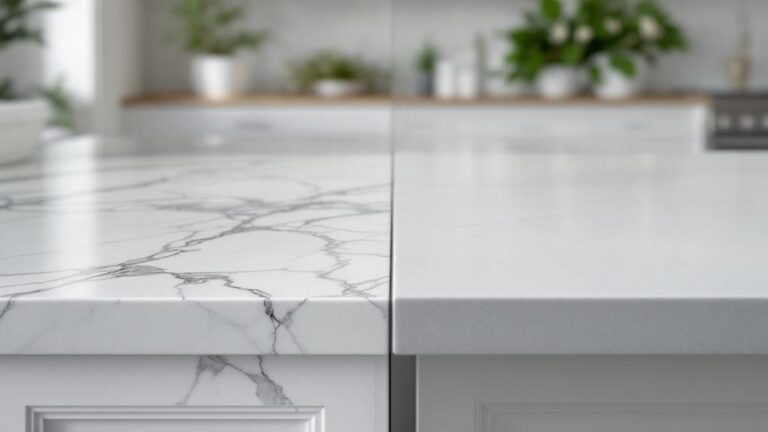

When it comes to choosing a surface for your home, the decision between natural stone vs. engineered stone often boils down to a core preference. Are you drawn to the unique, earthen character that nature creates, or do you need the consistent performance and durability that comes from modern manufacturing? This guide offers a comprehensive comparison of natural and engineered stone, helping homeowners and design professionals in California make an informed choice for their kitchens, bathrooms, and outdoor spaces.
Natural stone brings a story and unmatched character into your home. Engineered stone, on the other hand, is built for the demands of a busy lifestyle, offering incredible resilience with minimal upkeep. This guide will walk you through a practical, side-by-side comparison to help you figure out which is right for you.
An Immediate Comparison of Your Stone Options
Choosing the right surface—whether it’s for a hardworking kitchen countertop in Palo Alto or an elegant bathroom vanity in Monterey—is a major decision that shapes the feel and function of your space. At the heart of most design projects is the debate between natural and engineered stone. To make a smart choice, you have to get to know their core differences, from how they’re made to how they look and perform over time.
Natural stone, like granite, marble, and quartzite, is quarried straight from the earth. Each slab is literally a one-of-a-kind piece of geological art, sculpted over millions of years. This means no two countertops will ever be exactly the same, giving you a truly bespoke and luxurious finish.
Engineered stone, conversely, is a man-made composite. It’s typically crafted from about 90-95% crushed natural quartz crystals, which are then blended with pigments and polymer resins. This process results in a non-porous, incredibly durable, and highly consistent surface. According to recent market analysis, the global engineered stone market is projected to reach USD 43.5 billion by 2033, a testament to its growing demand. You can dig into this trend by reviewing the full market analysis.
Natural vs. Engineered Stone At a Glance
To give you a quick starting point, this table breaks down the fundamental differences between these two fantastic materials. It's a high-level overview to help with your initial assessment.
| Attribute | Natural Stone (e.g., Granite, Marble) | Engineered Stone (e.g., Quartz) |
|---|---|---|
| Origin | Quarried directly from the earth; 100% natural material. | Manufactured using crushed natural quartz and resins. |
| Appearance | Each slab is unique with one-of-a-kind veining and color. | Consistent and uniform color and pattern. |
| Durability | Varies by stone type; granite is very durable, while marble is softer. | Extremely durable; highly resistant to scratches and chips. |
| Maintenance | Porous by nature; requires periodic sealing to prevent stains. | Non-porous; does not require sealing and is stain-resistant. |
| Heat Resistance | Generally high, especially for granite and quartzite. | Good, but can be damaged by sudden, extreme heat. |
This table makes the initial choice a bit clearer, doesn't it? It all comes down to what you prioritize for your home and lifestyle.
Key Takeaway: Your choice hinges on what you value most. If you're looking for organic, unrepeatable beauty and want to bring a true piece of the earth into your home, natural stone is the perfect fit. But if you need predictable patterns, easy maintenance, and maximum durability for a high-traffic area, engineered stone is often the more practical choice.
Before we dive deeper, getting these foundational differences straight is key. For more help on this first step, feel free to check out our guide on how to choose the right natural stone.
The Unique Character Of Natural Stone

When you choose natural stone, you’re not just picking a building material; you're bringing a piece of the earth’s history into your home. Materials like granite, marble, and quartzite are quarried directly from the ground, carrying with them a story that took millions of years to write.
Each slab is a complete original, shaped by incredible heat, pressure, and unique mineral deposits. It's this one-of-a-kind nature that sets natural stone apart. No two pieces are ever the same, which means your countertop, fireplace, or floor is guaranteed to be yours and yours alone.
The Story In The Stone
The real beauty of natural stone is found in its so-called imperfections. Those cool grey veins that dance across a slab of Calacatta marble tell a story of ancient mineral intrusions. The warm, rustic texture of a hand-chiseled French limestone holds a timeless European charm you just can’t manufacture.
For homeowners here in coastal California, that connection to nature really hits home. A rugged, salt-and-pepper granite can echo the dramatic Monterey coastline, while a soft, sandy-hued travertine feels right at home in a sun-drenched Bay Area house. The stone doesn't just sit in the room—it becomes a part of the surrounding landscape.
A Piece of History: Every slab of natural stone is a testament to natural processes. Its veining, fossils, and mineral flecks are not flaws but features that tell a story of its origin, making each installation a unique work of art that cannot be replicated.
Aesthetics And Emotional Connection
Beyond just how it looks, natural stone has a tactile quality that manufactured materials can’t replicate. There's a tangible richness in the cool, smooth feel of a polished marble vanity or the subtly textured surface of honed granite.
This is a big part of the natural stone vs engineered stone conversation. Engineered options offer consistency, but natural stone delivers character. Ultimately, the choice comes down to what you value more: flawless uniformity or the unmistakable personality that only nature can create.
The best way to start is by seeing the possibilities for yourself. Exploring our hand-picked collection of natural stone online is a great first step, but nothing beats seeing it in person.
Unmatched Uniqueness In Every Slab
Picking out your natural stone is an experience. When you visit a Carmel Stone Imports showroom to look at full slabs, you see all the subtle colors and patterns that a tiny sample could never show you. It’s like a treasure hunt, and the prize is finding that one-of-a-kind piece of the earth that will define your space for years to come.
The Performance And Precision Of Engineered Stone
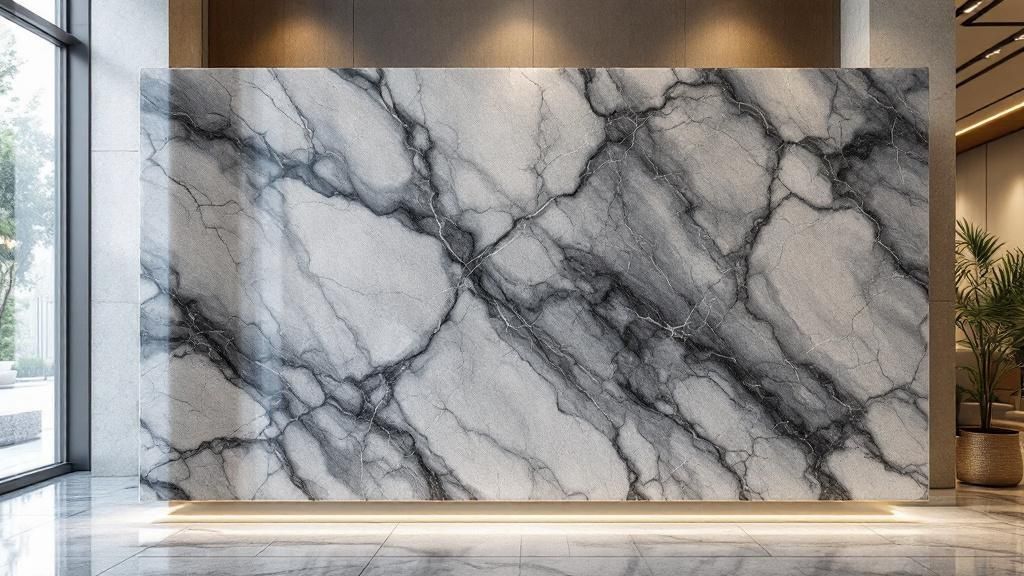
Where natural stone tells a story of geological history, engineered stone speaks to the power of human innovation. This material, which you probably know as quartz, was meticulously crafted to solve the practical challenges so many of us face in our homes. It delivers a level of performance and consistency that nature, for all its beauty, simply can’t replicate.
The manufacturing process itself is a feat of material science. It all starts with up to 93% natural quartz—one of the planet’s hardest minerals—which is crushed down. This quartz aggregate is then combined with high-quality polymer resins and pigments and compacted under intense pressure to form dense, non-porous slabs.
Unmatched Durability And Low Maintenance
It’s this production method that gives engineered stone its signature durability. Unlike its natural cousins, an engineered surface is completely non-porous. This means the surface resists stains from everyday culprits like wine, coffee, and oil without ever needing to be sealed.
For busy families or anyone who just wants a stunning countertop without the constant upkeep, this is a game-changer. The surface is also incredibly hard and resistant to scratches, chips, and cracks, making it a fantastic choice for high-traffic zones like kitchens and bathrooms.
A Solution-Oriented Surface: Engineered stone was literally designed to eliminate the vulnerabilities of natural materials. Its non-porous nature means no sealing, no staining, and no worries—just a reliably beautiful and functional surface built for modern living.
Consistency In Design And Aesthetics
Another major advantage of engineered stone is its incredible consistency. Because it's manufactured, there's precise control over color and pattern, ensuring every slab is uniform. This predictability is a huge asset for large projects or for designers who are after a specific, clean look—a popular choice for modern Bay Area aesthetics.
This design versatility is a massive draw. You can find engineered stone that flawlessly mimics the look of rare and expensive marbles, but you can also find a whole spectrum of bold, solid colors that are impossible to find in nature. The demand for these modern, resilient materials is booming; a report by Grand View Research valued the market at over USD 23 billion in 2022.
This precision makes for seamless installations, especially in kitchens with complicated layouts where matching up patterns is critical. If you're weighing the finer points, you can get more insight from our detailed look at engineered vs natural stone countertops.
A Detailed Comparison For Your Home
Choosing the right stone for your home goes way beyond just picking a color you like. You have to think about how the material will actually live in your space. The whole natural stone vs. engineered stone debate gets a lot clearer when you imagine them in real-world situations—from a chaotic family kitchen to a peaceful outdoor patio overlooking the Monterey coast.
This visual breakdown gives you a quick snapshot of the key differences in cost, lifespan, and maintenance.
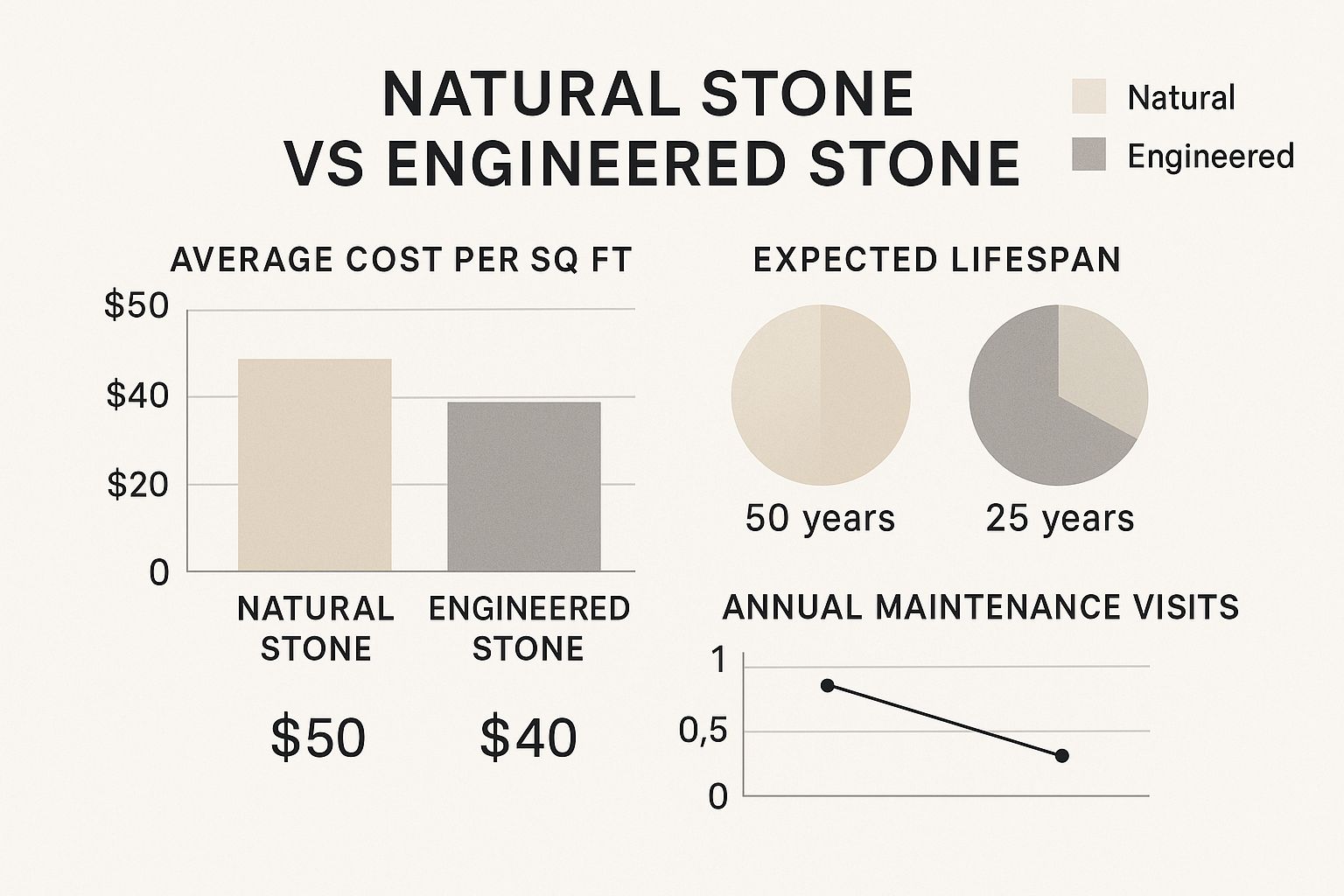
As you can see, natural stone offers incredible longevity if you care for it, while engineered stone provides a more accessible starting price and a much simpler maintenance routine.
Durability And Daily Life
How a stone stands up to everyday wear and tear is often the deciding factor. The differences here are pretty significant and really depend on your lifestyle.
-
Natural Stone: Its durability varies greatly by type. Granite and quartzite are incredibly hard and heat-resistant, making them a fantastic choice for kitchens. Softer stones like marble are porous and can be etched by acidic things like lemon juice, so regular sealing is a requirement.
-
Engineered Stone: Engineered quartz is a durability powerhouse. Its non-porous surface is a champ against scratches and stains, making it a perfect, worry-free option for a kitchen that sees a lot of action. The trade-off? The resins in its formula make it less heat-resistant than granite, so a trivet is always recommended for hot pans.
Situational Insight: For a passionate home chef who’s always pulling hot pans off the stove, a dense granite slab brings peace of mind. But for a busy family with young kids, the stain-proof, low-maintenance nature of engineered quartz is often the more practical choice for maintaining kitchen sanity.
For a clearer picture, here’s a direct comparison of their key features.
Natural vs. Engineered Stone Feature Breakdown
This table breaks down the essential performance and aesthetic traits to help guide your project decisions.
| Feature | Natural Stone (Contextual Details) | Engineered Stone (Contextual Details) |
|---|---|---|
| Durability | Varies by type. Granite is extremely hard; marble is softer and porous. Susceptible to staining and etching if not sealed. | Highly durable and consistent. Non-porous surface is resistant to stains, scratches, and bacteria. |
| Heat Resistance | Excellent. Granite and quartzite can handle hot pans directly on the surface without damage. | Lower heat resistance. The resins can be damaged by thermal shock from direct, high heat. A trivet is a must. |
| Maintenance | Requires regular sealing (typically every 1-3 years) to prevent staining and damage. Needs pH-neutral cleaners. | Virtually maintenance-free. Requires no sealing. Cleans easily with soap and water. |
| Aesthetics | Each slab is 100% unique with natural, unrepeatable veining and patterns. Offers organic, one-of-a-kind beauty. | Consistent and uniform patterns. Perfect for seamless looks across large areas. Offers solid colors not found in nature. |
| UV Resistance | Excellent for most dense stones like granite and slate, making them ideal for outdoor applications. | Poor. Not recommended for outdoor use as the resins can yellow and fade in direct sunlight. |
| Cost | Wide range. Common granites can be affordable, while exotic marbles and quartzites are a significant investment. | Mid-to-high range, often comparable to mid-tier natural stones. Higher upfront cost but lower long-term maintenance expenses. |
Ultimately, your choice hinges on whether you prioritize the raw, unique character of natural stone or the predictable, low-maintenance performance of an engineered product.
Aesthetics And Design Intent
Your design vision is a massive part of this decision. Are you drawn to the wild, unpredictable beauty of nature, or do you prefer the sleek consistency of modern manufacturing?
-
Natural Stone: Every slab of natural stone is a unique piece of art quarried from the earth. The dramatic veining in a piece of Calacatta marble or the fossil details in limestone are impossible to replicate, perfect for a grand fireplace or one-of-a-kind island.
-
Engineered Stone: What engineered stone offers is flawless consistency. If your design calls for a seamless look across a huge area, it guarantees a perfect pattern match from one slab to the next. It also provides bold, solid colors you just can't find in nature, fitting in perfectly with modern Bay Area home styles.
The market shows a strong preference for engineered options in large-scale projects. The engineered stone segment focusing on blocks and slabs held a dominant 92.25% market share in 2023, mostly because of its predictable installation and superior resistance to common household stains. You can discover more about engineered stone market trends to see why it's become a go-to for both homes and businesses.
Cost And Long-Term Value
The financial side is about more than just the price per square foot. It’s a mix of the initial cost, installation complexity, and long-term maintenance.
-
Natural Stone: While some common granites can be surprisingly affordable, rare and exotic stones can be very expensive. You must also factor in the recurring cost of professional sealing every one to three years to protect your investment.
-
Engineered Stone: Generally, engineered quartz lands in a mid-to-high price range, often on par with mid-tier natural stones. Its key financial advantage is the lack of maintenance costs; since you never have to seal it, the long-term cost of ownership is often lower.
Suitability For Coastal Outdoor Living
For anyone living in coastal California, an outdoor kitchen or patio is the ultimate dream. But here, your material choice is critical because of constant sun and salt exposure.
Most standard engineered quartz is not suitable for outdoor use. The resins that hold the quartz particles together are not UV-stable, which means direct sunlight will cause the colors to yellow or fade over time.
In contrast, many natural stones are perfectly happy outdoors. Dense, hard stones like granite, slate, and travertine can handle the elements beautifully, resisting UV damage and temperature swings. They are the clear winners for creating timeless, durable outdoor living spaces that feel right at home in the natural Monterey or Palo Alto landscape.
Matching The Right Stone To Your Project
It’s one thing to compare stats on a page, but the real test in the natural stone vs. engineered stone debate happens when you imagine the material in your own home. The best choice becomes much clearer once you connect a stone's specific quirks and strengths to the demands of your actual lifestyle.
Let's walk through a few common situations, from a chaotic family kitchen to a quiet master bath retreat. By grounding the decision in real-world needs instead of just a list of features, you can feel confident you’re picking the right surface.
The Busy Family Kitchen
Think about a kitchen that’s truly the heart of the home, where homework gets done and coffee gets spilled. In a high-traffic, high-mess environment like this, you need something that’s practically bulletproof and easy to clean.
Engineered quartz is the clear winner here. Its non-porous surface means you don’t have to panic over spilled juice or wine, and cleanup is as simple as wiping it down. For a busy family, that kind of low-stress functionality is priceless.
Scenario Recommendation: For a vibrant, high-use family kitchen where spills are a daily occurrence and time is short, engineered quartz is the superior choice. Its incredible stain resistance and zero-maintenance nature deliver a worry-free countertop that holds up to real life without compromising on style.
The Luxurious Master Bathroom
Now, let's picture a master bathroom designed to be a personal sanctuary. Here, creating a mood of quiet luxury is far more important than hardcore durability.
This is where natural stone, especially marble, really gets to shine. The soft, elegant veining of a Calacatta or Carrara slab creates a timeless, opulent atmosphere that engineered materials can only try to imitate. The low traffic and reduced exposure to harsh chemicals in a master bath make it a fantastic and practical choice for crafting that indulgent retreat.
The Monterey Coastal Outdoor Kitchen
An outdoor kitchen is the ultimate California lifestyle upgrade, but it comes with its own unique challenges. The countertop has to stand up to the relentless sun, salty sea air, and the Monterey Peninsula’s famous weather swings.
For this job, the choice is obvious: natural stone is the only way to go. Dense stones like granite, slate, or travertine are naturally UV-stable and were literally formed by the elements. Their rich colors won't fade or turn yellow in the sun.
On the other hand, most engineered quartz products are not recommended for outdoor applications. The resins used to bind the quartz particles can break down under direct UV exposure, causing the color to fade. While some manufacturers are developing new outdoor-rated engineered surfaces, classic natural stone is still the most reliable, time-tested option.
- UV Resistance: Granite and other dense natural stones won’t fade or yellow in the sun.
- Weather Durability: They can easily handle rain, wind, and temperature shifts without damage.
- Aesthetic Harmony: The organic beauty of natural stone blends perfectly with any outdoor landscape.
Once you’ve settled on the perfect stone for your project, the next critical step is getting it installed correctly. For professional advice on finding a good contractor, it's always smart to review tips from trusted industry sources.
The Environmental Impact Of Your Choice
When you're comparing natural stone vs. engineered stone, the environmental footprint is just as important as aesthetics and durability. Understanding the lifecycle is key to making a choice you feel good about.
For natural stone, the biggest environmental questions revolve around quarrying and transportation, which are energy-intensive processes. However, this is balanced by the material’s incredible lifespan and natural composition. It comes out of the earth as a finished product, not something that needs to be manufactured from other ingredients.
Key Insight: Natural stone is fundamentally durable. It doesn't rely on artificial binders or resins to hold it together. Because it’s a single-ingredient material that can last for generations, the need for replacement—and the environmental cost that comes with it—is practically eliminated.
The Sustainability of Engineered Materials
Engineered stone has a completely different environmental story, rooted in its manufacturing process. Creating it requires significant energy to crush natural quartz and bind it with polymer resins. That said, the industry has come a long way, and leading manufacturers are tackling these concerns with impressive innovations.
Many top-tier engineered stone brands now use a high percentage of recycled content, like leftover mirrors and glass. This smart practice not only reduces waste but also cuts down on the need to mine new quartz.
Beyond recycled content, these materials often come with certifications that speak to a healthier home environment.
- GREENGUARD Certification: This means the product has been tested and meets strict standards for low emissions of volatile organic compounds (VOCs), which improves indoor air quality.
- Recycled Content: Brands are becoming more transparent about the percentage of recycled materials in their slabs, a huge step toward a more circular economy.
Even the everyday performance of engineered stone has a green angle. Because it's non-porous and resists bacteria, you don’t need harsh chemicals to keep it pristine. For more on this, our guide to sanitizing natural and engineered stone is a great resource.
Frequently Asked Questions
When you're trying to land on a final decision between natural stone vs. engineered stone, a few common questions always seem to pop up. Getting straight, practical answers is the best way to choose the right material for your California home. Here are the most frequent concerns we hear from homeowners and designers in the Bay Area.
Is quartz more durable than granite?
It depends on how you define durability. Quartz is harder and more resistant to scratches and chips than granite. Its non-porous surface also makes it virtually stain-proof, whereas unsealed granite can absorb liquids. However, granite is more resistant to heat and can withstand a hot pan placed directly on it, while the resins in quartz can be damaged by high temperatures.
Which stone is better for a modern Bay Area aesthetic?
Engineered stone is often preferred for modern and minimalist designs popular in the Bay Area. Its consistency, uniform patterns, and availability in solid colors like crisp white or deep charcoal provide a clean, sleek look that complements contemporary architecture. However, a honed black granite or a subtly veined quartzite can also create a stunning modern statement.
Can I use marble in my kitchen?
You certainly can, but you must be prepared for the maintenance. Marble is a softer, more porous stone that can stain and etch easily from acidic substances like lemon juice or wine. At Carmel Stone Imports, we advise clients who choose marble for their kitchen to be diligent about sealing it regularly and wiping up spills immediately to preserve its beauty.
Is engineered stone cheaper than natural stone?
Not always. While entry-level granite can be more affordable than premium quartz, the price of exotic marbles and quartzites can far exceed that of engineered stone. It's best to consider the total project cost, including installation and long-term maintenance. Engineered stone has no sealing costs, which can make it a more cost-effective choice over its lifetime.
What’s the best stone for outdoor use in the Monterey weather?
For outdoor kitchens and patios, especially in the variable climate of Monterey, natural stone is the superior choice. Dense, non-porous stones like granite, slate, and travertine are UV-stable and can withstand sun, rain, and temperature fluctuations without fading or degrading. Most engineered stones are not recommended for outdoor use as the resins can yellow and become brittle in direct sunlight.
Ready to see these beautiful materials for yourself? The team at Carmel Stone Imports is here to guide you through our collections of natural and engineered stone. Visit one of our showrooms in Palo Alto, Carmel, or Sand City to find the perfect surface for your project.