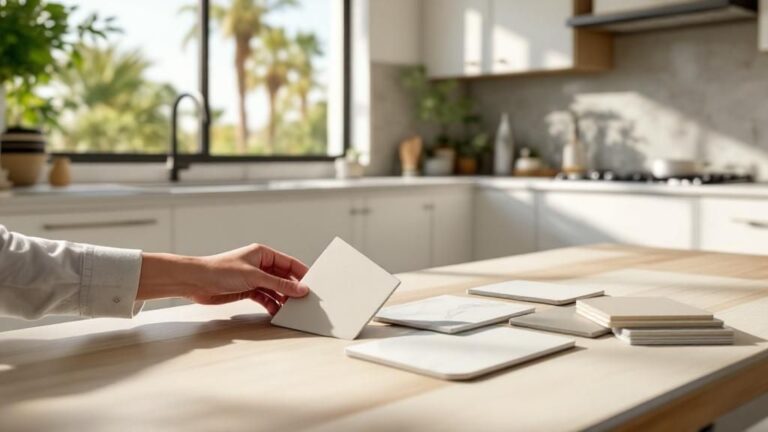
Picking the right countertop is a foundational decision in any kitchen or bathroom remodel, where your aesthetic vision must meet the realities of daily life. This guide will help you understand how to choose countertops by balancing your family’s lifestyle, design dreams, and budget. The goal is to land on a material that’s not just beautiful, but tough enough for your Monterey, Palo Alto, or Bay Area home.
Your Guide to Selecting the Perfect Countertop
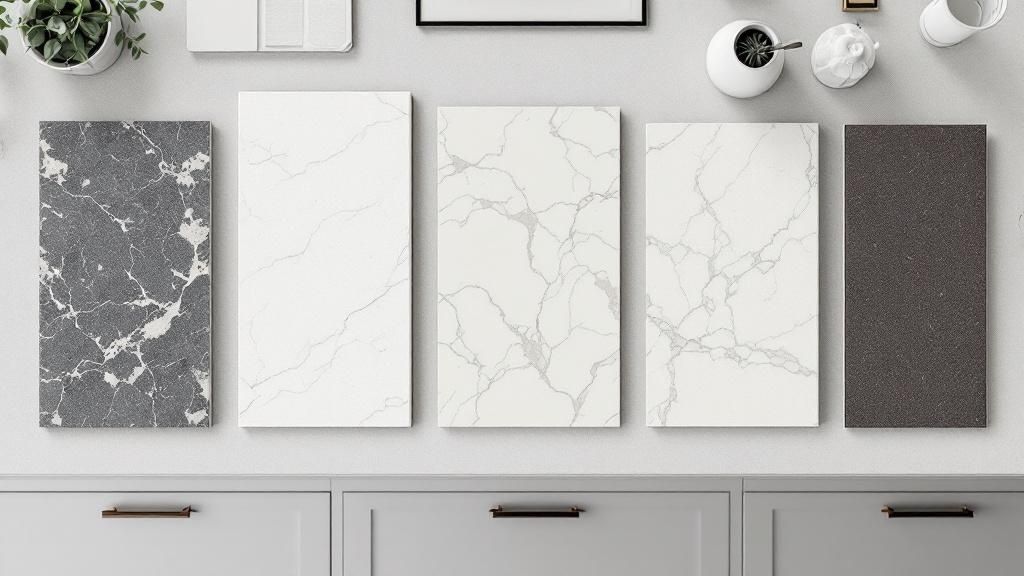
Choosing the perfect countertop for your California home can feel like a huge task, but breaking the process into clear steps makes it manageable. This is one of the most impactful choices you'll make, setting the tone for your kitchen or bathroom for years to come.
The journey begins with an honest look at how you live. From there, you can dive into the incredible world of materials, each with its own story and unique characteristics. This guide is your roadmap to understanding those nuances so you can make an informed choice you’ll love every day.
Start With Your Priorities
Before you fall for a particular slab of stone, it’s smart to get your priorities straight. Knowing what you need from the start helps you narrow the field to options that will actually work for you.
Here are the big three:
- Lifestyle & Use: Think about the daily demands on the surface. Is this for a high-traffic family kitchen, a rarely used powder room in a Palo Alto condo, or a breezy outdoor cooking area at your home in Monterey?
- Design Vision: Your countertop is a massive visual element. It needs to work with your cabinetry, flooring, and overall aesthetic, whether that’s sleek Bay Area minimalism or a classic, coastal-inspired look.
- Budget: Remember that your total investment isn't just the material. It also includes fabrication and installation. Knowing your all-in budget helps focus your search on realistic options.
Home renovations are on the rise as homeowners place a higher value on creating spaces that are both beautiful and hygienic. According to a Houzz & Home study, kitchen projects remain a top priority, with countertops being one of the most frequent upgrades. This increased focus on high-quality home environments reflects a desire for durable, functional luxury.
A countertop isn't just a purchase; it's an investment in your home's daily function and long-term value. The right choice combines durability for your lifestyle with a look that brings your design vision to life.
To help organize your thoughts, here is a quick-glance table of the key factors to consider.
Key Factors at a Glance When Choosing Countertops
| Consideration | Key Questions to Ask Yourself | Why It Matters for California Homes |
|---|---|---|
| Durability | How much cooking, spilling, and entertaining will happen here? Do I need it to be scratch, stain, and heat resistant? | From busy family kitchens in the suburbs to coastal homes exposed to salt air, California living demands resilient materials. |
| Maintenance | Am I willing to seal my countertops annually? Or do I need a "set it and forget it" surface? | Our active, indoor-outdoor lifestyle means we often want low-maintenance options that don't add to our to-do list. |
| Aesthetic | What look am I going for—modern, traditional, rustic, coastal? How will this material pair with my cabinets, backsplash, and floors? | The countertop is a major design statement that can define the style of your home, from a chic San Francisco flat to a relaxed Carmel retreat. |
| Budget | What is my total budget for the material, fabrication, and installation? | Material costs vary widely. A clear budget helps narrow choices and prevents unexpected expenses during the project. |
| Material Type | Do I prefer the unique character of natural stone like marble or granite, or the consistency and durability of engineered quartz? | Each material has its pros and cons in terms of look, feel, and performance, catering to different design tastes and practical needs. |
This table is a great starting point, but every project is unique. Thinking through these questions will get you much closer to a decision you feel great about. For an even deeper dive, check out our guide on three ways to pick the best countertops.
Matching Your Countertop to Your Lifestyle
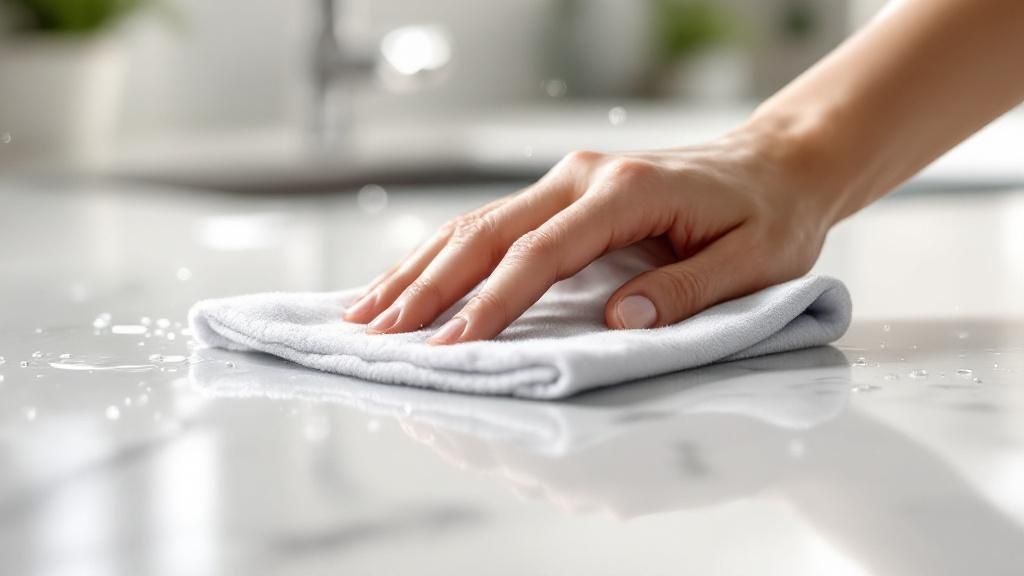
Before a gorgeous slab of stone captures your heart, it’s time for a reality check about how you and your family actually live. A countertop is more than a design choice; it’s the work surface that has to put up with daily life. An honest look at your habits is the first step in knowing how to choose countertops that bring you joy, not stress.
Think about your countertop as a long-term partner for your home. You want a relationship built on more than just good looks—it needs to handle your lifestyle's quirks, from chaotic mornings to relaxed dinner parties.
The Passionate Home Chef
If your kitchen is a creative sanctuary where you’re constantly cooking and baking, your countertop needs to be a resilient partner. You need a surface that can handle a hot pan, vigorous chopping, and the inevitable red wine spill without causing panic. For a high-demand kitchen, performance is everything.
- Heat Resistance: Granite and quartzite are fantastic choices, as they tolerate heat from hot pans without issue. Engineered porcelain is another incredibly heat-resistant option.
- Scratch Resistance: You need a hard material. Quartzite is one of the hardest natural stones available, making it exceptionally resistant to scratches from knives.
- Stain Resistance: For busy cooks, non-porous materials are a lifesaver. Engineered quartz doesn't require sealing and easily resists stains from oils, acids, and spices.
The Bustling Family Hub
For homes with kids, the kitchen is often mission control for homework, art projects, and snacks. Your countertop must be forgiving, low-maintenance, and durable. The last thing you want is to police every little spill or stray marker.
Your top priorities become stain resistance and simple cleanup. This is where the debate over materials gets interesting, and our post on whether quartz is better than granite offers great insights for family-first kitchens. Engineered quartz often emerges as the hero here, as it's non-porous, highly resistant to staining, and doesn't require sealing.
The Low-Traffic Statement Piece
Now, let's picture a space that's more about show than daily use, like a formal bar or a powder room in a Monterey condo. Here, you have the freedom to prioritize pure, unadulterated aesthetics. This is your chance to pick a show-stopping material that becomes the undisputed centerpiece of the room.
- Dramatic Veining: Exquisite natural stones like Calacatta or Statuario marble can truly perform. Their bold, artistic veining creates a powerful design statement that doesn’t have to worry about heavy use.
- Unique Materials: Consider a slab of onyx for a backlit bar that literally glows, or a richly colored soapstone for a sophisticated powder room. These materials may be softer, but their unparalleled beauty is perfect for spaces meant to be admired.
Deciding Between Natural and Engineered Stone
When choosing countertops, the first big question is whether you want the unique story of natural stone or the consistent performance of an engineered surface. This choice is foundational, especially when designing for a specific California vibe—from a sleek Bay Area condo to a grand Carmel estate. Understanding their differences is key to picking a material that fits your design and daily life.
Natural stone is a slice of the earth, quarried from mountains worldwide. Every slab tells a geological story through its unique veining, mineral inclusions, and color shifts, giving your project an exclusive quality.
The Unmatched Character of Natural Stone
Natural materials bring an organic, grounded energy into a space that’s impossible to manufacture. They're celebrated for their raw beauty and the distinct personality each slab brings.
- Granite: A true kitchen workhorse, granite is a classic choice due to its exceptional hardness and heat resistance. Its crystalline structure creates a familiar granular look in a massive range of colors.
- Marble: The definition of luxury, marble is known for its soft, elegant veining and luminous quality. While beautiful, it's a softer, more porous stone that can etch from common kitchen acids, developing a patina over time.
- Quartzite: Often mistaken for man-made quartz, quartzite is a natural metamorphic rock marrying the look of marble with the toughness of granite. Its incredible durability makes it a phenomenal, low-maintenance alternative for high-traffic areas.
The Smart Performance of Engineered Surfaces
Engineered stone is a marvel of modern manufacturing, combining natural minerals with advanced technology to deliver superior performance and aesthetic consistency. These materials solve real-world problems by offering predictable, reliable results.
From Experience: Engineered stone offers incredible peace of mind. Its non-porous nature means you're getting a surface that is exceptionally resistant to staining and doesn't require the periodic sealing that most natural stones demand.
Quartz is the king of engineered materials. Made of about 90% crushed natural quartz bound with resin, it’s a non-porous, incredibly durable surface that shrugs off scratches, stains, and acids. It offers almost limitless design flexibility with its vast array of colors and patterns.
Porcelain Slabs are another game-changer. Made from fine clay fired at high temperatures, the resulting surface is dense, non-porous, and exceptionally resistant to heat, scratches, and UV rays. This makes porcelain one of the few materials perfectly suited for both indoor and outdoor kitchens, as it won’t fade in the bright California sun.
Comparing Natural vs. Engineered Stone
| Material | Durability | Stain Resistance | Heat Resistance | Typical Maintenance | Best For |
|---|---|---|---|---|---|
| Granite | Excellent | Good (when sealed) | Excellent | Sealing every 1-2 years | Busy kitchens, high-traffic areas |
| Marble | Fair to Good | Poor (etches easily) | Good | Frequent sealing, careful use | Low-traffic areas like bathrooms, accent pieces |
| Quartzite | Excellent | Very Good (when sealed) | Excellent | Sealing every 1-2 years | Marble look with high durability |
| Quartz | Excellent | Excellent | Good (can discolor) | None required | Consistent color, low-maintenance kitchens |
| Porcelain | Excellent | Excellent | Excellent | None required | Indoor/outdoor use, seamless looks |
There’s no single "best" material—it’s about what’s best for your project. Are you drawn to the one-of-a-kind artistry of a piece of the earth, or the bulletproof performance of an engineered surface? Our detailed countertop materials comparison guide can help, but nothing beats seeing and touching these materials for yourself.
Creating Your Cohesive Design Vision
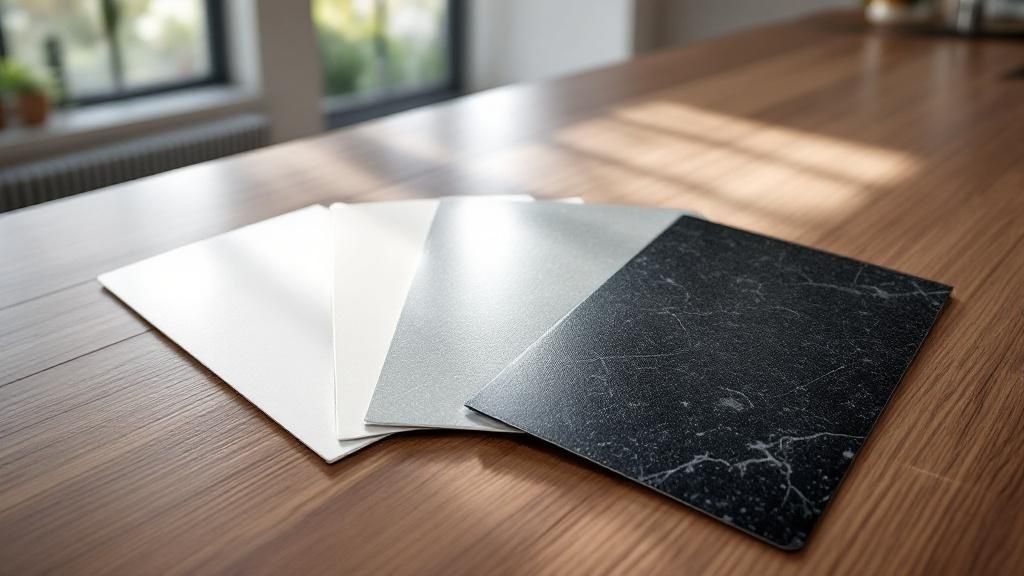
A countertop is never just a surface; it's a central character in your home's design story. Knowing how to choose countertops that harmonize with your cabinetry, flooring, and backsplash is what elevates a design from good to breathtaking. This is where your personal style is translated into a tangible, cohesive look.
Matching Stone to Popular California Styles
Your countertop can be a quiet supporter or a dramatic showstopper, depending on the atmosphere you want to create. For a classic Coastal Modern look in Monterey, pair light cabinetry with a countertop that feels natural and airy, like a subtly patterned quartz or a softly veined quartzite. A sleek, modern Bay Area home might demand a uniform, solid-colored porcelain slab or honed black granite for a minimalist foundation.
Expert Tip: The single biggest mistake is choosing a countertop in a vacuum. You must bring samples of your cabinet finish, paint swatches, and flooring to the stone yard. Seeing how a slab interacts with your other materials under proper lighting is the most crucial step.
The growing demand for high-quality countertops isn't just a local trend. The global countertop market was valued at around $148.3 billion in 2024 and is expected to keep growing, fueled by homeowners seeking beautiful, functional surfaces. For a deeper look, you can read the full research on countertop market trends.
The Power of Finishes and Edges
Beyond color and pattern, the finish and edge profile play a massive role in the final look. These details can completely change the mood of a space.
Choosing the right finish is about texture and light:
- Polished: A classic, high-gloss finish that reflects light beautifully, making colors pop. It’s an elegant choice but can show fingerprints more easily.
- Honed: A smooth, matte surface for a soft, contemporary feel. It diffuses light, hiding minor imperfections and creating a relaxed vibe.
- Leathered: A soft, textured finish that begs to be touched. It’s fantastic at concealing smudges and adds unique depth to any design.
The edge profile is that final, defining touch:
- Eased or Straight Edge: Clean, simple, and modern, a go-to for contemporary kitchens.
- Beveled Edge: A slight 45-degree angle that adds a touch of classic detail.
- Ogee Edge: A classic S-shaped curve that brings traditional elegance, perfect for Mediterranean or classically styled homes.
- Mitered Edge: Creates the illusion of a much thicker slab, delivering a substantial, luxurious look ideal for waterfall islands.
Planning Your Countertop Project Budget
It’s easy to focus on the price per square foot of a slab, but budgeting for a countertop is more involved. A transparent look at the total investment—stone, fabrication, and installation—is crucial to avoid surprises. The real magic, and a significant part of the cost, comes from the skilled labor that transforms a raw slab into a functional work of art.
Deconstructing the Total Cost
These services are essential for a professional, long-lasting installation:
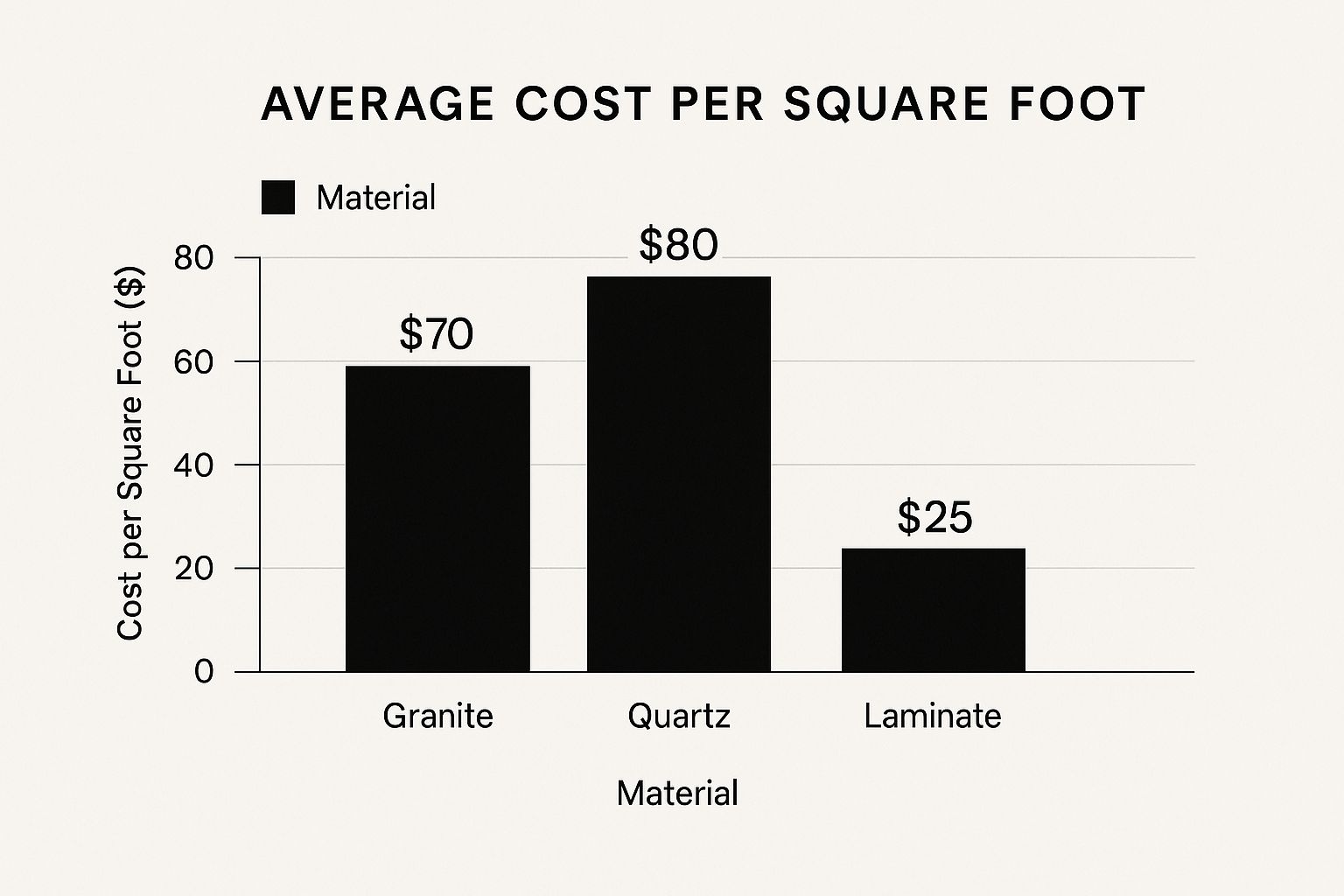
- Material Cost: The base price for the slab, usually per square foot. The range is huge, from common granite to rare Italian marble.
- Templating: A professional creates a hyper-precise digital or physical template of your cabinet layout, guaranteeing a perfect fit.
- Fabrication: Fabricators cut the stone to size, create sink and cooktop openings, and shape the edges to your specified profile.
- Installation: The finished countertops are carefully delivered, set into place, secured, and sealed for a flawless result.
What Influences the Final Price
A few key variables can swing the cost of your project. Knowing these upfront is part of learning how to choose countertops that fit your financial plans. Material rarity and demand are major factors; a stunning Calacatta marble slab will cost more than widely available granite. The thickness of the slab also plays a role; a 3cm slab is typically more expensive but adds substance.
Your kitchen’s layout is a major player in the final cost. A simple, straight run of countertops is far more straightforward to fabricate than a large, U-shaped kitchen with multiple seams, tricky angles, and a dramatic waterfall island.
Aligning Your Dreams with Your Budget
To navigate your options, think about materials in different investment tiers. This isn't about "good" vs. "bad" but finding the perfect blend of aesthetic and value for your home.
- Accessible Luxury ($-$$): Popular granites and well-designed quartz deliver fantastic durability and beauty on a controlled budget.
- Premium Selections ($$$-$$$$): High-end quartz with intricate veining, unique quartzites, and classic marbles. These materials are a significant design investment.
- Exclusive & Exotic ($$$$-$$$$$): The rarest and most breathtaking stones—think exotic marbles, semi-precious slabs, and one-of-a-kind designer quartzites.
A durable, high-quality surface provides a serious return by standing the test of time. These principles apply to any project; for more tailored advice, explore our guide on selecting the best bathroom vanity countertop materials.
Bringing Your Vision to Life with Expert Installation
Picking the perfect slab is a huge part of the journey, but turning it into a flawless countertop is where expertise shines. The final installation is a critical step that transforms a raw stone into an integrated feature of your home. This meticulous craft ensures your investment is protected and your vision comes to life with absolute precision.
The Art of Professional Templating and Fabrication
For any high-end project, digital templating is a non-negotiable first step. It captures every angle and curve of your cabinetry, guaranteeing a seamless fit. To learn more about this essential process, you can read about how to template countertops correctly.
Once the template is locked in, our fabricators use it to guide their cuts. This is where artistry comes in, especially with natural stone.
A huge part of the fabrication process is 'book-matching.' This is the art of taking two adjoining slabs and aligning them so their patterns mirror each other, creating a continuous, uninterrupted flow across any seam. It turns a necessary join into a stunning design feature.
The skill it takes to book-match perfectly and create flawless cutouts for sinks is what separates an average job from an exceptional one. If you're exploring advanced materials, specialized resources can offer cutting-edge installation insights. Understanding this craftsmanship ensures the final result lives up to the quality of the material you so carefully selected.
Frequently Asked Questions
Diving into the world of countertops brings up many questions. As experts in the Bay Area and Monterey, we hear them all the time. Here are some common queries from homeowners and designers, with straightforward answers to help you feel confident in your choice.
What is the most durable countertop material?
For high-traffic homes, engineered quartz and porcelain are top performers due to their inherent scratch and stain resistance. Natural stones like granite are also incredibly tough and durable, but they typically require periodic sealing to maintain their non-porous qualities. This simple maintenance step ensures they remain a reliable workhorse in a busy kitchen.
Can I put a hot pan on my countertop?
We always recommend using a trivet to protect your investment. While materials like granite and porcelain handle high heat exceptionally well, no surface is invincible. A sudden, extreme temperature change—known as thermal shock—can potentially damage any countertop, natural or engineered, so it's best to play it safe.
How should I clean my new countertops?
Keeping your countertops beautiful is simple. For most materials, a daily wipe-down with a pH-neutral cleaner or just mild soap and water is all you need. Avoid abrasive scrubbers or acidic cleaners like vinegar, which can damage the surface finish over time.
What’s the difference between a honed and polished finish?
It comes down to look and feel. A polished finish is glossy and reflective, making colors pop but showing smudges more easily. A honed finish is its opposite: a soft, matte surface that diffuses light, which is great for hiding minor imperfections and creating a subtle, contemporary vibe.
Is sealing natural stone difficult?
Not at all. Sealing is a simple wipe-on, wipe-off process that takes only a few minutes and is typically done once every one to two years. It's a small bit of maintenance that provides powerful protection against stains and moisture, preserving the natural beauty of your stone for decades to come.
Ready to see these materials for yourself? The design experts at Carmel Stone Imports can guide you through our extensive collection of natural and engineered stone. Visit one of our showrooms in Palo Alto, Carmel, or Sand City to find the perfect surface for your home.