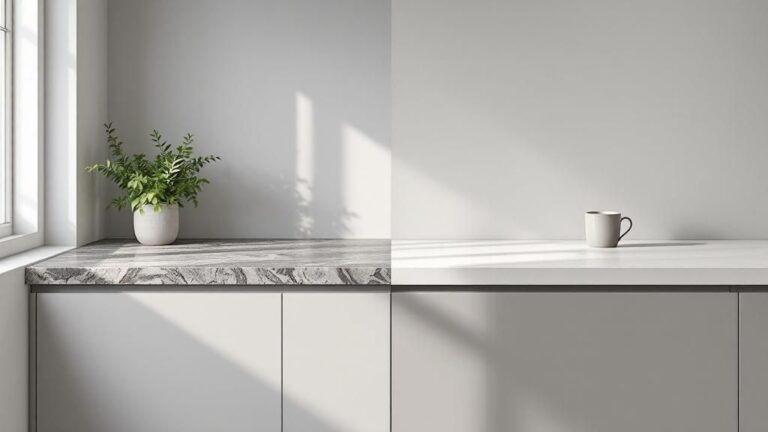
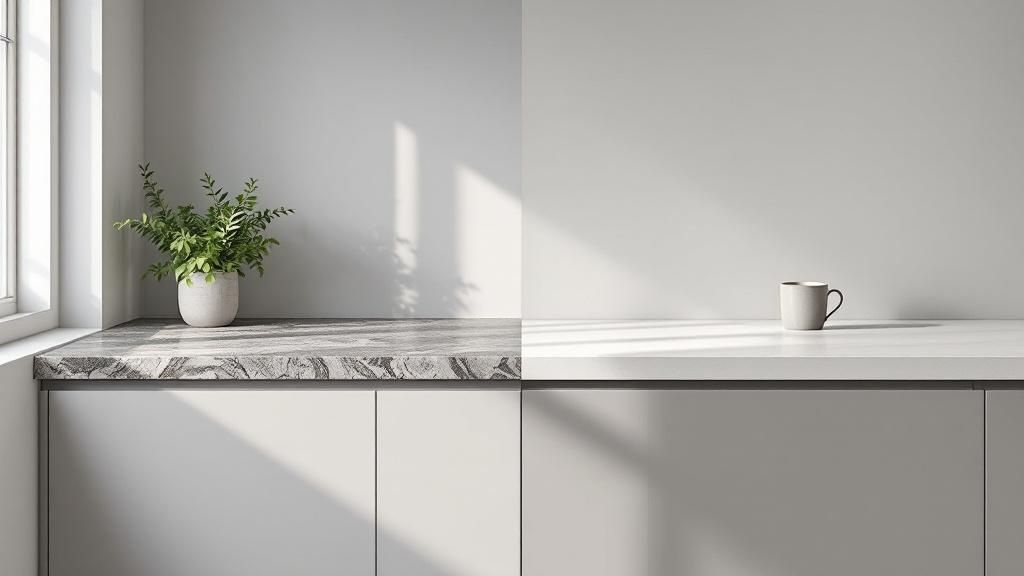
When you're weighing sintered stone vs quartz, the right choice boils down to your lifestyle and project needs. If you're after extreme durability for a high-traffic kitchen or an outdoor entertainment area, sintered stone's resistance to heat, UV rays, and scratches is unmatched. On the other hand, if your heart is set on a wide variety of consistent colors and patterns for an indoor project—and you're working with a more accessible budget—quartz is a fantastic and reliable choice.
An Introduction to Sintered Stone and Quartz
Choosing a countertop is a make-or-break moment for any kitchen or bathroom design. For homeowners and design professionals in the Bay Area, that decision often comes down to two of the most advanced materials on the market: sintered stone and quartz.
They might look similar at first glance, but how they’re made, how they perform, and where they shine are worlds apart. Getting a handle on these key differences is the secret to choosing a surface that you’ll love for its looks and its practicality for years to come.
These engineered surfaces are the peak of modern countertop technology and are compelling alternatives to natural stone. They both solve classic problems like staining and heavy maintenance, just in very different ways.
Our goal is to give you the confidence you need, whether you’re dreaming up a breezy coastal California kitchen or a sharp, modern commercial space in Palo Alto. As you think about your options, you might even find some great small kitchen countertop ideas that blend style and function perfectly.
Sintered Stone vs Quartz: A Quick Comparison
Before we get into the nitty-gritty details, this table gives you a quick snapshot of the core differences between sintered stone and quartz. Think of it as your cheat sheet.
If you want to see how these stack up against even more options, our countertop materials comparison guide goes into greater depth.
| Feature | Sintered Stone | Quartz |
|---|---|---|
| Composition | 100% natural minerals (e.g., porcelain, glass) fused with intense heat and pressure. | ~90-93% natural quartz crystals bound with polymer resins and pigments. |
| Heat Resistance | Excellent; you can place hot pans directly on the surface without worry. | Good, but can be damaged by "thermal shock" from direct, high heat. |
| UV Resistance | Excellent; it won't fade or turn yellow in sunlight, making it perfect for outdoor use. | Poor; the resins will yellow and break down with long-term sun exposure. |
| Scratch Resistance | Extremely high; it's one of the hardest surfaces you can buy. | Very high, but it can be scratched by sharp objects if you use enough force. |
| Stain Resistance | Excellent; completely non-porous and resistant to chemicals. | Excellent; it’s non-porous and stands up to most common household stains. |
| Design Options | Realistic natural looks (marble, wood) and through-body veining. | Wide range of consistent colors and predictable, uniform patterns. |
After looking at the table, the core difference becomes clear. The main takeaway is this: It all comes down to what they're made of. Sintered stone is 100% mineral, which gives it that incredible heat and UV resistance. Quartz uses resins as a binder, and while that allows for a different aesthetic, it also makes it vulnerable to extreme heat and sun.
How Sintered Stone and Quartz Are Made
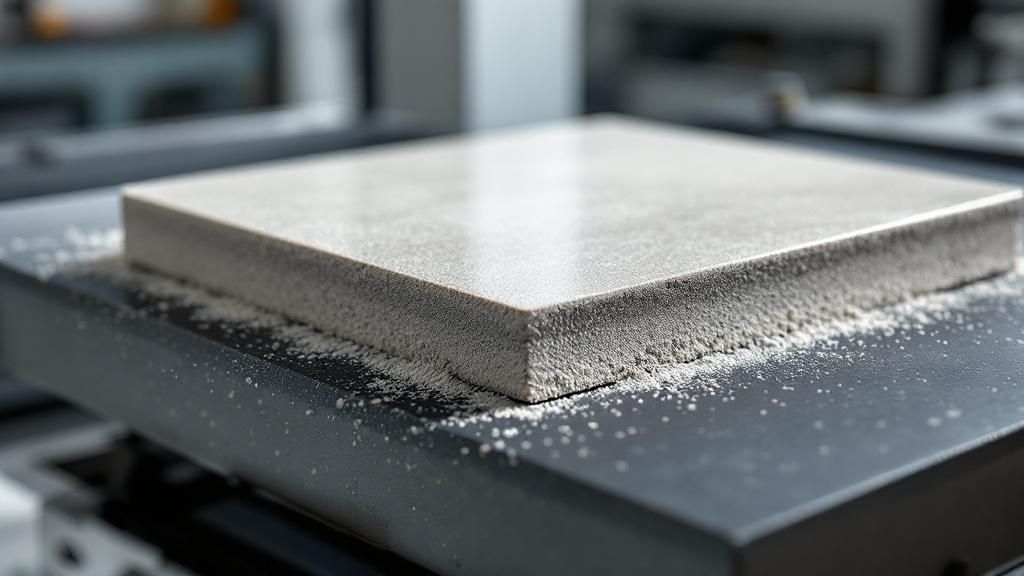
To really get to the bottom of the sintered stone vs. quartz debate, you have to look at how they’re born. The manufacturing process is the single biggest factor that dictates how they perform, how durable they are, and where they’ll shine in your home.
The core difference is simple: it’s all about the ingredients and the forces used to bring them together. One process recreates the immense pressure found deep within the earth, while the other relies on modern chemistry.
The Sintering Process For Ultimate Durability
Sintered stone is the product of advanced tech that mimics and speeds up what nature does over millennia. It starts with a blend of 100% natural minerals—we're talking particles of porcelain, glass, and even quartz.
This raw mix then gets hit with extreme pressure and scorching heat, often cranked up past 2,100°F (1,200°C). This is called sintering, and it fuses all those mineral bits together at a molecular level without actually melting them.
The real takeaway here? There are absolutely no resins or binders involved. This purely mineral composition is what gives sintered stone its incredible resistance to heat, UV light, and scratches. It's an exceptional pick for tough jobs, like an outdoor kitchen soaking up the sun in Monterey.
The Engineered Approach Of Quartz
Quartz countertops are also engineered, but the recipe is completely different. They're made of about 90-93% crushed natural quartz crystals, which is one of the hardest minerals on the planet.
But it’s the other 7-10% of the slab that really defines its personality. This portion is made of polymer resins, binders, and pigments. These are what hold the quartz crystals in a solid slab and give it a specific color and pattern.
The resin is what makes quartz totally non-porous and fantastic at resisting stains—a major plus over some natural stones. In our guide on whether quartz is better than granite, we talk more about how this non-porous quality makes it a favorite for busy indoor kitchens.
On the other hand, those same resins are the material's biggest weakness. They can be damaged by thermal shock if you set a hot pan directly on the surface, and they can turn yellow if they get too much direct sunlight. That’s why quartz is strictly an indoor-only material—a crucial point to remember for any Bay Area home with sun-drenched rooms.
A Head-to-Head Durability Comparison
When you cut through the marketing jargon and look at how these materials actually perform in a real home, the differences become glaringly obvious. For any household, especially an active one here in the Bay Area, a countertop has to stand up to the rigors of daily life. This is where how each material is made directly impacts how long it will last.
The infographic below gives you a quick visual rundown of how these two materials stack up side-by-side.
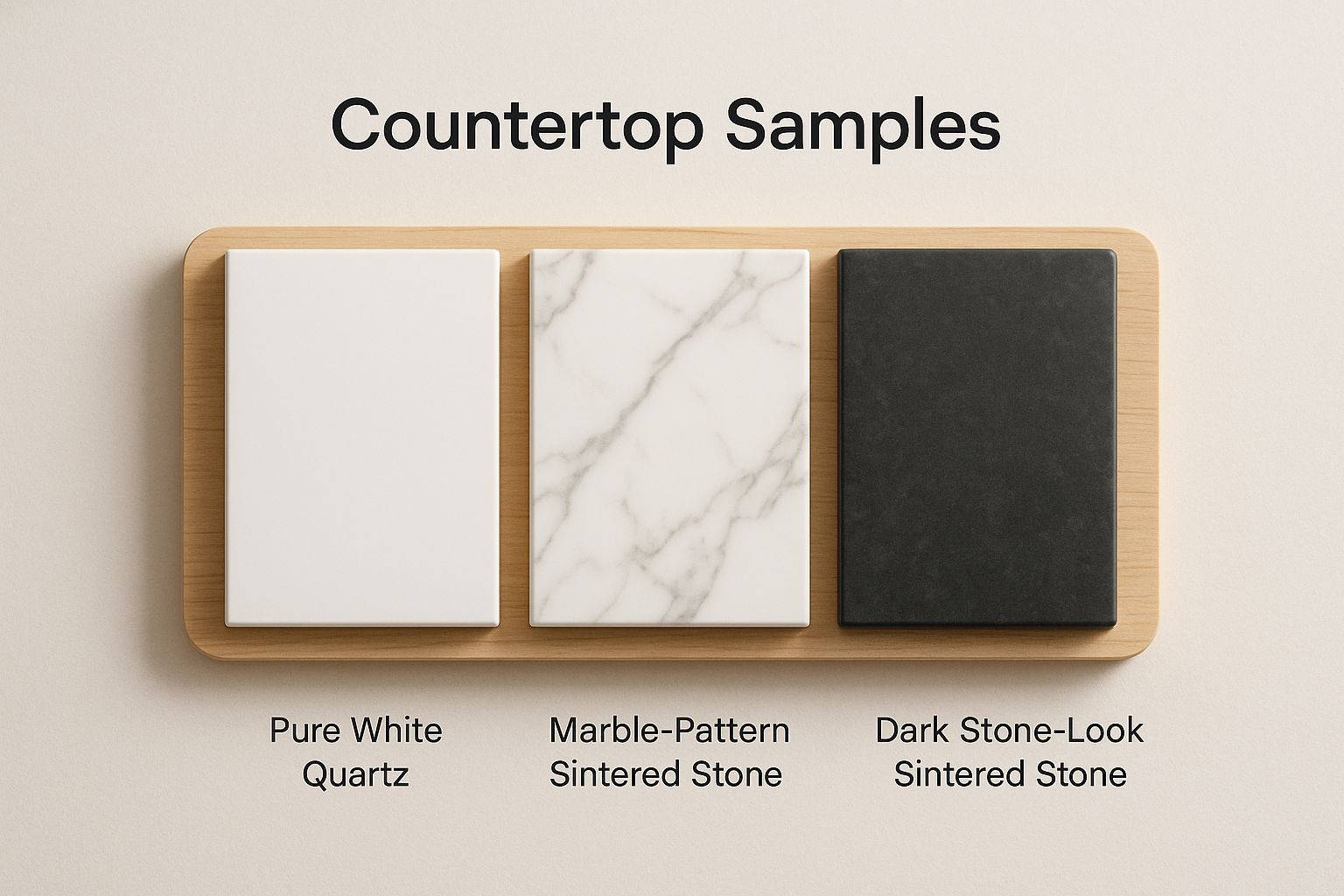
As the image shows, you get a very different look from each material—quartz offers that crisp, uniform appearance, while sintered stone delivers incredibly realistic natural patterns.
Heat and Thermal Shock Resistance
One of the biggest functional differences comes down to heat. Sintered stone is forged under intense pressure at temperatures soaring above 2,100°F. The result? It’s practically immune to damage from hot pots and pans. You can literally take a skillet right off the stove and set it on a sintered stone surface without worrying about scorching or cracking.
Quartz, on the other hand, is a different animal. The resins that bind the quartz crystals together are its weak link when it comes to heat. A sudden, drastic temperature change—what we call thermal shock—can damage those resins, which is why trivets are non-negotiable.
For a passionate home chef or a bustling family kitchen, sintered stone's incredible heat resistance offers priceless peace of mind. It completely eliminates a common source of accidental damage that can ruin a quartz surface for good.
Scratch and Abrasion Resistance
When it comes to fending off scratches, sintered stone is an absolute beast. It’s incredibly hard—often ranking higher than quartz on the Mohs scale—which means it can take on knives, keys, and abrasive items without a hint of wear.
Quartz is also very hard and scratch-resistant, but it’s not completely scratch-proof. The polymer resins make it just a bit softer than sintered stone, so a determined cut from a sharp knife could leave a mark.
There is a trade-off here, though. Sintered stone’s extreme hardness also makes it more brittle, especially on the edges. A heavy blow from something like a cast-iron skillet is more likely to chip a sintered stone edge than a quartz one. This is where careful edge profiling during fabrication becomes key. You can get a better sense of these handling techniques in our guide on installing quartz countertops, as many of the principles apply.
Stain and Chemical Resistance
Both of these materials are non-porous, which is a massive plus for any kitchen or bathroom. This means spills like red wine, coffee, or oil just sit on the surface instead of seeping in and leaving a permanent stain.
- Sintered Stone: Because it's made of 100% minerals, it’s unfazed by nearly all common household chemicals and acids. Spills from lemon juice, vinegar, or even harsh cleaning agents won’t etch or damage the surface.
- Quartz: While it’s highly stain-resistant, the resins in quartz can be damaged by aggressive chemicals like bleach or oven cleaner, which can cause discoloration. It’s best to stick with gentle, pH-neutral cleaners.
UV Resistance for California Lifestyles
For those of us living in California, UV resistance isn't just a bonus feature—it’s a must-have. This is probably the most critical difference between the two, especially for anyone dreaming of an outdoor living space.
Sintered stone is completely UV stable. Its colors won't fade, yellow, or break down when exposed to direct sunlight. This makes it the clear winner—and really the only viable choice of the two—for outdoor kitchens, patio bars, or even exterior wall cladding in sun-drenched areas like Monterey or Palo Alto.
Quartz, because of its resin binders, is a strictly indoor material. It will yellow and become brittle over time with prolonged exposure to UV rays. You even have to be careful using it in very sunny indoor rooms where direct sunlight might stream across the countertop for hours every day.
Aesthetics: Natural Realism vs. Flawless Color
Sure, durability is important, but let's be honest—the way a countertop looks is what really makes or breaks a design. It's the visual anchor of your space, whether you're aiming for a sleek, minimalist vibe in a Bay Area kitchen or a cozy, natural feel for a home in Carmel.
Sintered stone’s real talent lies in its incredible ability to mimic natural materials. We're talking about stunningly realistic versions of marble, slate, wood, and even industrial-looking concrete. Thanks to advanced digital printing, it captures the subtle imperfections and rich, organic patterns that make natural stone so sought after.
Quartz, on the other hand, is all about predictable perfection. If you need a countertop that is a flawless, uniform sheet of pure white or a vibrant, saturated color that’s consistent from corner to corner, quartz is your go-to. It’s perfect for modern designs that rely on crisp, clean lines and absolute color precision.
Through-Body Veins vs. Surface-Level Patterns
This is where the two materials really diverge. The magic of sintered stone is often its through-body veining. The pattern isn't just printed on top; it runs straight through the entire slab, just like it would in a real piece of marble. So, if you create a waterfall edge on an island, that beautiful vein continues right down the side.
Quartz takes a different approach. The patterns are stunning, with everything from delicate, feathery veins to big, bold movements. But these designs are typically applied to the surface layer. This isn't a deal-breaker for most, but it’s something to keep in mind if you're planning on intricate edge details where the inside of the slab will be visible.
For clients in Palo Alto or Monterey who want the classic look of Calacatta marble without the constant worry, sintered stone is an almost perfect match. Its ability to capture that natural depth makes it a top choice for luxury, nature-inspired interiors.
Finish and Texture: The Final Touch
The finish you choose has a massive impact on the final look and feel of your countertop. Both materials offer great options that can completely change how they interact with light and touch.
- Polished: The classic, high-gloss look that bounces light around the room, making spaces feel bigger and brighter.
- Honed or Matte: A soft, non-reflective finish that hides fingerprints and smudges like a champ. It gives off a very modern, understated vibe.
- Textured or Leathered: This finish adds a tactile quality, with gentle waves and dips that feel a bit like weathered stone.
A huge reason sintered stone is gaining so much traction is this aesthetic flexibility. People want surfaces that are tough, easy to clean, and beautiful. As the technology gets even better, we’re seeing an ever-expanding range of designs, which is why it’s becoming so popular for big, seamless applications. You can dig deeper into these trends and market forecasts with a little industry analysis.
Understanding Cost and Installation Factors
When you're comparing sintered stone vs. quartz, the conversation always finds its way to budget and installation. For our clients in Palo Alto and across the Bay Area, these factors are often just as important as how the material looks or performs.
Sintered stone usually comes with a higher upfront investment. The sophisticated manufacturing process adds to its cost, but the biggest price driver is actually the fabrication. Because this material is so incredibly hard, it requires special diamond-tipped tools and experienced fabricators to cut and handle it without causing chips.
Quartz is typically more budget-friendly. Its massive popularity also means there's a much larger pool of fabricators who are comfortable working with it, which helps keep installation costs in check.
Key Factors Influencing Your Final Price
The sticker price on a slab is just the beginning. A few key variables will affect your total project cost, no matter which material you land on.
- Brand and Origin: Premium brands like Neolith for sintered stone or Caesarstone for quartz will cost more than their lesser-known competitors.
- Slab Thickness: You'll pay more for thicker slabs (like 3cm versus 2cm), but they also give your countertops a more substantial, high-end look.
- Finish Type: A polished finish is often the standard and most affordable. Finishes like honed or textured can add to the price because they require extra processing steps.
- Design Complexity: The more cuts, seams, and detailed edge profiles your design has, the more labor-intensive it becomes, which drives up the cost.
The single most critical cost factor, especially if you choose sintered stone, is hiring a certified fabricator. A lower bid from someone inexperienced can quickly turn into a nightmare of costly mistakes, wasted material, and a countertop that just doesn't look right.
Ensuring a Flawless Installation
A perfect countertop installation starts long before the saw ever touches the stone. Precise measurements are absolutely essential for getting that perfect, snug fit around sinks, cooktops, and cabinets. To make sure this is done right, it's worth understanding how to properly template your countertops for a flawless result.
Hiring qualified pros is simply non-negotiable. For our Bay Area clients, we always suggest getting quotes from a few different fabricators and asking to see a portfolio of their recent work with the exact material you've chosen. If you're a homeowner trying to map out your budget, a general material cost predictor tool can be a great help in estimating the total project expenses.
Making the Right Choice for Your California Home
After digging into the technical details, the sintered stone vs quartz debate boils down to a simple truth: the "better" material is the one that actually fits your life. Your final decision should come from a practical look at your daily routine, design dreams, and budget.
This isn't just about picking a surface. It's an investment in a material that needs to stand up to your California lifestyle, whether you're building a high-performance kitchen or just want a specific aesthetic.
When To Choose Sintered Stone
For certain demanding jobs, sintered stone is the undisputed champion. Its technical muscle makes it a smart long-term investment in a few key situations.
- The Passionate Home Chef: Is your kitchen constantly buzzing with creative cooking? Sintered stone gives you peace of mind. You can slide a searing hot pan right off the stove and onto the counter without worrying about scorch marks or damage.
- The Ultimate Outdoor Entertainer: If you're designing an outdoor kitchen for your Monterey home, sintered stone is really the only way to go between these two. It's completely unfazed by direct sunlight, so its color and structural integrity won't degrade under the intense California sun.
When To Choose Quartz
On the other hand, quartz is still a fantastic and reliable choice, especially when looks and budget are the main concerns for an indoor project.
- Aesthetic-Driven Remodels: If your family has fallen in love with a specific, vibrant color or needs a perfectly consistent pattern for an indoor kitchen remodel on a moderate budget, quartz delivers. Its huge and predictable design library is second to none.
- Large-Scale Commercial Projects: Imagine outfitting a large commercial space in Palo Alto that needs dozens of identical countertops. Quartz provides a reliable, uniform, and cost-effective solution. Our guide to the best quartz countertops is a great resource for exploring popular styles.
Ultimately, picking the perfect countertop is just one piece of the puzzle. To make sure your whole project is a success, it helps to keep other key considerations for your new home build in mind.
Frequently Asked Questions
When you're digging into the details of sintered stone vs. quartz, a few practical questions always pop up. Here are some straight answers to help you sort out those final considerations.
Is sintered stone harder to repair than quartz?
Yes, repairing sintered stone can be more challenging. While its incredible hardness makes chips rare, fixing one seamlessly is a job for a specialist. Quartz has a slight edge here, as minor damage can often be patched effectively by a good technician.
Which countertop is more eco-friendly?
Both materials have eco-friendly aspects. Sintered stone is made from 100% natural minerals with no resins, making the slab itself recyclable. However, its manufacturing process is very energy-intensive. Many leading quartz brands now incorporate recycled materials and use sustainable factory practices, though the slabs do contain petroleum-based resins.
What is the best way to clean these surfaces?
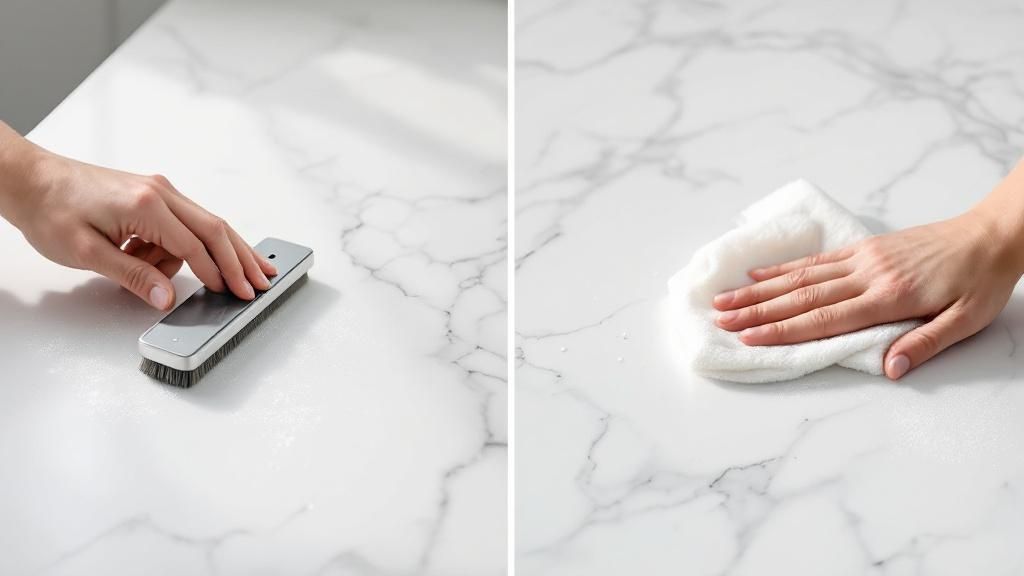
For both surfaces, simple is best. All you really need for daily upkeep is a soft cloth, warm water, and a bit of gentle, pH-neutral soap. Sintered stone can handle tougher chemicals, but harsh or acidic cleaners should be avoided on quartz to protect the resins.
How do the seams compare?
With a talented fabricator, you can get nearly invisible seams with either material. Sintered stone often comes in larger slab sizes, which can mean fewer seams on a big island. Quartz, with its consistent patterns, can make it easier for fabricators to match the design across a seam for a continuous flow.
Can you use sintered stone for applications other than countertops?
Absolutely. Its durability, UV resistance, and light weight make it a fantastic choice for a wide range of applications. It's often used for flooring, wall cladding (both interior and exterior), fireplace surrounds, and even furniture.
Ready to see the difference for yourself? The only way to really know which material is right for your project is to experience it firsthand.
Stop by a Carmel Stone Imports showroom in Palo Alto, Carmel, or Sand City. Our experts are here to help you navigate our collections and make a choice you’ll love for years to come.
Explore Our Products and Services at Carmel Stone Imports