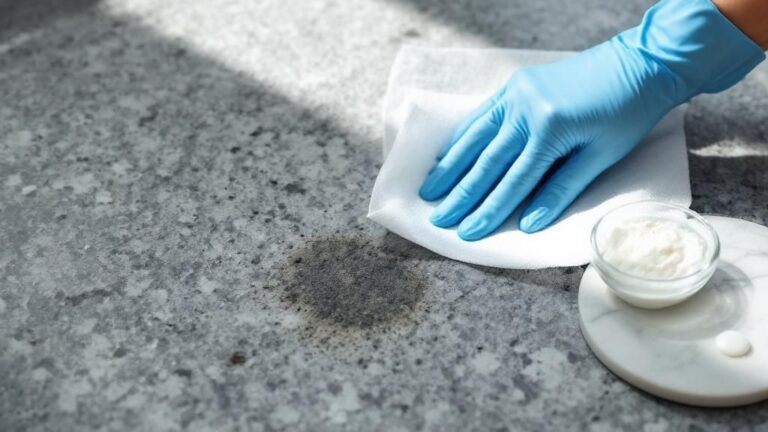
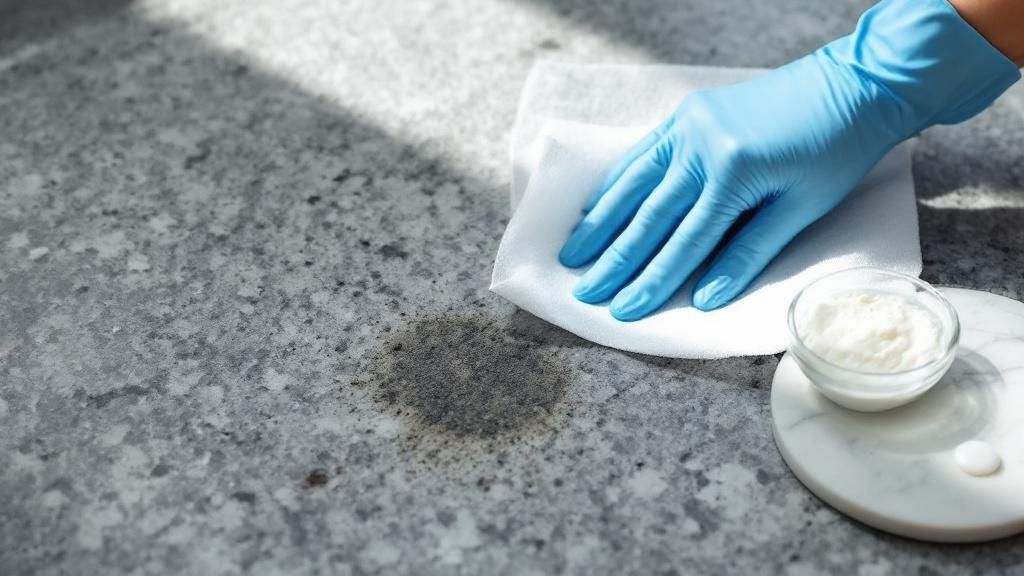
An oil stain on granite happens because this beautiful natural stone is porous. Think of it like a dense sponge. When cooking oil, greasy food, or cosmetics spill, the liquid soaks into the stone. This creates a dark mark that seems permanent.
This guide explains why oil stains are tricky and how to remove them. We'll show you how to protect your granite countertops, especially in busy kitchens in places like Carmel and Palo Alto.
Why Oil Stains on Granite Are So Tricky

Your granite countertop is a natural stone with tiny pores. Unlike engineered surfaces like quartz, granite has a unique texture that can absorb liquids.
When oil touches unsealed or poorly sealed granite, the stone acts like a sponge. The oil seeps below the surface and gets trapped. That’s why you can’t just wipe an old oil stain away; the stain is inside the stone.
The Critical Time Window
Acting fast is the best way to prevent a stain. After a spill, you have a short window of about 2 to 5 minutes to blot it up before it soaks in.
The type of granite matters, too. Lighter-colored granites, popular in modern Bay Area homes, show oil stains more than dark ones. A honed or matte finish can also be more porous than a polished one.
The key takeaway is that an oil stain on granite is a subsurface problem. It requires a special approach to pull the oil out of the stone’s pores.
Your First Move When Oil Spills Happen
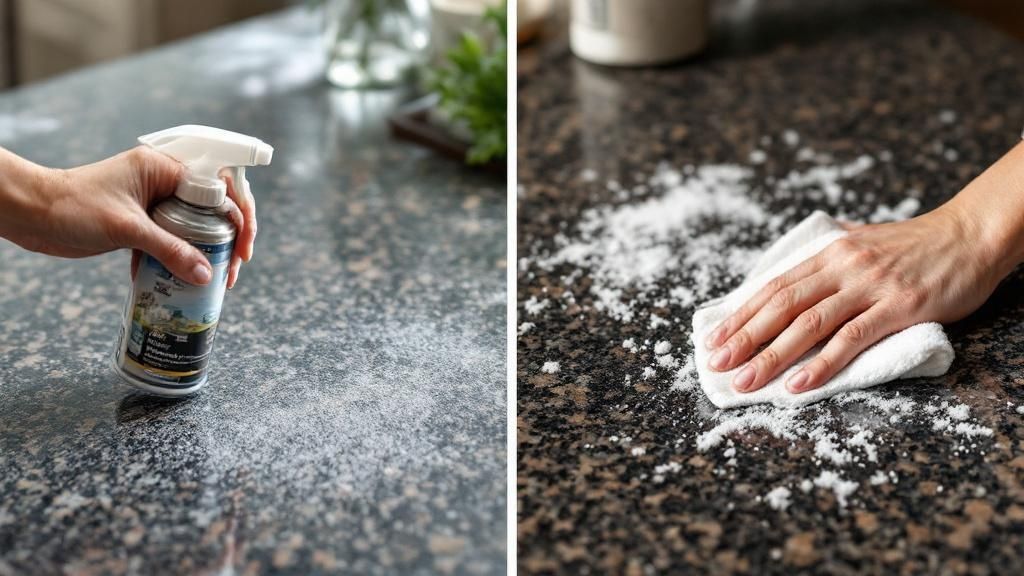
When oil spills, you need to act fast to prevent an oil stain on granite. Your quick response can make a huge difference.
The most important rule is to blot, don’t wipe. Grab a clean paper towel and press down on the spill. Wiping spreads the oil and pushes it deeper into the stone.
Cleaning Up the Remaining Residue
After blotting the oil, you'll see a greasy film. You can clean this with a gentle solution.
Mix warm water with a few drops of pH-neutral dish soap. Dip a soft cloth in the soapy water, wring it out, and wash the area. This lifts the grease without harming the stone.
Think of this as first aid for your countertop. Blotting then washing stops the oil from setting in.
Next, rinse the cloth with clean water and wipe the area again. Dry the spot completely with a soft towel to prevent water spots. This simple process keeps your granite looking beautiful.
You can learn more tips in our guide on how to clean natural stone floors.
Using a DIY Poultice for Set-In Oil Stains
If an oil spill sits too long, it can leave a dark spot. Don't worry. You need something that can get inside the granite and pull the oil out.
A DIY poultice is a paste that acts like a magnet for deep stains. As it dries, it draws the trapped oil up from the stone. You can make one with simple kitchen ingredients.
Crafting a Simple and Effective Poultice
Making a stain-lifting paste is easy. The most common recipe uses baking soda and water. Mix them until you have a thick paste, like peanut butter.
For tougher, older oil stains, you can use acetone instead of water. Acetone is a stronger solvent that breaks down aged oil. Make sure the paste is thick enough so it won’t run.
This poultice method is a trusted technique in stone care. According to the National Park Service, letting a poultice dry for 48 hours has a high success rate. You can read more about these technical procedures for stone care.
This image shows a gentle first step before using a poultice.
Using a soft brush helps remove surface residue without scratching the granite.
DIY Poultice Ingredient Guide
| Ingredient | Mixing Agent | Best For | Application Notes |
|---|---|---|---|
| Baking Soda | Water | Fresh or light oil stains | The gentlest option. Ideal for your first try. |
| Baking Soda | Acetone | Stubborn, older oil stains | More powerful. Use in a well-ventilated area. |
| Diatomaceous Earth | Water or Acetone | Very absorbent; great for deep stains | Can be dusty to work with but is very effective. |
| Unbleached Flour | Hydrogen Peroxide | Organic stains (wine, coffee) and oil | A classic poultice. Peroxide helps lift color. |
Applying the Poultice for Best Results
Applying the paste correctly is key. Here’s how:
- Spread it on thick. Use a plastic spatula to apply a layer about a quarter-inch thick over the stain.
- Cover beyond the edges. Extend the paste about an inch past the visible stain.
- Cover it up. Place plastic wrap over the poultice and tape the edges. This slows down drying and lets the paste work longer.
- Let it sit. Leave the poultice alone for at least 24 to 48 hours.
- Scrape and clean. After a day or two, remove the plastic. Gently scrape off the dry paste, then clean the area with a damp cloth and a bit of pH-neutral soap. Dry it completely.
Pro Tip: Don't worry if the granite looks darker where the poultice was. This is just moisture and should fade in a day or two as it evaporates.
How to Prevent Future Oil Stains on Granite
The easiest way to deal with an oil stain on granite is to prevent it. A little care can keep your countertops looking new.
The best protection is a high-quality sealant. It acts like an invisible shield, sinking into the granite's pores to create a barrier. This slows down how quickly liquids get absorbed, giving you time to clean up spills.
The Importance of a Quality Sealer
Look for a premium impregnating sealer. It protects the stone from the inside out. In coastal California areas like Monterey, a good sealer is vital to protect against moisture and spills.
How do you know if your sealer is working?
The Water Bead Test: Pour a small amount of water on your countertop. If the water beads up, your sealer is working. If it spreads out or darkens the stone, it’s time to reseal.
For more details, see our guide on how to seal natural stone.
Smart Daily Habits for Stain Prevention
Simple daily habits also make a huge difference.
- Use Coasters and Trivets: Place them under glasses and hot pans to protect the sealer.
- Utilize Cutting Boards: Always chop food on a cutting board to keep juices off the granite.
- Contain the Mess: Use a spoon rest for greasy utensils and place oil bottles on a small tray.
Choose the Right Cleaning Products
What you clean your granite with matters. Avoid harsh cleaners like vinegar, lemon juice, or ammonia. They can strip the sealer and leave your stone vulnerable.
Stick to a pH-neutral cleaner made for natural stone. Or, just use warm water with a drop of mild dish soap.
When to Call a Stone Care Professional
The DIY poultice method works well for most stains. But sometimes, you need to call a professional.
If you’ve tried a poultice two or three times and the mark is still there, the oil may be too deep. This is common with old stains. Trying more DIY fixes could damage your granite.
Recognizing Stubborn Stains
It’s time to call a pro if:
- The Stain is Old: An old stain has had more time to soak into the stone.
- Multiple Attempts Have Failed: If two or three tries with a poultice don't work, you need a stronger solution.
- You're Not Sure What the Stain Is: A pro can identify the stain and use the right treatment.
- Your Granite is Exotic or Delicate: Rare stones can react badly to common treatments.
The Professional Advantage
Stone care specialists in areas like Palo Alto or Monterey have tools and solutions not available to the public. They can safely remove stains without harming your countertops.
A professional will not only remove the stain but also check your granite's overall health and give you a plan for long-term care.
Hiring a pro is about protecting your investment. You can learn more in our guide on how to choose countertops for your home.
Frequently Asked Questions
Will an oil stain on granite go away on its own?
No, an oil stain will not disappear on its own. Granite's porous nature means the oil gets trapped deep inside. You must actively draw the oil out using a method like a poultice.
Can I use harsh chemicals like bleach on the stain?
No, never use harsh chemicals like bleach, ammonia, or vinegar on granite. These products can strip the protective sealant and etch the stone's surface, causing permanent damage. Stick to pH-neutral cleaners.
How do I know if my granite is properly sealed?
Use the water test. Pour a small puddle of water on the countertop and wait 15-30 minutes. If the water still beads up, your sealer is working. If the stone darkens, it's time to reseal.
What if the poultice leaves a dark mark?
A temporary dark spot under the poultice is normal. It's just moisture that the stone absorbed. Give the area a day or two to air dry completely, and the stone should return to its original color.
Can I use a regular glass cleaner on granite?
It is best to avoid glass cleaners on granite. Most contain ammonia, which is too harsh for natural stone and will damage the sealer over time. Use a cleaner made specifically for stone instead.
Ready to protect your beautiful stone surfaces or find the perfect new addition for your home? The experts at Carmel Stone Imports are here to help. Visit our showrooms in Carmel, Sand City, or Palo Alto to explore our collection and get personalized advice.