

If you want to keep your natural stone floors looking their best, the secret is surprisingly simple: stick to a pH-neutral cleaner. This guide explains how to clean natural stone floors properly, avoiding harsh, acidic, or alkaline products that can cause damage. For day-to-day cleaning, a quick once-over with a microfiber mop is your best friend to pick up the fine grit and dust that can subtly scratch beautiful materials like limestone, marble, and travertine over time.
Your Guide to Flawless Stone Floors
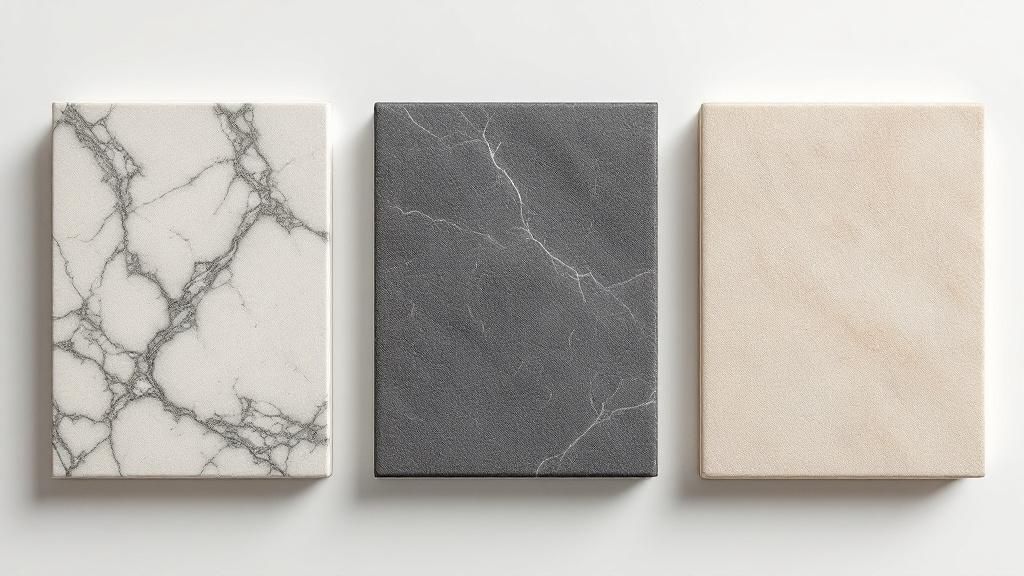
Keeping a natural stone floor looking elegant isn’t about intense, back-breaking scrubbing. It's about consistency and using the right tools for the job. Many homeowners mistakenly reach for a familiar household cleaner, like vinegar or an all-purpose spray, without realizing it can cause permanent damage, especially on calcium-carbonate-based stones common in high-end Bay Area homes. Those common cleaners can etch the surface and leave behind dull spots.
Your goal from day one should be to protect your investment by understanding which products are safe and which ones will wreak havoc on your floors. This knowledge is becoming more mainstream, as homeowners increasingly invest in proper care.
According to Verified Market Reports, the global market for stone cleaning products reached about USD 1.5 billion in 2024 and is expected to climb to nearly USD 2.8 billion by 2033. This jump shows that homeowners are finally understanding just how crucial proper maintenance is for preserving the natural beauty of stone.
Choosing the Right Approach
Before you even think about mopping, you need to know what your specific floor requires. A hand-chiseled French limestone in a Monterey coastal home has very different needs than a polished marble floor in a sleek Palo Alto kitchen. Starting with the right know-how prevents costly mistakes and keeps your floors looking incredible for decades.
If you’re still weighing your options, getting familiar with the unique traits of different stones is a great first step. Our guide on how to find the perfect natural stone for your home provides foundational knowledge to simplify creating a maintenance plan.
To get you started, we've put together a quick-reference table below. Think of this chart as your first line of defense in keeping those floors flawless.
Safe vs. Harmful Cleaners for Natural Stone
This table is a simple cheat sheet to help you quickly identify what's safe to use on your floors and what common household products you should steer clear of.
| Safe for Natural Stone | Harmful to Natural Stone | Why It's Harmful |
|---|---|---|
| pH-Neutral Stone Cleaners | Vinegar | Highly acidic; causes etching and dulls the finish. |
| Mild Dish Soap (diluted) | Lemon Juice / Citrus Cleaners | The citric acid eats away at calcium carbonate in stones like marble and travertine. |
| Warm Water | Ammonia | Too alkaline; can strip the sealer and damage the stone's surface over time. |
| Rubbing Alcohol (for spots) | Abrasive Powders / Scrubs | Creates micro-scratches that permanently dull the polish and finish. |
| Steam Mops (on sealed stone) | Bleach | Extremely harsh and can cause discoloration and break down the stone's sealant. |
| Microfiber Mops | All-Purpose Cleaners | Often contain unknown acids or alkalis that are unsafe for natural stone. |
Always check the label of any cleaner to ensure it's explicitly marked as "safe for natural stone." When in doubt, it's always better to use just plain water than to risk permanent damage.
Building Your Cleaning Routine
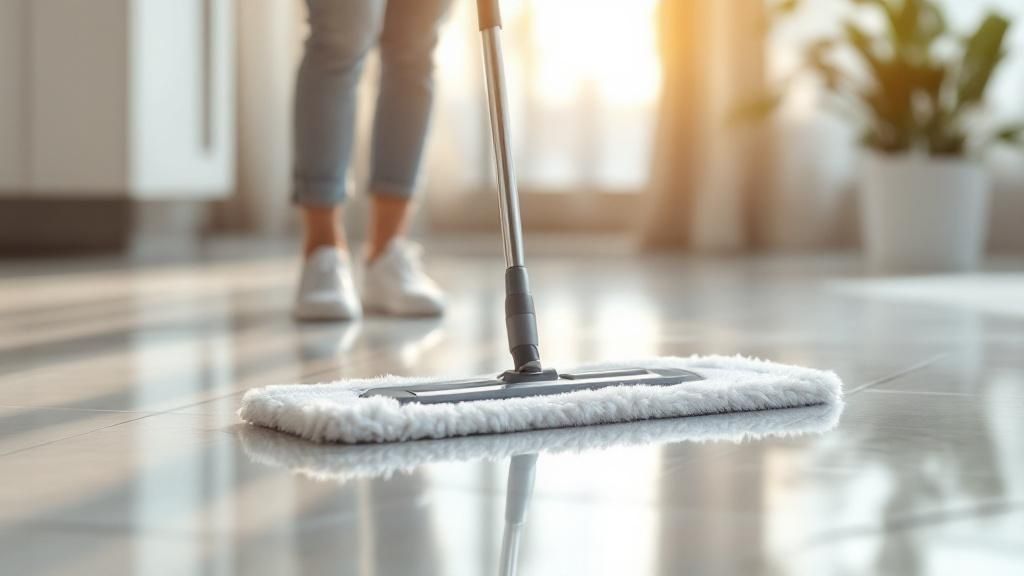
When it comes to keeping natural stone floors looking their best, consistency is everything. A simple, sustainable care schedule is far more effective than occasional deep-cleaning sessions, whether you're in a bustling Bay Area home or a quiet Monterey retreat.
The most important part of this routine is a daily habit that only takes a few minutes. Make it a point to grab a dry, clean microfiber mop every day to capture the fine dust, sand, and grit that inevitably get tracked inside. Over time, these tiny particles act like sandpaper, creating micro-scratches that dull your floor’s beautiful finish.
Natural stone is more popular than ever, and knowing how to clean natural stone floors the right way is essential for protecting that investment.
Your Weekly Mopping Ritual
Once a week, it’s time for a more thorough damp mop. Here, your technique is just as crucial as the cleaning solution you choose. The goal is to clean the stone effectively without oversaturating it or leaving moisture to pool in the grout lines.
First, mix a small amount of a pH-neutral cleaner into a bucket of warm water. Dip your mop in, then wring it out until it’s just barely damp to prevent excess water from seeping into the stone’s natural pores.
Pro Tip: Work in small, manageable sections. Mopping one area at a time prevents the cleaning solution from drying on the surface, which is a common cause of frustrating streaks and residue buildup.
After mopping a section, immediately go over it with a soft, dry towel. This extra step is a game-changer, especially for homes in California with hard water, as it buffs the stone and stops mineral deposits from leaving behind water spots. Our guide on how to choose the right natural stone can give you more context to tailor your routine perfectly.
Caring for Specific Stone Types
Not all natural stones are created equal, and each requires a unique approach to cleaning. A hand-chiseled French limestone floor in a Carmel home, for example, has completely different needs than a polished Calacatta marble in a Palo Alto kitchen. Getting a handle on these nuances is the secret to keeping your floors looking incredible for years to come.
This is especially true for highly porous stones like limestone. Because it's so soft and absorbent, it's extremely sensitive to anything acidic. A splash of wine or a bit of lemon juice needs to be blotted up immediately to prevent a permanent etch or stain.
Protecting Marble and Travertine
Marble, famous for its luxurious veining, shares that same vulnerability to acids like vinegar, tomato sauce, or coffee. When you have marble floors in kitchens or dining rooms, being vigilant is your best defense.
Travertine comes with its own unique challenge: a naturally pitted surface that can trap dirt and grime.
- Sweep Often: A soft, dry mop used daily is your best friend here to stop loose debris from settling in those pits.
- Mop Smart: When you damp mop, make sure your pH-neutral cleaner gets into the voids without oversaturating the floor.
- Gentle Persuasion: For stubborn dirt, you can gently use a soft-bristled brush with your cleaning solution to lift it out.
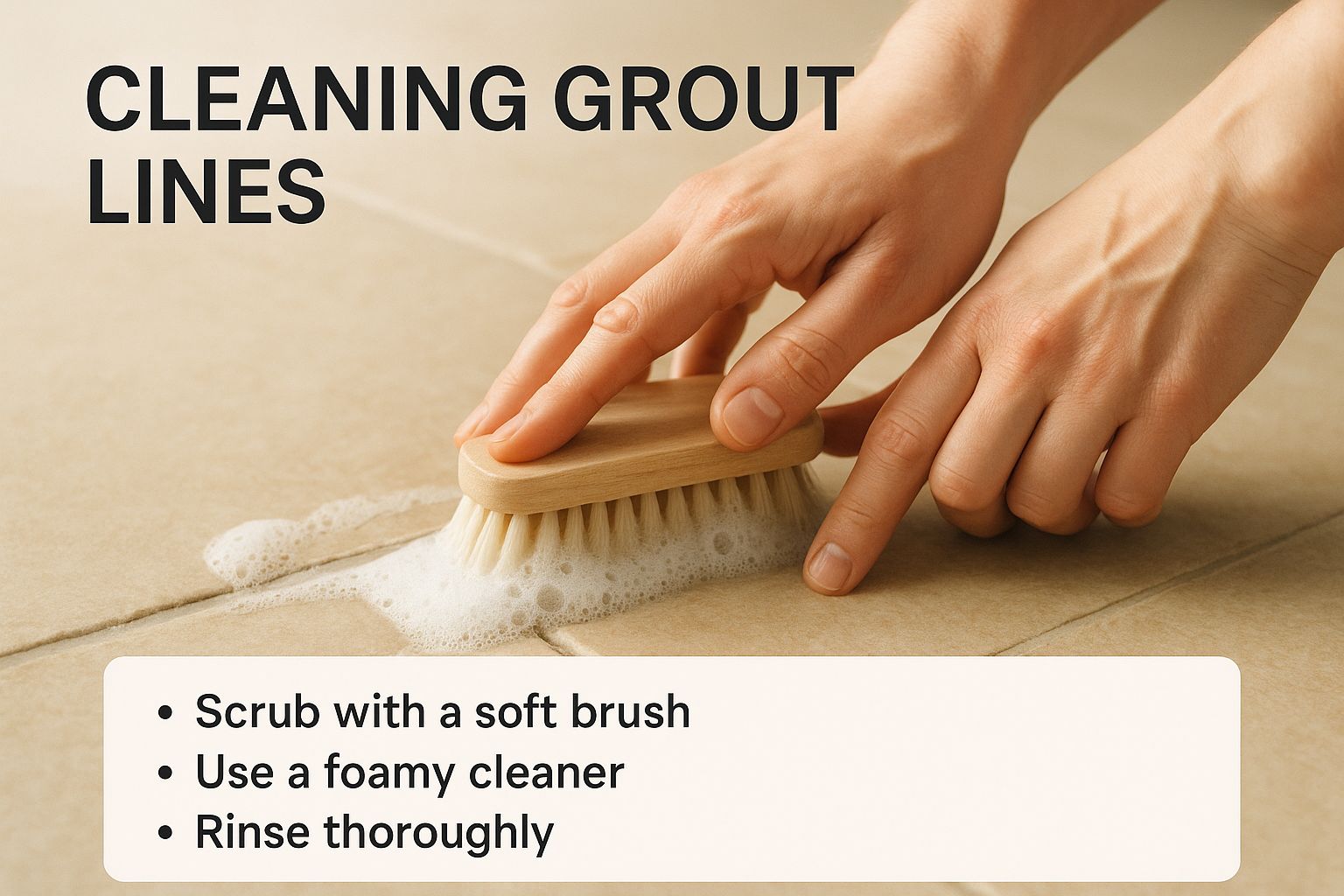
As you can see, a soft brush allows you to clean detailed areas effectively without resorting to harsh chemicals or abrasive pads that can permanently damage your beautiful floors.
Mastering Your Stone's Specific Needs
At the end of the day, the best strategy for how to clean natural stone floors is to get to know the specific material you've chosen. To help you get started, here's a quick cheat sheet for some of the most popular stones we see.
Natural Stone Cleaning Cheat Sheet
This table gives you a quick-glance guide to the do's and don'ts for common natural stones.
| Stone Type | Key Characteristic | Best Cleaning Practice | Caution |
|---|---|---|---|
| Marble | Soft, porous, calcite-based | pH-neutral cleaner, soft mop, blot spills instantly | Highly sensitive to acids (vinegar, citrus, wine). Etches easily. |
| Limestone | Very soft and porous | Damp mop with pH-neutral cleaner, minimal water | Extremely absorbent. Stains and etches very quickly. Avoid all acids. |
| Travertine | Pitted surface, porous | Sweep daily, use soft brush for pits, pH-neutral cleaner | Dirt easily gets trapped in the natural voids. Avoid letting spills sit. |
| Granite | Hard, less porous (when sealed) | pH-neutral cleaner, can tolerate more daily use | Unsealed or poorly sealed granite can still absorb stains. Check seal annually. |
| Slate | Cleft (uneven) surface, dense | Sweep or vacuum, damp mop with stone cleaner | The uneven texture can trap dirt. Avoid wax-based cleaners which can build up. |
Remember, this is just a starting point; your specific finish (polished, honed, tumbled) will also influence your care routine. Understanding the initial selection process can also give you a leg up on long-term care. Learning how to purchase natural stone tile for home installation can help you match a stone's maintenance needs with your lifestyle.
Handling Spills, Stains, and Scratches
Life happens, and even with the most diligent care, spills, stains, and scuffs are bound to appear on your natural stone floors. The key is to act fast and, most importantly, to use the right technique.
When a spill occurs—whether it's wine in your Palo Alto dining room or coffee in your Carmel kitchen—resist the urge to wipe. Always blot, never wipe. Wiping smears the liquid across a larger area, pushing it deeper into the stone's pores. Instead, grab a clean, absorbent cloth and gently blot the spill from the outside inward to keep it contained.
Removing Stubborn Organic Stains
For organic stains like coffee, tea, or red wine that have set, a poultice is an effective method to draw the stain out of the stone. You can easily make a basic poultice at home with baking soda and water, aiming for a thick, peanut-butter-like consistency.
Here’s the go-to process:
- Apply the Paste: Gently spread the poultice over the stain, about a quarter-inch thick, extending an inch beyond its edges.
- Cover and Wait: Cover the area with plastic wrap and tape the edges to keep the poultice moist. Let it sit for 24 to 48 hours.
- Remove and Clean: After a day or two, remove the plastic, let the paste dry completely, and then gently scrape it off with a soft plastic scraper. Wipe the area with a damp cloth, rinse with clean water, and dry thoroughly.
This process may need to be repeated for deep stains, but it's a remarkably effective and gentle solution. For more on home health, you can learn how to keep your natural stone free from coronavirus with the right cleaning practices.
Differentiating Scuffs from Scratches
Finally, it’s crucial to know the difference between a minor scuff and a deeper scratch. A scuff is a surface-level mark that can often be buffed out with a soft cloth and an approved stone polishing powder.
A true scratch is a physical gouge in the stone that you can feel with your fingernail. These deeper marks typically require professional restoration. Trying to fix them yourself can easily cause more harm, so knowing when to call a pro is one of the smartest things you can do for your floors.
When to Seal and Call a Professional
Routine cleaning will keep your natural stone floors looking great, but protecting them for the long haul requires another crucial step: sealing. A good sealant acts as an invisible shield, diving deep into the stone's pores to create a barrier that stops spills from turning into permanent stains.
Without that seal, porous stones like limestone and marble are vulnerable to everyday mishaps. A quality seal buys you precious time to wipe up spills before they do any real damage. So, how do you know when it’s time to reapply this protective layer?
The Simple Water Drop Test
The "water drop test" is a simple trick to check if your sealant is still working. Place a few drops of water on a discreet spot on your floor and wait 15-30 minutes.
- If the water beads up: Great news! Your sealant is holding strong.
- If the water soaks in and darkens the stone: This is a clear sign your sealant has worn off and it’s time to reseal.
For most interior floors in a Palo Alto home, you can expect to reseal every 3-5 years. However, high-traffic zones or floors in a Monterey bathroom will likely need attention sooner. If you have tile floors, you can learn more about the benefits of tile floors in another one of our guides.
Knowing When to Call for Expert Help
While DIY care is perfect for daily maintenance, some problems require a professional. It’s time to call a stone restoration expert when you see:
- Widespread or Deep Etching: If large patches of your floor look dull from something acidic, a pro can re-polish the surface.
- Significant Scratches or Chips: For deep gouges, you’ll need an expert with specialized diamond abrasives to make a seamless repair.
- Stubborn, Deep-Set Stains: If a poultice fails, a professional has access to stronger, industry-specific treatments.
These restoration experts use industrial-grade equipment to grind, hone, and polish floors back to their original factory finish. It's a precise craft that restores the stone's inherent beauty when routine cleaning isn't enough.
The demand for these services is growing. The market for stone floor polishers and restoration tools was valued at around USD 1.2 billion in 2024 and is expected to climb, as detailed by Verified Market Reports. This highlights how much homeowners value professional care to protect their beautiful stone floors for the long term.
Frequently Asked Questions
Here are answers to some of the most common questions we hear from homeowners and design professionals in the Bay Area and beyond.
Can I just use vinegar and water on my marble floors?
No, never use acidic cleaners like vinegar or lemon juice on marble, limestone, or travertine. The acid reacts with the stone, causing etching—dull, cloudy spots that permanently damage the finish. Always use a pH-neutral cleaner specifically made for natural stone to avoid costly repairs.
How often should I seal stone floors in a coastal home?
For a porous stone like marble in the entryway of a Monterey home, consider sealing every 1-2 years. The coastal air brings in salt and moisture, which can wear down sealants faster. Perform a water-drop test annually; if water soaks in instead of beading, it's time to reseal.
What’s the best way to clean grimy grout lines between stone tiles?
Avoid harsh, acidic grout cleaners that can damage your stone. Instead, use a soft-bristled brush with either your pH-neutral stone cleaner or a simple paste of baking soda and water. Gently scrub the grout lines, rinse well, and be careful not to scratch the stone itself.
Is it safe to use a steam mop on natural stone?
We strongly advise against it. The intense heat and high-pressure steam can damage or strip the sealer from your stone floor, leaving it exposed to stains and moisture. A damp mop with a proper pH-neutral cleaner is a much safer and more effective choice for long-term care.
Where can I find a good pH-neutral stone cleaner?
You can find quality pH-neutral cleaners at most home improvement stores or from professional stone care suppliers online. The expert teams at our Palo Alto and Carmel showrooms are always happy to recommend products we trust for your specific stone.
Ready to bring the timeless elegance of natural stone to your project? The experts at Carmel Stone Imports are here to guide you through our stunning collection of limestone, marble, and more. Visit one of our showrooms or contact us today to find the perfect surface for your home.