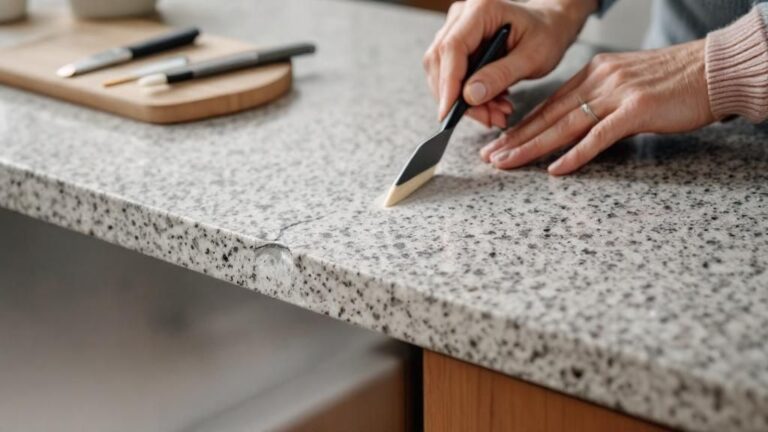
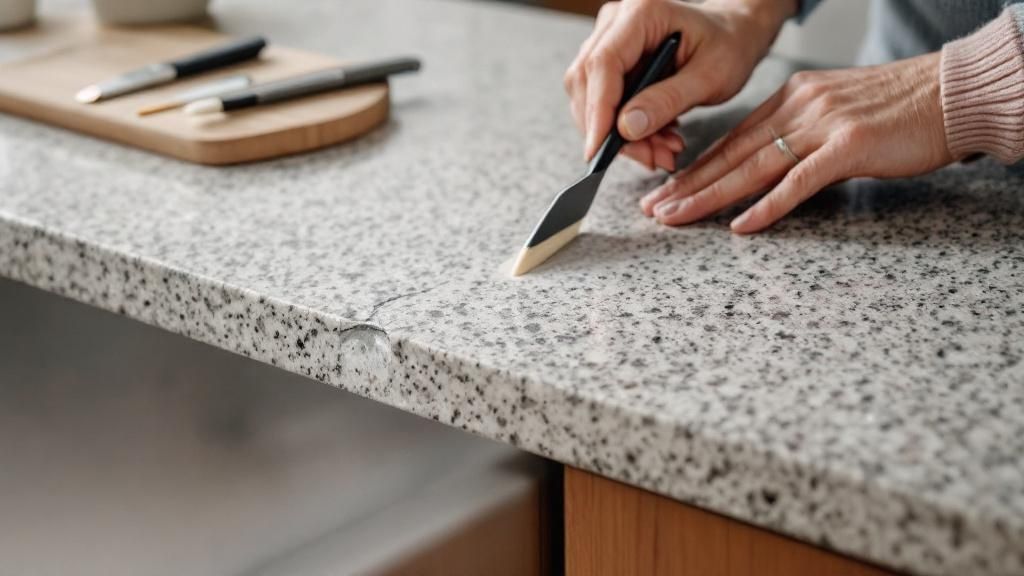
It's a sound every homeowner fears—the sharp crack of a dropped pan or a heavy bottle slipping. Suddenly, your perfect granite countertop has an ugly chip. But don't worry. A small chip doesn't mean your beautiful stone is ruined. This guide covers everything you need to know about chipped granite repair, a common task for busy kitchens in the Bay Area.
Why Granite Chips Happen and What to Do
Granite is a very hard natural stone, but it isn't indestructible. Most damage happens in high-traffic areas where the stone is most exposed. Understanding why chips happen can help you prevent them.
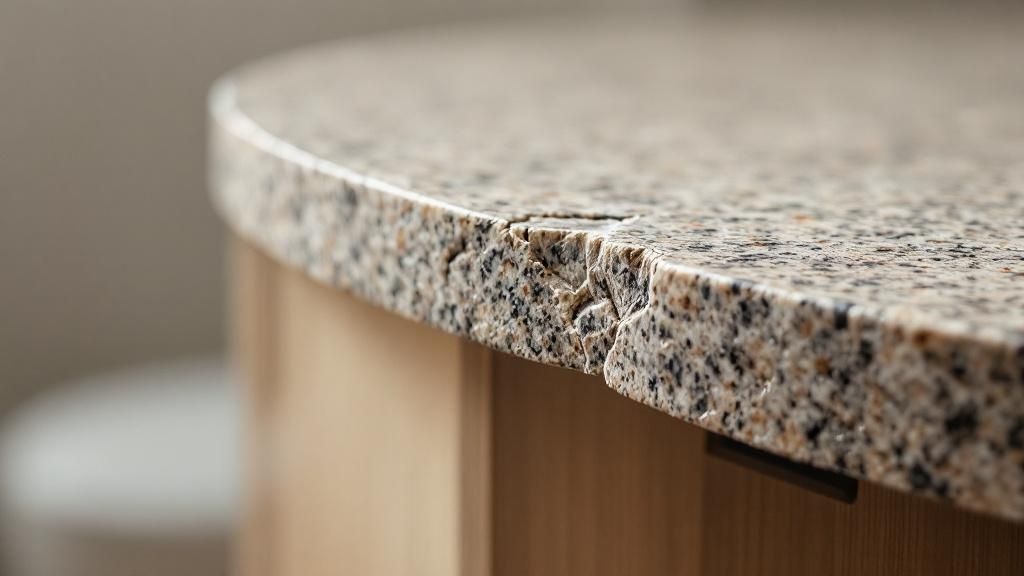
Most chips and dings occur in a few key spots. Being more careful around these areas can keep your countertops looking new for years.
Common Vulnerable Areas
- Around the Sink: The edges of your sink get hit by pots, pans, and dishes during cleanup. This is the top spot for chips.
- Countertop Edges and Corners: These exposed areas are easy to bump with heavy items, belt buckles, or furniture.
- Near Heavy Appliances: Areas next to stand mixers or other heavy gadgets are at a higher risk of accidental impacts.
The good news is that most chips are preventable with a little caution. When they do happen, fixing them quickly is important. A fast repair prevents dirt from getting stuck in the chip and causing a bigger problem later. This guide will walk you through assessing the damage, deciding between DIY and professional repair, and protecting your countertops.
How to Assess the Damage on Your Countertop
Before you buy a repair kit, you need to examine the damage. A good assessment helps you choose the right repair method. It can save you from a frustrating DIY attempt that ends with a call to a professional.
First, check the size of the chip. If it's smaller than a dime, you can likely fix it yourself. If the chip is bigger than a quarter, the repair becomes much harder. Blending a larger patch requires a skilled hand.
Next, feel the depth. Is it a shallow sliver on the surface, or is it a deep crater? Deeper chips are difficult to fill and get perfectly level with the rest of the granite.
Location and Complexity
The chip's location is just as important as its size. A chip in the middle of a flat countertop is the easiest to fix. Damage on a rounded edge or sharp corner is much tougher to repair.
- Flat Surface Chips: These are usually simple to fix. It's much easier to level the filler on a flat surface.
- Edge and Corner Chips: Rebuilding the original shape of an edge or corner requires a lot of precision. These are often best left to the pros.
- Chips Near the Sink: Damage in this wet area needs a perfect seal. If not done right, water can seep under the stone and cause more problems.
A shallow chip on a flat surface is a great candidate for a DIY kit. A deep gouge on a detailed edge, however, needs an expert to restore its shape.
Finally, look at the stone around the chip. Do you see any faint, hairline cracks spreading out? These small fractures can be a sign of a bigger problem. If you see them, it's time to call a professional. Also, make sure the area is sealed to prevent stains. You can learn how to seal natural stone in our detailed guide.
Your Guide to DIY Chipped Granite Repair
Do you have a small, annoying chip in your granite countertop? Don't panic. For simple nicks, fixing it yourself can be a satisfying and affordable solution.
A successful chipped granite repair depends on two things: the right materials and patience. The goal is to make a durable repair that is almost invisible. This will bring back the smooth, flawless surface you love.
Getting the Surface Ready for a Strong Bond
Most good repair kits give you everything you need. They usually include a two-part epoxy or acrylic adhesive, plus color tints to match your stone. For a strong bond, many people use a simple Gorilla Epoxy syringe, which works well for stone repairs.
Proper prep is the most important step. To get a permanent bond, you can't rush this part. A weak prep job leads to a weak repair that will fail later.
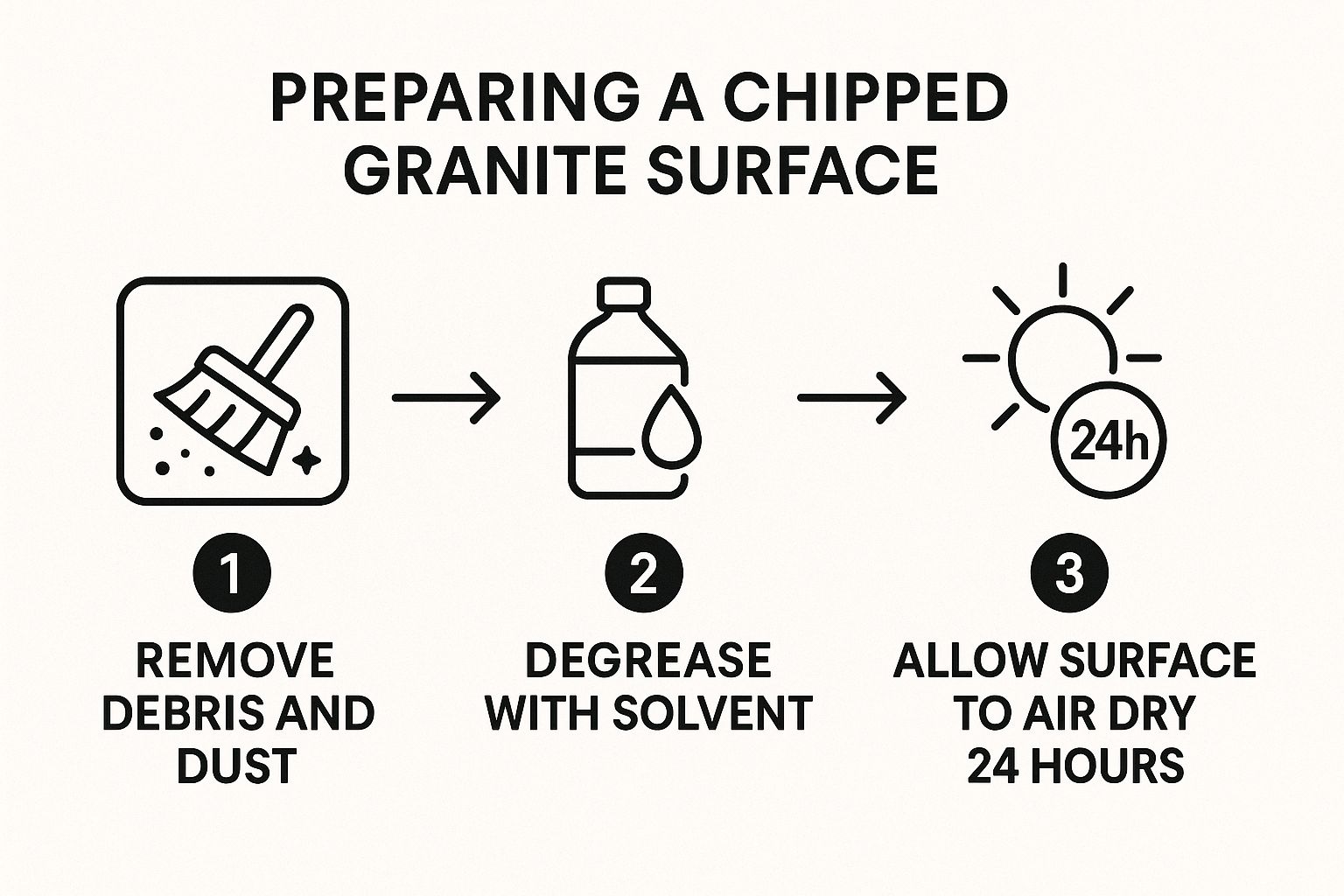
Follow these simple cleaning and drying steps to ensure the epoxy sticks directly to the stone. This creates a repair that is built to last. It’s a common mistake that can undermine the entire project.
Applying the Filler and Finishing Touches
Once the area is clean and dry, you can mix the epoxy. Follow the kit's instructions carefully. Add the color tints in tiny amounts until you get a good match. It's a smart idea to test your color mix on cardboard first.
Carefully work the mixture into the chip. You should slightly overfill it, as the epoxy can shrink a little as it cures.
Next, take a fresh razor blade and hold it at a low angle. Gently scrape away the extra material to make the filler flush with the countertop. Now, you must wait. Let the repair cure completely, which can take up to 24 hours.
The secret to a seamless finish is patience. Taking your time with color-matching and leveling makes the difference between an obvious patch and an invisible repair.
While a DIY fix works for minor damage, it’s good to know your options. Comparing the costs can help you decide.
DIY vs Professional Granite Chip Repair
| Factor | DIY Repair | Professional Repair |
|---|---|---|
| Cost | Low (cost of a repair kit, typically $20-$50) | Higher (average cost is $211 to $542) |
| Best For | Small, simple chips (less than a dime) | Large chips, cracks, or damage in highly visible areas |
| Skill Level | Basic; requires patience and a steady hand | Requires specialized tools and expertise |
| Turnaround | A few hours of work, plus up to 24 hours to cure | Usually completed in one visit by a technician |
The choice depends on the chip's size and your comfort level. For a small blemish, a DIY kit is a great solution. For a large chip on your kitchen island, calling a pro might be a better investment. Our guide on granite vs. quartzite countertops offers helpful insights on durability and maintenance.
When to Call a Professional for Granite Repair
A DIY kit is great for small jobs. However, there are times when a chipped granite repair is best left to a professional. Knowing when to call an expert is key to protecting your investment and getting a flawless fix.

A skilled technician has a trained eye for matching the complex colors and patterns of natural stone. This is a skill that's nearly impossible to replicate with a standard kit. They also have specialized equipment to ensure a perfect result.
Scenarios Demanding Expert Attention
Some types of damage are red flags that you need to call for backup. A professional is essential for these situations:
- Large or Deep Chips: If the damaged spot is bigger than a quarter or very deep, a pro is your best bet.
- Intricate Edge Damage: A chip on a fancy ogee or bullnose edge needs an expert to rebuild its specific shape.
- Visible Cracks: Hairline cracks spreading from the impact can suggest a deeper structural problem. This needs a professional assessment.
- High-Visibility Areas: For damage in the middle of your Palo Alto kitchen island, a perfect repair is a must.
A professional repair is more than just a cosmetic fix. It restores the structural integrity of your countertop. Technicians use industrial-grade adhesives and special tools to make the repair truly disappear.
The stone industry has many skilled professionals. In the United States, there are 9,689 stone firms that employ nearly 86,000 workers, according to the Natural Stone Institute. This means expert help is widely available. If you're looking for a new installation, our guide to finding a top granite slab dealer in the Bay Area can be helpful.
Preventing Future Chips and Protecting Your Granite
After a successful granite repair, the last thing you want is another chip. Being proactive is the best way to protect your investment. A few simple habits can keep your countertops looking pristine.
Think about the high-traffic zones like sink edges and corners. Always use a cutting board—never chop directly on the stone. Be extra careful with heavy cookware, like cast-iron pans, around these vulnerable spots.
Adopting Protective Habits
A few small changes to your daily routine can prevent future damage. These smart habits offer long-term protection for your beautiful stone surfaces.
- Use Trivets and Hot Pads: Granite is heat-resistant, but sudden temperature changes can stress the stone. Always place a barrier between hot pans and the countertop.
- Install Protective Mats: A good countertop protector around the sink can absorb shock and manage splashes.
- Ensure Proper Support: If you have large overhangs on a kitchen island, make sure they are properly supported with brackets to prevent stress fractures.
Protecting your granite is an ongoing commitment, not a one-time fix. Consistent care preserves the stone's beauty and its value, a key factor in today's market where countertops are a major home asset.
In fact, the global countertop market was valued at USD 131.42 billion in 2024 (Statista) and continues to grow. This shows how important it is to maintain these valuable surfaces. If you want to learn more, explore the different types of natural stone in our detailed guide.
Frequently Asked Questions
Even the most careful homeowners in Monterey and Carmel deal with chipped granite. Here are answers to some common questions we hear about granite repair.
Can all chips in granite be repaired?
Almost all chips can be repaired. Small to medium-sized chips are very fixable, and a good repair can make them nearly disappear. Large chips or long cracks are more complex and may require professional restoration.
Will a repaired granite chip be invisible?
When done by a professional, the repair is often almost invisible. Pros are experts at color-matching the repair material to your granite's specific pattern. A DIY repair can be effective, but achieving a seamless blend is difficult without experience.
How long does a granite chip repair take?
A DIY repair for a small chip can take about an hour, plus several hours for the filler to cure. A professional can usually complete the job in 1-3 hours. They use tools like UV lights to cure the adhesive almost instantly.
Is it expensive to repair a chip in granite?
The cost depends on the size and location of the chip. A small, simple fix is affordable and much cheaper than replacing the whole countertop. The cost increases for larger or more complex damage, but it's still a cost-effective solution.
Does a repaired chip affect my countertop's durability?
No, a properly done repair does not affect durability. High-quality epoxy or acrylic is very strong and restores the structural integrity of the spot. Proper aftercare, like knowing how to clean natural stone, will keep the repair and your countertop in great condition.
Ready to restore the flawless beauty of your granite countertops or find the perfect new stone for your Bay Area home? The experts at Carmel Stone Imports are here to help. Visit our showrooms or contact us today for a consultation.