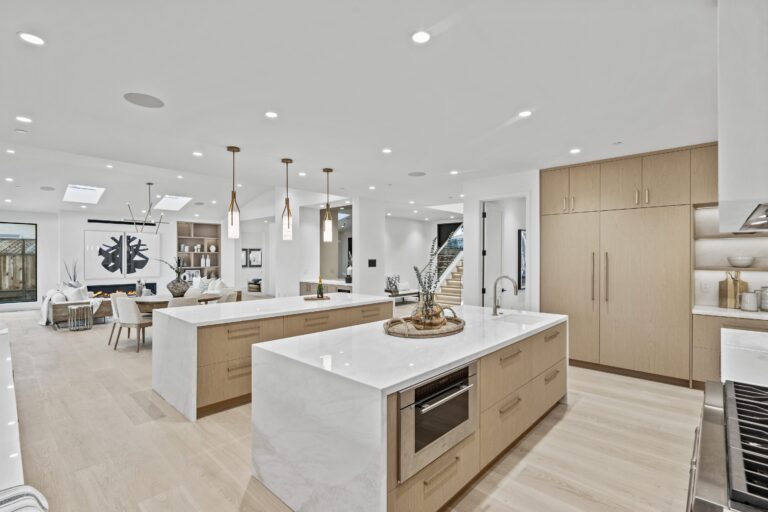
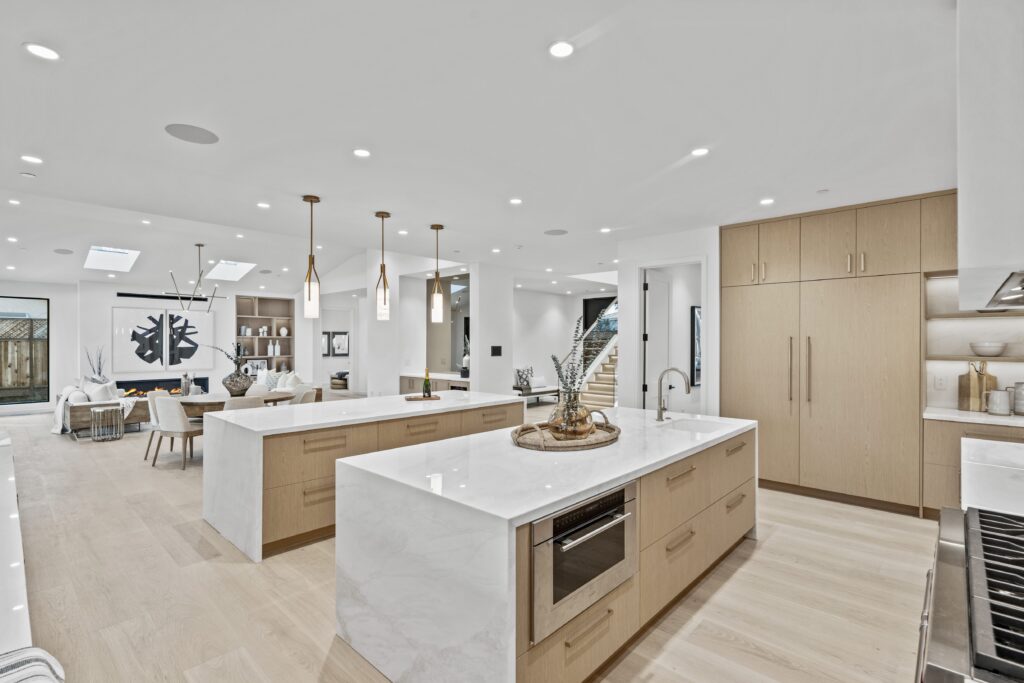
Direct Answer: Taj Mahal quartzite reads warm, soft, and fairly even, like a calmer marble. Naica is the dramatic one, with crystalline structure and strong movement. One recedes into the room, the other becomes the focal point.
You have narrowed a kitchen down to two slabs. Both tags say quartzite, both look expensive, and you are about to commit to a surface you will see every morning for the next twenty years.
That is the moment most people stall. Someone typed this exact question into our website chat and got no real answer, so here is the answer, written for a homeowner standing in a showroom on the Monterey Peninsula with a phone full of inspiration photos.
This article stays on one question: Naica vs Taj Mahal quartzite. We will cover how they look, how they behave day to day, and how the choice changes depending on whether your project is a fast Palo Alto remodel or a once and done Carmel kitchen.
The Short Answer on Naica vs Taj Mahal Quartzite
The honest difference is temperament, not quality. Both are natural stone. Both are sold as quartzite. They just do different jobs in a room.
- Taj Mahal reads warm, quiet, and fairly even. Soft cream to light beige, gentle veining, very little contrast. It is the stone people pick when they want the calm of white marble without the drama.
- Naica is the showpiece. Crystalline structure, visible sparkle under direct light, stronger veining and more color variation slab to slab. It behaves like a feature, not a background.
If you want the counter to disappear behind your cabinets, backsplash, and hardware, Taj Mahal is usually the safer pick. If you want the thing people notice when they walk in, that is Naica.
There is a second difference that matters just as much, and it has nothing to do with looks. Hardness and porosity vary by lot in this whole category, including both of these stones. We will get to that, because it is the single most common surprise buyers run into with quartzite.
If you are still weighing more than two options, the Taj Mahal and Mont Blanc shortlist comparison covers the wider field. This one stays head to head.
Look and Movement: Background Stone or Feature Stone
Ask yourself one question before you look at another photo: is this stone supposed to disappear, or is it supposed to be the first thing people see?
Taj Mahal disappears. Its veining is soft and low contrast, which is why designers across the Bay Area keep specifying it as the calmer alternative to white marble. It plays well with white shaker cabinets, warm brass, and the oak tones that have taken over Peninsula kitchens since 2020.
Naica does the opposite. The crystalline structure catches light, so it changes through the day in a way a photo cannot show you. In a Pebble Beach kitchen with big west-facing windows, that stone looks like three different materials between morning and sunset.
That is why almost every buyer who comes into the Sand City warehouse asks to see the full slab standing up. Reviews of our showrooms say the same thing over and over: people want to judge veining in person before they commit. A 4-inch sample tells you the color. It tells you almost nothing about the movement.
For the full breakdown on what Naica looks like in person, there is a standalone Naica quartzite profile with more detail on where it works best.
The Name on the Tag Is a Trade Name, Not a Lab Result
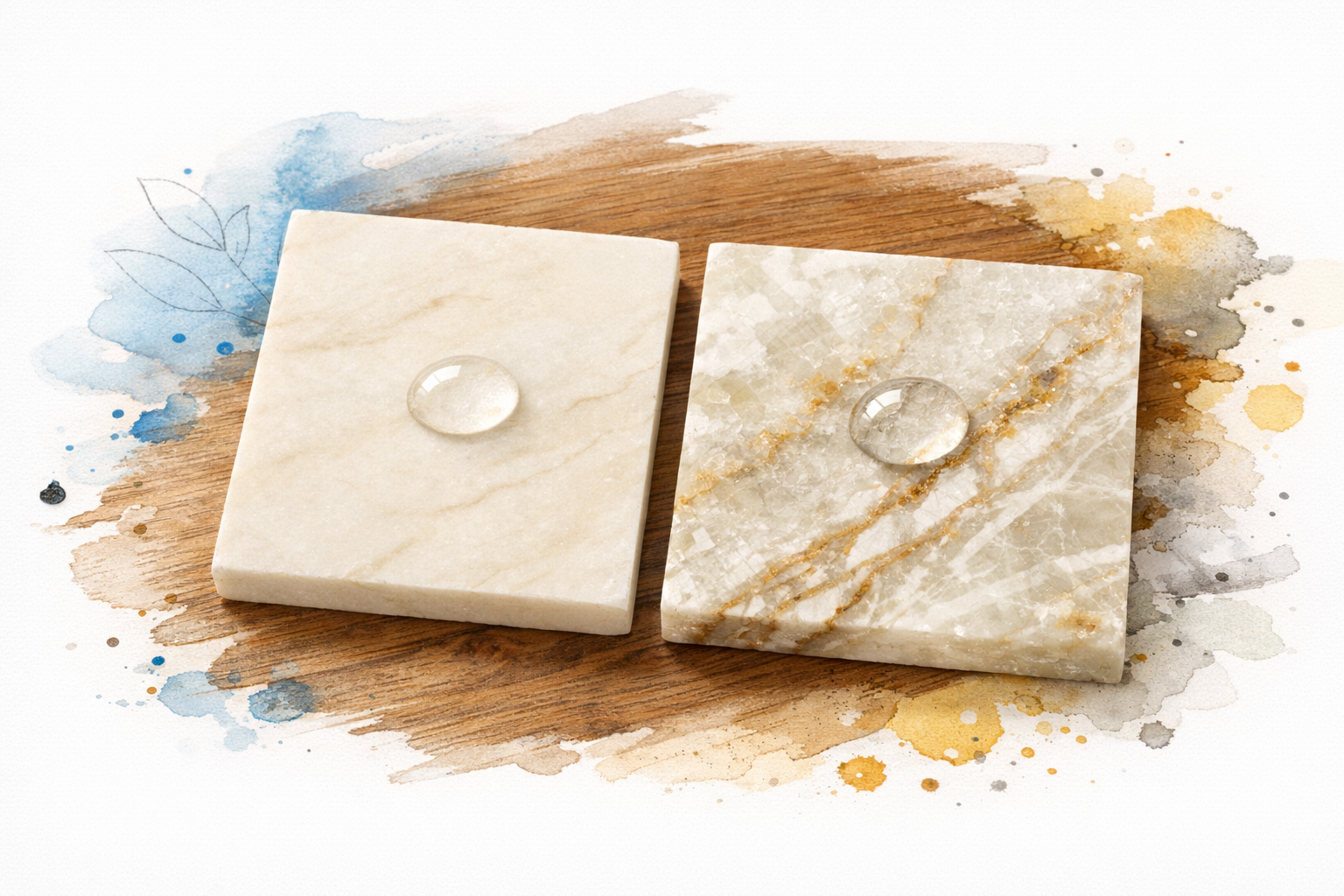
Here is the part most buyers do not hear until late in the process. Quartzite names are trade names, not test results. They describe a look and a source, not a verified mineral composition.
Stone sold as quartzite can run anywhere from very hard and dense to partly dolomitic. A dolomitic lot can etch from lemon juice or absorb more oil than the buyer expected. That applies to Naica and Taj Mahal both, and it is why two slabs with the same name can behave differently.
This is the number one thing callers ask about before they ask about anything else: will it stain, and how much work is it. Fair question for a kitchen you cook in every night.
The way to settle it is simple:
- Take home a sample of the actual lot you are considering, not a generic display piece.
- Run a water test and a lemon test on a hidden corner of that sample.
- Watch what happens over 20-30 minutes, not 20 seconds.
- Talk to your fabricator about sealing before the install, not after.
The step by step version lives in our guide on what to confirm before committing to a marble-look quartzite, so we will not repeat it here. Industry groups like the Natural Stone Institute publish the testing standards fabricators reference for absorption and abrasion if you want to go deeper with your contractor.
Which One Fits Your Kitchen?
A quick side by side on how these two stones behave in a real kitchen, from look to seam planning.
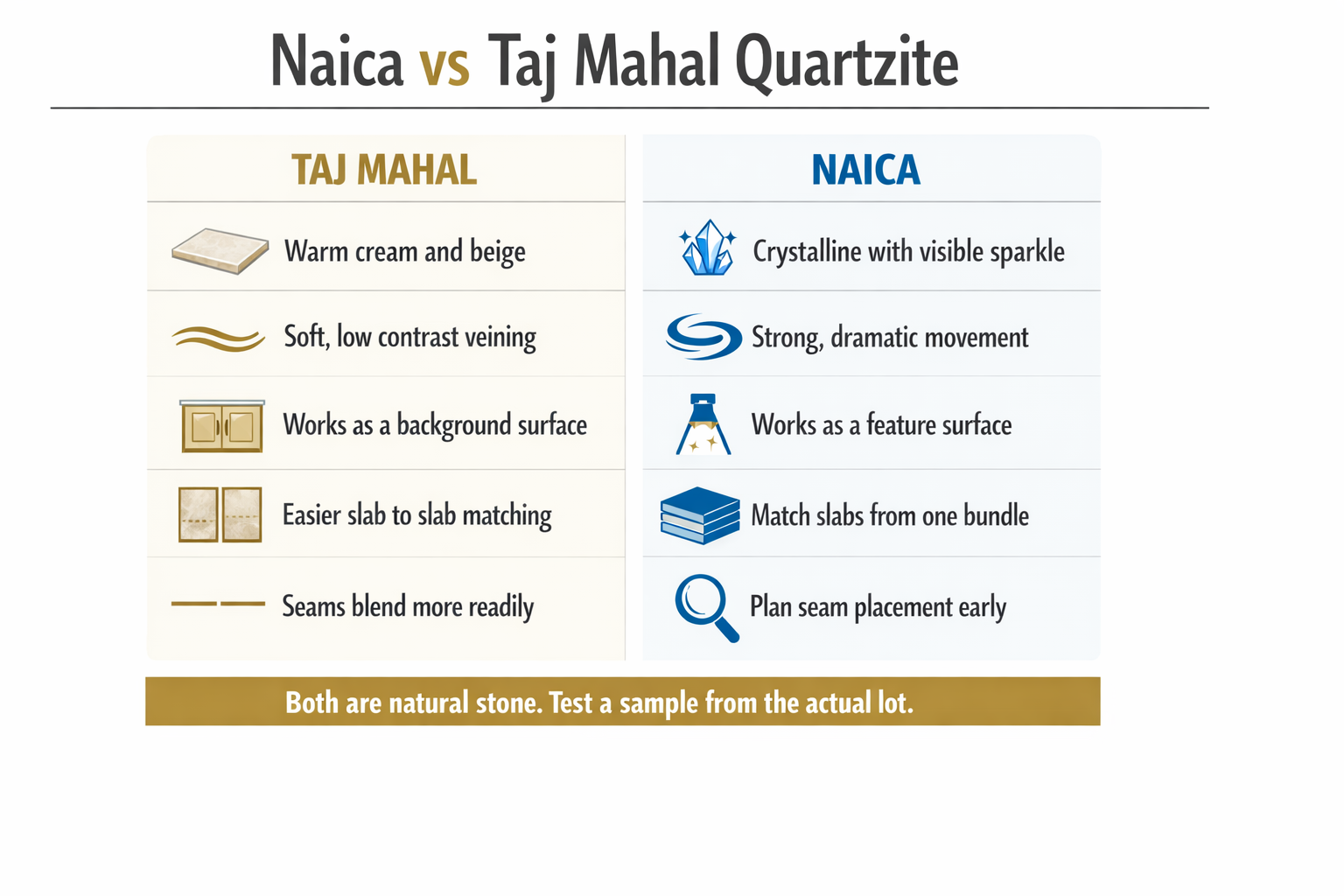
Naica and Taj Mahal Side by Side
A reference you can screenshot and bring to the showroom with you.
| What You Are Judging | Taj Mahal | Naica |
|---|---|---|
| Overall read | Warm, quiet, fairly even | Dramatic, crystalline, high interest |
| Color range | Cream to soft beige, occasional gray | Wider variation, sparkle under direct light |
| Movement | Gentle, low contrast veining | Strong veining with clear direction |
| Best role in the kitchen | Background surface behind the design | Focal point, often the island |
| Slab to slab matching | More forgiving | Needs slabs from the same bundle |
| Seam planning | Easier to blend | Plan before fabrication begins |
| Lot variation to verify | Test for etching and absorption | Test for etching and absorption |
Why Naica Changes How You Shop
The stronger the movement, the harder it is to hide a seam or match a second slab. That one fact changes your whole shopping trip.
With Taj Mahal, a second slab from a different bundle will often get close enough. With Naica, it usually will not. The veining has direction, and a mismatch shows up at the seam like a broken sentence.
So when you go look, do three things:
- View the slabs together, standing up, in daylight. Not stacked, not under warehouse fluorescents alone.
- Ask how many slabs are in the bundle and whether they came from the same block.
- Mark roughly where the veining will land on your island before you think about price per square foot.
One repeat customer put the mindset well in a review: “I was on the hunt for the perfect Taj Mahal Quartzite slabs and I was picky about all of the colors and veining.” That is not being difficult. That is doing the job right.
The mechanics of counting slabs and planning around heavy movement are covered in our piece on planning a kitchen around a high-movement quartzite. Bring your fabricator into that conversation early, since they are the ones templating and cutting.
Your Timeline Should Shape the Choice
Where the project sits on the map matters more than people expect.
A Palo Alto kitchen is often a gut remodel of a house built around 1963, with a long island, a designer, and a contractor working a schedule. In that case, Taj Mahal is frequently the lower risk call. It matches more easily, it forgives a seam, and it will not hold up the fabrication calendar while you hunt for a second slab that lines up.
A Carmel-by-the-Sea or Pebble Beach project tends to run differently. These are often homes the owner plans to keep, and the buyer has room to wait for the right bundle. If Naica is the stone you keep coming back to, take the slower route and wait for a shipment that works. Containers land at the Port of Oakland regularly, and inventory turns.
On cost, both stones move with block quality, thickness, finish, and how much movement is in the slab. Two bundles with the same name can price very differently, which we explain in why two slabs with the same name cost different amounts. Ask the showroom team for current numbers on what is actually on the floor rather than working from a figure you found online.
Frequently Asked Questions About Naica and Taj Mahal Quartzite
Is Naica harder than Taj Mahal quartzite?
Not reliably. Hardness and porosity vary by lot, not by name, so a given Naica slab could test harder or softer than a given Taj Mahal slab. The only way to know is to test a sample from the actual material you are buying.
Which one is easier to live with in a busy kitchen?
Taj Mahal, usually, and mostly for visual reasons. Its softer veining hides crumbs, water spots, and everyday wear better than a high-contrast crystalline surface. Both still need a sealer and pH neutral cleaner.
Can I see both stones at the same showroom?
Availability changes with incoming shipments, so call ahead before you drive out. The Carmel Rancho Lane showroom, the Sand City warehouse, and the Palo Alto location each hold different inventory, and the team can confirm what is standing on the racks that week.
Do you cut and install the slabs?
No. We are a supplier and showroom, so you pick the material and then work with your own fabricator or contractor. The team can share referrals if you do not have one yet.
How many slabs will I need?
That depends on your layout, overhangs, and whether you want a waterfall edge. Your fabricator calculates it from the template, but bring rough island dimensions to the showroom so the team can tell you whether a given bundle is even big enough to consider.
Want to See Both Stones Standing Side by Side?
Photos settle color. Standing in front of a full slab settles everything else, which is why most buyers in Carmel, CA end up making the trip before they decide. Carmel Stone Imports keeps live inventory across the Carmel, Sand City, and Palo Alto locations, and the team can tell you what is currently on the racks and arrange a slab selection appointment. Reach them at (650) 800-7840 or info@carmelimports.com.