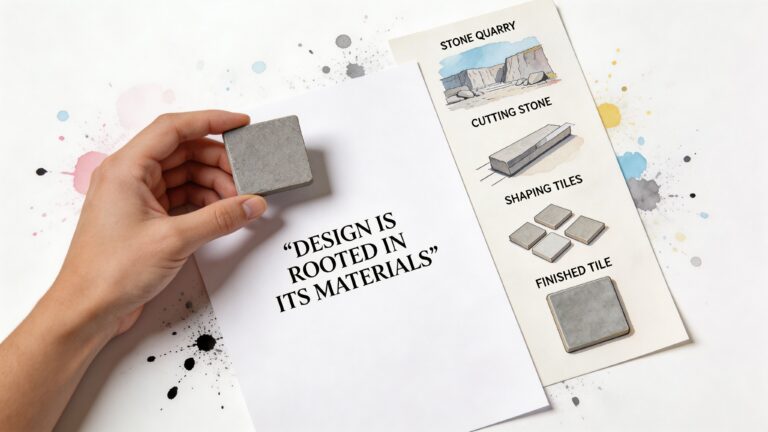
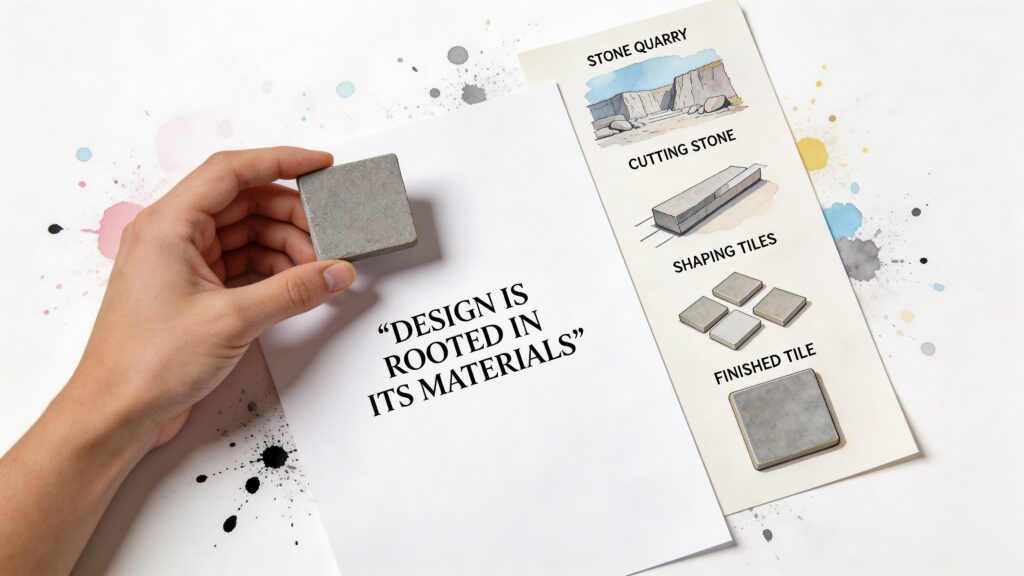
You choose a limestone that looks warm and calm under showroom lighting. Then it arrives at a home in Carmel Valley or San Francisco, and the color reads cooler, the surface texture feels different underfoot, and the lead time turns out to be longer than the contractor expected. That kind of surprise is exactly what the custom tile process is built to prevent.
Samples, quotes, and production stages each answer a different question before a full order is released. Samples test whether the material works in your actual light and alongside your cabinetry, flooring, and paint. A detailed quote records what is being made, in what quantity, at what finish, and on what schedule. Production stages protect consistency, especially with natural stone, where variation is part of the material and not a manufacturing defect.
That matters even more in the California market. High-end projects in the Bay Area, Monterey, and along the Central Coast often involve longer shipping routes, tighter installation calendars, and design standards that leave very little room for correction after the tile arrives. A missed detail at the start can turn into wasted material, installation delays, or a result that feels close, but not right.
Custom stone works a lot like tailoring a suit. The finished piece depends on more than taste. It depends on measurements, approvals, material behavior, and careful execution at each stage.
If you are still early in the process, this guide to visiting a stone showroom before selecting materials can help you prepare.
Your Guide to the Custom Stone Tile Journey
A custom tile order moves through three major checkpoints.
Samples answer the visual questions
A sample helps you confirm whether the material feels right in your space. That includes tone, surface texture, movement, and how the finish reads in morning light, evening light, and shaded areas.
This matters more with natural stone. Marble, travertine, quartzite, and limestone all have variation. That variation is part of their beauty, but it also means the tile you remember from a display may not look identical to the material reserved for your project.
Quotes answer the practical questions
Once the visual direction is approved, the quote turns the idea into a documented order. It confirms what is being ordered, how much is needed, what finish is expected, and what lead times or shipping factors may affect the schedule.
Many people think a quote is just a number. In custom tile, it is closer to a written agreement about exactly what will be supplied.
Production answers the consistency questions
Only after the material and order details are approved does production move ahead. That is when the supplier aligns the approved sample with the actual order, follows the required finish and size specifications, and checks the material before it ships.
The process can feel detailed at first, but every step is there for one reason. To make the delivered tile look like the tile you thought you were buying.
The result is a process that feels slower than buying in-stock commodity tile, but it is far safer for high-value projects.
The Foundation of Custom Design Why Samples Are Non-Negotiable

A client falls in love with a limestone in the showroom. At home, that same stone can feel cooler, busier, or flatter once it meets the actual light, cabinetry, and wall color. By the time that mismatch is discovered after ordering, the correction is expensive.
That is why the sample stage exists.
For high-end natural stone, a sample is not a formality and not a sales step. It is a risk-control step. It helps answer a question that photos, mood boards, and memory cannot answer well enough: what will this material look and feel like in your project, under your conditions, within a realistic range of variation?
Natural stone works a lot like wood. You can choose the species and the finish, but each piece still has its own markings, density shifts, fossils, veins, and tone changes. California projects make this even more important. Marine light in Monterey reads differently from strong South Bay sun, and a shaded San Francisco bath will reveal different qualities than a bright Los Altos kitchen.
A showroom chip introduces the stone. A real sample tests the decision.
Small display pieces are useful for narrowing options. They are not large enough to predict the full character of a custom stone order.
A more representative sample helps you evaluate questions such as:
- how active or quiet the stone reads
- how the honed, brushed, or polished finish changes the surface
- how the face and edge look together
- how much warmth, gray, cream, or gold appears in your room
- whether the variation feels refined or too busy for the design
If you are still sorting through stone types, this guide on what to know before buying natural stone gives helpful background on variation, performance, and selection.
Samples prevent the most expensive kind of surprise
The biggest misunderstandings in custom stone usually happen before production, not during installation. A client approves a general look in mind, while the supplier is preparing material within the acceptable range of that stone. If the range was never reviewed carefully, both sides can believe they are correct.
That is where samples earn their place.
They turn an abstract preference such as "warm white marble" into a physical reference. They also reveal details that digital images hide, including surface texture, edge softness, thickness consistency, fill quality in travertine, and how reflective or muted the finish feels in person.
Even estimating teams depend on accurate physical references before final scope and cost assumptions are built into schedules and takeoffs. Tools such as construction estimating software help organize numbers, but they do not replace material approval.
Light changes stone more than many clients expect
Stone is reflective, porous, crystalline, or layered depending on the material. Those characteristics affect how it reads from morning to evening.
A polished marble may brighten and sharpen under direct sun. A honed limestone may soften and flatten in low light. Veining that felt subtle in a showroom can become the dominant visual feature once it sits across a larger floor or shower wall.
This explains a great deal of disappointment with skipped sampling. The problem is rarely that the stone is defective. The problem is that the project team approved an idea of the stone instead of the stone itself.
The approved sample becomes the reference standard
Clients often hear the term control sample and assume it is internal supplier language. It is much more useful than that.
The control sample is the agreed reference for color range, finish, movement, and overall character. It gives the fabricator, supplier, designer, and homeowner a shared target. For custom work, that shared target matters because natural stone is selected within a range, not copied like a printed product.
Here is the practical difference:
| What a photo usually confirms | What a physical sample confirms |
|---|---|
| General color family | Actual tone in your lighting |
| Broad pattern direction | Real variation and movement |
| Style inspiration | True finish and texture |
| Approximate look | Edge detail, fill, thickness, and feel |
Skipping samples does not remove risk. It relocates risk to the point where freight has been paid, production time has been used, and schedule pressure is higher.
For Bay Area and Monterey projects, that is rarely a wise trade.
Translating Vision into Reality The Critical Role of a Detailed Quote

A client approves a beautiful stone sample, assumes the hard part is done, and expects a simple invoice next. For custom tile, especially high-end natural stone headed to a California project, that is the moment where expensive confusion can begin if the quote is too thin.
The quote protects your budget because it turns a visual approval into exact instructions. In other words, it answers a question the sample cannot answer on its own. What, precisely, is being purchased, in what quantity, to what finish, on what timeline, and under which delivery conditions?
A detailed quote defines the order in writing
Custom stone orders involve variation by nature. Two materials can look similar in a showroom and perform very differently once they are cut, finished, packed, shipped, and installed.
A proper quote usually confirms:
- Material identity. The specific stone, porcelain, or lot being priced.
- Finish details. Honed, polished, brushed, leathered, or another approved surface.
- Tile format and scope. Size, thickness, pattern, and where the material will be used.
- Quantity. The amount required, plus any waste factor or extra attic stock if included.
- Freight and logistics. Crating, shipping method, delivery location, and timing assumptions.
- Lead times. The estimated schedule for sourcing, fabrication, packing, and arrival.
That level of detail matters because custom stone is not bought by color name alone. It is bought by specification.
Why the quote comes after the sample
Pricing only becomes reliable after the material direction is approved. A limestone in a honed finish does not price like the same stone with custom shaping. A straightforward field tile order does not price like a patterned floor with borders, corners, and specialty trim.
For California projects, freight can change the math as much as the material itself. Port timing, crate size, breakage allowances, and final delivery conditions all affect the ultimate cost of getting stone from source to site.
This is one reason custom quotes often feel more detailed than clients expect. They are solving for risk, not just calculating a number.
The quote prevents the mistakes clients do not see coming
A quote works like a set of construction instructions for purchasing. Without it, everyone may be using the same words while picturing different outcomes.
Here are four common problems a detailed quote helps prevent:
- Finish mismatch. The sample approved was softly honed, but the order is priced for a higher-sheen finish.
- Quantity shortfall. The plan needs more stone for cuts, layout, or pattern alignment than the first estimate assumed.
- Freight surprise. The material price looked acceptable until crating, shipping, and delivery to a Bay Area or Monterey jobsite were added.
- Scope confusion. One party assumes trims, mosaics, or special pieces are included, while another priced field tile only.
Teams that want a clearer sense of how complex material inputs are organized can look at construction estimating software, which shows why precise inputs reduce errors before any order is released.
If you are comparing premium surface categories, this guide to porcelain slab costs for kitchen remodels also helps explain how size, fabrication, freight, and specification choices shape the final number.
The quote translates design intent into purchasing accuracy
The sample shows character. The quote records commitment.
That distinction matters in natural stone because beauty and consistency are related, but they are not the same thing. A quote can confirm the approved material, yet also document the tolerances, finish, quantities, and delivery assumptions needed to keep that material aligned with the design.
A clear quote protects your budget the same way a sample protects your design vision. For custom stone, that is not extra paperwork. It is one of the main tools that keeps a promising selection from turning into a costly surprise.
From Quarry to California Home Understanding the Production Stages

A California client approves a beautiful limestone sample in January and expects installation to begin a few weeks later. Then the order enters production, and the timeline suddenly feels much longer than the selection phase did.
That longer timeline usually reflects risk control, not delay.
For high-end natural stone, production is the stage where the supplier works to keep the installed material within the visual range you approved, cut it to the specified sizes, finish the surface correctly, inspect the order, and prepare it for a long trip to California without avoidable damage. Each step solves a different problem. Skip one, and the mistake often shows up only after the tile reaches the jobsite, when fixes are slower and far more expensive.
Material selection starts at the source
Natural stone begins with geology, not manufacturing.
A sample may represent a quarry block, a slab range, or a current lot, but the full order still has to be pulled from available material that matches the approved character as closely as possible. That requires judgment. Veining, mineral content, density, and background tone can shift from block to block, even within the same stone name.
This is why production does not operate like reordering paint by color code. Stone is closer to selecting boards for fine millwork. The species may be the same, but grain, movement, and tonal variation still have to be sorted so the finished room feels intentional.
Porcelain and engineered surfaces follow a different logic. Their production is more controlled at the factory level, so the emphasis is usually on confirming the exact finish, size, thickness, and performance specification. Clients comparing those categories with natural stone often benefit from understanding how large-format porcelain tile slabs are produced and specified, because the manufacturing discipline is different even when the finished look appears similar.
Cutting and finishing determine how the stone will read in the room
After the material is selected, it is cut into the ordered formats and given the approved finish.
This part affects more than dimensions. It affects appearance.
A honed limestone that is finished too lightly can read uneven or slightly reflective under strong California light. A polished marble with inconsistent polishing can make one section of floor look richer than the next. A brushed or textured surface that varies from piece to piece can change how the whole installation catches shadows. Those are production issues, not design issues, and they are exactly why this stage takes time.
Custom orders also become harder to change once cutting begins. At that point, the supplier is no longer holding raw potential. The supplier is converting selected material into your project’s sizes and finish requirements.
Inspection and crating protect the order before it ships
Inspection is where the order is checked against the approved requirements before it leaves the supplier.
For natural stone, that often includes reviewing finish consistency, checking general color range, confirming size and edge details, and separating out pieces that fall outside the expected visual band. Then the material must be packed for actual travel conditions. Freight to the Bay Area or Monterey Peninsula is not a short transfer from a local warehouse shelf. It may involve international handling, multiple loading points, and a final delivery path into a finished residential neighborhood or a tight remodel site.
Crating matters for that reason. Stone can be beautiful and still be brittle at the edges. Good packing is part of production because safe arrival is part of the order, not an afterthought.
Why custom production takes longer than stock material
Stock tile is already made and waiting in inventory. Custom material is still being matched, cut, finished, checked, and packed for your project.
That difference explains the timeline.
Here is the practical view:
| Stage | What happens | Why it matters |
|---|---|---|
| Material selection | Stone or surface lot is chosen to align with the approved range | Helps the delivered order stay visually consistent with the sample |
| Cutting and finishing | Pieces are sized and finished to the order requirements | Controls how the tile looks, feels, and installs |
| Inspection and crating | The order is reviewed and packed for transit | Reduces avoidable issues before shipment to California |
One practical example is Carmel Stone Imports’ custom tile workflow, which uses consultation, detailed quotations, control samples, production, and quality review before delivery. That structure is common in high-touch custom supply because each stage addresses a separate risk before the material reaches the project.
Protecting Your Investment in Bay Area and Monterey Projects
In Northern and Central California, material choices are not casual. A home in Atherton, Palo Alto, Carmel, or Monterey often carries a high design standard, and the tile has to support that standard across large, visible surfaces.
That is why the process matters so much.
A soft French limestone in a coastal home needs to look calm and consistent from one area to the next. A dramatic Calacatta marble in a sleek Bay Area kitchen needs the right range of movement, not a surprise shift in tone. A porcelain surface in a contemporary San Francisco project needs the approved finish to read exactly as intended under that home’s light.
The sampling and quoting stages are where those expectations get checked before the full order moves forward.
According to Marlborough Tiles’ explanation of sample benefits, the sampling and quoting stage enables technical verification of material properties and helps prevent specification mismatches in large projects. The same source notes this is significant in luxury work where stone expenditures can average over $200,000.
That helps explain why experienced design teams rarely rush this stage.
What California Clients Are Protecting
For many homeowners and designers, the investment is not just financial.
It also includes:
- Design cohesion across open, visible spaces
- Confidence in the selected material
- Reduced chance of late-stage changes
- Better coordination across a high-value project
In coastal California, light quality changes throughout the day. In urban Bay Area homes, strong contrast and contemporary architecture can make finish differences more noticeable. In larger estates, the scale of the order makes consistency even more important.
The Cost of Skipping Steps
When people skip structured reviews, the risk is not dramatic at first.
It starts small. A tone feels cooler than expected. The finish is glossier than the sample. The material reads busier across a larger surface than it did on a display board. Then the project team has to decide whether to accept a result they do not love.
That is the kind of regret these stages are meant to prevent.
On a high-value California project, samples, quotes, and production stages are not red tape. They are investment protection.
Your Checklist for a Successful Custom Tile Order

A good custom tile order starts before you ask for pricing. The clearer your inputs, the smoother the process.
Before you visit the showroom
- Gather your measurements: Bring your project dimensions in a clear format so material quantities can be discussed accurately.
- Save inspiration images: Photos help identify whether you are drawn to quiet limestones, bold marbles, earthy travertines, or crisp porcelain looks.
- Note your lighting conditions: Tell the stone specialist whether the room is north-facing, sun-filled, shaded, or coastal in feel.
During the consultation
- Ask about variation: With natural stone, ask what range of veining, texture, or movement is typical.
- Review finish choices closely: A polished surface and a honed surface can feel like two different materials even when the stone name is the same.
- Discuss lead times early: Custom orders move more smoothly when timing expectations are clear from the start.
When reviewing samples
- Take the sample home: View it in morning light, afternoon light, and evening light.
- Place it near surrounding materials: Cabinets, paint, flooring, and metal finishes can all change how the tile reads.
- Look past the center color: Pay attention to undertones, surface feel, and the amount of visible movement.
If a sample only works in one kind of light, keep looking. A material should make sense in your home's actual conditions.
Before approving the quote
- Confirm the material name and finish: Make sure the written quote reflects the sample you approved.
- Check the quantity carefully: Custom orders are easier when scope questions are settled before production begins.
- Read the timeline details: Ask what could affect scheduling, especially for imported materials.
For more planning help, this remodel article is useful: https://carmelimports.com/blog/advanced-guide-to-avoiding-tile-mistakes-in-your-remodel/
Frequently Asked Questions About Custom Tile
Why does ordering custom tile involve samples, quotes, and production stages?
Because each step solves a different problem. Samples protect the visual decision, quotes protect the documented scope and budget, and production stages protect consistency before the order is completed.
Why can’t I order from the showroom display?
A display shows the general style of a material. It does not always represent the exact range, finish, or current lot that will be used for a custom order.
How long does a custom tile order usually take?
Premium custom tile orders commonly run through an extended timeline once the order moves into production, based on the staged process cited earlier. Actual timing can vary with material type and logistics.
Why is a quote needed after I already chose the tile?
Because choosing the tile is only the design decision. The quote confirms the exact material, finish, quantity, and order details so the project can move forward with fewer assumptions.
Are samples mostly for natural stone, or do porcelain and engineered surfaces need them too?
All three benefit from samples. Natural stone needs visual range review, while porcelain and engineered surfaces also benefit from finish and specification confirmation.
What makes custom tile different from stocked tile?
Stocked tile is already made and available. Custom tile follows an approval process tied to your project, which is why it involves more checkpoints before the final order is completed.
Begin Your Custom Design Journey with Confidence
The short answer to why does ordering custom tile involve samples, quotes, and production stages is simple: Custom materials carry visual, financial, and logistical risk, and each step removes one layer of uncertainty before the order is finalized.
That is especially important when you are selecting premium marble, limestone, travertine, quartzite, porcelain, or engineered surfaces for a home in the Bay Area, Monterey, or the Central Coast. The more customized the material, the more important it is to approve it carefully.
A measured process gives you a better chance of getting the look you wanted, in the finish you expected, within the timeline you planned for.
If you are ready to compare materials, review samples, or request a detailed quote for your project, connect with Carmel Stone Imports. Their team can help you start the custom tile process with clear next steps, whether you plan to visit the Carmel, Sand City, or Palo Alto showroom.