
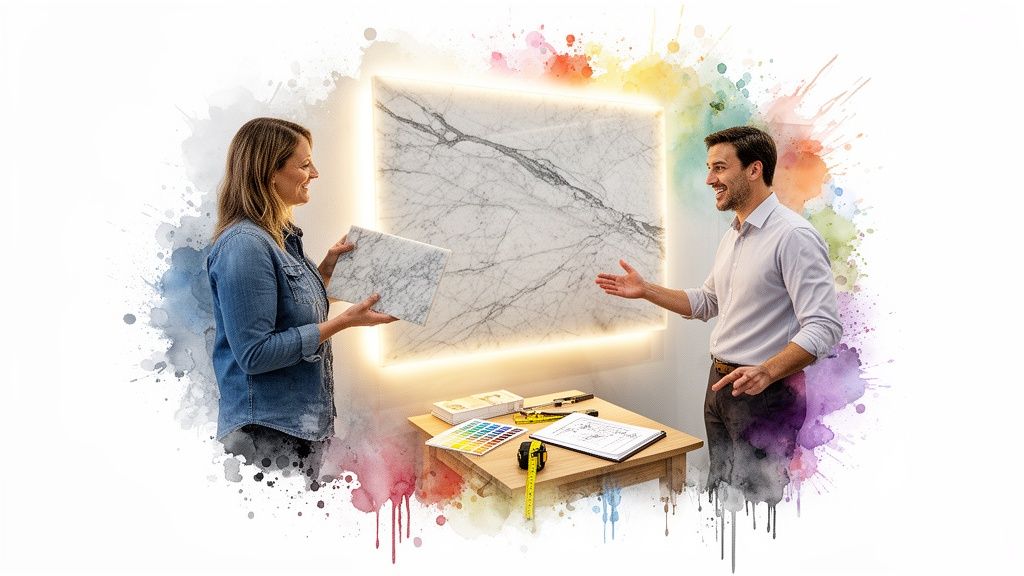
Nothing compares to seeing the perfect stone for your home in person. A computer screen just can’t capture its true character, color, and texture. This guide will walk you through what to expect on a visit, how to prepare, and what makes a quality showroom experience.
Why a Showroom Visit Is an Essential First Step
While online galleries are great for initial ideas, stepping into a stone showroom is a critical step. This is especially true for a major investment like natural stone.
Every slab of marble, limestone, or quartzite is a unique piece of art from the earth. It has its own veining, color shifts, and texture that photos can't fully capture.
A visit to Carmel Stone Imports is more than shopping; it’s a design consultation. You can compare full slabs side-by-side and feel the difference between a honed and a polished finish.
Clients who start their search online often feel "relieved" once they see the materials in person. The hands-on experience confirms their choice and prevents costly mistakes.
Post-pandemic, in-person showroom traffic is climbing as buyers want a tactile experience. This is especially true for high-investment items like marble and porcelain slabs.
Beyond the Pixels: Understanding True Color and Scale
Digital images can be misleading. A stone’s color can look different depending on your screen or the photo's lighting. A creamy limestone might look stark white online.
Seeing the material in person solves this. In our showrooms in Palo Alto, Sand City, and Carmel, you can view slabs under different lighting. This ensures the stone complements your Bay Area home’s cabinetry, flooring, and paint.
Beyond color, seeing a full slab reveals its "movement" and pattern. A tiny sample doesn’t show the dramatic sweep of a vein. Making a final decision based on a small square is a gamble.
How to Prepare for a Productive Showroom Visit
Walking into a room full of towering stone slabs can be overwhelming. A little planning turns this experience into a focused, productive design session.
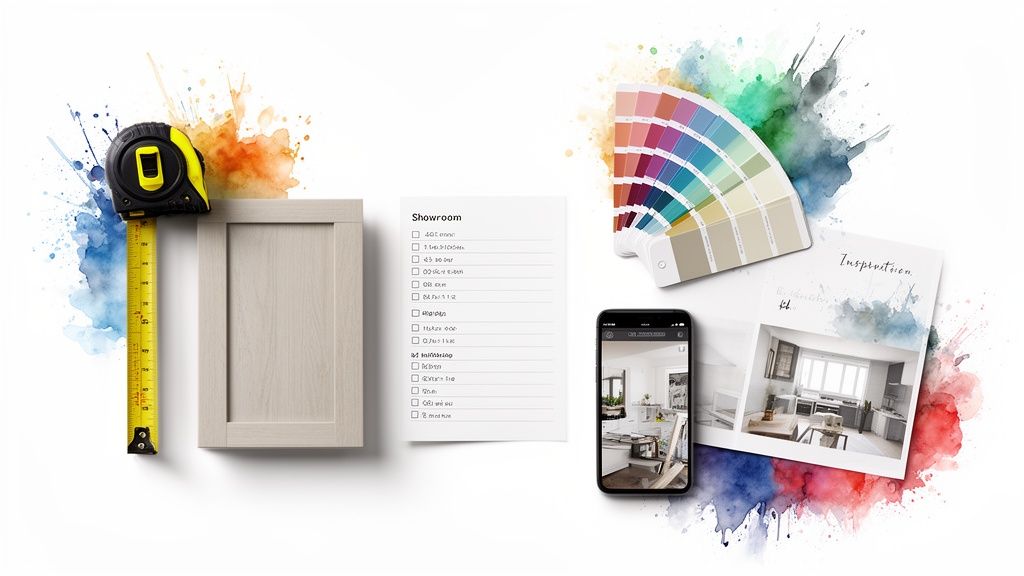
Coming prepared with the right information helps our experts find the perfect match for your home. This is true whether you have a modern kitchen in Palo Alto or a coastal bathroom in Monterey.
Your Essential Prep Kit
Before you head to one of our showrooms, gather a few key items. This project toolkit helps you and our design consultants make confident decisions together.
Here is a quick checklist of what to bring:
- Project Measurements: A simple sketch with dimensions helps us estimate square footage.
- Photos of Your Space: Pictures provide context on lighting, colors, and the room's style.
- Inspiration Images: Pinterest boards or magazine clippings help communicate your vision.
The Game-Changer: Bringing Material Samples
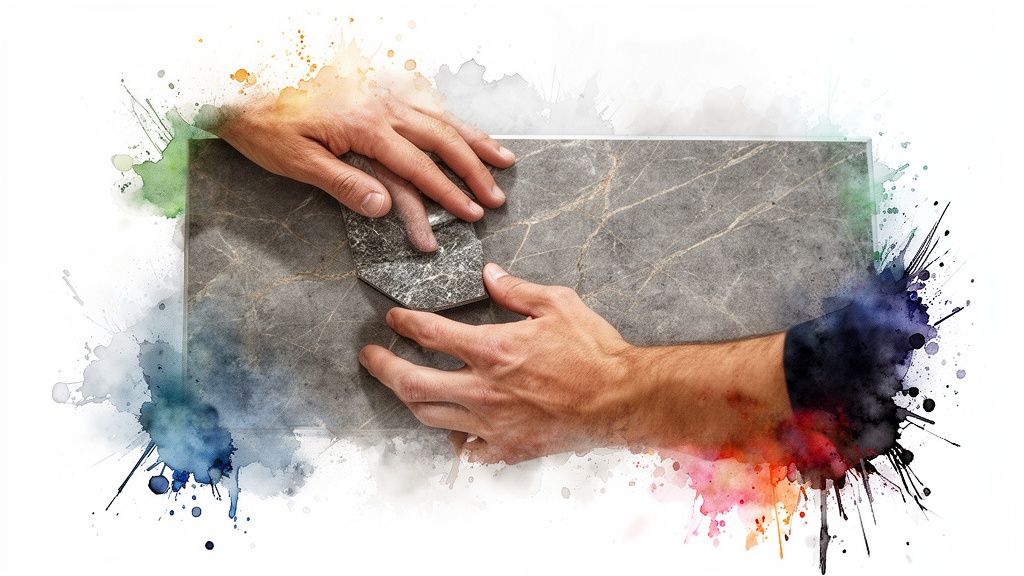
The most effective thing you can do is bring physical samples of your other design elements. There's no substitute for laying a cabinet door against a slab to see how they interact.
A common mistake is trying to match materials from memory. The subtle undertones in a paint chip or wood cabinet can clash—or harmonize—in unexpected ways.
Bringing these items helps you build a cohesive design story in the showroom. It is a key step in the smart homeowner’s guide to visiting a stone showroom.
Your sample kit should include:
- A cabinet door or drawer front
- Paint swatches for walls and trim
- Flooring samples (wood, tile, etc.)
- Backsplash tile samples
- Fabric swatches from furniture or window treatments
Arriving prepared helps you collaborate with our experts, turning your visit into an exciting design session.
Navigating the Showroom and Evaluating Slabs Like a Pro
When you enter a stone showroom, it's easy to feel overwhelmed. But with the right strategy, the experience becomes exciting and productive.
A stone specialist will guide you through the different sections. They will explain what makes each material unique. This is your chance to see how different finishes and patterns look in person.
Seeing the Bigger Picture Beyond the Sample
Small samples don't tell the whole story. Natural stone has "movement"—the flow of veins, mineral clusters, and color shifts across the slab.
You must evaluate the full slab you plan to reserve. Walk its length, step back to see the overall pattern, and inspect details up close. This ensures you love the entire piece.
One of the most common regrets we hear from people who bought stone elsewhere is that they chose based only on a small sample. The full slab's pattern was often bolder or more subdued than they expected.
Viewing the entire slab lets you see its true personality and confirm it’s the perfect fit.
The Critical Role of Lighting and Angles
Lighting is everything when it comes to stone. A slab can look different under warehouse fluorescents versus the warm, natural light of a California kitchen.
Here are a few pro tips:
- View it from multiple angles: Walk around the slab to see how light catches different minerals and textures.
- Use your phone's flashlight: Shine it across the surface at a low angle to highlight textures, fissures, or the finish quality.
- Ask to see it in natural light: If possible, ask to move the slab near a large door or window for the most honest view of its color.
This careful inspection helps you picture how the stone will look in your daily life.
Understanding Key Stone Characteristics
It helps to be familiar with the different types of stone flooring and countertop materials. Globally, granite and marble are top choices, making up over a third of the market according to some reports.
Pay attention to the finish. A polished surface is glossy, while a honed finish is matte and soft. Each finish affects the look and maintenance requirements of the stone.
What to Ask Your Stone Specialist
Your showroom visit is a chance to talk with an expert. The specialists at Carmel Stone Imports have deep knowledge, and asking the right questions is key.
This conversation turns a shopping trip into a design consultation. You will leave with total confidence in your choice.
Questions About Origin and Quality
First, understand the story behind the stone. Its origin and geology are critical. Not all slabs are equal, even if they share the same name.
Try asking these questions:
- Where was this specific stone quarried? A stone's home country—be it Italy, Brazil, or India—influences its color and durability.
- Is this material consistent, or does this lot have unique features? Some materials are uniform, while others vary wildly from one shipment to the next.
- Can you point out any natural fissures, pits, or fill in this slab? These are part of the stone’s natural story, not necessarily defects.
Getting these details helps you appreciate the material for what it is.
The most informed homeowners are always the happiest. They ask about the 'why' behind the stone—its geology and journey—which builds a deeper connection.
Questions About Performance and Daily Life
How a stone looks is one thing; how it lives is another. Your lifestyle is the ultimate test for any material.
Get practical with these questions:
- How does this stone handle heat? This is vital information for kitchen countertops.
- What’s its resistance to staining from things like wine or coffee? A stone's porosity determines how quickly it absorbs spills.
- How does it hold up to scratches or etching from acidic foods? This reveals differences between hard stones like quartzite and softer ones like marble.
Nailing down these performance facts ensures you pick a stone that looks incredible and stands up to daily use.
Questions About Logistics and Project Planning
Once you're close to a decision, it's time to talk logistics. These questions are crucial for your project’s timeline and budget.
Clarify these next steps:
- What is the lead time for this material?
- How many slabs do you have from this exact lot?
- What’s your process for reserving a slab?
Asking these questions helps you and your designer plan with confidence. It prevents last-minute surprises or delays.
Finalizing Your Choice and Reserving Your Slab
You’ve explored the options, compared textures, and asked the right questions. Then, you see it—the perfect slab. A few final steps ensure that exact piece makes it into your home.
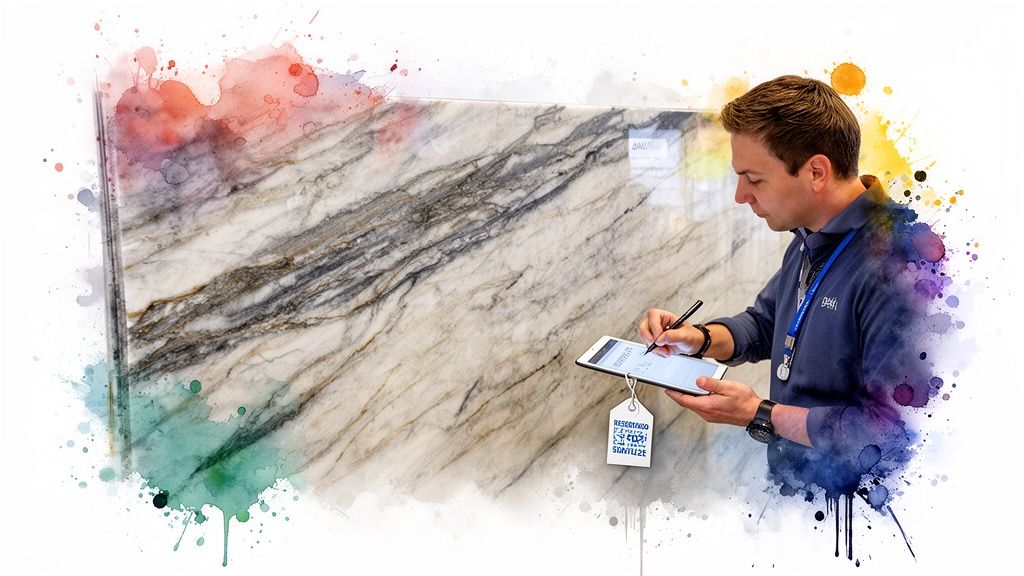
This part is critical when working with natural stone. Each slab is unique. If you don't reserve the one you picked, someone else could claim it.
The Importance of Reserving Your Slab
Think of reserving your slab like putting a "sold" tag on art. It’s your official claim. At Carmel Stone Imports, we immediately tag your chosen slab with your project details.
This reservation is a key part of the smart homeowner’s guide to visiting a stone showroom. It removes the risk of mix-ups and guarantees you get the slab you approved.
Reserving your slab is the most important action after making a decision. It provides peace of mind and ensures the slab you see is the exact slab you'll get.
Documenting Your Choice Like a Pro
Even though the showroom will tag the slab, it’s good practice to create your own record. This serves as your backup.
Here’s a quick checklist for documenting your selection:
- Take Detailed Photos: Snap a full shot of the slab and close-ups of details you love.
- Photograph the Tag: Get a clear photo of the identification tag with the lot number and slab number.
- Note the Details: Jot down the identification numbers, the date, and the specialist's name.
These records ensure everyone on your project team is on the same page.
Coordinating Matching Materials
Many projects need more than one piece of stone. You might need matching tiles for a shower or multiple slabs for a large kitchen.
With your main slab in front of you, coordinating these materials is much easier. You can hold tile samples against the stone to find a perfect match. You can also confirm multiple slabs are from the same lot for a consistent look.
Frequently Asked Questions
Stepping into the world of natural and engineered stone can bring up questions. We’ve answered some common ones to help you feel prepared.
Do I need an appointment to visit a Carmel Stone Imports showroom?
While walk-ins are welcome, we highly recommend an appointment. Booking a time ensures a dedicated stone specialist is available just for you. This allows for a personalized consultation focused on your project's unique needs.
How long should I plan for my showroom visit?
We suggest setting aside at least one to two hours. This gives you plenty of time to browse our collections without feeling rushed. It allows for a thoughtful comparison of materials and a detailed conversation with our experts.
Can I take samples home with me?
Yes, absolutely! We encourage you to take small samples home. Seeing a material in your own space is the only way to know how it will react to your home’s unique lighting throughout the day.
What is the difference between seeing a stone online versus in the showroom?
The difference is night and day. A photo can't capture the true depth, texture, or the way light plays across a stone's surface. An in-person visit lets you experience the stone’s scale and character, helping you make a choice you’ll love for years.
What if I see a slab I love at one location but live closer to another?
This is no problem at all. Our showrooms in Palo Alto, Sand City, and Carmel are fully connected. If you find the perfect slab in one location, we will coordinate everything to ensure that exact piece is available for your project.
Ready to see it all for yourself? The expert team at Carmel Stone Imports is here to guide you through our stunning collection and help you find the perfect stone for your project.
Visit our showrooms in Palo Alto, Sand City, or Carmel today to start your design journey!