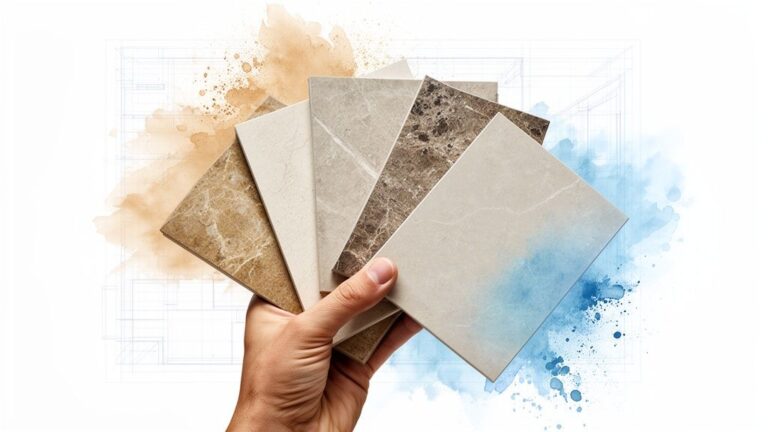
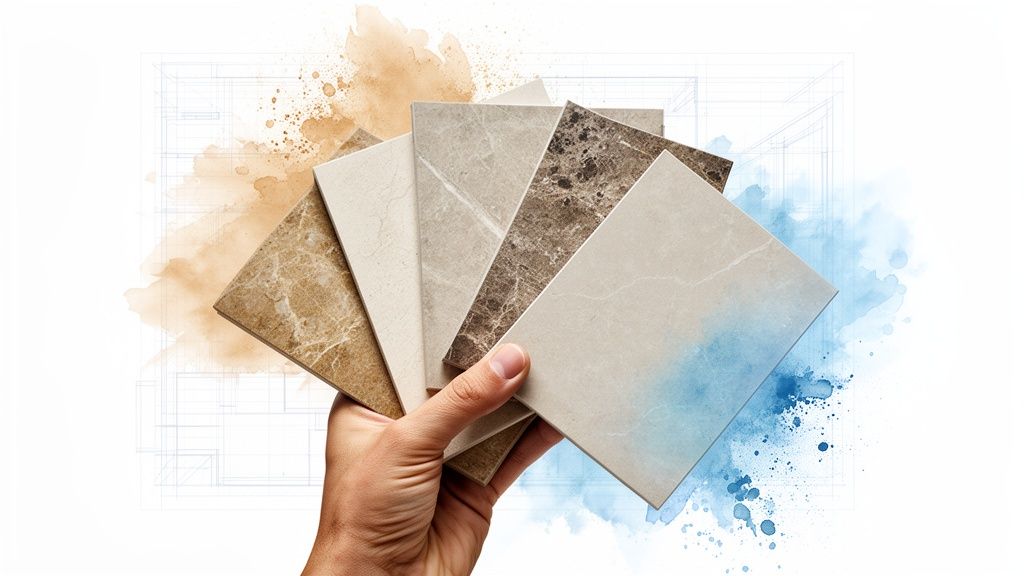
Flipping through inspiration galleries is a great part of planning a remodel. But the secret to a project that looks flawless isn't in the photos. It’s in the quiet decisions made before a single tile is chosen. This guide takes you beyond pretty pictures to ensure your tile choices are a long-term success.
Your Guide to a Flawless Tile Remodel
Choosing tile for your home remodel should be exciting. It's also the first place where expensive mistakes can happen. Many guides focus on color and patterns but often skip over the technical side.
Getting these choices right is key to a beautiful, durable result. We'll explain the differences between materials and why a supplier's knowledge matters. Making informed choices now prevents headaches later.
Moving Beyond Generic Advice
Most online advice shows products without explaining why one tile is better for a specific job. For a kitchen remodel, tile must stand up to spills and foot traffic. A pretty picture won't tell you that.
For homeowners in San Jose and Palo Alto, understanding performance factors is key.
- Batch Variation: Making sure every tile comes from the same production run to avoid color differences.
- Material Suitability: Matching the stone's natural properties—like its porosity—to the environment, such as a high-moisture bathroom or a sunny Monterey patio.
- Tile Grading: Knowing the difference between quality ratings that dictate how a tile will wear over years of use.
- Ethical Sourcing: Understanding where your natural stone comes from and the standards behind it.
The Value of Expert Guidance
Natural materials like travertine, limestone, and quartzite are very popular. They capture California's love for indoor-outdoor living. But these authentic stones have their own rules.
Using a soft limestone in a high-traffic entryway can quickly lead to scratches. You can learn more about the benefits of shopping at a tile showroom where experts can guide you.
At Carmel Stone Imports, our team doesn't just sell tile; we give you the knowledge to use it correctly. We can explain which finishes are best for outdoor use and which stones can handle a busy family kitchen. That guidance ensures your tile stays beautiful for years.
Choosing the Right Tile Material for Your Space
Picking the perfect tile goes deeper than just falling in love with a color. A tile's core properties—its strength, porosity, and texture—dictate how it performs over time.
This is a critical decision in any remodel. The first step is to understand the real-world differences between natural stones and manufactured materials like porcelain. Each has its place, but they are not the same.
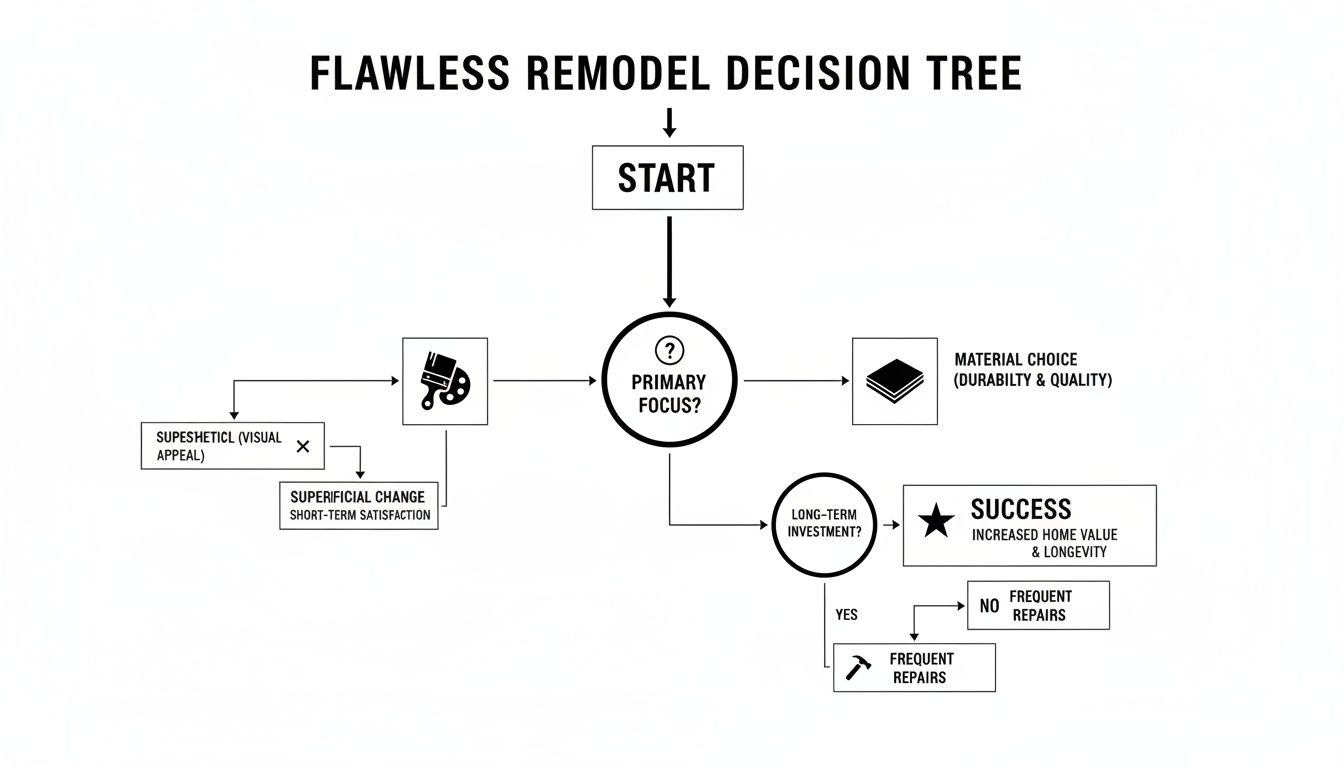
This decision tree highlights a key concept: a successful remodel is built on the right material. Focusing only on looks can lead to preventable problems. It's about ensuring the project ends in success, not surprise repairs.
Natural Stone: The Timeless Choice
There's a special beauty to natural stone like marble, limestone, and travertine. Every tile is unique, with its own veining and character. For homeowners in the Bay Area, that authenticity connects their home to the natural world.
But not all stones are created equal. A porous Carrara marble might look incredible at first but could stain easily in a busy kitchen. A dense quartzite delivers similar elegance with more resilience.
That’s where expert guidance is so important. Our team can show you a hand-chiseled French limestone for a Monterey home, but we’ll also explain its care needs. We help you balance your vision with the practical demands of your lifestyle.
Understanding Key Performance Ratings
To make an informed choice, you need to understand tile performance. Two important metrics are the PEI rating and the DCOF rating. These numbers tell you about safety and durability.
-
PEI Rating (Porcelain Enamel Institute): This is a tile's hardness score. A low rating (PEI 1) is fine for a guest bathroom wall, but you’ll need a PEI 4 or 5 for a busy entryway.
-
DCOF Rating (Dynamic Coefficient of Friction): This is all about grip. A higher DCOF value means more slip resistance—a must for bathroom floors and outdoor patios in our coastal California climates.
Choosing the right tile for your space is critical. A tile with a low DCOF rating might be beautiful on a wall but dangerous on a shower floor. Professional advice prevents a beautiful design from becoming a problem.
Matching Material to Environment
The most important factor is where the tile will be used. A sunny patio in San Jose needs a tile that can handle UV exposure without fading. A steam shower demands a material with very low porosity to prevent water damage.
Porcelain is known for its durability and is great for many uses. Yet, nothing can truly match the authentic texture of natural stone. A properly sealed travertine can bring a Mediterranean vibe to an outdoor living space. You can explore more ideas in our guide to the best tile for San Francisco renovations.
By understanding the tile’s properties, you can ensure your investment stays beautiful for decades. The goal is to find a tile that meets your design dreams and thrives in its environment.
Planning Your Tile Scale, Pattern, and Layout
How a tile pattern looks in a magazine can be very different from how it feels in your room. The art of tile design is understanding the balance between scale, pattern, and layout. Get it right, and you elevate a space.
There's a common myth that small rooms need small tiles. The opposite is often true. Large-format tiles can make a small bathroom feel much bigger by reducing busy grout lines.
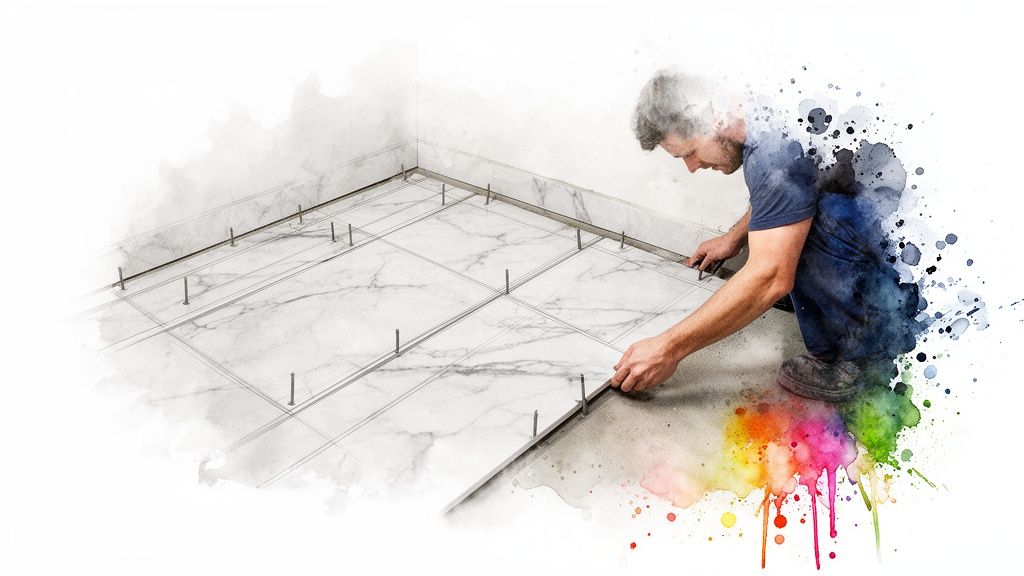
The Power of a Dry Lay
Before you begin, a dry lay is your project’s most important rehearsal. This is where you arrange the tiles without setting them. It’s a simple step that helps avoid layout disasters.
A dry lay lets you see how the pattern will flow and where cuts will land. It’s your chance to avoid awkward sliver cuts against a wall.
A dry lay is also a creative opportunity. You can make sure the most dramatic part of the stone’s veining becomes the hero of the room, not something hidden in a corner.
How Tile Edges Shape the Final Look
The edge of a tile may seem like a small detail, but it has a huge impact. It dictates the width of your grout lines and the overall feel of the surface.
Here’s a quick rundown of what you’ll find:
- Rectified Edges: These tiles are cut to a precise size after firing. This allows for super-thin grout lines (as narrow as 1/16") for a modern look.
- Pressed Edges: These tiles have a slightly rounded, softer edge. They require wider grout joints, adding texture and a more traditional feel.
- Tumbled Edges: Often found on natural stone, these tiles have a weathered, rustic look. It's perfect for adding old-world character, especially in homes with a coastal or Mediterranean vibe.
The edge you choose works with the tile’s scale. For more on large tiles, check out our post about large-format tile design and benefits. A tumbled travertine with wider grout lines tells a totally different story.
Aligning Pattern with Architectural Style
Finally, the tile pattern should connect to your home's architecture. A classic running bond or herringbone pattern feels right in traditional designs. A simple stack bond, with tiles in a clean grid, is perfect for a contemporary space.
For homes that blend styles, like the Spanish-modern designs in Monterey and Carmel, a pinwheel or Versailles pattern can add interest.
Planning your scale, layout, and edge details ensures the final result is intentional. This thinking transforms a simple tiled surface into a defining feature of your home.
Mastering the Details with Grout Joints and Transitions
An exceptional tile project is all in the finishing touches. Details like grout lines and transitions separate a good result from a flawless one. Grout is more than just filler; it's a powerful design tool.
The color and width of your grout can make tiles pop or blend them together. Getting these small details right is essential. For this kind of work, an experienced hand makes all the difference. professional tile and grout services can help you achieve that perfect finish.
Choosing the Right Grout for Durability
The type of grout you select is critical for performance. Your two main options are cement-based grout and epoxy grout.
- Cementitious Grout: This is the industry standard. It's affordable and comes in many colors, but it needs to be sealed regularly to resist stains.
- Epoxy Grout: Made from epoxy resins, this grout is non-porous and incredibly resistant to stains and moisture. It's the champion for kitchen backsplashes and shower floors.
While epoxy grout costs more upfront, its durability is a smart investment. It saves you the headache of sealing and holds up to tough cleaning.
Why Expansion Joints Are Non-Negotiable
Expansion joints are vital for the life of any large tiled surface. They absorb the natural movement of a building and the tile itself.
Without them, pressure builds up and can cause cracked tiles. This is a crucial point in an advanced guide to avoiding tile mistakes in your remodel because it's a detail that basic advice often misses.
Skipping proper expansion joints can be a costly mistake. It is a leading cause of tile failure, especially in areas with temperature shifts like California's Central Coast.
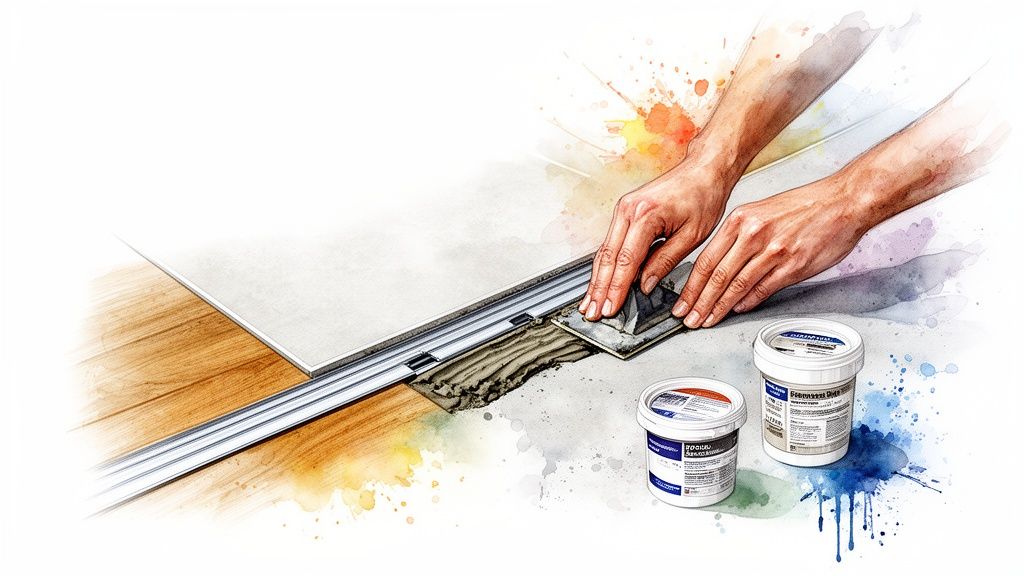
Planning for Seamless Transitions
The final element of a polished design is how your tile floor meets other materials. A clunky transition strip can disrupt the visual flow of your home.
Planning these intersections from the beginning is key. The goal should be a transition that feels flush and minimal. For California homes that prize an indoor-outdoor connection, this detail is very important.
Sourcing Your Tile and Ordering the Right Amount
Sourcing your tile is one of the most critical steps. Getting it right ensures visual consistency and saves you from costly delays.
The first rule is to order all your tile for the entire project at once. This guarantees consistency. Natural stone and porcelain tiles are made in batches, and each run can have slight variations in color and tone.
The Importance of Overages
One of the biggest mistakes is ordering the exact square footage needed. It’s a best practice to order 10–15% extra tile. This isn't waste; it’s your project’s insurance policy.
This overage covers cuts needed around corners and doorways. It also accounts for accidental breakage. Having extra tiles is a lifesaver for future repairs, ensuring a perfect match.
Understanding Batch Variation
Every box of tile has a code for its production run, or "dye lot." Think of it like a vintage of wine—each batch has its own character. For natural stone, this means subtle shifts in veining. For porcelain, it could be a slight color difference.
When tiles from different batches are placed side-by-side, the result can look like a mistake. A reputable supplier manages their inventory to ensure your entire order comes from a single batch.
This is a key part of our advanced guide to avoiding tile mistakes in your remodel. Partnering with experts protects you from these costly errors. Find out more on how to find a reliable natural stone tile supplier in the Bay Area.
The Power of Physical Samples
Showroom lighting is designed to make materials look their best. Your home’s lighting is unique. The way light streams through a window in a Palo Alto home will be different than in a San Francisco kitchen.
For this reason, you should always view physical samples in your own space. Bringing a sample home lets you see how the color and texture shift throughout the day. This simple step confirms your choice and prevents surprises.
Where Do You Go From Here?
You’ve just walked through the plan for a successful tile remodel. This guide was designed to show you how focusing on the small stuff early on leads to a beautiful, long-lasting result.
But research can’t replace seeing and feeling these materials for yourself. Natural textures like travertine and limestone are making a huge comeback. Comparing an authentic stone to its alternatives in person closes the gap between an idea and a stunning reality.
From Vision to Reality
Getting the right guidance upfront ensures your tile looks incredible and performs as it should. If you're remodeling in the Monterey, San Jose, or San Francisco areas, the best way to solidify your choices is to visit a showroom.
We invite you to stop by a Carmel Stone Imports showroom in Carmel, Sand City, or Palo Alto to speak with our experts. Let's work together to turn your vision into a stunning reality. Your perfect remodel is within reach.
Frequently Asked Questions
When you're deep in the details of a remodel, questions come up. To help, we've gathered some common ones we hear from homeowners in the Bay Area. Think of this as part of our advanced guide to avoiding tile mistakes in your remodel—a little extra clarity to help you move forward.
What's the real difference between rectified and non-rectified tile?
Rectified tiles are cut to a precise size after firing, creating sharp edges. This allows for very thin grout lines (as narrow as 1/16 inch), which creates a clean, modern look. Non-rectified tiles have slightly rounded edges, requiring wider grout lines for a more traditional or rustic feel.
How do I choose between a honed or polished finish?
A polished finish is glossy and reflective, making the stone's color and veining pop. However, it can be slippery when wet, so it's often better for walls or low-traffic floors. A honed finish is matte and non-reflective, offering more grip underfoot, which makes it a safer choice for busy floors in kitchens and bathrooms.
Why is ordering a tile sample so important?
A sample lets you see the tile’s true color and texture in your home, under your unique lighting. It helps you see how the material works with your cabinets, paint, and countertops. This simple step can save you from the costly mistake of choosing a tile that doesn't look the way you imagined.
What does "tile grading" actually mean for me?
Tile grading is a quality rating from Grade 1 to Grade 3. Grade 1 is the highest quality, with uniform size and color, making it suitable for any application. Lower grades may have more imperfections and are often better for areas where perfect visual consistency isn't the top priority.
How much extra tile should I really order?
The industry standard is to order 10-15% more tile than your actual square footage. This "overage" covers cuts needed for fitting tiles around corners and fixtures, as well as any accidental breakage. Most importantly, it leaves you with perfectly matching tiles for any future repairs.
Ready to make your tile selections with total confidence? The experts at Carmel Stone Imports are here to guide you. Visit one of our showrooms in Carmel, Sand City, or Palo Alto, or contact us today to get started on your flawless remodel.