
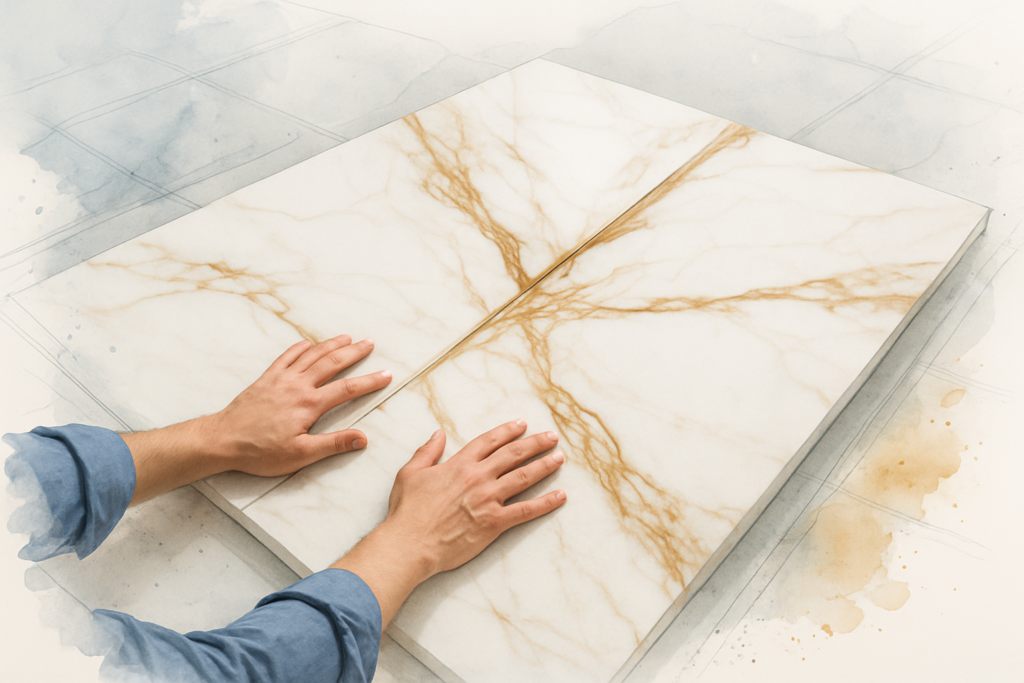
Direct Answer: Before choosing a marble slab, ask about etching risk, surface finish, the specific variety and its origin, and whether bookmatching is possible — these four factors determine how satisfied you’ll be three years from now.
Most buyers who feel burned by marble don’t say the stone looked wrong. They say they weren’t told something important before they bought it. That pattern shows up repeatedly in conversations with homeowners across the Monterey Peninsula and Bay Area — the stone was beautiful, the photos were convincing, but nobody explained what they were actually signing up for.
Choosing a marble slab involves a short list of decisions that have long-term consequences. Get them right and you’ll have a surface you’re proud of for decades. Get them wrong and you’ll spend years managing a material that wasn’t right for your situation.
This guide walks through the questions that matter most — the ones worth asking before a slab is ordered, before fabrication begins, and certainly before anything is set in stone.
The Question Most People Never Ask: What Actually Causes Etching?
Etching is the single most misunderstood aspect of marble ownership, and it’s the root cause of most buyer regret. According to the Marble Institute of America, marble is a calcium carbonate-based stone, which means it reacts chemically when it contacts acidic substances — citrus juice, wine, vinegar, certain cleaning products, even sparkling water left sitting on the surface.
The result isn’t a stain. Etching is a surface change — a dull, slightly rough patch where the polished finish has been chemically worn away. It won’t wash off. It won’t respond to sealing. Once it happens, the only fix is re-polishing.
This distinction matters enormously depending on where you’re putting the stone:
- Kitchen countertops see lemon, tomatoes, and coffee daily — etching is a near-certainty over time
- Bathroom vanities are lower risk but not immune — toothpaste and some skincare products are acidic
- Fireplace surrounds, accent walls, and low-contact surfaces can live beautifully in marble with minimal etching risk
The question to ask before you buy: What is this surface going to contact on a typical day, and am I comfortable with how marble responds to that? A knowledgeable showroom consultant will walk you through this honestly — and if they don’t bring it up unprompted, that’s a signal worth paying attention to.
Polished vs. Honed: Why the Finish Decision Has to Happen First
Surface finish isn’t an aesthetic preference — it’s a practical decision that affects how the marble performs and how much maintenance it requires.
Polished marble has a high-gloss surface that makes veining pop and color appear richer. It’s the classic look most people picture when they think of Italian marble. But polished surfaces make etching highly visible, because the contrast between the glossy surround and the dulled etch mark is immediately obvious.
Honed marble has a matte or satin finish. It hides etching significantly better because the surface doesn’t have a reflective baseline to contrast against. It also tends to be more forgiving with fingerprints and water spots. The trade-off is that honed surfaces are more porous and require more diligent sealing — typically every six to twelve months depending on use.
Why does this have to be decided before fabrication? Because finish is applied during the fabrication process. Once a slab has been cut and polished, reversing the decision means re-processing the stone — which adds cost and time. Decide on finish before the slab leaves the yard.
If you’re using marble in a high-contact kitchen application and you want to minimize daily maintenance frustration, honed is almost always the more practical choice. For a bathroom vanity or a feature wall in a Carmel-by-the-Sea home where the surface sees limited contact, polished can work beautifully without much compromise.
Calacatta vs. Carrara: They’re Not the Same Stone
These two names get used interchangeably in showrooms, on design blogs, and in contractor conversations — but they are genuinely different materials from different quarrying regions in Italy, and the difference affects both appearance and price.
Carrara marble comes from the Carrara region of Tuscany, one of the most extensively quarried regions in the world. It typically has a softer white or blue-grey background with fine, feathery grey veining. Because it’s quarried in high volume, it tends to be more accessible in terms of price — though cost still varies significantly based on slab size, thickness, and lot quality.
Calacatta marble also originates in the Carrara mountains but comes from higher-elevation, more limited quarries. The result is a whiter background with bolder, more dramatic veining — often in gold or deep grey tones. It’s scarcer, which is reflected in the price. Calacatta is what’s behind the dramatic marble looks you see in luxury kitchen features and high-end design publications.
When a caller asks about Calacatta marble by name, they’ve typically done their homework and have a specific look in mind. Understanding the distinction helps you evaluate quotes accurately: if two suppliers are pricing what sounds like the same stone but at very different numbers, the variety and lot quality may not be the same material at all.
Other specific varieties worth knowing by name include Breccia Blue and Bestia Antico — both of which attract buyers looking for something more distinctive than the standard white-and-grey palette. Asking a supplier to identify the exact variety, origin, and lot of a slab — not just the general category — is a reasonable question that any reputable source should be able to answer. You can also see how marble compares to other natural stone choices in this overview of marble, quartzite, granite, or porcelain — how to actually decide.
Calacatta vs. Carrara: Key Differences at a Glance
These two marble varieties are often confused, but their differences are real and affect both aesthetics and budget planning.
| Feature | Calacatta | Carrara |
|---|---|---|
| Origin | High-elevation Carrara quarries, Italy | Carrara region, Tuscany, Italy |
| Background color | Bright, bright white | White to blue-grey |
| Veining | Bold, dramatic — gold or deep grey | Finer, softer, feathery grey |
| Relative scarcity | More limited supply | More widely quarried |
| Typical price tier | Higher — varies by lot quality | More accessible — still varies significantly |
| Best for | Statement countertops, feature walls | Bathrooms, transitional spaces, broader use |
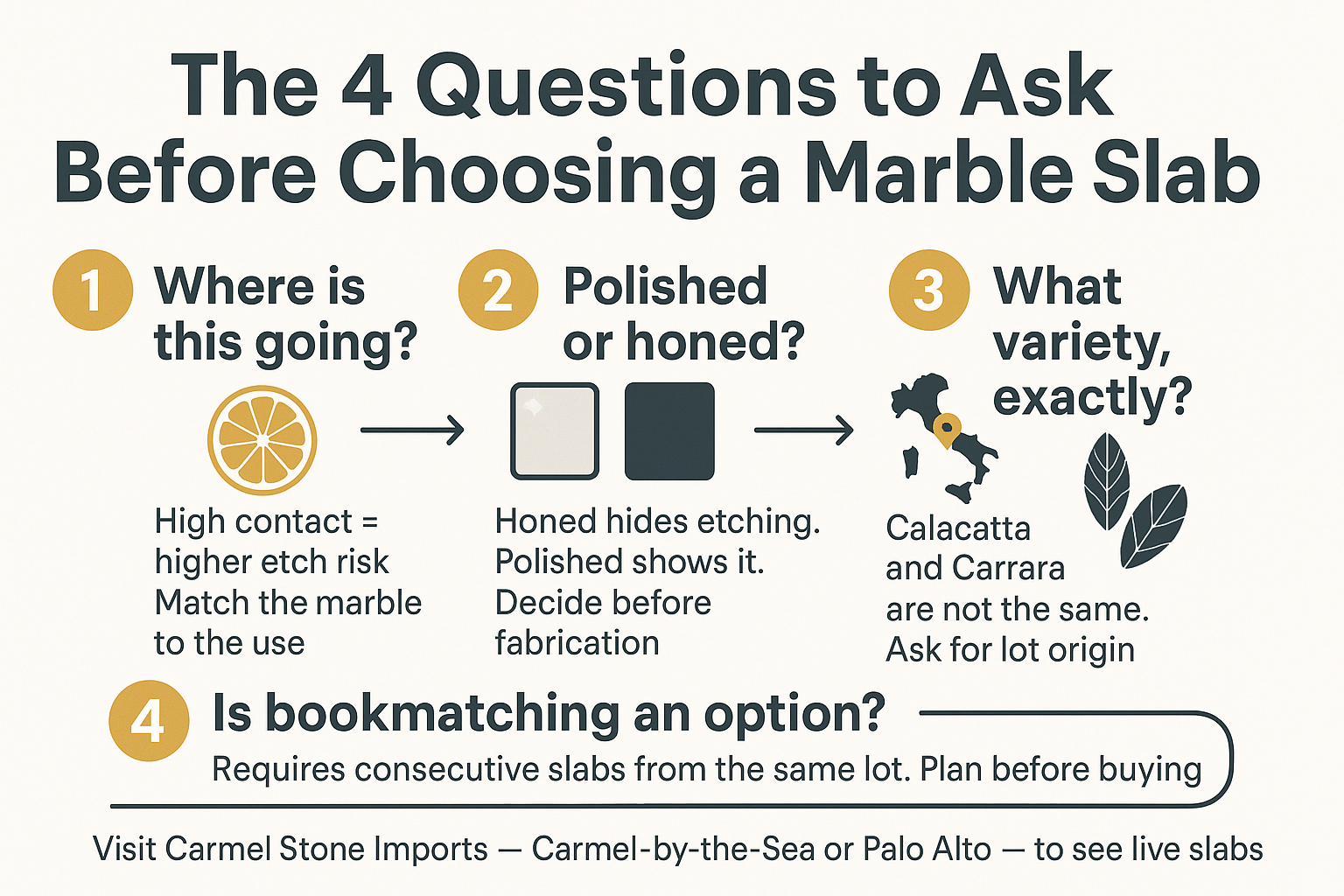
The Four Questions to Ask Before Choosing a Marble Slab
These four questions, asked in the right order, cover the decisions that determine whether a marble slab works long-term for your project.
What Is Bookmatching, and When Is It Worth Pursuing?
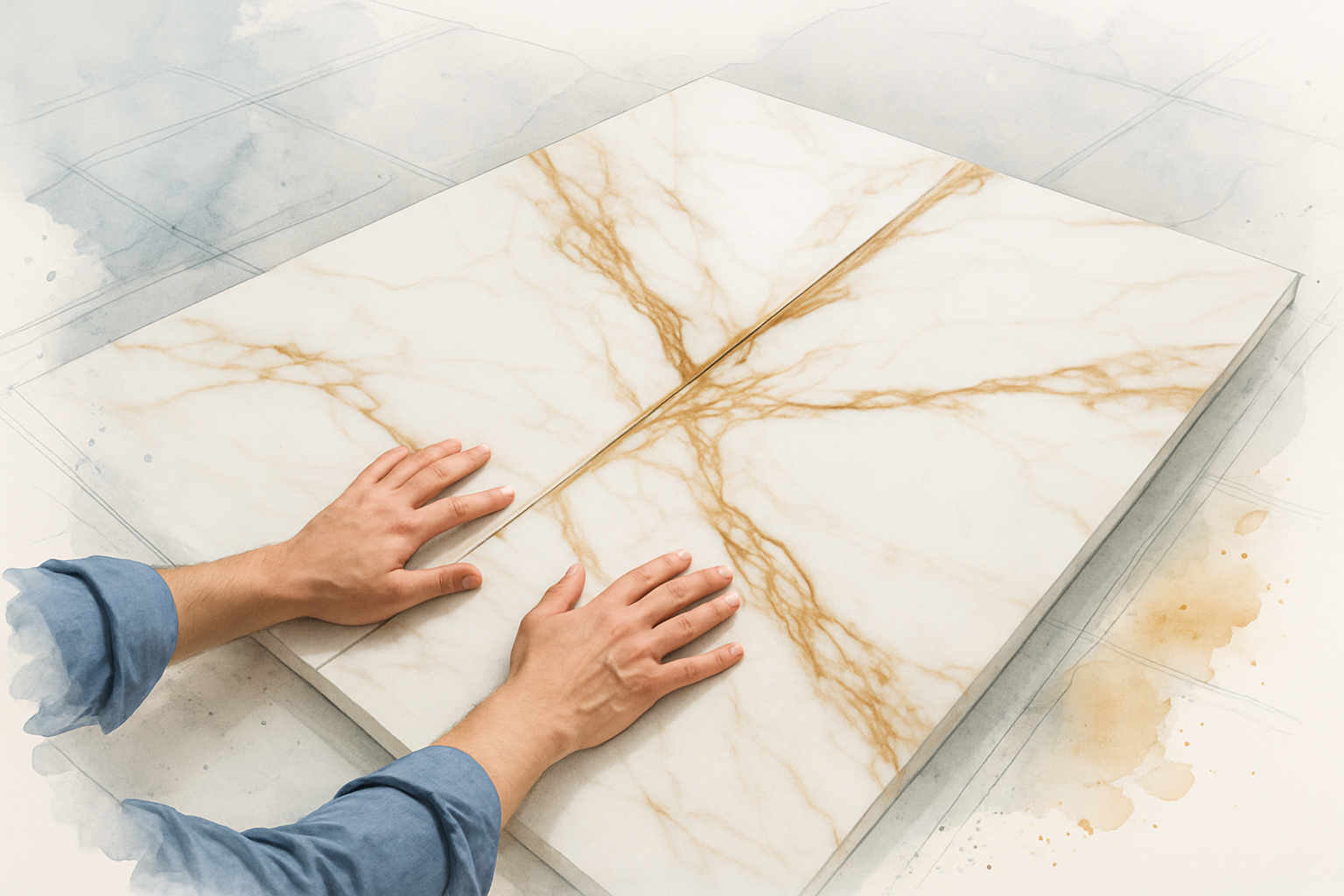
Bookmatching is what creates the dramatic mirror-image veining you see in luxury interiors — the kind where the pattern on one slab opens like the pages of a book and reflects perfectly onto the slab beside it.
It happens because consecutive slabs from the same block are cut sequentially and then opened face-to-face. The veining on each slab is essentially a mirror of the other. When installed side by side — on a kitchen island, a bathroom wall, or a fireplace surround — the result is an effect that simply can’t be replicated with individually selected slabs.
There are three things to understand about bookmatching before you decide:
- It requires consecutive slabs from the same lot. You can’t bookmatched two slabs pulled from different quarry runs — the veining won’t align. This means identifying and reserving the matched pair before either one is sold to someone else.
- It significantly affects how much material you need to order. Bookmatched layouts require precise planning around layout and yield. Your fabricator needs to be involved in this conversation early.
- The visual payoff is real, but not every project calls for it. A kitchen island or a primary bathroom feature wall is a natural candidate. A small powder room or a backsplash is probably not worth the added coordination.
If bookmatching is something you’re drawn to, bring it up during your slab selection appointment — not after. Matching slabs need to be identified while both are still in live inventory, and picking a marble slab in person rather than from catalog images makes this process dramatically more accurate.
For buyers who want to understand what a full showroom slab selection experience looks like before they visit, this guide on what happens when you visit a stone showroom for the first time covers the process from arrival to decision.
Frequently Asked Questions About Choosing a Marble Slab
Can I seal marble to prevent etching?
No — and this is one of the most common misconceptions. Sealing protects marble against staining, not etching. A sealer fills the pores so liquids don’t absorb into the stone. But etching is a chemical reaction on the surface itself, and sealer doesn’t create a barrier against acid. Both honed and polished marble should still be sealed regularly, but sealing alone won’t prevent etch marks from forming.
Is marble a realistic choice for a kitchen countertop?
Yes, but with clear expectations. Many homeowners in Carmel-by-the-Sea and across the Bay Area use marble in their kitchens and love it. The key is understanding that a marble kitchen counter will develop a patina over time — slight etching, minor wear — and some people find that beautiful and characterful. Others find it stressful. If you want a surface that looks exactly the same in year ten as it did on installation day, marble probably isn’t your material. If you appreciate the lived-in quality of natural stone that shows its age gracefully, it can be a genuinely rewarding choice.
How do Calacatta and Carrara compare in terms of cost?
Calacatta marble consistently runs at a higher price point than Carrara, primarily because it comes from more limited quarry sources and is produced in lower volume. Both vary significantly based on slab size, thickness, lot quality, and current availability. For accurate pricing on specific slabs in live inventory, it’s worth calling or visiting a showroom directly — online estimates rarely reflect what’s actually on the floor.
What’s the difference between a marble ‘variety’ and a marble ‘lot’?
The variety is the type of marble — Calacatta, Carrara, Paonazzetto, Breccia Blue, and so on. The lot refers to the specific batch of slabs quarried and shipped together. Two slabs of the same variety from different lots can look noticeably different in background color, veining density, and tone. This is why seeing live slabs — not catalog images — is the only reliable way to know what you’re actually getting.
Do I need to decide on polished vs. honed before I order the slab?
Yes. Finish is determined during fabrication. Once a slab is cut and polished, changing the finish means additional processing. Make the finish decision before the slab goes to your fabricator — and factor in how the surface will be used daily before you decide.
How do I know if a supplier actually has the slab in stock vs. showing me a catalog image?
Ask directly: Is this slab in your live inventory, and can I see it in person? Reputable suppliers maintain physical inventory you can view before purchasing. Several callers to our showroom each month specifically call ahead to confirm a slab is physically on-site before making the drive — that’s a completely reasonable thing to do. If a supplier can’t show you the actual slab, that’s worth factoring into your decision.
What to Do with These Questions Before You Visit a Showroom
Arriving at a slab selection appointment with these questions already in mind changes the conversation. Instead of reacting to whatever is in front of you, you’re making decisions based on your actual project conditions.
Before your visit, it’s worth knowing:
- Where exactly the marble will be installed — kitchen, bathroom, fireplace, exterior feature, or something else
- What the surface will be exposed to daily — food prep, water, cleaning products, heavy traffic
- Whether you have a specific variety in mind — or whether you’re open to guidance based on your project goals
- Whether bookmatching is a priority — so consecutive slabs can be identified while both are still available
One homeowner who contacted the showroom framed it simply: I’m finalizing with my fabricator — can you confirm availability and send slab photos? That’s a buyer who knows what they need. Getting to that level of clarity before you walk in makes the selection process faster and significantly reduces the chance of a decision you’ll second-guess later.
For trade professionals sourcing on behalf of clients, the same principles apply — and understanding what separates a good slab supplier from a frustrating one is worth reading before you establish a sourcing relationship for a major project.
Ready to See the Slabs in Person?
Carmel Stone Imports maintains live slab inventory across its showroom locations in Carmel-by-the-Sea and Palo Alto — which means you can see and select the actual stone, not a catalog image. If you’re working through any of the questions above and want to talk them through before your visit, you can reach the team at (650) 800-7840 or by emailing info@carmelimports.com to schedule a slab selection appointment.