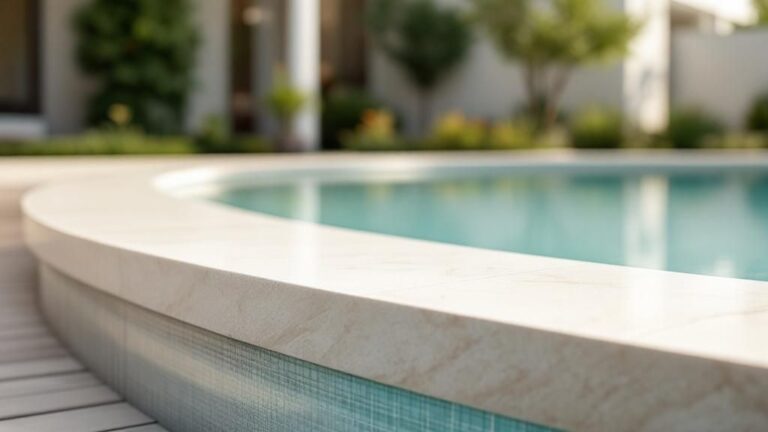
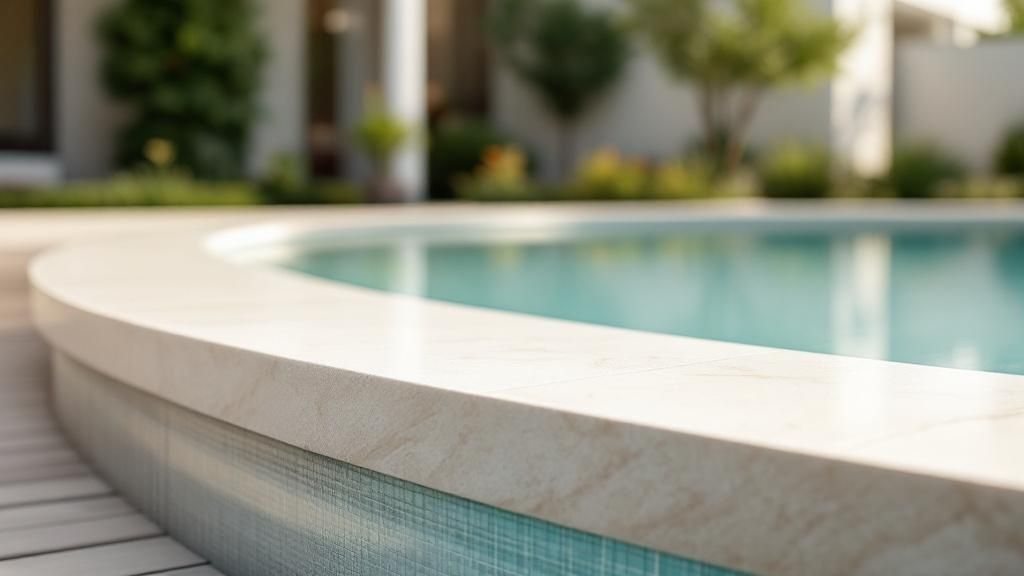
When you're designing a pool, the edge is a big deal. It's not just a border; it frames your whole outdoor space. That's why limestone coping is a very popular choice for swimming pools.
Limestone coping brings together natural looks, safety, and long-lasting strength. Its surface stays cool on hot days and isn't slippery when wet. This makes it a smart choice for any pool in California.
Why Limestone Is a Great Pick for California Pools
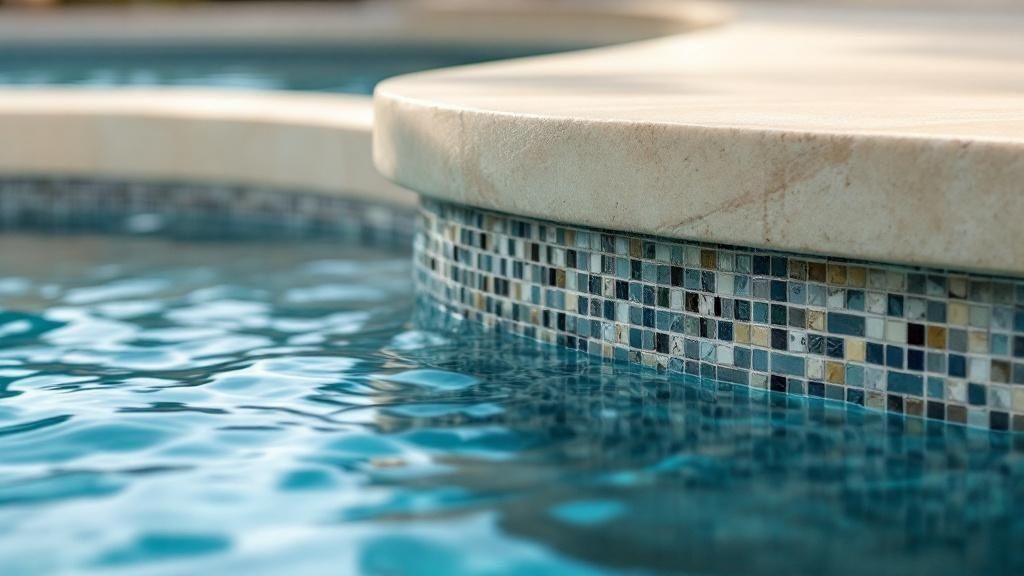
The details around your pool are just as important as the water. For homeowners from the Central Coast to the Bay Area, choosing the right material for the pool's edge is key. Limestone coping is a perfect mix of good looks and practical benefits.
One of the best things about limestone is that it stays cool in the hot California sun. Dark pavers or concrete can get very hot. But limestone's natural color reflects more heat, making it comfortable to walk or sit on.
The Perfect Mix of Safety and Style
Safety is the most important thing around a pool. Limestone has a natural texture that makes it slip-resistant, even when it gets wet. This gives you peace of mind, especially if you have kids.
Limestone also looks beautiful and elegant. It comes in different tones and textures, creating a look that is both fancy and welcoming. It's also very flexible for design:
- Modern Look: For a modern home in Palo Alto, a smooth limestone in light gray or beige creates a clean, simple look.
- Rustic Style: For a rustic home in Monterey, a rough-cut limestone edge adds texture and blends in with nature.
A Smart Investment
Choosing limestone is a good investment in your home. Many people want high-quality, natural materials for their pools. According to a recent report, the market for swimming pool coping stones was valued at USD 1.2 billion in 2024 and is expected to grow. This shows that people prefer materials that are both beautiful and strong.
Limestone offers a unique mix of natural beauty and strength. It stands up to weather while giving your pool an inviting look.
As you look at your options, it's good to compare materials. To help you choose the best stone for your pool, check out our guide on choosing the right stone for your pool.
Picking the Right Limestone for Your Pool
Choosing the right limestone is about more than just color. You also need to think about the finish and the edge style. These details will define the look of your outdoor space.
At Carmel Stone Imports, we help clients in Palo Alto and the Bay Area choose the best options. Popular choices like Beige Palancar have a soft, classic look. Others like Grey Osiris have richer, darker tones for a more dramatic feel.
Finding the Right Finish for Style and Safety
The finish of your limestone is very important. It affects how the stone looks and how safe it is. The right texture makes your pool edge safe without giving up style.
Here are a few common finishes:
- Honed Finish: This finish is smooth and matte. It looks clean and modern but may be less slip-resistant.
- Tumbled Finish: This finish gives the stone an aged look. It has a slightly rough surface that adds character and better grip.
- Brushed Finish: A wire brush creates a unique, textured surface. It provides great traction and looks good with many design styles.
It helps to see how natural stone compares to other options. For more information, read our complete guide comparing natural stone vs engineered stone.
Choosing an Edge Profile
The edge profile is the shape of the coping's edge. This small detail has a big impact on the look and feel of your pool.
A bullnose edge is rounded and smooth. It is a classic choice because it's comfortable for swimmers to hold onto and looks soft and inviting.
A chiseled edge looks rough and natural, perfect for a rustic pool in the Monterey area. For a modern look, a straight or eased edge has clean lines. Each profile changes how you use and enjoy your pool.
Comparing Limestone Coping Edge Profiles
| Edge Profile | Description | Best For | Key Benefit |
|---|---|---|---|
| Bullnose | A fully rounded, smooth edge. | Traditional, family-friendly pools. | Comfortable to grip and sit on. |
| Eased | A squared edge with slightly softened corners. | Modern, minimalist designs. | Creates clean, sharp architectural lines. |
| Chiseled | A rough, hand-hewn edge. | Rustic, naturalistic, or Mediterranean styles. | Adds texture and an organic feel. |
| Tumbled | Softened, slightly irregular edges. | Old-world or Tuscan-inspired pools. | Provides a worn-in, aged appearance. |
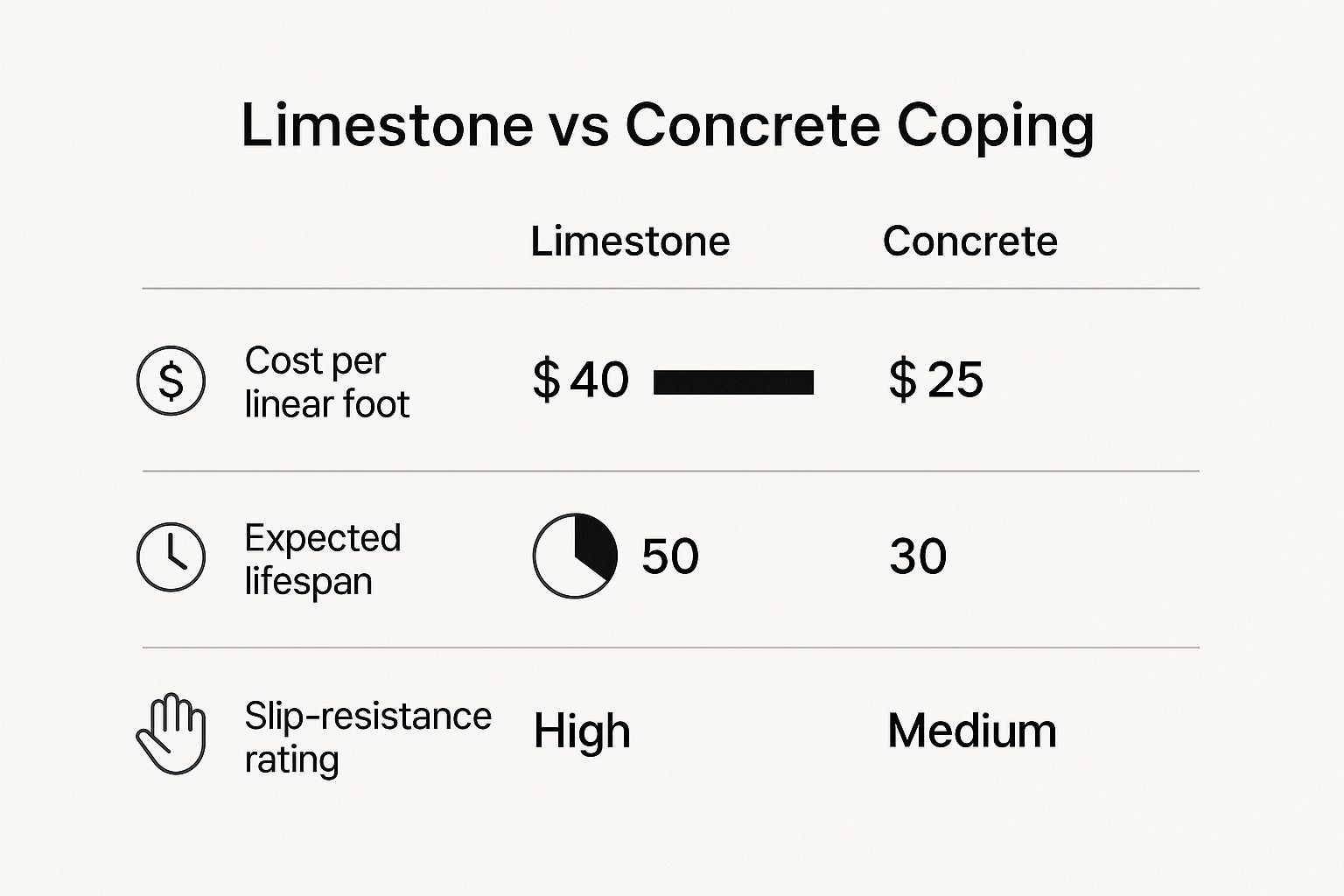
While limestone might cost more at first, its long life and better safety make it a great value over time.
How to Install Limestone Coping Correctly
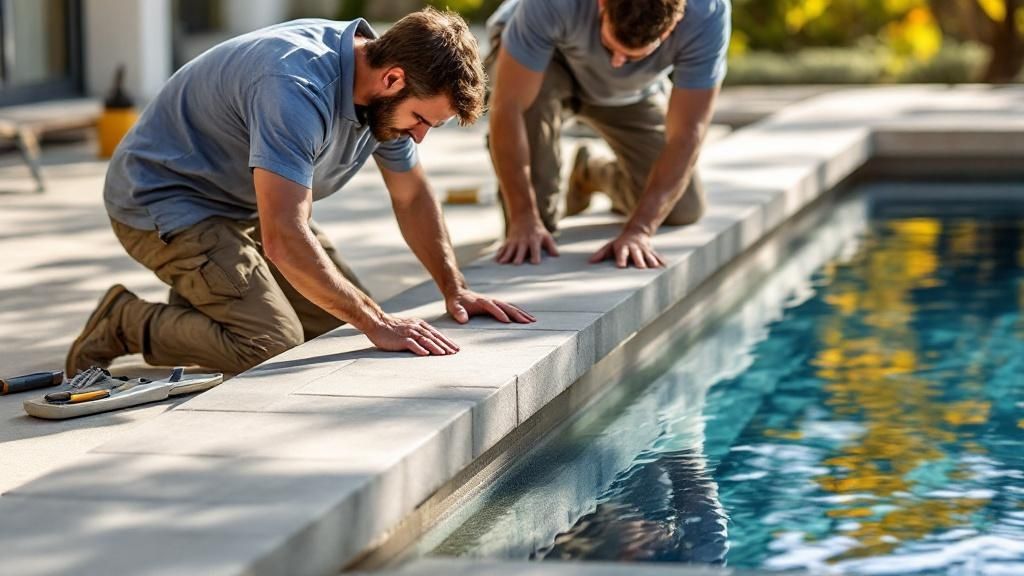
A beautiful limestone coping swimming pool needs a great installation. Even the best stone can have problems if it's not installed right. A good installation means your pool will last for years without needing costly repairs.
The process starts with a solid base. The installer must use a strong concrete beam around the pool. This keeps the coping level and prevents it from shifting or cracking over time.
The Right Materials for a Wet Area
Using the right mortar is very important. Pool coping is always wet from water, chlorine, or salt. Regular mortars won't work well here.
The installer needs to use a special mortar made for natural stone in wet places. This mortar creates a strong, waterproof bond. The installer must also make sure there are no air pockets behind the stone. Our guide on how to properly install stone veneer covers similar important principles.
A perfect installation is invisible. It lets the beauty of the limestone shine through. This is achieved by careful prep work and using the right materials.
Grout and Expansion Joints
After the limestone is set, the joints need to be protected. Grouting and sealing stop water from getting under the stones.
The installer must also use expansion joints. These are small gaps filled with a flexible sealant. They allow the stone and concrete to expand and shrink with temperature changes.
Two key joints need this sealant:
- Pool-Side Joint: The gap between the coping and the pool tile needs a 100% silicone sealant for underwater use.
- Deck-Side Joint: The gap between the coping and the pool deck needs a strong sealant that can handle foot traffic.
Paying attention to these details ensures your beautiful new pool is built to last.
Simple Care to Keep Your Limestone Looking Great
Limestone is very strong, but a little care will keep it looking new. Luckily, taking care of your limestone coping swimming pool is easy. You just need to use the right products.
Always use pH-neutral cleaners. Harsh or acidic chemicals can damage the stone's surface. A gentle cleaner made for natural stone is best. You can learn more in our guide on how to clean natural stone floors.
Why Sealing Your Coping Is So Important
Sealing your limestone is a must. A good sealer protects the stone from water, pool chemicals, and stains. You should apply it after installation and then again every one to three years.
The sealer soaks into the stone's tiny pores. It creates a barrier that keeps water out. This gives you time to clean up spills before they can cause a stain.
Think of a sealer like a good jacket for your stone. It makes the limestone water-resistant, protecting it from damage.
Handling Common Poolside Problems
You might see a white, powdery stuff called efflorescence. This happens when water evaporates and leaves mineral salts behind. It's usually easy to fix.
- First, use a dry brush: Use a stiff, nylon brush to scrub away the powder.
- Next, use a cleaner: If brushing isn't enough, use your pH-neutral stone cleaner with water to scrub the area.
- Then, rinse well: Rinse the coping with clean water to remove any leftover cleaner or salt.
Limestone coping is a smart choice for pools in places like Monterey and the Bay Area. It is a good balance of quality and cost. With simple care, your investment will stay beautiful for a long time.
Design Ideas for Your Limestone Pool
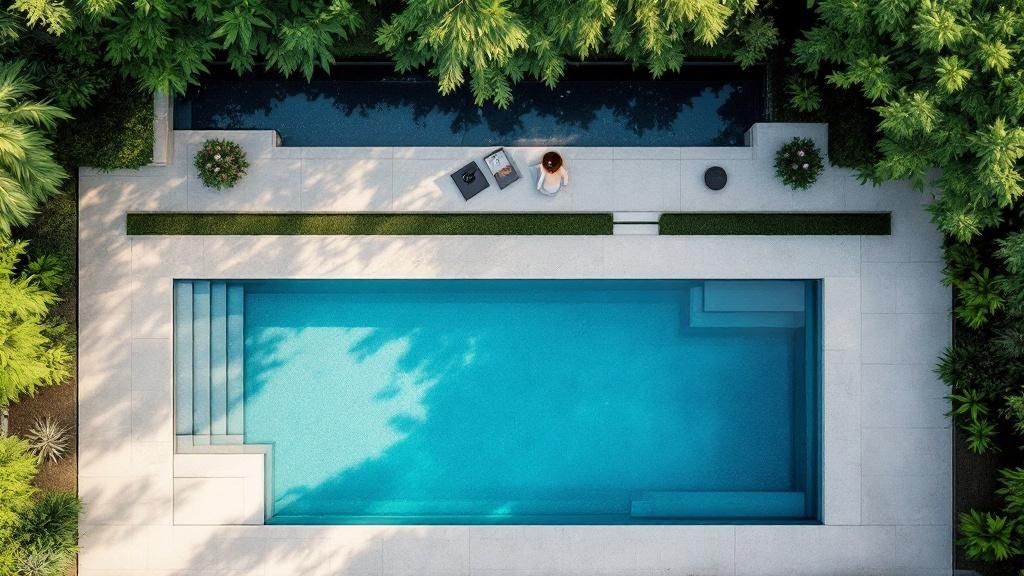
Your limestone coping is more than just a pool edge. It sets the mood for your whole backyard. The right choice can turn a simple yard into a beautiful retreat.
For a modern home in Palo Alto, a light-colored, smooth limestone creates a clean and simple frame for the water. It makes the pool a real centerpiece.
Matching Materials for a Complete Look
A great design matches the limestone coping swimming pool with the materials around it. This makes the pool and patio look like one connected space.
You can pair limestone coping with a rich wood deck. The contrast between the cool stone and warm wood looks amazing. This is great for a relaxed, coastal California feel.
The best pool designs use the coping, decking, and water color as one complete palette. Every part should work together.
You can also use the same limestone for both the coping and the entire pool deck. This creates a large, resort-like feel. To see more ideas, check out our guide on choosing the best stone for your pool deck.
Creating a Rustic Coastal Style
For a rustic home on the coast in Monterey, a tumbled limestone with a chiseled edge works perfectly. The rough texture adds character and blends with the natural landscape.
To complete this rustic look, think about these ideas:
- Waterline Tile: Use blue or green tiles to match the ocean colors.
- Pool Finish: A darker pool finish can create a beautiful lagoon look.
- Landscaping: Use native grasses and stones around the pool.
Frequently Asked Questions
Here are answers to common questions homeowners in Monterey and the Bay Area ask about limestone coping for a swimming pool.
Is limestone a good choice for saltwater pools?
Yes, limestone works well with saltwater pools, but you must seal it properly. Salt can damage the stone over time. A good sealer protects the limestone by keeping salt from getting into its pores. You will need to reapply the sealer every few years to keep it protected.
Does limestone coping get hot in the sun?
Limestone stays cooler than many other materials like concrete or dark pavers. Lighter shades of limestone reflect the sun's heat instead of absorbing it. This makes it more comfortable to walk on in the hot California sun.
How do I keep limestone from being slippery?
Limestone has a natural texture that helps prevent slipping. To make it even safer, choose a finish with more grip, like a tumbled or brushed finish. Sealing the stone also helps by preventing slippery algae from growing.
Can I use the same limestone for my deck and coping?
Yes, and it’s a great idea! Using the same limestone for both the coping and the deck creates a seamless, high-end look. It makes your whole outdoor area feel bigger and more luxurious. We can help you find matching limestone at Carmel Stone Imports.
How often do I need to reseal limestone coping?
You should plan to reseal your limestone coping every one to three years. How often you need to do it depends on how much sun your pool gets and how much it's used. An easy way to check is to splash water on it. If the water beads up, the sealer is still working. If it soaks in, it’s time to reseal.
Ready to find the perfect limestone to frame your pool? The expert team at Carmel Stone Imports is here to guide you through our stunning collection. Visit our showrooms or contact us today to start your project.