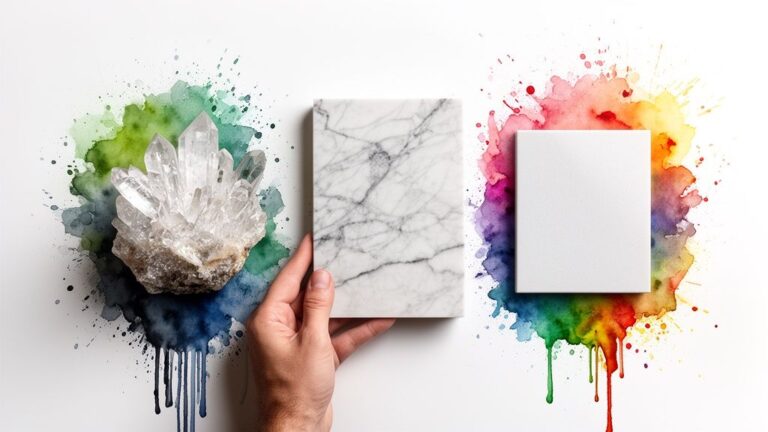
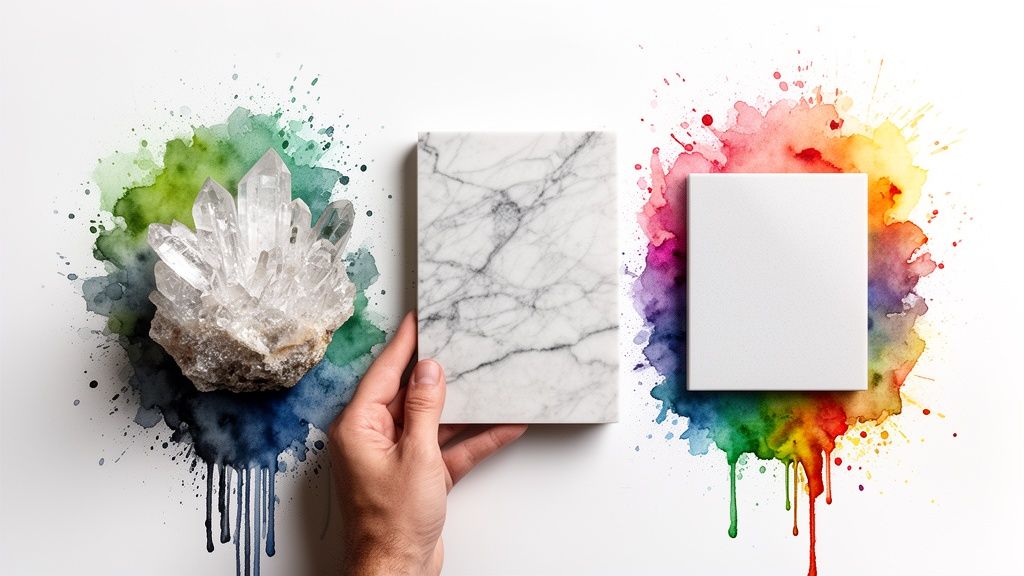
No, not all quartz is engineered. This common mix-up happens because people use the word "quartz" for very different materials. Answering the question "is all quartz engineered?" is key to picking the right surface.
The simple truth is there are three types. These include natural quartz crystals, a natural stone called quartzite, and the man-made engineered quartz countertops found in many homes today.
Understanding the Quartz Family of Surfaces
When people in the Bay Area talk about "quartz" for a kitchen or bathroom, it can be confusing. It's important to know the difference.
Think of it like solid wood flooring versus engineered wood flooring. Both are great options, but one is natural and the other is man-made. Knowing which is which helps you choose the perfect material for your project.
This isn't just about using the right words. It affects your design choices. For example, the global quartz slab market is valued at over $17 billion. This shows that both natural and engineered options are very popular for different reasons.
The Three Main Types of Quartz
Let's break down the quartz family to clear things up. This will help you understand where each material comes from.
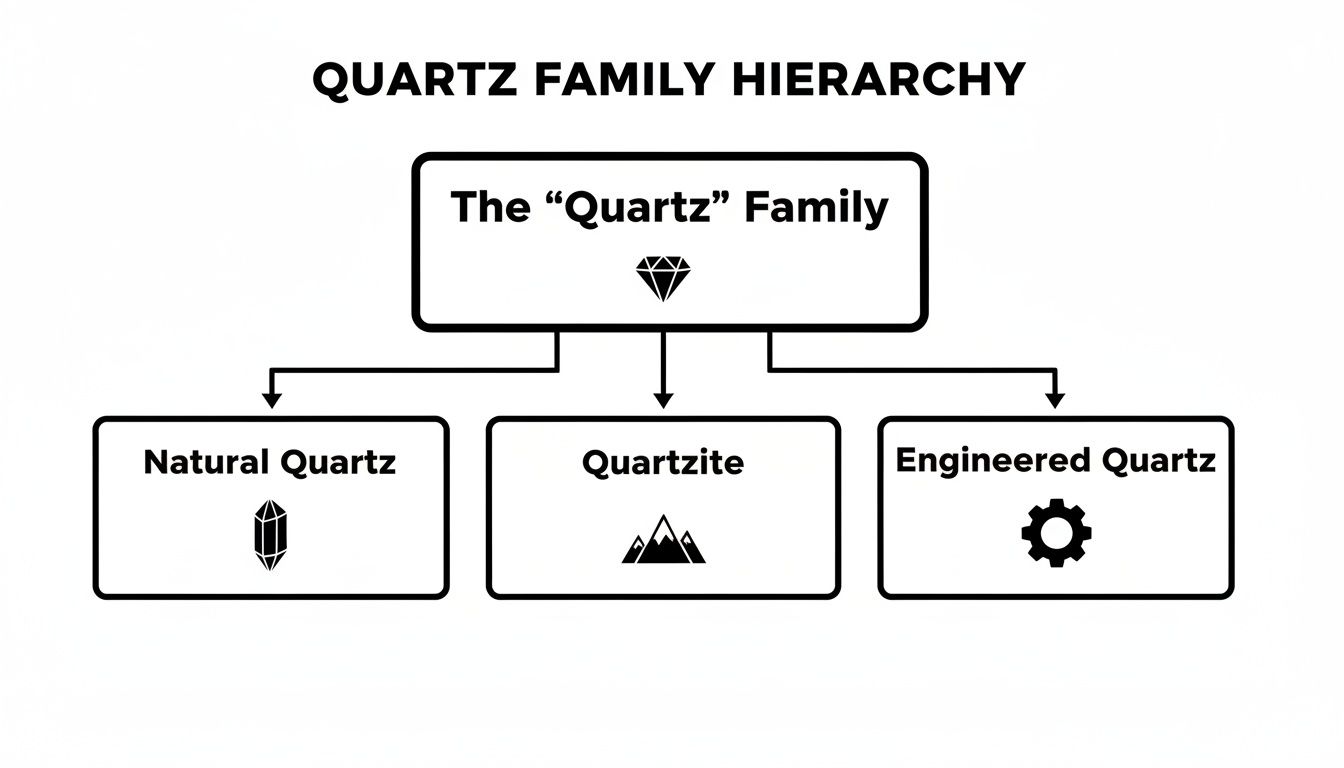
This chart shows how "Quartz" splits into three unique materials. As you can see, both natural stone and engineered surfaces are part of this family. That's why asking is all quartz engineered is such a common question.
To help you remember the terms, here is a quick guide.
Quick Guide to Quartz Terminology
| Material Type | How It's Made | Key Characteristic |
|---|---|---|
| Natural Quartz | Forms naturally in the Earth as crystals. | Found as raw crystals, not large slabs. |
| Quartzite | A natural rock cut from quarries in large slabs. | 100% natural stone, loved for its unique patterns. |
| Engineered Quartz | Man-made by mixing ~90% ground quartz with resins. | A manufactured product with consistent, uniform looks. |
This table shows the main differences at a glance. It makes choosing your material much easier.
Each type offers something special. For instance, comparing engineered quartz to another popular stone like granite shows differences in performance. You can learn more about how quartz compares to granite in our detailed guide.
Next, we will look at each of these materials more closely.
What Exactly Is Engineered Quartz?
To answer "is all quartz engineered," we need to see how this popular countertop material is made. Think of an engineered quartz slab as a sophisticated recipe. It's carefully designed for great looks and strength.
Engineered quartz is a composite material. About 90% of it is crushed natural quartz, one of the hardest minerals on Earth. This quartz is ground into small pieces, which gives the final slab its texture and depth.
The other 10% is a mix of strong polymer resins and pigments. The resin acts like glue, holding the quartz crystals together. The pigments provide the endless color options. You can learn more about the details in our guide on what is engineered stone.
The Manufacturing Process
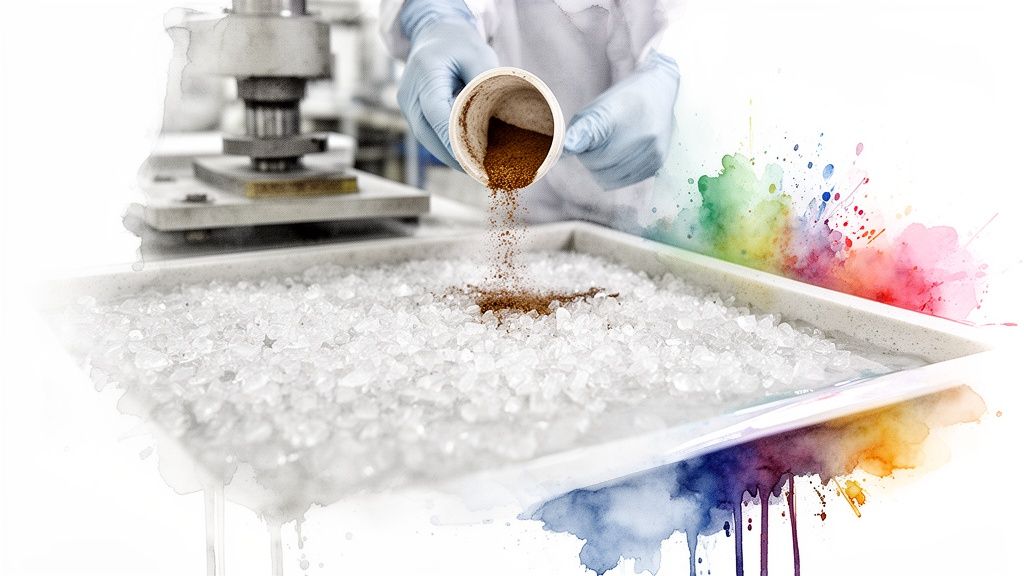
After the ingredients are mixed, they are poured into a large mold to become a slab. This is where the "engineering" happens.
The process is very modern and precise:
- Molding and Compression: The mix is shaken and pressed under a vacuum. This removes all air bubbles, making the slab very dense and non-porous.
- Curing: The slab then goes into a large oven. This baking process hardens the resin, locking the quartz particles into a solid, durable surface.
- Finishing: After cooling, the slab is polished. This can create a shiny finish or a modern matte look.
This controlled process allows for a huge variety of styles. You can get anything from the pure white slabs seen in many Bay Area kitchens to patterns that look like natural marble.
Industry experts at Research Nester confirm the formula is about 90% ground quartz and 10% polyresin. This method is so successful that countertops are expected to make up nearly 79% of the engineered stone market’s profits by 2035. You can discover more insights on the engineered stone market.
The final product offers the beauty of stone with modern performance and design freedom.
Discovering Natural Stone Quartzite
Now, let's look at nature's own creation: quartzite. Once you understand this natural stone, the answer to "is all quartz engineered?" becomes clear. It starts as simple sandstone.
Deep in the earth, sandstone is changed by incredible heat and pressure over millions of years. The sand grains fuse together, creating a very dense and strong stone.
The Artistry of Nature
This natural process creates the flowing veins and shimmers that make each slab of quartzite unique. Unlike an engineered material, no two pieces of quartzite are ever the same.
The stone's appearance tells a story of its past. This unique quality is its greatest appeal.
For homeowners in coastal California, from Monterey to Palo Alto, quartzite is a chance to bring a one-of-a-kind piece of nature indoors. Its organic beauty fits perfectly with the region's style.
From Quarry to Your Home
Quartzite is taken directly from the earth in a very different way from its engineered cousin. Here’s how it gets from a mountain to a finished slab:
- Quarrying: Large blocks of stone are cut from mountains in quarries around the world.
- Slicing: These huge blocks are sliced into thinner slabs with special saws.
- Polishing: The slab surfaces are polished to a high shine to show the stone’s inner beauty.
Because quartzite is a natural material, its patterns are beautiful and unpredictable. This is why it's a top choice for creating dramatic features. You can explore more in our guide, "what is quartzite stone?"
This natural origin is the key difference, proving that not everything called "quartz" is made in a factory.
Comparing Performance and Aesthetics
When choosing between engineered quartz and natural quartzite, the decision comes down to two things: looks and performance. How will it look, and how will it hold up to daily life?
Engineered quartz is known for its consistency. Since it’s manufactured, it offers a uniform color and pattern across the entire slab. This is perfect for designers who want a specific, controlled look—like the pure white popular in modern Bay Area homes.
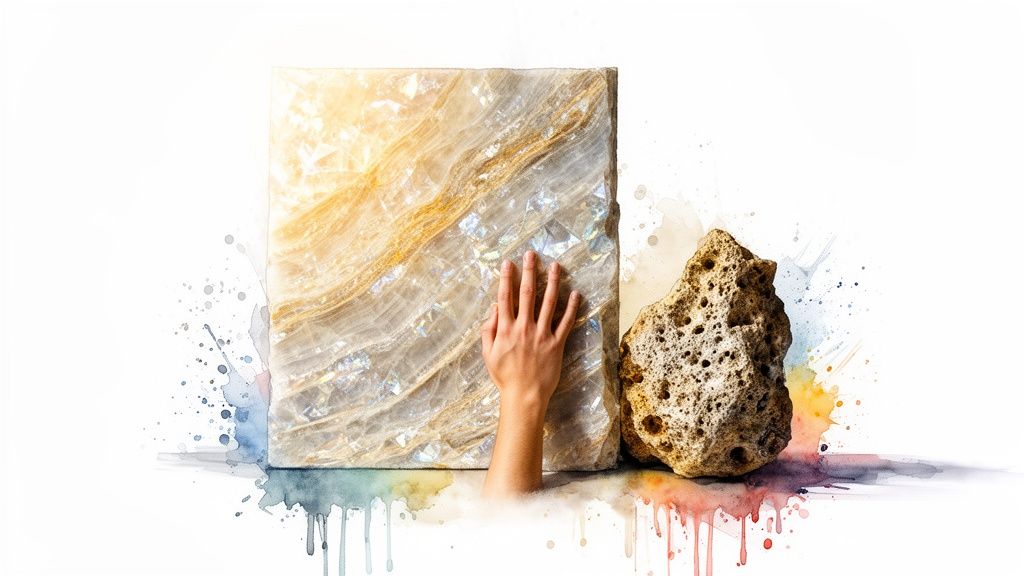
Natural quartzite is all about unique, organic beauty. Each slab is a work of art, shaped by millions of years of natural forces. Its flowing veins and subtle colors cannot be copied.
Daily Life and Durability
This is where the practical differences are most clear. Engineered quartz is completely non-porous because of the resins that bind it together.
- Stain Resistance: Spills like wine or coffee sit on the surface and can be wiped away easily.
- Zero Sealing: It never needs to be sealed. This makes it a low-maintenance choice for busy families from Palo Alto to Monterey.
Natural quartzite is one of the hardest natural stones available, so it resists scratches and heat very well. However, it is a natural material and is slightly porous. This means it needs a quality sealer to protect it from stains.
To make it even clearer, here’s a quick comparison:
Engineered Quartz vs. Natural Quartzite at a Glance
| Feature | Engineered Quartz | Natural Quartzite |
|---|---|---|
| Appearance | Uniform color and pattern. Many colors, including pure whites. | Unique, natural veining. Each slab is one-of-a-kind. Earthy colors. |
| Durability | Very durable and scratch-resistant. Can be sensitive to extreme heat. | Extremely hard and durable. Resists scratches and heat very well. |
| Maintenance | Non-porous. Never needs sealing. Easy to clean. | Porous. Must be sealed regularly to prevent stains. |
| Best For | Kitchens and bathrooms where consistency and low maintenance are key. | Homeowners who want a unique, natural centerpiece and don't mind sealing. |
This table helps show the trade-offs between the two materials.
Market trends show a growing preference for the performance and clean look of engineered surfaces. The global engineered stone market was valued at USD 23.42 billion in 2022 and is expected to grow.
For more help deciding, our guide on quartz vs. quartzite can help you decide which stone is right for you. The choice depends on your priorities: the perfect consistency of an engineered product or the unique artistry of a natural stone.
Choosing the Right Stone for Your Project
So, how do you pick the right stone for your design? There is no single "best" choice. The right option is the one that fits your lifestyle, design vision, and maintenance preferences for your Northern California home.
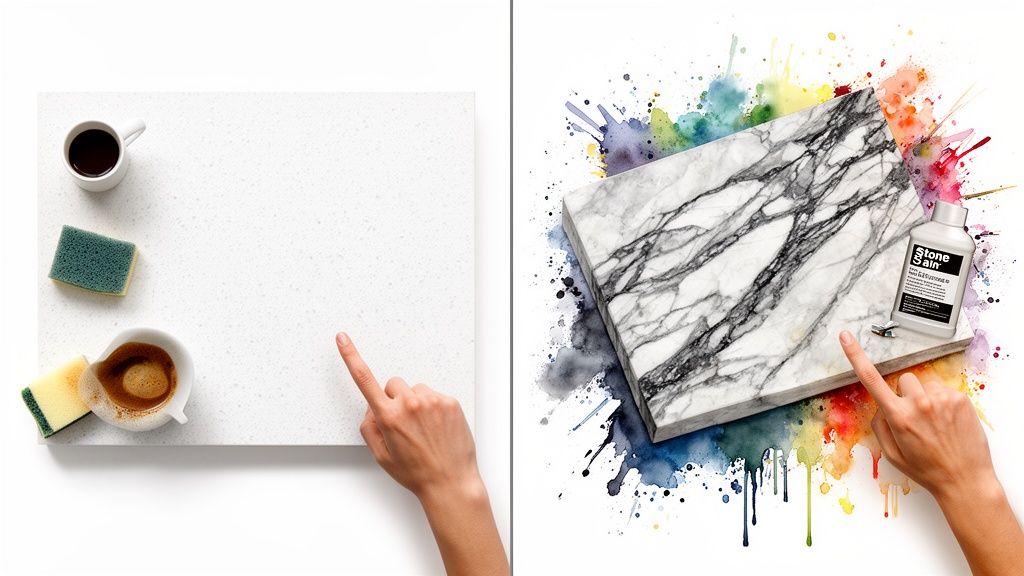
Let's look at a few examples. Thinking about how you live and what you value will help you find the perfect material.
When Engineered Quartz Is the Ideal Choice
Engineered quartz is the best choice when you need consistency, practicality, and low maintenance. Its non-porous surface is built to handle busy family life.
Consider engineered quartz if:
- You have a busy family kitchen: In a busy Palo Alto home, you need a stress-free surface. Engineered quartz resists spills from juice and wine without needing a sealant.
- You want a specific, consistent look: For a clean, modern style with a uniform color—like a perfect white or solid black—engineered quartz delivers predictable beauty.
- You need to match multiple surfaces: For projects with several countertops or a matching backsplash, the consistency of engineered quartz is essential for a seamless look.
When Natural Quartzite Steals the Show
Natural quartzite is the winner when you want a dramatic, one-of-a-kind statement piece. It brings natural elegance into a space.
Choose natural quartzite if:
- You want an artistic centerpiece: For a stunning fireplace in a Carmel home or a show-stopping kitchen island, the unique veins of quartzite offer a piece of natural art.
- Heat resistance is a top concern: Quartzite is very durable against high temperatures, making it a great choice for kitchens where hot pans are common.
- You value natural beauty: If you love the unique story that only a natural material can tell, the character and soul of quartzite are unmatched.
In the end, your daily routines and design goals are the best guides. Let them lead you to the stone that feels right for your project.
Your Partner in Stone Selection
Now you know the answer to "is all quartz engineered?" is no. Both man-made quartz and natural quartzite have incredible benefits. The key is understanding their differences in origin, looks, and performance.
We believe the best decisions are made when you can see and feel the materials in person. There's a beauty in a quartzite slab and a flawless look in an engineered surface that you can only appreciate up close. You can learn more about our commitment to quality by reading why Carmel Stone Imports is the best choice for stone in California.
See the Difference for Yourself
We invite you to visit a Carmel Stone Imports showroom in Palo Alto, Carmel, or Sand City. Our team is here to guide you and help you find the perfect stone for your modern Bay Area kitchen or relaxed Monterey home.
Frequently Asked Questions
Homeowners and designers often have a few final questions when choosing between engineered quartz and natural quartzite. Here are some of the most common ones we hear.
Is quartzite more durable than engineered quartz?
They are both very tough, but in different ways. Natural quartzite is extremely hard, making it very resistant to heat and scratches. Engineered quartz is also scratch-resistant, but its main advantage is being non-porous. This gives it superior stain resistance without needing a sealant.
How do I clean and maintain these surfaces?
Engineered quartz is very low-maintenance. Soap and water or a mild cleaner is all you need for daily care. Natural quartzite is also easy to clean, but it must be sealed regularly. Sealing protects its natural beauty and prevents stains.
Can I tell the difference just by looking?
Usually, yes. Natural quartzite has organic, flowing patterns that are unique across the slab. Engineered quartz, even with complex designs, often has a more uniform or repeating pattern that you won't find in nature.
Which option is better for an outdoor kitchen?
For any outdoor project, natural quartzite is the clear winner. The resins in engineered quartz can be sensitive to direct sunlight over time. The California sun could cause colors to fade. As a 100% natural stone, quartzite is built to handle the elements.
Is one always more expensive than the other?
Not necessarily. Prices for both materials vary based on the brand, design, and rarity of the stone. Some high-end engineered quartz can cost more than common types of quartzite. Likewise, a rare slab of natural quartzite can be a premium investment.
Ready to see these incredible materials for yourself? The expert team at Carmel Stone Imports is here to guide you through our extensive collections of both natural quartzite and engineered quartz. Stop by one of our showrooms or contact us today to find the perfect surface for your next project.