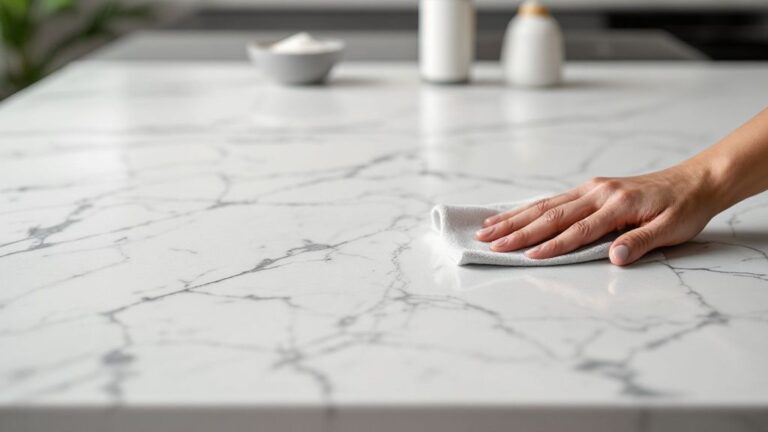
Removing water stains from your quartzite countertops is usually simple. For most mineral deposits, a paste made from baking soda and water works well. Lighter marks often come off with mild dish soap. The most important thing is to always use a soft cloth and avoid harsh cleaners. This guide offers expert tips that work to keep your stone looking beautiful.
Understanding Water Stains on Quartzite
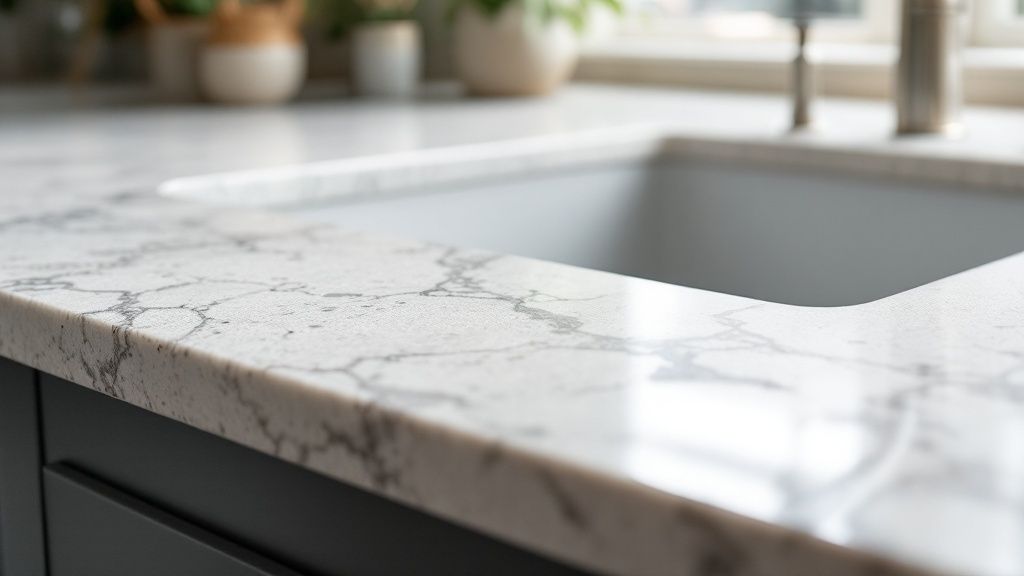
Clients often choose a stunning quartzite slab for its beauty and toughness. It becomes the centerpiece of their Bay Area home. However, even this durable stone can get water marks. You'll usually spot them as faint rings or cloudy patches around sinks.
These marks are not from the water itself. They come from what the water leaves behind when it dries.
There are two main causes:
- Mineral Deposits: Much of California has hard water, which contains minerals like calcium and magnesium. When water dries on your counter, it leaves these minerals behind, creating a hazy film.
- Improper Sealing: If your quartzite's sealant is old or weak, it cannot protect the stone. Moisture can seep into the pores. When it evaporates, it can leave a stain just below the surface.
Stains vs. Etching
It's important to know if you have a stain or an etch mark. A water stain is a surface-level deposit that you can usually clean off.
Etching is physical damage to the stone. It happens when acidic things like lemon juice or vinegar touch the countertop. The acid dissolves a tiny bit of the stone, leaving a dull spot. While quartzite is much more resistant to etching than marble, it can still happen.
Run your fingers over the spot to tell the difference. A water stain will feel smooth. An etch mark will often feel slightly rough.
The Importance of Sealing
Quartzite is a natural stone with tiny pores that can absorb liquids. Proper sealing is your best defense. A good sealant fills these pores, creating a barrier that stops moisture. For more about this material, see our guide on what is quartzite stone.
At Carmel Stone Imports, we educate our clients on proper stone care. We want you to keep your stone looking beautiful for years. We offer premium quartzite slabs that are properly sealed and ready for your home.
Step-by-Step Guide to Removing Water Stains
Use Mild Dish Soap for Light Stains
Always start with the gentlest cleaning method. This is often all you need for fresh spills or faint water marks on your quartzite countertops. We give this advice to all our clients from San Francisco to Palo Alto.
What You'll Need:
- Warm water
- A few drops of mild, pH-neutral dish soap
- Two soft microfiber cloths (one for cleaning, one for drying)
This simple combination is powerful for daily care. For more tips, see our guide on how to clean natural stone.
The Gentle Cleaning Method:
Learning how to remove water stains from quartzite countertops is about using the right technique. Resist the urge to scrub hard. This can damage the sealant over time.
Mix a few drops of dish soap into a bowl of warm water. Dip a microfiber cloth in the water and wring it out until it's damp. Gently wipe the stain in a circular motion.
Next, rinse the cloth with clean water and wipe the area again to remove any soap. Finally, dry the countertop completely with a clean, dry cloth. This prevents new water spots from forming.
For Mineral Deposits, Use a Baking Soda Paste
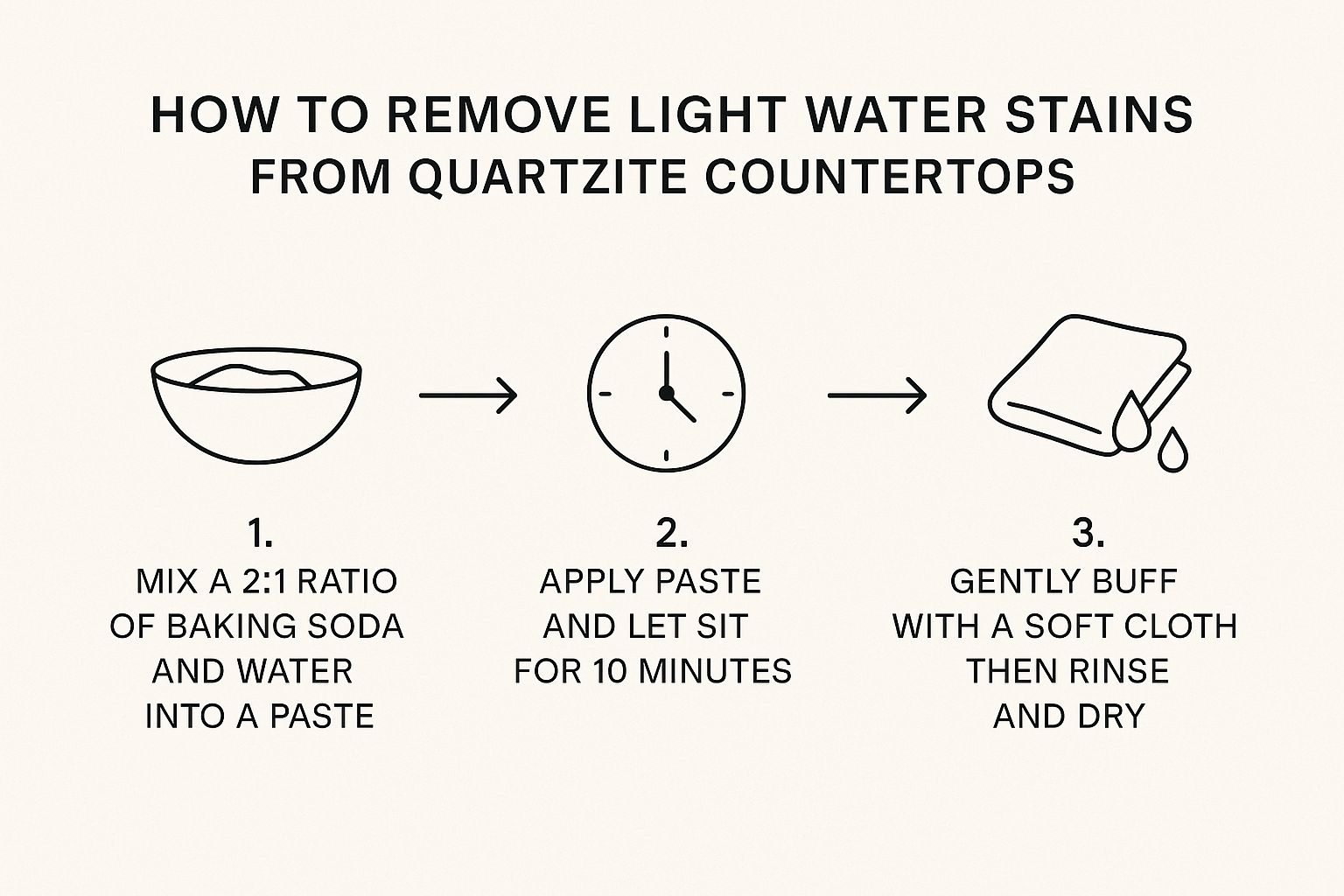
For tougher mineral deposits from hard water, a baking soda paste is a great stone-safe remedy.
How to Make and Use the Paste:
- Mix baking soda with warm water in a small bowl. Create a thick paste, similar to peanut butter.
- Apply a thick layer of the paste directly onto the stain.
- Cover the area with plastic wrap and tape the edges down. This keeps the paste moist and active.
- Let it sit for several hours, or even up to 24 hours for very stubborn stains.
- Remove the plastic wrap and gently scrape off the dried paste with a plastic scraper.
- Wipe the area clean with a damp microfiber cloth, then dry it completely.
You can repeat this process if the stain is still visible. For more cleaning tips, our guide on how to clean natural stone floors can be helpful.
Use a pH-Balanced Stone Cleaner
If the baking soda paste doesn't work, you may need a specialized cleaner. Hard water is a common issue in many Bay Area homes, and it can leave stubborn mineral buildup. According to the U.S. Geological Survey, over 85% of the country has hard water. This detailed guide on hard water stain removal offers more insight.
When choosing a product, look for a cleaner that is pH-balanced or pH-neutral. Never use acidic cleaners like vinegar or harsh chemicals like bleach. They can strip the sealant and damage the stone.
Always use products made for natural stone. Follow the manufacturer's directions carefully. At Carmel Stone Imports, we help clients choose the right products to protect their investment. For more ideas, see our article on the best cleaner for stone floors.
Preventing Future Water Stains on Quartzite
Preventing stains is easier than removing them. A few simple habits can keep your quartzite countertops looking flawless in your Palo Alto or Carmel home.
The Importance of Sealing Countertops
A quality sealant is your best defense against moisture. It fills the stone's tiny pores and creates a barrier. Sealing is a crucial part of your care routine.
You can test your sealant easily:
- Sprinkle a few drops of water on the counter.
- Wait for about 10-15 minutes.
- If the water beads up, your seal is strong. If it soaks in and darkens the stone, it's time to reseal.
For a complete guide, check out our article on how to seal natural stone.
Wipe Up Water Immediately
The golden rule is to wipe up spills right away. Don't let water sit on the surface, especially near sinks and faucets.
Using coasters for drinks and drying mats for dishes also helps a lot. If you live in an area with very hard water, consider investing in a good water filter for home use.
When to Call a Professional
Sometimes, a stain is too stubborn for DIY methods. Knowing when to call an expert is key to preventing accidental damage.
If you have tried cleaning a stain multiple times with no luck, it's time to call a professional. They have specialized tools and techniques to restore your countertop. A stone care expert can deep clean, polish, or even hone the surface to remove deep stains and etch marks. Consulting with professional natural stone cleaning services is a wise choice for tough issues.
At Carmel Stone Imports, we are a trusted resource for ongoing support. For our clients in the San Francisco and Central Coast regions, we can refer trusted stone care professionals.
Frequently Asked Questions
Can I use vinegar on quartzite water stains?
No, you should never use vinegar or other acidic cleaners on quartzite. The acid can etch the stone, which is permanent damage. Always use a pH-neutral cleaner.
How often should I seal my quartzite countertops?
Generally, you should seal quartzite annually. However, you should perform the water test every few months. If water soaks into the stone instead of beading, it's time to reseal.
Is quartzite completely stain-proof?
While quartzite is highly stain-resistant, it is not stain-proof. As a natural stone, it has some porosity. Proper sealing and quick cleanup of spills are essential to prevent stains.
Are some types of quartzite more prone to staining?
Yes, porosity can vary between different quartzite slabs. Denser varieties may be more resistant to stains. At Carmel Stone Imports, we educate clients on the specific care needs of the slab they choose.
What is the best daily cleaner for quartzite?
For daily cleaning, use a pH-neutral stone cleaner or a simple mixture of mild dish soap and warm water. Avoid common all-purpose cleaners, as they can damage the sealant over time.
Ready to find the perfect quartzite for your home? The experts at Carmel Stone Imports are here to help you explore our beautiful collection. We serve homeowners, designers, and contractors across San Francisco, Palo Alto, and Carmel. Contact us today or visit one of our showrooms.