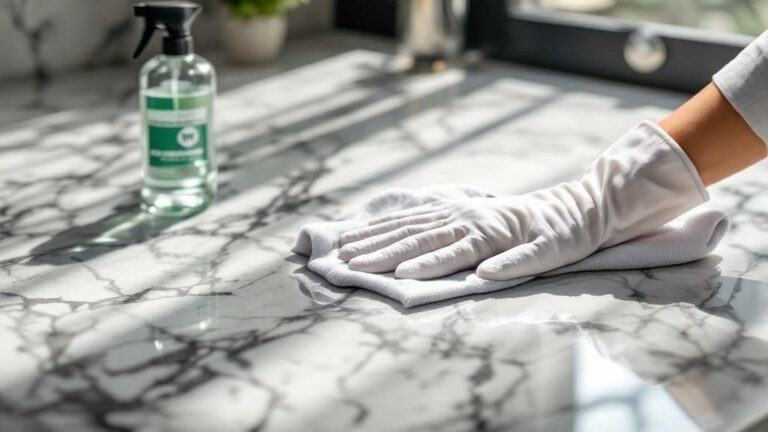
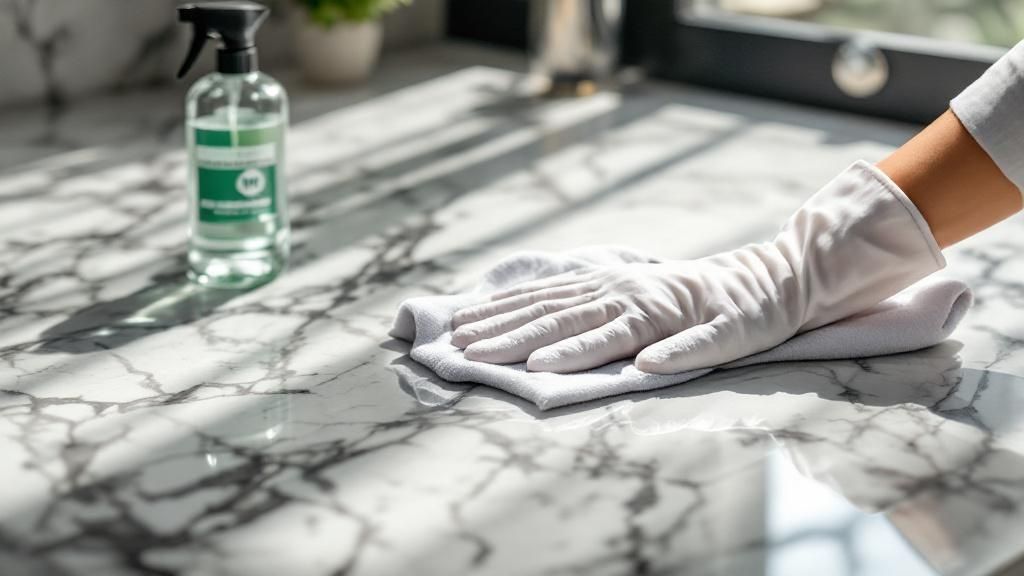
Knowing how to clean natural stone is essential for preserving its beauty, whether it's a sleek granite countertop in your Palo Alto kitchen or a timeless limestone floor in a coastal Monterey home. To get your natural stone looking its best, you first need to identify its type, then use a pH-neutral cleaner and a soft cloth. Avoiding acidic or abrasive products like vinegar or harsh scrubbing pads is critical to prevent permanent damage, making a simple daily wipe-down your best defense against stains and grime.
Understanding Your Natural Stone Before You Clean
Before a single drop of cleaner touches your surface, it's vital to know what you're working with. Natural stone isn't one-size-fits-all; its unique geology determines how it will react to cleaners, spills, and everyday use. The most important thing to learn about how to clean natural stone is identifying which of the two main geological families it belongs to.
This one piece of information will guide every single cleaning decision you make. Guessing wrong can lead to irreversible damage, but getting it right will keep your stone looking beautiful for decades.
The Two Families of Stone
Nearly all natural stone falls into one of two categories, and each has its own set of vulnerabilities.
- Siliceous Stone: This family is made up of stones like granite, slate, and quartzite. Composed mostly of silica-based minerals, they are incredibly hard and generally resistant to acids. This durability makes them an excellent choice for high-traffic spots like kitchen countertops where acidic spills are common.
- Calcareous Stone: This group includes marble, limestone, travertine, and onyx. These stones are built from calcium carbonate, a compound that is extremely sensitive to acids. Even a small splash of lemon juice, wine, or the wrong household cleaner can cause etching—a chemical reaction that eats away at the stone's surface, leaving a dull spot.
Knowing if your stone is siliceous or calcareous is the foundation of a proper care routine. If you're not sure what you have, you can do a quick test on a hidden spot, like under a countertop lip or in a corner, by placing a single drop of vinegar on it. If you see any fizzing or bubbling, you have a calcareous stone.
Key Takeaway: The single most important rule is to never use acidic cleaners (like vinegar or lemon-based products) on calcareous stone such as marble or limestone. The chemical reaction, known as etching, removes the stone’s polish and creates dull spots that are costly and difficult to repair.
Porosity and Finish Matter
Beyond its basic chemistry, a couple of other factors will shape your cleaning strategy: porosity and finish.
Porosity is just a fancy word for how absorbent a stone is. A highly porous stone, like some unsealed limestones, will drink up spills in a flash, leading to deep-set stains. A dense stone like granite, on the other hand, is much less porous, giving you more time to wipe up a mess. This is why a good quality sealer is so vital for long-term protection.
The stone's finish also plays a big part in its care.
- Polished Finish: This glossy, mirror-like surface makes the stone's color and veining pop. It's less porous than other finishes, but the high shine means etches and scratches are much more noticeable.
- Honed Finish: This is a smooth, matte, or satin-like finish. It does a much better job of hiding small scratches, but it can be more prone to absorbing oils and stains if it isn't sealed properly.
Understanding these characteristics is the critical first step. If you're currently in the market for a new stone surface, our experts at Carmel Stone Imports can walk you through the options that best suit your lifestyle. For a deeper dive into material properties, check out our guide on how to choose the right natural stone for your home.
Assembling Your Stone-Safe Cleaning Toolkit
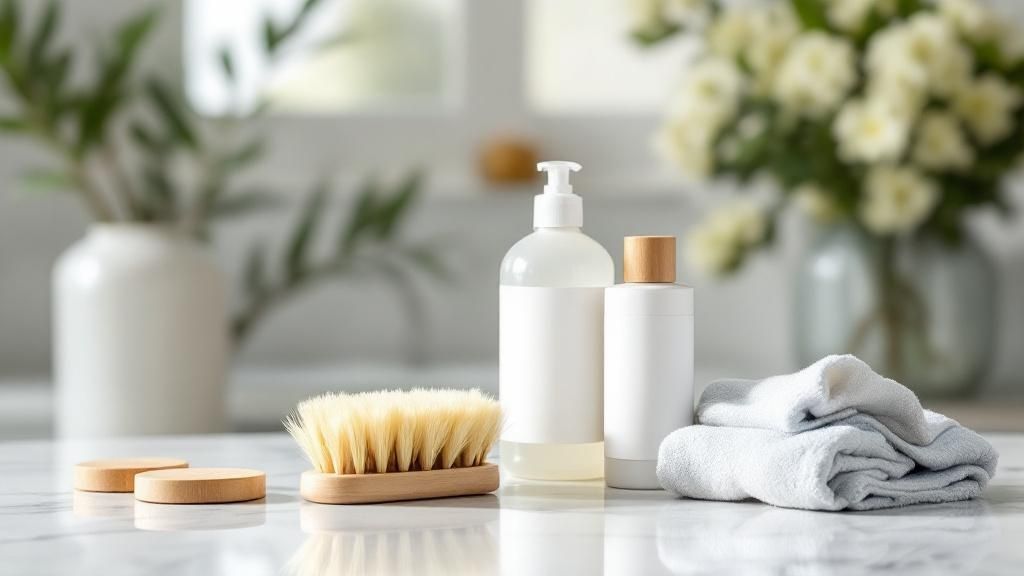
When homeowners ask how to clean natural stone, the first thing we discuss isn't technique—it's tools. Having the right supplies ready to go makes all the difference, allowing you to tackle messes and spills without a second thought and, more importantly, without causing accidental damage.
Think of this as building a small, dedicated arsenal for protecting your investment. The items themselves are simple, but their impact is huge. Using the wrong cloth or cleaner, even just once, can lead to dullness, scratches, or etches that are a headache and expense to fix.
Everyday Cleaning Essentials
For daily wipe-downs and routine care, you only need a few key items. This is the foundation of a proactive maintenance plan that keeps your stone looking incredible, whether it’s a hardworking kitchen island in San Jose or a serene marble vanity in a Monterey home.
- pH-Neutral Stone Cleaner: This is your absolute must-have. You need a cleaner specifically formulated for natural stone with a pH value of 7. Acidic cleaners (like vinegar or lemon juice) will etch stones like marble and limestone, while highly alkaline ones (like bleach) can degrade the sealer over time.
- Microfiber Cloths: Forget abrasive sponges or paper towels. Microfiber cloths are your best friend. They are incredibly soft and absorbent, lifting away dust and grime without leaving a single scratch on polished surfaces. They’re also perfect for buffing the stone dry to prevent water spots.
- Soft-Bristled Brush: For getting into grout lines or cleaning textured stone surfaces like hand-chiseled French limestone, a simple nylon brush is ideal. It has just enough stiffness to dislodge dirt without abrading the stone itself.
Specialized Solutions for Stains and Spills
Life happens, and spills are inevitable. Having the right products on hand can turn a potential disaster into a minor cleanup. These are the items you'll reach for when you're facing something tougher than a few crumbs.
Expert Tip: I can't stress this enough: Never use generic all-purpose cleaners, scouring powders, or vinegar-based solutions on any natural stone. These products are your stone's worst enemy and can cause irreversible chemical damage that dulls the finish and eats away at the sealer.
There’s a clear trend in home care toward using specialized, effective products for premium materials. The market for stone care solutions reflects this, with projections showing it will expand from $1.5 billion to nearly $2.8 billion by 2033, according to Global Market Insights. This growth proves that homeowners are becoming more aware of how important it is to use the right products. You can review the full market analysis to see how consumer habits are shifting.
For deep-set, stubborn stains, your secret weapon is a poultice. A poultice is a thick, paste-like substance you apply directly to a stain. As it dries, it pulls the stain right out of the stone’s pores. You can find excellent pre-made commercial poultices or make a DIY version with baking soda and water for simple organic stains like coffee or tea.
Natural Stone Cleaning Toolkit Dos and Don'ts
Putting together your toolkit is just the first step. Knowing what to use—and what to leave on the shelf—is just as crucial.
The table below is your quick-reference guide. It clearly lays out what belongs in your cleaning caddy and what should stay far away from your beautiful stone surfaces.
| Item | Safe to Use (Do) | Avoid Using (Don't) |
|---|---|---|
| Cloths & Sponges | Soft microfiber cloths, non-abrasive sponges. | Green scouring pads, steel wool, any abrasive scrubbers. |
| Cleaners | pH-neutral, stone-specific daily cleaners. | Vinegar, lemon juice, bleach, ammonia, glass cleaner, degreasers. |
| Brushes | Soft nylon-bristle brushes for grout or texture. | Hard-bristled brushes that can scratch polished surfaces. |
| Spill Response | Gentle blotting with a clean cloth or paper towel. | Wiping or rubbing, which spreads the spill. |
Following this simple guide is a critical part of learning how to clean natural stone the right way, ensuring your surfaces stay as stunning as the day they were installed.
Crafting Your Daily and Weekly Cleaning Rituals
Consistency is the real secret to keeping your natural stone looking pristine for a lifetime. Instead of viewing it as a chore, see it as a simple ritual that protects the soul of your home. This approach of small, frequent actions is far more effective than an occasional, aggressive cleaning session.
The goal is to build a sustainable routine that fits into your life, whether you're navigating a bustling family kitchen in Palo Alto or maintaining a serene limestone shower in a coastal Monterey home. Sticking to a simple plan stops the buildup of grime and mineral deposits, ultimately saving you from costly restoration work.
The Simple Daily Wipe-Down
Your first line of defense is the quick, daily wipe-down. This isn't about deep scrubbing; it's about clearing away minor messes before they settle in and cause problems. This little habit is especially vital in areas with hard water, where mineral deposits can quickly create dull, hazy spots on your beautiful stone.
For your countertops, vanities, and other high-traffic surfaces, the process couldn't be easier:
- Prep the Surface: First, grab a soft, dry microfiber cloth and get rid of any crumbs, dust, or other loose debris.
- Spray Lightly: Lightly mist the area with a good pH-neutral stone cleaner. A light, even spray is all it takes.
- Wipe Clean: With a separate, clean microfiber cloth, gently wipe down the entire surface.
- Buff Dry: This final step is key. Take a third, completely dry microfiber cloth and buff the stone until it’s totally dry. This prevents water spots and streaks, leaving a beautiful, clear finish.
This whole daily ritual takes less than 60 seconds, but it pays huge dividends in preserving your stone's natural luster and preventing buildup. It’s a foundational step in learning how to clean natural stone the right way.
Your Weekly Refresh Routine
Once a week, it's time to give your stone a slightly more thorough cleaning. This weekly refresh lifts away any grime, oils, or residues that daily wipe-downs might have missed, all without harming the stone’s protective sealer.
Pro Tip: When it comes to mopping stone floors, less is definitely more. Over-mopping can wear down the sealer much faster and might even cause your grout to discolor over time. A regular sweep or vacuum followed by an occasional, well-wrung mop is the best strategy.
You'll be using the same trusted pH-neutral cleaner, but the method changes slightly depending on whether you're working on floors or countertops.
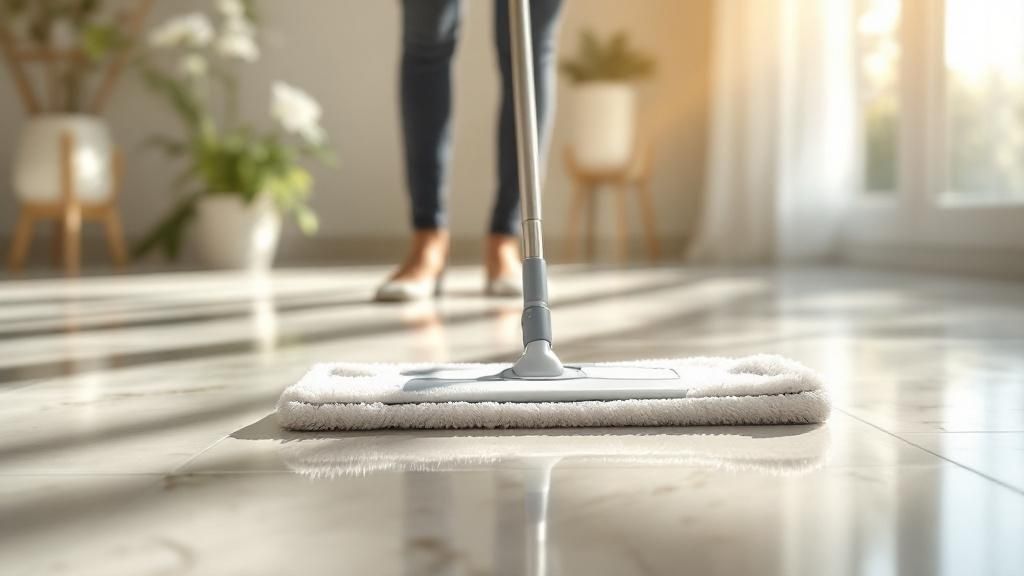
- For Floors: Start by sweeping or vacuuming the floor to get rid of all the loose dirt and grit. Dilute your cleaner in a bucket of warm water, following the product's directions. Mop with a well-wrung mop, then go over it again with a separate mop and clean water to rinse. Let it air dry, or use a dry microfiber mop to speed things up and stop water spots.
- For Countertops and Showers: Apply the cleaner and let it sit for a minute or two. This gives it time to dissolve any soap scum or residue. If your grout lines need some attention, use a soft nylon brush, then wipe everything clean with a damp microfiber cloth and buff it completely dry.
A consistent cleaning routine is the cornerstone of preserving your natural stone. For specific advice on keeping backsplashes pristine, consulting a guide on maintaining stone backsplashes is a great idea. For more in-depth advice tailored to the heart of the home, check out our guide on how to clean kitchen countertops, which offers more insights for tackling common kitchen messes safely.
How to Handle Spills, Stains, and Etching
Even with meticulous care, spills are a part of life. The good news? A spill doesn't automatically mean a permanent blemish. The key to successfully learning how to clean natural stone after an accident is knowing what you're up against and acting fast.
Your immediate response plan will hinge entirely on what was spilled. Different substances need different treatments, especially for beautiful calcareous stones like marble and travertine, which are popular in high-end Bay Area homes.
Differentiating Between Stains and Etching
Before you can fix the problem, you must correctly identify it. Is it a stain, or is it etching? They might look similar at a glance, but they are fundamentally different.
A true stain happens when a substance soaks into the stone's pores and leaves color behind. Etching, on the other hand, isn’t a stain at all. It’s physical damage—a chemical burn on the stone's surface caused by acid.
- Organic Stains: Think coffee, tea, red wine, or fruit juice. These leave a colored mark but don't physically alter the stone itself.
- Oil-Based Stains: This group includes cooking grease, cosmetics, or lotions. These stains work their way into the stone's pores, making it look darker.
- Etching: This is that dull, whitish mark left behind when an acid—like lemon juice, vinegar, or the wrong cleaner—hits a calcareous stone like marble or limestone. It’s a literal corrosion of the surface.
This quick visual guide shows the basic cleaning process for general upkeep. Think of this as your first line of defense, preventing spills from setting in and becoming a major headache.
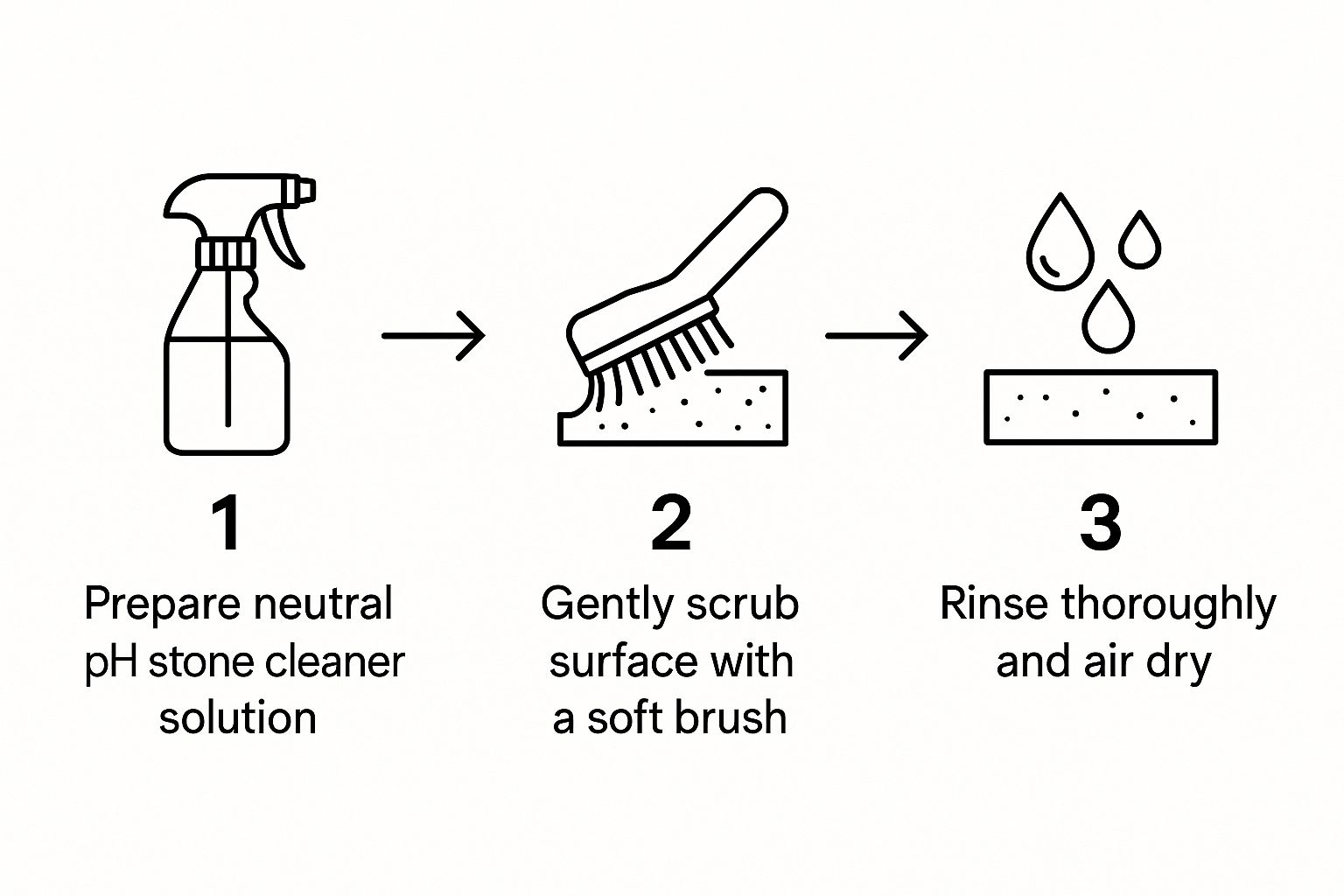
As the infographic shows, a gentle, pH-neutral approach is the foundation of routine care. It's how you keep your stone looking great without compromising its sealer or surface integrity.
Your Go-To Method for Organic Stains
For those all-too-common organic stains—a coffee ring or splash of wine—your best weapon is a poultice. A poultice is simply a thick paste that pulls the staining agent out of the stone's pores as it dries. Commercial poultices are fantastic for tough jobs, but for many everyday spills, you can whip one up yourself.
DIY Poultice Recipe: For organic stains, mix baking soda with a little water until it has the consistency of peanut butter. Slather a thick layer (about 1/4 inch) over the stain, going slightly beyond its edges. Cover it with plastic wrap and tape the sides down. Let it sit for 24 hours, then gently scrape it off and clean the area as usual.
This method works wonders on many types of stone. However, some materials like Jerusalem Stone have unique quirks. You can read our guide for cleaning Jerusalem Stone for more specific advice on handling its particular needs.
Addressing Oil-Based Stains and Etching
Oil-based stains also respond well to a poultice, but you may need a commercial-grade product specifically designed to break down oils. As always, test any new product on a hidden spot first.
Etching, though, is a completely different animal. Since it's actual surface damage, you can't just "clean" it away. A minor etch on a honed (matte) surface might not be very noticeable, but on a polished stone, it can stick out like a sore thumb.
For very light etches, you can try a specially formulated marble polishing powder. But for anything more significant, professional restoration is the only real fix. A stone professional will need to physically hone the surface down and re-polish it to bring back that original, flawless shine.
Long-Term Care: Sealing and Professional Help
Beyond daily wipe-downs and spill management, the lasting beauty of your natural stone comes down to two things: a solid, high-quality seal and knowing when to call in a professional. This is your long-term game plan for protecting the stone you love.
Mastering this part of how to clean natural stone is less about daily chores and more about periodic health checks for your surfaces. A good sealer is your stone's invisible shield, and understanding its limitations is just as crucial as the initial application.
The Importance of Sealing Your Stone
A top-tier impregnating sealer is the most important investment you can make in your stone's long-term health. It sinks deep into the stone's pores to create a protective barrier from the inside out. This barrier dramatically slows down how quickly liquids can soak in, buying you precious time to clean up spills before they become stubborn, deep-set stains.
It’s a common myth that sealers make stone totally stain-proof. They actually make it stain-resistant. That’s a critical distinction, especially if you have more porous stones like certain limestones or honed marbles, which are popular in Monterey and other coastal California homes.
A well-sealed surface isn't just better protected—it's also easier to clean and keep hygienic. For more on that, our guide to caring for your countertops and your health has some great information.
Is It Time to Reseal Your Stone?
How can you tell when that invisible shield is wearing thin? There’s a simple, foolproof method: the water test.
The Water Test: Sprinkle a few drops of water on the most-used spot of your counter. Watch it for a few minutes. If the water beads up into tight little droplets, your sealer is holding strong. But if you see the water start to spread out, darken the stone, or soak in, it’s time for a new coat of sealer.
For a busy kitchen, you'll probably find yourself resealing every one to three years. For a low-traffic area like a guest bathroom vanity, you might go as long as five years.
Choosing the right type of sealer is just as important as knowing when to apply it.
- Impregnating/Penetrating Sealers: The go-to for most situations. They protect from within and don’t alter the stone's natural look.
- Color-Enhancing Sealers: These also impregnate but darken the stone to bring out its depth and richest colors, giving it a permanent "wet look."
- Topical Sealers (Coatings): These create a film on top of the stone. We generally advise against these for most interior uses because they tend to scratch, peel, and can trap moisture.
When to Call a Professional
Your daily and weekly maintenance can handle most things, but some issues are best left to a stone restoration professional with specialized equipment. Trying to fix these problems yourself can quickly turn a small issue into a much bigger one.
It's telling that the specialized stone cleaner market is valued at over $2.5 billion. Homeowners are realizing that protecting a major investment like natural stone sometimes requires more than off-the-shelf products. As you can see from market trends, people are getting smarter about stone care.
Here are the clear signs it's time to pick up the phone:
- Widespread Etching or Dullness: If big patches of your polished marble or limestone look dull from acidic spills, a pro is the only one who can mechanically hone and re-polish the surface back to its original glory.
- Deep Scratches or Chips: A professional can fill chips with perfectly color-matched epoxy and grind down deep scratches until they vanish, restoring that seamless finish.
- Stubborn, Deep-Set Stains: If you've tried everything, including a poultice, and that stain just won't budge, a pro has access to powerful chemical treatments that aren't available to the public.
- Lippage (Uneven Tiles): If the tiles on your stone floor are uneven, a professional can grind them down flat—a process called lippage removal—for a perfectly smooth, beautiful surface.
Your Guide to Lifelong Stone Care Confidence
Caring for natural stone is a rewarding practice, not a chore. We've walked through the essentials, from getting to know your stone's unique personality to handling those inevitable spills. Now, let’s tie it all together so you can feel completely confident for years to come.
When you embrace these habits, you're not just cleaning—you're ensuring the timeless elegance of your stone endures. This final section is all about reinforcing those core ideas, empowering you to protect your investment with skill and total peace of mind.
Reinforcing the Core Principles
True mastery over how to clean natural stone boils down to a few foundational habits. By weaving these simple actions into your routine, you shift from reacting to problems to proactively preserving your stone's beauty.
These are the non-negotiables, the bedrock of effective stone care. It doesn't matter if you have a sleek quartzite island in Palo Alto or a classic travertine floor in Monterey—these rules always apply.
- Stick to pH-Neutral Cleaners: This is the golden rule. Always. A cleaner with a pH value close to 7 is your safest bet because it won’t strip the sealer or harm the stone itself.
- Tackle Spills Immediately: When something spills, time is not on your side. Blotting up acidic liquids like wine, coffee, or juice before they have a chance to penetrate is absolutely crucial for preventing stains and etching.
- Test Your Sealer Periodically: Remember that simple water test? If a few drops of water no longer bead up on the surface, it's a clear sign your stone is thirsty for a fresh coat of sealer.
Final Takeaway: The point isn't to create a sterile, museum-like environment. It's about enjoying your beautiful stone and having the knowledge to care for it when life happens. Confidence comes from understanding your stone and knowing you have the right tools and techniques ready for any situation.
Building Confidence Through Knowledge
The more you understand your specific stone, the less intimidating its care becomes. You now know the critical difference between a siliceous stone like granite and a calcareous one like marble. That knowledge is powerful—it helps you avoid the most common and costly mistakes.
Homeowners who take the time to learn how to clean natural stone are far less likely to cause accidental etching. Just by knowing not to reach for a generic, all-purpose cleaner to wipe down a marble surface, you're already way ahead of the curve.
For more specific insights on this classic material, our guide on how to properly clean marble countertops offers an even deeper dive.
A Partnership in Preservation
Your journey with natural stone doesn’t just stop after installation. At Carmel Stone Imports, we see it as a long-term relationship built on care and appreciation. By adopting these core principles—gentle daily cleaning, quick spill management, and regular sealing—you become a knowledgeable steward of your home’s most stunning features.
For any personalized advice or to explore our premier selection of natural stone, our team is here to help you continue your stone care journey with confidence, ensuring your investment remains a source of pride for many years to come.
Frequently Asked Questions
Even with the best advice, you're bound to have questions as you live with and care for your natural stone. To give you complete confidence, we’ve put together some answers to the most common questions we hear from homeowners and designers throughout Northern California.
1. How often should I reseal my granite countertops?
The right time to reseal depends on the stone's porosity and how much you use the surface. The best way to know for sure is the water test. Sprinkle a few drops of water on a high-traffic spot. If it beads up, you're good. If it soaks in, it's time to reseal. For a typical family home in the Bay Area, this is usually every 1 to 3 years.
2. Can I use vinegar or lemon juice to clean marble?
No, this is the most important rule to remember. Acids like vinegar and lemon juice are the sworn enemy of calcareous stones like marble, limestone, and travertine. They cause a chemical reaction called etching, which dulls the surface and causes permanent damage. Always stick with a pH-neutral cleaner made specifically for stone.
3. What is the best way to remove a red wine stain?
Speed is everything. Immediately blot—don't wipe!—the spill with a clean paper towel to lift as much liquid as possible. For light-colored stones, you can apply a simple poultice of baking soda and a bit of hydrogen peroxide mixed into a thick paste. Cover it with plastic wrap for 24 hours, then gently scrape it away and clean the area.
4. Are steam cleaners a safe option for stone floors?
We strongly recommend against using steam cleaners on natural stone floors. The combination of high heat and pressurized moisture can weaken or strip the stone's protective sealer, leaving your floors vulnerable to stains and moisture damage. A safer and still very effective method is using a microfiber mop with a quality pH-neutral stone cleaner.
5. Why do my polished stone countertops look dull?
Dullness on polished stone usually has two causes. Most often, it’s a film buildup from soap or the wrong cleaners, which can be fixed with a dedicated stone-safe product. The other cause is etching from acidic spills. If a deep clean doesn't restore the shine, you are likely looking at an etch mark that requires a professional stone restoration specialist to re-polish the surface.
At Carmel Stone Imports, we believe beautiful stone is meant to be lived with and enjoyed for a lifetime. With the right care, your surfaces will stay as breathtaking as the day they were installed.
Have more questions or ready to find the perfect stone for your next project? Visit our showrooms in Palo Alto, Carmel, or Sand City and let our experts guide you.