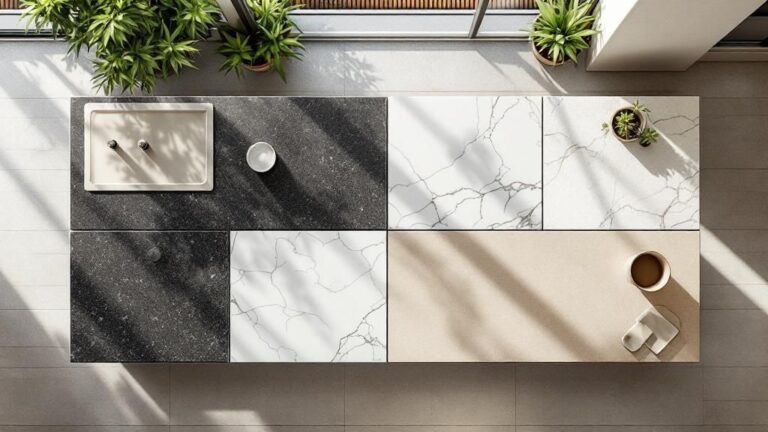
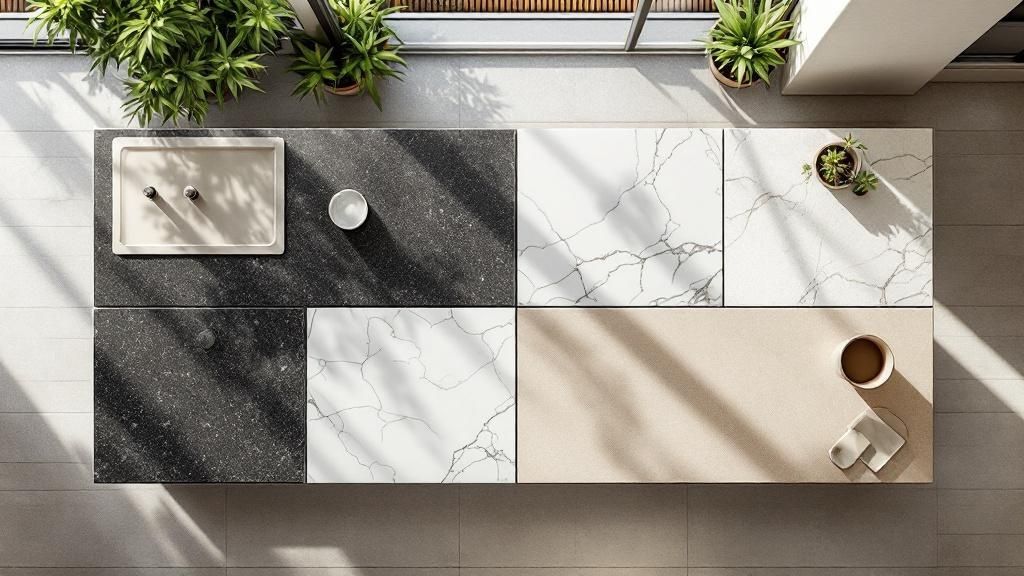
Choosing the right countertop is a balancing act between aesthetics, durability, and budget. This guide offers a practical countertop materials comparison, going beyond the sales pitch to provide advice tailored for California homeowners, from the Bay Area to Monterey. It covers the key differences between popular choices like granite, marble, quartz, and porcelain to help you select the perfect surface for your home.
The first major decision is often between natural stone and engineered surfaces. Are you drawn to the unique, one-of-a-kind character of granite, or do you need the consistent, low-maintenance performance of quartz? There's no single right answer, but your choice will shape how you use and care for your kitchen for years to come.
Decoding Your Countertop Options
Selecting a countertop is a significant decision that impacts your daily routine and your home's overall value. Whether you're designing a sleek, modern kitchen in Palo Alto or a timelessly elegant bathroom in a coastal Monterey home, understanding the real differences between materials is the critical first step. It's about finding a surface that fits your lifestyle, design vision, and budget.
This choice is increasingly important as design tastes and material technology evolve. According to Mordor Intelligence, the global countertop market was valued at USD 107.57 billion in 2024 and is projected to continue growing, highlighting that homeowners are serious about finding surfaces that are both beautiful and durable.
As you begin, remember your countertop is a major visual element that must harmonize with your cabinets, floors, and lighting. Considering broader interior design considerations will help you create a cohesive and stunning space.
Quick Countertop Material Snapshot
To get you started, here is a brief, at-a-glance comparison of the most popular players in the countertop game. Think of this as your cheat sheet before we dive into the nitty-gritty of each material's performance. Sourcing the right slab is just as important, and you can learn more in our guide on where to buy stones.
| Material | Best For | Durability | Maintenance | Typical Cost |
|---|---|---|---|---|
| Granite | Busy kitchens, heat resistance, unique natural patterns | High | Low (requires periodic sealing) | Moderate to High |
| Marble | Luxury aesthetics, statement islands, baking stations | Moderate | High (prone to etching and staining) | High |
| Quartz | Low-maintenance consistency, busy family homes | Very High | Very Low (non-porous, no sealing needed) | Moderate to High |
| Porcelain | Modern designs, indoor/outdoor use, UV resistance | Very High | Very Low (non-porous and heat-proof) | High |
This table provides the 10,000-foot view. Now, let's zoom in on what these ratings mean for your home, ensuring you make a lasting investment.
Exploring Natural Stone: The Timeless Appeal Of Granite And Marble
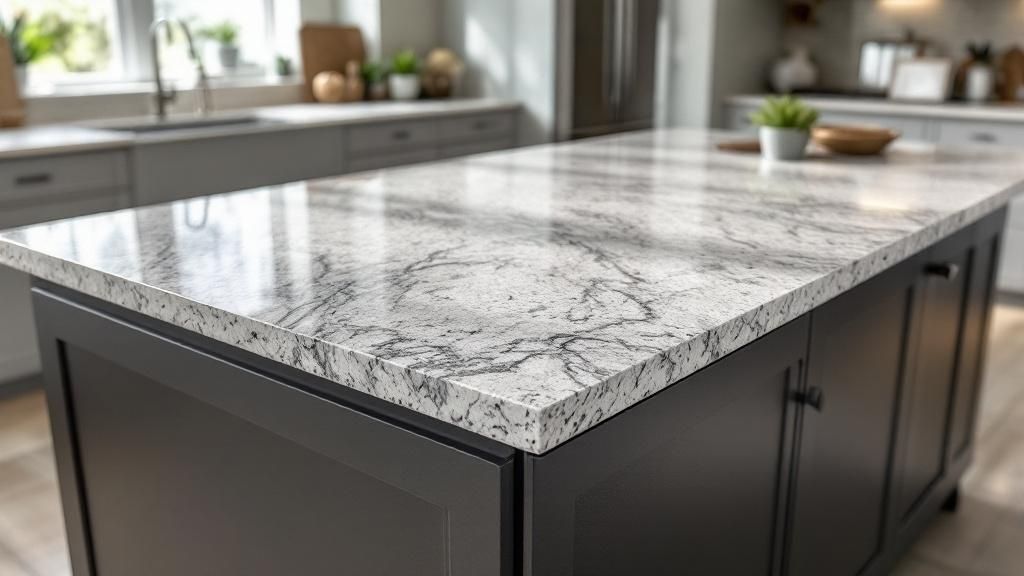
There's something uniquely special about bringing a piece of the earth into your home. Natural stone countertops offer a slice of geological history, and their true magic lies in the fact that no two slabs are ever identical. This is precisely why homeowners in Palo Alto and Monterey, seeking a truly one-of-a-kind design, often gravitate towards them.
Among the titans of natural stone, granite and marble have long been top contenders. In this section of our countertop materials comparison, we'll explore how their deep-earth origins influence their daily performance, helping you decide which is the right fit for your lifestyle.
The Enduring Strength Of Granite
Forged from immense heat and pressure deep within the earth's crust, granite is an igneous rock with a dense, crystalline structure. This intense formation process gives it exceptional real-world advantages, most notably its superior resistance to heat. If you're a passionate cook who doesn't want to worry about setting down a hot pan, granite is an ideal solution.
Its signature speckled appearance comes from interlocking crystals, creating patterns from the understated and consistent look of Absolute Black to dramatic, flowing veins.
- Heat Resistance: Granite is one of the most heat-resistant countertops available, making it a workhorse for active kitchens.
- Durability: It is incredibly tough against scratches, and when properly sealed, it effectively resists stains.
- Uniqueness: Each slab has a distinct mineral pattern, guaranteeing your countertop is unlike any other.
Because it's such a naturally hard material, granite excels in high-traffic areas. Even if a chip occurs, a professional can often perform a near-invisible repair using a color-matched epoxy and granite dust mixture.
This combination of toughness and beauty makes granite a fantastic choice for everything from kitchen islands to outdoor barbecue areas, standing up beautifully to the diverse California climate.
The Unmistakable Luxury Of Marble
Marble is a metamorphic rock formed when limestone undergoes a complete transformation from heat and pressure. This process recrystallizes the calcite, creating the soft, elegant veining that has symbolized luxury for centuries. It's a softer, more porous stone than granite, which means it requires more mindful care from its owner.
While marble is more susceptible to etching from acidic spills like wine or lemon juice, its beauty is simply unparalleled. For many designers and homeowners, the patina it acquires over time is part of its charm, as the subtle marks of daily life become part of the home's story.
Choosing marble is about embracing its unique character. Opting for a honed (matte) finish can make etching less obvious than a high-polish surface, and diligent sealing is non-negotiable to protect against stains.
Living With Marble And Granite
To keep your natural stone looking fantastic, a little routine care goes a long way. The single most crucial task for both granite and marble is maintaining the protective seal. An easy way to check is with a drop of water; if it beads up, the seal is intact, but if it soaks in and darkens the stone, it’s time to reseal.
While both are phenomenal natural stones, some homeowners desire the look of marble with the ruggedness of granite. For these clients, we often suggest they buy a Taj Mahal quartzite slab for countertops, as quartzite beautifully bridges that gap.
Engineered Excellence: The Rise Of Quartz And Porcelain
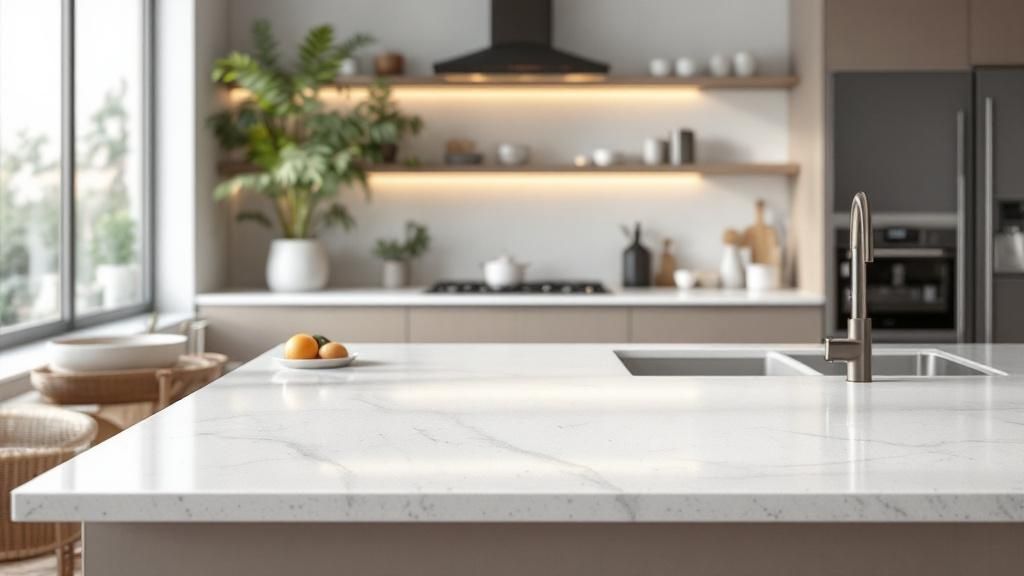
While nothing can replicate the one-of-a-kind organic beauty of natural stone, engineered surfaces offer a powerful combination of design flexibility and modern performance. Led by quartz and porcelain, this category fuses natural minerals with advanced manufacturing to overcome some of the inherent limitations of quarried stone. The result is a countertop that delivers remarkable resilience and aesthetic consistency, perfect for the demands of contemporary life.
Engineered materials are no longer just an alternative; for many designers and homeowners, they are the first choice, especially when durability and low maintenance are top priorities. Market analysis shows the engineered stone segment is set to lead market growth, a trend fueled by its superior performance and incredible design versatility.
The Power And Precision Of Quartz
Quartz countertops are a true feat of material science, typically made of over 90% crushed natural quartz blended with polymer resins and pigments. This recipe creates an incredibly dense and non-porous surface—arguably its single greatest advantage. Unlike natural stone, quartz never needs to be sealed to fend off stains from coffee, wine, or oil.
This built-in resilience makes quartz a workhorse for busy family kitchens across the Bay Area. The manufacturing process also provides a level of control impossible with natural stone, enabling uniform colors and patterns for a seamless look. To achieve a perfectly cohesive design, it’s helpful to know how to integrate quartz countertops with custom cabinets.
Key Differentiator: The main trade-off with quartz is its vulnerability to high heat. The resins used in its construction can be damaged by direct contact with a hot pan, so using trivets is non-negotiable. For sheer stain resistance and minimal upkeep, however, its performance is tough to beat.
The Rise Of High-Performance Porcelain
Porcelain slabs represent the next frontier in engineered surfaces, offering benefits that are incredibly valuable for California homes. This material is created from a sophisticated blend of clays and minerals fired at extremely high temperatures—upwards of 2,000°F. This process, known as sintering, creates a surface that is incredibly hard, dense, and non-porous.
This intense manufacturing gives porcelain several key advantages over quartz:
- Superior Heat Resistance: Forged in fire, porcelain is virtually immune to heat damage. You can place hot cookware directly on the surface without worry.
- UV Stability: The pigments are baked into the material, making porcelain completely UV-resistant. It won’t fade or discolor in direct sunlight, a massive benefit for sun-drenched kitchens or indoor-outdoor living spaces common in California.
- Exceptional Scratch Resistance: As one of the hardest countertop materials available, porcelain stands up to daily scratches and scuffs with ease.
This unique combination of traits makes porcelain a top contender in any countertop materials comparison, especially for projects that flow from the kitchen to an outdoor patio. To explore further, read our article comparing engineered and natural stone countertops.
A Head-To-Head Countertop Performance Analysis
Choosing a countertop is about more than just aesthetics; it's a practical decision about performance. To make the right choice, you must look past the showroom shine and consider how each material will hold up to daily life. Let’s dive into a head-to-head analysis of the big four—granite, marble, quartz, and porcelain—to see how they stack up.
Durability Under Pressure: Heat, Scratches, And Stains
"Durability" means different things in different contexts. A countertop in a rarely used guest bath faces far fewer challenges than one at the center of family life. Here's how the materials compare:
-
Heat Resistance: Granite and porcelain are the undisputed champions. Both are forged in incredible heat, so you can set a hot pan directly on them without a second thought. Quartz, however, contains resin binders sensitive to high temperatures, making trivets essential to avoid permanent burn marks.
-
Scratch Resistance: For scratch resistance, porcelain and granite lead the pack. They are exceptionally hard materials that easily shrug off nicks from knives and everyday wear. Quartz is also quite scratch-resistant, but marble, being a much softer stone, can be easily scratched by utensils and abrasive cleaners.
-
Stain Resistance: This is where engineered surfaces excel. Quartz and porcelain are non-porous, meaning they naturally repel liquids like wine, coffee, and oil without ever needing to be sealed. Natural stones, especially porous ones like marble, are thirsty and require diligent sealing to prevent stains, a vulnerability shared by some restaurant surfaces like butcher block but solved by materials like commercial stainless steel tables.
The Maintenance Commitment
Your countertop choice directly impacts your cleaning routine. Engineered stones like quartz and porcelain are as low-maintenance as it gets; a simple wipe-down with soap and water is all they need. For busy households, this "set it and forget it" quality is a massive selling point.
Natural stone, however, asks for a bit more commitment.
The single most important task for any natural stone is keeping its protective seal intact. You can do a quick water test: place a drop of water on the surface and see if it beads up or soaks in. If it soaks in, it’s time to reseal—typically every 1-3 years for granite.
Marble is the most demanding, requiring immediate cleanup of spills to prevent stains and etching. It is a material you must be prepared to care for intentionally.
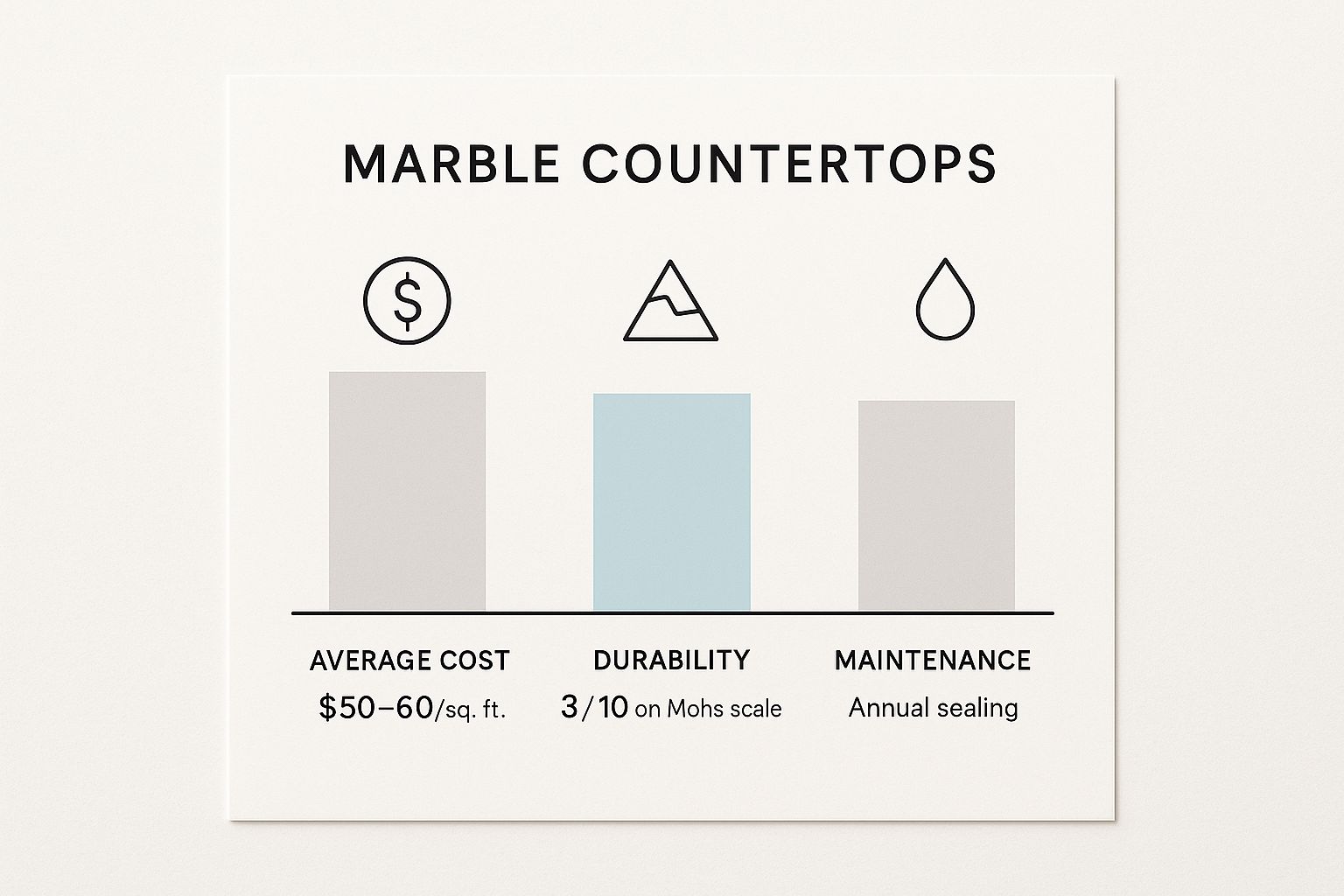
As you can see, while marble’s cost is often in the mid-range, its durability is on the lower end, and it requires consistent care to look its best.
Countertop Performance Metrics Compared
| Feature | Granite | Marble | Quartz | Porcelain |
|---|---|---|---|---|
| Heat Resistance | Excellent | Poor | Good (with trivets) | Excellent |
| Scratch Resistance | Excellent | Poor | Very Good | Excellent |
| Stain Resistance | Good (when sealed) | Poor (porous) | Excellent | Excellent |
| Required Sealing | Every 1-3 years | Every 6-12 months | Never | Never |
| Maintenance | Low | High | Very Low | Very Low |
This table makes it clear that while materials like quartz and porcelain win on maintenance, granite holds its own as a durable, all-around performer.
The Final Trade-Off: Aesthetics
Ultimately, your decision often comes down to what you want to look at every day. Natural stone offers something that can’t be manufactured: one-of-a-kind beauty. The dramatic, sweeping veins in a slab of Calacatta marble or the complex mineral patterns in a piece of granite are like works of art from the earth.
Engineered surfaces deliver a different kind of aesthetic appeal—one built on consistency and precision. Quartz and porcelain offer uniform colors and patterns, which is perfect for creating a clean, modern look and enables book-matching for seamless, mirrored patterns across large surfaces.
Understanding The True Cost And Long-Term Value
Choosing a new countertop is a significant financial investment. The sticker price per square foot is only the beginning; the total cost includes the material, intricate fabrication, and skilled installation.
This is especially true in California, where demand is high. The North American countertop market is expected to reach USD 36.31 billion in 2025, and with the US West accounting for about 35% of that market, trends in the Bay Area and Monterey influence everything from slab availability to labor costs. You can review the full industry report to see these trends firsthand. A wise countertop materials comparison must balance today's cost with tomorrow's value.
Breaking Down The Total Investment
Your final quote covers three distinct elements, and each material strikes a different balance between them.
- Material Cost: This is the price of the raw slab. An exotic, one-of-a-kind granite will cost more than a common quartz pattern.
- Fabrication Cost: This is the skilled labor needed to transform the slab into your countertop, including custom cutouts and edge profiles. Denser materials like quartzite and porcelain demand specialized tools, often increasing fabrication fees.
- Installation Cost: This is the final step of safely fitting the heavy, finished piece into your home. The stone's weight, kitchen accessibility, and number of seams can all impact this figure.
A key insight for California homeowners: a lower price per square foot doesn't always mean a lower final bill. A cheaper material that requires complex fabrication can end up costing as much as a more premium material with a straightforward installation.
Assessing Long-Term Value And Resale Impact
Beyond the upfront cost, each countertop has a different long-term financial story. This includes maintenance expenses and its potential impact on your home's resale value.
Natural Stone (Granite & Marble)
While granite and marble can have a higher initial cost, their unique, timeless appeal can be a huge selling point for potential buyers, often raising the perceived value of your home. They do require periodic sealing—a small but necessary maintenance task.
Engineered Stone (Quartz & Porcelain)
Quartz offers a balance of moderate upfront cost and virtually zero maintenance expenses later on, making it a stable, long-term investment. If that blend of style and performance appeals to you, our guide to the best quartz countertops is a great next read. Porcelain is in the same low-maintenance camp, often with a higher initial price justified by its incredible resistance to heat and UV rays.
Getting It Right: How to Make Your Final Countertop Choice
You've done the research and weighed the pros and cons. The final step is moving from theory to reality by aligning all that information with how you actually live. The best countertop is the one that truly fits your lifestyle, whether that means standing up to a chaotic family kitchen or serving as a show-stopping marble island.
Nothing Beats Seeing It in Person
Reading about materials and looking at photos online is a great start, but it can only get you so far. We always encourage clients to visit a Carmel Stone Imports showroom to bridge the gap between research and a confident final decision. Here, you can feel the cool, silky surface of honed marble or see how light dances across a massive, polished granite slab.
This is also your chance to appreciate the uniform perfection of quartz up close. Understanding the logistics of a proper installation can also solidify your choice, and our guide to installing quartz countertops is a great resource.
The most crucial step before you commit? See a full-size slab. This is the only way to grasp the true scale of veining and movement in a natural stone or to see how a color shifts in different lighting conditions.
Our teams in Palo Alto and Monterey are here to guide you through these final, important steps. Stop by for a personalized consultation, and let's ensure the stone you choose becomes the perfect foundation for the home you envision.
Frequently Asked Questions
Choosing a countertop brings up a lot of questions. To help you feel completely confident, here are answers to some of the most common inquiries we receive from homeowners and designers in the Bay Area and beyond.
1. What is the best countertop material for a busy family kitchen?
For a high-traffic kitchen, engineered quartz is an exceptional choice due to its non-porous and durable nature. It resists stains from juice, wine, and oil without ever needing to be sealed, and it stands up incredibly well to scratches and chips, making it a practical, low-maintenance workhorse.
2. Is quartzite the same as quartz?
This is a common point of confusion. Quartzite is a 100% natural metamorphic rock prized for its marble-like beauty and granite-like durability; it must be sealed. Quartz is an engineered product made from ~90% crushed natural quartz, resins, and pigments, making it non-porous and maintenance-free.
3. Can I use marble countertops in my outdoor kitchen?
We strongly advise against using marble outdoors, especially in the variable California climate. It is porous and susceptible to staining, etching, and discoloration from sun and rain. For outdoor kitchens, ultra-durable surfaces like porcelain or dense granite are far superior choices as they resist UV rays and moisture.
4. How often do I need to seal my granite countertops?
Proper sealing is the key to granite's longevity. We generally recommend resealing every 1-3 years, depending on the specific stone and level of use. You can test the seal by placing a drop of water on the surface; if it beads up, the seal is strong, but if it soaks in, it’s time to reseal.
5. Which countertop is best for a modern, minimalist design?
Porcelain slabs are a fantastic match for modern and minimalist aesthetics. They can be fabricated with ultra-thin profiles and crisp, sharp edges, creating the sleek, seamless look that defines contemporary design. Their ability to mimic materials like raw concrete or feature solid, uniform colors makes them a favorite for achieving a clean, uncluttered space.
At Carmel Stone Imports, our team is ready to answer your questions and guide you through our collections. We invite you to visit one of our showrooms in Palo Alto, Carmel, or Sand City to see and feel these materials for yourself.