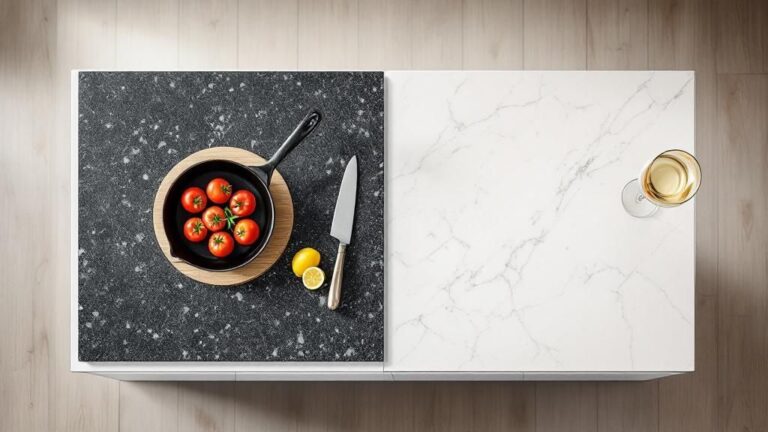
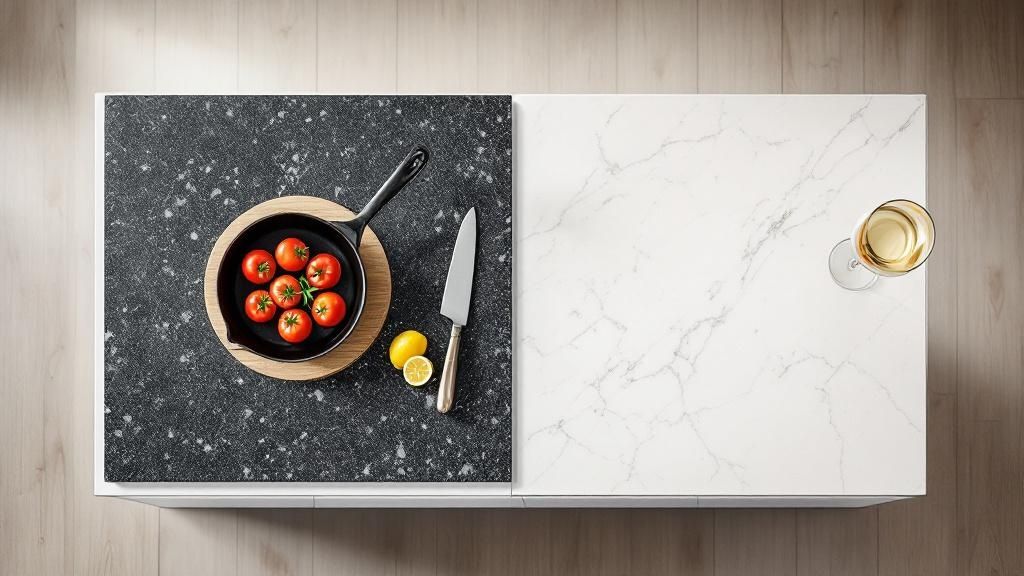
When choosing the perfect countertop, the granite vs quartzite countertops pros and cons can feel complicated. Do you want granite's classic look and amazing heat resistance? Or do you prefer quartzite's elegant, marble-like style and top-notch scratch resistance?
Your choice depends on what matters most for your kitchen. This guide will explain everything you need to know to make the best decision for your California home.
Choosing Between Granite and Quartzite
Picking between granite and quartzite gets easier when you know their key differences. Both are beautiful, strong natural stones, but they fit different needs and styles. For homeowners in the Bay Area, where looks and function are equally important, the details matter.
Granite is an igneous rock, formed from cooled magma. This gives it a special speckled pattern with beautiful flecks and colors. Quartzite is a metamorphic rock that started as sandstone and was changed by heat and pressure. This process creates smooth, flowing lines that look a lot like marble.
Understanding the Core Differences
Let's break down what makes these two materials different. Each stone has its own mix of strength, care needs, and appearance. Learning about the various types of natural stone countertops can give you a bigger picture.
- Hardness and Durability: Both are very tough. However, quartzite is harder on the Mohs scale, which means it resists scratches better. Granite is great at handling heat from hot pots and pans.
- Aesthetic Appeal: Granite offers many unique, speckled patterns, often in earthy colors. Quartzite is known for its soft, graceful veins that create a clean, modern look.
- Maintenance Requirements: Both are porous, so they need to be sealed. Granite usually needs sealing once a year. Some denser quartzite slabs can go longer between sealing.
This chart quickly shows the main differences in hardness, cost, and maintenance.
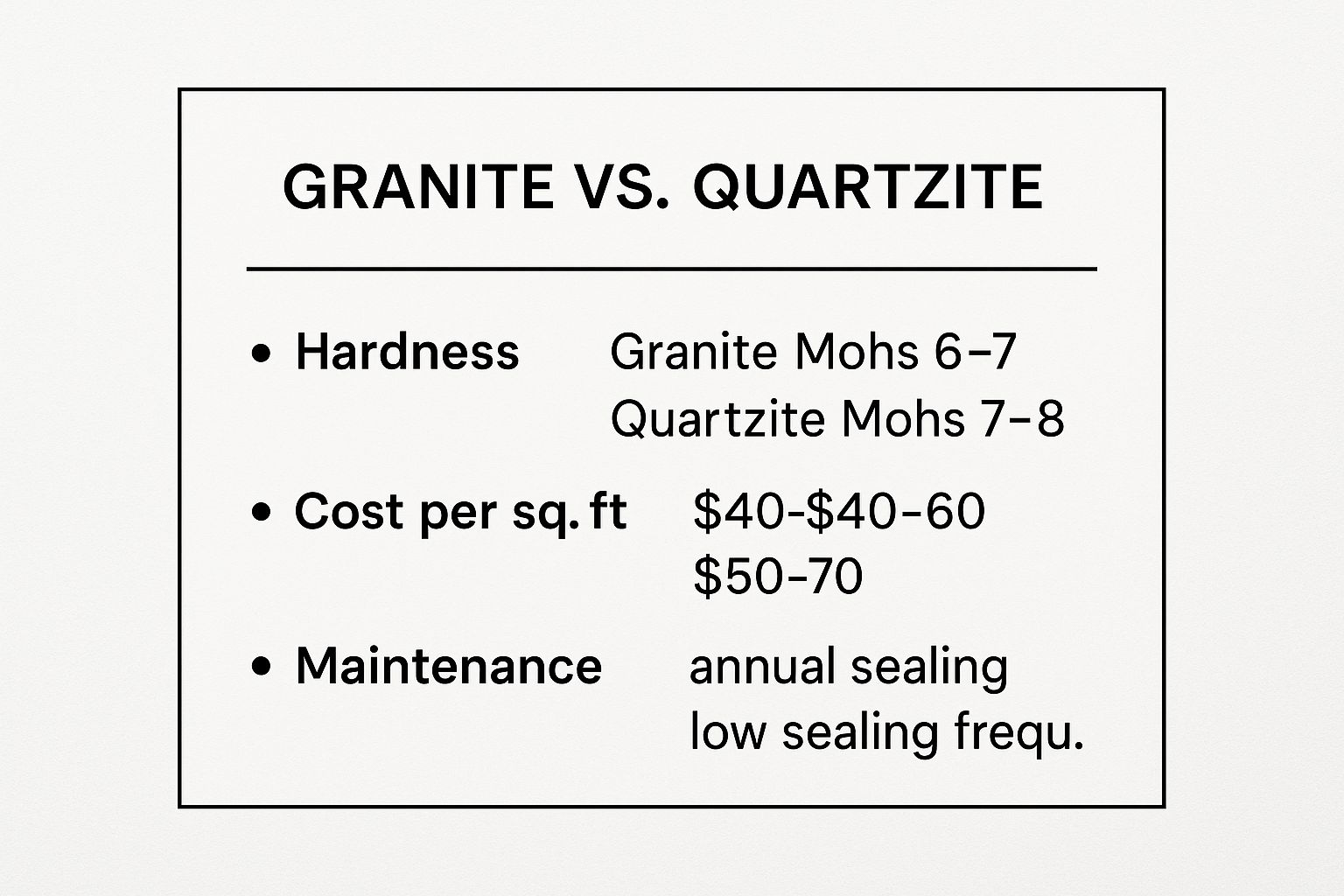
This chart highlights that quartzite is a bit harder and may cost more. It also shows that it might need sealing less often than granite.
Key Takeaway: Your choice is about matching the stone to your lifestyle. A busy family kitchen in Monterey might need granite's heat resistance. A stylish Palo Alto bar area may be better with quartzite’s scratch resistance.
Comparing Countertop Aesthetics and Design
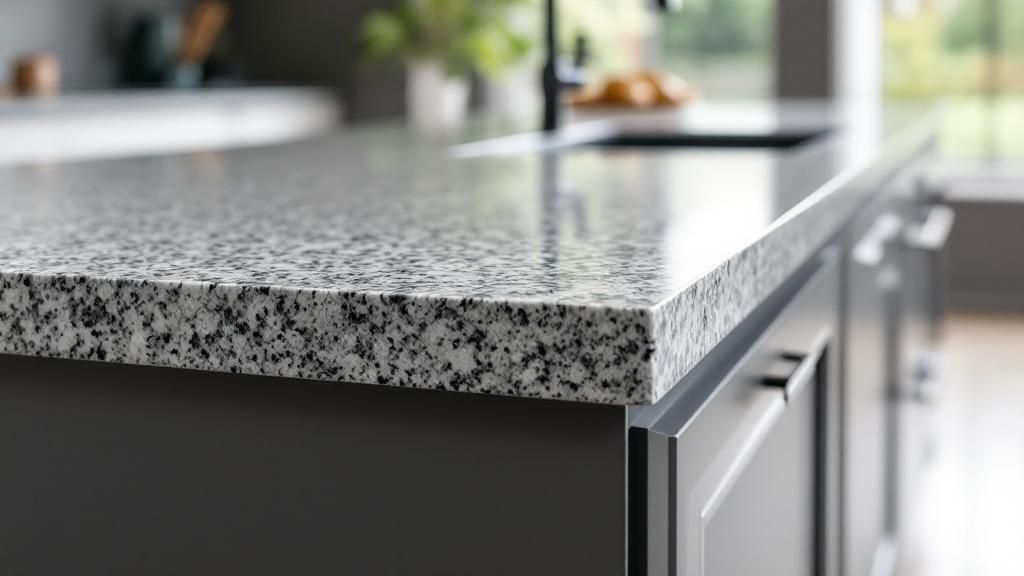
The look of your countertop is key to your kitchen's design. When thinking about granite vs quartzite countertops pros and cons, how they look is often the final decider. Each stone creates a different feel, whether you have a rustic Monterey kitchen or a modern Palo Alto home.
Granite has a natural, earthy look. No two slabs are the same, so your countertop will be one-of-a-kind. Its surface is a beautiful mix of crystals that create speckled or flowing patterns in many colors.
The Unique Visual Signature of Granite
Some people find granite's look "busy," but this is also its strength. It adds energy and makes the countertop a focal point. This makes it a great fit for traditional or rustic designs that need warmth and character.
- Color Palette: You can find granite in almost any color. There are deep blacks, vibrant blues, warm golds, and soft creams. In California homes, lighter tones like White Ice or classics like Ubatuba are popular.
- Pattern Variety: Patterns range from fine grains for a simple look to bold waves of color. This variety makes it easy to match with different cabinets and floors.
For designers in the Bay Area, an exotic granite slab can be the centerpiece of a kitchen. It can tie all the other design elements together with its unique colors.
The Refined Elegance of Quartzite
Quartzite offers a more subtle and sophisticated feel. It looks a lot like marble, with soft veins that flow across the slab. This clean look is perfect for modern and minimalist styles.
This refined look adds a touch of luxury without being too loud. It gives you the high-end look of marble without the difficult maintenance.
How Quartzite Complements Modern Design
The clean lines and soft colors of quartzite fit today's design trends. Its simple beauty lets other features, like custom cabinets or a backsplash, stand out.
- Marble-Like Veining: Slabs like Super White or Taj Mahal quartzite have the delicate veins that people love in marble. This creates a timeless and upscale feel.
- Color Consistency: Quartzite is a natural stone, but it has a more consistent pattern than granite. This makes it easier to match slabs for large projects, like a waterfall island.
- Light and Brightness: Many quartzites come in white and light gray shades. These colors can make a kitchen feel larger and brighter, a popular feature in coastal California homes.
The best way to choose is to see and feel the stones yourself. Visit a Carmel Stone Imports showroom to find the perfect fit for your home.
A Practical Look at Durability and Hardness
When you choose a new countertop, you need a surface that can handle real life. In the debate over granite vs quartzite countertops pros and cons, durability is very important. Both stones are strong, but they handle daily wear differently.
Both granite and quartzite are extremely hard natural stones. They are much tougher than materials like marble or limestone. But there are small but important differences in how they perform.
Scratch and Abrasion Resistance
In a scratch test, quartzite usually wins. It scores a 7 to 8 on the Mohs scale of hardness. Granite is close behind, scoring between a 6 and 7.
What does this mean for your kitchen? Quartzite is less likely to get a mark from a slipped knife or a heavy pot. Its dense structure, formed under intense pressure, makes it very tough.
Real-World Impact: For a busy family kitchen, quartzite's superior scratch resistance offers great peace of mind.
Granite is also very durable and has been a top choice in kitchens for many years. It is known for its strength and long life. In fact, in 2023, granite made up about 29.15% of the global countertop market share, thanks to its toughness (Source: Grand View Research).
Heat and Impact Resistance
This is where granite really shines. Because it was formed from hot magma, granite can handle heat very well. You can place a hot pan directly on a granite surface without worrying about damage.
Quartzite is also heat resistant but is more sensitive to sudden temperature changes. It is best to use a trivet for hot pots to avoid any risk of cracking.
When it comes to impact, both stones are very strong. However, their edges and corners are the most likely spots for chips.
- Edge Profiles: A rounded edge, like a bullnose, can reduce the chance of chipping.
- Fabrication Quality: Professional installation is key. It ensures your countertop is supported correctly and the edges are finished for maximum durability.
To learn more, check out our guide on natural stone vs. engineered stone. Both granite and quartzite are excellent, long-lasting materials that will look beautiful in any California home.
Understanding Maintenance and Daily Care
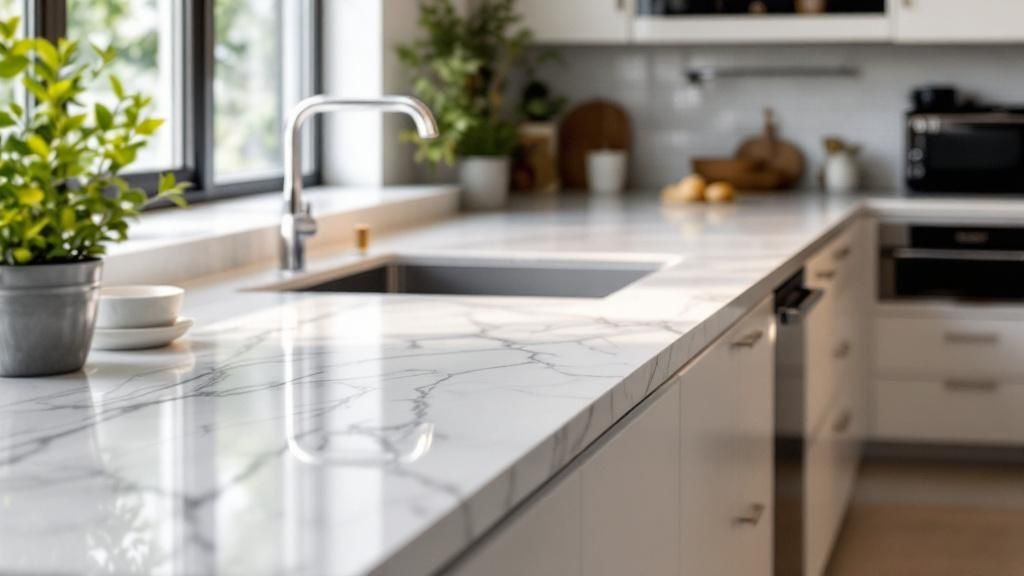
Choosing a beautiful countertop is the first step. Knowing how to care for it will keep it looking great for years. When you compare granite vs quartzite countertops pros and cons, maintenance is a big factor.
Both are natural stones and are somewhat porous. This means they need some care to prevent stains and damage. Proper care protects your investment and keeps your counters looking new.
The Importance of Sealing Natural Stone
Granite and quartzite have tiny pores that can absorb liquids. Spills like red wine or oil can sink in and leave a stain if the stone is not sealed. A good sealant fills these pores and acts as a barrier.
Granite is known for needing regular sealing. For most granite countertops, sealing once a year is a good idea to keep it stain-resistant.
Quartzite is often denser than granite. This means some quartzite slabs are less porous and may only need sealing every few years. The right schedule depends on the specific slab you choose for your Bay Area home.
Pro Tip: To check if it's time to reseal, do a water test. Leave a small puddle of water on the counter for about 15 minutes. If the stone gets darker, it's absorbing water, and you should apply a new coat of sealant.
Daily Cleaning Routines for Longevity
Daily care is just as important as sealing. Good cleaning habits stop grime from building up and protect the sealant. The key is to use gentle cleaners.
Harsh or acidic chemicals can harm natural stone. They can remove the sealant and even damage the stone's surface, making it look dull.
What to Avoid on Your Countertops:
- Acidic Cleaners: Do not use vinegar, lemon juice, or cleaners with citrus oils.
- Abrasive Scrubs: Harsh scrub pads or powders can scratch the surface and ruin its shine.
- Bleach and Ammonia: These strong chemicals will break down the protective sealant.
For daily cleaning, warm water and a little pH-neutral soap are all you need. The best habit is to wipe up spills as soon as they happen. This is the easiest way to prevent stains on both granite and quartzite.
Breaking Down the Costs of Each Countertop
Budget is a big part of any remodel. When you are looking at granite vs quartzite countertops pros and cons, you need to think about the total cost. This includes the stone slab, the fabrication, and the installation.
Granite is often the more budget-friendly choice. It comes in a wide range of colors and patterns, so there is usually an option for every budget. More common granite types can be very affordable. Granite countertops made up about 34.33% of market revenue in 2024, partly because of this price variety (Source: Statista).
What Influences the Price Tag
The final price of a natural stone slab depends on a few things. These factors can make a high-end granite cost as much as a basic quartzite.
- Rarity and Origin: Slabs with rare colors or unique patterns from far-away quarries will cost more. A common gray granite will be much cheaper than a rare blue quartzite from a single source.
- Slab Thickness: Thicker slabs (3cm vs. 2cm) use more material. They are also heavier, which makes them harder to transport and install, increasing the price.
- Fabrication Complexity: More cuts and special features mean higher labor costs. Things like fancy edges, sink cutouts, or a waterfall edge add to the final bill.
Comparing Long-Term Value
Quartzite usually costs more per square foot than granite. This is because it is rarer and much harder to quarry and cut. Popular types with marble-like veins, like Taj Mahal, also cost more.
Even though the initial cost is higher, many homeowners in Palo Alto see it as a good investment. You are paying for better scratch resistance and a sleek, modern look.
The right choice depends on your priorities. Granite offers great value and proven durability. Quartzite gives you a high-end look with amazing toughness. The best way to decide is to visit a showroom and see them for yourself.
How to Make the Right Choice for Your Home
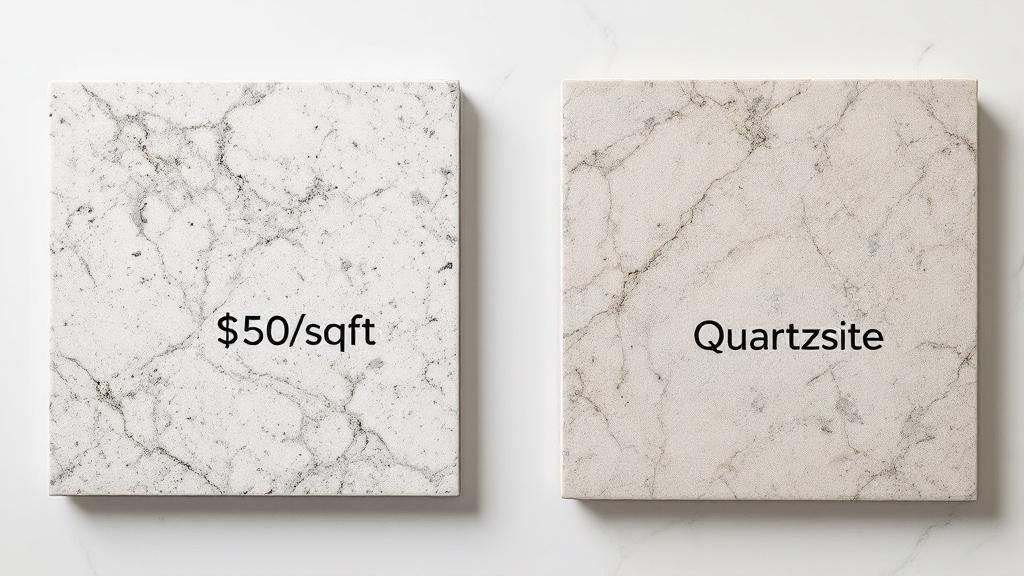
So, how do you decide between granite and quartzite? After you have looked at the granite vs quartzite countertops pros and cons, the choice comes down to your lifestyle and the look you want. This is about finding a surface that fits your daily life.
Let's look at some real-life examples from California homes. This will help make the right choice clearer for you.
Matching the Stone to Your Lifestyle
Think about a busy family kitchen in Monterey. In this home, granite is often the better choice. Its amazing heat resistance means you can put a hot pan right on the counter without worry. Granite is a tough surface that can handle an active household.
Now, imagine a modern bathroom or a beautiful kitchen island in a Palo Alto home. Here, the style is all about elegance. In this case, quartzite is the clear winner. Its stunning, marble-like look adds luxury. It is also very hard and scratch-resistant, so it stays looking perfect.
Key Insight: Choose a stone based on its performance. Granite is a workhorse for heat and heavy use. Quartzite is the champion of scratch resistance and style.
Considering Your Long-Term Vision
A new countertop is a big investment. The desire for beautiful and durable materials is growing. In fact, countertop sales in the United States are expected to grow from USD 86.4 billion in 2025 to USD 156.2 billion by 2035 (Source: Precedence Research).
You can't go wrong with either choice. Both granite and quartzite are great materials that add value and beauty to your home. To get more advice, read our guide on how to choose countertops for your California home.
The best way to decide is to see these materials in person. We invite you to visit a Carmel Stone Imports showroom in Carmel, Sand City, or Palo Alto. Our team can help you find the perfect stone for your home.
Frequently Asked Questions
When choosing the right stone for your countertops, a few questions always come up. Here are quick answers to some of the most common ones we hear from homeowners in the Bay Area.
Which Is More Durable, Granite or Quartzite?
Both are very tough, but in different ways. Quartzite is harder, scoring a 7–8 on the Mohs scale, which makes it great at resisting scratches.
Granite, which scores a 6–7, is fantastic with heat. You can set a hot pan right on it. The best choice depends on what you need most: scratch resistance or heat resistance.
Do Both Granite and Quartzite Need to Be Sealed?
Yes, both need to be sealed. Because they are natural stones, they are porous and can absorb spills, which can cause stains. Sealing creates a protective barrier.
We usually recommend sealing granite once a year. Some denser quartzite slabs might go longer, but sealing is always an important part of maintenance.
Is Quartzite More Expensive Than Granite?
In most cases, yes. Quartzite often costs more because it is rarer and harder to cut and quarry. This extra work adds to the price.
However, prices can overlap. A rare, exotic granite might cost more than a common type of quartzite. It is always best to compare the specific slabs you are interested in.
Can I Use Quartzite for Outdoor Countertops?
Yes, quartzite is a great choice for outdoor use, especially in sunny California. It is very resistant to UV rays, so the sun will not fade its color. Just make sure it is sealed properly to protect it from weather and moisture.
What Is the Difference Between Quartz and Quartzite?
This is a very common question. Quartzite is a 100% natural stone quarried from the earth. Quartz is an engineered, man-made product.
Quartz is made by mixing about 90% ground natural quartz with resins and pigments. Quartzite offers unique, natural patterns, while quartz has a uniform, non-porous surface.
Ready to see the unique beauty of granite and quartzite for yourself? The design experts at Carmel Stone Imports are here to guide you through our stunning collection. Visit one of our showrooms in Palo Alto, Carmel, or Sand City, or contact us today to find the perfect stone for your home.
Explore our natural stone collection at Carmel Stone Imports