Direct Answer: White Macaubas quartzite suits light, soft kitchen and bath designs where you want a Calacatta marble look with better acid resistance. Slab porosity varies, so test the actual slab before you commit.
You want the look of Italian white marble in your kitchen. You also want to stop bracing every time somebody sets a lemon wedge or a glass of Pinot on the counter.
That tension is how most people find White Macaubas quartzite. It is one of the most requested white stones on the Monterey Peninsula right now, and for good reason. It reads like a Calacatta marble but wears more like a quartzite.
The catch is that not every White Macaubas slab behaves the same way, and not every kitchen design flatters it. Here is how to tell if it belongs in your project.
What White Macaubas Quartzite Actually Is
White Macaubas is quarried in Brazil. The background is a soft, milky white and the movement runs in fine silver and gray veining, sometimes with a warm gold thread running through it.
At six feet away it reads like a high end Italian marble. The difference is what is underneath. True quartzite begins as sandstone and gets compressed and heated until the quartz grains fuse, which makes it much harder than marble and far less reactive to acid.
Most buyers arrive at this stone the same way:
- They fell in love with a Calacatta marble on a designer’s mood board
- They read about etching and lost their nerve
- Someone told them quartzite gives the look with fewer worries
That instinct is mostly correct. Marble etches when acid dulls the polish. Quartzite generally does not, because the calcium carbonate that reacts with acid is not the dominant mineral. If you are still weighing material families, our guide on how to actually decide between marble, quartzite, granite, or porcelain walks through the tradeoffs side by side.
Where It Shines and Where It Falls Flat
White Macaubas is a quiet stone. It works when the design wants light, airy, and soft.
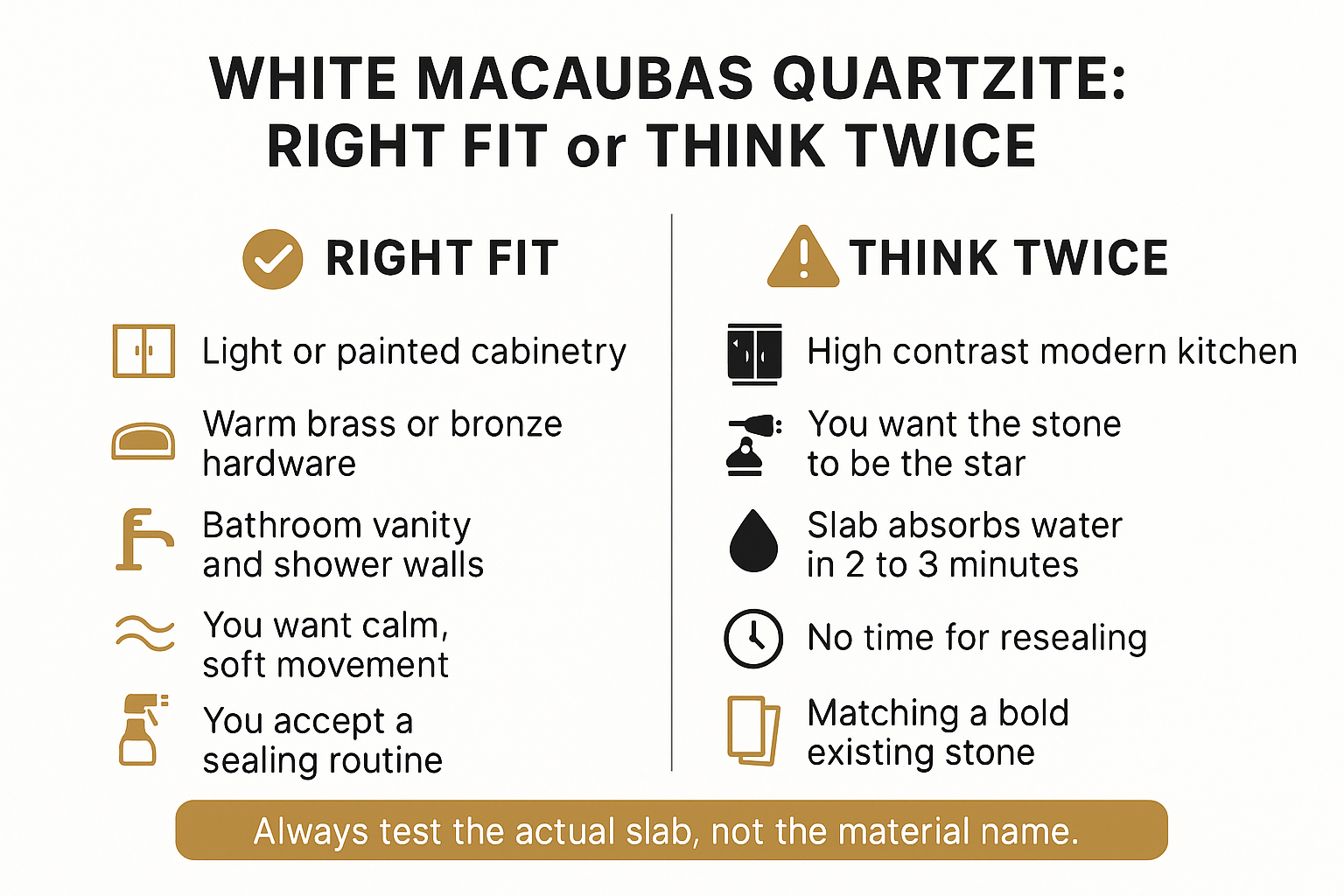
It is right for:
- Kitchens with light or painted cabinetry, white oak, or pale gray tones
- Warm metal hardware, unlacquered brass, aged bronze, or champagne finishes
- Bathroom vanity tops and full height shower walls where you want a calm, spa feel
- Coastal homes in Carmel-by-the-Sea, Pacific Grove, and Pebble Beach where the light is already soft and diffused
Think twice if:
- Your kitchen is high contrast and modern, with black cabinets or heavy dark millwork. Against those, the delicate movement stops reading as serene and starts reading as indecisive. A stone with bolder, more directional veining usually serves that design better.
- You want the slab to be the star of the room. This one supports a design, it does not dominate one.
- You are matching to an existing bold stone elsewhere in the house.
Finish changes the read too. A polished surface pushes the silver veining forward, while a honed surface softens it and leans further toward the marble look. Our breakdown of why the finish on your stone slab matters more than you think covers that decision in detail.
The Honest Limitation: Porosity Varies Slab to Slab
Here is the part buyers rarely hear before they sign off. Porosity varies between slabs of the same material. Some White Macaubas slabs are more absorbent than people expect from a quartzite.
That is not a defect. Quartzite is a natural stone with a range, and the Natural Stone Institute treats absorption as a property measured per material and per lot, not a fixed number you can look up once.
But it matters a lot if you chose this stone specifically to escape marble-style maintenance. A more porous slab will drink olive oil, red wine, and cooking grease if it is not sealed properly.
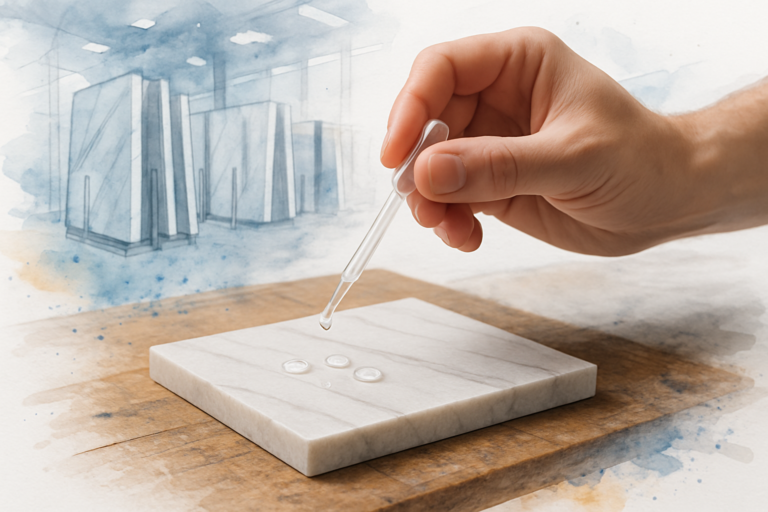
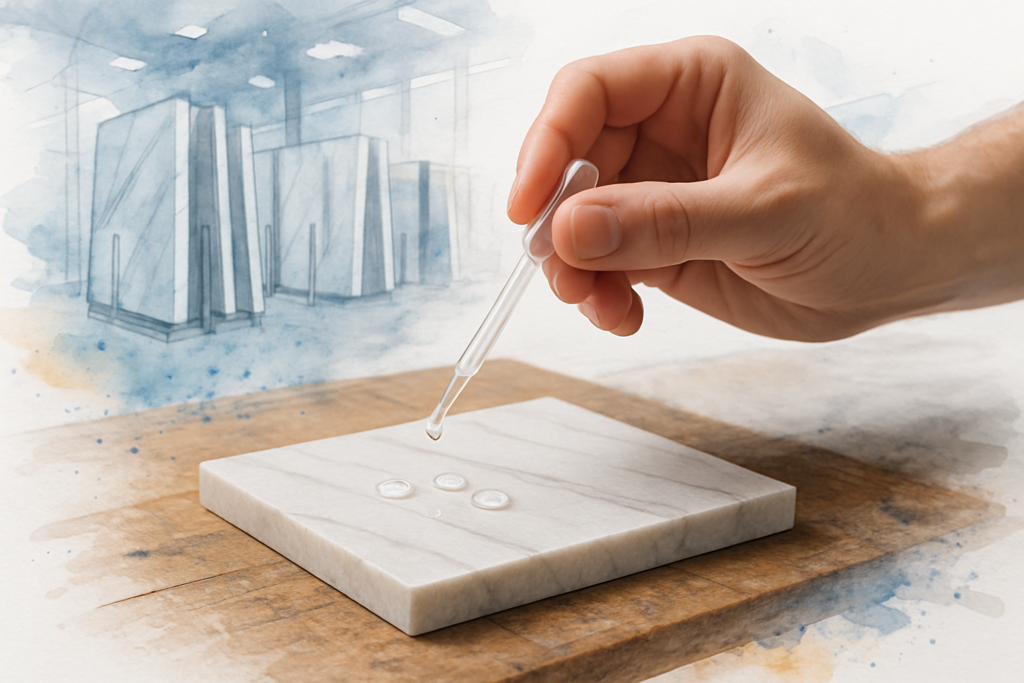
The only reliable way to know is the water drop test on an unsealed sample. Put a few drops of water on the raw stone and watch the clock.
This is also why brand new counters sometimes darken in spots. We covered the mechanism in why brand-new quartzite sometimes stains and how to prevent it, and it almost always traces back to sealing that did not match the slab’s actual absorption rate.
Reading the Water Drop Test
Time how long the water takes to soak in and darken the stone. Here is what each result generally tells you.
| Absorption Time | What It Suggests | What It Means for You |
|---|---|---|
| Water beads for 20+ minutes | Very dense slab | Standard sealing schedule, low worry in a busy kitchen |
| Soaks in around 10 to 15 minutes | Moderate density | Seal well at install, recheck yearly |
| Soaks in within 2 to 3 minutes | More porous than typical | Needs a high quality penetrating sealer and regular resealing attention |
| Darkens almost immediately | High absorption | Workable, but plan on diligent sealing and prompt spill cleanup |
Right Fit or Think Twice: A Quick Gut Check
Use this side by side check before you fall in love with a specific slab.
The Brazilian Sourcing Angle Worth Knowing Right Now
Because White Macaubas comes out of Brazil, import conditions affect what lands in Northern California warehouses.
As of July 22, 2026, quartzite from Brazil sits under a tariff classification that was kept outside the new 25% additional duty applied to some other imported stone categories, including certain Brazilian marble and granite lines. Trade rules shift, so confirm current status with your supplier before you build a budget around it.
What that means practically: if you are choosing between White Macaubas and a Brazilian marble alternative, the cost structures are not moving in the same direction right now. On a project needing three or four slabs, that gap is not trivial.
Price per square foot on any quartzite still swings widely based on:
- Block quality and how clean the veining runs
- Slab thickness, usually 2cm or 3cm
- Finish, since honed and leathered involve extra processing
- Freight and how recently the container cleared the Port of Oakland
Two slabs wearing the same name can carry very different numbers, which we explained in why two slabs with the same name cost different amounts. Ask for a quote on the specific slab, not the material.
Frequently Asked Questions About White Macaubas Quartzite
Will White Macaubas etch like marble?
Generally no. True quartzite does not react to household acids the way marble does, so lemon juice and vinegar will not dull the polish. Staining is the real risk with this stone, not etching, and that comes down to how well it is sealed.
How often will I need to reseal it?
It depends entirely on the slab and the sealer. Many owners of denser quartzite go 18 months or longer between applications, while a more porous slab may want attention closer to once a year. Repeat the water drop test on an inconspicuous spot every so often. When water starts soaking in instead of beading, it is time.
Is it strong enough for a large kitchen island?
Yes for the material itself. Quartzite is dense and handles daily kitchen use well. Span, overhang, and support are questions for your fabricator, who will look at the actual slab and your cabinet layout before templating.
Can I pick it from photos, or do I need to see the slab?
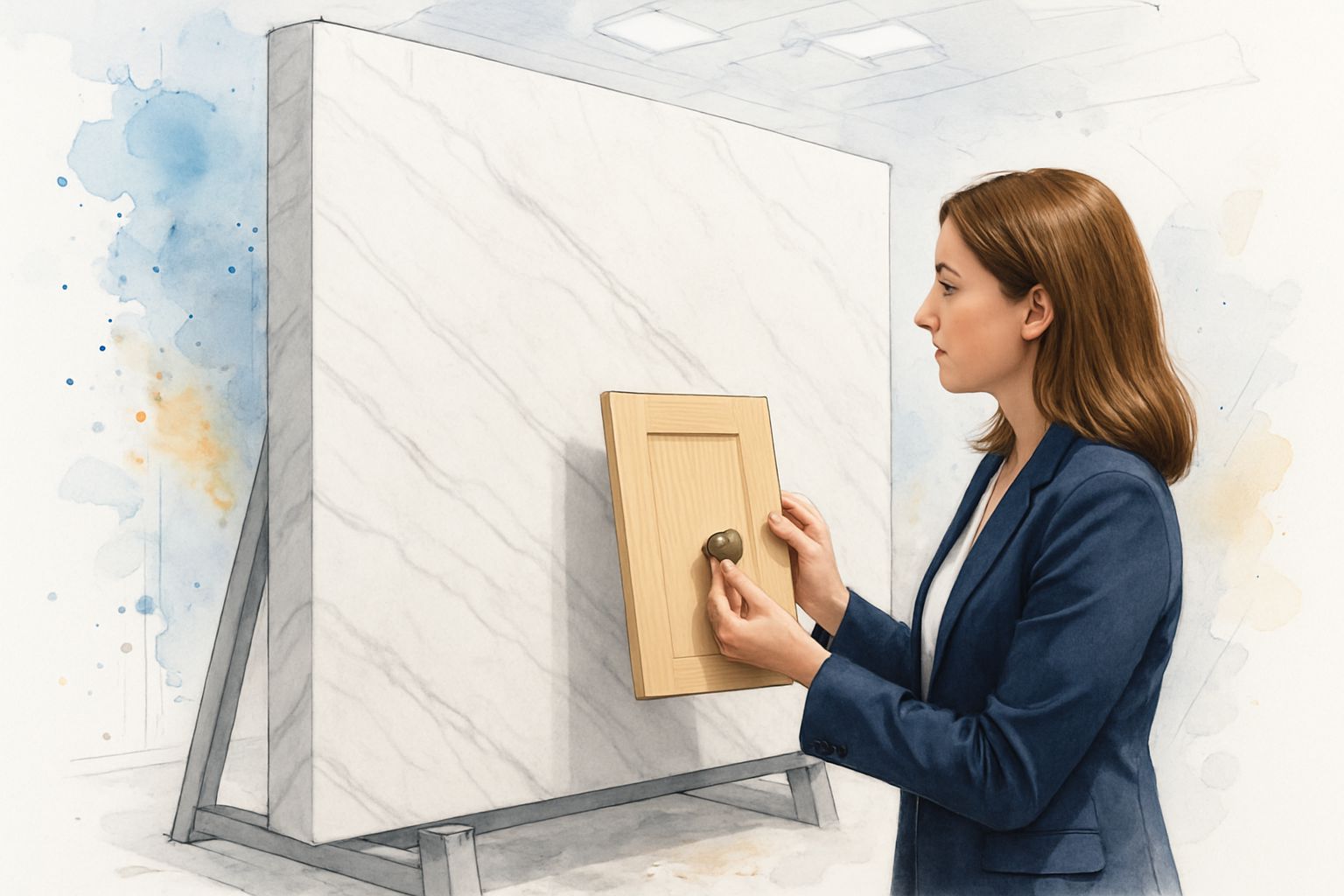
See it. Natural stone varies block to block and even slab to slab from the same quarry, and White Macaubas varies more than most because the veining is so fine. Two slabs sold under the same name can look noticeably different side by side. Viewing the actual slab under real light is the only way to know what you are getting.
How does it compare to Perla Venata?
Both are soft, quiet quartzites, but Perla Venata leans warmer with more cream and gold tones while White Macaubas stays cooler and whiter with silver movement. If your cabinetry is a cool white or gray, White Macaubas usually sits better against it.
Want to See a White Macaubas Slab in Person?
Fine veining and true white tone are hard to judge from a photo, which is why most buyers end up standing in front of the actual slab before they decide. Carmel Stone Imports keeps live inventory across the Carmel, Sand City, and Palo Alto locations, and walk-ins are welcome if you happen to be nearby. If you want to check what is currently on the racks or arrange a slab selection appointment, call (650) 800-7840 or email info@carmelimports.com.