
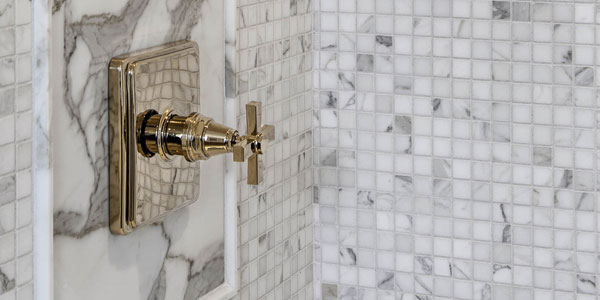
Direct Answer: No two marble slabs look alike, even from the same quarry block. Understanding veining movement, background tone, and batch lot numbers helps you select the right slab and avoid costly mismatches mid-project.
A homeowner in San Francisco submitted a contact form twice in the same week, specifically asking for actual slab photos, close-up photos, for a Calacatta Gold kitchen project. She wasn’t being difficult. She was reacting to something real: the image on a product page doesn’t show you what you’re actually buying.
Marble is a natural material formed under tremendous heat and pressure over millions of years. Every slab that comes out of a quarry is different from the one cut next to it. Two slabs from the same block can have noticeably different veining character, background tone, and movement. A website photo might show the most photogenic slab in that lot. You might receive something that reads completely differently in your kitchen.
This is not a complaint about any particular supplier. It’s just how marble works. And a buyer who understands three things before selecting a slab, namely movement, background tone, and batch lot numbers, has a much more productive conversation at the showroom and a much lower chance of being surprised mid-project.
What ‘Movement’ Actually Means in a Marble Slab
When showroom staff talk about movement, they mean how far and how actively the veining travels across the face of the slab. Some slabs have tight, contained veining that stays close to one area of the stone. Others have dramatic veins that sweep from corner to corner in long arcing lines. Neither is better. But they look completely different installed.
For a kitchen island, a slab with strong lateral movement can read beautifully when the full face is visible. For a backsplash cut into many smaller sections, that same movement might look choppy or disconnected once the fabricator cuts between the veins. Understanding what you want before you walk into the showroom helps you evaluate slabs faster and with more confidence.
Some buyers also mistake movement for veining density, but they’re different things. A slab can have bold, wide veins that don’t travel far. Another can have thin, delicate veining that runs nearly the full length of the stone. You can read more about how these variables play out across different stone types in this guide to picking a marble slab in person vs. online.
The key question to ask yourself before selecting: Do I want the veining to be a focal point, or a supporting texture? That answer should drive which slabs you even pull from the rack.
Background Tone: The Variable Most Buyers Miss
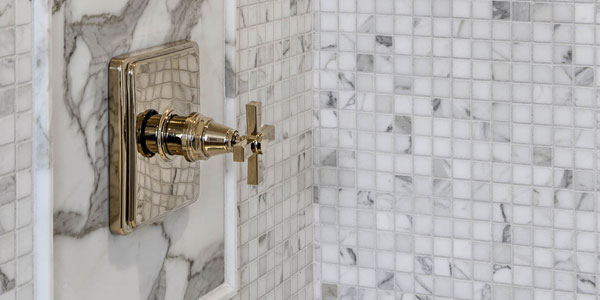
Marble doesn’t come in one white. Depending on the quarry, the depth of the cut, and the mineral content of that particular block, the base color of a slab can shift from bright optical white to warm cream to cool gray or even a slightly greenish ivory.
For a project like a full-height kitchen backsplash paired with white cabinetry, background tone matters as much as the veining. A Calacatta with a warm cream base will read yellow-gold next to bright white paint. A Calacatta with a cool gray base will feel more modern and sharp. These differences are almost impossible to see on a screen. They become obvious the moment you hold a sample next to your cabinet door in real lighting.
This is one of the reasons showroom staff will ask about your cabinetry finish, your flooring, and even your wall paint color before pulling slabs. Those variables change which background tone actually works.
Three background tone categories come up most often in marble selection:
- Bright white – crisp, modern, reads cleanest under cool lighting
- Warm cream or ivory – softer, pairs well with natural wood tones and warmer paint colors
- Cool gray or blue-gray – contemporary, tends to show veining contrast more sharply
Before your showroom visit, bring a photo of your cabinetry and flooring. Better still, bring a door sample if you can. It changes the conversation considerably.
Where the Stone Comes From Changes What You’re Looking At
Not all marble sold under the same name comes from the same place. Italian Calacatta, for example, comes from specific quarries in the Apuan Alps near Carrara in Tuscany. That origin produces a particular mineral character: bold, dramatic veining with strong contrast against a white or near-white background.
Some suppliers sell Turkish or Portuguese marble under names that sound similar, and the slabs can be attractive. But they tend to have softer, less defined veining and a slightly different background character. For a buyer who has seen Italian Calacatta and expects that specific look, receiving a different-origin slab is a real disappointment.
The Marble Institute of America notes that origin is one of the primary factors affecting marble’s visual and physical properties, including density, absorption rate, and vein formation. Knowing where a slab comes from isn’t just aesthetics. It affects how the stone performs and how it needs to be maintained.
Among Carmel Stone Imports’s primary sourcing regions, Italy, Brazil, and Turkey each produce slabs with distinct character:
- Italy – Calacatta and Statuario varieties with sharp, high-contrast veining; the standard that most buyers picture when they say “marble”
- Brazil – strong quartzite and exotic marble varieties; often richer background color, more complex patterning
- Turkey – wide variety of marble grades; softer veining, broader color range, and typically different density than Italian equivalents
Asking a supplier where a specific slab was quarried, not just what it’s called, gives you much better information about what you’re selecting. You can find more context on how to ask the right questions in The Questions Worth Asking Before You Choose a Marble Slab.
Three Italian Marble Varieties: What to Expect
These are the characteristics that distinguish the most commonly requested Italian marble varieties. Keep in mind that even within a single variety, individual slabs will vary by block and batch.
| Variety | Background Tone | Veining Character |
|---|---|---|
| Calacatta | Bright white to warm white | Bold, dramatic, high contrast – veins often gold or gray |
| Statuario | Cool bright white | Strong gray veining, typically more linear and graphic |
| Bianco Carrara | Light blue-gray to soft white | Subtle gray veining, lower contrast, more uniform overall |
| Paonazzetto | White with pink or rose tones | Purple and red veining; distinctive and visually assertive |
Batch Numbers: The Detail That Saves Projects
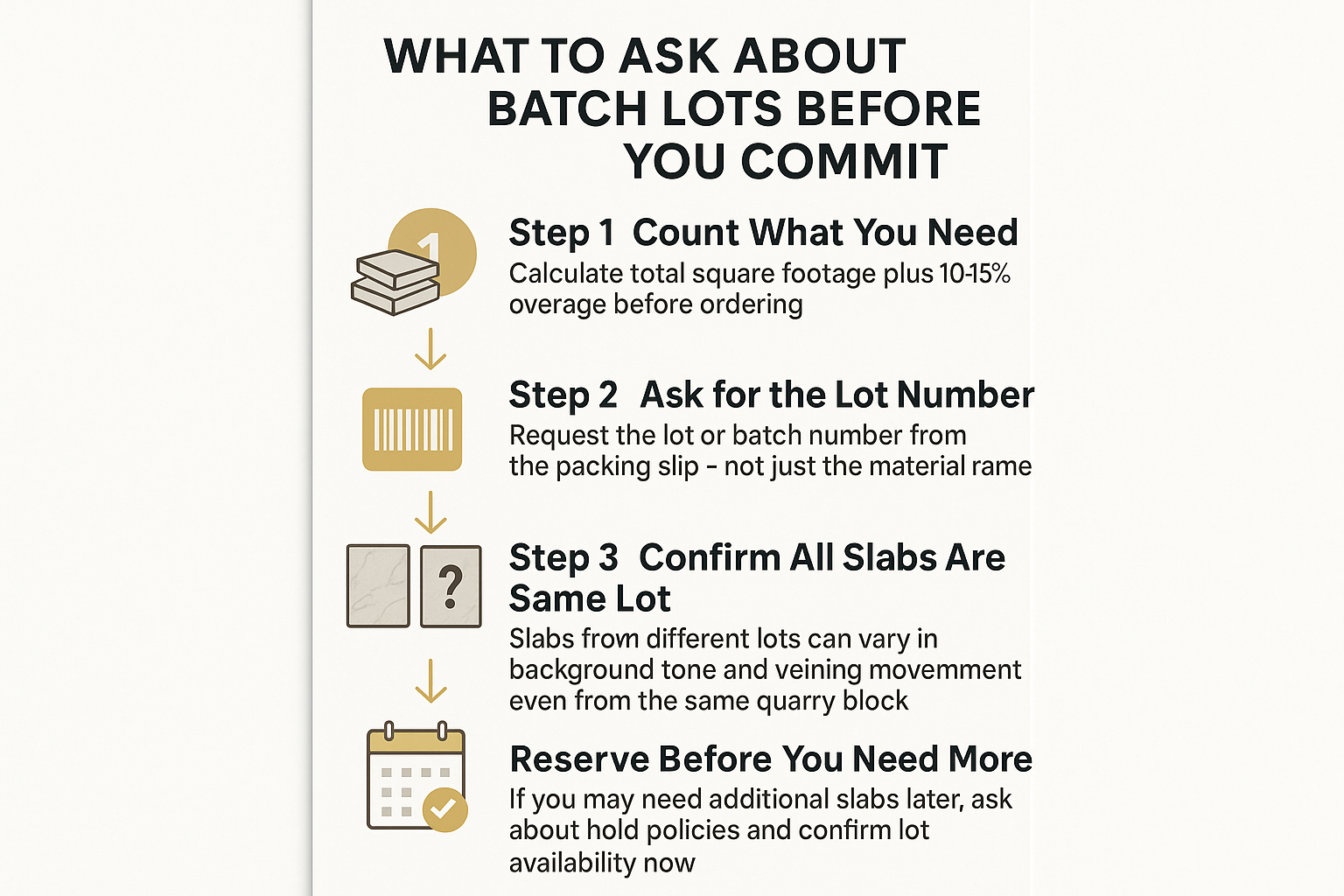
Most homeowners don’t think about lot numbers until they need a fourth slab mid-project and discover the new batch doesn’t match. This diagram explains what to ask before you confirm your order.
Why Batch Lot Numbers Matter More Than Most Buyers Realize
Here’s a situation that comes up more than it should. A buyer selects three slabs from one inventory lot for a kitchen island and full-height backsplash. The project starts, and mid-way through, the fabricator determines a fourth slab is needed. The supplier has more slabs in the same variety. But they’re from a different quarry batch.
The new slabs arrive with a slightly warmer background tone and veining that runs in a different direction. It’s not a defect. It’s just how natural stone works. Two slabs from the same quarry, from different blocks cut weeks apart, can look meaningfully different once they’re installed next to each other.
The way to avoid this is to ask the right questions before your order is finalized:
- “How many slabs do you have in this variety?” – establishes total available quantity
- “Are they all from the same lot?” – the critical follow-up most buyers skip
- “What does the lot number look like on the packing slip?” – gets you the specific identifier you can reference if you need more later
- “If I need another slab in six months, can you trace the lot?” – good suppliers keep these records
This is especially important for projects with multiple surfaces, like an island top, a backsplash, and a bathroom vanity, where visual consistency across rooms matters. Buying one more slab than you think you need from the same lot is almost always the right call. For more on how stone sourcing decisions affect the overall project, see What Separates a Good Slab Supplier From a Frustrating One?
Viewing Slabs Vertically: The Step Most First-Time Buyers Skip
Slabs stored flat on a warehouse floor look different from the same slab propped upright at eye level in kitchen-like lighting. This isn’t a minor difference. It’s significant enough that buyers who skip this step often get a surprise when the stone is installed.
When a slab lays flat, the veining appears to float on the surface. When the same slab stands vertical, the way your eye reads the stone’s movement changes. The veins that looked like gentle background texture when horizontal can appear bold and directional when vertical. The background tone can shift depending on how light hits it at an angle.
This is why experienced showroom staff pull slabs from storage and position them so buyers can see natural movement the way it will actually appear on the wall or across a countertop. Multiple buyers who worked through Carmel Stone Imports described this in their own words: staff physically pulled slabs and stood them upright so the buyer could see what the stone would actually look like installed.
If you’re visiting a showroom and no one offers to do this, ask. A supplier who knows stone will pull it and prop it for you without hesitation. If you want to understand what else a showroom visit can show you that a website never can, this guide to what happens when you visit a stone showroom for the first time is worth reading before you go.
For bookmatched pairs specifically, vertical viewing is the only way to see whether the mirror effect is working the way you expect it to. Two slabs that bookmatch on paper may have a seam that reads awkwardly in vertical light if the cut point falls mid-vein.
Frequently Asked Questions About Marble Slab Selection
Can I select a marble slab from photos before visiting the showroom?
Photos help you identify varieties and narrow your shortlist. But they don’t replace seeing the actual slab. Background tone and veining movement read differently on a screen than in person, and even a high-quality photo can’t show you how a slab will read in your specific lighting. Use photos to start the conversation, then visit to confirm.
What is a bookmatched pair and when does it matter?
Bookmatching means two adjacent slabs are cut from the same block and flipped open like the pages of a book, creating a mirror-image vein pattern where the slabs meet. It’s commonly used for dramatic kitchen island designs or full-height wall installations. Not every project needs it, but for statement surfaces where the seam will be visible, bookmatching produces a much more intentional look than two randomly selected slabs.
How do I know if slabs are from the same batch lot?
Ask the supplier for the lot number from the packing slip for each slab. Reputable suppliers track this. If you’re buying multiple slabs for one project, confirm all of them share the same lot number. If you may need more slabs later, ask whether the supplier can source from the same lot on a future order.
Is Italian marble actually different from Turkish or Portuguese marble sold under similar names?
Yes, meaningfully so. Italian Calacatta from the Apuan Alps quarries tends to have bolder, sharper veining and a brighter white background than varieties from other countries sold under similar names. Turkish equivalents often have softer veining definition and slightly different base tones. Origin affects both appearance and the stone’s physical properties. Ask your supplier which country and region a slab was quarried in before comparing varieties.
How much extra marble should I order beyond my project measurements?
Most fabricators recommend at least 10 to 15 percent overage to account for cuts, waste, and the occasional unexpected break during fabrication. For complex layouts with diagonal cuts or bookmatched seams, some fabricators go higher. Ordering from the same lot upfront is far easier than trying to match a new batch six months later.
Do all marble varieties require the same maintenance?
No. Marble is a calcium-based stone that reacts to acids, including lemon juice, wine, and many common cleaners. But porosity and hardness vary by quarry origin and slab density. Italian Calacatta tends to be denser than some other varieties, which affects absorption rates and how quickly a slab needs resealing. Ask your supplier about the specific maintenance expectations for the slab you’re selecting, not just marble in general.
Ready to See the Actual Slabs?
Carmel Stone Imports maintains live slab inventory across its showroom locations in Carmel-by-the-Sea and Palo Alto, so you can view and select actual stone rather than catalog images. If you’re planning a kitchen or bathroom project on the Monterey Peninsula or in the Bay Area and want to walk through slab options in person, you can schedule a slab selection appointment by calling (650) 800-7840 or emailing info@carmelimports.com.