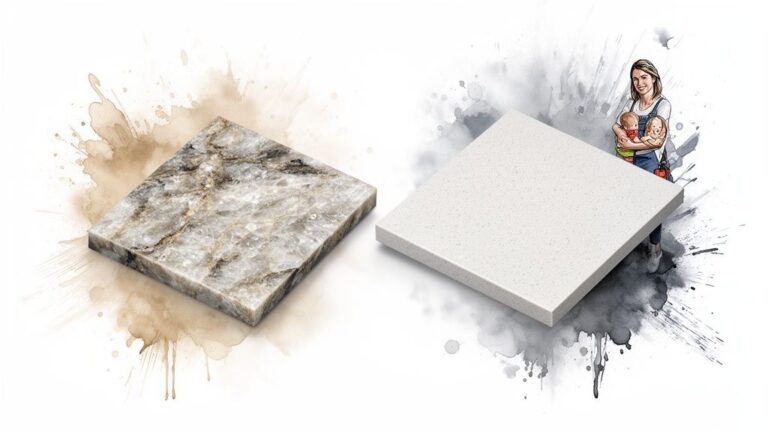
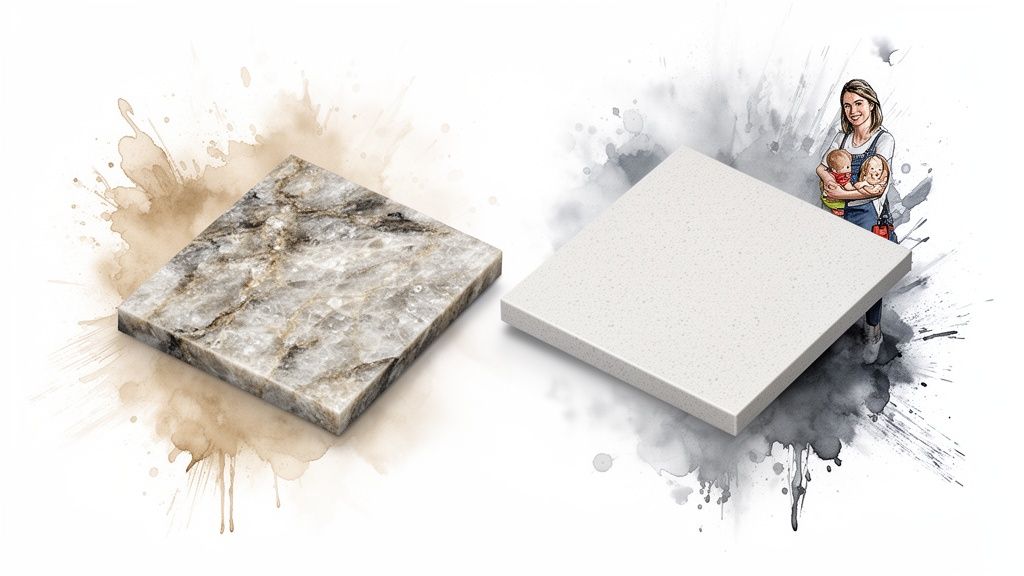
When homeowners and designers ask, is quartz and quartzite the same, the answer is a clear and simple no. Their names sound alike, but that’s where the similarities end. One is a natural stone formed by the earth, while the other is an engineered product made by people.
Understanding this key difference is the most important step in choosing the right surface for your home project in areas like Palo Alto or Carmel. This guide will explain what sets them apart in simple terms.
Answering The Quartz vs Quartzite Question

Getting these two materials straight is the first step. Confusing them can lead to picking a countertop that doesn't fit your lifestyle or the look you want to achieve.
Quartzite is a 100% natural metamorphic rock. It is pulled directly from the earth in huge blocks. It begins as quartz sandstone and is changed by amazing heat and pressure deep in the earth. This process creates a very dense, strong stone known for its natural beauty.
On the other hand, quartz countertops are a man-made, engineered surface. In a factory, makers combine about 90-93% ground natural quartz minerals with polymer resins and colors. This process results in a material that is not porous and has a very consistent look.
A Quick Comparison
The main differences come down to how they are made and what they are made of. This quick table breaks it down so you can easily see the facts.
Quartz vs Quartzite at a Glance
For a simple look at what sets these two materials apart, here's a side-by-side summary. This table highlights the key distinctions between natural quartzite and engineered quartz.
| Characteristic | Quartzite (Natural Stone) | Quartz (Engineered Stone) |
|---|---|---|
| Origin | Quarried from the earth | Manufactured in a factory |
| Composition | Natural metamorphic rock | ~93% ground quartz, resins, pigments |
| Porosity | Porous, requires sealing | Non-porous, never needs sealing |
| Appearance | Unique, natural veining and patterns | Consistent, uniform colors and patterns |
Ultimately, choosing between them is a matter of taste. Do you prefer the one-of-a-kind look of nature or the predictable style of an engineered product?
If you like the consistency of engineered stone, you might explore the benefits of quartz countertops. If you are weighing other options, our guide on quartz vs. quartzite vs. marble offers great insights.
Understanding Their Origins and Composition
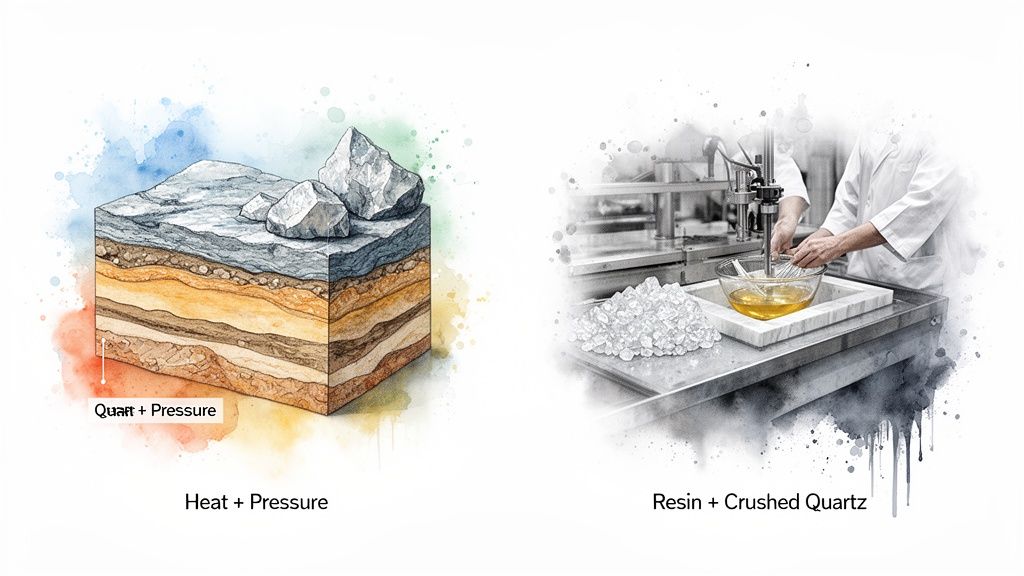
To really answer the question, is quartz and quartzite the same, you have to start at the beginning. One is a product of the earth's power, while the other shows modern manufacturing. This basic difference is what gives each material its own personality.
The Natural Forging of Quartzite
Quartzite's story is an ancient one. It begins as simple quartz sandstone, which is put under great heat and pressure for millions of years. This natural process fuses the quartz grains together, creating a very dense and durable stone.
The result of this process is a natural stone with a unique, crystalline structure. Each slab tells a one-of-a-kind story of how it was formed.
This is why every slab of quartzite is a unique piece of art. It's perfect for creating a standout feature in a Bay Area home that values natural style. For a deeper look, you can explore our detailed guide on what quartzite stone is.
Engineered Quartz: A Story of Innovation
Engineered quartz is a product of human skill. It’s created in a factory, which allows for a level of consistency that nature can't offer. The goal is to produce a surface that is both beautiful and practical for modern life.
The manufacturing process for engineered quartz combines natural minerals with technology. Here’s a quick breakdown of how it's made:
- Raw Materials: The main ingredient is crushed natural quartz, making up as much as 93% of the slab.
- Binding Agents: These fine quartz crystals are blended with polymer resins, which act as a binder.
- Color and Pattern: Pigments are mixed in to create a huge range of colors.
- Final Production: This mixture is poured into a mold, compressed, and cured at high temperatures to form a dense, non-porous slab.
This controlled process is why the two materials are so different. The factory method allows for the uniform look that is popular in many modern Palo Alto or Carmel designs. Carmel Stone Imports can help you find the perfect engineered quartz for a clean, cohesive look.
Comparing Appearance and Aesthetic Qualities
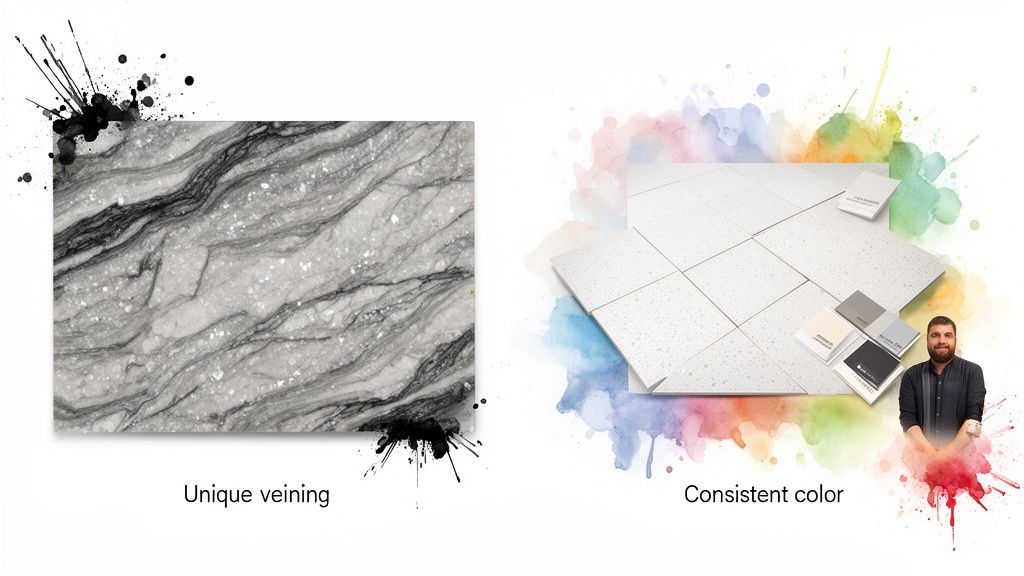
When clients are choosing between these two materials, how they look is often the most important part. Put a slab of each side-by-side, and the answer to is quartz and quartzite the same becomes instantly clear. One offers the wild beauty of nature, while the other gives controlled elegance.
The Organic Beauty of Quartzite
Quartzite is all about a one-of-a-kind look. Since it’s a natural stone from the earth, no two slabs are ever the same. This makes every project a unique piece of art. Its personality comes from flowing veins and a deep, crystalline sparkle in the light.
The amazing patterns you see in quartzite are a record of its past. This natural artistry makes it a showstopper for a kitchen island in a Monterey home.
The color range is also impressive and feels connected to the earth. You’ll find soft whites, grays, rich blues, and greens. The finish also plays a big role; you can learn more about how to choose the right stone finish for your space in our guide.
The Consistent Elegance of Engineered Quartz
Engineered quartz offers consistency and almost endless design options. Because it's manufactured, every slab has a uniform color and pattern. This is a big plus for modern designs in Palo Alto that need a seamless look.
The range of styles available in quartz is huge. Manufacturers can create solid colors—like a perfect pure white or a deep jet black—that are rare in nature. They can also copy the look of natural stones like marble, giving you classic beauty without the upkeep.
This engineered precision is a game-changer for designs that need perfect matching. It ensures a flawless, cohesive look that suits modern and minimalist styles. At Carmel Stone Imports, we help designers achieve this polished aesthetic.
Durability and Real-World Performance
When you choose a countertop, how it performs every day is just as important as how it looks. Both quartz and quartzite are known for being tough. Understanding their unique strengths is key to making a smart investment.
Heat Resistance and Hardness
Quartzite is a natural powerhouse. Formed by great pressure, it’s one of the hardest natural stones you can get. This hardness makes it very resistant to scratches from kitchen tools.
Quartzite sits at a solid 7 on the Mohs scale of mineral hardness, making it harder than granite. It can handle high heat, so placing a hot pan on the surface won't cause damage. This is a big plus in a busy kitchen.
Engineered quartz is also very hard, usually ranking between 6-7 on the Mohs scale. However, the resin that binds the quartz particles is its weak spot. Placing a hot pot on a quartz countertop can cause damage. Using trivets is always a must with quartz. For a detailed look at its strengths, our guide on quartzite countertops pros and cons has great info.
Real-World Application in California Homes
In kitchen remodels across Northern California, the choice often comes down to lifestyle. For a busy kitchen with a lot of cooking, quartzite’s great heat resistance is a clear advantage. But for areas with less direct heat, like a bathroom, the durability of engineered quartz is more than enough.
The demand for quartzite has grown, with a Houzz survey showing 24% of renovating homeowners choosing natural stone other than granite. Families in places like Carmel and Monterey seek its natural textures and superior durability for their homes.
Ultimately, both are excellent materials, but their differences matter. Quartzite delivers natural toughness against heat and scratches. Engineered quartz offers predictable durability but needs more caution with high heat.
Navigating Maintenance And Stain Resistance
Long-term care is a huge factor when choosing a surface. This is where quartz and quartzite really show their differences. How a material stands up to daily spills and splashes will affect your routine.
Quartzite Care: A Closer Look
Quartzite is a natural stone, so it is somewhat porous. This means it can soak up liquids, which could lead to stains. To keep it looking perfect, quartzite needs to be sealed from time to time. This simple process protects it from things like wine, oil, or coffee.
Sealing natural stone is not as hard as it sounds.
- Frequency: Most quartzite needs a new coat of sealant every one to two years. This depends on the specific stone and how much you use the surface.
- Process: Applying sealant is easy, but a professional can always do it for you.
This little bit of care is all it takes to protect the unique beauty of your quartzite. If you find a tough spot, our guide on how to remove water stains from quartzite countertops has expert advice.
The Effortless Nature of Engineered Quartz
Engineered quartz is a different story. The resins that bind the quartz minerals make the final slab completely non-porous. This is one of its biggest selling points for busy households from Palo Alto to Carmel.
Because engineered quartz is non-porous, it never needs to be sealed. Its surface naturally resists stains and bacteria. This makes it very easy to clean, often just with soap and water. Carmel Stone Imports offers a wide selection of these low-maintenance options.
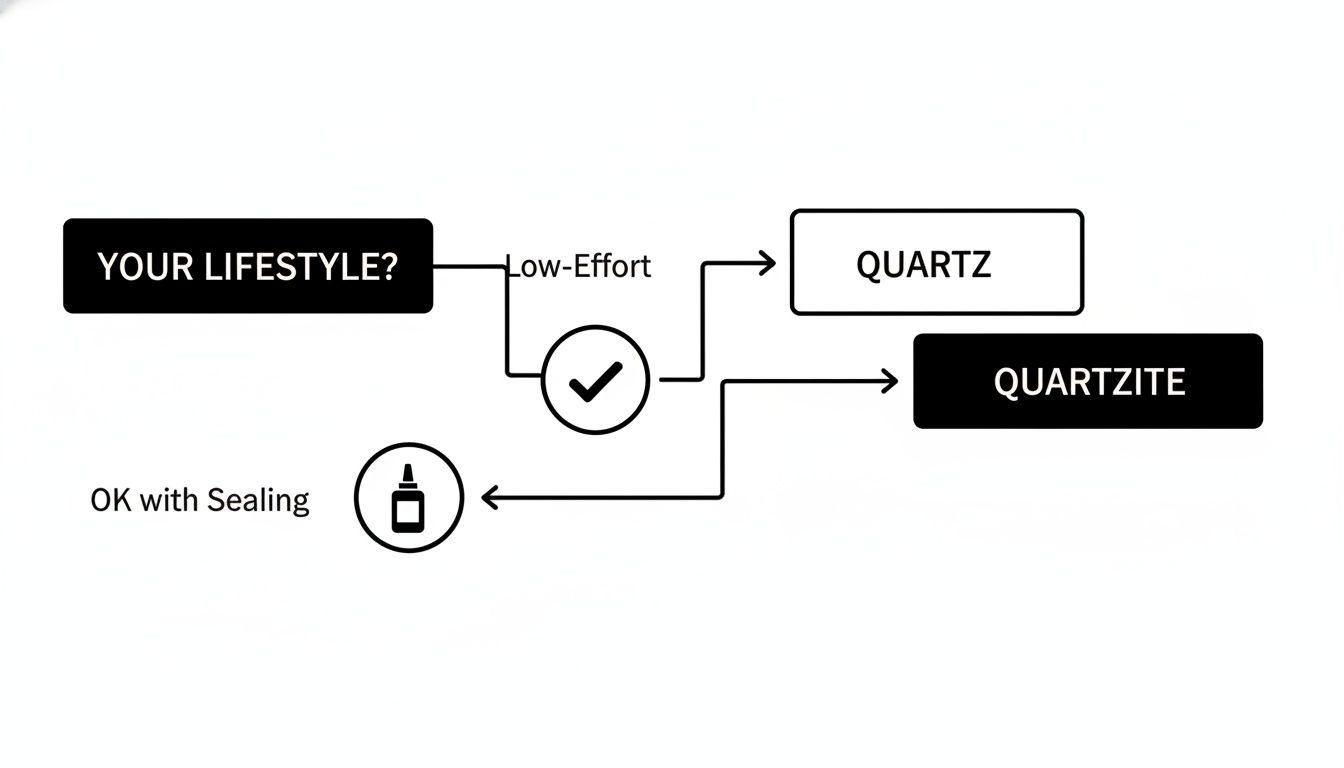
The choice comes down to your lifestyle. Are you happy to do simple, periodic upkeep to protect a beautiful piece of natural art? Or do you prefer the set-it-and-forget-it ease of an engineered surface?
How to Choose the Right Stone for Your Project
So, how do you make the final choice? It comes down to your project’s needs and your personal style. It's not about which stone is "better," but which one is the perfect fit for your home.
Think about where you'll use it. For a sunny outdoor kitchen in a Monterey home, heat- and UV-resistant quartzite is the clear winner. Its natural structure won’t fade or yellow in the California sun.
But for a sleek Palo Alto condo that needs perfect color consistency? Engineered quartz is the obvious choice.
Matching the Material to Your Lifestyle
The best choice always matches your daily habits. If you want a surface with almost zero upkeep that can handle spills from a busy family, the non-porous nature of quartz is your match.
If you love the unique story of natural stone and are fine with simple yearly sealing, quartzite will reward you with beauty that can't be copied.
Making an Informed Decision
Knowing where each material comes from is important. Natural quartzite is 100% quarried from the earth in places like Brazil and Italy. Engineered quartz is made with up to 93% quartz content.
The best way to make a decision is to see the materials in person. Experiencing the sparkle of quartzite next to the smooth finish of quartz can make the choice clear. Our team at Carmel Stone Imports can guide you through the options in our showrooms.
For more tips, learning how to choose kitchen countertops effectively can provide a broader view for making the right call.
Frequently Asked Questions
As you weigh your options, a few common questions always come up. Here are simple answers to help you decide.
Which Is More Expensive: Quartz or Quartzite?
In most cases, high-quality quartzite costs more than quartz. This is because it is difficult to quarry and ship large, unique blocks of stone from around the world. However, some high-end, designer quartz collections can cost as much as some quartzite slabs.
Can I Use Quartzite for an Outdoor Kitchen?
Yes. Quartzite is a great choice for outdoor spaces, especially in coastal California. As a natural stone, it will not fade or yellow in direct sunlight. Engineered quartz, however, is not suitable for outdoor use because its resins will get damaged by the sun.
Is One Material More Durable Than the Other?
Both are very durable, but in different ways. Quartzite is harder and more resistant to scratches and heat. Engineered quartz is a bit more flexible, which makes it less likely to chip at the edges. Its main weakness is a low tolerance for high heat.
Does Quartzite Stain Easily?
Because it is a natural stone, quartzite can stain if it is not sealed. However, once it is properly sealed, it becomes very resistant to common spills like wine and coffee. Sealing is a simple task, usually done just once a year.
How Can I Tell the Difference Between a Quartz and Quartzite Slab?
Up close, quartzite often has a glassy look and a natural sparkle. Its veins are organic and flow unpredictably. Engineered quartz has a more uniform and consistent pattern. At Carmel Stone Imports, our experts can show you these differences in person.
Ready to see the distinct beauty of quartz and quartzite for yourself? The stone experts at Carmel Stone Imports are here to guide you through our extensive collections. Visit one of our showrooms in Carmel, Palo Alto, or Sand City, or contact us today for a personalized consultation.