Is natural stone actually a sustainable choice? Many people are surprised to learn the answer is yes. While quarrying raises fair environmental questions, new insights show stone is a top choice for eco-friendly homes.
This guide explores the facts. We'll cover why natural stone’s low VOCs, long lifespan, and local sourcing make it a highly sustainable choice, especially when compared to engineered surfaces that often use resins or emit VOCs during production. For California homeowners who value quality, it's a way to achieve luxury without compromise.
The Surprisingly Green Truth About Natural Stone
The idea of "quarrying" can make people think of environmental damage. This is a valid concern, as any extraction process affects the land.
However, recent insights show that natural stone’s low VOC output, long lifespan, and local sourcing make it a highly sustainable choice—especially when compared to engineered surfaces that often use resins or emit VOCs during production.
What This Means For Your Home
What this actually means for you is that choosing stone—especially slabs sourced regionally or recycled—can drastically reduce your remodeling project’s carbon footprint. A hand-chiseled French limestone floor isn't just a design statement; it's an investment you won't need to replace.
The true measure of sustainability isn't just how a material is made, but how long it lasts. Natural stone’s ability to endure for centuries means fewer replacements and less waste.
Key Factors in Stone's Sustainability
To understand why stone is eco-friendly, you need to look at what makes it different from factory-made options.
- Longevity and Durability: Most materials wear out and end up in landfills. Natural stone can last for hundreds of years, breaking the wasteful cycle of removal and replacement.
- Low VOCs for Healthier Air: As a raw material from the earth, natural stone contains zero volatile organic compounds (VOCs). This means cleaner, healthier indoor air for your family.
- Recyclability and Reuse: Old countertops can be cut into tiles, and building facades can be crushed for new construction. It’s the ultimate recyclable material.
Natural Stone Sustainability at a Glance
This table offers a clear, side-by-side comparison of natural stone versus engineered surfaces like quartz.
| Sustainability Factor | Natural Stone (e.g., Limestone, Granite) | Engineered Surfaces (e.g., Quartz) |
|---|---|---|
| Source Material | 100% natural, quarried from the earth. | Composite of ~90% crushed quartz, pigments, and ~10% petroleum-based polymer resins. |
| Embodied Energy | Lower; energy used for quarrying, cutting, transport. | Higher; requires significant energy for crushing, mixing, heating, and pressing. |
| VOC Emissions | Zero VOCs. An inert, non-emitting material. | Can emit VOCs from resins during and after manufacturing. |
| Lifespan & Durability | Extremely long; can last centuries with proper care. | Durable, but can be prone to heat damage; lifespan is typically decades. |
| End-of-Life Options | Highly recyclable; can be repurposed or crushed. | Difficult to recycle due to mixed materials. Most often ends up in a landfill. |
| Chemical Additives | None. It is a pure, single-ingredient material. | Contains chemical resins, binders, and artificial pigments. |
As you can see, natural stone often comes out ahead when you consider the full lifecycle.
An actionable step you can take is to ask your supplier about locally quarried options or materials like limestone, which is both timeless and low-impact. This mindset fits perfectly with the principles of Quiet Luxury, where quality outlasts trends.
Understanding the Full Lifecycle Beyond the Quarry
To decide if natural stone is sustainable, we must look beyond the quarry and consider its entire journey. When you take this view, stone’s eco-friendly side becomes clear.
A key concept is embodied carbon—the total carbon footprint of a material. Natural stone already exists. The energy we use is mostly for cutting and moving it, which is far less than manufacturing surfaces from scratch.
Longevity: The Ultimate Green Feature
If there's one standout feature of natural stone, it's durability. A limestone floor or granite countertop can easily last for centuries. This lifespan is a powerful antidote to today's throwaway culture.
For high-end homes in Palo Alto and Carmel, this is a huge benefit. Choosing a material that won't end up in a landfill in 20 years is one of the most impactful green decisions you can make, as confirmed by its low Whole Life Carbon Costs.
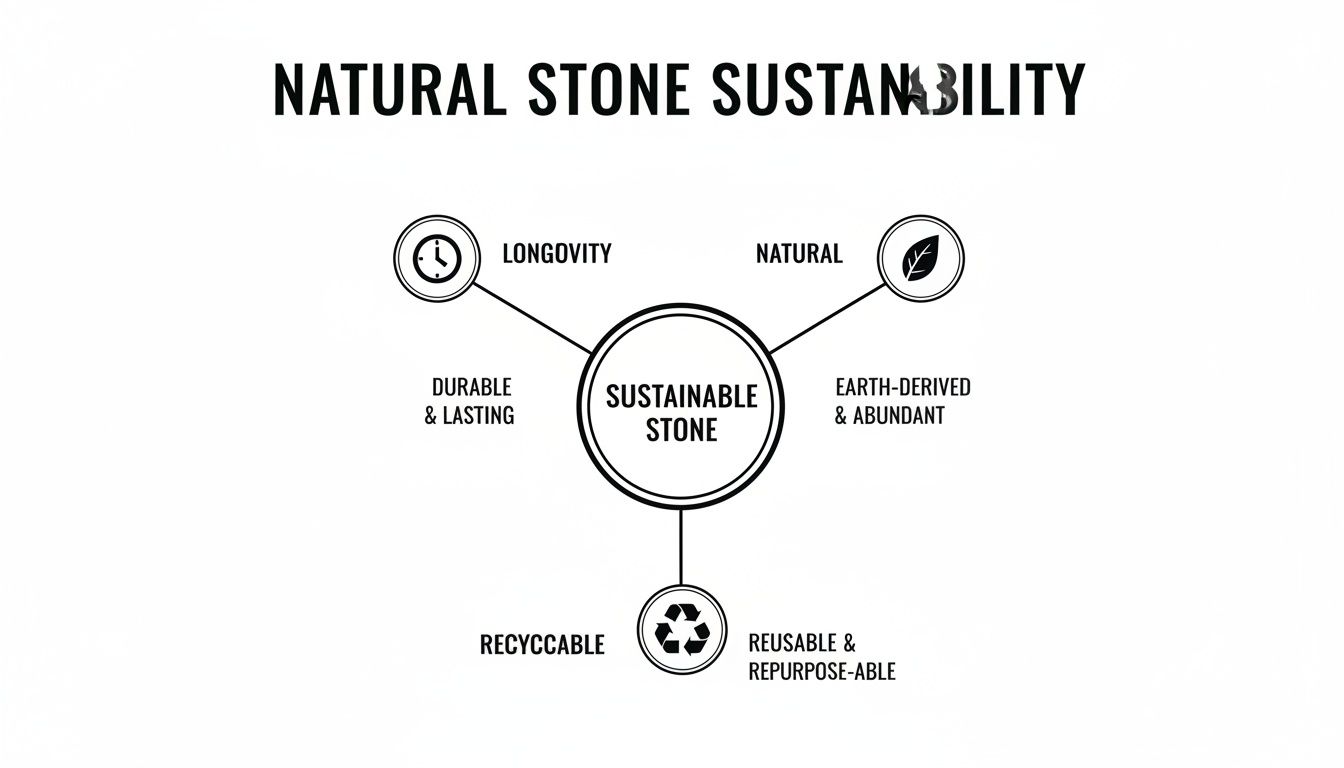
As you can see, stone's natural origins, recyclability, and especially its long life add up to a strong environmental profile.
A Lifecycle Comparison: Natural vs. Engineered
Mapping out a material's journey helps compare them. For natural stone, the path is direct. For many engineered products, it's more complex.
What this actually means for you is that choosing stone—especially slabs sourced regionally or recycled—can drastically reduce your remodeling project’s carbon footprint over its lifetime.
Let's break down the key differences:
- Natural Stone: It's quarried, cut into slabs, and transported. No chemical binders or high-heat manufacturing required.
- Engineered Surfaces: This process involves crushing minerals, mixing them with petroleum-based resins, and then baking the mixture in an energy-intensive process.
This fundamental difference is why the conversation is shifting. For a deeper dive, explore our guide comparing natural stone vs. engineered stone. The raw, durable, and timeless qualities of natural stone make a compelling case for its role in sustainable design.
Creating a Healthier Home with Low VOC Materials
When we talk about sustainability, it's easy to focus on the planet. But what about the health of our own indoor environment? Many modern building materials can release invisible chemicals called Volatile Organic Compounds (VOCs).
Natural stone is different. Pulled from the earth, it's a pure material free of the resins and glues that cause this problem. This makes it a healthier choice, ensuring the air you breathe is clean.
For design-savvy homeowners in the Bay Area, choosing materials that promote clean indoor air is a huge part of the quiet luxury trend. It's a philosophy that prizes well-being and authentic materials.
The Problem with Off-Gassing in Modern Homes
Today's homes are built to be airtight for energy efficiency. While great for utility bills, this can trap indoor pollutants, making your choice of materials critical.
Many manufactured products rely on industrial adhesives. Over time, these chemicals can seep into your living space. Natural stone completely avoids this issue.
What this actually means for you is that choosing stone for your kitchen, bathroom, or flooring directly contributes to a healthier living environment.
If you want to learn more about how products are evaluated for chemical releases, this guide to VOC product emission testing can shed light on the process.
A Natural Advantage in Health-Conscious Design
The shift toward healthier living spaces is a big deal, especially in communities like Palo Alto and Monterey. The beauty of natural stone is that its health benefits are part of its nature.
This zero-VOC characteristic is a major reason why the question "is natural stone really sustainable?" has a clear answer. True sustainability must include human health.
For those interested, our guide on eco-friendly building materials offers more insights. Choosing natural stone means investing in a material that is as good for your home's interior as it is for its look.
How Responsible Sourcing Makes All the Difference
When you ask, "is natural stone really sustainable?" the answer often comes down to one thing: where it came from. The true environmental footprint is tied to how it was sourced.
Responsible sourcing means partnering with quarries that care about environmental stewardship and land restoration. It’s a commitment to understanding a material's entire journey.
Transparency and Certifications are a Must
A great supplier doesn’t just sell stone; they offer transparency. They should be able to tell you about a slab's origins and the quarry's practices.
This focus on ethics is reshaping the industry. We're seeing more certifications like ISO 14001 for environmental management, ensuring quarries meet global standards.
What this all means for you is that asking your supplier about sourcing is one of the most powerful things you can do. It turns a purchase into a conscious choice.
Asking the Right Questions
When looking at stone, don’t hesitate to ask your supplier specific questions about how they source their materials.
Here are a few essential questions to ask:
- Where exactly does this stone come from?
- Do you have direct relationships with your quarry partners?
- Are there any locally sourced options available?
- Can you tell me about the quarry’s environmental practices?
Asking these questions helps guarantee your choice is genuinely green. For more on how design professionals approach this, check our guide on where designers get their natural stone materials. Responsible sourcing ensures the stone you choose for your Bay Area home began its journey in a way that respects the planet.
Natural Stone in a Circular Economy
A powerful concept called the circular economy is shifting how we think about materials. It's a move away from the "take-make-waste" approach toward a loop where nothing is discarded.
Natural stone is a perfect fit for this way of thinking. Unlike many manufactured products, it is timeless and endlessly reusable. An old limestone facade can find new life as a feature wall in a modern Bay Area home.
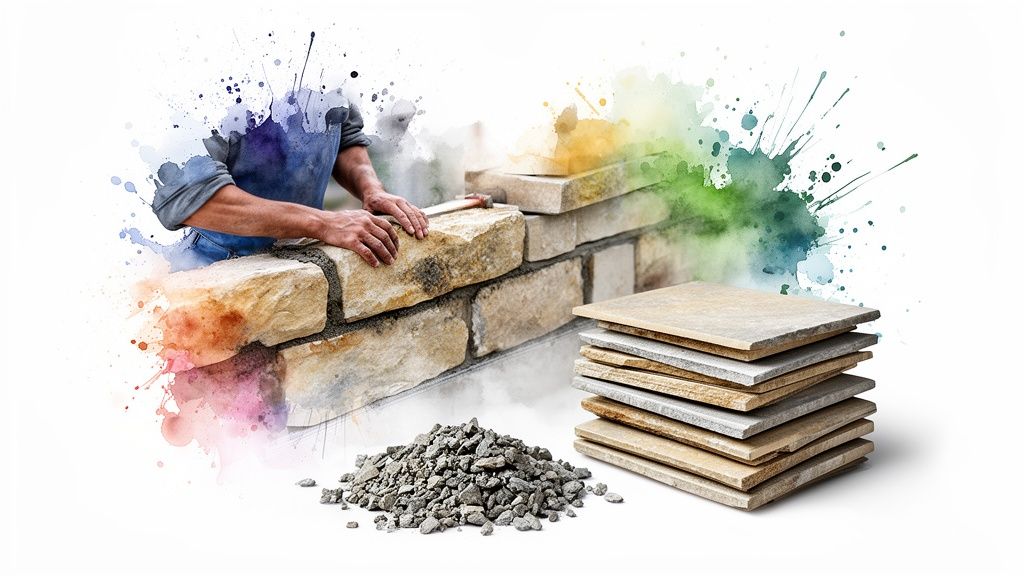
This vision of a material's continuous journey makes natural stone the ultimate recyclable resource. It resonates with eco-conscious clients from Carmel to Palo Alto.
The End-of-Life Advantage
Even when a piece of stone ends its life in one form, its story isn’t over. It can be crushed into aggregate for new construction projects. It returns to the earth without leaching toxins.
What this means for you is that selecting natural stone is an investment in a material that never truly becomes waste. It’s a choice that aligns with a future where resources are preserved.
This recyclability is a huge reason natural stone stands out in modern construction. According to Polaris Market Research, granite holds a commanding 31.34% market share globally, partly due to lifespans that exceed 100 years.
Designing for Reuse
Thinking in circles also changes how we design. The idea of designing for disassembly means planning so materials can be easily removed and reused later.
This approach works exceptionally well with natural stone:
- Reclaimed Stone: Sourcing stone from old structures gives your project unique character.
- Repurposing Slabs: Leftover pieces can be transformed into custom tiles or shelving.
- Mechanical Fixings: Using methods without permanent adhesives makes it easier to salvage stone.
This forward-thinking mindset ensures the value of the stone is preserved. For more ideas, see our guide on sustainable stone ideas for modern California homes.
Making the Right Sustainable Choice for Your Home
Choosing the right materials brings your vision for a sustainable home to life. So, after reviewing its lifecycle, let's return to the big question: is natural stone really sustainable?
The evidence is clear. Its incredible longevity, zero-VOC content, and full recyclability make it a powerhouse choice for eco-conscious design. When paired with responsible sourcing, it becomes one of the greenest materials you can choose.
Maximizing Your Sustainable Impact
To maximize your project's positive impact, a few strategies can make a huge difference. These steps ensure your design is as green as it is gorgeous.
Ask your supplier about locally quarried options. Choosing materials sourced closer to home dramatically cuts down on transportation emissions.
What this actually means for you is that choosing stone—especially slabs sourced regionally or recycled—can drastically reduce your remodeling project’s carbon footprint.
Here are a few ways to focus your efforts:
- Prioritize Regional Materials: Ask for stones quarried in California or nearby states.
- Embrace Longevity: Select a durable stone like granite for high-traffic areas.
- Consider Timeless Designs: Opt for classic stones that won't go out of style.
These choices are fundamental to building an enduring home. For more on this, our guide on how sustainable stone surfaces are becoming the new standard offers more insights.
Frequently Asked Questions
Isn’t quarrying stone bad for the environment?
It's a valid concern, as any extraction leaves a mark. However, modern quarries use advanced techniques to minimize their footprint and focus on land reclamation. When you consider stone's long lifespan and zero-chemical processing, it is often a far more sustainable choice than manufactured alternatives.
Which type of natural stone is the most eco-friendly?
The greenest stone is often the one sourced closest to you, which reduces transportation emissions. Softer stones like limestone generally require less energy to quarry and process than harder stones like granite. Ultimately, the best choice balances durability, local sourcing, and ethical quarrying practices.
How does natural stone compare to engineered quartz?
Natural stone is a single, pure material from the earth. Engineered quartz is a composite of crushed stone, petroleum-based resins, and pigments. The manufacturing of quartz is energy-intensive, and the final product is very difficult to recycle.
Does natural stone contribute to green building certifications like LEED?
Yes, it can. Natural stone can help earn points for green building certifications like LEED, especially in categories like "Materials and Resources" (for using reclaimed or regional stone) and "Indoor Environmental Quality" (for its zero-VOC nature).
Is reclaimed or salvaged stone a good sustainable option?
Reclaimed stone is one of the most sustainable building materials available. It prevents new quarrying and shipping impacts while adding unique character to your project. This approach is a core principle of the Quiet Luxury design movement.
Curious how to design with eco-friendly luxury in mind? Visit one of our showrooms in Palo Alto, Carmel, or Sand City to see sustainable stone options up close.