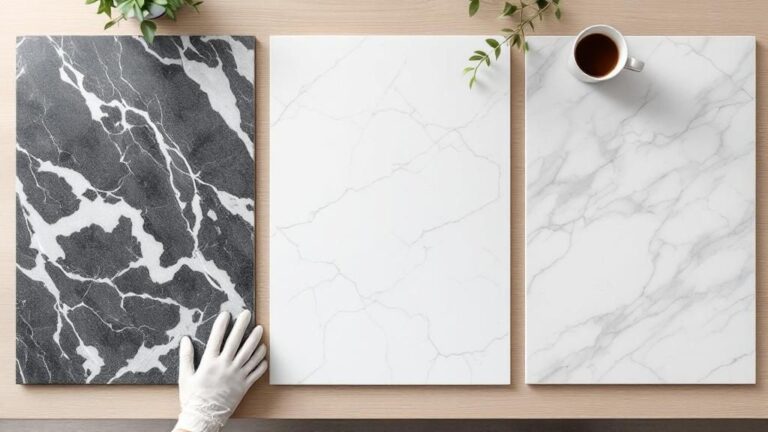
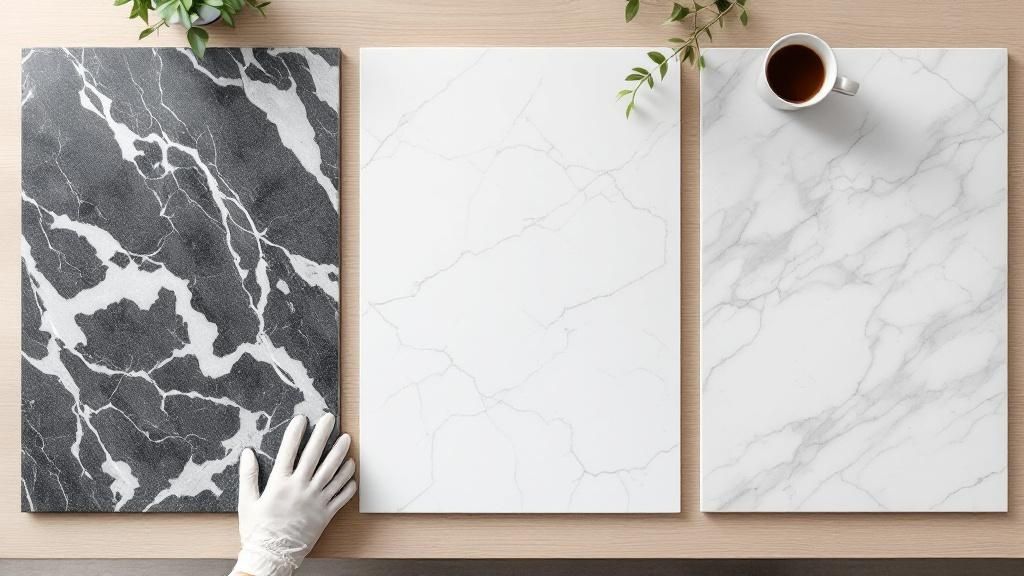
Choosing the right countertop comes down to knowing what sets your options apart. This guide explains the difference between granite, quartz, and porcelain, helping you find the perfect surface for your Bay Area home. Granite is a 100% natural stone known for its unique patterns. Quartz is an engineered stone prized for its durability, and porcelain is a high-tech ceramic known for its versatility.
Choosing Your Ideal Countertop Material
Finding the perfect countertop for a coastal California home means balancing looks, toughness, and upkeep. Whether you’re designing a modern kitchen in Palo Alto or a timeless bathroom in Monterey, knowing how each material performs is key. This comparison will explain the key differences between granite, quartz, and porcelain to match the right surface to your lifestyle.
Each material offers a unique blend of beauty and strength. Granite provides raw, natural artistry that can't be copied. Quartz delivers solid, low-maintenance performance. Porcelain opens up a world of design flexibility. By looking at what makes each one special, you can make a choice you’ll love for years.
This visual breakdown gives a great snapshot of how they stack up on porosity, scratch resistance, and general price points.
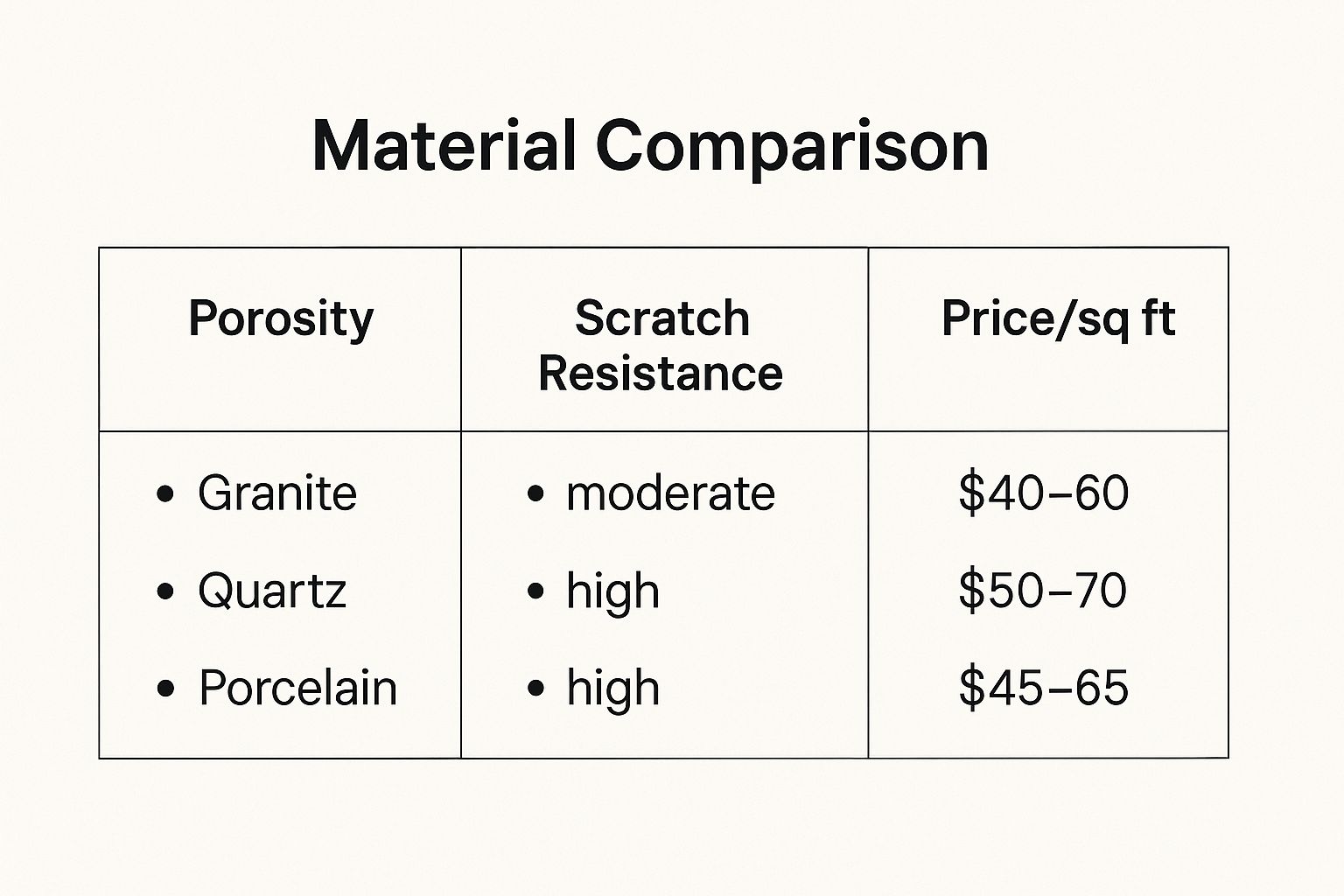
As the infographic shows, while all are tough, the engineered nature of quartz and porcelain gives them an edge. Their low porosity makes them champions at resisting stains.
Granite vs Quartz vs Porcelain At a Glance
Sometimes, you just need a quick cheat sheet. This table breaks down the core features of each material side-by-side. It gives you a high-level overview before we get into the details.
| Feature | Granite | Quartz | Porcelain |
|---|---|---|---|
| Composition | 100% natural igneous rock | ~90% ground quartz, resins, polymers | Fine clay and minerals fired at high temps |
| Durability | Very durable but porous; needs sealing | Extremely durable, non-porous | Very hard, scratch and heat resistant |
| Heat Resistance | Excellent | Good, but resins can scorch with direct heat | Excellent; withstands very high temperatures |
| Stain Resistance | Good when sealed | Excellent; non-porous surface resists stains | Excellent; non-porous and highly resistant |
| Maintenance | Requires periodic sealing | Low maintenance; just soap and water | Very low maintenance; easy to clean |
| Appearance | Unique, natural patterns and veining | Consistent color and pattern | Can mimic any look (marble, wood, etc.) |
This table shows that your decision will likely depend on whether you prefer the unique beauty of natural stone (granite) or the low upkeep of engineered quartz and porcelain.
Beyond the practical side, homeowners are thinking about the bigger picture. This includes exploring sustainable interior design materials. Making a conscious choice ensures your new surfaces are beautiful and responsibly chosen.
If you're ready to go deeper, check out our countertop materials comparison guide. In the sections below, we'll break down what sets these surfaces apart.
What Sets Each Material Apart: Composition and Craft
To feel the difference between granite, quartz, and porcelain, you must start with how they're made. Their origins define how a slab looks, feels, and performs in your home.
This is a critical first step for anyone making a long-term investment in a home in Monterey or the Bay Area, where quality and durability matter.
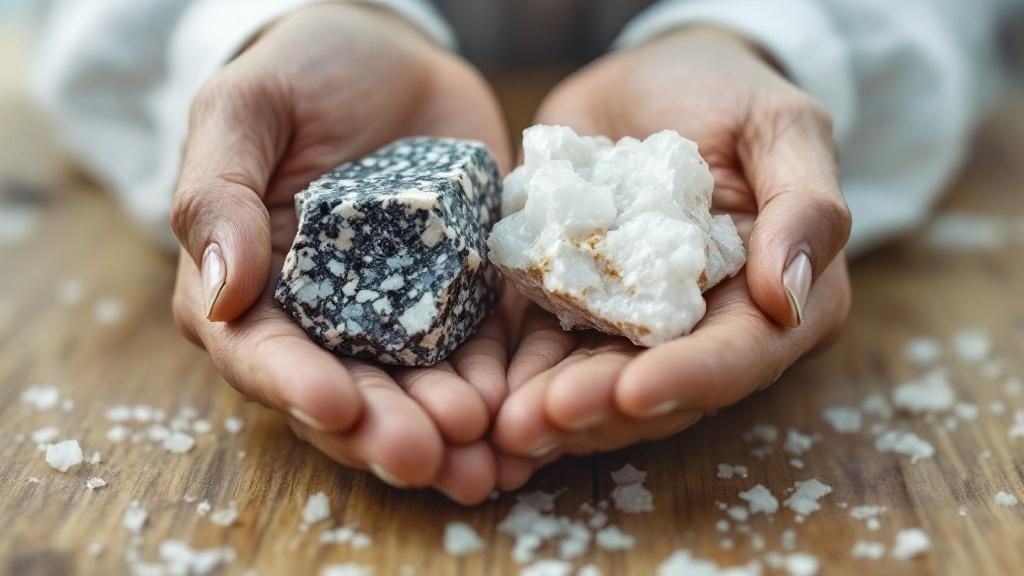
Granite: The Artistry of Nature
Granite is a 100% natural igneous rock. It formed deep in the earth as magma cooled over millions of years.
Every single slab is a unique piece of geological history. Each one has its own blend of minerals, colors, and veining, making it a true one-of-a-kind statement piece.
Quartz: Engineered for Precision
Unlike granite, quartz is an engineered surface. It’s made by blending about 90% ground natural quartz with resins and pigments. This mixture is then compacted to form dense, non-porous slabs.
This process gives quartz its signature consistency and strength. While granite's beauty is random, quartz offers uniform color and pattern. This makes it perfect for modern designs. For more, our stone experts explain what engineered stone is and how it’s made.
Porcelain: High-Tech Ceramic Craft
Porcelain slabs are made with advanced ceramic technology. They are created from a blend of fine clays and minerals fired at very high temperatures. This process, called sintering, creates an incredibly dense and non-porous surface.
This high-tech process gives porcelain its versatility. Digital printing allows it to look like almost any material, from marble to wood. It combines stunning looks with top performance.
Durability and Longevity in Real Life Use
A countertop is the workhorse of your kitchen. It must stand up to daily life—hot pans, spilled coffee, and chopping knives.
The durability you choose affects how long it will last and your peace of mind. Let’s see how granite, quartz, and porcelain perform under pressure, especially for homeowners who value lasting quality.
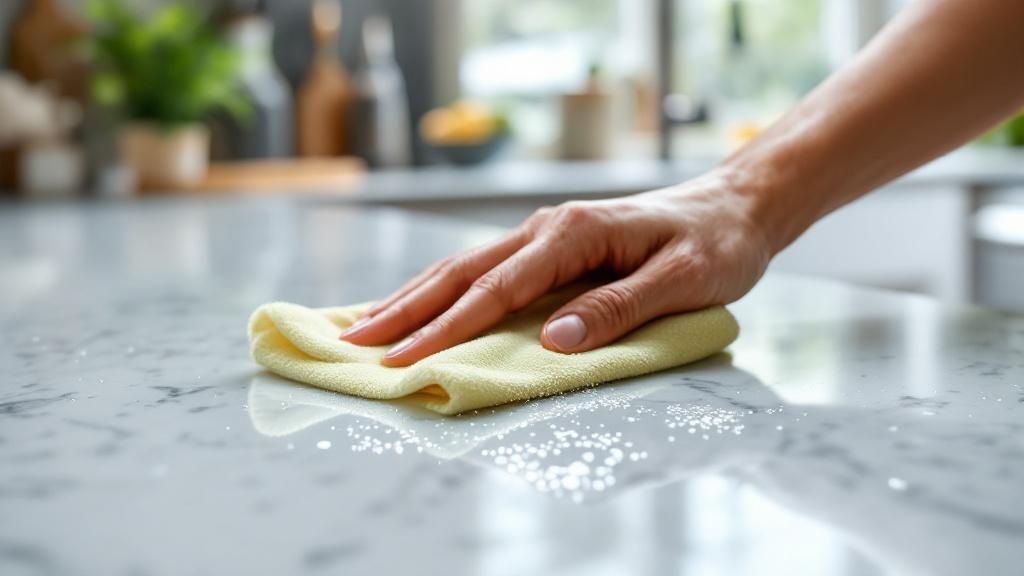
Granite: A Tough Natural Performer
Granite is famously tough. It's very hard and naturally resistant to heat. You can set a hot pan directly on its surface, which is a big plus for cooks.
However, granite is a natural stone, so it's porous. It needs to be sealed periodically to prevent stains. This simple step keeps this beautiful stone looking great for decades.
Quartz: Engineered for Resilience
Quartz is engineered for modern life. Its non-porous surface is its biggest advantage, offering great resistance to stains from wine, coffee, and oil.
This makes cleanup simple and keeps the surface hygienic. In fact, its durability is why 51% of homeowners choose engineered quartz, according to a Houzz study. You can learn more about the long-standing quartz vs. granite debate in our guide.
Porcelain: The High-Tech Choice
Porcelain is in a class of its own for resilience. It's fired at extreme temperatures, making it incredibly dense and hard. This makes it almost impossible to scratch, stain, or damage with heat.
Porcelain is also UV resistant, so its color won’t fade in direct sunlight. This makes it perfect for indoor-outdoor kitchens, a popular feature in coastal California homes.
Aesthetic Considerations: Veining, Finish, and Format
While durability is key, the look of your countertop sets the tone for a room. Granite, quartz, and porcelain offer very different aesthetics.
Choosing the right look helps create the calm, natural interiors popular in Bay Area homes today.
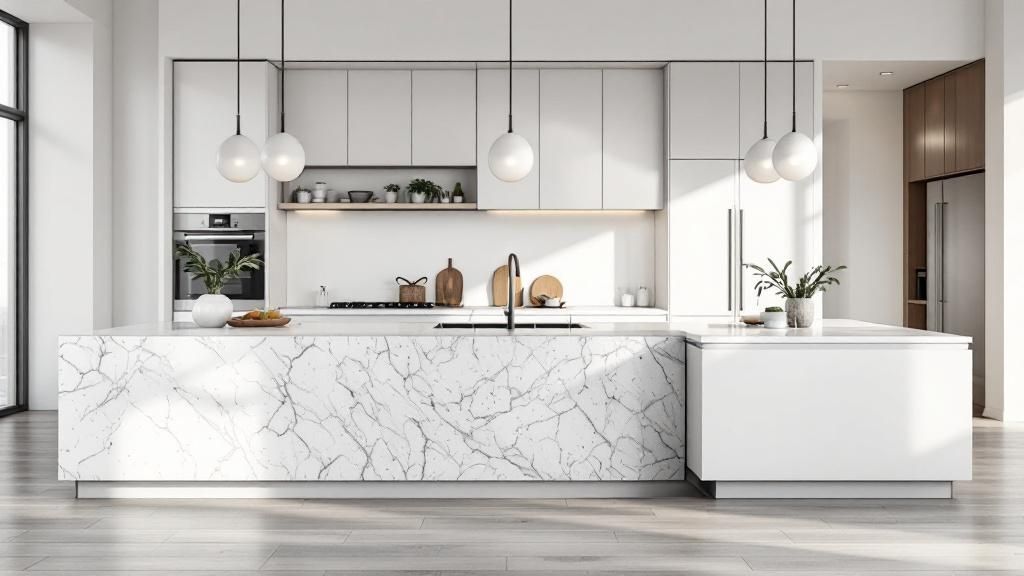
Granite: Organic and Unrepeatable Beauty
Granite is nature’s artwork. Every slab has a unique pattern, from subtle speckles to bold, sweeping veins. This guarantees that no two granite countertops will ever be the same.
This one-of-a-kind quality makes granite a perfect statement piece. It brings an authentic touch of the earth into your home, becoming an instant focal point.
Quartz: Engineered for Consistency and Versatility
Quartz is all about precision and predictability. As an engineered stone, it comes in a huge range of consistent colors and patterns. You can find everything from solid whites to designs that mimic marble.
This control makes quartz ideal for modern spaces where a clean, cohesive look is important. Its wide color palette allows you to match any design scheme perfectly.
Porcelain: The Ultimate Design Chameleon
Porcelain is a design chameleon. Advanced digital printing allows it to flawlessly copy the look of almost any material. It can look like Calacatta marble, natural wood, or even industrial concrete.
This ability allows you to get a high-end look without the maintenance headaches. Exploring stone-look porcelain tile can open up a world of design possibilities for your Monterey home.
Ease of Maintenance and Everyday Use
Your countertop should fit your lifestyle, not the other way around. How you care for granite, quartz, and porcelain daily reveals some of their biggest differences.
Choosing a material that matches your tolerance for upkeep is key to long-term satisfaction. Think of it as a lifestyle decision, not just a checklist.
Granite Upkeep: A Natural Commitment
As a natural stone, granite is porous. This means it can absorb liquids, which could lead to stains. To protect its patterns, granite needs periodic sealing.
This is a simple process that creates a protective shield. Learning how to seal natural stone is a small time investment to protect a beautiful surface.
Quartz: The "Set It and Forget It" Surface
Quartz is the opposite. It is engineered to be non-porous and never requires sealing. This makes it incredibly resistant to stains from coffee, wine, or oil.
This quality makes quartz a top choice for busy families. Cleaning is easy: a soft cloth with mild soap and water is all you need.
Porcelain: Peak Performance with Minimal Effort
Porcelain takes low maintenance to the next level. Its dense, non-porous surface is practically bulletproof against staining and scratching.
Like quartz, porcelain never needs sealing. Its tough surface cleans up easily, making it a fantastic choice for a high-performance, worry-free kitchen.
Environmental and Ethical Considerations
Today, many homeowners want to make conscious design choices. This can mean choosing materials with low-waste production, long lifespans, or from responsible sources.
Granite, being a natural stone, connects directly to the earth, but quarrying has an environmental impact. Quartz production is controlled, but uses resins. Porcelain's firing process is energy-intensive, but its durability means it lasts for decades, reducing waste from replacements. Carmel Stone Imports is committed to sourcing beautiful materials that align with client values around sustainability.
Where Each Material Shines: Best Use Cases
The perfect material for a chaotic family kitchen might not be the same one for a calm, spa-like bathroom. Matching a material’s strengths to your lifestyle is the key.
This is where a stone expert's breakdown of the difference between granite, quartz, and porcelain becomes truly practical.
For the Bustling Family Kitchen
In a busy kitchen with constant spills and activity, you need a forgiving surface. For this, quartz is an exceptional choice. Its non-porous nature handles juice, wine, and oil without staining.
This "set it and forget it" quality is why quartz is so popular for young family kitchens. It offers peace of mind and more time for everything else.
For the Statement Island or Legacy Home
To create a showstopper, granite offers a character that can't be manufactured. Each slab is a unique piece of art with deep, flowing veins and rich mineral deposits.
This makes granite ideal for a jaw-dropping kitchen island or a legacy space. It brings a feeling of permanence and organic beauty to your home.
For Sleek Bathrooms and Outdoor Kitchens
In spaces with moisture or sun exposure, porcelain is the superior choice. Its incredible density makes it virtually waterproof and resistant to mold.
Best of all, porcelain is UV-resistant, so its color will never fade. This makes it the only reliable option of the three for outdoor countertops, radiant-heat floors, and other demanding applications. The countertop market reflects these strengths, as you can see in trends from sources like Grand View Research.
Frequently Asked Questions
Here are some of the most common questions we hear from homeowners and designers in the Bay Area when they're choosing between granite, quartz, and porcelain.
Which countertop is best for a busy family?
For busy families, we often recommend quartz. Its non-porous surface is highly resistant to stains, scratches, and bacteria, making it easy to clean and maintain. It's a worry-free option that stands up to the demands of daily life.
Is granite more durable than quartz?
Both are very durable, but in different ways. Granite is a harder natural stone and handles heat better. Quartz is engineered to be non-porous, giving it superior stain and scratch resistance. The best choice depends on your daily habits in the kitchen.
Can I put porcelain countertops outside?
Yes, absolutely. Porcelain is an excellent choice for outdoor kitchens, a popular feature in coastal California homes. It is UV-resistant, so its color won't fade in the sun, and it's non-porous, so it withstands moisture and temperature changes.
Does granite really need to be sealed?
Yes, all natural stone like granite is porous and requires sealing to protect it from stains and moisture. It’s a simple but necessary maintenance step to keep its unique beauty preserved for years to come.
What’s the best choice for a pure white countertop?
If you want a flawless, solid white surface, engineered quartz is your best bet. It can be made in perfectly consistent pure white tones. Porcelain is another great option, offering crisp white slabs with an extremely durable finish.
Ready to see these stunning materials up close? The team at Carmel Stone Imports can help you find the perfect surface for your project. Come visit one of our showrooms in Palo Alto, Carmel, or Sand City to explore our entire collection.