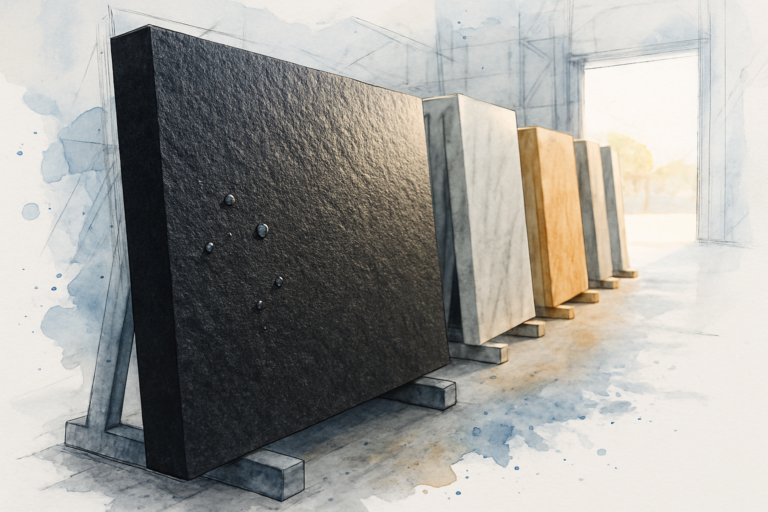
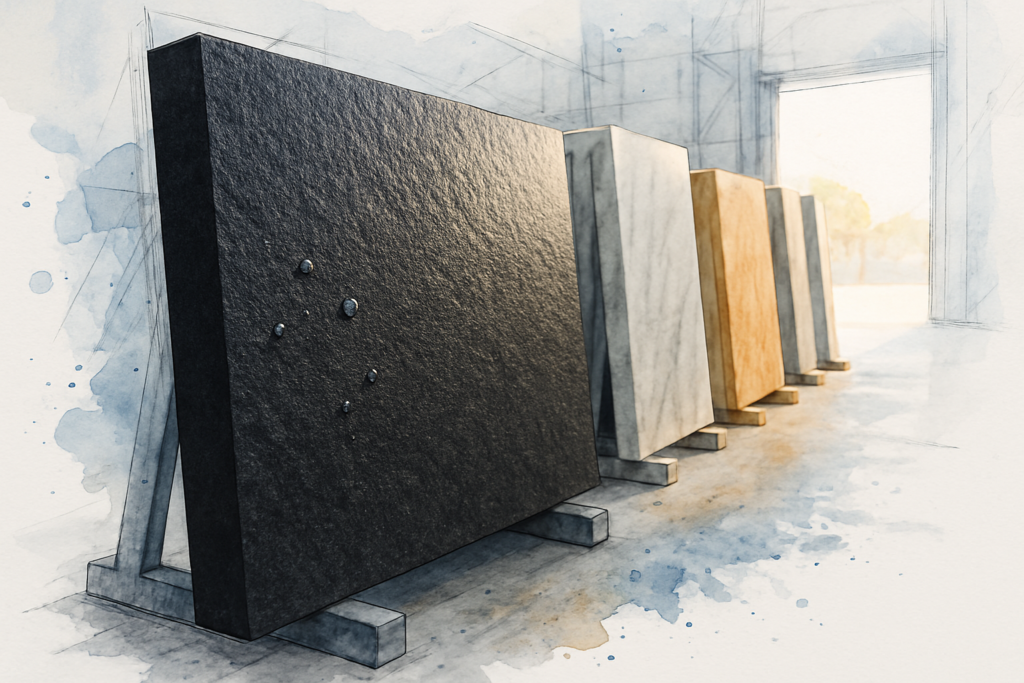
Direct Answer: Modern granite slab selection comes down to two things: how porous the specific slab is, and what finish it carries. Test absorption with water, and view leathered and honed options before deciding.
Most people who ask about granite today start the conversation with an apology. They think granite means the speckled brown polished counters of 2004, and they are half convinced they should be asking about something else.
That picture is out of date. Granite is showing up again in Carmel and Pebble Beach kitchens, in bar tops, and on outdoor counters, mostly in leathered and honed finishes that look nothing like what people remember.
But the material has a real trap in it. Granite is a category, not a single stone, and two slabs sold under that name can behave completely differently in a working kitchen. This guide covers how to tell them apart, why the finish often matters more than the name, and what a productive slab visit actually looks like.
Why granite came back into the conversation
Through the mid-2010s, quartz and quartzite took over the design conversation. Granite got pushed to the side, mostly because of how it had been sold, not how it performs.
That has flipped. Recent inquiry records from Monterey Peninsula and Bay Area buyers show people calling and asking for granite by name, along with black soapstone and leathered granite for kitchens and bar projects. One caller was chasing a leather-finish quartzite for a long bar. Another booked a whole-house remodel that included stone cladding alongside countertops.
What is driving it is a shift in taste. Buyers want:
- Warmth and variation instead of the flat uniformity of engineered slabs
- Texture you can feel, which pairs well with rift oak and warmer cabinet finishes
- A material that handles heat and daily abuse without a heavy conversation about resin
- Something no neighbor in Carmel Woods has an exact copy of
If you are still weighing categories, it helps to read granite, quartz, or porcelain side by side before you start pulling slabs.
The biggest myth in granite slab selection: that it is all the same stone
This is where most bad decisions start. Granite is a broad mineral category. It covers everything from dense, fine-grained absolute black to open-pored slabs with heavy movement that behave more like marble than the granite you were picturing.
Density is the thing that actually matters day to day. It drives how much the stone absorbs, how often it needs sealing, and how it reacts to red wine, olive oil, and a dripping bottle of Carmel Valley cabernet.
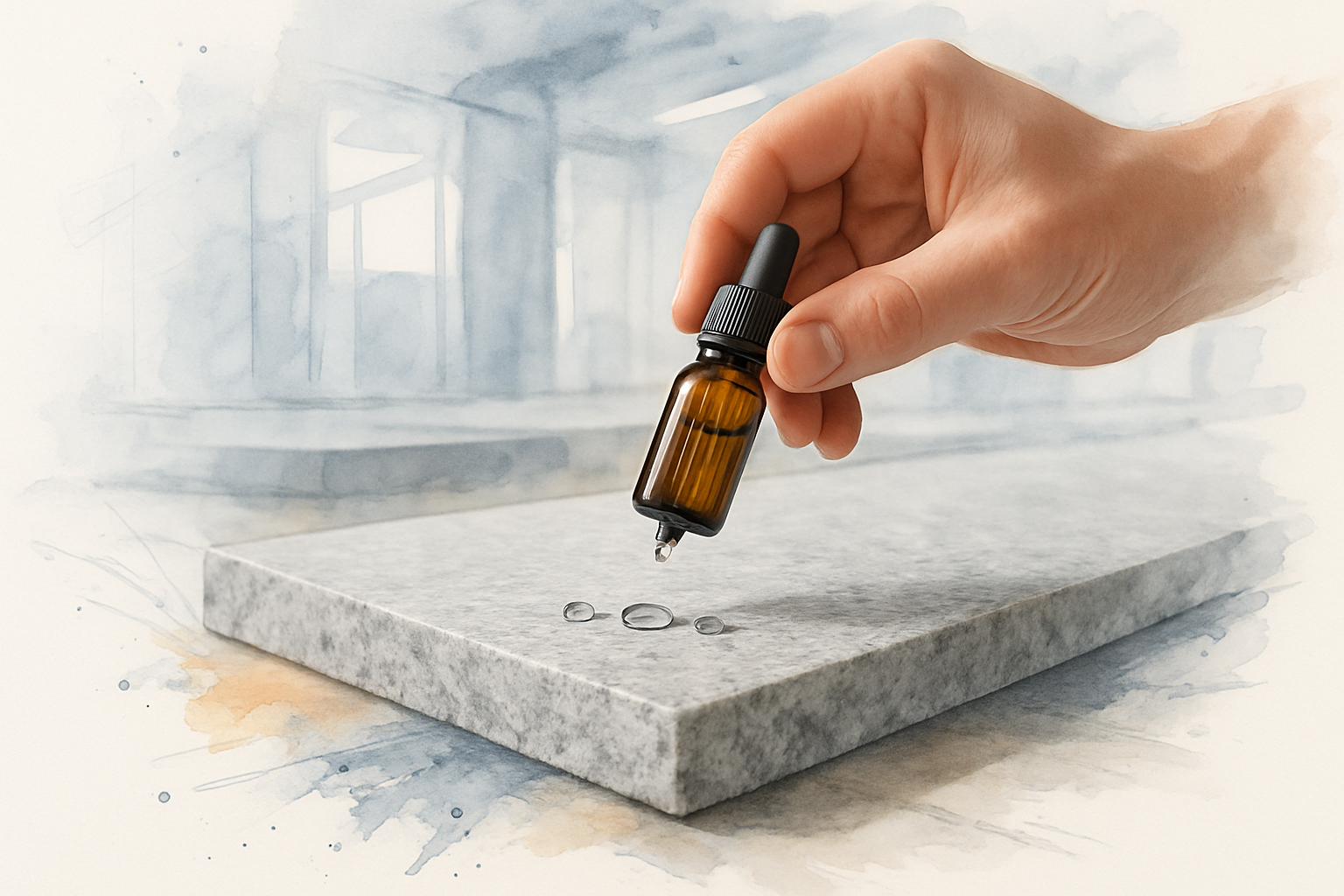
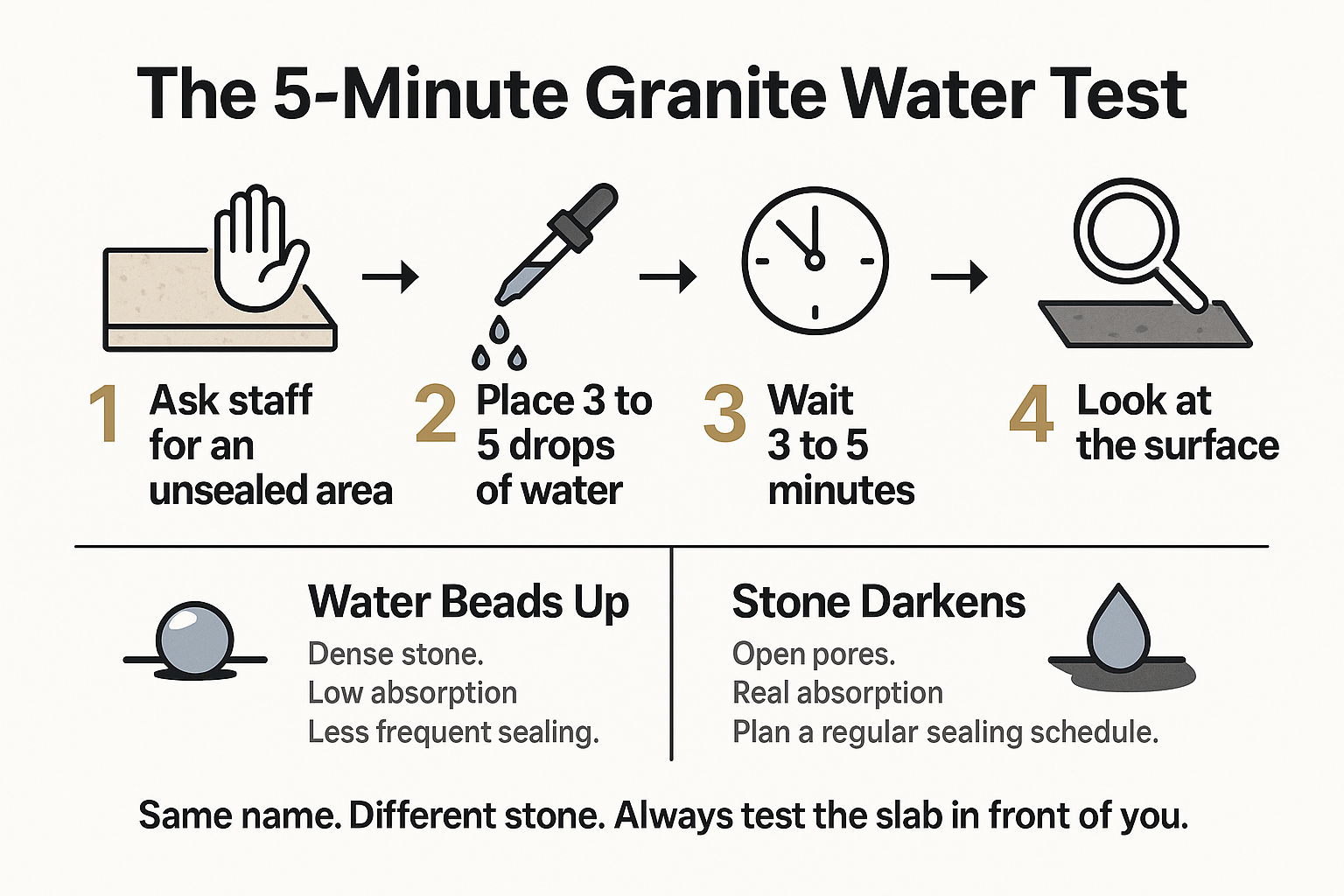
There is a simple field test. Put a few drops of water on an unsealed area of the slab and wait three to five minutes.
- Water beads up and sits there: dense stone, low absorption, less frequent sealing
- Water darkens the stone in a visible ring: open pores, real absorption, plan on a more regular sealing schedule
- The dark spot fades away within an hour: normal, that is the water leaving, not a stain
Ask a showroom staff member before you pour water on anything, since many display slabs are already sealed and will not read true. Absorption is measurable, and the Natural Stone Institute publishes the industry standards fabricators and specifiers reference for it.
The practical takeaway is simple. Two slabs both labeled granite can need very different care, so ask about the specific stone in front of you, not the category.
The finish question is often bigger than the material name
Here is the pattern showroom staff see constantly: someone walks in set on one material, a consultant pulls a leathered slab they had not considered, and that is the one that goes home.
Finish changes how a stone looks, feels, and lives more than most buyers expect. The same granite block can read formal and glossy or soft and quiet depending on how it is surfaced.
- Polished: the most reflective, deepest color saturation, shows fingerprints, water spots, and fine scratches most clearly
- Honed: matte and flat, softens color, hides scratches better, can show oils on lighter stones
- Leathered: a light texture you can feel, hides fingerprints and small scuffs, shows etching less than polished, pairs well with warm woods and matte hardware
- Flamed or split face: rough and grippy, mostly an exterior choice for steps and pool decks
Leathered has become the default request for high-use kitchens and bars, and the reviews back it up. One customer described searching a long time “for a specific leathered quartzite for our kitchen island” before finding the slab. Another came in with a cabinet door and photos, and left with a leathered slab she had never heard of.
Bring the cabinet door. Seriously. It changes the conversation. More on why in this piece on how the finish on a stone slab affects the whole room.
Granite finishes compared for real kitchen use
A quick reference for how the three main interior finishes behave once the kitchen is in daily use.
| Finish | How it looks and feels | Best fit | Watch for |
|---|---|---|---|
| Polished | Glossy, deep color, smooth | Formal kitchens, bathrooms, low-traffic islands | Fingerprints, water rings, visible fine scratches |
| Honed | Matte, soft, flat light | Quiet contemporary kitchens, dark stones | Oil marks can show on lighter or porous slabs |
| Leathered | Subtle texture, low sheen | Busy family kitchens, bar tops, islands | Crumbs can sit in texture, needs a good wipe habit |
| Flamed / split face | Rough, grippy, weathered | Pool coping, steps, exterior surfaces | Too coarse for interior prep counters |
The five-minute granite water test
This is the fastest way to understand how a specific slab will behave before you commit to it.
Granite outdoors on the Central Coast
This is the part of granite slab selection almost nobody plans for, and the coast makes it matter. Carmel-by-the-Sea and Pebble Beach deal with salt air, fog, and constant moisture, while inland spots like Salinas and Palo Alto get real summer heat and bigger day-to-night temperature swings.
Dense granites handle both well, which is why they keep showing up in outdoor kitchens, pool surrounds, pavers, and dark retaining wall and foundation cladding. Recent contact records include buyers specifically hunting dark exterior stone for exactly that.
When you are selecting for outside, ask about:
- Absorption rate, since a porous slab near salt spray will show it within a season or two
- UV stability of the color, especially on stones with heavy iron content
- Surface grip, which usually means flamed, brushed, or split face rather than polished
- Thickness and format, since pavers and coping have different structural needs than a counter
- Whether the same stone is available in both slab and paver form, if you want the counter and deck to match
One note that saves headaches later. A supplier sells and stocks the material. Cutting, templating, and setting it is your fabricator’s and contractor’s work, so bring them into the conversation early on any exterior project.
What a productive slab selection visit looks like
The difference between a frustrating showroom trip and a decisive one is almost entirely preparation. Buyers who show up ready walk out with a slab. Buyers who show up curious walk out with a list.
Bring these:
- Rough measurements of your counter runs and island, even approximate ones
- A cabinet door sample, plus flooring and paint chips if you have them
- Photos of the space in daylight, not just at night
- Your fabricator’s name, if you already have one lined up
Then ask for these things once you are there:
- To see the slab pulled into natural light, since warehouse lighting lies about color
- Two or three slabs of the same material, so you understand the natural variation range
- Photos of the full slab sent to you, which is standard practice for buyers coordinating with a designer or spouse
- Whether a short, time-bound hold is possible while your fabricator confirms square footage
One more thing worth knowing: inventory moves. Slabs sell, containers land, and what is on the website Tuesday may be gone Friday. Understanding what live inventory actually means will save you a wasted drive to Carmel Rancho Lane.
Frequently Asked Questions About Granite Slab Selection
Is granite outdated in 2026?
No. What is outdated is the highly polished, heavily speckled look that dominated twenty years ago. Leathered and honed granite in cleaner color fields reads current, and it is showing up in Monterey Peninsula kitchens and bar projects right now.
How often does granite really need to be sealed?
It depends entirely on the slab, which is the whole point of the water test. A dense, fine-grained granite may go years between sealings. An open-pored slab with heavy movement may want attention once a year or more, especially around a sink or cooktop. Ask about the specific stone, and ask your fabricator what they used at install.
Does leathered granite show crumbs and grime more than polished?
Slightly, yes. The texture is shallow but it is real, so a quick wipe with a cloth beats a dry swipe with your hand. In exchange you get a surface that hides fingerprints, water spots, and light scratches far better than polished, which is why so many busy kitchens land there.
What should I expect to pay for a granite slab?
Pricing moves a lot based on the quarry, rarity, thickness, finish, and whether the stone came from Brazil, Italy, or elsewhere. Two slabs both labeled granite can sit at very different price points, similar to why quartzite slabs with the same name cost different amounts. Ask a showroom for a quote on the actual slab you are looking at rather than working from a general per-square-foot number.
Can I choose a slab before I have a fabricator?
You can, and plenty of people do. Just know that the fabricator handles cutting, seam placement, edge profiles, and installation, so bring them in before the final purchase so nothing about the slab size or layout surprises anyone. Most showrooms can point you toward fabricators they see doing good work locally.
Ready to see granite slabs in person?
Photos flatten stone. Seeing two or three slabs of the same granite side by side in daylight is what makes the decision obvious, and that only happens in a yard. The showrooms in Carmel and Palo Alto keep live inventory on hand for exactly that kind of comparison. If you want to look at what is currently in stock or ask about a specific material, Carmel Stone Imports can be reached at (650) 800-7840 or info@carmelimports.com.