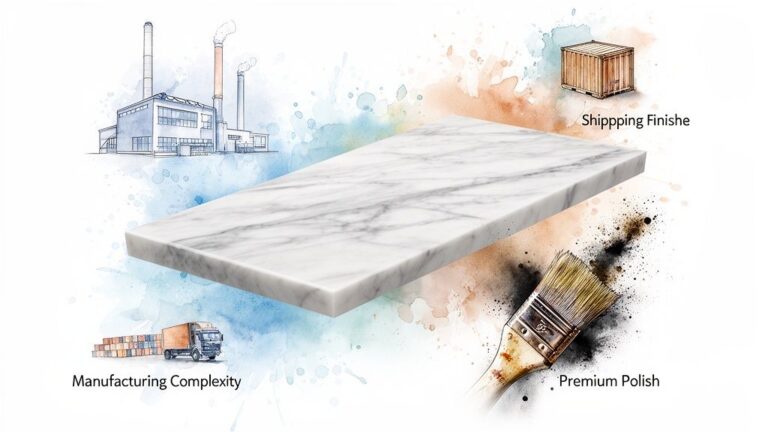
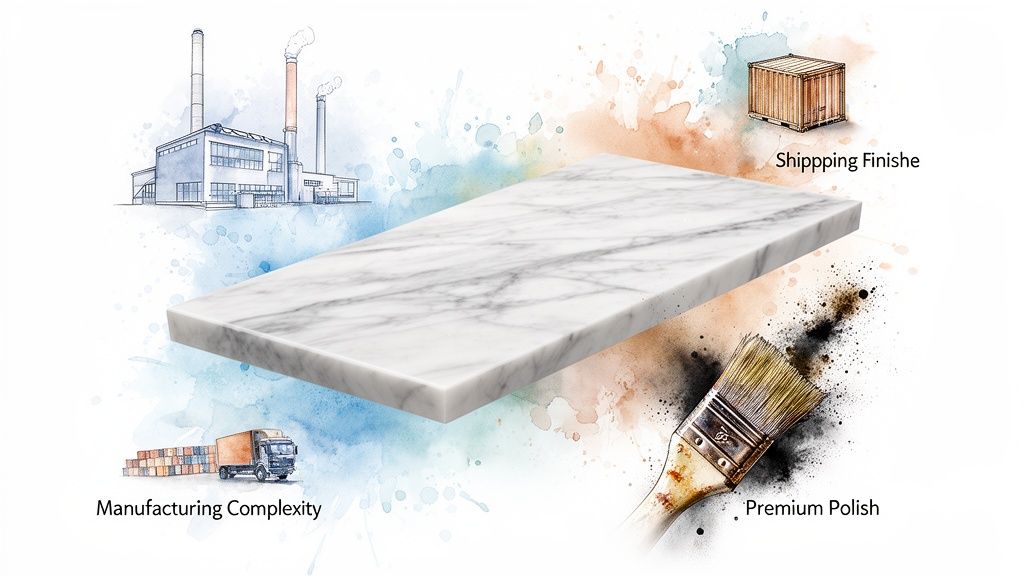
When homeowners in Palo Alto or Carmel get a quote for a porcelain slab project, they're often shocked. Many assume an engineered material should be cheaper than natural stone, which leads to the big question: 'Why are porcelain slabs so expensive?' The answer often has less to do with the final steps and more to do with the material itself.
Understanding the True Cost of Porcelain Slabs
A common misstep is comparing the price of a massive porcelain slab to a box of porcelain tiles. This comparison ignores the huge differences in manufacturing, raw materials, and logistics that put large-format slabs in a luxury category right alongside high-end stones like marble.
The journey a single porcelain slab takes from a quarry in Europe to a Bay Area home is incredibly complex. Unlike tile, these giant panels require a serious upfront investment long before they arrive.
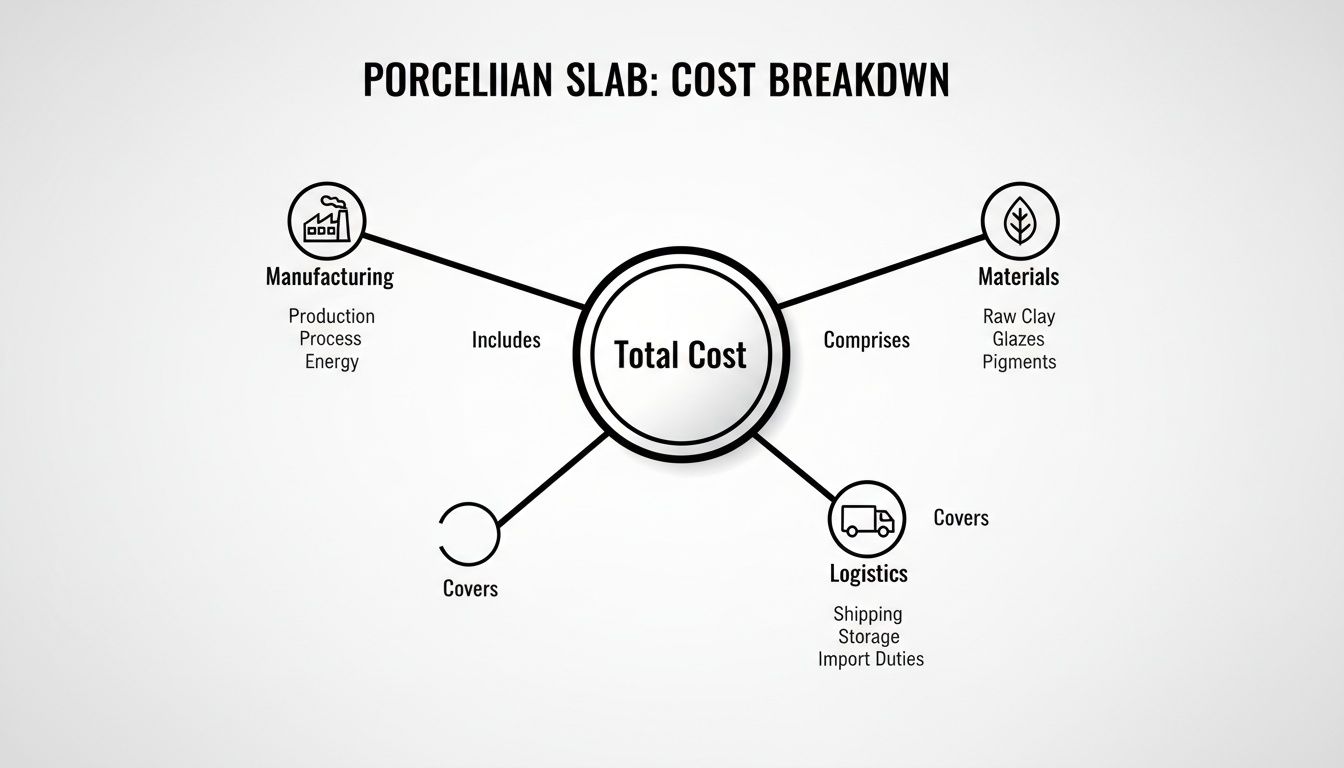
The final price is a blend of advanced production technology and specialized logistics. Understanding this helps shift the conversation from cost to what you're paying for: long-term value and incredible performance.
Key Cost Factors
So, what exactly drives that premium price? A few core elements are at play here.
- Sophisticated Manufacturing: Making these slabs involves immense heat and pressure. This process creates an unbelievably dense and non-porous material.
- Premium Raw Materials: The recipe matters. Only high-purity clays and minerals are used to guarantee superior strength and stunning visual quality.
- Complex Logistics: Getting an oversized, fragile slab from an international supplier to one of our California showrooms is a feat. It demands specialized crating and careful handling.
When budgeting for a remodel, it’s helpful to see how all the pieces fit together. You can look at guides that break down how much does landscaping cost for a wider view.
At Carmel Stone Imports, our team gives you the complete picture. You can dive deeper into the differences between porcelain slabs and tiles in our detailed guide.
The Science Behind Premium Porcelain Manufacturing
Porcelain slabs are born from an intense process called sintering. Carefully selected minerals are crushed with immense force and then baked at temperatures exceeding 2,200°F. This extreme process transforms simple materials into an incredibly dense surface.
This advanced manufacturing is what elevates a porcelain slab far beyond a standard tile. The result is a material with exceptional resistance to red wine spills in a San Francisco kitchen or the intense sun on a Monterey patio.
From Raw Minerals to Refined Surfaces
The journey from earth to elegant surface begins with a precise recipe of high-quality raw materials. This is not just a simple mix; it's a carefully engineered formula.
The primary components include:
- Kaolin Clay: A fine, white clay that gives porcelain its signature color and integrity.
- Feldspar: This mineral acts as a flux, melting during firing to fuse all elements into a glass-like body.
- Silica Sand: Provides strength and hardness, making the slab highly resistant to scratches.
These materials are finely ground, blended, and compacted under thousands of tons of pressure. This intricate, multi-stage process is worlds away from basic tile production.
The price difference is a direct reflection of this industrial science. While basic porcelain can start around $20 per square foot, luxury designs can climb to $65 or more, justified by the sophisticated production required. Discover more insights about porcelain slab costs from USA Builders Depot.
Why Sintering Creates Superior Strength
Sintering is the final, most critical stage. During this process, the slab travels through a massive kiln where particles fuse on a molecular level without melting completely.
This process is what gives porcelain its hallmark qualities:
- Extremely Low Porosity: The fused structure creates a surface with a water absorption rate of less than 0.5%, making it virtually stain-proof.
- Exceptional Hardness: Sintering creates a material harder than many natural stones, including some granites.
- Thermal Shock Resistance: The dense body can withstand rapid temperature changes, making it ideal for countertops and outdoor kitchens across the Central Coast.
Why Large Formats Drive Up Material And Handling Costs
The sheer size of a porcelain slab is a huge part of its appeal. It allows for seamless, grout-free surfaces that define modern luxury. But that grand scale is a primary reason for higher material costs.
Transporting a panel over ten feet long requires a specialized process. Each slab is packed into a reinforced, custom-built crate to prevent stress during its long journey.
The Global Journey To Your Home
Once crated, these oversized panels start a multi-stage trip involving ocean freight and ground transportation. This supply chain is built around specialized equipment like cranes and A-frames.
Every time a slab is moved, there's a risk. The cost to insure such a large and valuable product is substantial. These logistical expenses are factored into the final material price.
Handling With Precision
The need for careful treatment doesn't end when the slab arrives. Their thin profiles, sometimes as lean as 6mm, demand incredible care. Thicker slabs are often used for countertops, which pushes up the price due to added weight.
The bottom line is that size directly impacts cost. A larger slab means more weight, greater risk, and the need for more manpower and specialized tools at every step.
This meticulous handling is not optional. The costs tied to guaranteeing a flawless product are an integral part of why these materials command a premium.
If you're interested in learning more, check out our guide to large-format porcelain slabs.
The Value Of Premium Finishes And Design Versatility
Beyond being tough, porcelain has a chameleon-like ability to mimic other materials. Advanced digital printing can perfectly replicate Calacatta marble or French limestone without the headaches of staining or etching.
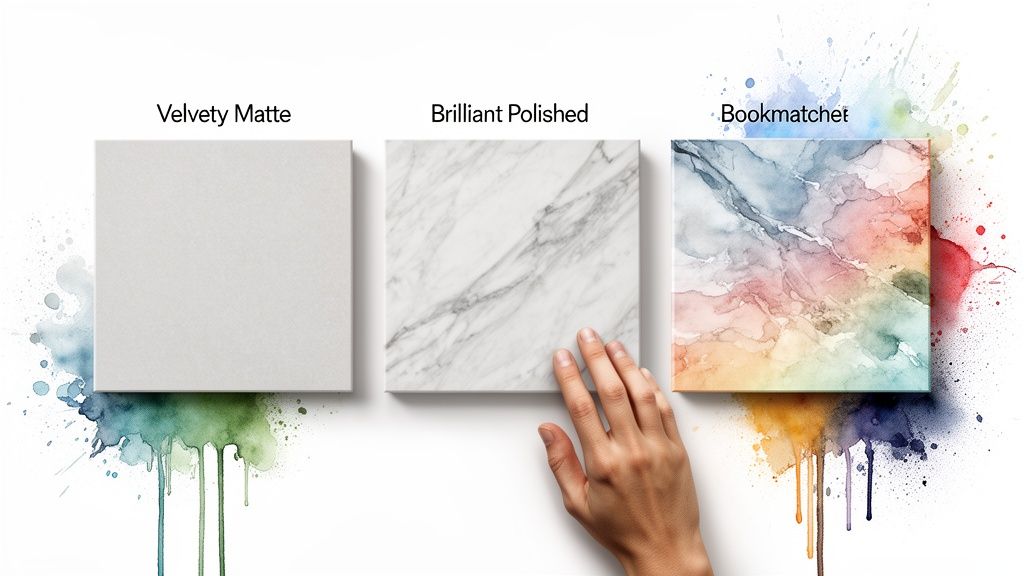
This design freedom unlocks stunning possibilities. Think of a seamless, grout-free shower in a coastal Carmel home or a bookmatched feature wall in a modern San Jose living room.
Finishes That Define The Space
The surface treatment of a slab adds another layer of character and cost. Each finish requires a different process, which shapes the final look and price.
A few popular options you'll see are:
- Polished: A brilliant, mirror-like finish that makes spaces feel bigger.
- Honed or Matte: A velvety, non-reflective surface perfect for a contemporary look.
- Textured: Finishes designed to mimic the feel of natural stone or wood.
Choosing the right finish is critical for your design vision. For a deeper dive, check out our guide on how to choose the right stone finish for your space.
The expense of luxury porcelain slabs is tied to this level of customization. For high-end projects, total costs can climb to $70-$150 per square foot in major markets. It's an investment that delivers a custom, high-performance result.
Thinking Long-Term: Durability and Lifetime Value
It's easy to get sticker shock from the price of porcelain slabs. But focusing only on the upfront cost misses the whole story. The true value is in how it performs flawlessly for decades.
Porcelain offers a long-term return on investment that few other surfaces can match. This makes it a smart choice for discerning homeowners across California.
The secret is in its incredibly dense, non-porous structure. Unlike natural stones, porcelain is practically bulletproof, making it a perfect fit for the California lifestyle.
Built For The California Lifestyle
Porcelain’s sintered body gives it exceptional resistance to the daily grind. It’s engineered to look just as stunning in ten years as it does on day one.
- UV Resistance: Porcelain’s color is baked in, so it stays vibrant even after years under the California sun.
- Stain Proof: The surface is non-porous, so spills like red wine or coffee sit on top and wipe away easily.
- Scratch Resistance: Porcelain is one of the hardest countertop materials you can buy. It stands up to daily use without showing scratches.
This built-in toughness adds up to a much lower total cost of ownership. You can dive deeper into porcelain’s ROI for Bay Area remodels in our detailed article.
The Low-Maintenance Advantage
Many beautiful natural stones demand regular sealing and special care. Porcelain, on the other hand, asks for very little.
This minimal upkeep saves you time and money over the years. You can say goodbye to annual sealing appointments and expensive cleaning products.
By choosing porcelain, you are investing in peace of mind. Its enduring beauty and minimal maintenance mean you spend less time worrying and more time enjoying.
So, when homeowners ask why are porcelain slabs so expensive, the long-term value is a huge part of the answer. That initial investment is balanced by decades of worry-free performance.
How To Plan Your Porcelain Project With Confidence
To make sure your project is a success, smart planning is key. A clear understanding of the full scope of costs is the best way to avoid sticker shock and make decisions you feel great about.
First, get total clarity on the investment by asking for an itemized quote. A little homework on how to plan your home renovation can also save you from unexpected expenses.
Questions To Ask Your Supplier
To sidestep confusion, you need to know what’s included in the price. Walking in with the right questions ensures there are no surprises.
- What is the price per square foot for this slab? This is your baseline for comparing material costs.
- What are the estimated freight and delivery charges? Logistics for these massive slabs can be a significant line item.
- Can you recommend experienced professionals who work with this material? A flawless result is all about the right team.
The most critical step is experiencing the material firsthand. Photos can't capture the subtle textures and impressive scale of a full-sized slab.
Visiting a showroom is non-negotiable. For homeowners in San Jose, Salinas, or anywhere on the Central Coast, seeing slabs in person at a Carmel Stone Imports showroom is eye-opening.
Our expert team in Carmel, Sand City, and Palo Alto is here to give you personalized guidance. Don’t let a surprise quote derail your dream project—connect with us to start your design journey with confidence. For a deeper dive, learn about the nuances of large-format installations in our guide.
Frequently Asked Questions
Navigating the world of premium surfaces for a project in the Bay Area brings up questions. Getting a clear picture helps explain why porcelain slabs are a worthwhile investment.
Is a porcelain slab more expensive than quartz or granite?
It’s a common misconception that porcelain is a budget alternative. In reality, the material cost for a premium porcelain slab is often in line with mid- to high-end quartz and sought-after granite. This price reflects its advanced manufacturing and superior durability, placing it in the luxury category.
Why not just use large porcelain tiles instead of a slab?
This comes down to the final look. While large-format tiles are great for floors, a full-size slab delivers a completely seamless, grout-free surface for countertops or shower walls. That stunning, uninterrupted look is a high-end design feature that tiles can't replicate.
Are porcelain slabs a good choice for outdoor use in California?
Absolutely. Porcelain slabs are one of the best materials for an outdoor space, especially on the Monterey Peninsula. They are 100% UV-resistant, so their color won't fade. Their non-porous nature also makes them bulletproof against stains, moisture, and frost.
Do all porcelain slabs cost the same?
Not at all. Pricing varies based on the design's complexity, the finish type, the slab's thickness, and the brand. At Carmel Stone Imports, we help you find the perfect slab that fits your budget and design vision.
What makes porcelain slabs so durable?
Their strength comes from the sintering process. This technique uses immense pressure and heat to fuse minerals into an ultra-dense, non-porous material. The result is a tough surface resistant to scratches, heat, stains, and UV light, ensuring it stays beautiful for years.
Ready to see the beauty and value of porcelain slabs for yourself? The team at Carmel Stone Imports is here to guide you through our extensive collection and help you plan your project with confidence.
Visit our showrooms in Carmel, Sand City, or Palo Alto to start your design journey today.