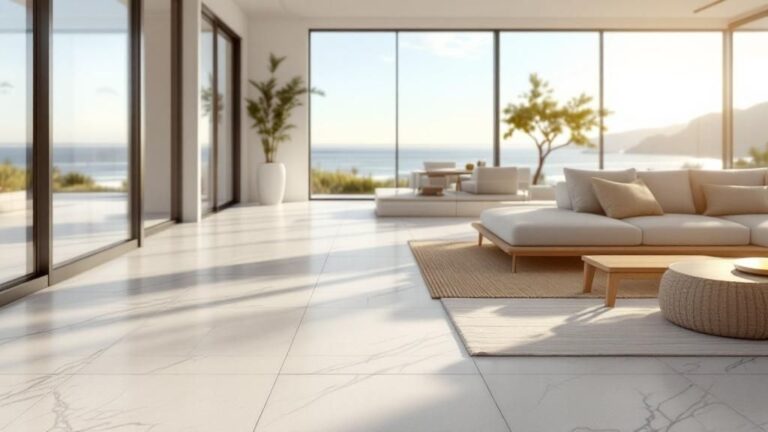
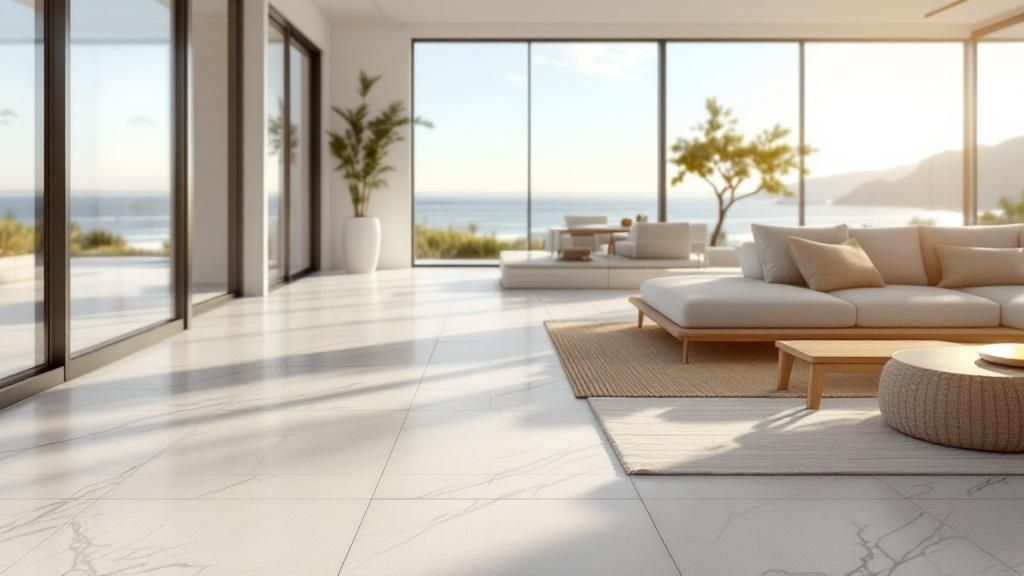
Choosing the right white stone tile can do more than just finish a room. It can redefine the space, making it feel brighter, bigger, and more luxurious. This guide will help you understand how to bring that look into your home. We’ll cover different stones, from classic marble to earthy limestone.
We'll explore how these materials can anchor your design. Whether you want a modern Bay Area look or a relaxed Monterey coastal style, we can help. Our goal is to help you find a tile that is both beautiful and a perfect fit for your life.
The Timeless Appeal of White Stone Tiles
For centuries, white stone has been a top choice for architects and designers. It creates a sense of elegance and purity. Its popularity is not just steady; it's growing. Designers and homeowners love its ability to create a clean, calm backdrop for any style. This is not a trend—it's a design staple that adds lasting value to a property.
The numbers back this up. The global market for ceramic and natural stone tiles was valued at USD 477.20 billion in 2023. It's expected to reach USD 826.07 billion by 2032. That's a huge growth rate of 7.1% per year, showing its lasting appeal. You can explore the full market research to learn more.
Why White Stone Works in Any Design
One of the best things about white stone tiles is how versatile they are. They act like a blank canvas, making your furniture, art, and accent colors stand out. This makes them a smart choice for any room.
Here are a few key benefits:
- Enhances Natural Light: White surfaces are great at reflecting light. This can make small or dark rooms feel brighter and more open. This is a big plus in coastal California homes where sunlight is a priority.
- Creates a Sense of Space: The clean look of white floors or walls can trick the eye. It makes a room feel larger than it really is.
- Offers Unmatched Elegance: White stone adds a touch of class. This is true whether you choose the soft veining of Carrara marble or the warm texture of limestone.
The true beauty of white stone is its ability to be both a quiet foundation and a stunning focal point. It adapts to your vision, whether you're creating a minimalist sanctuary in Palo Alto or a luxurious spa-like bathroom in Carmel.
This versatility isn't just for floors. Natural stone also brings amazing texture to walls, creating eye-catching features. If you are considering this, our guide on using natural stone wall tiles offers plenty of ideas. Next, we’ll look at the unique features of each stone type to help you find the perfect match.
Exploring Different Types of White Stone
Choosing the right material is about more than just color. When it comes to white stone tiles, each type has its own story, character, and strength. Knowing these differences is the key to picking a stone that looks great and works for your needs.
Think of it like choosing fabric for a suit. Some are silky and luxurious, while others are tough and built to last. We'll look at the practical side of each option, from Italian marble to French limestone. The goal is to help you feel confident in your choice.
The Timeless Elegance of Marble
Marble is what most people think of when they imagine luxury. It's formed from limestone that has been changed by heat and pressure deep in the earth. Its famous veining comes from mineral impurities swirled into the stone, making every slab a unique piece of art.
The love for marble is clear. It’s a huge part of the global decorative stone market, valued at around $21.71 billion in 2024 and expected to grow to $33.32 billion by 2032. You can discover more about the marble market trends to see why it's still so popular.
Two Italian marbles are especially well-known:
- Calacatta Marble: This type has a bright white background with thick, dramatic veins in gray, gold, or brown. It makes a bold statement and is often used for feature walls or countertops.
- Carrara Marble: Carrara is more common and has a softer look. It has a grayish-white background with fine, feathery veins for a more delicate pattern.
The image here shows a great top-down view of different white stone samples, letting you see the subtle differences in texture and pattern up close.
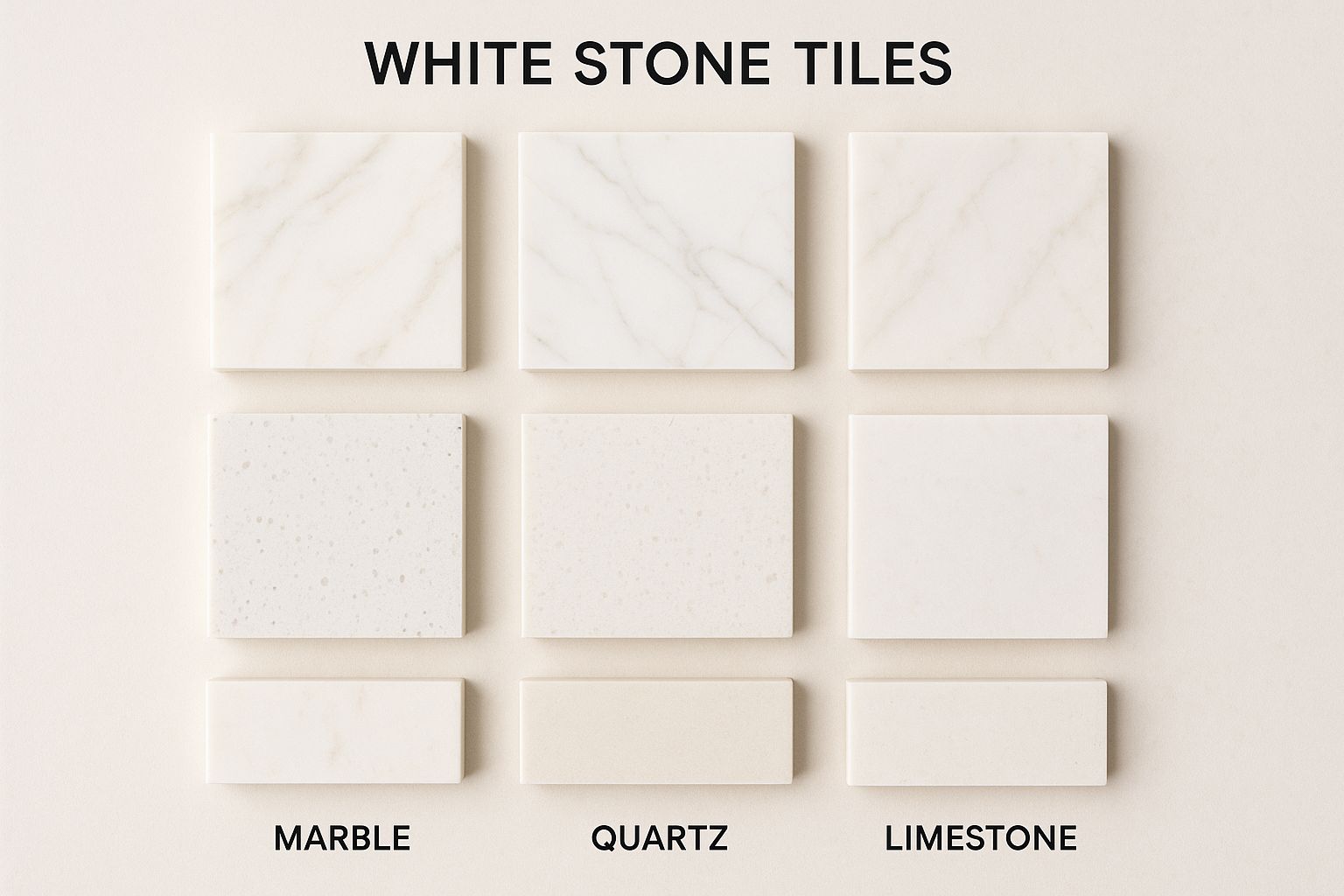
This kind of comparison shows how marble’s unique veining sets it apart from other stones.
To help you see the differences, here’s a quick breakdown of popular options.
Comparing Popular White Stone Tile Options
| Stone Type | Primary Look | Best For | Maintenance Level | Durability |
|---|---|---|---|---|
| Marble | Elegant, artistic veining on a white or gray base. | Statement walls, vanities, low-traffic floors. | High (Requires regular sealing) | Moderate (Porous and can scratch/etch) |
| Limestone | Soft, earthy, often with fossil details. | Relaxed spaces, bathrooms, low-traffic areas. | High (Needs sealing, sensitive to acids) | Low to Moderate (Softer and porous) |
| Quartzite | Crystalline shimmer with marble-like veining. | Kitchen countertops, high-traffic floors, entryways. | Low to Moderate (Sealing recommended) | Very High (Harder than granite) |
| Engineered Quartz | Uniform and consistent color and pattern. | Busy kitchens, bathrooms, commercial spaces. | Very Low (Non-porous, no sealing needed) | Very High (Stain and scratch resistant) |
| Porcelain | Can mimic any natural stone with precision. | Any application, including outdoors and wet areas. | Very Low (Non-porous and stain-proof) | Extremely High (Very dense and hard) |
Each stone has its own strengths. The best one for you depends on where and how you plan to use it.
The Rustic Warmth of Limestone
If marble feels too formal, limestone offers a softer, more natural option. This rock is formed from the shells and marine life of ancient seas. Its surface often has beautiful fossils and subtle color changes that add a touch of history to your space.
Limestone's texture is warmer and more porous than marble. This gives it an inviting, earthy feel. It’s a great choice for creating a relaxed coastal vibe in a Carmel home or a timeless, European look.
The Unyielding Strength of Quartzite
If you love the look of marble but need something tougher, quartzite is the answer. This rock starts as sandstone and is transformed by intense heat and pressure. The sand grains fuse together, creating an incredibly dense and durable stone.
It’s easy to get them mixed up, but don’t confuse quartzite with engineered quartz. Quartzite is a 100% natural stone, known for being very hard and resistant to heat and scratches. It is often more durable than granite.
Quartzite has a beautiful, subtle shimmer. While some types are solid white, many have delicate veins that look just like marble. This makes it a great choice for busy kitchen floors or entryways where you need beauty that lasts.
The Practicality of Engineered Stone
While natural stone is unique, engineered options offer amazing consistency and performance. These man-made materials capture the look of natural stone while solving some of its practical problems.
Here are the two main types:
- Engineered Quartz: This material is made of about 90-95% crushed natural quartz mixed with resins. The result is a non-porous surface that resists stains, scratches, and bacteria, making it very easy to care for.
- Porcelain Tiles: Made from fine clay fired at very high temperatures, modern porcelain can look just like marble, limestone, or even wood. It’s incredibly dense and durable, making it a great choice for indoors and outdoors—perfect for the Bay Area climate.
The best white stone tiles for you will balance looks, function, and the maintenance you're comfortable with. Whether you prefer natural Calacatta marble or perfect porcelain, Carmel Stone Imports has a large collection to explore.
California Design Ideas with White Stone
White stone is more than a building material; it's a design tool that can define a room's feel. Here in California, where styles range from breezy coastal to sharp urban, white stone tiles offer a versatile foundation. The real art is in choosing the right stone, finish, and size to bring these styles to life.
The secret is to think beyond the tile itself. A finish can change a stone's personality from rustic to refined. The tile size can make a space feel grand or cozy. This thoughtful approach turns a simple surface into a strong design statement.
Creating a Coastal Retreat in Carmel
The relaxed, sunny style of a Carmel or Monterey home is all about capturing the feel of the coast. The goal is a calm, airy space that feels connected to nature. White stone is perfect for this, especially materials that remind you of sand and sky.
Honed white limestone is a great choice for this style. Its soft, matte finish absorbs light for a gentle glow that feels warm and inviting. The subtle fossils in the stone add just enough texture to keep the space from feeling cold.
To achieve the coastal look, consider these elements:
- Larger Format Tiles: Using bigger tiles (like 24×24 or 24×48 inches) means fewer grout lines. This creates a smooth surface that brings to mind a sandy shore.
- Contrasting Grout: A slightly darker, sand-colored grout can highlight the tile shape without disrupting the soft look.
- Natural Pairings: Pair limestone with natural wood, woven fabrics, and lots of natural light to enhance the beach-inspired vibe.
Modern Minimalist Design for a Palo Alto Home
On the other hand, the modern minimalist style is popular in places like Palo Alto. This style requires clean lines, uncluttered surfaces, and a focus on form. White stone is used here to create a seamless canvas that feels simple and sophisticated.
Large-format porcelain tiles that look like marble are a great option for this. Today's porcelain is very realistic and captures the elegant veins of Calacatta or Carrara. Using huge tiles—some as large as 5×10 feet—reduces grout lines and creates the look of a single stone slab.
The essence of minimalism is stripping away the non-essential. In flooring and wall design, this means using large-format tiles to create a visually quiet, expansive foundation that allows the architecture and key design pieces to take center stage.
This approach is a perfect match for mid-century modern homes, like the iconic Eichlers found in the area. To see how white stone can define a kitchen, explore some fresh kitchen renovation ideas that show how clean surfaces can anchor a modern design.
Achieving Classic European Elegance
White stone can also create a sense of timeless, old-world luxury. This style is perfect for a spa-like master bathroom. Polished Carrara marble is the ideal material for this, with its soft gray veins and glossy finish that shines in the light.
The polished surface reflects light, making the room feel brighter and more glamorous. Using smaller tiles—like classic 3×6 subway tiles on the walls and a mosaic on the floor—adds texture and detail. To learn more, check out our guide on how to choose bathroom tile. This lets you mix patterns while keeping a harmonious, elegant feel.
Practical Steps Before You Install
So, you've chosen the perfect white stone. But turning that vision into reality means getting the details right before installation. This is where you make key decisions on the tile’s finish, grout color, and sealing process.
These steps are just as important as choosing the stone. A good plan protects your investment and ensures the final space meets your expectations. It’s the difference between a project that looks good and one that’s truly great.
Selecting the Right Tile Finish
The finish on a stone tile does more than change its look; it affects how it performs. This is especially important in areas where safety matters. The same piece of marble can feel very different depending on if it’s polished or honed.
A polished finish is dramatic and glossy. It's a stunning choice for a grand entryway or a feature wall where you want to reflect light. However, its slick surface can be risky in wet areas.
Choosing the right finish is an essential balance of aesthetics and practicality. A beautiful tile in the wrong application can become a maintenance headache or even a safety hazard.
For floors in bathrooms, kitchens, and patios—especially in coastal climates like Monterey—other finishes are a smarter, safer choice.
Here are a few options for busy or wet areas:
- Honed Finish: This finish has a smooth, matte surface. It offers much better slip resistance than polished stone, making it ideal for bathroom floors.
- Tumbled Finish: For a rustic, aged look, this is a great choice. Tiles are tumbled with sand and pebbles to soften their edges and create a textured surface that provides excellent traction.
The Art of Choosing Grout Color
Grout may seem like a small detail, but its color can transform the final look. It can either unify the surface or make each tile stand out. The choice depends on the design effect you want.
Do you want a seamless look or do you want to highlight the tile pattern?
- For a Monolithic Look: Matching the grout color to the tile creates a clean, continuous surface. This is popular in modern designs because it makes spaces feel larger.
- For a Contrasting Effect: Choosing a darker grout—like a soft gray against white marble—draws attention to the tile grid. This can create a classic or a bold, graphic look.
Demystifying the Sealing Process
Sealing is one of the most important steps to protect your investment. This is especially true for porous stones like marble and limestone. A good sealer acts as an invisible shield, blocking liquids and preventing stains. It's a must-have for kitchens and bathrooms.
Installing natural stone requires skill and precision. If you want to learn more about the technical side, our guide on how to properly install stone veneer has great insights.
Taking these practical steps ensures your beautiful white stone tiles will look stunning for years to come.
Caring For Your White Stone Tiles
You’ve invested in your home's elegance with beautiful white stone floors and walls. The good news is, protecting that investment is simple. With a consistent, gentle approach, you can keep your white stone tiles looking new for years.
This commitment to quality is a growing trend. According to Houzz’s 2024 U.S. Kitchen Trends Study, engineered quartz is the top choice for upgraded countertops at 42%, with natural quartzite following at 25%, showing a strong preference for durable, beautiful stone surfaces.
Daily and Weekly Cleaning Routines
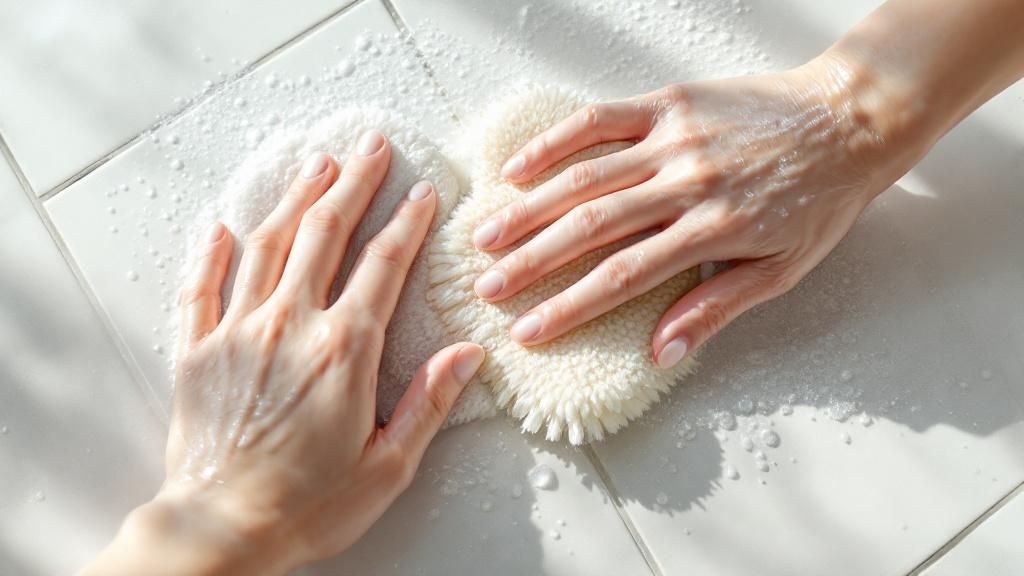
The key to stone care is a simple, regular routine. For floors, daily sweeping or vacuuming (with a soft brush) is essential. This removes the dirt and grit that can scratch the surface over time.
For weekly cleaning, always use the right products. A pH-neutral cleaner made for natural stone is a must. Harsh, acidic cleaners like vinegar or lemon juice can permanently damage stones like marble and limestone.
Think of your stone's surface like your skin; you wouldn't use a harsh chemical on it. A gentle, pH-balanced solution cleans effectively without causing damage, preserving the stone's natural luster and integrity.
For safe and effective options, you might explore some of the best non-toxic cleaning products for a safer home.
Handling Spills Immediately
Accidents happen, especially in a busy kitchen or bathroom. With natural stone, you need to act fast. Blot spills right away with a soft, absorbent cloth. Don't wipe, as that just spreads the liquid.
- For acidic spills like wine or coffee, quick blotting is key to prevent etching.
- For oil-based stains from cooking oil or grease, you may need a commercial stone poultice to lift the stain.
The Importance of Resealing
Sealing is your best defense for porous stones like marble and limestone. A quality sealer fills the stone's tiny pores, creating an invisible barrier that repels water and oil. This gives you extra time to clean up spills before they stain.
But that seal doesn't last forever. You can check if it's time to reseal with the water test. Put a little water on the tile and wait a few minutes. If the water beads up, your sealer is working. If it soaks in, it’s time to reseal.
As a general guideline:
- High-traffic areas like kitchens or bathrooms may need resealing every 1-2 years.
- Low-traffic areas like a formal entryway might only need it every 3-5 years.
The process is simple but crucial for the long life of your stone. For a complete guide, check out our article on how to seal natural stone correctly.
Find Your Perfect White Stone Today
Now that you have the inspiration and practical tips, the best next step is to see these beautiful materials in person. Pictures online are helpful, but white stone tiles have a quality you can only appreciate up close. This is the best way to see the subtle textures, tones, and finishes.
We encourage you to visit one of our showrooms. There is no substitute for seeing and feeling the materials. It’s a key part of the design process that helps you make a confident choice for your home. Our experts are always there to guide you and answer your questions.
Visit Our Showrooms
Choosing the right stone is a hands-on experience. Whether you’re near Monterey or Palo Alto, our showrooms are set up for you to explore our large collection.
- Feel the Texture: Run your hand over the cool surface of polished marble, or feel the soft touch of honed limestone.
- See the True Colors: The natural light in our showrooms shows the real depth and variation in each slab.
- Get Expert Guidance: Our team can give you advice based on your specific project and the look you want to achieve.
Making the final selection is a big moment in any design journey. Seeing the stone in person ensures the material you choose will not only work for your needs but will also perfectly capture the atmosphere you want to create.
Finding the perfect material should be exciting, and we're here to help you. For more guidance, our article on how to find the perfect natural stone for your home offers more valuable tips.
Connect with the experts at Carmel Stone Imports today. We can provide a personal consultation or a quote to help bring your vision to life.
Frequently Asked Questions
Thinking about bringing white stone into your home? You probably have some questions. Here are clear answers to some of the most common ones we hear from our clients.
Are white stone tiles hard to keep clean?
Not at all, with the right care. The most important step is sealing natural stones like marble or limestone. This protects them from spills and stains. Once sealed, daily care is simple. A quick sweep and a wipe-down with a pH-neutral cleaner is all you need.
What is the most durable white stone for a kitchen floor?
For a busy kitchen, quartzite is a fantastic choice. It has the elegant look of marble but is incredibly hard and durable, even more so than granite. High-quality porcelain tiles that look like natural stone are another great, low-maintenance option because they resist stains and scratches.
Can I use white marble in my bathroom?
Yes! White marble creates a classic, spa-like feel. For bathroom floors, we recommend a honed finish instead of polished. The matte surface offers better grip when wet. Proper sealing is also essential to protect the porous stone from water and soap.
Do white tiles make a room feel cold?
While stone is cool to the touch, white tiles can make a room feel visually warmer. They reflect light, making any space feel more open and inviting—perfect for a coastal California home. You can also add warm elements like wood accents, soft rugs, and warm lighting to create a balanced, comfortable space.
What is the difference between Carrara and Calacatta marble?
Both are beautiful Italian marbles, but they have different looks. Carrara marble usually has a softer, grayish-white background with fine, feathery veins. Calacatta marble is rarer, with a bright white background and bold, dramatic veins in shades of gray and gold.
At Carmel Stone Imports, we're here to help you navigate these choices and find the perfect material for your project. Visit one of our showrooms in Monterey or Palo Alto to see our collection in person, or contact our team for a personalized consultation.