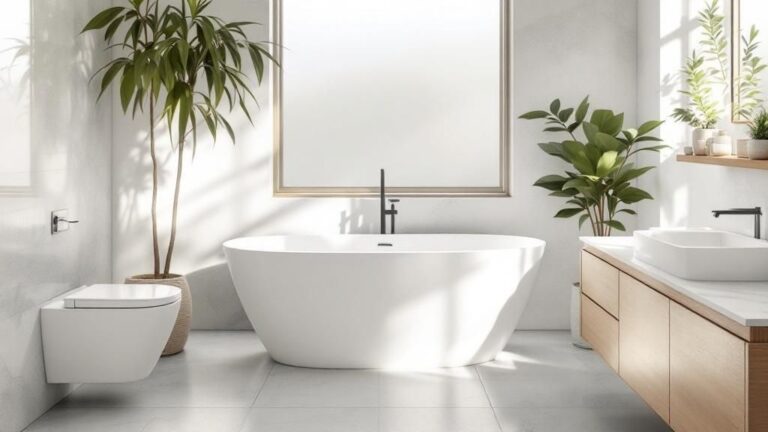
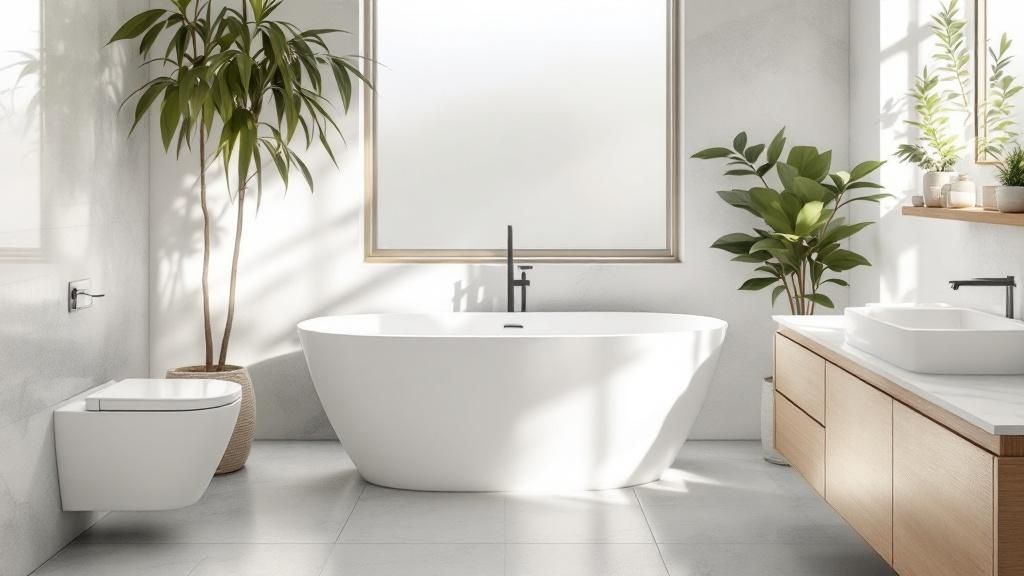
Choosing the right bathroom tile is a balance of style, durability, and moisture resistance. A great first step is to think about how you will use the bathroom. Is it a busy hub for the family, or a quiet space just for you? Answering that question will make every other decision much easier.
Finding the Perfect Tile for Your California Bathroom
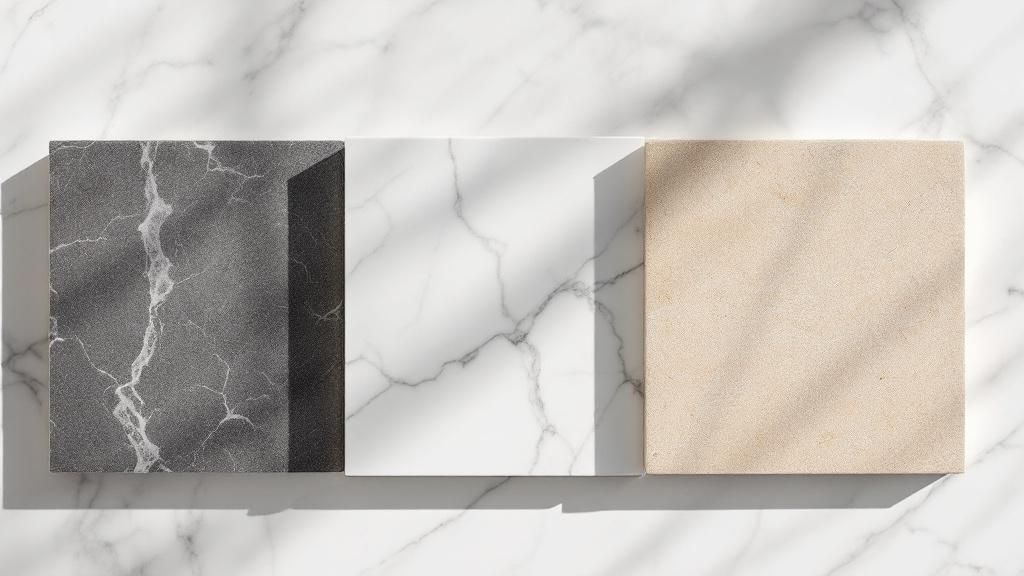
Picking out bathroom tile is one of the most exciting parts of a remodel. It’s what sets the style for the whole room. But your dream look also has to work in a busy, wet space.
For homeowners across California—from modern condos in Palo Alto to coastal homes in Monterey—the right tile needs to fit both your personal taste and the local style.
This guide will help you understand the most important things to consider first. It’s easy to fall in love with a certain style, but understanding the practical needs of your bathroom will lead to a better choice in the long run.
We'll cover the key factors you need to think about:
- Material Durability: Which tiles can handle daily use?
- Slip Resistance: What makes a floor safe when it's wet?
- Maintenance Needs: How much cleaning are you willing to do?
- Style and Looks: How can tile improve your home's unique look?
Starting with these basics helps you feel confident in your choices. It ensures the tile you pick will look great and last for years. For more local advice, our guide on choosing bathroom tile in San Jose offers tips for Bay Area homes.
High-quality tile is more popular than ever. In fact, the global ceramic tile market is expected to reach nearly $408 billion by 2030, according to Grand View Research. This shows how much homeowners value tile for making their homes both tough and beautiful.
Key Factors for Choosing Bathroom Tile
Here is a quick summary of the most important things to consider.
| Consideration | Why It Matters for Your Bathroom | Top Material Choices |
|---|---|---|
| Moisture Resistance | Bathrooms get wet. You need tile that won’t soak up water, which can lead to mold and damage. | Porcelain, Ceramic, Glass |
| Durability & Wear | Think about foot traffic. A family bathroom floor needs a tougher tile than a guest powder room wall. | Porcelain, Natural Stone (sealed) |
| Slip Resistance | Safety is key on wet floors. Look for tiles with a texture or a good slip-resistance rating. | Matte-finish Porcelain, Unglazed Ceramic |
| Maintenance | Be honest about cleaning. Some materials need more care (like sealing) than others. | Glazed Ceramic, Porcelain |
| Size & Scale | Tile size can make a room feel bigger or smaller. Large tiles create a spacious look, while small mosaics add detail. | Large-format (for floors), Mosaics (for accents) |
Thinking about these points will help you narrow down your options and find the perfect fit.
The Best Tile Materials for Bathroom Floors and Walls
Choosing the right tile material is the most important decision you'll make. It affects durability, maintenance, and the overall feel of your bathroom. At Carmel Stone Imports, we help clients understand our materials because each one has unique benefits.
Let's look at the most popular options, from hardworking porcelain to elegant natural stone. Once you know the pros and cons, you will know how to choose bathroom tile that fits your life.
Porcelain and Ceramic: The Workhorses of Bathroom Tile
People often group porcelain and ceramic together, but they are different. Both are made from clay, but porcelain uses a finer clay and is fired at higher temperatures. This makes porcelain very dense and durable, so it's a great choice for wet, busy areas like a shower or main bathroom floor.
Ceramic tile is a great, affordable option. It works well for bathroom walls or floors in rooms that get less use, like a powder room. It also comes in many colors and patterns, giving you lots of design freedom.
Porcelain’s strength makes it a top choice. In fact, porcelain tiles made up over 40% of the global ceramic tile market in 2022. This shows how popular it is for bathrooms where water resistance is a must.
Natural Stone: Timeless Elegance and Unique Character
For a truly luxurious bathroom, nothing beats natural stone. Each piece of marble, limestone, or travertine is unique. It brings an organic, high-end feel that can't be copied.
- Marble: Known for its classic, sweeping veins, marble can turn any bathroom into a spa. It looks stunning as a feature wall or on a vanity.
- Limestone: This stone has a softer, more muted look. It's perfect for creating a warm, inviting space, fitting the coastal California style.
- Travertine: With its natural pits and earthy colors, travertine adds texture and rustic charm to both traditional and modern homes.
It is very important to remember that natural stone is porous. This means it needs to be sealed regularly to protect it from stains and water. The upkeep is higher, but many feel the beauty is worth it. This is similar to the process for kitchen design ideas with natural stone.
Comparing Popular Bathroom Tile Materials
Use this chart to see which tile material best fits your needs and budget.
| Material | Best For | Durability & Water Resistance | Maintenance Level | Average Cost (per sq. ft.) |
|---|---|---|---|---|
| Porcelain | High-traffic floors, showers, wet rooms | Excellent; very low porosity | Low | $8 – $20 |
| Ceramic | Walls, backsplashes, low-traffic floors | Good; more porous than porcelain | Low to Moderate | $5 – $15 |
| Natural Stone | Luxury floors, feature walls, vanities | Varies; requires sealing | High | $15 – $50+ |
| Glass/Mosaic | Decorative accents, backsplashes, niches | Excellent; non-porous | Low | $20 – $100+ |
This table gives you a clear snapshot, but remember costs can change based on the specific tile you choose.
The infographic below shows how tile size can affect things like cleaning, cost, and the feel of the room.
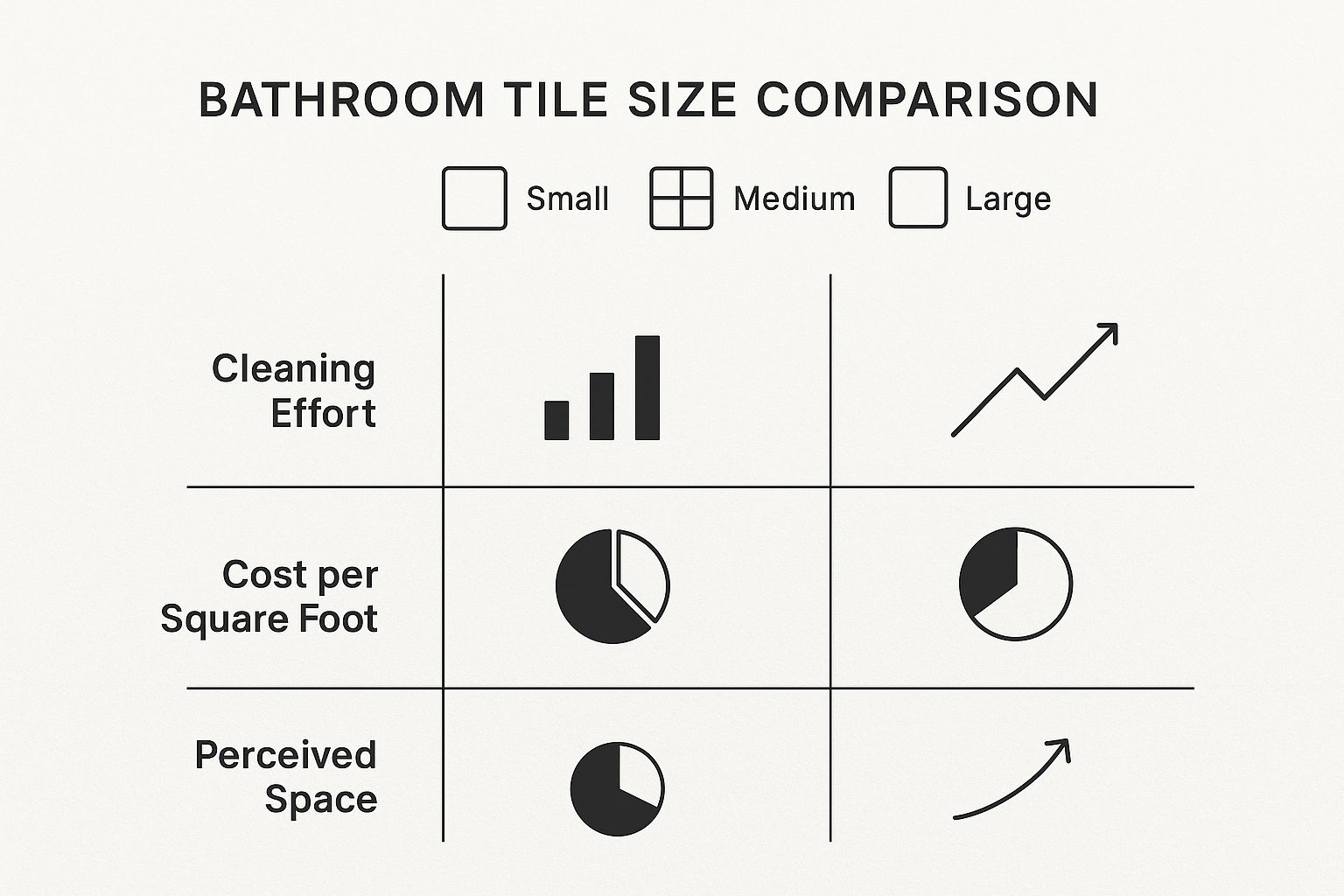
As you can see, larger tiles can make a room feel bigger and are easier to clean because they have fewer grout lines. However, they often cost more per square foot.
Glass and Mosaic Tiles for Accents and Flair
Don't forget the details! Glass tiles are great for adding color and reflecting light, which can make a small bathroom feel brighter. They are perfect for a backsplash or a decorative shelf in the shower. Since they are non-porous, they are waterproof and easy to clean.
Mosaics, which come in glass, stone, or porcelain, let you get creative with patterns. The many grout lines also provide great grip, making them a safe and stylish choice for shower floors.
Designing With Tile: Size, Pattern, and Color
Now that you have a material in mind, we get to the fun part: design. The size, shape, and pattern of your tiles define the look of your bathroom. This is where you can show your personality.
It's a common myth that small bathrooms need small tiles. Often, the opposite is true. Using large-format tiles in a small powder room can be a game-changer.
Fewer grout lines create a clean, seamless surface that tricks the eye into seeing a larger space. This is a popular strategy in space-conscious Bay Area homes. For more on this, check out our guide on proper large-format tile installation.
Creating Visual Interest with Patterns
Patterns are a great way to add character. You can make a basic tile look special just by laying it in a creative way.
Here are a few popular patterns:
- Herringbone: This V-shape layout adds movement and style. It’s a great choice for a bathroom floor or a feature wall.
- Chevron: Similar to herringbone but with a true "V" point, chevron creates a sharp, modern look.
- Subway (Offset): The classic brick pattern is very versatile. It can look clean with white tile or bold with a colored tile and dark grout.
A good pattern does more than look nice. A vertical tile layout can make a low ceiling feel taller, while a horizontal pattern can make a narrow room feel wider.
Using Color and Texture to Set the Mood
Finally, let's talk about color and texture. For a calm, spa-like feel, choose soft, neutral tones. Think of the peaceful colors of limestone or light-colored porcelain. These are perfect for creating a relaxing escape in a Monterey home.
If you want to make a statement, try bold choices. A deep blue subway tile can create a dramatic, cozy vibe. A textured tile, like a hand-chiseled stone, adds depth that a flat surface can't match. The key is to balance bold elements with simpler ones so the space doesn't feel too busy.
Getting Serious About Durability, Maintenance, and Safety
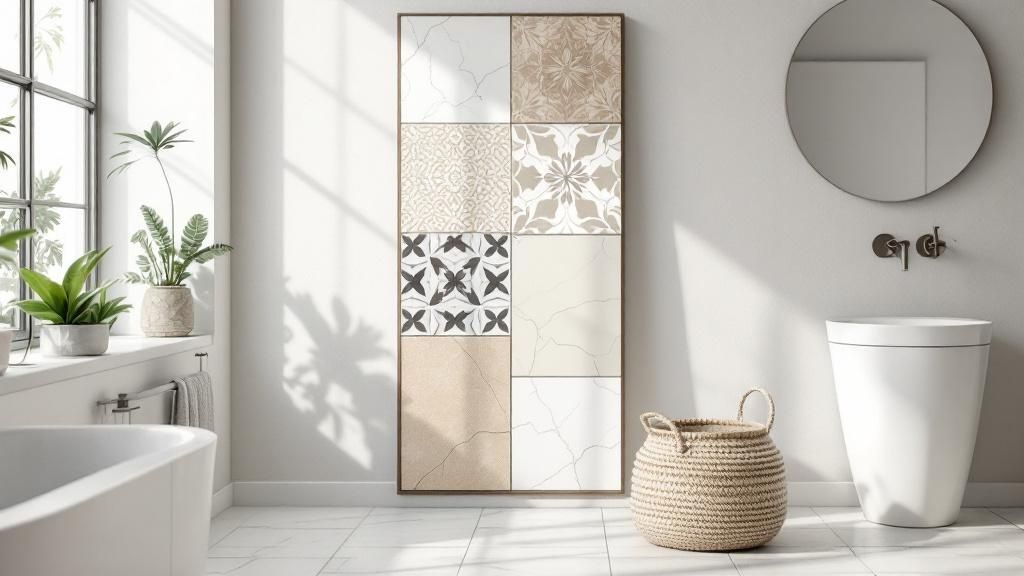
The look of a tile is exciting, but the practical side is what you'll live with every day. How it holds up, how you clean it, and how safe it is are very important. Getting these details right is a key part of learning how to choose bathroom tile that works as good as it looks.
Understanding Tile Ratings
Two important ratings are the PEI and DCOF ratings. These tell you how tough and safe a tile is.
The PEI (Porcelain Enamel Institute) rating measures how well a tile resists wear from foot traffic. The scale is 1 to 5. For a home bathroom floor, you'll want a tile with a PEI rating of at least Class 3. This means it can handle daily use without scratching easily.
The DCOF (Dynamic Coefficient of Friction) rating tells you how much grip the tile has. This is a major safety factor in a wet bathroom. Look for tiles with a DCOF rating of 0.42 or higher. This is the industry standard for surfaces that may be wet when walked on.
Key Takeaway: For bathroom floors, choose a tile with a PEI rating of 3 or higher and a DCOF rating above 0.42. These numbers ensure your floor is tough and safe.
Matching Maintenance to Your Lifestyle
Be honest with yourself about cleaning. Some materials are easy to care for, while others need more attention. Porcelain and glazed ceramic tiles are famously low-maintenance.
Natural stone is more of a commitment. Materials like marble and travertine need to be sealed now and then to keep water and stains out. Our guide on how to seal natural stone makes this process simple.
When regular cleaning isn't enough, consider hiring experts. Periodic professional steam cleaning services for tiles and grout can lift deep dirt and make your grout look new again.
How to Budget for Your Bathroom Tile Project
A realistic budget is the key to a stress-free remodel. When you learn how to choose bathroom tile, it's easy to focus only on the price per square foot. But that number is just one part of the total cost.
A good budget includes all materials and labor needed to get the job done right.
Looking Beyond the Tile Price
To avoid surprise costs, think about the other materials needed for a professional installation.
- Underlayment and Prep Materials: This is the foundation, including cement board and waterproofing membranes for showers.
- Adhesives and Grout: You’ll need the right mortar and grout. Special grouts, like colored or epoxy types, cost more.
- Sealant: For natural stone, a quality sealant is a must-have to protect your tile.
- Tools and Supplies: If you do it yourself, you'll need to rent or buy tools like a wet saw and trowels.
The Value of Professional Installation
Hiring a pro can cost $10 to $20 per square foot or more. While it might be tempting to save money here, an experienced installer for your Monterey or Palo Alto home is a smart investment.
A professional handles tricky cuts, plans the layout perfectly, and ensures the surface is level. This makes the difference between a good result and a great one.
Smart Budgeting Tip: Use a "high-low" approach. Splurge on a beautiful mosaic for a small area, like a shower shelf. Then, use a more affordable porcelain tile for the main floor. You get a "wow" factor without breaking the budget.
Remember to plan for the whole project, including plumbing fixtures and interior painting services. For more details, see our guide on how to budget for your bathroom remodel. Investing in quality materials and labor from the start usually saves money on repairs later.
Finalizing Your Tile Choice Before You Buy
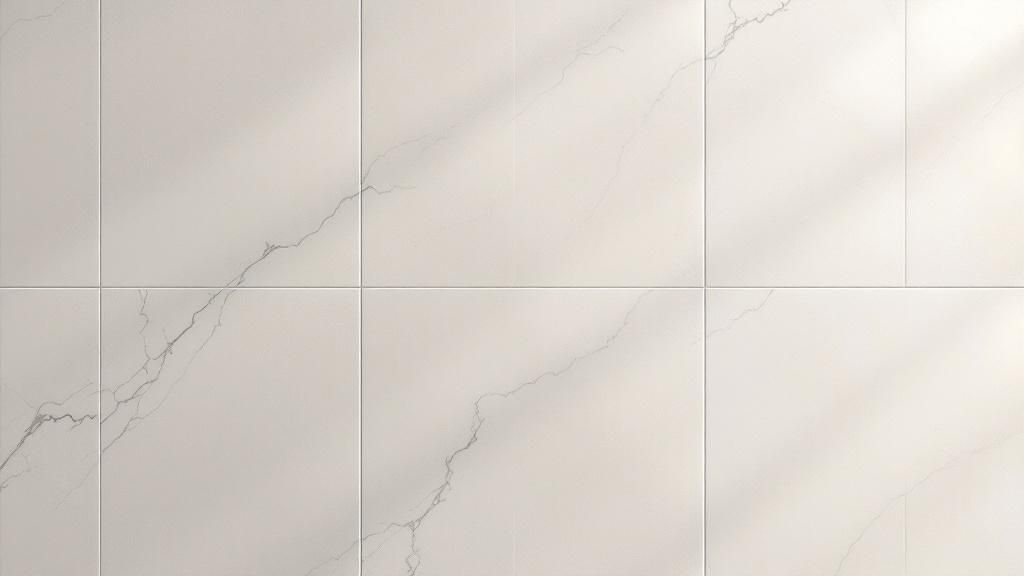
You’ve sorted through materials, picked a style, and have a layout in mind. Now it's time to lock in your decision. This is the last check to make sure there are no surprises.
Getting these final steps right will help your bathroom remodel in Palo Alto or Monterey turn out exactly as you imagined. This is a pro tip for learning how to choose bathroom tile.
First, always get physical samples before ordering. A tile’s color and texture can look different in your home's lighting compared to the showroom. Place samples on the floor and wall to see how they look at different times of the day.
Plan for Overage and Installation
Once you love a sample, it's time to figure out how much to order. Here’s a key tip: always add 10-15% extra tile to your total measurement.
This "overage" is your safety net. It covers pieces that might break or be mis-cut during installation. It also leaves you with extra tiles for any future repairs.
Finally, talk with your installer before they start. A clear conversation can make all the difference.
Key Questions to Ask Your Installer:
- What is the plan for the layout?
- Which grout type and color will we use?
- How will you waterproof the shower?
Talking through these details helps ensure a high-quality finish you'll enjoy for years.
Frequently Asked Questions
1. What's the best tile for a shower floor?
Porcelain mosaic tiles are a top choice for shower floors. Their small size means more grout lines, which gives your feet better grip and reduces slipping. Porcelain also absorbs very little water, making it a safe and durable option.
2. Can I use large format tiles in a small bathroom?
Yes, absolutely! Using large tiles in a small bathroom is a great design trick. Fewer grout lines create a clean, seamless look that can make the space feel much bigger and more open.
3. Is natural stone a good choice for bathrooms?
Natural stone like marble offers a beautiful, unique look but requires more care than porcelain. Because it is porous, it must be sealed regularly to protect against water damage. It's a great choice if you love the look and are ready for the upkeep.
4. How much extra tile should I order?
We always recommend ordering 10-15% extra tile. This buffer covers cuts, waste, and any breakage during installation. It also ensures you have matching tiles for future repairs.
5. What's the real difference between porcelain and ceramic tile?
The main difference is the water absorption rate. Porcelain is made from a denser clay and fired at higher temperatures, making it less porous and more durable than ceramic. This is why porcelain is the preferred choice for wet areas like bathroom floors and showers.
Ready to find the perfect tile for your bathroom? The experts at Carmel Stone Imports are here to help you navigate our extensive collection of natural stone and porcelain. Visit one of our showrooms in Palo Alto, Carmel, or Sand City, or contact our team for a personalized consultation today.