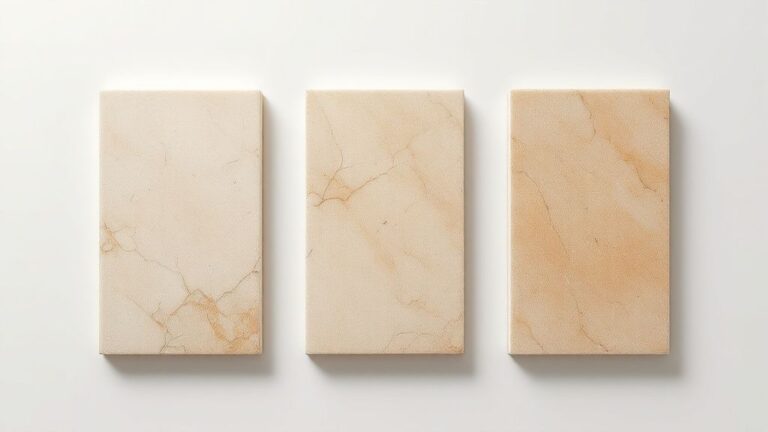
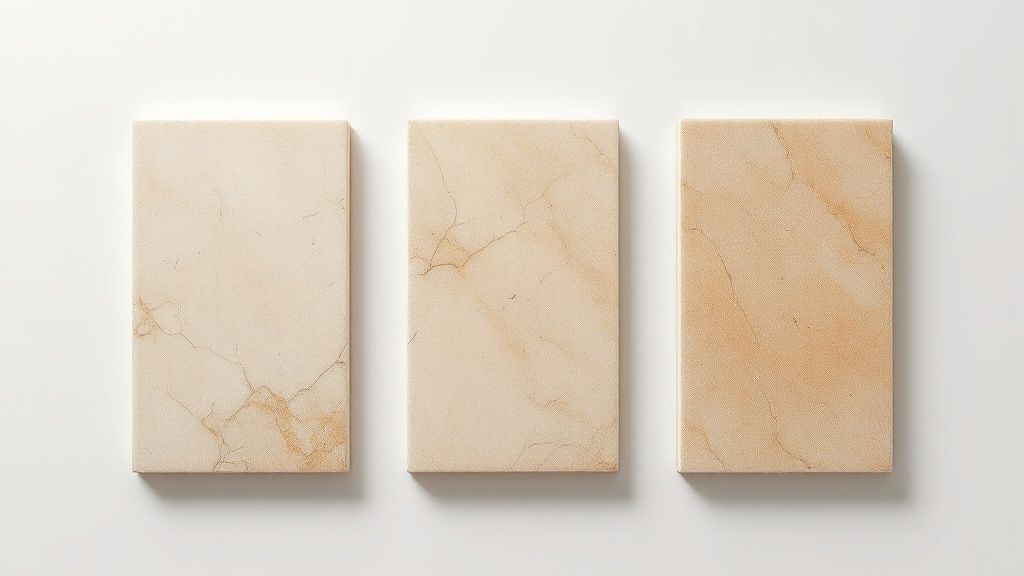
So, what is travertine tile? Think of a natural stone formed in the earth’s hot springs. Over thousands of years, mineral-rich water deposits layers of calcium carbonate. This process gives travertine its special porous texture and warm, earthy colors that look great in both classic and modern homes.
This guide explains what travertine tile is, how it's made, and why it's a great choice for projects in the Bay Area.
The Timeless Appeal of Travertine
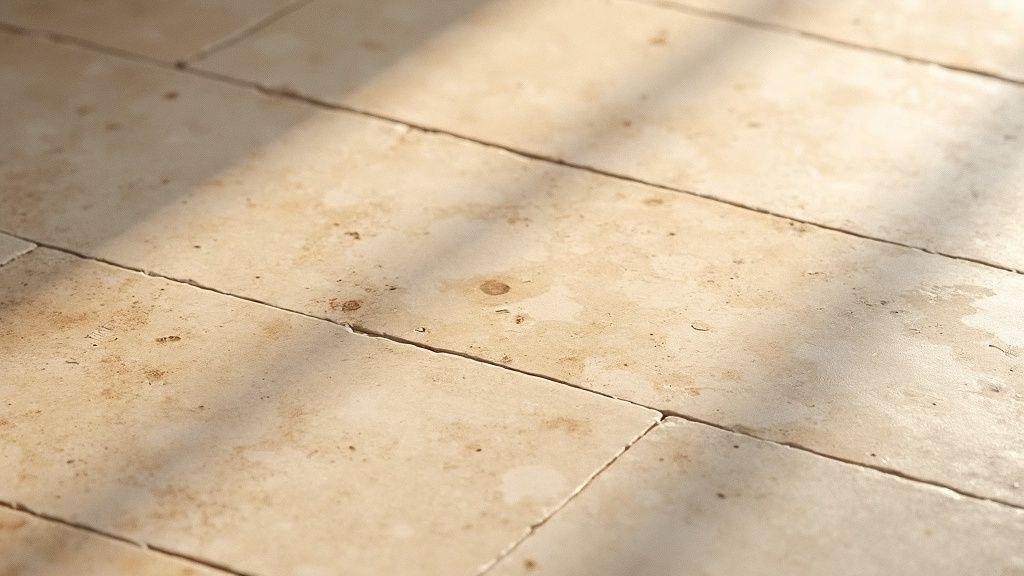
Travertine is more than just a building material; it's a piece of history. It forms when minerals quickly settle out of water. Its most unique feature is the small pits and holes left by trapped gas bubbles. This means no two tiles are ever the same, giving every surface a unique, natural feel.
For centuries, this strong and beautiful stone has been a favorite in building. It has been used in everything from ancient Roman buildings to modern homes in Palo Alto and Monterey. Its natural warmth and simple elegance make it a top choice for those wanting to bring a touch of nature inside.
A Quick Look at Travertine
Here’s a simple table that shows what defines travertine tile. It highlights its main features, making it easy to see why this stone is a classic choice.
| Attribute | Description |
|---|---|
| Material Type | A type of limestone. |
| Origin | Formed in mineral hot springs. |
| Key Feature | Naturally porous with pits and holes. |
| Color Palette | Usually warm, earthy colors like cream, beige, tan, and rust. |
| Common Finishes | Honed, polished, brushed, and tumbled. |
| Durability | Strong and long-lasting, good for many uses. |
This summary captures the essence of travertine—a beautiful and durable stone with a story in its texture.
Why It's More Popular Than Ever
Travertine's popularity is growing. According to a Houzz survey, natural stone remains a popular choice for homeowners aiming for a high-end look. This demand is driven by a desire for authentic materials in both homes and businesses.
Travertine’s defining features are its warm colors, unique porous texture, and historical importance. Every tile tells a story.
Its ability to mix rustic charm with modern style makes it a great fit for many uses. To see how versatile it is, explore our guide on travertine design ideas. Whether your style is coastal or modern, this stone works well.
How Nature Crafts This Unique Stone
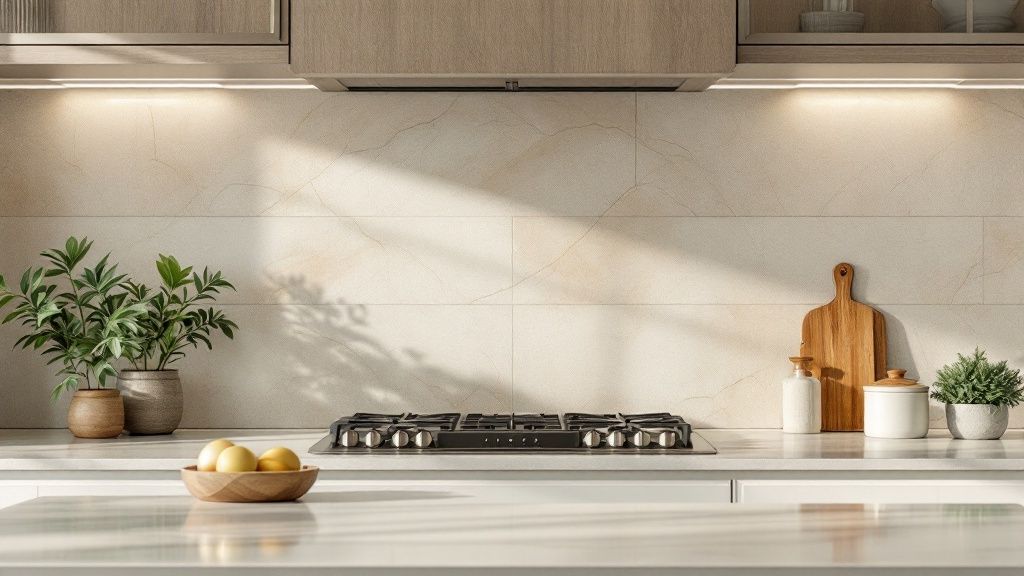
Every piece of travertine has a story that starts thousands of years ago. It begins in mineral-rich hot springs and geysers. This is the simple answer to what is travertine tile and where its unique character comes from.
Imagine superheated water bubbling up from underground. This water is full of minerals, mostly calcium carbonate. As the water cools or evaporates, it leaves these minerals behind to form solid layers.
This natural process slowly builds up sediment, forming a dense stone over many years. The escape of carbon dioxide gas during this time is what gives travertine its special look.
The Story Behind the Pits and Holes
As the mineral layers form, tiny gas bubbles get trapped inside the stone. When the stone hardens and is cut into tiles, these trapped pockets become the pits and holes that define travertine's surface.
This natural process makes sure that no two tiles are exactly alike. Each piece has a unique pattern of color, veining, and texture. This history is what gives travertine its timeless, earthy appeal, connecting modern Bay Area homes to an ancient process.
The natural holes and pits are not flaws. They are the signature of travertine, showing how it was formed in hot springs. This unique texture adds depth that cannot be copied.
From Ancient Rome to Modern Monterey Homes
The same stone used to build famous structures in ancient Rome is now popular for creating elegant spaces in California homes. Its long history shows its strength and lasting beauty.
The natural formation process gives travertine a warmth that fits the relaxed lifestyle from Monterey to Palo Alto. Its earthy colors and soft texture bring a piece of nature into your home. This creates a connection to the environment that feels both luxurious and comfortable.
Finding the Perfect Travertine Finish
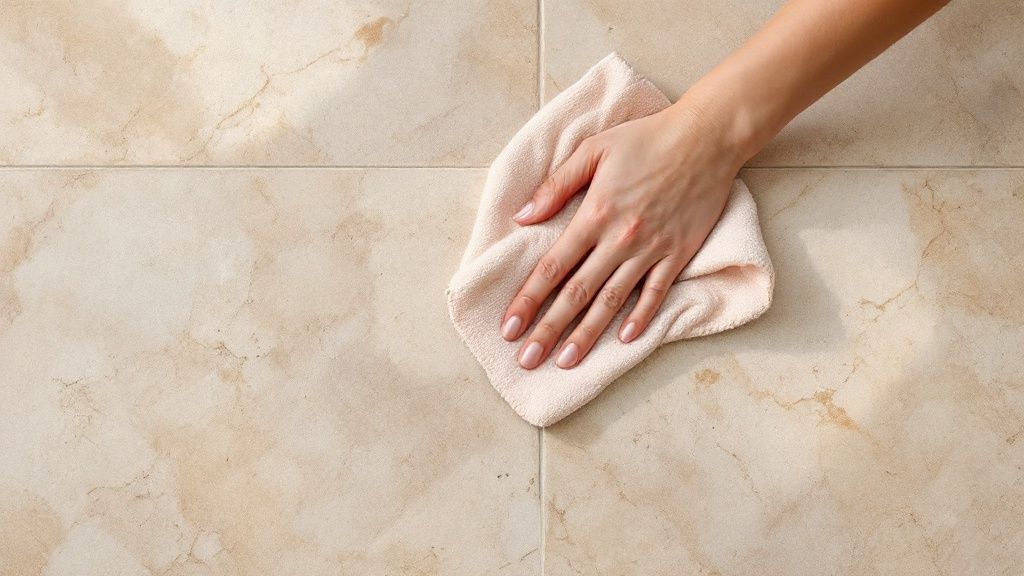
The finish on a travertine tile gives it its personality. It can make the same stone look either rustic or sleek. Choosing the right finish is about matching the stone to your design style.
Each finish changes the tile's look, texture, and how it reflects light. Whether you are designing a modern home in Palo Alto or a coastal retreat in Monterey, the surface finish helps complete the look.
Popular Finishes for Every Style
Let's look at the most common finishes. Each one has a different feel, and knowing the difference will help you find the perfect match.
-
Polished Travertine: This finish is glossy and reflective. It makes the stone’s natural colors and patterns stand out. It’s great for adding elegance to indoor spaces like entryways or accent walls.
-
Honed Travertine: This finish gives a smooth, matte look with very little shine. It creates a more modern feel and is good at hiding small scratches, making it a popular and practical choice.
-
Tumbled Travertine: If you want a rustic, aged look, this is the finish for you. The tiles are tumbled with gravel to soften their edges and create a weathered, textured surface. The result is a stone that feels warm and full of character.
Brushed and Chiseled Edge Finishes
Besides the top three, there are other finishes that add more texture. A brushed finish, for example, uses wire brushes to give the stone a slightly rough, matte surface. It gives the tile a unique feel that is subtle but interesting.
A chiseled edge is another option that can be added to other finishes. The tile edges are chipped by hand to create an antique, handcrafted look. It's a great way to get an old-world style and pairs well with a tumbled or brushed surface for a complete rustic look.
The Defining Characteristics of Travertine
What makes travertine special compared to other natural stones? Its unique features make it a favorite for projects from the Bay Area to the Monterey Peninsula. These traits define its look, feel, and performance over time.
The first thing people notice is its uniquely porous texture. Those signature pits and holes are a beautiful reminder of how the stone was formed. This gives it a depth and character that man-made materials can't match.
This graphic gives you a quick snapshot of travertine's key properties, including its porosity and hardness.
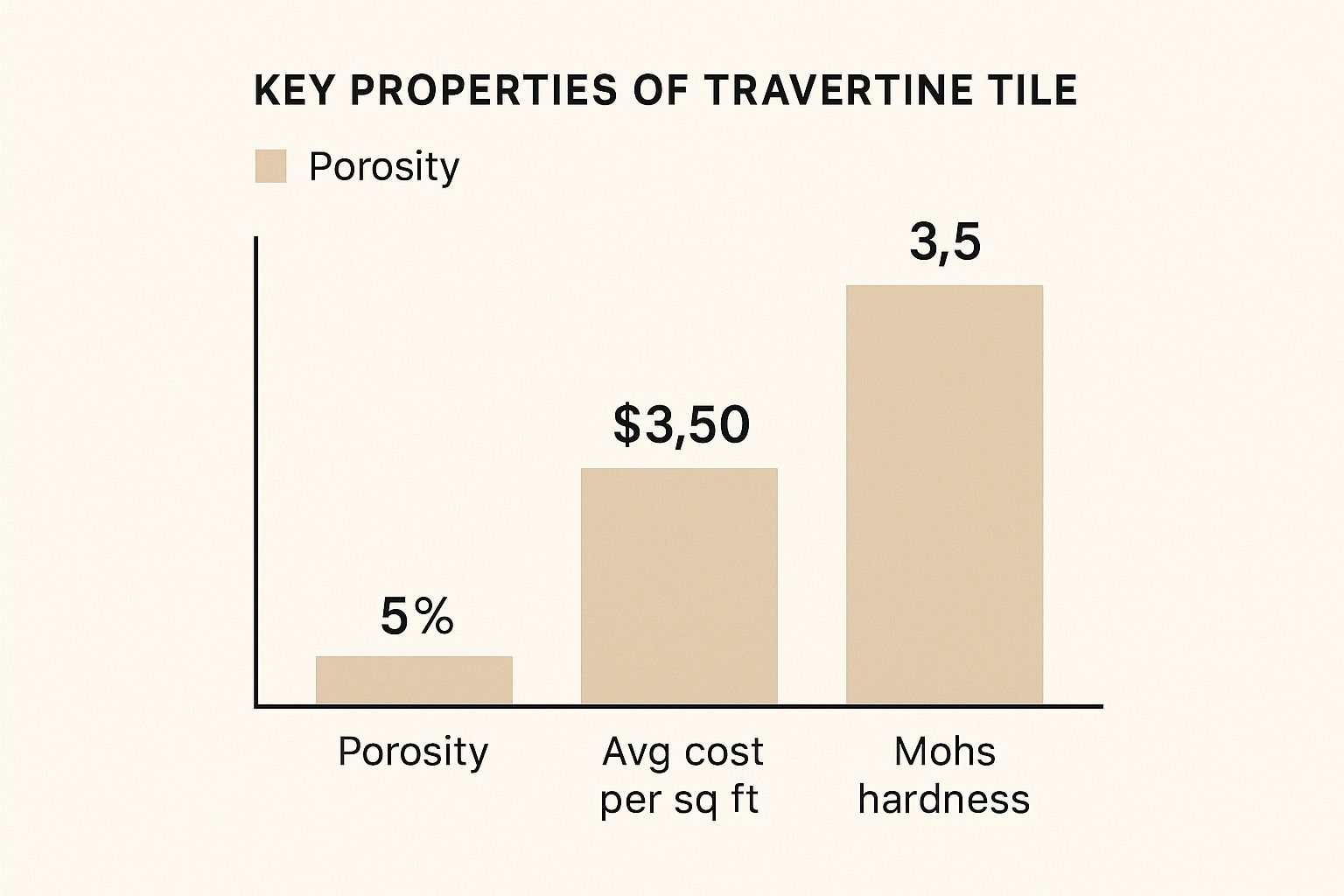
As you can see, travertine has a good balance of texture, medium hardness, and a reasonable price point, which makes it a versatile choice.
Warmth and Durability
Travertine is known for its warm, inviting colors. It comes in a range of earthy tones like soft creams, warm tans, rich golds, and even light rusts. This gentle color variation makes any surface feel natural and welcoming.
But it’s not just about looks; travertine is also very durable. While it’s softer than granite, it’s strong enough to have been used in buildings that have stood for centuries, like the Roman Colosseum. This mix of beauty and strength makes it popular today.
To see how it compares to other materials, it helps to look at them side-by-side. Our guide on the different types of natural stone offers a broader look.
Comparing Travertine to Other Natural Stones
Travertine is related to stones like marble and limestone, but they each have their own style. Think of them as cousins—related, but different.
Here's a quick table to help you see the differences:
| Feature | Travertine | Marble | Limestone |
|---|---|---|---|
| Appearance | Earthy, warm tones with visible pores. | Elegant, cool tones with dramatic veining. | Softer, often uniform colors with subtle patterns. |
| Feel | Textured and fibrous, from rustic to smooth. | Sleek and cool to the touch, often polished. | Fine-grained and smooth, with a matte feel. |
| Common Uses | Flooring, patios, pool decks, and wall cladding. | Countertops, flooring, and statement walls. | Architectural features, flooring, and walls. |
Choosing between them depends on the specific look and feel you want for your space. Each stone tells a different story.
Inspiring Uses for Travertine in Modern Homes
Travertine's beauty really shows when you use it for more than just floors. Its warm texture can improve your home in many creative ways. It’s a perfect match for the California indoor-outdoor lifestyle, creating spaces that feel both elegant and inviting.
Imagine a beautiful travertine feature wall adding depth to a living room. Or, picture a classic fireplace surround becoming a timeless centerpiece. This flexibility is why it's a favorite among designers.
Beyond the Floor
When you think creatively, you see how much potential this stone has. Travertine can make almost any surface a design statement.
Here are a few ideas to get you started:
-
Elegant Bathroom Walls: Travertine in a bathroom creates a spa-like feel. It's great for shower walls or as a backsplash behind a vanity. For more inspiration, check out our guide to beautiful travertine bathroom ideas.
-
Inviting Outdoor Spaces: Because it's durable, travertine is a natural choice for patios, pool decks, and garden paths. A honed or tumbled finish gives it some grip, and it stays relatively cool in the California sun—perfect for a Monterey backyard.
-
Architectural Details: Use travertine to cover columns, design a custom range hood in the kitchen, or create unique shelving. These smaller uses add texture and luxury that make a big impact.
If you are planning a new home, looking through custom home design ideas can spark ideas for using natural stone. Travertine adds character without overwhelming a space, which is why designers love it for creating warm, sophisticated homes.
Simple Care Tips for Travertine Surfaces
Taking care of your travertine tile is easier than you might think. Since it is a naturally porous stone, the key to keeping it looking great is gentle, regular care. This simple approach protects your investment and keeps it beautiful.
The most important rule is to avoid harsh chemicals. Acidic or abrasive products like vinegar or lemon juice can damage the stone's surface. It is best to use a pH-neutral, stone-safe cleaner with warm water for regular cleaning.
Dos and Don'ts for Travertine Care
Most of travertine care is about preventing problems before they start. Wiping up spills quickly and using coasters will help keep your surfaces looking new. For more tips, read our guide on how to clean travertine countertops.
Here are a few simple habits to follow:
- Do wipe up spills right away, especially acidic ones like wine, coffee, or juice.
- Do use coasters under glasses and placemats under dishes to prevent scratches and stains.
- Don't use abrasive scouring pads or powders, as they will scratch the surface.
- Don't drag heavy furniture across travertine floors without using protective pads.
By following these easy steps, you can maintain the natural beauty of your travertine for years to come.
Frequently Asked Questions
Still have a few questions? That's perfectly normal. We've put together answers to some of the questions we hear most often from homeowners and designers in the Bay Area.
Is travertine a durable choice for flooring?
Absolutely. Travertine has been used in buildings for thousands of years. While it's softer than granite, its durability makes it a great choice for home flooring, especially in areas with normal foot traffic.
Can travertine be used outdoors in the Monterey climate?
Yes, travertine is an excellent choice for outdoor use in coastal California. It stays cooler to the touch than many other materials and is durable enough for patios, pool decks, and walkways. Tumbled and honed finishes offer better slip resistance.
How does travertine differ from marble?
While both are natural stones, travertine has a warm, earthy look with a porous texture. Marble usually has cooler colors, like white and gray, with dramatic veining for a more formal appearance.
Is travertine tile slippery when wet?
The finish you choose matters. A polished finish can be slippery. However, honed, tumbled, or brushed finishes have more texture and grip, making them a safer choice for wet areas like bathrooms and pool decks.
How should I clean travertine surfaces?
Proper care is simple. Always use a pH-neutral cleaner made for natural stone. Avoid harsh, acidic chemicals like vinegar. Wiping up spills quickly also helps prevent stains. For more details, learn about avoiding damage from acid cleaning tiles.
Ready to explore the timeless beauty of travertine for your next project? The experts at Carmel Stone Imports are here to help you find the perfect stone. Visit our showrooms in Palo Alto, Carmel, or Sand City to see our collection.