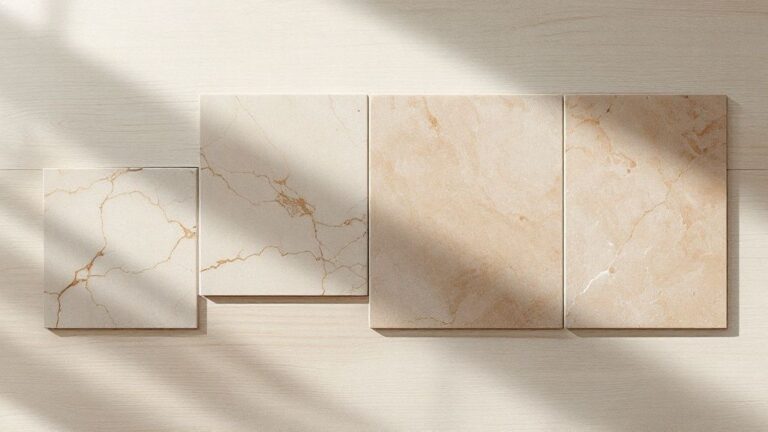

So, what is travertine tile? It is a type of natural stone that people love for its warm, earthy look. This stone brings a timeless feel to any space, making it a popular choice for many homes.
The Timeless Appeal of Travertine
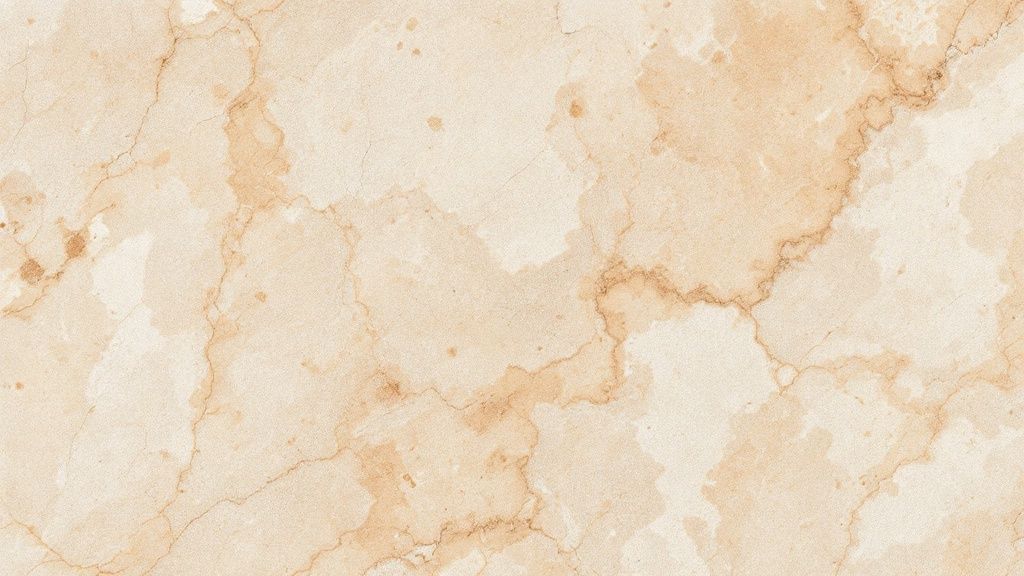
Travertine forms in a special way. It is made when minerals separate from water in hot springs or limestone caves. This process creates the small pits and patterns that make each tile unique.
This stone has a long history. It was used to build famous landmarks like the Roman Colosseum. This shows that travertine is not just a trend but a classic material that lasts. You can explore industry reports on travertine tile to learn more about its history and use today.
Travertine’s soft, warm colors and textured surface make it a perfect fit for California's style. It looks great in rustic Bay Area homes and elegant Monterey estates.
Travertine Tile At a Glance
Here is a simple breakdown of travertine's main features. This table sums up what makes this stone special.
| Characteristic | Description |
|---|---|
| Material Type | A form of natural limestone, which is a sedimentary rock. |
| Formation | Created by minerals settling out of water from hot springs. |
| Key Feature | Its naturally porous and pitted texture. |
| Color Palette | Usually has warm, earthy colors like cream, beige, gold, and brown. |
| Common Finishes | Honed, polished, tumbled, and brushed. |
| Primary Uses | Flooring, wall covering, backsplashes, and outdoor paving. |
These features give travertine its unique personality. It can be used in many different ways in home design.
Key Characteristics Up Close
Let's look at those features more closely to understand this stone.
- Natural Origin: Travertine is a real stone from the earth, which gives it an organic feel that man-made materials cannot copy.
- Unique Texture: Its porous surface has pits and lines, adding depth and visual interest wherever it's used.
- Warm Tones: Travertine's colors are warm and inviting, often in shades of ivory, beige, gold, and rich walnut.
Exploring the Unique Character of Travertine
The magic of travertine is that no two tiles are exactly alike. It brings a rich, warm color palette that feels right at home in California. Colors range from soft ivories to deep walnut browns.
Each piece tells a story through its pits and lines, which formed over thousands of years. These marks come from its creation in mineral springs. This gives the stone a sense of history and an earthy feel that factory-made materials can't match.
How Finishes Transform Travertine's Look
The final look of travertine depends on its surface finish. Each finish brings out a different part of the stone's personality, changing its color and feel. This makes it easy to find the right travertine for any design.
- Honed: This finish is smooth and matte, like velvet. It shows the stone's natural color without a glossy shine, creating a relaxed look.
- Polished: A polished finish is shiny and reflective. It makes the colors look rich and bright for a more formal, high-end style.
- Brushed: A wire brush is used to create a more textured, rustic feel. This finish highlights the natural pits for an antique look.
- Tumbled: Tumbled travertine has a weathered look with soft edges. It is perfect for creating a classic, old-world charm.
This infographic gives a good visual summary of travertine's features, from its finishes to its common uses.
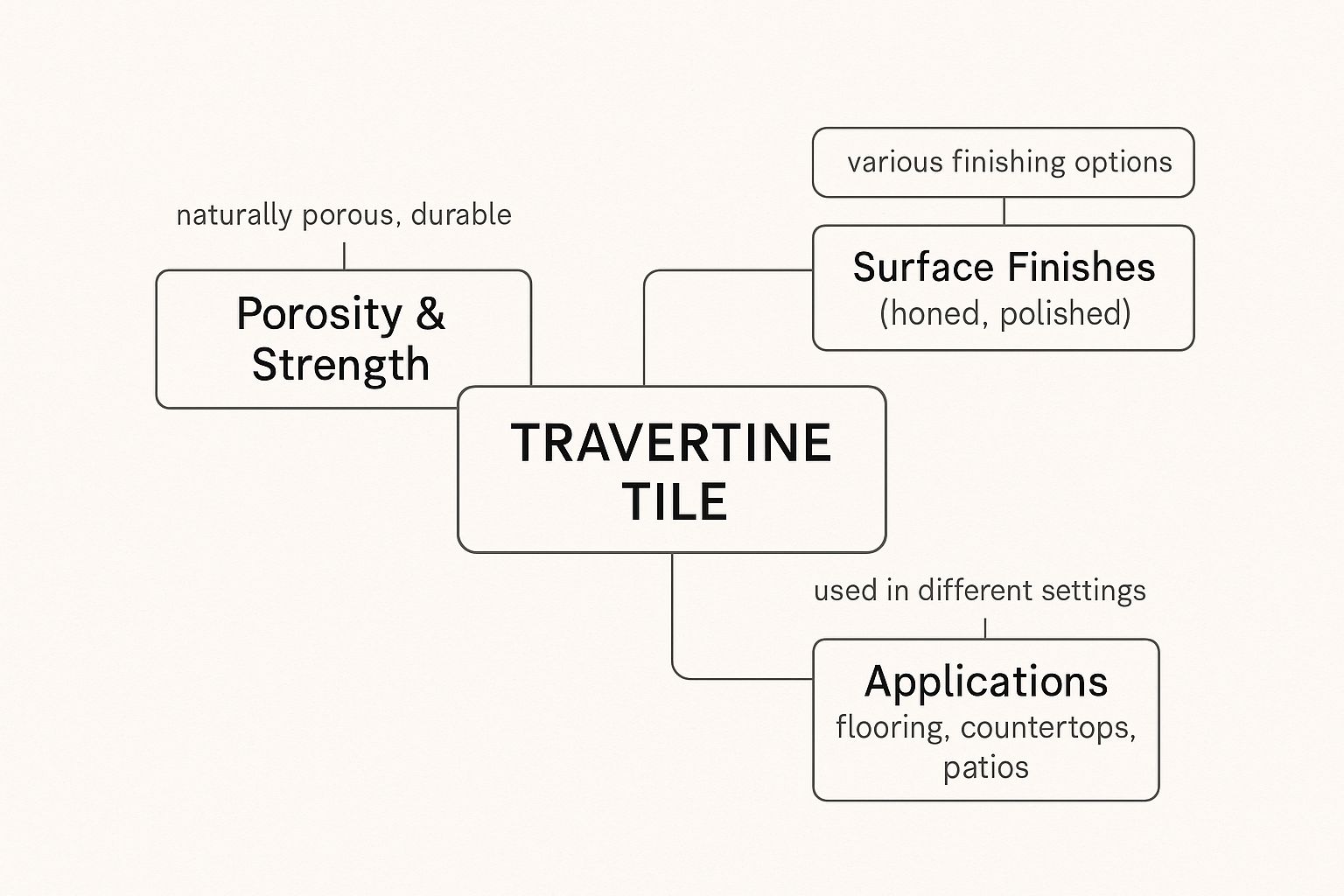
Choosing the right finish is key for matching the stone to its purpose. For more ideas, check out these timeless travertine bathroom ideas for your next project.
How to Use Travertine Tile in Your Home
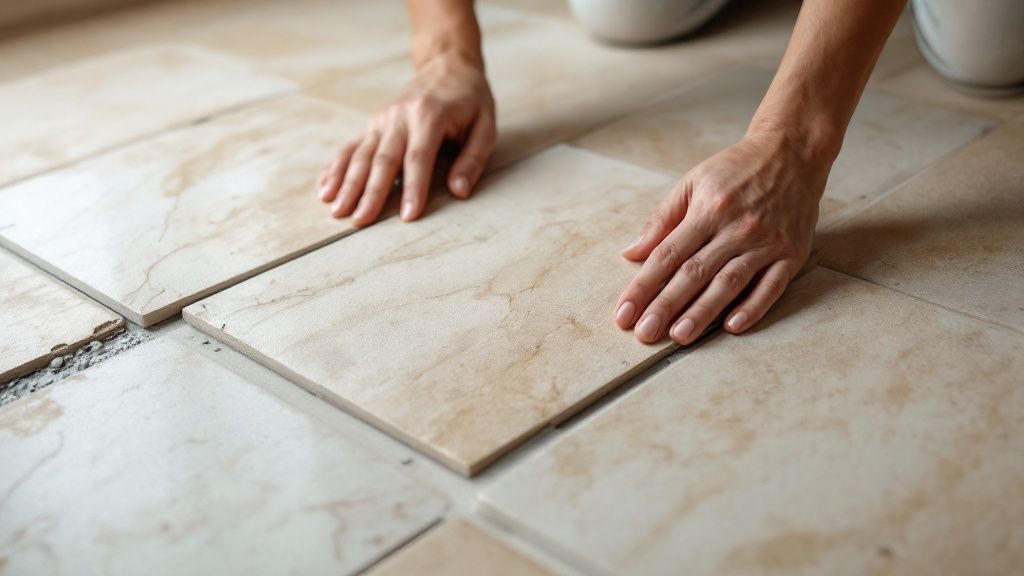
Travertine's versatility is why so many people love it. It is a great choice for almost any room. Its natural texture and warm tones create an inviting feel.
This makes it perfect for flooring in entryways, living rooms, and kitchens. It has a subtle elegance and feels nice to walk on.
But travertine is not just for floors. It also looks great on walls or as a kitchen backsplash. It can turn a simple bathroom into a spa-like retreat, adding depth and character.
Creating Seamless Indoor-Outdoor Living
One of the best ways to use travertine in California is to connect indoor and outdoor spaces. It helps create a smooth flow from your living room to your patio. This is a popular feature in Bay Area and Monterey homes.
It is a great choice for our sunny weather because it stays cooler than many other paving materials. This makes it a good choice for outdoor areas where you might walk barefoot.
Its ability to stay comfortable in the sun makes it ideal for:
- Patios and Terraces: Extend your living space outdoors with a surface that feels both natural and stylish.
- Pool Decks: A tumbled or brushed finish is best here. It provides good slip resistance in wet areas, combining safety and style.
- Walkways and Garden Paths: Create beautiful, durable stone paths that look like they belong in the garden.
The right finish is very important for outdoor use. A tumbled or brushed travertine is safer and adds a timeless look that fits coastal and Mediterranean designs.
Using the same travertine inside and out makes your property feel larger and more unified. This works well in modern Palo Alto homes and coastal Monterey estates. Even though travertine is durable, proper care is important. You can learn how to clean travertine countertops to protect your stone.
The Real Pros and Cons of Travertine
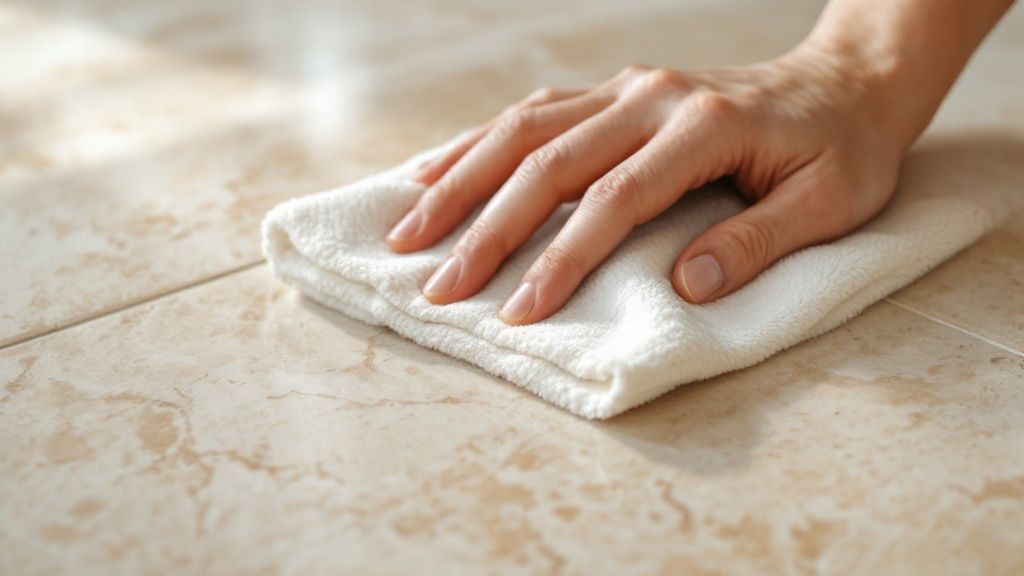
Choosing the right stone means looking at the whole picture. Travertine tile offers a beautiful look and good durability. But like any natural material, it has its own needs.
The stone's organic look and warm colors bring a sense of calm to any room. This visual appeal is one of its biggest benefits. It creates an elegant foundation that does not go out of style.
The Clear Advantages of Travertine
One of travertine's best benefits is its classic, lasting look. Its soft colors and unique patterns work with many designs. It looks great in modern homes in Palo Alto and classic villas in Monterey.
- Timeless Beauty: Its natural patterns and warm colors give it an elegance that outlasts trends.
- Proven Durability: People have built with this stone for centuries. Travertine is tough and can handle daily life in a busy home.
- Eco-Friendly Choice: As a natural stone from the earth, travertine is a sustainable building material.
Its growing popularity is clear in recent travertine tile market research.
Important Care Considerations
No material is perfect, and travertine needs some attention. The main thing to know is that it’s naturally porous.
Because it has tiny pits, travertine can absorb liquids if it’s not sealed. This means spills like red wine or oil could cause stains.
This natural softness also means it can scratch more easily than very hard stones like granite. But these issues are easy to manage with simple, routine care. Proper care will keep your stone beautiful for many years.
Keeping Your Travertine Looking Its Best
Keeping travertine beautiful is surprisingly easy. With the right care, its natural elegance will last for decades. This protects your investment and keeps your home looking great.
The single most important step is sealing the stone.
Because travertine is porous, a quality sealer is a must. It acts like a shield, soaking into the stone to stop spills from becoming stains. This is very important in kitchens, bathrooms, and outdoor areas.
Daily Care and Spill Management
For daily cleaning, simple is best. A soft broom or vacuum with a soft brush attachment is great for dust. This will prevent scratches on the surface.
When you need to mop, avoid harsh chemicals. Cleaners with acid, like vinegar, can damage the stone over time. Instead, use a pH-neutral cleaner made for natural stone.
For outdoor travertine, the same gentle cleaning rule applies. It can be helpful to learn about gentle soft washing techniques, which clean sensitive surfaces safely.
Spills happen, but stains don't have to. The key is to blot spills right away with a soft cloth. Do not wipe, as this can spread the liquid and push it deeper into the stone.
For homeowners in California, choosing a cleaner that works with our local water can help. We made a list of the 12 best travertine floor cleaners for California homes to help you. With the right products and a simple routine, your travertine will stay stunning for years.
Why Travertine Is Still a Top Design Choice
While design trends change, travertine remains popular. Its unique origin, classic beauty, and versatility make it a favorite for designers and homeowners in California.
From modern homes in the Bay Area to rustic estates in Monterey, travertine's warm, earthy texture just works. It fits today's desire for natural materials that feel both grounded and luxurious.
The numbers prove its popularity. The global travertine market was valued at $1.2 billion in 2024 and is expected to reach $1.8 billion by 2033. According to market projections, this shows that choosing travertine adds real, long-term value to a property.
By connecting indoor and outdoor spaces, travertine creates a sense of harmony. This is a key feature of stylish California living. It’s more than just a stone; it’s a part of timeless design.
Whether for floors, walls, or patios, travertine elevates any project. Look at our collection and explore different travertine design ideas to see how this stone can transform your space.
Frequently Asked Questions
Thinking about travertine for your home? It's a popular stone, but it's common to have questions. Here are answers to what we hear most often.
Is travertine durable enough for a busy kitchen floor?
Yes, travertine is a tough natural stone that holds up well in high-traffic areas like kitchens. The key is to make sure it is properly sealed. A good sealer protects it from spills, and it should be resealed every few years to keep it looking great.
What is the difference between travertine and marble?
While both are natural stones, they have different looks. Travertine has a porous, textured surface with warm, earthy colors perfect for a rustic feel. Marble is known for its smooth, polished surface and cool, dramatic veins that create an elegant look.
Can I use travertine tile for an outdoor patio?
Absolutely! Travertine is a great choice for outdoor spaces in California because it stays cool in the sun. A tumbled or brushed finish provides good slip resistance, making it a safe and stylish option for patios and pool decks.
How porous is travertine?
Travertine is naturally porous because of how it is formed. However, this is easily managed by applying a quality stone sealer. The sealer fills the tiny pores and creates a protective barrier against moisture and stains.
Does travertine come in colors other than beige?
While travertine is famous for its classic creams and tans, its color range is quite broad. At Carmel Stone Imports, we offer beautiful variations like silver, gray, gold, and even deep walnut. It is a versatile stone that can fit almost any design style.
To see the variety of this beautiful stone, please browse our full range of travertine tile options.
Ready to see the timeless beauty of travertine for yourself? The design experts at Carmel Stone Imports are here to help you find the perfect stone for your project. Visit one of our showrooms in Carmel, Sand City, or Palo Alto today.