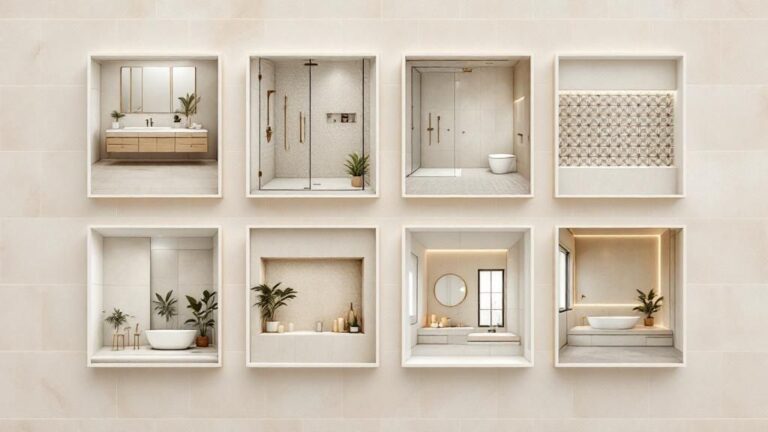

Travertine, with its warm, earthy tones and distinctive natural texture, offers a timeless foundation for luxurious bathroom design. This versatile sedimentary stone bridges the gap between classic elegance and contemporary minimalism, making it a premier choice for discerning homeowners and designers in California. From the coastal-inspired homes of Monterey to the modern estates in Palo Alto, travertine brings an organic sophistication that feels both grounded and refined. This guide explores eight actionable travertine bathroom ideas that can elevate your space from simply functional to a true personal sanctuary.
We will explore distinct applications, detailing how to use this beautiful stone for everything from dramatic accent walls and seamless shower surrounds to custom vanity tops and intricate mosaic patterns. You will discover practical insights on mixing finishes, integrating radiant heat, and crafting bespoke details like niches. Before diving in, consider these foundational steps to transform your bathroom into a spa to set the stage for a truly restorative environment.
1. Travertine Accent Wall
One of the most impactful travertine bathroom ideas is to create a stunning accent wall. This approach dedicates a single wall to travertine tile, transforming it into a compelling focal point that adds texture and warmth without overwhelming the space. An accent wall draws the eye, establishing a clear design anchor for the rest of the bathroom.
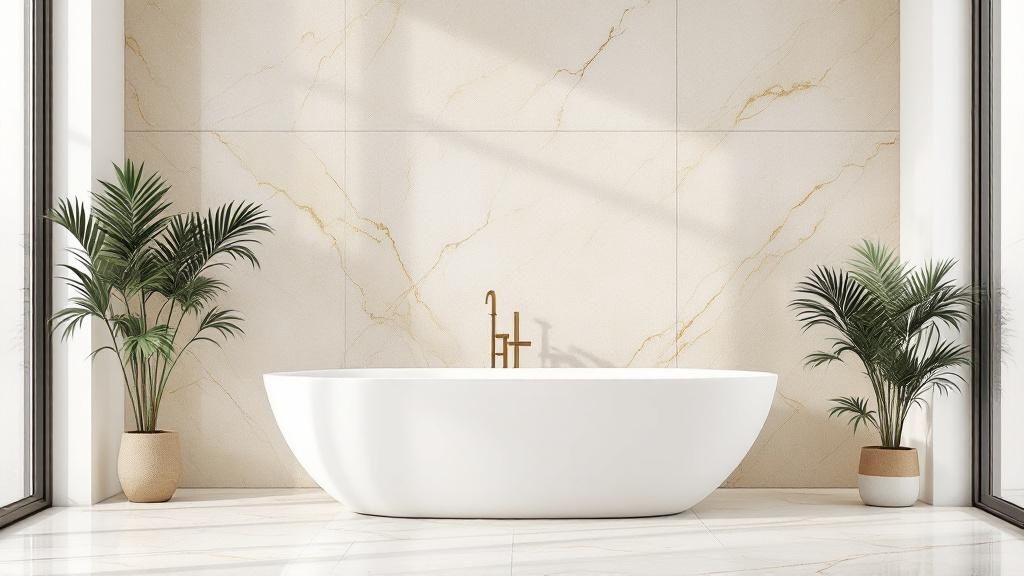
This design is highly versatile. It is often used behind a freestanding bathtub to create a spa-like retreat or as a full-height backsplash behind the vanity to elevate a functional area into a design statement. In a walk-in shower, a travertine accent wall can define the space and introduce a natural, organic element.
Implementation Tips
To execute this idea successfully, consider these practical details:
- Choose the Right Finish: For wet areas like showers, select a filled and honed travertine. The filled pores create a smoother surface that is easier to clean. For a more rustic or slip-resistant feature, a tumbled finish offers softened edges and a tactile quality.
- Sealing is Non-Negotiable: Travertine is porous. Apply a high-quality penetrating sealer before grouting to prevent "grout haze" and again after installation is complete to protect against moisture and stains.
- Strategic Pairing: Enhance travertine's warmth by pairing it with complementary materials. Think warm-toned woods like walnut for vanities, oil-rubbed bronze or matte black fixtures, and creamy off-white paint—a cohesive look popular in many California coastal homes.
2. Travertine Shower Surrounds
Enveloping a shower enclosure entirely in travertine creates an immersive, spa-like sanctuary. This method uses travertine tiles or large-format slabs to build a seamless space, turning a daily routine into a luxurious ritual. The stone's natural warmth brings a calming energy reminiscent of ancient Roman baths or a high-end wellness retreat in the Monterey Bay area.
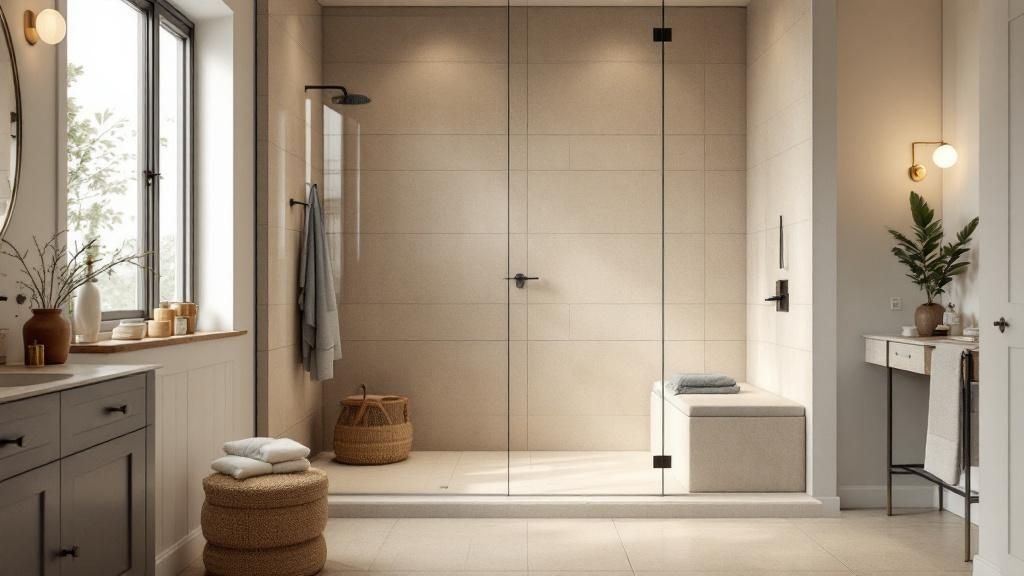
This design is particularly effective for a master bathroom that feels like a private escape. Floor-to-ceiling travertine can make the shower feel larger and more integrated with the rest of the bathroom. Adding features like built-in benches or recessed niches further enhances both functionality and opulence.
Implementation Tips
To achieve a beautiful and durable travertine shower, focus on these key details:
- Prioritize a Non-Slip Finish: For the shower floor, safety is paramount. Choose a tumbled or honed finish over a polished one, as their matte texture provides better grip when wet.
- Invest in Proper Waterproofing: A flawless installation requires a robust waterproofing membrane behind the stone. Systems like Schluter-KERDI are essential to prevent water from penetrating the substrate. While designing your travertine shower, remember the importance of mastering shower plumbing for optimal longevity.
- Seal Diligently and Regularly: Travertine is porous and must be sealed. Apply a high-quality penetrating sealer to all surfaces before and after grouting to protect the stone from water absorption, soap scum, and staining.
3. Travertine Vanity Tops
Using travertine for a bathroom vanity top is an elegant way to infuse the space with Old-World charm and natural beauty. It serves as a durable, functional surface that doubles as a sophisticated design element, offering a warm and distinctive alternative to common materials like granite or quartz.
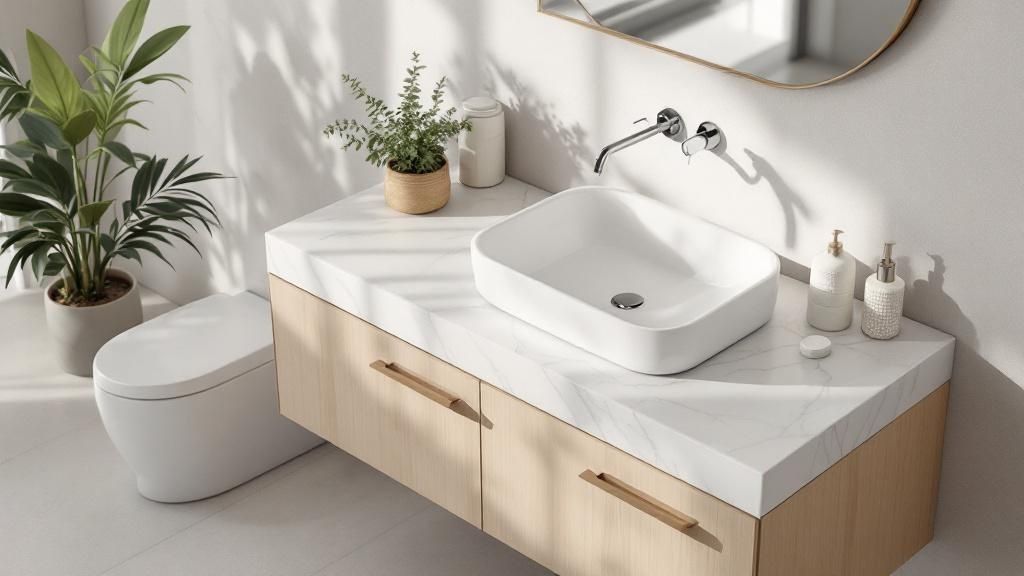
This application is exceptionally versatile. In a Tuscany-inspired bathroom, a travertine top with a chiseled edge pairs beautifully with a vessel sink. For a modern Bay Area aesthetic, a honed travertine slab with clean, straight edges provides an organic warmth that softens sleek lines.
Implementation Tips
To ensure your travertine vanity top is both beautiful and long-lasting, follow these key recommendations:
- Choose a Filled Finish: For a bathroom countertop, a filled and honed travertine is ideal. The resin filling creates a smooth, non-porous surface that prevents grime from accumulating, making it easier to clean.
- Seal Diligently and Regularly: Sealing is absolutely essential for protecting a travertine vanity from water, soap, and cosmetic stains. Reapply a high-quality, penetrating sealer every 6 to 12 months.
- Practice Mindful Daily Use: Prevent damage by avoiding direct contact with acidic substances like citrus or harsh cleaners, which can cause etching. Always use coasters and clean up spills immediately with a pH-neutral cleaner.
4. Travertine Mosaic Patterns
For a truly artistic touch, consider incorporating intricate travertine mosaic patterns. This technique uses small pieces of travertine to create decorative designs like herringbone, basketweave, or hexagonal layouts. Mosaics introduce a dynamic layer of visual interest and sophisticated detail to any bathroom surface.
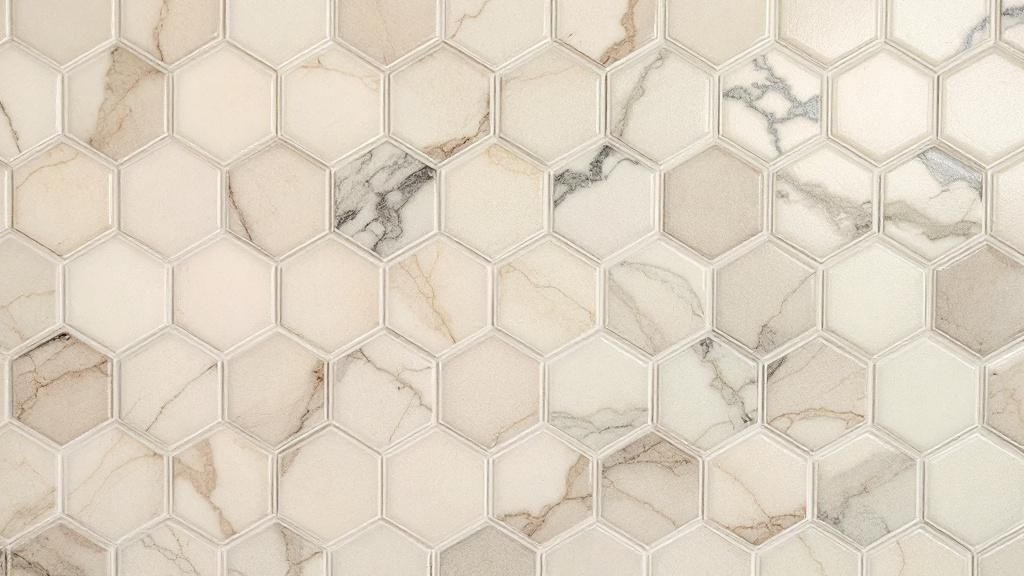
This approach is exceptionally versatile. A herringbone pattern creates a classic backsplash behind a vanity, while a hexagonal mosaic on a shower floor adds slip-resistant texture. For a more subtle statement, a basketweave pattern can be used as a decorative border. You can explore a variety of decorative mosaics and trims on carmelimports.com to see the range of possibilities.
Implementation Tips
To ensure your mosaic installation is both beautiful and durable, focus on these key details:
- Plan the Layout Meticulously: Before setting any tile, perform a dry layout of the mosaic sheets. This allows you to check pattern alignment and plan cuts around fixtures, ensuring a balanced, professional-looking result.
- Use the Right Grout: The grout itself becomes a design element. Consider using a high-performance epoxy grout, especially in wet areas, as it offers superior resistance to stains, mold, and mildew.
- Seal Everything Thoroughly: Just like larger tiles, travertine mosaics are porous and require sealing. It is critical to apply a penetrating sealer to both the stone and the grout lines after installation.
5. Travertine Bathtub Surrounds
Elevating a bathtub from a simple fixture to a luxurious centerpiece is one of the most transformative travertine bathroom ideas. Cladding the area around the tub with travertine tiles or slabs creates an elegant surround that invokes the atmosphere of a high-end spa.
This design is especially effective for built-in or drop-in tubs, where the travertine creates a seamless deck and apron. It is also used to build stately platforms for soaking tubs, sometimes with integrated steps. For a contemporary look, a travertine base for a freestanding tub can ground the fixture while maintaining an open feel.
Implementation Tips
To create a functional and beautiful bathtub surround, focus on these key details:
- Prioritize Safety and Comfort: Use tiles with a bullnose edge for any exposed corners or steps. This rounded, finished edge is safer, more comfortable, and provides a clean, professional look.
- Ensure Proper Drainage: When designing a tub deck, ensure it is slightly sloped away from the tub edge to prevent water from pooling.
- Select the Right Finish: For horizontal surfaces like the tub deck, a honed finish is ideal as it is smooth and easy to wipe clean. It offers a matte look that is less slippery than a polished finish.
- Consider Heated Stone: For the ultimate in luxury, especially in cooler climates like the Monterey Bay area, install a radiant heating system beneath the travertine surround. This feature turns cold stone into a warm, inviting surface.
6. Mixed Travertine Finishes
For a sophisticated and custom look, consider mixing different stone finishes. This advanced technique involves layering various travertine textures—such as polished, honed, and tumbled—within a single space. The result is a bathroom rich in tactile depth and visual intrigue.
This approach offers practical and aesthetic advantages. For instance, you can pair a glossy, polished travertine on the vanity countertop with a matte, honed finish on the walls. In the shower, a slip-resistant tumbled travertine on the floor can be beautifully contrasted with smooth, honed walls. To explore these combinations further, learn more about travertine design on carmelimports.com.
Implementation Tips
To successfully execute this nuanced look, focus on balance and thoughtful application:
- Limit Your Palette: To avoid a chaotic appearance, stick to a maximum of two or three different finishes. A common combination is using a rougher finish for floors (tumbled) and a smoother one for walls (honed).
- Plan Your Transitions: Pay close attention to where different finishes meet. Use clean architectural lines, like corners or changes in plane, as natural transition points.
- Consider Maintenance and Use: Assign finishes based on function. A polished finish is stunning but can be slippery, making it better for low-traffic areas. A honed or tumbled finish offers better slip resistance for shower floors and high-traffic zones.
7. Travertine Flooring with Radiant Heat
One of the most luxurious and practical travertine bathroom ideas is to install the flooring over a radiant heating system. This approach combines the timeless appeal of natural stone with the unparalleled comfort of a warm floor underfoot. Radiant heat gently warms the travertine from below, turning a naturally cool material into a source of cozy, ambient warmth.
This technology is a game-changer for master bathrooms, creating a spa-like atmosphere. The system works by embedding electric coils beneath the tile, which then transfer heat upward. Because travertine is an excellent thermal conductor, it retains and radiates heat effectively. Beyond travertine, it's beneficial to explore a wide array of flooring options to find the perfect match for your heated system.
Implementation Tips
To ensure a successful installation, pay close attention to these technical details:
- Use a Flexible Adhesive: Use a high-quality, polymer-modified thin-set mortar designed for use with radiant heating to accommodate thermal movement and prevent cracking.
- Prioritize Insulation: Install a proper thermal insulation board directly beneath the heating elements. This critical layer directs heat upward into the travertine for maximum efficiency.
- Plan for Expansion: Leave a small expansion gap around the perimeter of the room. This space allows the floor assembly to expand freely and will be hidden by baseboards.
- Invest in Smart Controls: Pair your system with a programmable thermostat. This allows you to schedule heating cycles, control temperatures precisely, and optimize energy usage. You can learn more about how natural stone flooring works in any room on our blog.
8. Travertine Niche and Shelf Details
One of the most refined travertine bathroom ideas is to integrate custom niches and shelving directly into the stone surfaces. This technique uses travertine as a structural and sculptural element. Carved-out recesses in a shower wall offer seamless, elegant storage that enhances the room’s unified, high-end aesthetic.
This approach is highly functional, providing dedicated space for toiletries without the clutter of aftermarket caddies. In luxury showers, a travertine niche can be a standout feature, especially when accented with subtle LED lighting. A recessed shelf along the vanity wall offers a practical yet beautiful display area.
Implementation Tips
To incorporate travertine niches and shelves flawlessly, meticulous planning is key:
- Plan Ahead: The location and dimensions of any niche must be determined during the initial framing and design phase to ensure proper structural support and waterproofing.
- Ensure Proper Drainage: For shelves and niches in wet areas, the bottom surface must have a slight slope. This allows water to drain away effectively, preventing pooling and soap scum buildup.
- Waterproof Thoroughly: A niche is a potential point of water intrusion. It is critical to apply a high-quality waterproofing membrane inside the entire recess before tile installation.
- Use Matching Stone: For a truly seamless look, construct the niche using the same travertine as the surrounding wall. A skilled fabricator can create clean, mitered edges for a solid, carved-from-a-single-block appearance. For more information, see this guide to tile selection and installation.
Final Thoughts
Travertine is an unparalleled material for transforming a functional bathroom into a personal sanctuary. The travertine bathroom ideas in this guide represent a shift towards creating environments that are both luxurious and deeply connected to nature. From a striking accent wall to the subtle elegance of a custom-carved sink, the versatility of this stone is remarkable.
The key takeaway is that travertine's power lies in its adaptability. You can embrace warm, earthy tones for a rustic escape or select a cool silver travertine for a clean, contemporary aesthetic popular in the Bay Area. The stone's unique texture ensures that no two installations are identical, giving your project a bespoke character.
Actionable Next Steps for Your Travertine Project
As you move from inspiration to implementation, it’s crucial to approach your project with a clear strategy.
- Define Your Aesthetic: First, solidify your vision. Are you aiming for a modern spa or a classic Roman bath? Your answer will guide your selection of travertine type and finish.
- Layer Textures and Finishes: Remember the impact of mixing finishes. A honed travertine floor paired with a polished travertine vanity top creates a sophisticated contrast.
- Focus on Functional Details: Don't overlook high-impact applications. Integrating travertine into shower niches, shelving, and drain covers ensures a cohesive, high-end look.
- Consult with an Expert: Partnering with a stone specialist at Carmel Stone Imports is the most critical step. Our team can provide invaluable guidance on selecting the right slab, advising on the best sealant, and ensuring your design vision is executed flawlessly.
By embracing these travertine bathroom ideas, you are not just selecting a building material; you are choosing a timeless element that will infuse your daily routine with a sense of calm, luxury, and enduring style.
Frequently Asked Questions
1. Is travertine a good choice for a bathroom floor?
Yes, travertine is an excellent choice for bathroom floors, especially with a honed or tumbled finish. These finishes provide natural slip resistance. When properly sealed, travertine is durable and holds up well to moisture, making it both a beautiful and practical solution for any bathroom design.
2. How do you clean and maintain a travertine shower?
To maintain a travertine shower, clean it regularly with a pH-neutral, stone-safe cleaner and a soft cloth or squeegee. Avoid acidic or abrasive cleaners like vinegar or bleach, which can etch the stone. Re-sealing the travertine and grout every 6-12 months is crucial to protect it from water absorption and soap scum.
3. Can I use polished travertine in a bathroom?
Polished travertine can be used in a bathroom, but with caution. While its glossy finish is beautiful for vanity tops or accent walls, it becomes very slippery when wet. For this reason, we recommend avoiding polished finishes for flooring or shower pans and opting for honed or tumbled textures instead.
4. What is the difference between filled and unfilled travertine?
Filled travertine has its natural pits and voids filled with a color-matched resin or cement at the factory, creating a smooth, solid surface. Unfilled travertine leaves these pits exposed for a more rustic, natural look. For bathroom surfaces like countertops and showers, filled travertine is generally recommended as it’s easier to clean and prevents grime buildup.
5. How does travertine's durability compare to porcelain tile?
Travertine is a durable natural stone that can last for generations with proper care. However, it is softer and more porous than porcelain tile, requiring regular sealing to prevent staining and etching. According to a study by the Tile Council of North America (TCNA), porcelain has a water absorption rate of less than 0.5%, making it less susceptible to water damage, but it lacks the unique, natural veining and character of travertine.
Ready to explore premium travertine for your bathroom oasis? The experts at Carmel Stone Imports can help you select the perfect slab and finish to bring your vision to life. Visit our showrooms in Carmel, Sand City, and Palo Alto, or contact us today to consult with our design specialists.