For today's California homeowner, a beautiful home is also a responsible one. Many are looking past just energy-saving appliances and thinking about the materials that build their homes. This guide explains why natural stone is sustainable by nature: the smart choice for high-end eco remodels. We'll show you how materials like limestone and marble are naturally green choices, known for their long life, simple processing, and classic style.
The Enduring Appeal of Natural Stone in Eco-Conscious Design
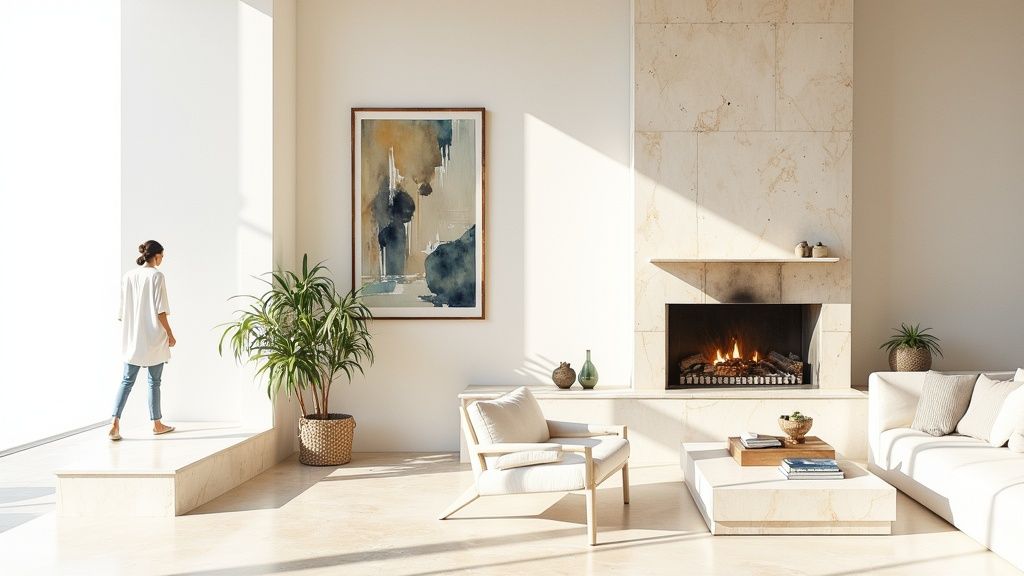
In high-end design, luxury has a new meaning. It is not just about expensive materials anymore. It is about ethical choices, durability, and caring for the environment. Homeowners from Palo Alto to Monterey are leading this change. They want materials that match their values.
This new way of thinking makes us look at a product's entire life. The surfaces on our floors, walls, and counters have a big impact on a home's footprint. In this area, natural stone is Mother Nature’s original green building material.
A Foundation Built on Responsibility
When you choose natural stone, you invest in your home and the planet. Unlike factory-made products, stone is created by the earth over millions of years. This means it avoids the high-energy processes used to make synthetic materials.
A recent study confirmed that natural stone has a lower environmental impact. It found that stone uses less energy and creates fewer emissions during processing. Better yet, it can be reused at the end of its life, unlike many synthetic options that go to a landfill.
The New Standard for California Luxury
The trend toward sustainable luxury is clear in California. Homeowners know that true style comes from choices that last. Natural stone is a timeless material that supports a healthier, more responsible way of life. In fact, 63% of California homeowners are now planning "green" upgrades.
Natural stone’s amazing durability means you won't replace it soon. This reduces waste over your home's lifetime. It is also free of harmful chemicals called VOCs, which helps keep your indoor air clean.
The table below breaks down the key benefits.
Natural Stone's Eco-Friendly Advantages at a Glance
| Attribute | Benefit for Eco Remodels |
|---|---|
| Durability & Longevity | Lasts for generations, reducing the need for replacements and minimizing landfill waste. |
| Low Embodied Energy | Requires less energy to quarry and process compared to manufactured materials like porcelain or quartz. |
| Natural & Non-Toxic | Contains zero VOCs (Volatile Organic Compounds), promoting healthier indoor air quality. |
| Recyclable & Reusable | Old stone can be salvaged, recut, or crushed for use in other projects, closing the loop. |
| Low Maintenance | Proper sealing reduces the need for harsh chemical cleaners over its lifespan. |
| Timeless Aesthetic | Its classic beauty avoids fleeting trends, ensuring it won't be torn out in a future remodel. |
Choosing stone means you are picking a surface that is naturally eco-friendly. To learn more, you can explore what California homeowners should know about sustainable stone surfaces in our detailed guide. This ensures your remodel is both beautiful and responsible.
The True Lifecycle of Natural Stone
To understand why natural stone is a sustainable choice, you have to look at its entire journey. Unlike materials made in factories, natural stone is already a finished product. It was perfected by the planet over millions of years.
Think of it as the ultimate "found object." A synthetic surface is made from scratch using resins and heat. Stone is simply quarried, cut, and finished. The process uses much less energy, giving it lower embodied energy—the total energy used to make a material.
From Quarry To Home With Minimal Fuss
The journey starts in a quarry, where large blocks are taken from the earth. Modern quarrying practices focus on reducing waste and protecting the environment. The blocks are then cut into slabs and polished using water and diamond tools. It’s a simple, mechanical process.
This simplicity is a huge plus. Natural stone avoids the complex chemical reactions needed to create products like engineered quartz. This means fewer industrial byproducts and a cleaner production process.
A big win for a healthy home is that natural stone is free of Volatile Organic Compounds (VOCs). These are chemicals in synthetic materials that can harm indoor air quality. With stone, what you see is what you get: pure, natural material.
Understanding The Full Environmental Picture
To see the true impact of natural stone, you need to consider its whole story. A good way to measure this is by understanding whole life carbon costs, which looks at a product's entire footprint. Thanks to its durability and minimal processing, natural stone does very well in these studies.
This long-term view is important for homeowners in the Bay Area who want to make sustainable choices. When you choose stone, you invest in a material that has a light touch on the planet.
A Circular Material Built For The Future
What happens to natural stone at the end of its long life? This is where its sustainability story comes full circle. Because it’s a natural element, stone does not fill up landfills. Instead, it can be:
- Reclaimed: Old countertops or flooring can be saved and re-cut for new projects.
- Repurposed: A large slab can become smaller tiles, furniture, or a landscape feature.
- Recycled: Stone can be crushed into aggregate for roads or building foundations.
This circular lifecycle ensures the material’s value is never lost. It’s a huge part of why natural stone is sustainable by nature: the smart choice for high-end eco remodels. You can learn more about how sustainable renovation starts beneath your feet by choosing materials built to last.
How Durability Defines Sustainability
What is the most eco-friendly material you can choose? It’s the one you never have to replace. That simple idea is why natural stone is a top choice for sustainable remodels. In a world of disposable products, stone offers something powerful—permanence.
True sustainability is about the entire life of a product. Materials that wear out quickly, like carpet or vinyl, create a constant cycle of waste. Every 10 to 15 years, they end up in a landfill.
Natural stone breaks this wasteful cycle. Its amazing durability means it can last for centuries. This "buy it for life" approach greatly cuts down your home's long-term environmental impact.
Built to Last for Generations
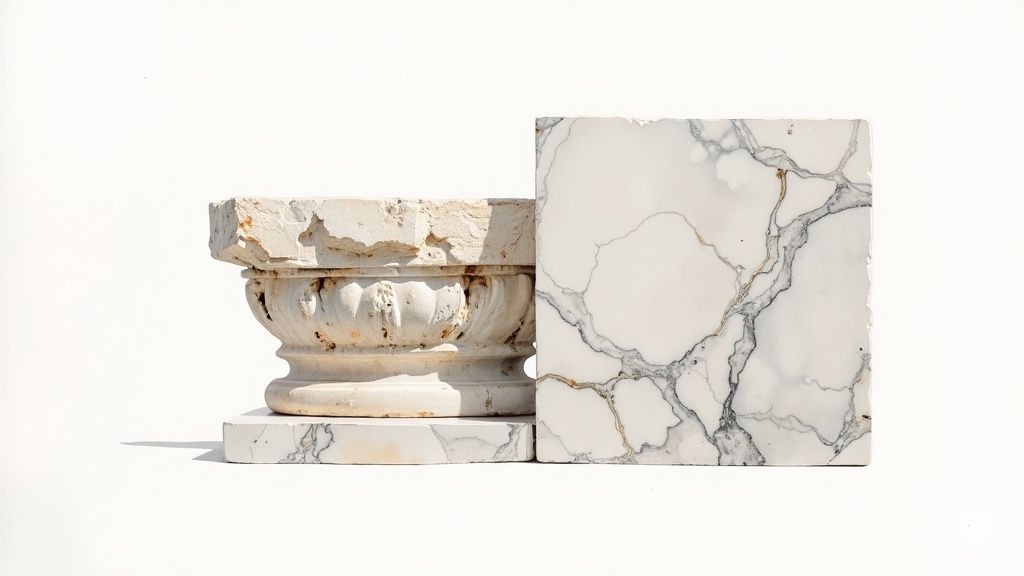
Think of the ancient stone buildings still standing today, like the Colosseum in Rome. These structures prove stone's incredible strength. When you choose natural stone for your home, you invest in a material that has proven it can last.
This long life is a game-changer, especially in climates like coastal California. Salt air and changing temperatures can be tough on materials, but natural stone holds up well.
The real beauty of stone is that it ages gracefully. Over time, it develops a rich patina and character that only time can create. This makes a space more beautiful with each passing year.
The Long-Term Value of Enduring Materials
Choosing a durable material like stone is smart for both the environment and your wallet. The initial cost may be higher, but its long lifespan makes it more cost-effective over time. You avoid the repeated costs of tearing out and replacing lesser materials.
The stone industry is also focused on eco-friendly practices. According to industry reports, sustainability is now a mainstream part of luxury design, and natural stone fits this trend perfectly.
This focus on permanence sets a high-end eco remodel apart. It's a shift from short-term fixes to long-term solutions. You can learn more about how to remodel with stone for a timeless upgrade in our dedicated guide.
Sourcing Your Stone: Why Local and Ethical Quarries Matter
For anyone planning a remodel in areas like Palo Alto or Carmel, where a material comes from matters. The journey a stone takes from the earth to your home is a big part of its sustainability. Choosing stone from regional and ethical quarries is a real commitment to the environment.
Opting for locally quarried stone immediately cuts down on transportation costs. Shipping heavy slabs across an ocean uses a massive amount of energy. By selecting stone from North American quarries, you shorten the supply chain and support the local economy.
This choice connects your project to the unique geology of your region. It’s a great way to ground your home in its natural surroundings.
What Does "Ethical Quarrying" Actually Look Like?
The old image of a destructive quarry is outdated. Modern, responsible quarrying follows strict environmental and ethical standards. Suppliers like Carmel Stone Imports partner with quarries that use these modern practices.
So, what does that mean?
- Land Reclamation: Responsible quarries have plans to restore the land after the stone is extracted. This can include planting native vegetation or creating wildlife habitats.
- Water Recycling: Water is used to cut stone and control dust. Advanced quarries use closed-loop systems that filter and reuse water. This protects local rivers and water sources.
- Fair Labor Practices: An ethical quarry is a safe quarry. These operations provide safe working conditions and fair wages for their workers.
Asking the Right Questions
The best way to make a sustainable choice is to be informed. Don't be shy about asking your supplier where your stone came from. A knowledgeable team can tell you where a slab was quarried and explain their practices.
When you ask about your stone’s origin, you support a more responsible industry. It’s a simple question that ensures your beautiful new countertop doesn't come with a hidden environmental cost.
Understanding the source of your materials is key to any sustainable project. It turns a design decision into a meaningful action. For homeowners in the Bay Area, seeking out suppliers who support ethical sourcing is a powerful move.
Natural Stone Versus Engineered Surfaces
When planning a high-end remodel, the choice between natural stone and an engineered surface like quartz is a big one. They may look similar, but their environmental stories are very different. You have to look past the surface to make a truly sustainable choice.
Engineered products are made through a complex, energy-heavy process. They mix crushed stone with chemical resins and colors. This mixture is pressed into slabs using intense heat and pressure, which has a larger environmental impact.
A Head-to-Head Comparison
The differences become clear when you look at their lifecycles. Natural stone is a product of the earth, needing only to be cut and finished. Engineered surfaces are factory-made composites. This affects everything from their chemical makeup to how they are disposed of.
One of the biggest advantages of natural stone is its purity. It contains no synthetic binders or plastics, so it won't release Volatile Organic Compounds (VOCs) into your home’s air. This makes it a healthier choice for your family.
Analyzing the Core Differences
Let’s dig a little deeper. While engineered quartz is marketed for its durability, natural stones like granite often last just as long or even longer. That kind of longevity is the definition of sustainable design. The most eco-friendly product is the one you never have to throw away.
The growing appeal of natural stone is seen in global demand. The market is projected to grow significantly, driven by a preference for authentic, natural materials. As you can read in the full market research, this trend is supported by the industry's focus on sustainable practices.
The table below puts the two materials side-by-side.
Sustainability Showdown: Natural Stone vs. Engineered Surfaces
| Sustainability Factor | Natural Stone (e.g., Marble, Limestone) | Engineered Surfaces (e.g., Quartz) |
|---|---|---|
| Raw Material Source | 100% natural, quarried directly from the earth. | 90-95% crushed stone aggregate, 5-10% polymer resins and pigments. |
| Embodied Energy | Lower; energy is used for quarrying, cutting, and finishing. | Higher; requires significant energy for crushing, mixing, pressing, and curing. |
| VOC Off-Gassing | Zero; contains no synthetic chemicals or binders. | Can release VOCs from resins, especially in lower-quality products. |
| Lifespan | Can last for centuries with proper care. | Typically lasts 20-30 years, often replaced due to style changes. |
| Recyclability | Fully recyclable; can be crushed for aggregate or repurposed. | Difficult to recycle due to mixed materials; typically ends up in landfills. |
This breakdown shows why natural stone is a clear winner for an eco-friendly home. For a more detailed analysis, you can explore our guide comparing natural stone vs. engineered stone to help with your Bay Area project. Natural stone’s connection to the earth gives it an authenticity that manufactured products cannot match.
Frequently Asked Questions
Here are clear answers to common questions about natural stone's sustainability.
Is quarrying bad for the environment?
That is a common myth. Modern, responsible quarrying follows strict environmental rules. Reputable suppliers work with quarries that have plans to restore the land after extraction is complete. They also use advanced water recycling systems to limit their impact.
Is natural stone a healthy choice for my home?
Yes. Natural stone is one of the best choices for healthy indoor air. It has zero Volatile Organic Compounds (VOCs), which are chemicals that synthetic materials can release. Stone is also naturally resistant to bacteria, making it a great choice for a clean home.
How does the cost of natural stone compare?
The initial investment for natural stone can be higher than some manufactured products. However, its amazing durability makes it more cost-effective over time. Materials like vinyl often need to be replaced every 10–15 years, while stone lasts for generations. This "buy it once" approach is a key part of sustainable design.
Are certain natural stones more sustainable than others?
Yes. A stone's sustainability depends on where it comes from. Sourcing stone from quarries closer to home, like here in North America, cuts down on transportation emissions. Our experts in Palo Alto and Monterey can show you beautiful options that meet your environmental goals.
Can natural stone be recycled?
Yes, and this is one of its greatest strengths. At the end of its long life, natural stone can be reclaimed and repurposed. Old countertops can be re-cut for smaller projects, and old slabs can be crushed for use in new construction. This circular approach minimizes waste.
Ready to bring sustainable luxury into your California home? The team at Carmel Stone Imports is here to help you select the perfect material that aligns with your design vision and environmental values. Our experts can guide you to a timeless choice that is sustainable by nature: the smart choice for high-end eco remodels.
Visit our showrooms or contact us today to schedule a design consultation.