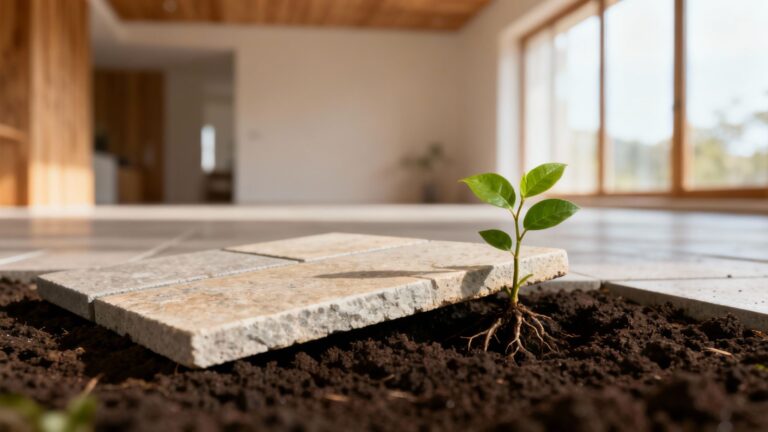
A truly sustainable renovation starts from the ground up—literally. It’s about choosing materials designed to last a lifetime, not just a few years. This guide explains how selecting natural stone that is built to endure and protect is a smart investment for your California home and the planet, moving beyond trendy, disposable options to a durable, low-waste foundation.
Why Real Sustainability Is Built to Last
In today's world of "fast interiors," it’s common to see flooring materials swapped out every decade. This cycle contributes a massive amount of waste to our landfills. True sustainability pushes back against this disposable mindset, prioritizing longevity above all else.
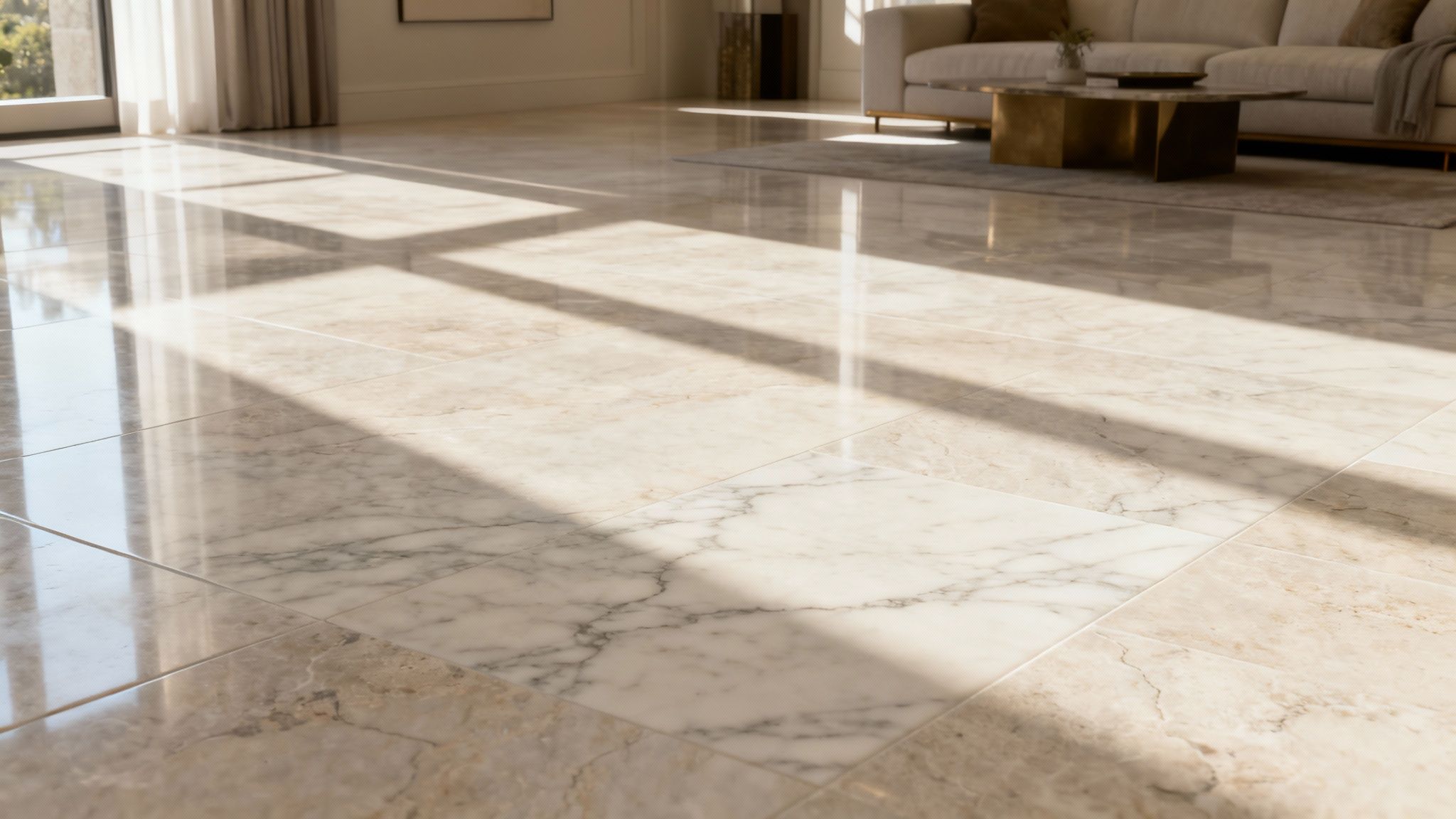
A natural stone floor isn't just a surface; it's a permanent part of your home. Unlike synthetic alternatives that look dated or worn, stone ages with grace. It develops a rich patina that adds character, making it a low-waste option from the start.
The Long-Term Value of Durability
Opting for a floor that lasts a lifetime pays dividends for the environment and your finances. By sidestepping the need for frequent replacements, you support a healthier planet and a more resilient home.
Here’s how longevity adds up:
- Reduces Landfill Waste: A floor that lasts a century keeps multiple generations of old flooring out of landfills.
- Conserves Resources: When you aren't replacing floors every ten years, you lower the demand for raw materials and energy.
- Lowers Your Home's Footprint: A durable material reduces the embodied carbon—the total emissions from its life cycle—associated with your home.
For homeowners in Monterey and the Bay Area, investing in natural stone is more than an aesthetic choice. It’s a commitment to a home that is both beautiful and fundamentally sustainable.
Thinking about sustainability this way shifts the focus from temporary fixes to permanent, elegant solutions. It’s a mindset that aligns with wellness-conscious Californians who want their homes to feel healthy, timeless, and responsible. Choosing stone built to endure is an investment in your home and our environment.
The Hidden Costs of Disposable Design
Walk into any big-box store, and you'll see flooring with appealing "green" labels. But those labels often hide a less sustainable reality. Materials like vinyl and laminate might look good, but their lifecycle tells a different story.
Their journey often starts with chemical-heavy manufacturing and ends in a landfill a decade later. This cycle of replacement creates a mountain of waste, canceling out any eco-friendly claims. For homeowners in communities like Palo Alto and Monterey, understanding a material's full impact is everything.
Beyond the Label: The Truth About Lifespan
When planning a sustainable renovation, durability is the most important factor. A floor you replace every 10–15 years feeds a cycle of manufacturing and disposal. In contrast, a material that lasts for generations breaks this wasteful pattern.
This infographic puts the lifespan of popular flooring materials into perspective. It shows just how dramatic the difference in durability is.
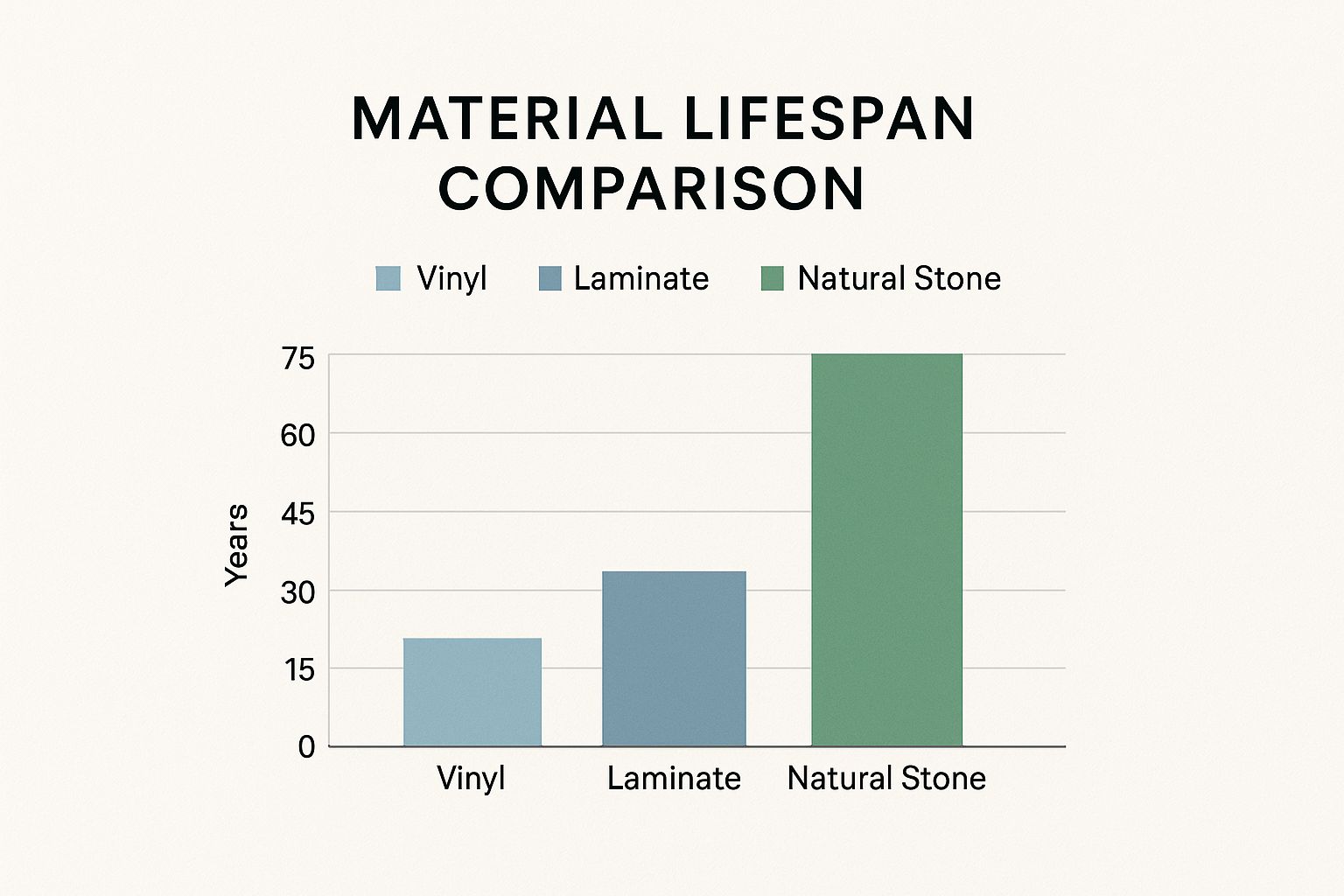
The incredible longevity of natural stone blows its synthetic counterparts out of the water. This makes it a powerful choice for anyone serious about reducing long-term waste.
Investing in Permanence
Choosing a durable material like natural stone is an investment in permanence. This single decision lowers your home’s embodied carbon, the total greenhouse gas emissions tied to a material’s entire life. By picking a floor you only have to choose once, you're making an impactful sustainable choice.
The most sustainable choice is the one you don't have to make again. By prioritizing longevity, homeowners in the Bay Area can build beautiful spaces that are also better for the planet.
With proper care, stone floors can easily endure for over 100 years. That kind of lifespan dwarfs the typical 10–20 years you get from common synthetic options. It's no surprise that green building certifications now recognize natural stone for its low VOC emissions and minimal processing. You can dive deeper into a detailed comparison of natural stone vs. engineered stone to explore their unique qualities.
How Stone Connects Durability with Timeless Beauty
Natural stone offers something synthetic materials can't replicate: a living finish. Unlike manufactured flooring that degrades over time, stone evolves. It develops a rich, subtle patina from daily life, becoming a unique canvas of your home's history.
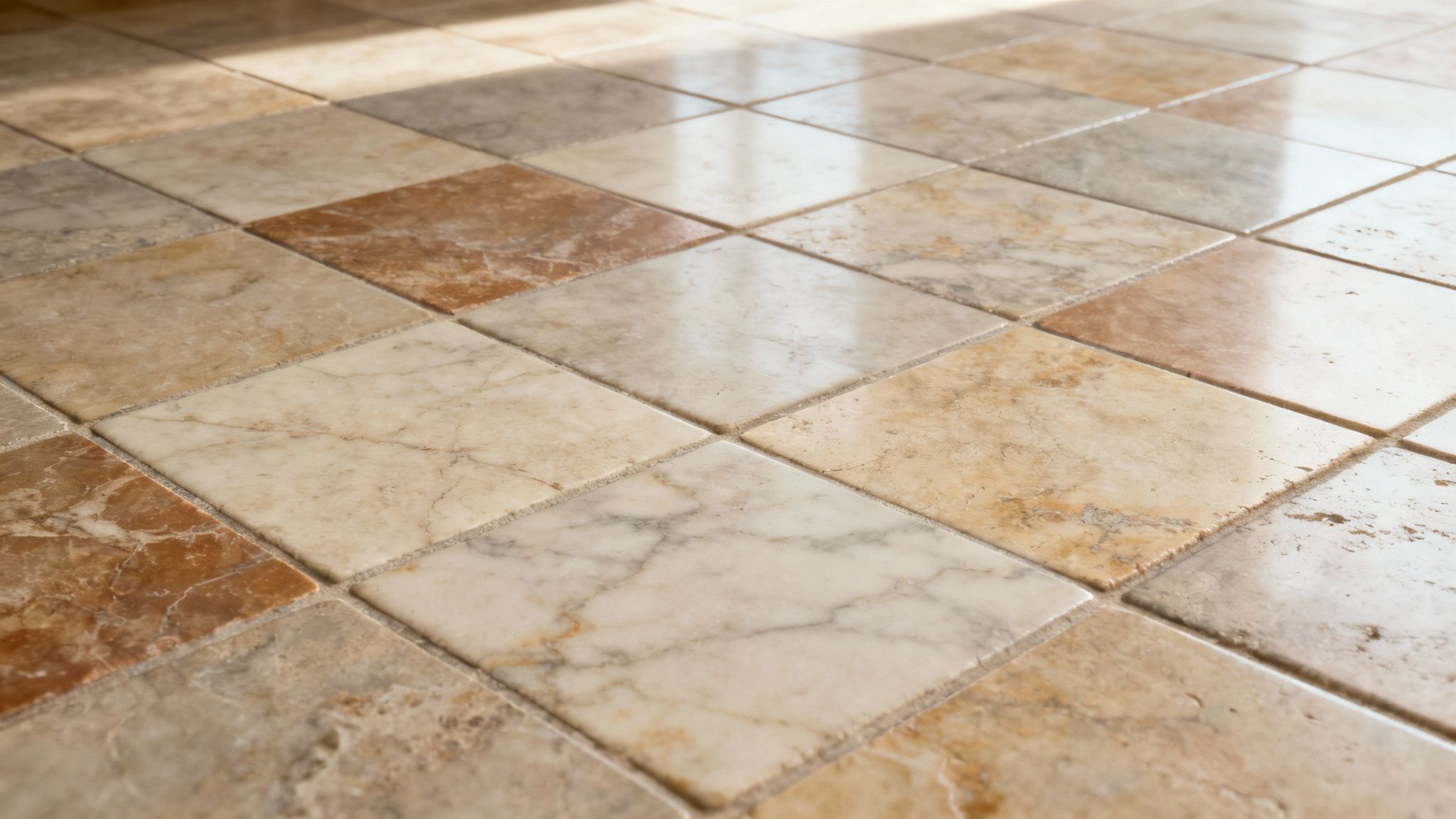
This graceful aging is where stone truly shines. Classic materials like hand-chiseled French limestone don't just follow trends; they set a standard of timeless elegance. Your floors will look just as stunning in thirty years as they do today, saving you from costly and wasteful updates.
An Authentic Connection to Nature
Creating a home that feels grounded and real is more important than ever. Natural stone forges an immediate connection to the earth with its organic textures and deep, earthy tones. Each slab is a one-of-a-kind piece of natural art, bringing a sense of calm and authenticity into your space.
This is especially true for Bay Area homes, which often blend clean, modern lines with natural elements. Stone provides the perfect bridge between contemporary architecture and genuine warmth. This approach is the heart of biophilic design, which strengthens our connection to the natural world.
The Lasting Power of Natural Aesthetics
A truly sustainable renovation starts beneath your feet, and choosing materials with lasting beauty is critical. A trendy pattern on a synthetic tile might look fresh for a season, but its appeal can fade. Natural stone's beauty, on the other hand, is inherent and enduring.
This timeless appeal is valuable in California's high-end real estate markets, from Monterey to Palo Alto. A home with beautiful stone floors signals quality and longevity to potential buyers. To get the most out of your stone's aesthetic, proper maintenance is key. Learning how to clean stone floors correctly will keep them looking pristine for decades.
Building a Healthier Home from the Ground Up
A truly sustainable home is also a healthy one. The materials you choose play a massive role in your family's well-being. A sustainable renovation starts beneath your feet by protecting the planet and creating a healthier indoor environment.
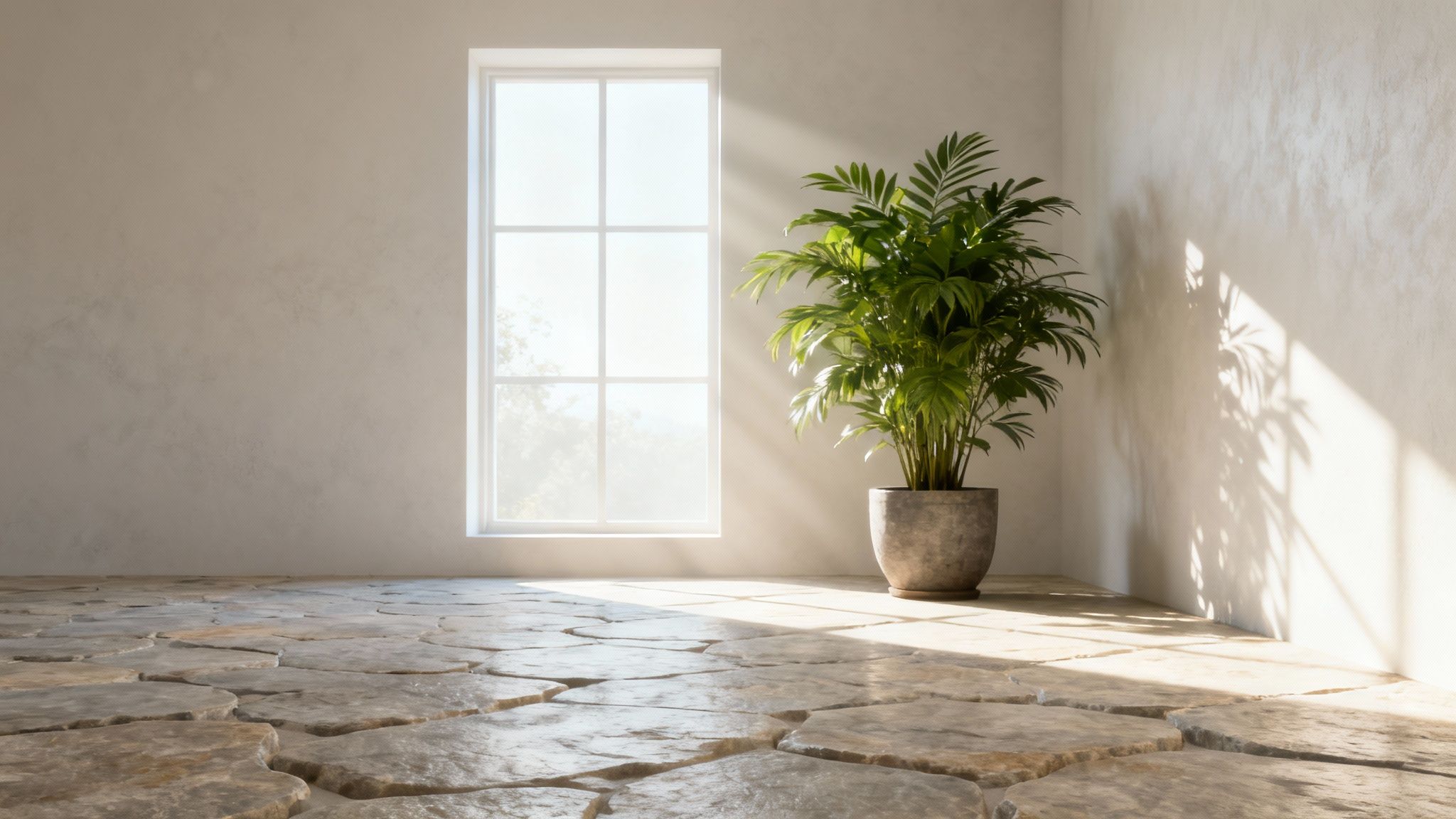
Unlike manufactured flooring, natural stone is completely inert. It contains zero Volatile Organic Compounds (VOCs)—harmful gases that can have adverse health effects. Choosing stone means you're guaranteeing cleaner, healthier air inside your home. To learn more about keeping surfaces hygienic, explore our guide on caring for your countertops and your health.
Embracing Nature for Wellness and Comfort
The benefits of natural stone go beyond air quality. Bringing materials from the earth into our living spaces is a core principle of biophilic design. The unique textures and organic colors in a slab of stone can reduce stress and create a calming atmosphere.
Stone also has a remarkable ability known as thermal mass. This means it can absorb, store, and slowly release heat, acting like a natural temperature regulator.
In California's varied climates, from warm days in Palo Alto to cooler evenings in Monterey, stone’s thermal mass helps maintain a comfortable indoor temperature. This can reduce your reliance on HVAC systems, leading to lower energy bills.
By choosing natural stone, you aren't just selecting a building material. You're building a home that is timelessly beautiful, durable, and healthier for your family.
Choosing Stone with Confidence and Conscience
A truly sustainable choice goes deeper than the material itself—it’s about knowing its entire story. When a sustainable renovation starts beneath your feet, you deserve confidence that the stone was sourced with respect for people and the planet. This means understanding the stone's journey from the quarry to your home.
Partnering with a supplier committed to ethical sourcing and a transparent supply chain is key. Responsible quarrying means fair labor practices and environmental stewardship. At Carmel Stone Imports, we build relationships with reputable quarries that share our values.
How to Verify Ethical Sourcing
When you select stone, asking the right questions can confirm a supplier's commitment to sustainability. An ethical supplier will welcome your questions and provide clear answers.
Here are a few key things you should ask:
- Can you trace this stone back to its original quarry? A transparent supplier should be able to identify the source.
- What are the labor and environmental standards of your quarry partners? Look for suppliers who work with quarries that follow international best practices.
- How long have you worked with your international suppliers? Long-term relationships often point to trust and a shared commitment to quality.
By asking these questions, you become an informed buyer who champions responsible practices. This ensures the stone in your Bay Area home aligns with your conscience.
Choosing ethically sourced stone is a critical step in choosing stone that’s built to endure and protect both your investment and the environment. To get a better sense of how the pros approach this, you can learn more by reading our guide on where designers get their natural stone.
An Investment in Your Home and Our Planet
When you choose natural stone, you're making a powerful statement. Think of it as a financial and an environmental investment that pays dividends for decades. A truly sustainable renovation starts beneath your feet, with a foundation built to last.
This mindset moves you beyond fleeting trends. Instead, you're focusing on timeless quality that enhances your home’s value while shrinking its environmental impact. In a competitive market like California's, high-quality materials are a huge selling point.
Lower Costs and Higher Value
While the initial price of some materials might seem appealing, the total cost of ownership tells a different story. Natural stone’s longevity and minimal upkeep mean you skip the recurring expense of replacement. To see how these choices play out in a budget, our guide explores the cost considerations of different surfaces.
By selecting a material you only have to choose once, you are investing in permanence. This decision cuts down on landfill waste, conserves resources, and lowers your home’s environmental footprint.
This shift in thinking is catching on. The market for natural building stone was valued at over USD 35 billion in 2023, according to Grand View Research. This demand is fueled by an upswing in sustainable building practices. You can learn more about these market trends and forecasts to see where the industry is heading.
Frequently Asked Questions
Is natural stone really more sustainable than flooring made from recycled materials?
While using recycled content is good, the true measure of sustainability is longevity. A natural stone floor can last for over 100 years. Most other flooring needs replacing every 10-20 years, creating a cycle of waste. Stone’s incredible lifecycle makes it the most sustainable option in the long run.
Does quarrying stone harm the environment?
This is a valid concern. Responsible suppliers like Carmel Stone Imports partner only with quarries that adhere to strict environmental and ethical standards. Modern best practices focus on minimizing the operational footprint and rehabilitating the land afterward, making it a responsible choice.
How does stone flooring improve my home's indoor air quality?
This is one of stone's biggest benefits. Natural stone is an ideal choice for a healthy home because it contains zero VOCs (Volatile Organic Compounds). These harmful chemicals can "off-gas" from many synthetic flooring types, so choosing stone means cleaner, healthier air for your family.
Will stone flooring feel too cold in my coastal California home?
Stone has a quality called thermal mass, meaning it absorbs and holds the temperature of the air around it. In California’s mild climate, from Monterey to the Bay Area, stone floors typically feel pleasantly cool on a warm day. You can also pair stone with area rugs to add warmth and texture where you want it.
Is natural stone difficult to care for?
You might be surprised at how low-maintenance natural stone is. For the most part, a regular sweep and an occasional mop with a pH-neutral cleaner are all it takes. Properly sealed stone resists stains and stands up to daily life, making it a tough, easy-to-live-with surface for any busy home.
If you’re planning a sustainable remodel in Monterey, the Bay Area, or along California’s Central Coast, contact Carmel Stone Imports to explore natural surfaces that reflect your values and elevate your space for decades to come.
Visit our showrooms to see and feel the timeless beauty of natural stone for yourself.