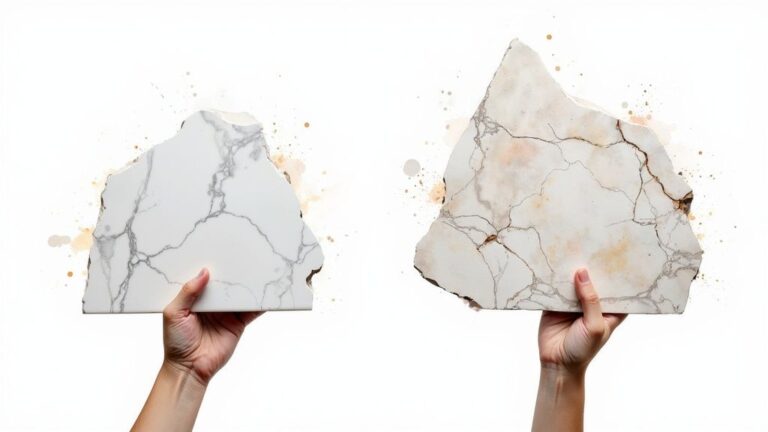
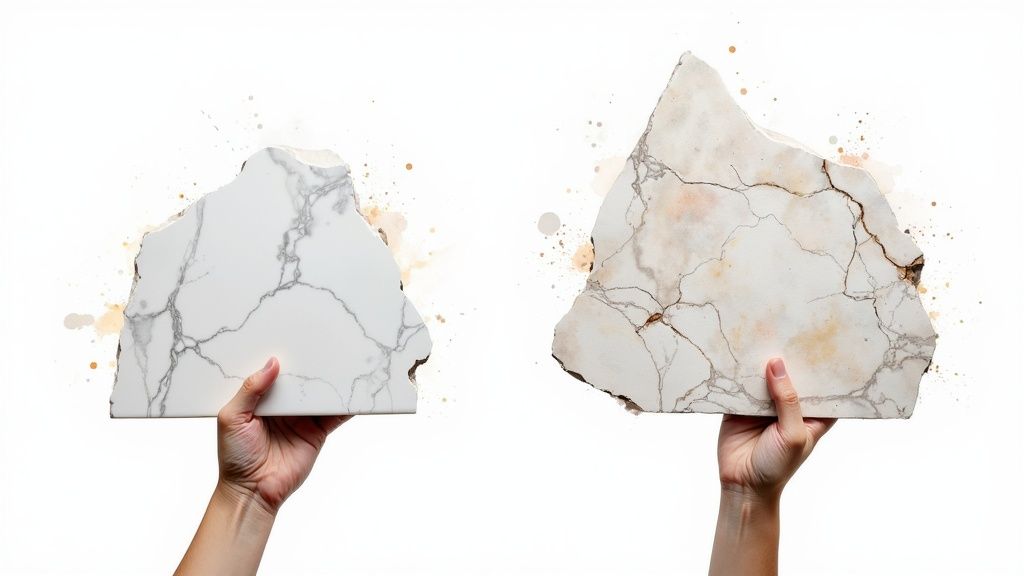
Deciding between marble and quartzite comes down to your lifestyle and what you want for your space. Marble is classic luxury, known for its soft, elegant look. It does ask for a bit more care, making it a perfect fit for beautiful but low-traffic areas. Quartzite offers a similar high-end look but is much more durable, making it a practical choice for a busy kitchen.
Choosing Between Timeless Marble and Durable Quartzite
Picking the perfect stone for your home is a big deal. It defines the look and feel of your space for years to come. Many blogs offer simple comparisons, but they often miss the details that matter to homeowners in places like Carmel and Palo Alto.
This guide is different. We will take a close look at marble vs. quartzite: which stone suits your space? We'll help you find a choice that truly fits your life. Before diving in, it helps to think about what's most important in interior design overall. This is about finding a material that works for you every day.
Key Differences at a Glance
Understanding the main features of each stone is the best place to start. They are both beautiful natural stones, but they perform very differently. This table gives you a quick look at their features.
| Feature | Marble | Quartzite |
|---|---|---|
| Durability | Softer stone, can scratch and etch. | Extremely hard and scratch-resistant. |
| Stain Resistance | Porous; needs regular sealing to prevent stains. | Less porous and highly stain-resistant. |
| Maintenance | High; requires special cleaners and yearly sealing. | Low; easy to clean with mild soap and water. |
| Best For | Low-traffic areas like bathrooms and fireplaces. | High-traffic areas like kitchens and outdoor spaces. |
While quartz has been popular, luxury homeowners are shifting toward quartzite. They love its unique, natural beauty and incredible strength. Our guide on how to choose the best countertop for your lifestyle and climate offers more help with this decision.
Choosing the right surface is about more than just looks—it’s about longevity, lifestyle fit, and design harmony. At Carmel Stone Imports, we offer curated stone collections and expert guidance to ensure your selection enhances both beauty and function.
The Story Behind Each Stone
To understand the differences between marble and quartzite, you have to go back millions of years. Both stones are formed deep inside the Earth. The journey each one takes shapes everything about it, from its look to how it performs in your home.
Marble’s story begins as limestone, a soft rock made from old sea life. Over a long time, heat and pressure change it. This process creates the soft, elegant veins that marble is famous for. Because it is still a calcite-based stone, it is softer and can be damaged by acids.
The Intense Creation of Quartzite
Quartzite’s formation is much more extreme. It starts as sandstone, which is full of quartz sand. Like marble, it changes under heat and pressure, but the force is much higher.
This melts the quartz grains, fusing them into a very dense structure. This process is the secret to quartzite's amazing strength. Its geological toughness is why it holds up so well in a busy home.
Quartzite is not just changed limestone like marble; it is forged into a new, unified rock that’s harder than a steel knife.
This origin story also explains quartzite's look. Some slabs can look like marble, but many have bold, sweeping patterns. The wide range of colors comes from other minerals trapped in the stone during its creation. To learn more, check out our guide on what quartzite stone is.
The marble vs. quartzite: which stone suits your space? debate comes down to their past. Marble’s gentler origin results in a timeless, softer stone. Quartzite's intense formation creates a durable powerhouse, ideal for a high-traffic Bay Area kitchen.
A Look at Appearance and Style
Both marble and quartzite bring natural beauty to a home, but their looks are very different. Are you drawn to classic grace or modern energy? The marble vs. quartzite: which stone suits your space? debate often begins with this question.
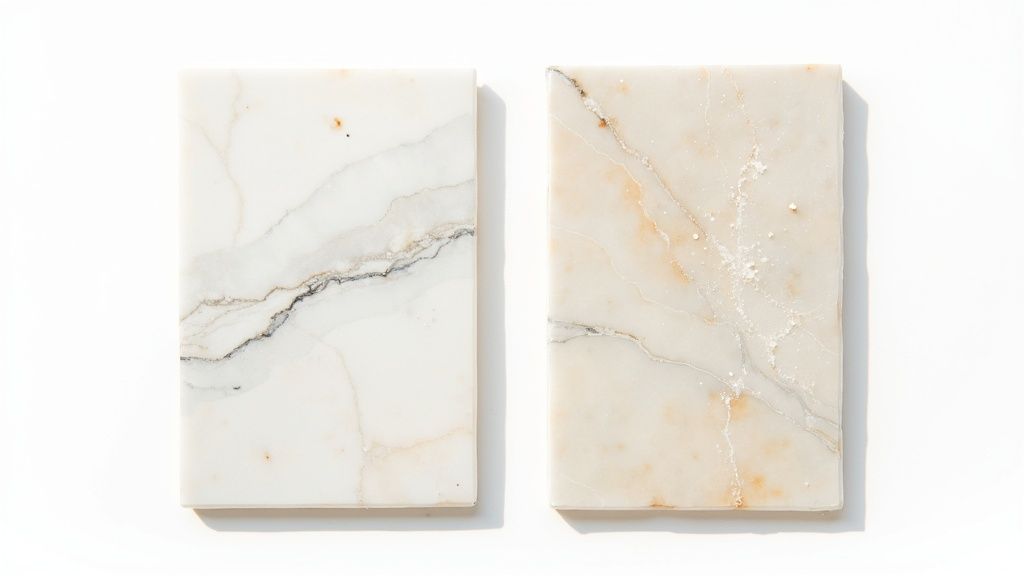
Marble is known for its soft, feathery veining against a glowing background. This gentle look creates a sense of calm and luxury. Famous types like Carrara and Calacatta are known for their elegant patterns.
The Classic Elegance of Marble
The beauty of marble is in its soft look. Its veining is more organic and gentle than in many other stones.
- Soft Veining: Marble’s patterns are often described as smoky or cloudy.
- Luminous Surface: It plays with light, giving it a soft glow that can make a room feel brighter.
- Timeless Appeal: From ancient statues to modern bathrooms, marble’s look is a sign of high-end design.
This elegance makes marble perfect for a master bathroom or fireplace surround.
The Dynamic Look of Quartzite
Quartzite, on the other hand, offers a wider visual range. Some types can look like marble, while others have bold, dramatic patterns with a crystalline sparkle. This variety is one of its biggest assets.
For homeowners in Palo Alto or Carmel, this means quartzite can fit any design style. Slabs like Taj Mahal quartzite have a creamy, marble-like elegance. Options like Blue Macaubas are like works of art.
You can see into quartzite. The fused quartz grains create a see-through quality, letting you appreciate its glittering, multi-dimensional texture.
Designers love working with it for this reason. Quartzite can be the centerpiece of a room or a simple, solid color in a minimalist kitchen.
The choice comes down to the story you want your space to tell. Marble speaks of quiet luxury and tradition. Our guide on how to bring quiet luxury into your space with marble, limestone, and quartzite explores this style. Quartzite can be subtle and calm or bold and expressive, a perfect match for the nature-inspired modern style popular in California.
Comparing Durability in Daily Life
Looks are important, but how a stone holds up every day is key to the marble vs. quartzite: which stone suits your space? debate. For a busy home, durability is everything. This is where the story of each stone makes a huge difference.
We can break down their real-world performance by looking at three key areas. How do they handle scratches, stains, and heat? Knowing these differences will help you decide if marble’s delicate nature is right for you, or if you need the rugged strength of quartzite.
Scratch and Etch Resistance
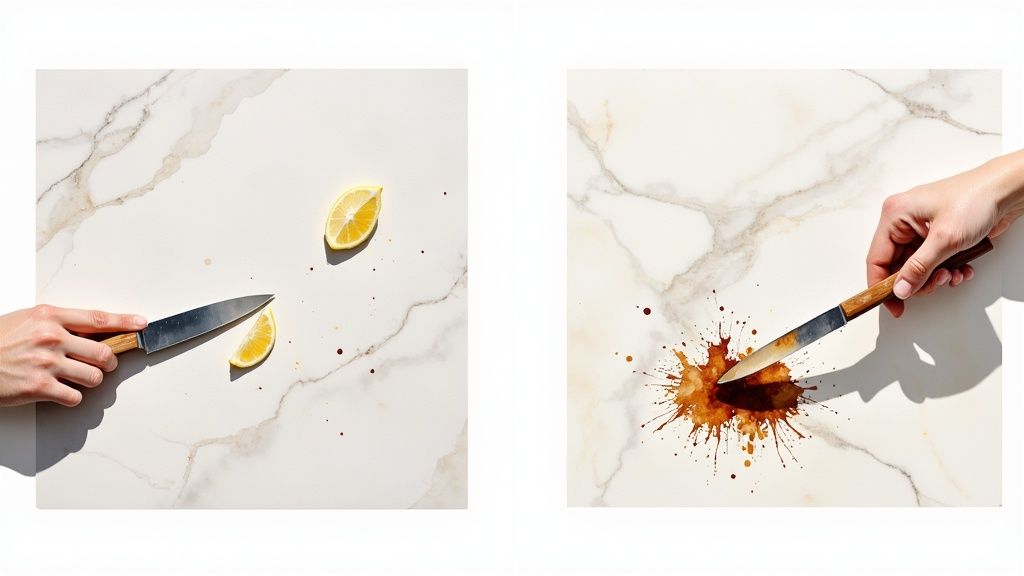
When it comes to hardness, it’s not a fair fight. Marble is a soft stone, rated a 3 to 4 on the Mohs hardness scale. This means everyday items like knives can scratch it.
Marble is also very vulnerable to etching. This is not a stain, but a chemical reaction from acids like lemon juice or wine that dulls the stone's surface.
Quartzite is a true workhorse. It is a 7 on the Mohs scale, harder than steel and glass. This means it resists scratches from daily use, making it perfect for a busy kitchen.
A dropped pan might leave a permanent mark on marble. A quartzite surface will likely remain unharmed. This is a major reason why families choose quartzite for their most-used spaces.
Stain Resistance and Porosity
Porosity is about the tiny pores in a stone that can soak up liquids and cause stains. As a more porous stone, marble needs to be sealed often. Spills like coffee or red wine must be wiped up right away.
Quartzite is much denser and less porous than marble. We still recommend sealing it, but its tight structure is a powerful natural shield against stains. This makes cleanup much easier.
Quartzite's popularity comes from this blend of beauty and strength. It offers a marble look but is much less likely to be damaged by acids. To learn more, you can read more about the pros and cons of quartzite countertops in our guide.
Heat Resistance
Both stones are winners here. As natural stones, marble and quartzite handle heat very well. You can set a hot pan on either countertop without worry.
However, quartzite’s density gives it a slight edge in resisting sudden temperature changes. This is a nice bonus if you’re planning an outdoor kitchen.
Performance Showdown: Marble vs. Quartzite
This table gives a quick summary of how marble and quartzite compare in durability.
| Performance Metric | Marble | Quartzite |
|---|---|---|
| Mohs Hardness | 3-4 (Softer, can scratch) | 7 (Harder than steel, scratch-resistant) |
| Etch Resistance | Low (Harmed by acids like lemon juice) | High (Resists common acids) |
| Stain Resistance | Moderate (Porous; needs frequent sealing) | High (Dense and less porous) |
| Heat Resistance | Excellent (Handles hot pans well) | Excellent (Slightly better with temperature changes) |
This shows quartzite's strength in busy areas, while confirming marble needs more careful care.
Long-Term Maintenance and Upkeep
The amount of care needed is a big factor in the marble vs. quartzite debate. How you live and your tolerance for upkeep will decide how happy you are with your stone. Marble demands mindful care, while quartzite lets you relax.
Understanding these maintenance differences is key. A low-maintenance home is a top priority for many people. Let’s be real about what life is like with each of these materials.
The Careful Attention Marble Requires
Marble is a high-maintenance surface. Keeping it beautiful requires constant attention. It is very vulnerable to both staining and etching from common kitchen items.
This means you have to be alert. Spills from acidic things like wine, coffee, or lemon juice must be wiped up right away.
To keep marble looking its best, a strict cleaning routine is a must.
- Daily Cleaning: Only use pH-neutral cleaners made for natural stone. Harsh or acidic cleaners will damage the stone.
- Preventative Measures: Use coasters and trivets under glasses and hot pans. This protects the surface from moisture and heat.
- Stain Management: You have to act fast. Even a puddle of water can leave a mark on unsealed marble.
Sealing is the most important part of marble care. This protective shield needs to be reapplied regularly, often once a year, to help repel liquids.
The Easy Upkeep of Quartzite
Quartzite is known for being very low-maintenance. This makes it a practical choice for busy family kitchens. Its dense structure makes it tough against staining and etching.
Daily cleaning for quartzite is simple. A soft cloth with mild soap and warm water is all it takes to keep it looking perfect. No special cleaners are needed.
Even though quartzite is less porous than marble, getting it sealed at first is a smart move. But unlike marble, quartzite doesn’t need frequent resealing. Our guide on how to seal natural stone offers great tips.
Your lifestyle should be your guide. If you enjoy caring for beautiful things, marble can be very rewarding. If you prefer a surface with minimal upkeep, quartzite’s strength is the clear winner.
Matching the Stone to the Space
Choosing the right stone is about more than color. It’s about matching the stone’s nature to the room’s needs. The whole marble vs. quartzite debate often comes down to this: where will it be used?
Some rooms need a tough surface, while others are about creating luxury. When you know the best spots for both stones, you can design a home that works with your lifestyle. This is true for a sleek Bay Area home or a classic Monterey coastal house.
Where Marble Shines
Marble’s delicate beauty is its best feature. It’s the perfect choice for spaces where you want to make a design statement without a lot of daily wear.
- Bathroom Vanities: The master bath is marble’s natural home. Its glow brings a spa-like feel to the room.
- Fireplace Surrounds: Marble is fire-safe, making it a stunning choice to frame a fireplace.
- Decorative Walls: A full slab of veined marble can be like a piece of art on an accent wall.
Practical guides on choosing a bathroom vanity can help you weigh your options.
Marble is best in spaces designed to impress and soothe. It shines where elegance is the main goal and the risk of spills and scratches is low.
Where Quartzite Is a Perfect Fit
If marble is the beauty, quartzite is the brawn. This stone is a workhorse, built to handle the busiest parts of your home. Its durability and easy care make it the go-to for high-traffic zones.
Its ability to fit any design style means it looks great in a busy kitchen or a chic outdoor bar.
- Kitchen Countertops: This is quartzite’s domain. It resists scratches, stains, and etching from everyday cooking.
- Bars and Entertainment Areas: Spilled drinks are no problem. Quartzite handles frequent use and keeps looking sharp.
- Outdoor Kitchens: For sunny California climates, quartzite is a great choice. It has natural UV resistance, so its color won't fade in the sun.
This blend of strength and style is why quartzite is becoming a favorite. It gives you a high-end look without the high-maintenance needs.
Making Your Final Decision
We've covered the main differences in the marble vs. quartzite debate. Marble offers timeless beauty but needs care. Quartzite brings amazing durability with a similar luxury feel, making it a practical choice for a busy home.
So, how do you choose? Look at your daily habits, your tolerance for upkeep, and your vision for the space. The right stone is the one that fits your life. Market data from sources like Mordor Intelligence shows quartzite gaining on quartz among luxury clients who want both looks and performance.
A Visual Guide to Your Perfect Stone
This decision tree helps you see which stone fits your needs. It is especially helpful for high-traffic or outdoor areas in a California home.
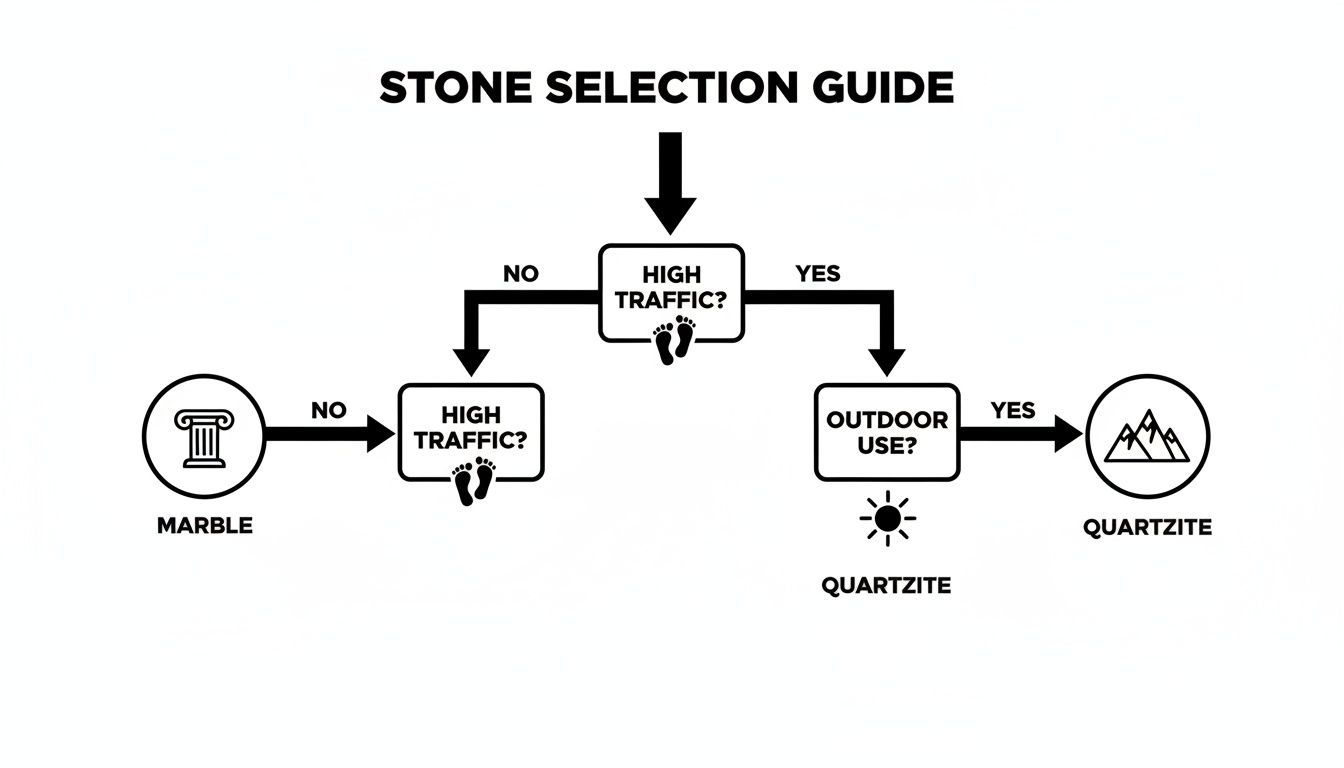
As the chart shows, quartzite is the clear choice for demanding areas because of its strength. Marble is best in spaces where its look is the top priority.
From Screen to Showroom
Reading about stone is one thing, but seeing it is another. We encourage you to see these materials for yourself. You can only appreciate the unique character of a slab when you see it in person.
The best next step is to visit a Carmel Stone Imports showroom in Carmel or Palo Alto. Our team has experience matching the right stone to California's different climates. We can help you find a stone you’ll love for years to come.
Frequently Asked Questions
When comparing two amazing natural stones, a few questions often come up. Here are answers to some of the most common ones we hear from our clients.
Is quartzite really stain-proof?
Quartzite is one of the most stain-resistant natural stones, but no stone is completely stain-proof. It is very durable, but not indestructible. A good sealer is always recommended to protect it. Always wipe up spills like red wine or oil right away.
Can I use marble for my kitchen countertops?
Yes, but it is a choice you need to think about carefully. Marble is softer and can scratch or etch from acids like lemon juice. If you have a busy family kitchen, quartzite is often the more practical, worry-free option.
Does quartzite look just like marble?
Some types of quartzite can look very similar to marble. Slabs like Taj Mahal can mimic the soft veining that people love in marble. This gives you the classic look with much better performance. However, quartzite offers a much wider range of looks, including bold patterns and a sparkling depth that is all its own.
Which stone is better for a coastal home?
Both stones look beautiful in a coastal California home. Marble offers a timeless, classic style that fits traditional coastal designs. On the other hand, quartzite's durability and UV resistance may be a smarter choice for an active, indoor-outdoor lifestyle, especially for outdoor kitchens.
Isn't quartzite the same as quartz?
No, and this is a very important difference. Quartzite is a 100% natural stone that is quarried from the earth. Each slab is unique. Quartz countertops are an engineered, man-made product. They are made by mixing crushed quartz with resins. The final decision in the marble vs. quartzite: which stone suits your space? debate often comes down to this choice between natural and engineered.
Ready to see these incredible stones for yourself? The expert team at Carmel Stone Imports is here to help you find the perfect surface for your home. Visit one of our showrooms in Carmel, Sand City, or Palo Alto to explore our curated collection and get personalized guidance for your project. Contact us today to schedule your consultation.