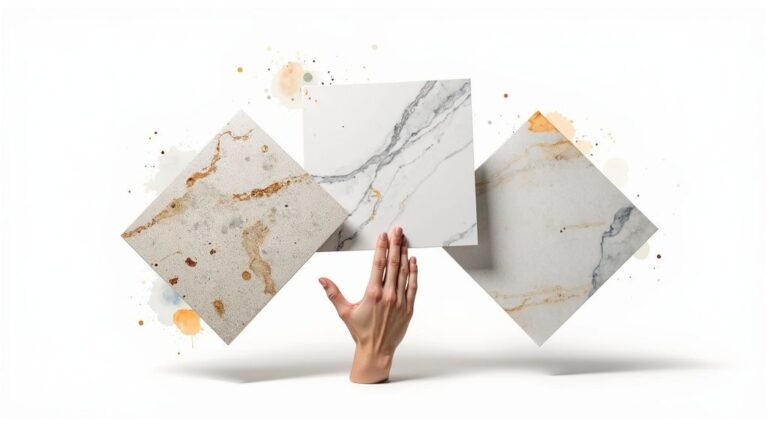

Choosing between granite, quartz, and porcelain countertops is about what you want most. Do you love natural, unique patterns? Or do you prefer a consistent look with easy care? Maybe you need a super-strong surface with endless design options.
Granite is like a piece of art from the earth. Quartz is a reliable, low-maintenance choice. Porcelain offers amazing strength with beautiful, realistic designs. This guide will help you understand the difference between granite, quartz, and porcelain vs quartz to find the perfect fit for your home.
Choosing Your Ideal Countertop Material
Picking the right countertop is a big deal. It sets the style for your kitchen or bathroom and has to handle daily use. For homeowners from Palo Alto to Monterey, the best choice depends on your lifestyle and taste.
The surface you choose can also make your kitchen easier to use. A low-maintenance material saves you time. A durable one means you worry less about scratches or spills. Comparing them side-by-side helps you decide.
A Quick Comparison
Here's a simple way to think about it:
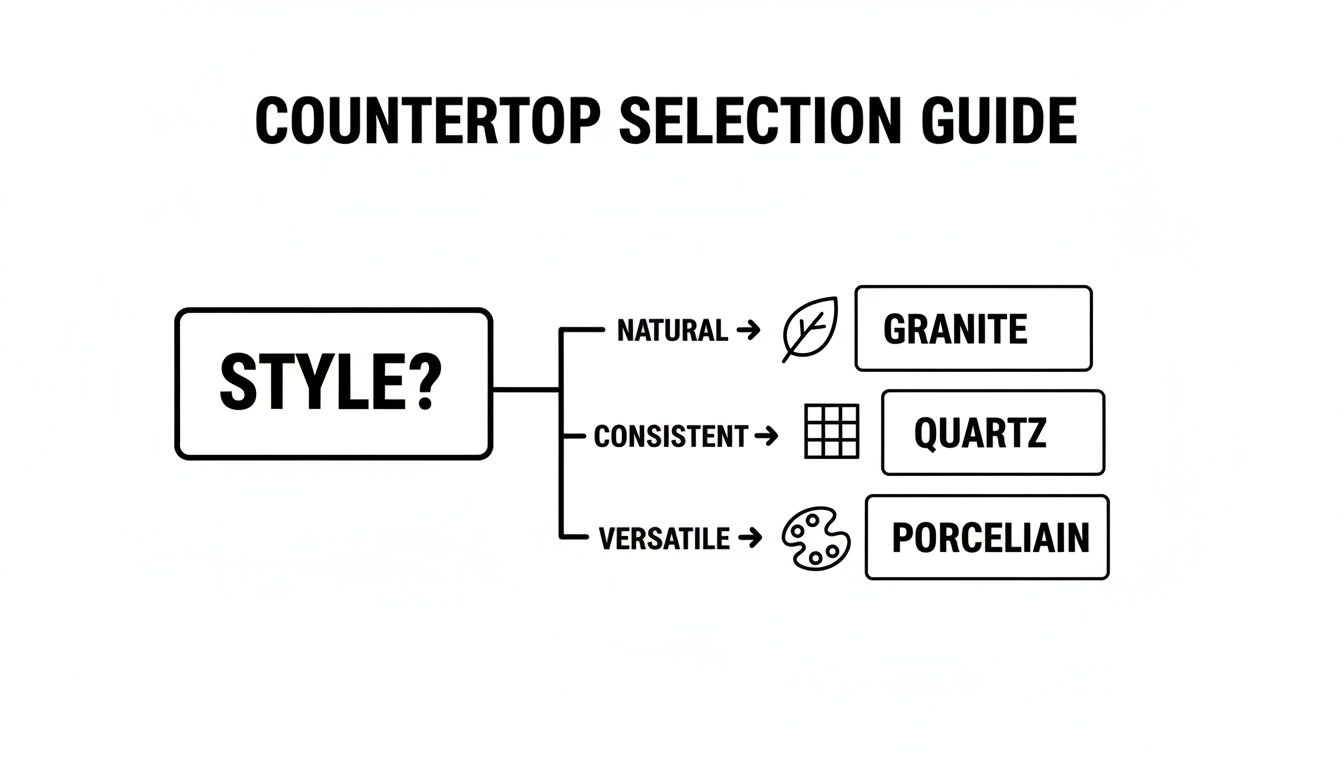
- Granite: Best for those who want a one-of-a-kind, natural look. No two pieces are the same.
- Quartz: Great for anyone needing a consistent pattern and very little upkeep.
- Porcelain: The top pick for those who want realistic designs with unmatched heat and UV resistance.
| Feature | Granite | Engineered Quartz | Porcelain |
|---|---|---|---|
| Primary Appeal | Unique, natural patterns | Consistent color & pattern | Versatile, realistic designs |
| Composition | 100% Natural Stone | 90%+ Crushed Quartz & Resins | Fired Clay & Minerals |
| Maintenance Level | Low (Requires Sealing) | Very Low (No Sealing) | Very Low (No Sealing) |
| Best For | One-of-a-kind style | Busy, modern kitchens | Indoor/Outdoor use |
This table can help you see which path makes the most sense for your home.
 tile porcelain.” />
It’s easy to see how your design goals can point you to the right material for your Bay Area home.
Understanding How Each Countertop Is Made
The look, feel, and performance of a countertop all come from how it’s made. Granite, quartz, and porcelain each have a different origin story. One is shaped by nature, while the other two are made with smart engineering.
Granite is a masterpiece made by the earth. It is a 100% natural rock formed from magma that cooled slowly deep underground. This process creates a dense stone with beautiful minerals like quartz and feldspar.
Because it’s natural, every slab of granite is unique. It is dug out of the ground in large blocks from all over the world. The organic veins and colors tell the story of how it was made. For a Monterey home wanting a natural feel, granite is a perfect choice.
The Engineered Alternatives
Unlike granite, quartz and porcelain are engineered surfaces. They are designed to offer specific benefits and a consistent look that nature can’t always provide.
Engineered quartz countertops are a mix of materials. They are made of over 90% crushed natural quartz crystals, which are very hard. These crystals are blended with colors and held together with a polymer resin. This mixture is pressed and heated to form a solid, non-porous slab. To learn more, read our guide on what is engineered stone.
This process gives quartz its uniform color and pattern. It allows for many design options, from pure whites for a modern Bay Area kitchen to patterns that look like natural stone. You can be sure the sample you see in a Palo Alto showroom will look the same in your home.
High-Tech Ceramic Craftsmanship
Porcelain is another type of engineered surface. It is made from a special mix of natural clays and minerals, similar to high-end pottery.
This mixture is pressed and fired in a very hot oven, often over 2,200°F (1,200°C). The intense heat melts the minerals together into an incredibly dense and strong slab. No resins are needed.
This process has clear benefits:
- Very Hard: The heat makes the surface extremely resistant to scratches.
- Light and Strong: Porcelain can be made in thin slabs without losing its strength.
- Design Freedom: The surface can be printed with high-definition images. It can look just like rare marble, rustic wood, or industrial concrete.
This advanced manufacturing makes porcelain a great choice. It offers a powerful mix of toughness and style.
Comparing Durability and Everyday Performance
How your countertop holds up to daily life is very important. This is a key part of understanding the difference between granite quartz and porcelain vs quartz. A beautiful surface that can't handle a hot pan or a spill isn't very useful.
We'll look at how each material handles heat, scratches, and sunlight. This will help you match a material’s strengths to your lifestyle.
Heat Tolerance in the Kitchen
If you love to cook, a heat-resistant countertop is a must. Placing a hot pan directly on some surfaces can cause damage.
Granite is the best for heat. Because it was formed by intense heat inside the earth, it is very resistant to high temperatures. It can handle heat up to 2,192°F (1,200°C). You can see some top granite slab options in the Bay Area to learn why it's so popular.
Porcelain also handles heat very well. Since it’s fired at high temperatures when it's made, it is not damaged by hot cookware. You can place hot pots right on it without worry.
Quartz needs more care with heat. The resins used to make it can be damaged by temperatures over 300°F (150°C). This can leave a permanent burn mark. With quartz, you must always use a trivet for hot pans.
Durability At a Glance Granite vs Quartz vs Porcelain
| Durability Factor | Granite | Engineered Quartz | Porcelain |
|---|---|---|---|
| Heat Resistance | Excellent (up to 1200°C) | Fair (up to 150°C) | Excellent (kiln-fired) |
| Scratch Resistance | Very Good (Mohs 6-7) | Excellent (Mohs 7) | Excellent (Mohs 7-8) |
| Chip Resistance | Good (can chip on edges) | Excellent (resins add flex) | Good (dense but can chip) |
| UV Resistance | Very Good (UV-stable stone) | Poor (resins yellow) | Excellent (fade-proof) |
This table shows that while all three are strong, their specific strengths are different.
Scratch and Chip Resistance
Your countertops need to be tough. Hardness is a good measure of how well a material resists scratches.
Here’s how they compare:
- Porcelain: This is the hardest, with a Mohs rating of 7-8. It is very difficult to scratch.
- Quartz: Also very hard at around 7 on the Mohs scale. The resins in quartz give it a little flexibility, so it's less likely to chip than natural stone.
- Granite: This natural stone is usually between 6 and 7 on the Mohs scale. It’s very scratch-resistant, but a hard hit on an edge could cause a chip.
All three materials are tough. But porcelain and quartz often have a slight edge in scratch resistance. Quartz is often better at resisting chips.
UV Resistance for Sunlit Spaces
If you live in a sunny place like Monterey or Palo Alto, you need a countertop that won’t fade. This is very important for outdoor kitchens or rooms with big windows.
Porcelain is the best choice for UV resistance. Its color is baked into the material, so it won't fade or turn yellow in the sun. This makes it perfect for outdoor use.
Granite also does well outdoors. As a natural stone, its colors are stable in the sun.
Quartz is not a good choice for outdoor use. The resins in it can be damaged by sunlight. Over time, the countertop can turn yellow, fade, or become weak.
How Maintenance and Stain Resistance Compare
For most people, easy upkeep is very important. The best countertop looks great and makes your life simpler. This is where you will see big differences between granite, quartz, and porcelain.
The main difference is porosity. This just means how many tiny holes a material has. Porosity affects how easily a surface will soak up liquids and stain.
Granite's Natural Porosity
Granite is a 100% natural stone, so it has tiny pores. Spills like coffee or wine can seep into these pores and cause a permanent stain. This is why granite countertops need to be sealed.
Sealing is a simple process that puts a protective layer on the stone. It closes the pores to block stains. We usually recommend sealing granite every one to three years.
The Engineered Advantage of Quartz and Porcelain
This is where quartz and porcelain shine. Both are engineered to be non-porous. This means they do not have tiny holes for liquids to soak into.
Because they are non-porous, spills just sit on the surface. Cleanup is easy with a cloth and mild soap. This also makes them very hygienic, since bacteria can't hide in pores. You can find more tips in our guide on how to clean natural stone.
Many people are choosing these low-maintenance options. The market for engineered quartz is expected to grow by 8.1% per year from 2025 to 2030, according to some reports. You can discover more insights on countertop market trends to see why these easy-care surfaces are so popular.
A Quick Maintenance Comparison
Here's a look at what care is needed for each material.
- Granite: Needs sealing every few years to prevent stains. Spills should be wiped up quickly.
- Quartz: Never needs sealing. Its non-porous surface is very resistant to stains and bacteria.
- Porcelain: Also never needs sealing. Its dense surface is a fortress against stains and germs.
It’s a trade-off. You can choose the natural beauty of granite, which needs a little more care. Or you can pick the set-it-and-forget-it ease of quartz or porcelain.
Exploring Your Design and Aesthetic Options
Your countertop is a big part of your room's style. Choosing between granite, quartz, and porcelain means choosing a certain look. Each material offers a different way to express your taste.
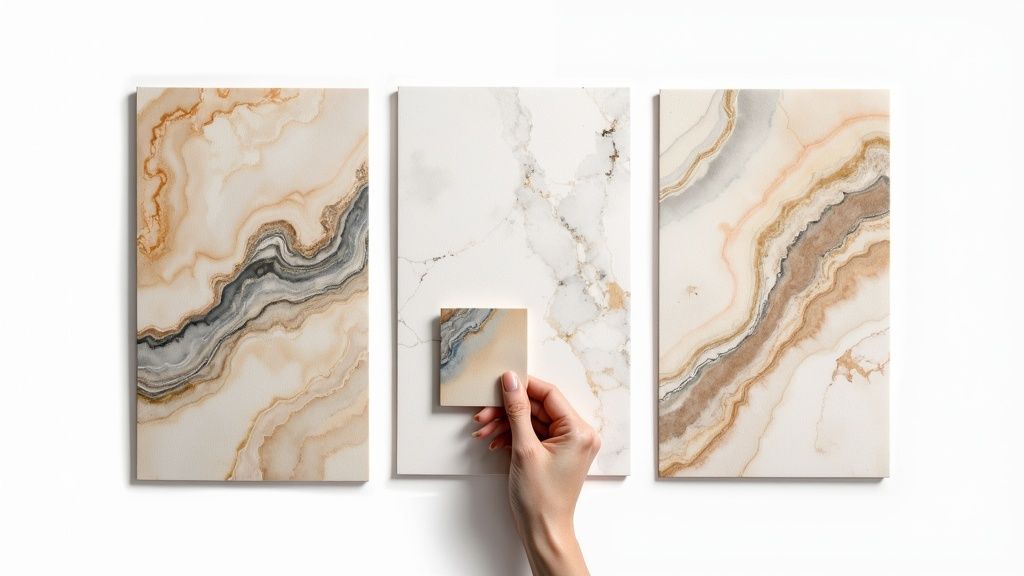
Let's look at the design possibilities for each material.
Granite: The Beauty of Natural Uniqueness
Granite is perfect for people who love natural beauty. Because it comes from the earth, every slab of granite is one-of-a-kind. No two pieces will ever have the same pattern or color.
This uniqueness is granite's best feature. It brings a timeless, organic feel to a room that can't be copied. Its patterns tell a story about the earth, which is perfect for a rustic Monterey home or a classic design.
Quartz: Engineered Consistency and Control
Unlike granite, quartz offers design control. Because it is an engineered product, quartz provides consistent color and pattern. The sample you choose in our Palo Alto showroom will look just like the countertop in your home.
This consistency allows for many design options. Quartz is available in a huge range of colors and styles, including:
- Solid Colors: Perfect for a clean, modern look.
- Subtle Patterns: Soft flecks and veins add texture without being too busy.
- Realistic Marble Looks: New technology creates patterns that look just like real marble.
Quartz gives you a polished, uniform look. It is ideal for modern designs where clean lines and exact colors are important.
Porcelain: The Frontier of Design Versatility
Porcelain offers the most design freedom. Using advanced digital printing, the surface of a porcelain slab can be decorated with very realistic images.
This allows porcelain to look like almost any material you can imagine. The design options are nearly endless. Popular porcelain looks include:
- Rare Marbles: Get the look of exotic stone with much better durability.
- Wood Grains: Get the warm look of wood in places where real wood would be damaged by water.
- Industrial Concrete: Get the raw, edgy look of concrete in a light, non-porous material.
The finish also changes the final look. You can learn more about polished, honed, or leathered finishes in our guide. Porcelain gives you the ultimate creative control.
Which Countertop Is the Most Sustainable Choice?
For many people in California, where a material comes from is as important as how it looks. When comparing granite, quartz, and porcelain, sustainability is a key factor.
Granite is a natural product from the earth. It is free of chemicals and resins. However, digging it out of the ground uses a lot of energy. Transporting the heavy stone also has a large carbon footprint.
Engineered Surfaces and Their Environmental Impact
Quartz and porcelain have a different environmental story. Their impact is shaped by the materials they use and how they are made.
Quartz is made mostly from crushed natural quartz, which is a very common mineral. This is good because it doesn't require digging up giant slabs of stone. But, it uses petroleum-based resins to hold the particles together. These resins are not a renewable resource.
Porcelain is a very eco-friendly choice. It’s made from natural clays and minerals. The manufacturing process uses less raw material than quarrying granite. Many porcelain makers now use recycled content.
Porcelain Is Leading the Way in Sustainability
The countertop industry is working to be more eco-friendly, and porcelain is leading the way. New innovations are creating surfaces that are good for the planet.
The U.S. countertop market is expected to reach $32.44 billion by 2030, with porcelain becoming more popular due to its green benefits. Some porcelain is now made with up to 80% recycled content, which can cut its carbon footprint by a huge 40%. You can discover more insights about these design innovations to learn more.
This makes porcelain a great choice for homeowners in Monterey and Palo Alto who care about the environment.
Frequently Asked Questions
Choosing between granite, quartz, and porcelain can be tricky. Here are answers to some common questions we hear from homeowners in the Bay Area.
What is the best countertop for an outdoor kitchen in California?
Porcelain is the best choice for outdoor kitchens, especially in sunny areas like Monterey. It is completely UV-stable, meaning its color won't fade or turn yellow in the sun. You can use granite outdoors, but quartz is not recommended as its resins can be damaged by sunlight.
Is quartz more durable than granite?
They are durable in different ways. Quartz is engineered to be more flexible, so it resists chipping, and its non-porous surface is great at resisting stains. Granite, on the other hand, is more resistant to heat from hot pans and is also very hard to scratch. The best choice depends on your needs.
Which countertop looks the most seamless?
For a smooth, seamless look, porcelain and quartz are the best options. They can be made in very large slabs, which can often cover an entire kitchen island without any seams. Granite slabs are limited in size, so seams are more common in larger kitchens.
Do these countertops add value to my home?
Yes, all three are considered high-end materials that can increase your home's value. Granite is known for its classic luxury. Quartz is popular for its modern look and easy care. Porcelain is a top choice for buyers who want the latest in design and performance.
Can I cut directly on my countertop?
We do not recommend cutting directly on any of these surfaces. While they are all very hard and scratch-resistant, a sharp knife could still leave a mark. Using a cutting board is best to protect both your countertop and your knives.
Ready to see these stunning materials for yourself? The expert team at Carmel Stone Imports is here to guide you through our extensive collection of granite, quartz, and porcelain. Visit one of our showrooms in Palo Alto, Carmel, or Sand City to find the perfect surface for your project. Contact us today for a personalized consultation.