Planning a kitchen or bathroom remodel in your California home involves many choices, but few impact your budget and daily life like countertops. This guide breaks down the engineered stone countertops cost, helping you understand what to expect. Generally, the cost ranges from $70 to $150 per square foot installed, making it a significant part of your project's investment.
This guide will pull back the curtain on the total price, giving you a clear, honest breakdown of what you're actually paying for. We'll explore the material itself, expert fabrication, and final installation to help you budget confidently for your Bay Area or Monterey project.
Understanding Your Total Investment
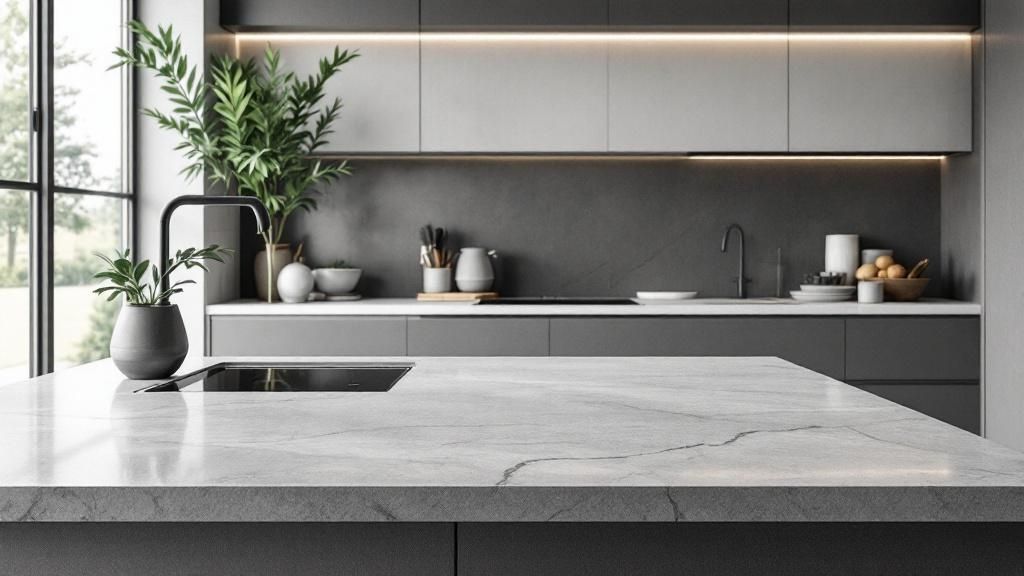
When budgeting for countertops, it’s easy to fixate on the advertised per-square-foot price. However, that number is just one piece of a much larger puzzle. Your final invoice is a combination of the stone itself, the craftsmanship needed to shape it, and the skill required for a perfect installation.
We'll move beyond simple square-foot numbers to dig into the details that truly matter. From the specific quartz brand you choose and the complexity of your design to the fine points of fabrication, every choice affects the bottom line. Understanding how material tiers, edge profiles, and sink cutouts impact the final price empowers you to make smart decisions for your Bay Area home.
Key Factors Influencing Cost
The final price tag on your engineered stone countertops is rarely a single line item. It's a sum of several critical parts that create your finished surface. According to industry data, an installed quartz countertop can run anywhere from $70 to over $150 per square foot, with premium designer styles climbing even higher.
To help you get a handle on your project, here are the main factors driving the engineered stone countertops cost:
- Material Selection: The slab is your starting point, and its cost can vary wildly. The price depends on the brand, color complexity, and pattern intricacy. A simple, solid-color quartz will always be more budget-friendly than one with dramatic, marble-like veining.
- Fabrication Complexity: This covers the labor and skill needed to cut, shape, and finish the raw slab. The number of sink or cooktop cutouts and the edge profile choice (e.g., a simple eased edge versus a decorative ogee) will influence this cost.
- Installation Logistics: This includes everything from transporting heavy slabs to your home and creating a perfect template to leveling the counters and creating nearly invisible seams. A straightforward kitchen in Palo Alto has different logistical needs than a complex island installation in a multi-story home in Monterey.
This next section provides a clearer picture of how these costs typically break down.
Estimated Cost Breakdown for Engineered Stone Countertops
This table outlines the typical cost components for an engineered stone countertop project.
| Cost Component | Average Price Range (Per Sq. Ft.) | Key Influencing Factors |
|---|---|---|
| Material (The Slab) | $40 – $120+ | Brand reputation, color/pattern complexity, slab thickness, and exclusivity of the design. |
| Fabrication | $20 – $50+ | Number of cutouts (sinks, faucets, cooktops), edge profile choice (e.g., eased vs. ogee), and layout complexity. |
| Installation | $10 – $30+ | Site accessibility, travel distance, number of seams required, and any necessary on-site adjustments. |
As you can see, the material itself is just the beginning. The hands-on work of fabrication and installation adds a significant portion to the final cost.
A common mistake is underestimating the cost of fabrication and installation, which can account for a significant portion of the total budget. Always request an all-inclusive quote to avoid surprises.
At Carmel Stone Imports, we believe in transparent pricing that details each of these elements. This approach ensures you know exactly where your investment is going, empowering you to make informed decisions that perfectly balance beauty, function, and your budget.
What Is Engineered Stone and Why Is It So Popular?
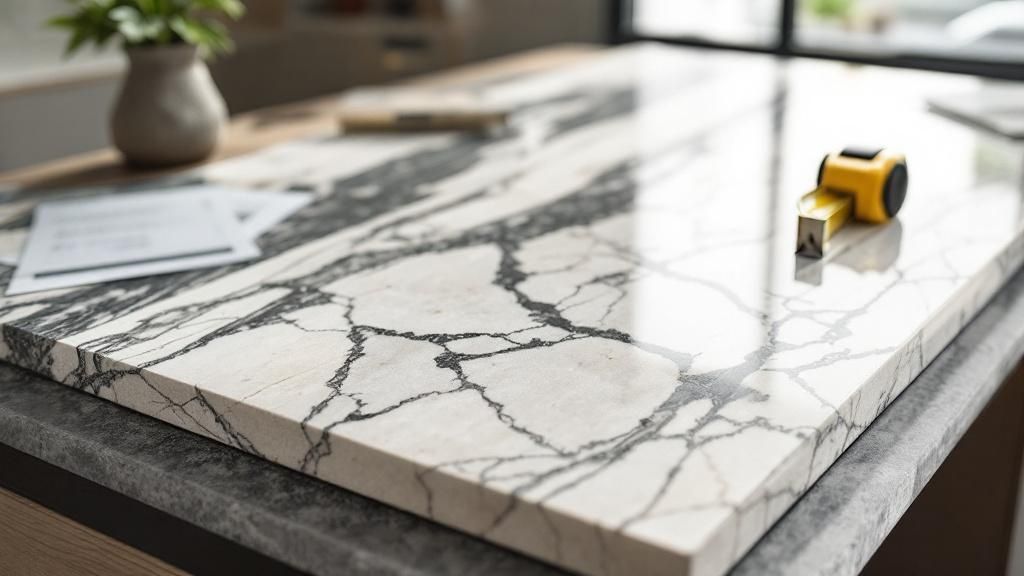
Before we analyze the engineered stone countertops cost, let’s define what this material is and why it's a mainstay in modern design. Unlike natural stones like granite or marble, which are cut directly from the earth, engineered stone blends nature and technology. It’s a perfect mix of raw mineral muscle and human ingenuity.
The manufacturing process is precise. It starts by mixing up to 90-95% crushed natural quartz—one of Earth's hardest minerals—with polymer resins and pigments. This blend is poured into a mold, compressed under immense pressure, and baked at high temperatures to create a solid, incredibly dense slab.
This process gives engineered stone its biggest advantages: consistency and predictability. While every piece of natural stone is unique, engineered stone offers uniform color, pattern, and texture. That consistency is a huge plus for large projects needing matching surfaces, like kitchen islands, waterfall edges, and the full-height backsplashes popular in modern Bay Area homes.
The Unmatched Durability of Engineered Stone
One of the biggest draws for homeowners is engineered stone's incredible durability and low-maintenance nature. The non-porous surface created during manufacturing is a game-changer for busy areas like kitchens and bathrooms.
Here’s what that non-porous surface means in your daily life:
- Stain Resistance: Spills from coffee, wine, or oil sit on the surface instead of soaking in, making cleanup easy and preventing permanent stains.
- Hygienic Surface: Its dense structure inhibits the growth of bacteria, mold, and mildew, creating a safer space for food preparation.
- No Sealing Required: Natural stones like marble or granite need regular sealing. Engineered stone never needs sealing, saving you time and money over the life of your countertops.
Because of its robust, low-maintenance characteristics, engineered stone offers exceptional long-term value. The initial investment is often offset by the savings in upkeep and potential repair costs associated with more porous natural materials.
This practical performance doesn't require sacrificing aesthetics. Manufacturers offer an endless variety of styles, from brilliant solid whites perfect for minimalist designs to intricate patterns that mimic the delicate veining of Calacatta marble. For a deeper look, check out our guide on natural stone vs. engineered stone.
A Market Driven by Performance and Style
The demand for engineered surfaces is not a fleeting trend; it reflects a real shift toward materials that deliver both high performance and sophisticated design. The global engineered stone market was valued at USD 23.42 billion in 2022 and is projected to reach USD 36.76 billion by 2030, according to Fortune Business Insights. This growth is driven by construction and a widespread desire for durable, beautiful surfaces.
Engineered stone's rise is due to its ability to solve a classic homeowner dilemma: achieving the timeless beauty of stone without the demanding maintenance. It’s a smart, stylish, and practical investment perfectly suited for the busy lifestyles of homeowners from Carmel to Palo Alto.
Breaking Down Your Final Countertop Cost
The sticker price on a slab of engineered stone is just the starting point. The final invoice for your countertop project is a combination of key elements, and understanding them is the secret to keeping your budget in check. The total engineered stone countertops cost is a blend of the material itself, the craftsmanship to shape it, and the skilled labor for a perfect installation.
Think of it like commissioning custom furniture. You're not just paying for the wood; you're investing in the design, expert joinery, finishing, and delivery. Your countertops are no different—each step adds value and shapes the final cost.
The Foundation: The Material Slab
The slab is the single largest part of your cost, with its price often determined by a tier system based on design complexity and brand name. Just like with anything custom, the more intricate and rare the look, the higher the price.
- Entry-Level (Tier 1): These are clean, simple designs—solid colors or patterns with fine, subtle specks. They're fantastic for minimalist looks or projects with a tight budget.
- Mid-Range (Tier 2-3): Here, you'll find more visual texture. These slabs have more movement and gentle veining, often mimicking common natural stones. They strike a great balance between eye-catching design and value.
- Premium (Tier 4+): This is the top of the line, featuring slabs with bold, dramatic veining, rare colors, and complex patterns that rival exotic marbles. These are showstoppers that highlight the full potential of engineered stone.
The brand matters, too. Big names like Silestone or Cambria often have a higher price tag, but you're paying for a reputation built on quality, cutting-edge designs, and solid warranties.
This chart gives you a good idea of where engineered stone lands in the overall countertop market.
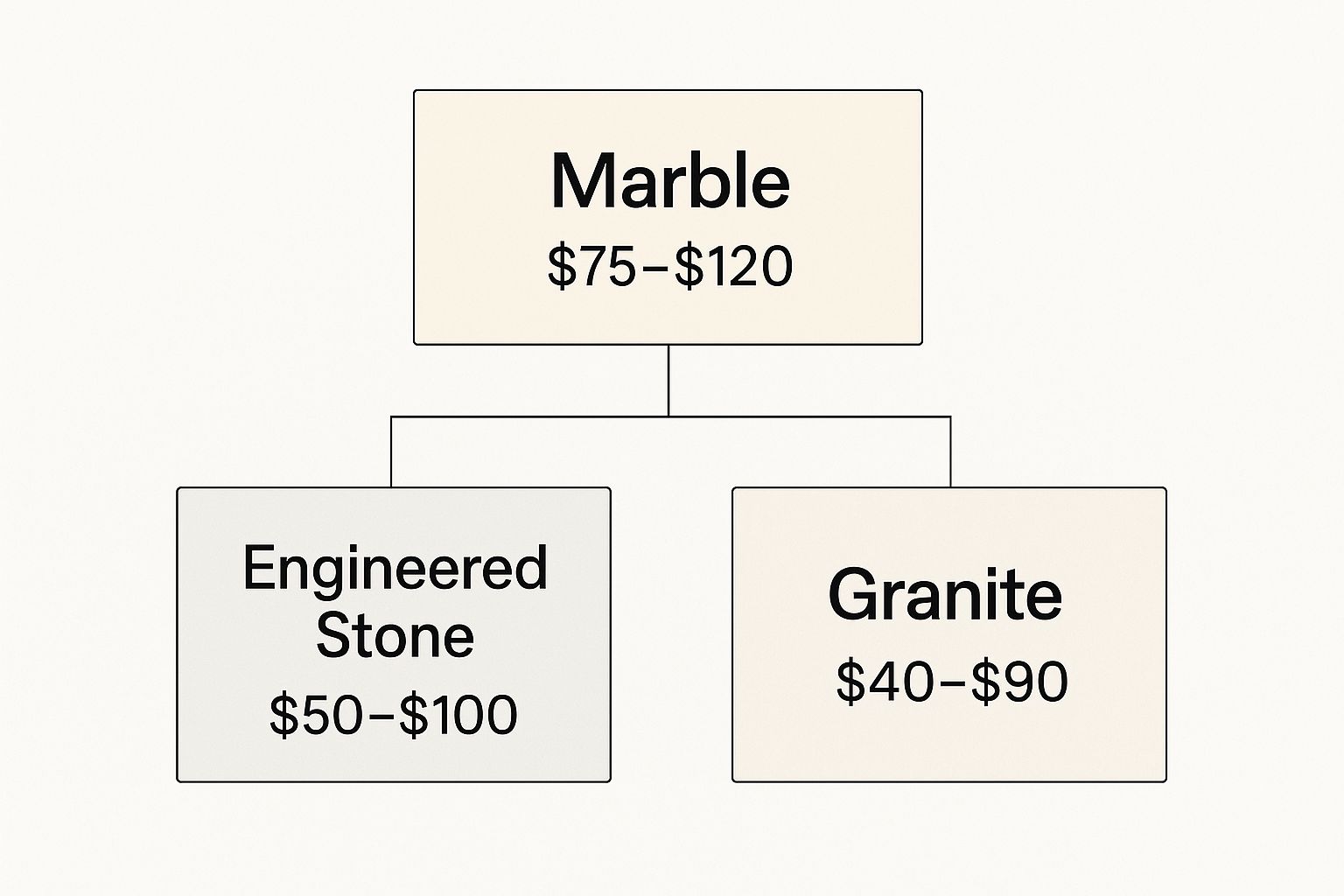
As you can see, engineered stone sits comfortably in the mid-to-upper price range, making it a strong competitor to many natural stones. To get a better sense of these comparisons, you can dive deeper into our analysis of the price of quartzite vs granite.
The Artistry: Fabrication Costs
Once you've selected a slab, the next cost is fabrication. This is where raw material becomes your custom-fit countertop. It’s all about craftsmanship and precision, where every cut and polish adds to the final price.
Here's what goes into fabrication costs:
- Cutouts: Every opening for your sink, cooktop, or faucet needs to be cut perfectly with specialized tools. An undermount sink cutout requires more detailed work than a simple drop-in model.
- Edge Profiles: The edge finish significantly impacts both the look and the cost. A basic eased edge is typically standard, but more decorative profiles require extra labor.
- Simple Edges: Eased, Bevel
- Premium Edges: Ogee, Bullnose, Dupont
- Layout Optimization: A good fabricator carefully plans cuts to maximize material use and minimize waste. Complex layouts or projects needing multiple slabs can increase both waste and labor.
The Final Step: Installation and Labor
The last piece of the puzzle is installation. This covers getting the finished countertops from the workshop into your kitchen and secured perfectly. It’s a job that takes both muscle and experience to ensure your investment looks incredible for years.
Installation costs usually cover several key services:
- Delivery and Transportation: Safely getting heavy, fragile stone slabs to your home requires special equipment and a skilled crew, especially for homes in tricky locations.
- Templating: Before any cuts are made, a fabricator creates an exact template of your cabinetry. This is a critical step for a perfect, glove-like fit.
- On-Site Work: This includes leveling the countertops, meticulously joining seams so they're nearly invisible, and making any final adjustments. A flawless installation is what makes a project truly stunning.
Working with a transparent supplier like Carmel Stone Imports means every cost is clearly laid out, empowering you to make smart choices that bring your vision to life without breaking the bank.
Comparing Engineered Stone Costs: Quartz vs. The Competition
When we talk about the engineered stone countertops cost, quartz usually dominates the conversation. It hits that sweet spot of toughness, easy care, and endless design choices that homeowners and designers across California love. But the world of engineered surfaces is bigger than just quartz, with exciting new materials bringing their own perks and price points.
Figuring out how quartz stacks up against other popular materials, both engineered and natural, is key to choosing with confidence. We’ll look past the initial price per square foot to consider long-term value, upkeep, and aesthetics to help you find the perfect surface.
Quartz vs. Granite: A Classic Matchup
This is the comparison we hear most often. While the final installed costs for quartz and granite can be similar, they offer very different long-term experiences.
- Quartz: Expect to pay between $70 and $150 per square foot installed. The pricing is fairly straightforward, increasing with brand recognition and veining intricacy.
- Granite: The price can swing wildly, from $60 to over $200 per square foot installed. Basic granite might seem like a bargain, but rare, exotic slabs can easily cost more than luxurious quartz.
The real difference-maker is upkeep. Granite needs sealing every one to two years to prevent staining, adding a recurring cost. Quartz is non-porous and never needs sealing, a huge plus for a busy household in the Bay Area.
Quartz vs. Marble: Beauty and Brawn
Nothing says luxury quite like marble. Its soft, luminous quality is stunning, but that beauty comes with a high price tag and even higher maintenance.
Marble is almost always more expensive than quartz, starting around $75 per square foot and easily climbing past $200 for coveted varieties like Calacatta or Statuario. Its porous surface is also a magnet for stains and etching from everyday items like lemon juice or wine.
This is where engineered quartz truly shines. Manufacturers have mastered recreating the look of high-end marble, complete with complex, natural-looking veining. You get the opulent aesthetic of marble combined with the durability and low-maintenance reality of an engineered product.
Emerging Alternatives: Sintered Stone and Porcelain
Innovative materials like sintered stone and porcelain slabs are making a real splash. Forged using incredible heat and pressure, these surfaces are exceptionally dense and resilient.
Sintered Stone & Porcelain Slabs:
- Superior Heat Resistance: They handle high temperatures without a problem, taking durability a step beyond quartz.
- UV Stability: These materials won’t fade or yellow in direct sunlight, making them ideal for outdoor kitchens or sun-drenched rooms—a common feature in coastal California homes.
- Cost: Their price is often on par with or slightly above high-end quartz, reflecting their advanced manufacturing and superior performance.
The countertop world is full of amazing options. Our guide on how to choose countertops dives even deeper, giving you the insights to navigate the selection process like a pro.
Engineered Stone Countertop Material Comparison
To help you visualize the differences, here’s a quick breakdown of how these popular engineered materials compare.
| Material Type | Average Cost (Per Sq. Ft. Installed) | Key Benefits | Best For |
|---|---|---|---|
| Quartz | $70 – $150 | Non-porous, stain-resistant, huge color/pattern variety, no sealing required. | Busy kitchens, modern aesthetics, and homeowners wanting low maintenance. |
| Sintered Stone | $80 – $180 | Extreme heat/scratch resistance, UV stable for outdoor use, waterproof. | Indoor/outdoor kitchens, high-use areas, and those seeking maximum durability. |
| Porcelain Slabs | $75 – $170 | Very durable, heatproof, UV resistant, lightweight, available in thin profiles. | Countertops, backsplashes, wall cladding, and projects needing a seamless look. |
Each of these materials brings something valuable to the table. Whether you prioritize the predictable performance of quartz or the advanced durability of newer surfaces, Carmel Stone Imports can help you find the perfect fit.
How Global Supply Chains Affect Your Local Price
Ever wondered why the price for the same style of countertop can change from one season to another? The final engineered stone countertops cost you see in a local showroom is the last stop on a long, global journey. Understanding that journey helps make sense of price shifts and shows why working with an established local supplier makes all the difference.
The path from a factory in Europe or Asia to your Bay Area kitchen has many steps, and each one adds to the final cost. We’re talking about overseas shipping, international tariffs, and domestic trucking—all sensitive to the global economy.
The Geography of Manufacturing
Where a slab is made plays a huge role in its price. Different regions specialize in certain types of engineered stone, focusing on different styles and price points.
- European Hubs: Countries like Italy and Spain are famous for their high-end, design-focused slabs. They are often trendsetters, creating luxurious surfaces that mimic rare, natural marbles. This commitment to premium design means their products usually have a higher price tag.
- Asian Production Centers: The Asia Pacific region has become a powerhouse for engineered stone. It holds a massive 38% share of the global market, valued at USD 8.42 billion in 2023. With over 140 manufacturing plants in countries like China and India, the competition is fierce, often leading to more affordable prices. You can read more about these market dynamics to see how they influence global supply.
From Port to Project Site
Once a slab is made, its journey has just begun. Moving these heavy, delicate slabs across the globe is a major cost that most customers never see.
The "landed cost" of a slab—what it costs by the time it reaches a U.S. port—isn't just the factory price. It includes ocean freight, insurance, tariffs, and port fees. A hiccup anywhere along the line, like a backup at the Port of Oakland, can cause delays and drive up these costs, which eventually trickles down to local retail prices.
This is where working with a seasoned importer like Carmel Stone Imports pays off. We manage a complex global supply chain daily. Our long-term relationships with top manufacturers give us a competitive advantage, allowing us to negotiate better terms and anticipate market shifts, which helps protect our clients from price swings.
By keeping a large, diverse inventory in our California warehouses, we create a buffer against supply chain issues. This means when you pick a slab for your Monterey home, you get a stable, straightforward price. We handle the global logistics so you can focus on choosing the perfect stone.
Budgeting Your Project to Maximize Value
A good budget is the backbone of any successful remodel. When it comes to the engineered stone countertops cost, smart planning is about making strategic moves that give you the biggest bang for your buck. Thinking through your budget ahead of time lets you put your money where it counts, guaranteeing a result that’s both gorgeous and financially smart.
The first step is to get a truly all-inclusive quote. A reputable supplier like Carmel Stone Imports will break everything down for you: the slab, fabrication, delivery, installation, and even tearing out your old countertops. This transparent approach means no surprise charges later, giving you a complete picture of your total investment.
Strategies for Smart Savings
Getting the most value doesn't always mean picking the cheapest slab. It's about being clever with your decisions to make every dollar work for you. A few small adjustments can often lead to big savings without sacrificing the high-end look you’re aiming for in your Palo Alto or Monterey home.
Here are a few pro tips to stretch your budget further:
- Ask About In-Stock Materials: See what your supplier has on-site. These slabs are already in inventory, which can cut down on wait times and lower the cost compared to a special order.
- Stick with Standard Edge Profiles: A fancy ogee or Dupont edge is beautiful but requires more labor. Choosing a clean, standard eased or beveled edge can reduce fabrication costs while delivering a sleek, modern look.
- Optimize Your Slab Layout: Work with your fabricator to plan the most efficient way to cut your slab and minimize waste. Sometimes, smart placement of cutouts means you don’t have to buy a whole second slab.
Focusing on Long-Term Value
A countertop is a long-term investment in your home's function and appeal. The initial engineered stone countertops cost might seem higher than some materials, but its durability and low maintenance pay you back over time. Unlike materials that need annual sealing or are easily damaged, engineered stone handles real life with almost no fuss.
Think of your countertops as a permanent upgrade. The resilience of engineered stone means you avoid the recurring costs of repairs or resealing, adding to its lifetime value and contributing to your home’s resale potential.
The market certainly agrees. There’s a growing appreciation for durable, high-tech surfaces, with the engineered stone countertop segment projected to grow to USD 1.32 billion by 2030. This growth is fueled by new digital fabrication tech allowing for incredibly precise designs.
Budgeting for a major home project is a skill. It helps to see how other upgrades are handled, and looking over a guide to understanding switchboard upgrade costs can offer perspective. Likewise, learning how to template countertops provides a deeper understanding of the fabrication process and where costs originate.
Frequently Asked Questions
To help you feel confident about your decision, here are answers to the most common questions we hear from our clients in the Bay Area and beyond.
Is quartz more expensive than granite?
It depends. The costs for quartz and granite often overlap. While some entry-level granite may be cheaper, high-end, exotic granite slabs will almost always cost more than even the most luxurious quartz. Their price points are generally comparable, but quartz pricing is much more predictable, making it easier to budget for the final engineered stone countertops cost.
Do engineered stone countertops increase home value?
Absolutely. A stylish, durable, and modern kitchen is a huge draw for potential buyers. Homebuyers today often look for engineered stone because they appreciate its high-end look and minimal maintenance. Installing quartz countertops is a solid investment that pays off, especially in a competitive real estate market like the Bay Area.
What's the difference between quartzite and quartz?
This is a common point of confusion. Quartzite is a 100% natural metamorphic rock quarried from the earth in unique slabs, much like granite or marble. Quartz, on the other hand, is an engineered product made by combining about 90-95% crushed natural quartz with polymer resins. The key difference is that engineered quartz is non-porous and never needs sealing, while natural quartzite requires periodic sealing. We dive deeper into this in our post on the essentials of quartz countertops.
Can I put a hot pot directly on my quartz countertop?
We strongly advise against it. The resins that bind the crushed quartz can be damaged by a sudden, intense temperature change (thermal shock). This can cause permanent discoloration or even crack the surface. Always use a trivet or hot pad to protect your beautiful investment.
How do I clean and maintain engineered stone?
This is where engineered stone truly shines—it’s incredibly easy to care for. For daily cleaning, a soft cloth with mild soap and warm water is all you need. Avoid harsh or abrasive cleaners and scrubbers, as they can dull the polished finish over time. Best of all, since it's non-porous, you’ll never have to worry about sealing it.
Ready to explore the perfect engineered stone for your project? The team at Carmel Stone Imports has the expertise and inventory to bring your vision to life. Visit our showrooms in Palo Alto, Carmel, or Sand City to see our collection, or contact us for a personalized consultation today.