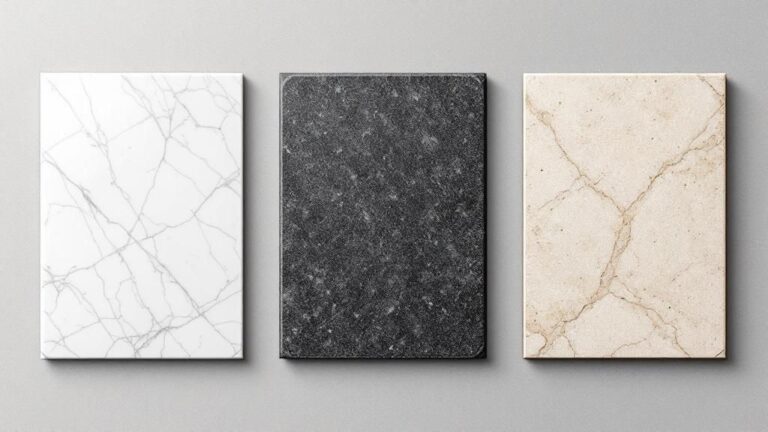
Selecting the perfect slab of marble, quartz, or granite is only half the battle; the edge profile you choose is the critical finishing touch that defines your countertop's final look and feel. This small but significant detail impacts everything from the overall design aesthetic to daily functionality and long-term durability. The right edge can transform a simple surface into a statement piece, seamlessly integrating it with your cabinetry and tying your entire kitchen or bathroom design together.
Whether you're aiming for a sleek, modern look in a Palo Alto home or a more ornate, classic style suited for a Monterey estate, understanding your edge options for countertops is essential. This guide explores the most popular profiles, helping you make an informed decision that elevates your space. From the clean lines of a straight edge to the intricate curves of an ogee, we will discover how this choice affects safety, cleaning, and visual style. For those exploring advanced material applications beyond traditional stone, it can be useful to see what specialists in other industries are doing. Companies specializing in advanced edge materials and applications, such as those found at the Titan Edge Titanium Homepage, showcase how specialized engineering can push the boundaries of performance in various fields.
1. Bullnose Edge
The Bullnose is a timeless classic among edge options for countertops, recognized for its fully rounded, 180-degree curve. This profile creates a smooth, semi-circular edge that extends from the top surface down to the underside of the stone. Its complete lack of sharp corners makes it an exceptionally safe and comfortable choice, defining its role as a practical yet soft design element.
This edge is particularly well-suited for high-traffic areas where safety is paramount, like a busy family kitchen or a bustling commercial cafeteria. The rounded surface minimizes the risk of bumps and injuries, offering peace of mind without sacrificing style. Its soft silhouette integrates seamlessly with traditional, transitional, and even some rustic design schemes, lending a gentle, welcoming feel to the room.
Best Applications and Design Pairings
The Bullnose edge shines in specific applications:
- Family-Friendly Kitchens: Use it on islands and peninsula counters that serve as central hubs for homework, casual meals, and socializing.
- Bathroom Vanities: Its smooth, easy-to-clean surface is ideal for main or children's bathrooms.
- High-Traffic Commercial Spaces: Perfect for reception desks, service counters, and cafeterias.
For a cohesive look, pair a Bullnose edge with traditional or transitional cabinetry featuring raised panels or soft detailing. The curve of the edge complements these classic styles beautifully.
Key Design Insight: While universally appealing, the Bullnose edge works best with thicker countertop slabs (1.25 inches or more) to achieve a substantial, well-defined curve. For a more modern take, consider a Half Bullnose, which keeps the top edge flat and rounds only the bottom.
This infographic provides a quick reference for the Bullnose edge's core attributes, from its shape to its safety benefits.
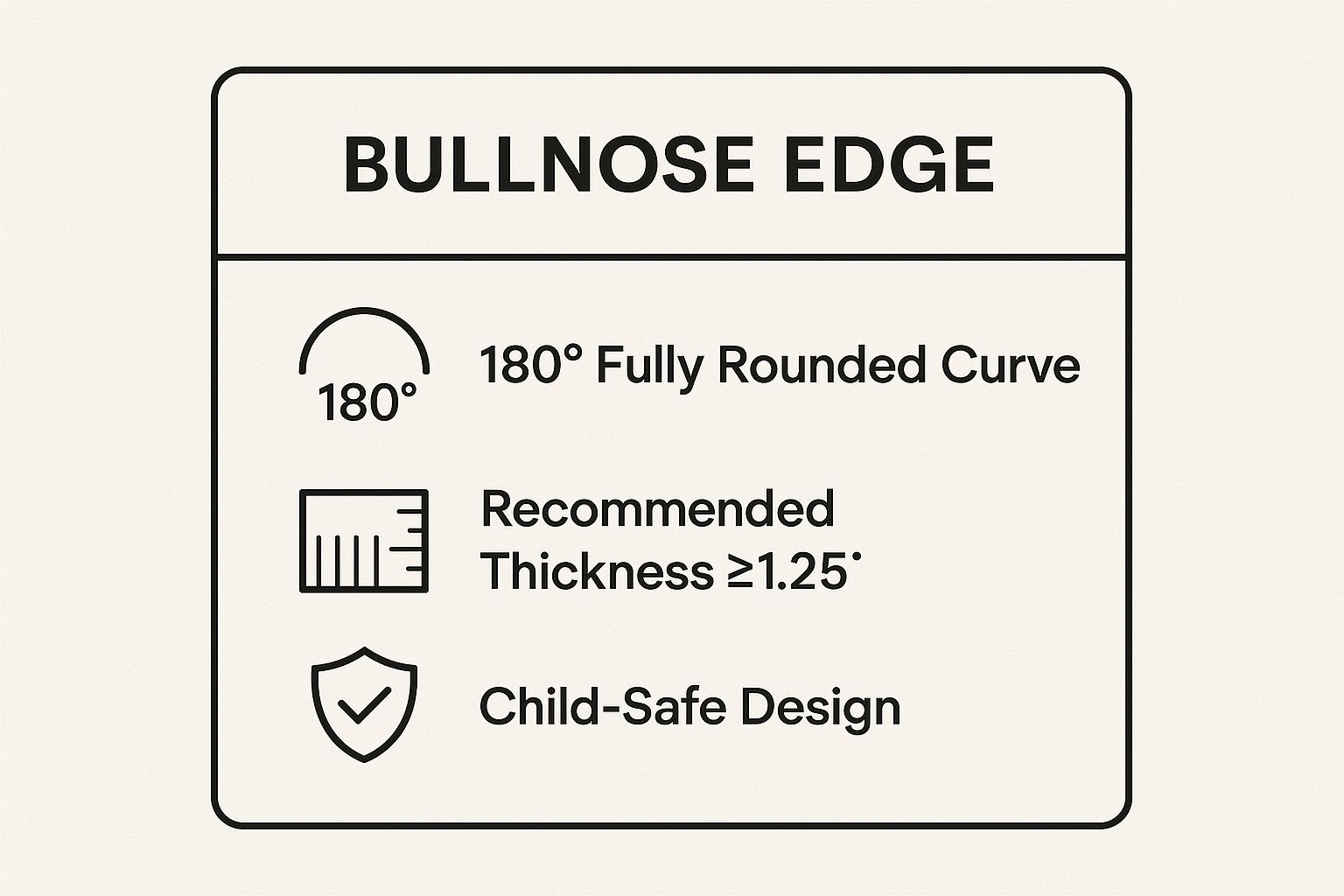
As the visualization highlights, the defining features of this profile are its full curve and inherent safety. The smooth, continuous surface is also quite easy to maintain. For specific advice on keeping your chosen material pristine, you can learn more about how to clean quartz countertops on carmelimports.com and apply similar principles to other non-porous stones.
2. Beveled Edge
The Beveled edge is a sophisticated and highly popular choice, defined by its crisp, angular cut. This profile features a straight edge that is sliced off at an angle, typically 45 degrees, creating a sleek, faceted look. This chamfered corner catches and reflects light, adding a touch of brilliance and dimension to the stone's surface.
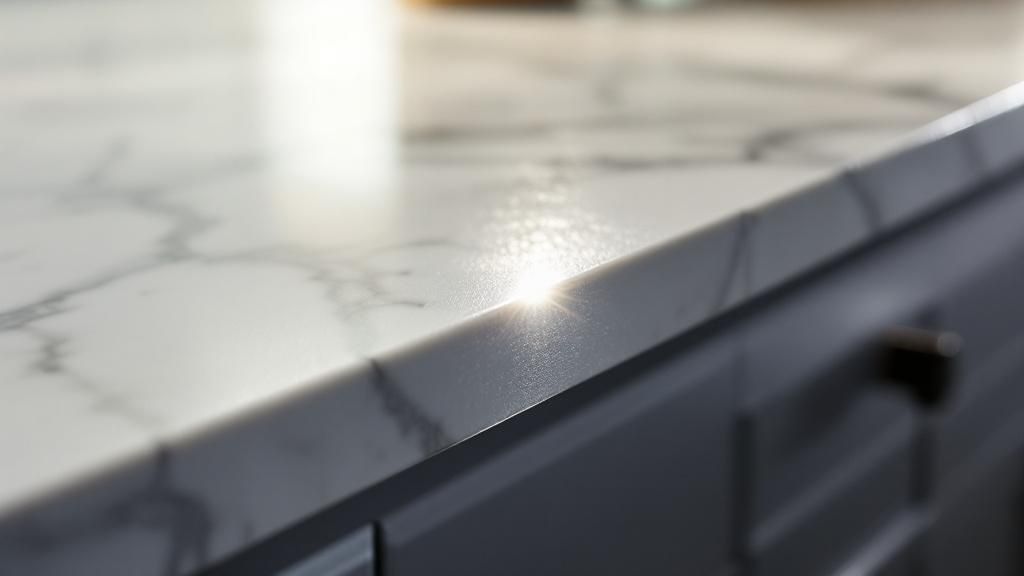
This edge profile strikes a perfect balance between traditional elegance and modern minimalism, making it incredibly versatile. It provides a more finished appearance than a simple square edge without being as ornate as an Ogee. Its clean lines are easy to wipe down, and the subtle angle helps soften the corner just enough to reduce its sharpness.
Best Applications and Design Pairings
The Beveled edge is a design chameleon, fitting seamlessly into various settings:
- Luxury Kitchens: It imparts a tailored, high-end finish to marble or quartz islands and perimeter counters.
- Transitional Bathrooms: The Bevel bridges the gap between classic and contemporary vanity styles with clean, understated detail.
- Executive Office Desks: Its formal yet modern look lends an air of authority and refinement to stone desktops.
- Upscale Bars and Counters: The light-reflecting facets add a subtle sparkle, enhancing the ambiance in high-end hospitality environments.
Pair a Beveled edge with shaker-style cabinets for a clean, transitional look or with flat-panel, handleless cabinetry to emphasize its modern, geometric appeal. You can explore some of the best quartz countertops on carmelimports.com to see how this edge complements various stone patterns and colors.
Key Design Insight: The width of the bevel can be customized. A smaller 1/4-inch bevel offers a subtle hint of detail, while a larger 1/2-inch or 5/8-inch bevel makes a more pronounced statement. For added elegance, consider a Double Bevel, which features an angle on both the top and bottom edges.
3. Ogee Edge
The Ogee edge is a statement of luxury and classical elegance, defined by its distinctive S-curve profile. This ornate detail combines a concave and a convex curve, flowing seamlessly into one another to create a sophisticated, architectural flourish. Inspired by historical moldings, the Ogee adds a layer of depth and formality, transforming a countertop into a refined centerpiece.
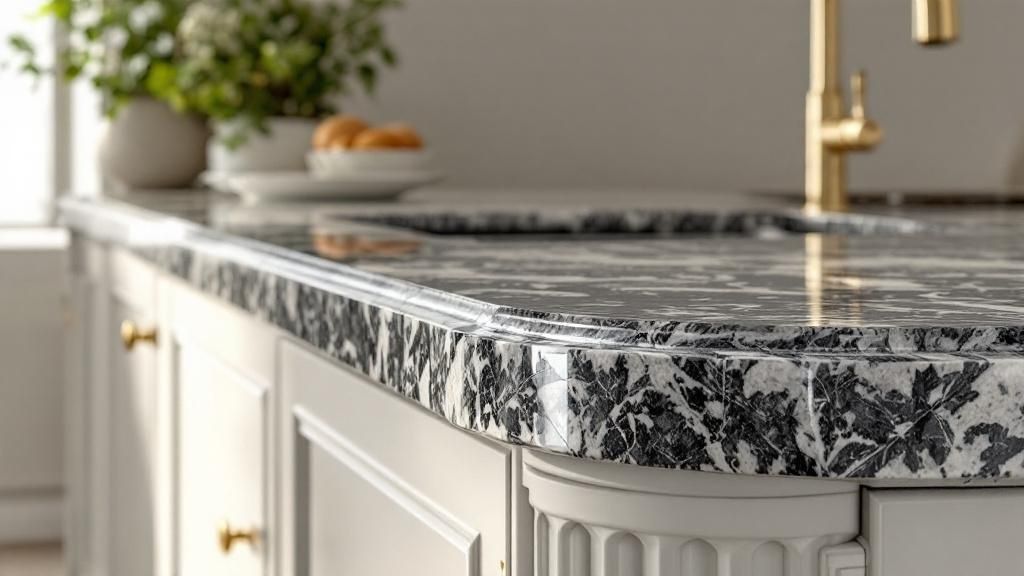
This profile is ideal for spaces that aim for a traditional or formal aesthetic, such as a Monterey estate. Its intricate shape catches the light beautifully, highlighting the natural veining of stones like marble, granite, or quartzite. While it requires more detailed cleaning, the visual payoff is immense, lending an air of custom craftsmanship to any room.
Best Applications and Design Pairings
The Ogee edge excels in creating a high-end, classic atmosphere:
- Traditional Luxury Kitchens: Use it on a central island or perimeter counters to elevate the room's design.
- Formal Dining Room Buffets: An Ogee edge on a serving buffet adds a touch of sophistication for entertaining.
- Bathroom Vanities: Perfect for a primary suite or guest powder room where elegance is the goal.
- High-End Commercial Spaces: Ideal for hotel reception desks or executive office furniture to make a lasting impression.
To create a cohesive design, pair the Ogee edge with traditional cabinetry, especially styles featuring raised panels, intricate moldings, or antique-style hardware. The S-curve of the edge complements these classic details perfectly.
Key Design Insight: The Ogee edge profile shows its full decorative potential on thicker slabs, ideally 1.25 inches or more. On thinner materials, the signature "S" curve can appear compressed and lose its dramatic effect.
4. Waterfall Edge
The Waterfall edge is a dramatic and luxurious statement in modern design, transforming a countertop into a sculptural centerpiece. This profile is created when the countertop material extends vertically down the sides of an island or cabinet run, flowing seamlessly to the floor. This continuous surface creates a powerful visual effect that emphasizes the beauty of the chosen material, making it one of the most impactful edge options for countertops.
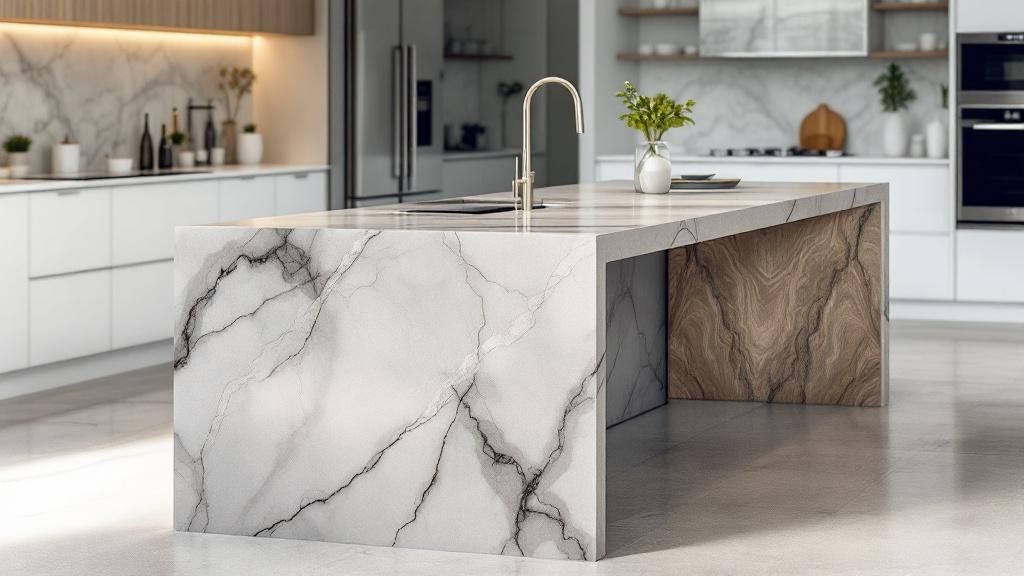
Unlike traditional edges that simply finish the horizontal slab, the waterfall edge makes the countertop a three-dimensional feature. It is a favorite among contemporary architects and luxury home builders for its clean lines and high-end aesthetic. This design is particularly effective in open-concept spaces, where it can define the kitchen while maintaining an uncluttered feel.
Best Applications and Design Pairings
The Waterfall edge excels in specific, high-impact scenarios:
- Modern Luxury Kitchen Islands: It serves as the ultimate focal point, especially when crafted from a stone with bold, dynamic veining.
- Contemporary Office Reception Desks: This design creates a strong first impression of sophistication and modern style.
- Upscale Residential Bar Areas: The continuous flow of material adds a bespoke, custom-built feel to entertainment spaces.
- High-End Retail Counters: It provides a clean, premium backdrop for displaying luxury goods.
For a cohesive look, pair a Waterfall edge with minimalist, flat-panel cabinetry to let the stone be the star. The clean geometry of this edge profile complements modern and contemporary design schemes perfectly.
Key Design Insight: Success with a waterfall edge depends on meticulous planning. For stones with prominent veining, consider book-matching the slabs so the pattern flows symmetrically down the side. Also, ensure the floor structure can support the additional weight and plan for any electrical outlets.
This is a popular trend that brings a cohesive feel to bathrooms as well; you can see more examples by reading about bathroom countertop styles and trends on carmelimports.com.
5. Straight/Square Edge
The Straight or Square edge is the epitome of minimalist design, defined by its crisp, 90-degree angle. This profile offers an unembellished, clean-lined look that puts the focus squarely on the countertop material itself. Its straightforward geometry creates a bold, architectural statement, making it a default choice for modern designs.
This edge profile is a staple in contemporary, industrial, and minimalist spaces where less is more. Its sharp, defined lines complement frameless cabinetry, sleek hardware, and an overall uncluttered aesthetic. The square edge enhances the perceived thickness and substance of the stone slab, giving it a solid, grounded presence in the room.
Best Applications and Design Pairings
The Straight/Square edge is highly versatile and excels in certain environments:
- Modern Minimalist Kitchens: Its clean form aligns perfectly with flat-panel cabinets and integrated appliances for a seamless look.
- Industrial-Style Lofts: The raw, geometric feel complements exposed brick, concrete floors, and metal accents.
- Budget-Conscious Renovations: As the standard edge, it often comes with no upcharge, delivering high style for a lower cost.
- Commercial Office Spaces: Ideal for conference tables, reception desks, and breakrooms where a professional aesthetic is required.
To achieve a cohesive design, pair a Straight/Square edge with contemporary, slab-door cabinetry. The profile’s simplicity allows the beauty of high-end materials to take center stage, a principle discussed in guides about using high-end stone tiles for the kitchen at carmelimports.com.
Key Design Insight: While visually striking, a true 90-degree corner can be sharp. Many fabricators will slightly "ease" or "kerf" the top edge, subtly sanding it to remove the sharpness without sacrificing the square appearance. This small adjustment improves safety and durability.
6. Half Bullnose Edge
The Half Bullnose, also known as a Demi-Bullnose, is a highly popular and versatile choice. It features a gently rounded top edge that curves down to meet a flat, squared-off bottom. This hybrid design merges the softness of a fully rounded profile with the clean look of a straight edge, creating a balanced and sophisticated finish.
This profile is celebrated for its ability to guide spills and liquids downward, preventing them from running onto your cabinetry. Aesthetically, the Half Bullnose offers a subtle, contemporary feel that is less traditional than its fully rounded counterpart. It adapts effortlessly to a wide range of design languages, from classic to modern.
Best Applications and Design Pairings
The Half Bullnose edge is a true design chameleon, fitting well in various settings:
- Family Kitchen Countertops: Its rounded top minimizes the risk of bumps, while its flat bottom maintains a crisp look.
- Bathroom Vanities: The profile is easy to wipe down and its spill-directing quality is perfect for spaces prone to splashes.
- Multi-Purpose Work Surfaces: Use it in laundry rooms or home offices where you need a durable, comfortable, yet stylish edge.
- Casual Dining Areas: Its approachable design works well for breakfast bars and peninsulas where family and guests gather.
Pair a Half Bullnose edge with shaker-style cabinets for a clean, transitional aesthetic, or with flat-panel doors to enhance a modern design. It works with nearly any cabinet style due to its balanced profile.
Key Design Insight: The Half Bullnose is an excellent choice for showcasing the full thickness and pattern of your stone, as the flat bottom provides a clear visual endpoint. It's also often a more budget-friendly selection compared to more complex, decorative edges.
7. Dupont Edge
The Dupont edge profile offers a touch of classic elegance and architectural interest. It is defined by a sharp, 90-degree angle that drops down for a short distance before curving outward into a rounded profile. This "step-down" detail creates a distinctive ledge that adds depth and a custom, furniture-like quality to the countertop.
This profile is an excellent choice for adding a refined, formal touch to a space without being overly ornate like an Ogee edge. Its crisp upper line maintains a clean look, while the lower curve softens the overall appearance. The Dupont edge is particularly effective in traditional, transitional, and French country designs, where it elevates the countertop to a statement piece.
Best Applications and Design Pairings
The Dupont edge excels in spaces designed for elegance and detail:
- Upscale Residential Kitchens: Use it on a large central island to create a stunning focal point that feels like a bespoke piece of furniture.
- Formal Butler's Pantries: Its sophisticated profile complements glass-front cabinets and high-end finishes.
- Boutique Hotel Bathrooms: Add a touch of luxury to vanities, enhancing the guest experience with a custom, high-end feel.
For a cohesive and luxurious design, pair the Dupont edge with detailed cabinetry, such as styles with applied moldings, inset doors, or glazed finishes. The edge’s subtle complexity mirrors these traditional details perfectly.
Key Design Insight: The distinct step of the Dupont edge can collect dust or spills more easily than simpler profiles. Regular wiping with a soft cloth is necessary to keep it looking pristine. It is best reserved for showpiece areas rather than high-use, messy prep zones.
8. Mitered Edge
A Mitered Edge is a sophisticated fabrication technique rather than a simple profile, designed to create the illusion of a much thicker countertop slab. This method involves cutting two pieces of stone at a 45-degree angle. These angled pieces are then expertly joined together, forming a seamless 90-degree corner that conceals the true thickness of the material.
This edge is the ultimate choice for achieving a bold, contemporary look, especially for kitchen islands. By building up the edge, a standard 1.25-inch slab can appear to be three or four inches thick, delivering a high-end, custom aesthetic. This technique is a testament to a fabricator's skill, turning a practical joint into a clean, architectural statement.
Best Applications and Design Pairings
The Mitered Edge excels in specific, high-impact applications:
- Waterfall Islands: It creates a flawless continuous flow of material from the countertop surface down the sides of the island.
- Thick-Look Countertops: Ideal for achieving a substantial, chunky look in modern and minimalist kitchens.
- Seamless Corners: Perfect for L-shaped and U-shaped layouts where maintaining a continuous pattern is crucial.
- Luxury Commercial Spaces: Used in high-end reception desks, bars, and vanities to project an image of quality and substance.
Pair a Mitered Edge with flat-panel, handleless cabinetry to complement its clean lines. It works exceptionally well with materials that have strong veining, as skilled fabricators can match the pattern for a continuous "bookmatched" look around the corner.
Key Design Insight: The success of a Mitered Edge depends entirely on the fabricator's precision. Insist on seeing examples of their past mitered work before committing, as a poorly executed seam can ruin the entire effect.
This video demonstrates the meticulous process of creating a strong, nearly invisible mitered seam, highlighting the skill required.
This advanced method works beautifully on both natural and engineered stone. To better understand the materials well-suited for this edge, you can explore more about engineered and natural stone countertops on carmelimports.com. This will help you select a material whose pattern is ideal for a mitered application.
Edge Style Comparison of 8 Countertop Options
| Edge Type | Implementation Complexity ???? | Resource Requirements ⚡ | Expected Outcomes ???? | Ideal Use Cases ???? | Key Advantages ⭐ |
|---|---|---|---|---|---|
| Bullnose Edge | Low to moderate (simple curve) | Moderate (standard material usage) | Safe, smooth rounded edge; hides minor flaws | Family kitchens, bathrooms with children, high-traffic areas | Child-safe; timeless look; easy maintenance |
| Beveled Edge | Moderate (angled cuts, may be double) | Moderate to high | Elegant, reflective facets; adds depth & light | Luxury kitchens, upscale bathrooms, executive offices | Sophisticated appearance; light reflection |
| Ogee Edge | High (complex S-curve shaping) | High (more material, skilled work) | Ornate, classical look with shadow lines | Traditional luxury kitchens, formal dining rooms | Decorative elegance; classical appeal |
| Waterfall Edge | Very high (continuous vertical slabs) | Very high (more material usage) | Dramatic monolithic style; highlights material | Modern luxury islands, upscale receptions, retail counters | High-end look; protects cabinets; custom |
| Straight/Square Edge | Low (simple 90-degree cut) | Low | Minimalist, clean profile | Modern minimalism, industrial spaces, budget projects | Affordable; easy to fabricate and maintain |
| Half Bullnose Edge | Low to moderate (rounded top, straight bottom) | Moderate | Safer than square; clean bottom line | Family kitchens, casual dining, bathroom vanities | Safer than square; affordable; versatile |
| Dupont Edge | Moderate to high (step detail) | Moderate to high | Subtle architectural shadow lines | Upscale kitchens, boutique hotels, designer showrooms | Sophisticated; subtle depth |
| Mitered Edge | Very high (precise angled joins) | High | Thick-edge appearance; seamless corners | Complex islands, L/U-shaped counters, high-end commercial | Dramatic thickness; creative designs |
Frequently Asked Questions
1. What is the most durable countertop edge?
Rounded edges like the Bullnose or Half Bullnose tend to be the most durable because they lack sharp corners, which are more susceptible to chipping upon impact. An eased edge, which is a slightly softened square edge, also offers excellent durability for a modern look.
2. Is a Mitered edge more expensive?
Yes, a Mitered edge is typically one of the more expensive options. It requires precise 45-degree cuts and expert labor to join the pieces seamlessly, which increases both fabrication time and cost compared to standard profiles.
3. What is the easiest countertop edge to keep clean?
Simple, smooth profiles like the Straight/Eased, Beveled, and Bullnose edges are the easiest to clean. Ornate edges with curves and crevices, such as the Ogee or Dupont, can trap dust and spills, requiring more detailed wiping.
4. How does a countertop edge affect the style of a kitchen?
A countertop edge is a critical finishing detail that defines the room's style. A simple Straight or Mitered edge reinforces a modern, minimalist aesthetic, while a decorative Ogee or Dupont edge complements traditional and formal designs. A rounded Bullnose edge creates a softer, more transitional feel.
5. Which edge profile is best for a small kitchen?
In a smaller kitchen, simpler profiles like a Straight, Eased, or Half Bullnose edge are often best. They provide a clean, uncluttered look that doesn't overwhelm the space. These profiles make the countertop appear sleek and can help a compact room feel more open.
Final Thoughts
Choosing the right countertop edge is a critical design decision that defines the character and functionality of your space. As we’ve explored, the profile you select impacts everything from maintenance and safety to the aesthetic harmony of your room. The subtle curve of a Bullnose or the crisp line of a Mitered edge can completely transform the perception of your chosen stone.
The journey through the various edge options for countertops reveals a fundamental truth: details matter. A simple Straight edge can anchor a minimalist design, while an ornate Ogee edge elevates a traditional space. Understanding the interplay between these profiles and your chosen material is paramount to a successful project.
Key Takeaways for Your Project
To distill this guide into actionable insights, consider these core principles as you finalize your decision:
- Function Before Form: First, evaluate how you use the space. High-traffic kitchens or homes with children benefit from the rounded safety of Bullnose or Half Bullnose edges. These profiles minimize the risk of chipping and injury.
- Aesthetic Cohesion: Your edge profile must complement your overall design narrative. A Beveled edge, for instance, bridges the gap between modern and traditional, fitting well in transitional spaces often seen in Bay Area homes.
- Material Compatibility: The stone itself can guide your choice. Softer stones may be more susceptible to chipping on sharp, squared-off edges. Conversely, the uniform pattern of engineered quartz is perfectly suited for precise Mitered or Straight edges.
- The Power of Light: Don't underestimate how an edge interacts with light. The facets of a Beveled or Dupont edge will catch and reflect light, adding dynamic visual interest, while a smooth Bullnose creates softer highlights.
Ultimately, the right edge profile ties your entire vision together, ensuring your investment in premium stone delivers maximum impact for years to come. It’s the final brushstroke on your masterpiece, proving that in luxury design, every last detail contributes to the whole.
Ready to see how these edge profiles look on world-class natural stone and engineered surfaces? The experts at Carmel Stone Imports can guide you through our extensive collection and help you select the perfect combination of material and edge detail for your project. Visit our showrooms in Carmel, Sand City, or Palo Alto to experience the beauty and craftsmanship firsthand.