
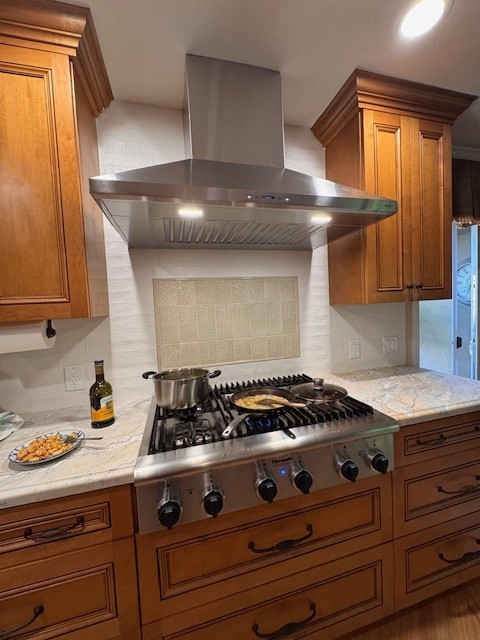
Direct Answer: The finish on natural stone countertops changes daily upkeep more than the stone type does. Polished shows water spots but resists staining longest. Honed hides smudges. Leathered hides scratches but traps fine debris.
Most people spend two hours picking veining and about ninety seconds picking a finish. The color is what you fall in love with. The finish is what you live with every morning.
That matters more on the Monterey Peninsula than a lot of buyers expect. Coastal light shifts hard between a foggy Carmel morning and a bright afternoon, and a slab that looked calm under showroom fluorescents can read completely different once it lands in your kitchen.
This guide covers the three finishes you will actually be choosing between, what each one does to the stone surface, and how to test a finish honestly before you commit to it.
The Finish Sets Your Maintenance Schedule, Not Just the Look
Polished, honed, and leathered are not three styles of the same thing. They are three different surface conditions, and each one behaves differently the second something spills.
A polished finish means the stone has been ground and buffed until the tiny peaks and valleys on the surface are compressed flat. Light bounces off it cleanly. That density is why polished stone resists absorbing liquids longest, and it is also why every fingerprint, water ring, and dust speck shows up.
A honed finish stops short of that buff. The surface is flat and matte, so smudges disappear. But acid etching on marble or limestone shows up as a dull patch rather than a shiny ring, and dull patches on a matte field can be easier to notice, not harder.
Here is the tradeoff in plain terms:
- Polished: shows water spots and prints, hides etching less obviously on some stones, cleans fastest
- Honed: hides prints and light wear, shows etching as flat patches, feels softer underhand
- Leathered: hides scratches and surface variation, holds fine debris in the texture, warmest feel of the three
If you have a busy kitchen in Pacific Grove or Carmel Valley where the counter gets wiped down eight times a day, that daily reality should drive the finish call as much as the design board does.
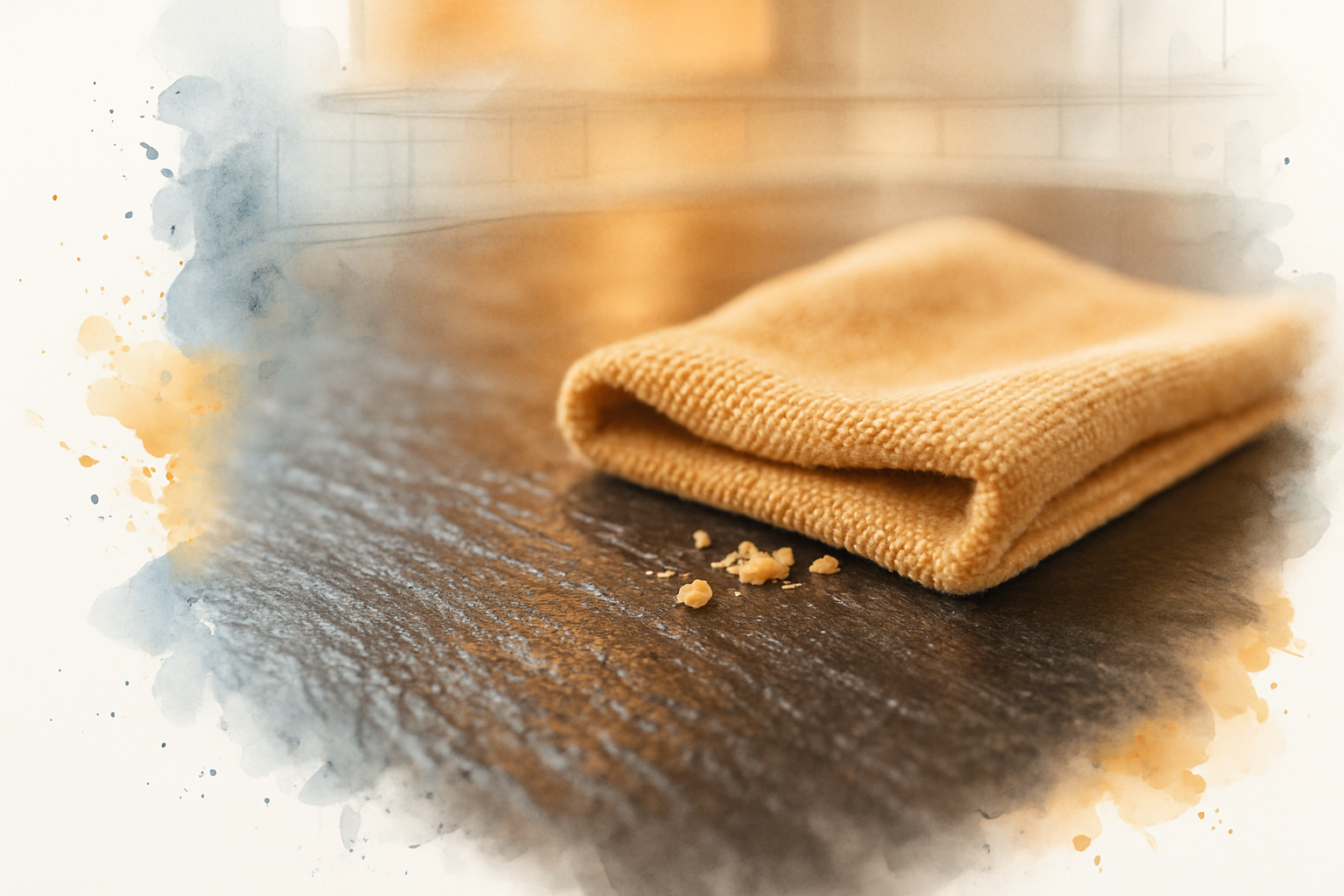
Leathered Finishes Are the Most Misunderstood of the Three
Leathered stone gets requested constantly, usually after someone saw it in a magazine or an outdoor kitchen in Pebble Beach. One reviewer described it exactly that way, saying she had been “searching for a specific leathered quartzite for our kitchen island.”
The confusion starts when people learn how the texture is made. Brushes with abrasive heads run across the slab and wear away the softer minerals faster than the hard ones. What is left is a surface with shallow peaks and channels that follow the stone’s own mineral structure.
That is why leathered stone hides scratches so well. A new scratch has nowhere to catch the eye on a surface that is already irregular.
It is also why it is harder to wipe clean. Coffee grounds, flour, and fine grit settle into the low channels, and a flat swipe of a cloth rides over the top of them. You need a slightly damp cloth and a little more attention, not a special product.
Worth knowing on cost: leathering takes extra processing at the factory, which is one reason it shows up most often in imported premium slabs rather than commodity material. Expect it to carry a higher square foot number than the polished version of the same stone, though the actual spread depends on the material and lot.
Polished vs Honed vs Leathered at a Glance
A quick side by side of how each finish behaves once the countertop is installed and in use.
| Finish | Hides Best | Shows Most | Sealer Behavior |
|---|---|---|---|
| Polished | Water absorption, general staining | Fingerprints, water rings, dust | Absorbs slowly, holds longer between reapplications |
| Honed | Fingerprints, smudges, light traffic wear | Etching as dull patches, oil marks | Absorbs faster, needs refreshing more often |
| Leathered | Scratches, chips, mineral variation | Fine debris in surface channels | Absorbs fastest, shortest interval between coats |
Why the Finish Changes How Often You Reseal
This is the part almost nobody covers at the point of sale. The finish changes the porosity of the topmost layer of the stone, and that layer is what the sealer lives in.
On a polished slab, those micro-peaks have been compressed flat. The surface is dense and glassy, so sealer soaks in slowly and stays put longer. The catch is that if the sealer does wear off and nobody refreshes it, a polished stone gives a spill very little resistance.
On a honed or leathered surface, the peaks are still standing. Sealer absorbs quickly and evenly, which is why those finishes take a coat so well. That same open structure means the sealer also exhausts sooner.
Practically, that looks like this:
- Polished stone in a normal kitchen: longer stretches between coats, but do not skip the check
- Honed stone: plan on checking more often, especially around the sink and cooktop
- Leathered stone: shortest interval of the three, and the texture makes coverage easier to get right
The test is the same either way. Leave a tablespoon of water on the counter for ten minutes and wipe it off. If the stone darkens where the water sat, the sealer needs refreshing. The Natural Stone Institute publishes general care guidance worth reading before you settle on a finish.
One more coastal note: homes closer to the water in Carmel and Pacific Grove deal with damp air more months of the year, and hard water is common across the Peninsula. Both show up first as mineral rings on polished surfaces.
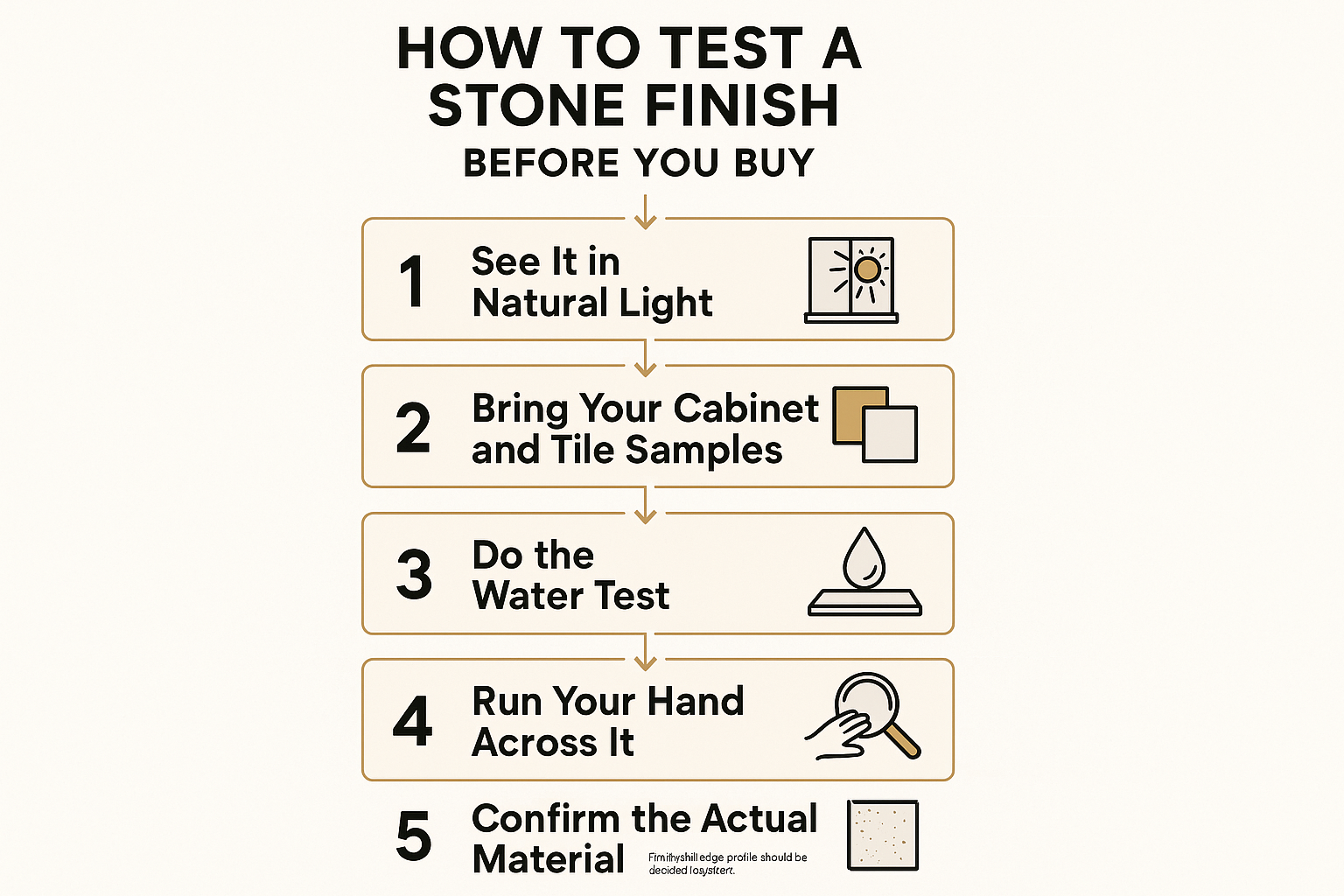
How to Test a Finish Before You Commit
Five things worth doing with a slab in front of you, in the order that actually helps.
Honed Quartzite: Make Sure You Know What Is Under the Finish
A honed quartzite with strong veining can look almost identical to marble. That confusion is real, and it is the source of one of the most common questions buyers ask: will honed quartzite etch?
The honest answer is that it depends on what the stone actually is, not on the finish. True quartzite is quartz-based and does not react to lemon juice, wine, or vinegar. A softer dolomitic stone sold under a quartzite trade name will react, because it contains carbonate minerals.
A matte finish does not change the chemistry. It only changes how visible the damage is. On a honed dolomitic slab, an etch reads as a slightly different flat sheen, which many people find easier to live with than a glossy scar on a polished one.
So the sequence matters:
- Confirm the material class first
- Then pick the finish that suits how the space gets used
- Then plan sealing around both
If you are weighing that call, what dolomite actually is and whether dolomite works for countertops are worth reading before you fall for a slab name. Granite buyers should know what the category looks like now too, since finish options have widened there considerably.
Decide the Finish and the Edge Together, Not in That Order
Edge profile and face finish interact, and separating those two conversations causes avoidable regret at templating.
A leathered face with a polished straight edge creates a deliberate contrast. Designers use it on purpose, and on a waterfall island it can look terrific. The same combination chosen by accident reads as a mistake.
The usual pairings that hold up:
- Leathered face with a leathered or lightly eased edge for a consistent tactile feel
- Leathered face with a polished edge when you want the contrast on record
- Honed face with a honed edge, since a glossy edge on a matte top rarely looks intentional
- Polished face with almost any profile, which is part of why polished stays popular
Your fabricator handles the edge work, so bring this up with them while the slab is still on hold rather than after it has been picked up. Peninsula fabricators are usually booked out weeks ahead, and changing the finish call at that stage means changing the slab.
More on how surface treatment drives the whole decision is covered in this guide to stone slab finishes.
Judge the Finish in the Room, Not on a Screen
Several buyers who came to the Palo Alto and Carmel showrooms had already picked a slab somewhere else, then realized at templating that the finish looked nothing like it had at the supplier. Cool fluorescent light and warm kitchen light do very different things to a matte surface.
What to do instead:
- Ask to see the slab pulled into natural light rather than judged under overheads
- Bring a cabinet door sample, a tile sample, and a paint chip with you
- Bring a small bottle of water and put a little on the surface to see how it darkens and how it dries
- Look at the slab from across the room, not just from two feet away
That water test is the fastest read you will get. A polished stone barely changes. A honed or leathered surface darkens more, and how quickly it returns to normal tells you a lot about porosity.
Seeing the full slab also matters because natural stone varies block to block. Two slabs from the same quarry, same name, same finish, can look meaningfully different. That is why viewing live inventory beats catalog images, and why a first showroom visit usually goes better with samples in hand.
Frequently Asked Questions About Stone Countertop Finishes
Will honed quartzite etch like marble?
Only if it is not actually quartzite. True quartzite does not etch from acids because it is quartz-based. Some softer dolomitic stones are sold under quartzite trade names and will react to lemon, wine, and vinegar. Ask what the material class is, not just the slab name.
Is leathered stone harder to keep clean?
A little, yes. The texture has shallow channels that hold flour, crumbs, and fine grit, so a dry swipe rides over them. A damp cloth handles it fine. In exchange you get a surface that hides scratches and daily wear better than either polished or honed.
Which finish needs the least sealing?
Generally polished, because the surface is compressed and dense, so sealer stays effective longer. Honed and leathered surfaces absorb sealer faster and also need refreshing sooner. Test with water every few months rather than following a fixed calendar.
Can I change the finish later if I do not like it?
Sometimes, but it is a refinishing job done by a stone restoration specialist on the installed counter, and it is not cheap. Going from polished to honed is more workable than the reverse. It is much easier to get the call right before fabrication.
Does a leathered finish cost more than polished?
Usually. Leathering takes extra processing at the factory, so it tends to carry a higher square foot price than the polished version of the same stone. How much more depends on the material, the lot, and current availability, so ask for a quote on the specific slab you are considering.
Want to See the Same Stone in Three Finishes Side by Side?
Finish is one of those decisions that gets easier the moment you can put your hand on the material and see it in daylight. The Carmel Rancho Lane showroom and the Palo Alto location both keep slabs on hand for exactly that kind of comparison, and walk-ins are welcome. If you would rather plan a slab selection appointment around specific materials, Carmel Stone Imports can be reached at (650) 800-7840 or info@carmelimports.com.