Direct Answer: Dolomite can work well for bathroom surfaces and lower-traffic countertops, but it etches and scratches more easily than granite or quartzite. Material selection and sealing protocol matter a lot.
Dolomite keeps coming up in design conversations across the Monterey Peninsula — and for good reason. Its soft white-and-grey veining looks almost identical to Italian Calacatta marble, but it tends to carry a lower price per slab. That gap gets people curious fast.
But curiosity without context leads to expensive regret. Dolomite is a natural stone with a specific set of strengths and real limitations. Whether it holds up in your kitchen or bathroom depends almost entirely on how you plan to use that surface — and whether your fabricator and installer understand what they’re working with.
This article covers the two things that actually matter most to buyers: how dolomite performs under real use conditions, and which applications it’s genuinely suited for versus which ones tend to disappoint.
What Makes Dolomite Different from Marble and Quartzite
If you’ve already read about what dolomite actually is, you know it sits in a mineralogical middle ground. It’s harder than marble but softer than quartzite — and that positioning shapes everything about how it performs on a countertop or vanity.
Marble is calcite-based, which makes it highly reactive to acids. Lemon juice, wine, and even some cleaning products will etch it within seconds. Quartzite is silica-based and much more resistant — closer to granite in terms of surface toughness. Dolomite is a calcium magnesium carbonate, which makes it more acid-resistant than marble but still vulnerable. It will etch. The process is just slower.
There’s also a hardness difference worth noting:
- Marble typically rates 3–4 on the Mohs scale
- Dolomite typically rates 3.5–4.5 on the Mohs scale
- Quartzite typically rates 7+ on the Mohs scale
- Granite typically rates 6–7 on the Mohs scale
That half-point difference between marble and dolomite is real, but it doesn’t make dolomite a low-maintenance stone. Designers in Carmel and Palo Alto who spec dolomite regularly are clear about this: it needs the same level of care as marble, and clients need to know that before the slab goes in.
Kitchen Countertops: Where Dolomite Succeeds and Where It Doesn’t
The kitchen is where most of the difficult questions about dolomite surface. It’s a high-acid, high-traffic environment — and dolomite’s acid sensitivity is its most significant performance limitation.
Etching is the primary risk. Citrus juice, vinegar-based dressings, tomato sauce, and even sparkling water left sitting on the surface can leave dull spots. These aren’t stains — they’re micro-level surface damage caused by acid dissolving the stone’s calcium content. You can polish them out, but it requires a professional stone restoration service, which in the Monterey area typically runs $8–$15 per square foot depending on severity.
That said, dolomite can absolutely work in a kitchen if the homeowner understands what they’re signing up for. It tends to perform well when:
- The kitchen is used primarily for light meal prep, not heavy daily cooking
- The homeowner is committed to wiping up spills immediately — within 2–3 minutes is the practical rule
- A penetrating sealer is applied at installation and reapplied every 12–18 months
- The surface finish is honed rather than polished, since honed finishes make etching less visually obvious
Where it genuinely struggles is in a high-use family kitchen with kids, frequent cooking, or a homeowner who doesn’t want to think about maintenance. In that scenario, granite, quartz, or porcelain will serve them better without the anxiety.
Bathroom Surfaces: Dolomite’s Strongest Application
Bathrooms are where dolomite earns its reputation. The acid exposure risk drops dramatically compared to a kitchen — soap and water don’t etch stone the way citrus and vinegar do. And in a bathroom, the visual qualities of dolomite are at their best.
A dolomite vanity top, shower surround, or flooring installation in a Carmel or Pebble Beach home can look genuinely exceptional. The soft veining and warm white base read as luxurious without the premium price of Italian statuary marble. Interior designers working on high-end bathroom remodels in Pacific Grove and Atherton regularly spec dolomite for exactly this reason.
A few practical notes for bathroom applications:
- Vanity tops are an excellent fit — lower acid exposure and lighter daily use mean the stone holds up well with basic care
- Shower walls work well but require a natural stone-rated penetrating sealer on a regular schedule to prevent moisture absorption
- Shower floors are manageable but require attention to slip resistance — a honed or brushed finish is preferable to polished for wet surfaces
- Flooring outside the shower is dolomite’s most forgiving application overall
One real-world consideration: if you’re speccing dolomite for a shower, confirm with your tile installer that they have experience setting natural stone in wet environments. The installation process — especially waterproofing and grout selection — matters as much as the stone itself.
Dolomite vs. Common Alternatives: Quick Performance Comparison
This table gives a side-by-side view of how dolomite compares to four stones commonly considered for the same applications. It’s meant as a starting reference — actual performance varies by specific stone origin and finish.
| Stone | Acid Resistance | Scratch Resistance | Best Applications | Maintenance Level |
|---|---|---|---|---|
| Dolomite | Moderate | Moderate | Bathroom vanities, shower walls, lower-use countertops | Medium — seal every 12–18 months |
| Italian Marble | Low | Low–Moderate | Bathroom surfaces, decorative countertops | High — seal frequently, avoid acids |
| Quartzite | High | High | Kitchen countertops, high-traffic surfaces | Low–Medium — seal annually |
| Granite | High | High | Kitchen countertops, outdoor surfaces | Low — seal every 1–3 years |
| Porcelain Slab | Very High | High | Kitchen, bath, outdoor, high-traffic | Very Low — no sealing required |
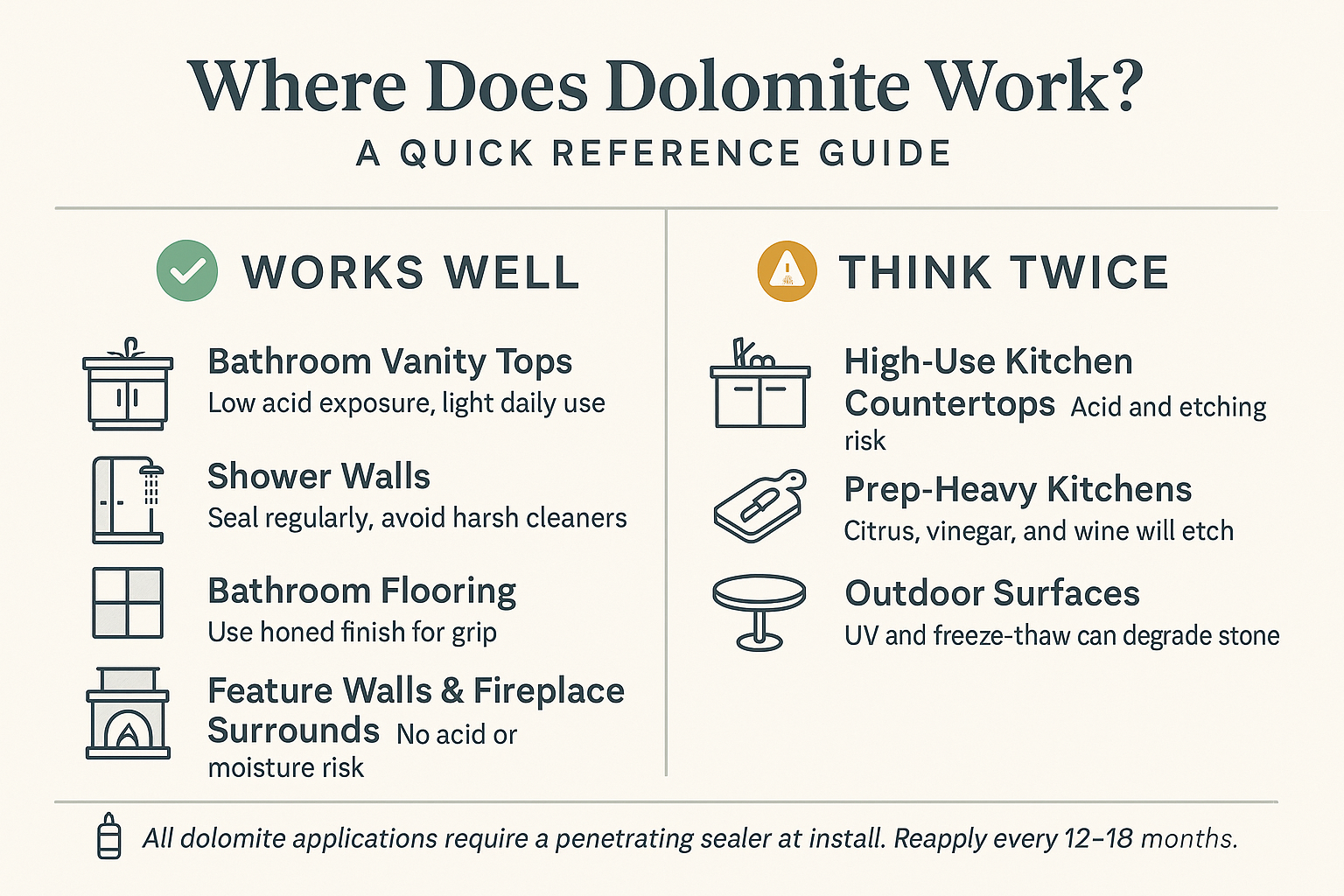
Dolomite Surface Selection at a Glance
This visual summarizes the key decision points for choosing dolomite by application — useful for homeowners and designers working through material selection.
How to Evaluate a Dolomite Slab Before You Commit
Dolomite is not a standardized material. Two slabs labeled “dolomite” can have meaningfully different mineral compositions, and that affects both appearance and hardness. This is one area where seeing the actual slab in person is not optional — it’s the only responsible way to buy.
A few things worth checking before selecting a slab:
Run a scratch test. A steel knife blade dragged lightly across the surface should not leave a permanent mark on a properly hard dolomite. If it does, the stone is softer than expected. This is a quick field test any showroom should be comfortable performing.
Ask about the origin. Dolomite from different quarrying regions behaves differently. Italian dolomite tends to have tighter, more consistent mineral structure. Some Turkish or Spanish material marketed as dolomite is softer and closer to marble in performance. Knowing the quarry source matters.
Check the veining under different light. Natural veining in dolomite can vary dramatically within a single slab. What looks like subtle movement in warehouse fluorescent light may read very differently under the warm pendant lighting over your kitchen island. Bring a photograph of your space if you can.
For homeowners working through a remodel in Carmel-by-the-Sea or along the Peninsula, the best approach is to know what to expect from a showroom visit before you arrive, so you can make the most of the time with a stone specialist.
Frequently Asked Questions About Dolomite Countertops and Bathroom Surfaces
How often does dolomite need to be sealed?
For most applications, plan on resealing every 12–18 months with a quality penetrating sealer made for natural stone. Bathroom shower surfaces in regular use may need attention toward the shorter end of that range. A simple water test tells you when it’s time — drop a small amount of water on the surface and if it absorbs rather than beading, the sealer has worn off.
Can dolomite be used for an outdoor countertop or patio surface?
Generally, no. Dolomite is not the right stone for outdoor use on the Central Coast or anywhere with significant sun exposure and temperature swings. The freeze-thaw cycle isn’t a major issue in Carmel, but UV exposure and moisture infiltration over time will degrade the surface. For outdoor projects, harder stones and specific porcelain formats are far better suited.
Is dolomite cheaper than marble?
Often, yes — but the gap isn’t always as large as people expect. Premium dolomite slabs from well-known Italian quarries can price similarly to mid-range marble. The cost advantage tends to be more pronounced with material from Turkish or Spanish sources. That said, price per slab is only part of the equation — long-term maintenance costs and longevity are worth factoring in too.
Will dolomite etch the same way marble does?
It can, but it tends to etch more slowly. Dolomite’s mineral structure gives it slightly better acid resistance than marble, but it’s not immune. Leaving lemon juice or vinegar on the surface for several minutes will still produce visible etching. The difference is more about how quickly damage occurs than whether it occurs at all.
What finish should I choose for dolomite — polished or honed?
Honed is usually the smarter choice, especially for kitchen applications. A polished finish shows etching and scratching more clearly because the contrast between damaged and undamaged areas is more visible. Honed finishes absorb light rather than reflect it, which makes surface wear far less noticeable over time. For shower floors specifically, honed or brushed finishes also provide better grip.
How do I know if a stone being sold as dolomite is actually dolomite?
This is a real and common issue in the stone industry. The best protection is sourcing from a supplier who can tell you the quarry of origin and has physical slabs you can inspect and test in person. A reputable stone specialist should be able to explain exactly what they’re selling and back it up with documentation. If a supplier can’t tell you where a stone came from, that’s worth paying attention to.
Ready to See Dolomite Slabs in Person?
If dolomite is on your shortlist, the most useful thing you can do right now is see actual slabs side by side with the alternatives — marble, quartzite, and porcelain — so you can make that comparison in real light with real surface texture. Carmel Stone Imports carries live inventory at its showrooms in Carmel-by-the-Sea and Palo Alto, and the team can walk you through the specific slabs in stock, explain what each one will and won’t do, and help you narrow down the right material for your project. Call (650) 800-7840 or email info@carmelimports.com to schedule a slab selection appointment.