Direct Answer: The most common mistake is choosing outdoor stone based on looks alone, without accounting for how it performs against moisture, freeze-thaw cycles, and surface texture underfoot.
Outdoor stone projects on the Monterey Peninsula don’t fail because homeowners chose ugly material. They fail because homeowners chose the wrong material — one that looked perfect in a showroom but wasn’t built for what California weather actually does to stone over time.
The mistake isn’t laziness. It’s that most people don’t know there’s a difference between indoor-rated and outdoor-rated stone until after they’ve already committed to a slab or paver. By then, the fabricator has already cut it and the installer is asking for a deposit.
This article focuses on the two decisions that matter most for outdoor stone: material performance in real conditions, and surface finish selection. Get those two things right and most outdoor stone problems disappear before they start.
Why Stone That Works Indoors Can Fail Outside
Stone is porous. All natural stone absorbs some amount of water — the question is how much, and what happens when that water expands, contracts, or sits on the surface.
For indoor applications, this rarely matters in a serious way. A marble countertop with a small amount of moisture absorption is a maintenance consideration, not a structural one. But outdoors, the same porosity becomes a real problem.
Along the Central Coast, the climate is mild compared to places that see hard freezes. But coastal areas like Carmel-by-the-Sea and Pacific Grove still experience enough temperature swings — especially in shaded areas — to cause surface spalling in stone that absorbs water and then contracts when temps drop at night. Add in morning fog and salt air, and you’ve got conditions that accelerate wear on the wrong materials significantly.
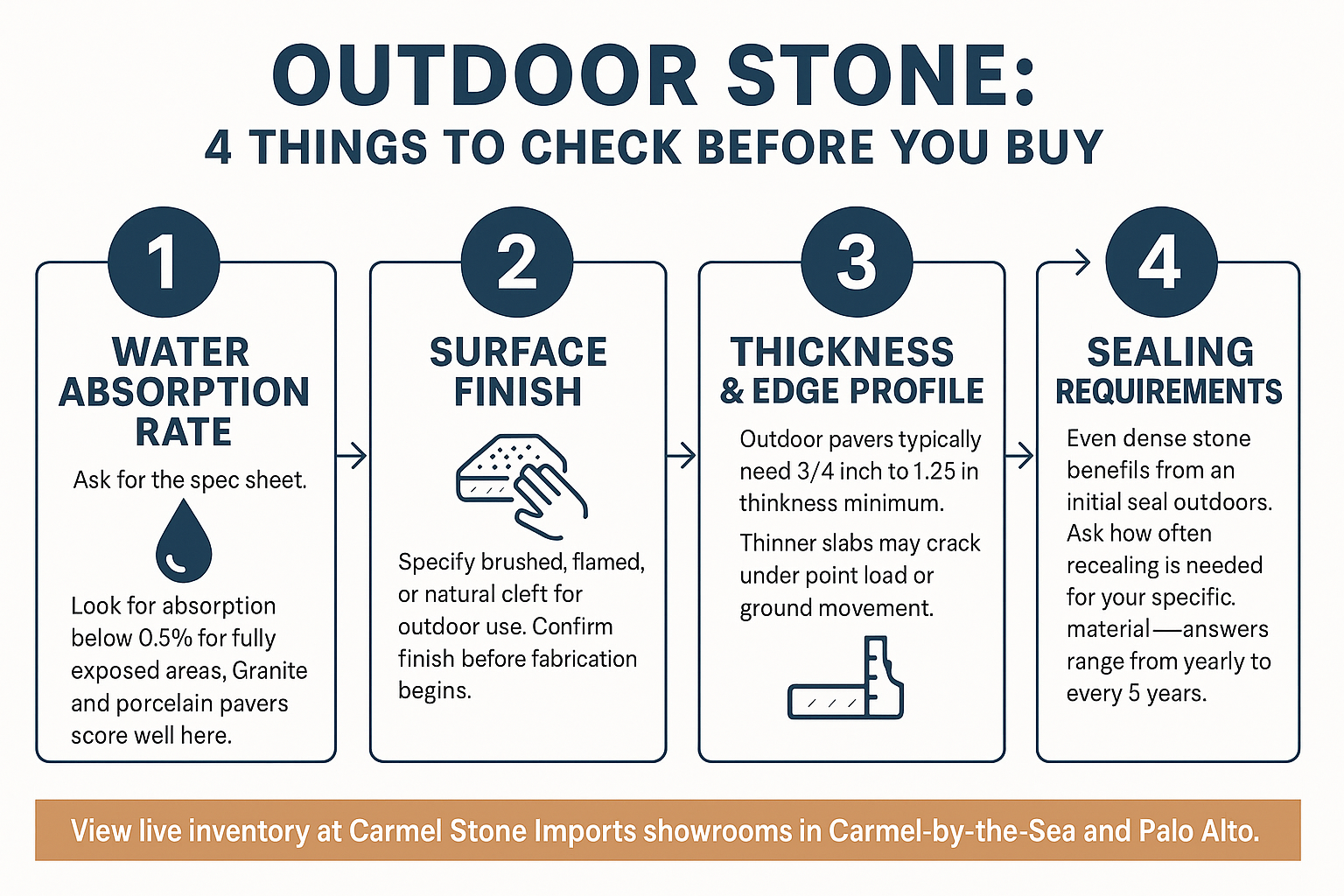
Which stone surfaces hold up to California weather outdoors? is a question worth reading before you finalize any outdoor project. The short version: porosity rating, often expressed as water absorption percentage, is the spec that matters most for outdoor stone. Lower is better.
Materials with strong outdoor performance records include:
– Granite — very low porosity, excellent weather resistance, holds up well in high-traffic areas
– Quartzite — similarly dense, though absorption rates vary by quarry origin; always confirm specs
– Porcelain pavers — near-zero water absorption, frost-resistant, consistent thickness for outdoor laying
– Travertine — usable outdoors, but the filled-and-honed versions absorb more than polished; use with caution near direct water features
– Limestone — generally softer and more porous; works well in low-moisture covered outdoor areas, less ideal in exposed, wet conditions
The materials to think twice about in fully exposed outdoor settings are typically softer marbles and certain limestones. They photograph beautifully and feel elegant underfoot, but their porosity numbers often put them in a category that demands very frequent resealing or simply isn’t suited for years of coastal exposure.
The Finish Decision Most People Get Wrong
Even when homeowners pick a material with a solid outdoor performance record, they often select the wrong surface finish — and this is where a lot of outdoor stone projects go sideways.
Polished stone looks extraordinary. In a showroom, under good lighting, a polished granite or quartzite slab is genuinely stunning. But polished stone outdoors is a safety issue. Wet polished surfaces are slippery, and in a patio, pool deck, pool coping, or garden path application, that’s not a small problem.
The finishes that actually work outdoors are:
– Brushed — mechanically textured for grip, still shows the stone’s natural color and veining
– Honed — matte surface, modest slip resistance; better for covered patios or dry-climate applications
– Flamed — high heat applied to the surface creates a rough, highly textured finish; excellent for driveways and high-traffic exterior areas
– Bush-hammered — aggressive mechanical texture; typically used for pool decks and heavily trafficked commercial outdoor areas
– Natural cleft — for flagstone-style applications; the stone is split along its natural grain, leaving an organic, non-slip surface
The fabricator you hire will ask about finish, but they’ll often defer to whatever you specify. If you walk in asking for polished pavers because that’s what you saw on Pinterest, most fabricators will cut them that way. The showroom consultation step — before fabrication begins — is where this conversation should happen.
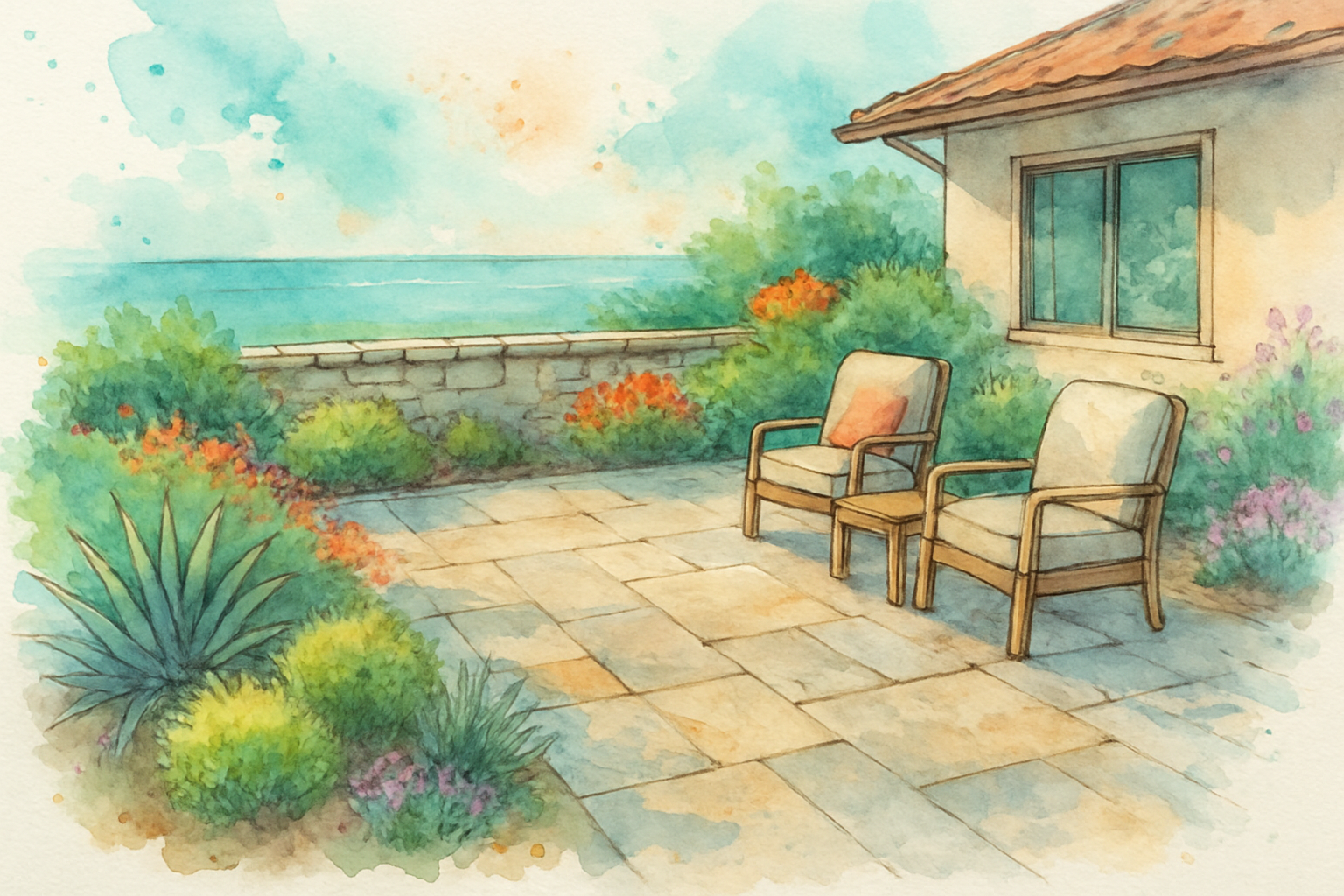
For projects in Carmel or anywhere on the Monterey Peninsula, a brushed or flamed finish on granite or quartzite is the most practical outdoor combination most designers land on. It handles coastal fog, occasional rain, and barefoot traffic without any of the slip risk.
Outdoor Stone: What to Check Before You Commit
This infographic walks through the four key checkpoints every homeowner should run through before finalizing an outdoor stone selection.
Outdoor Stone Performance at a Glance
Here’s a quick reference for how common stone types perform across the factors that matter most for outdoor use in California’s coastal climate.
| Stone Type | Outdoor Durability | Recommended Finish | Resealing Frequency |
|---|---|---|---|
| Granite | Excellent | Brushed or Flamed | Every 3–5 years |
| Quartzite | Very Good (varies by origin) | Brushed or Honed | Every 2–3 years |
| Porcelain Pavers | Excellent | Textured factory finish | None required |
| Travertine | Moderate | Brushed (filled) | Annually |
| Limestone | Fair — best in covered areas | Honed | Annually or more |
| Marble (soft varieties) | Poor for exposed use | Not recommended outdoors | N/A |
Why This Mistake Happens — and How to Avoid It
Most homeowners shop for outdoor stone the same way they shop for indoor stone: they find an image they love, they track down the material, and they order it. The problem is that indoor design inspiration — Houzz boards, Instagram saves, design magazines — almost never flags whether what you’re looking at is a finished outdoor-rated product or a studio photograph of indoor material placed in an outdoor setting.
That gap between inspiration and real-world specification is where the mistake lives.
The fix is straightforward: select your outdoor stone in person, not from a screen. When you’re standing in front of an actual slab or paver sample, you can ask the right questions — what’s the absorption rate, what finish is this, how does it perform in salt air or around a pool? You can also hold a sample and actually feel the texture, which matters enormously for anything people walk on barefoot.
Picking a marble slab in person vs. online covers how different the experience is when you’re evaluating actual material rather than a catalog photo. The same principle applies to exterior stone — maybe even more so, because the performance stakes are higher outdoors than in.
If you’re not sure what questions to bring to a showroom, what happens when you visit a stone showroom for the first time lays out the full process. A good showroom consultation for an outdoor project should cover your specific site conditions — sun exposure, proximity to water, foot traffic levels — before a single material recommendation is made.
For homeowners in Pebble Beach, Carmel Valley, or anywhere along the Peninsula with coastal exposure, that site-specific conversation makes a real difference. A brushed quartzite that performs beautifully on a sheltered Carmel Valley terrace may not be the right call for an ocean-facing deck in Pebble Beach where salt mist is a daily factor.
A Note on Porcelain Pavers — the Often-Overlooked Option
Natural stone gets most of the attention in outdoor design conversations, and understandably so. But large-format porcelain pavers deserve a direct mention because they solve several outdoor problems simultaneously.
Porcelain has a water absorption rate that sits at or near zero. It doesn’t react to salt air, doesn’t require sealing, and — when manufactured with a textured outdoor surface — delivers excellent slip resistance without any compromise on appearance. Modern porcelain pavers can be produced in formats that convincingly read as stone, concrete, or wood depending on the design direction.
For pool decks and high-moisture outdoor areas specifically, porcelain pavers are worth serious consideration. The maintenance picture is dramatically simpler than any natural stone alternative.
The tradeoff is that porcelain is an engineered material, not a quarried one. For homeowners who specifically want the character and variation of natural stone — the veining, the organic surface, the geological story — porcelain isn’t a substitute. But for projects where long-term performance and low maintenance matter more than material origin, it’s a strong outdoor option.
The real difference between these three stone surfaces covers this comparison in more depth if you’re still working through which direction fits your project.
Frequently Asked Questions About Outdoor Stone Selection
Can I use the same stone indoors and outdoors for a continuous look?
Sometimes, yes — but you need to confirm the outdoor specs separately from the indoor application. A granite that works indoors will almost certainly work outdoors as well. A marble or limestone that works indoors may not be appropriate for a fully exposed outdoor setting. The finish will also likely differ — polished inside, brushed or flamed outside — which means the two surfaces won’t look identical even with the same material. That’s worth knowing before you design around a continuous flow.
How often does outdoor stone really need to be sealed?
It depends heavily on the material and the exposure. Granite in a covered outdoor kitchen might only need resealing every 4–5 years. Travertine around a pool might need it annually. Porcelain pavers need no sealing at all. Ask your supplier for the specific resealing interval for the exact material you’re considering — not a general answer for the stone category, but for that specific slab or paver product.
Is honed stone safe for outdoor use?
Honed stone is safer than polished, but it’s not the best choice for wet areas like pool decks or rain-exposed patios. A brushed or flamed finish gives you meaningfully better grip when the surface is wet. Honed works reasonably well for covered outdoor areas or climates with very low rainfall — which parts of California do have, though the Central Coast isn’t one of them.
What thickness do outdoor stone pavers need to be?
For most residential outdoor applications, 3/4 inch to 1.25 inches is the standard range. Thinner material risks cracking under point load or ground movement, especially in areas with tree roots or soil that shifts seasonally. Your fabricator should confirm thickness based on your specific subbase and installation plan — this is a conversation to have before material is cut.
Does coastal salt air actually damage stone faster?
Yes, over time. Salt is mildly acidic and can accelerate surface erosion on softer stones like limestone and certain marbles. Denser materials like granite and porcelain are much more resistant. If your property has direct ocean exposure — as many Pebble Beach and Carmel Point homes do — factor that into your material selection conversation. It’s not a reason to avoid natural stone, but it is a reason to be more deliberate about which stone you choose.
Ready to Choose Outdoor Stone with Confidence?
Carmel Stone Imports carries live inventory of granite, quartzite, travertine, and large-format porcelain pavers at its showroom locations in Carmel-by-the-Sea and Palo Alto — where you can see actual slabs and paver samples in person, not catalog images. If you’re planning an outdoor project on the Monterey Peninsula or in the Bay Area and want to work through material and finish options with someone who knows the conditions, call (650) 800-7840 or email info@carmelimports.com to schedule a slab selection appointment.