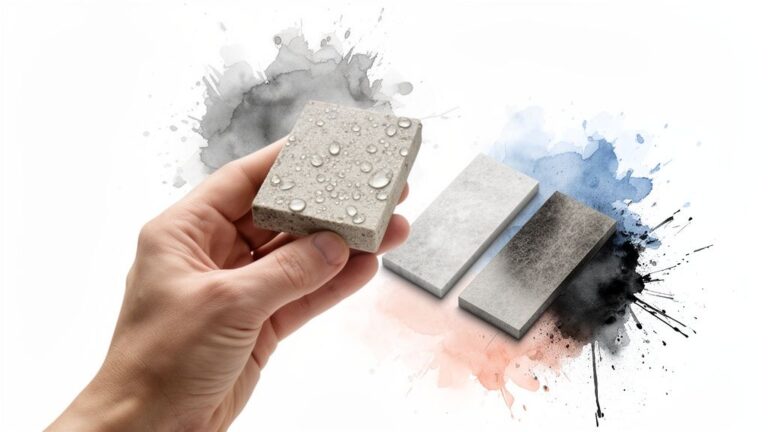
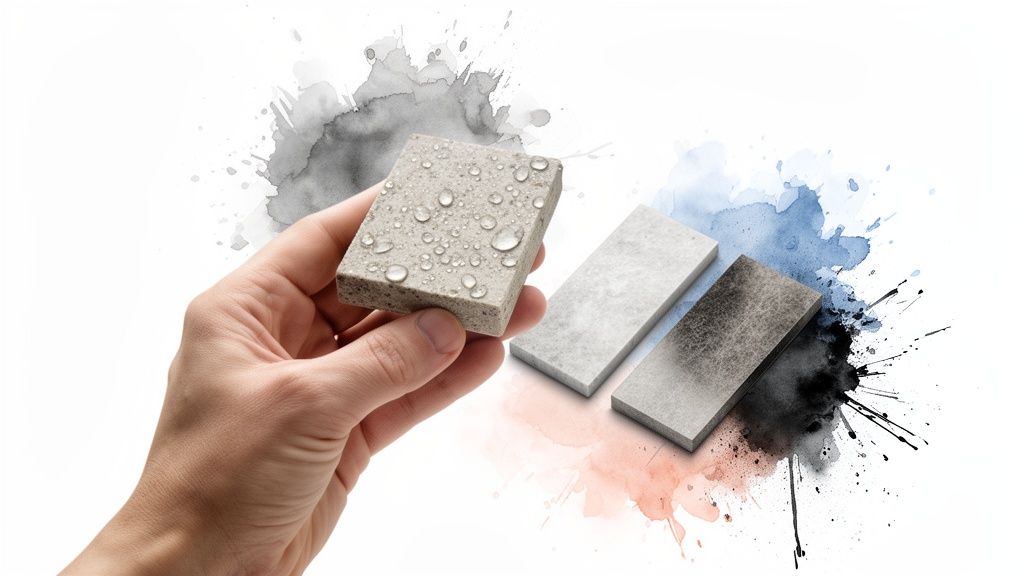
The most common mistakes homeowners make when selecting a stone vanity top are choosing based on appearance alone, confusing hardness with stain resistance, skipping a porosity test before purchase, and overlooking how finish type affects long-term maintenance. Granite, marble, and quartzite behave very differently in wet environments — and the differences matter more in a bathroom than almost anywhere else in the home.
Choosing a stone vanity top is a big decision for your bathroom remodel. With materials like granite, marble, and quartzite available, it's easy to get lost in the beautiful colors and patterns. However, some common mistakes can lead to disappointment later on.
This guide will cover the biggest mistakes homeowners make when selecting a stone vanity top. We'll explain why the hardest stone isn't always the most worry-free and show you a simple test to check for porosity. By understanding these key points, you can choose a beautiful and durable vanity top that fits your lifestyle.
Mistake #1: Assuming the Hardest Stone Is the Most Worry-Free
One of the biggest mistakes homeowners make is assuming that a hard stone is automatically durable and stain-proof. Hardness and porosity are two different things, and understanding this difference is key to choosing the right vanity top.
A stone’s hardness refers to its ability to resist scratches. Porosity, on the other hand, is about how easily it absorbs liquids. A stone can be very hard but still soak up water, oils, or soap if it's porous.
Quartzite is a perfect example of this common confusion. It is an extremely hard stone that resists scratches well, but some types can be surprisingly porous. Homeowners are sometimes told quartzite "can't etch," only to find dull spots from spilled products.
When selecting your stone, ask two separate questions: "How hard is it?" and "How porous is it?" This simple step helps you understand how the slab will actually perform in a busy bathroom.

This is why expert guidance is so important. At Carmel Stone Imports, our team helps you navigate these details, ensuring you select a stone that not only looks great but is also suited for your daily routine.
Mistake #2: Skipping the Water Test Before You Buy
Many buyers make a decision without performing a simple, yet crucial, test. The water test is a 15-minute check that tells you how porous a stone is and how much maintenance it will require.
This test is especially important for natural stones like marble and some quartzites. It removes the guesswork and helps you avoid future frustration with staining.
Here's how to do it:
- Ask for a small sample of the slab you are considering.
- Pour a few tablespoons of water onto the surface.
- Wait 10-15 minutes, then wipe the water away.
If the stone looks darker where the water was, it means it has absorbed the liquid. A porous stone will need to be sealed before use and resealed regularly to protect it from stains. If the stone's color doesn't change, it is dense and will be highly resistant to staining. You can learn more about how different stones handle moisture in our guide to The Truth About Natural Stone and Water Resistance.
Mistake #3: Choosing a Finish Without Thinking About the Bathroom Environment
The finish of your stone—whether polished, honed, or leathered—is more than just a cosmetic choice. It dramatically affects how the vanity top performs in a wet, high-use environment like a bathroom.
A bathroom vanity is exposed to water, soap, toothpaste, and cosmetics daily. Each finish responds differently to this wear and tear, so it's important to pick one that matches your maintenance tolerance.

Here's a quick comparison:
- Polished: This glossy finish is great at resisting stains because the polishing process closes the stone's pores. However, its reflective surface shows every water spot and fingerprint, requiring frequent cleaning.
- Honed: A matte, non-reflective finish that hides smudges and water spots well. The honing process leaves the stone more porous, so it requires diligent sealing to prevent stains.
- Leathered: This finish has a unique, subtle texture that does an excellent job of hiding daily grime. Its textured surface can be slightly harder to clean if substances like makeup get into the grooves.
According to the National Kitchen & Bath Association (NKBA), nearly 70% of remodelers value long-term durability and ease of maintenance in their material choices. Choosing the right finish is a major part of that equation. For a deeper dive, check out our guide on how to choose the right stone finish.
Mistake #4: Not Checking How the Slab Looks in Your Bathroom Lighting
One of the most common mistakes homeowners make is falling in love with a stone under bright showroom lights. The lighting in a showroom is often intense and cool-toned, which can make a slab look very different than it will in your home.
Your bathroom lighting is likely warmer, dimmer, or more directional. A stone that appeared gray in the showroom might reveal beige or yellow undertones in the soft morning light of a coastal California home. This is a well-documented issue and a major cause of buyer's remorse.
 tiles in a cool showroom and a warm bathroom, demonstrating lighting impact.” />
To avoid this problem, always request a sample of the slab to take home. View it in your bathroom at different times of day to see how it looks in your natural and artificial light. This small step ensures the stone you choose is one you'll love for years to come. This is just one of the tips you'll find in this guide on how to avoid common mistakes when choosing bathroom vanity tops.
Ready to see stone in person? Get prepared with our smart homeowner's guide to visiting a stone showroom.
Mistake #5: Overlooking Thickness When Comparing Price
When comparing prices for stone vanity tops, many people focus only on the cost per square foot. However, the thickness of the slab—usually 2cm or 3cm—plays a significant role in the total project cost.
A thinner 2cm slab may seem cheaper initially, but it often requires a plywood substrate for support. This adds material and labor costs that may not be included in the initial quote.
A 3cm slab is thicker and more durable, allowing it to be installed directly onto the vanity cabinet without extra support. Before making a decision, ask your supplier for a breakdown of what's included in the price to ensure you are making an accurate comparison. You can learn more about how engineered stone countertop costs are calculated.
Mistake #6: Treating All "Granite" as the Same Material
Another common error is believing that all stones with the same name, like "granite," are identical. In reality, granite slabs can vary significantly in mineral density and porosity, even if they share the same trade name.
These differences affect how they perform over time. For example, dark, busy granites are great at hiding water spots, while lighter, plain granites show everything.
This is why it's so important to view the full slab in person rather than choosing from a small sample or a photo. Visiting a showroom in the Bay Area allows you to see the unique character of each slab and choose the exact piece for your project. For more on this, check out our guide on choosing your best bathroom vanity countertop materials.
Frequently Asked Questions
What is the best low-maintenance stone for a kids' bathroom?
For a high-traffic kids' or guest bathroom, engineered quartz is an excellent choice. It is non-porous, meaning it resists stains from toothpaste, soap, and other spills without needing to be sealed. Its durability makes it ideal for the daily chaos of a family bathroom.
Does a honed finish stain more easily than a polished one?
Yes, a honed finish can be more susceptible to stains than a polished one. The honing process creates a matte look by opening the stone's pores, which can allow liquids to seep in. However, with regular and proper sealing, a honed vanity top can be well-protected and perfectly suitable for a bathroom.
How can I tell if my stone vanity needs to be resealed?
Use the simple water test. Sprinkle a few drops of water on the surface and wait 10-15 minutes. If the water beads up, your sealer is still effective. If the stone darkens where the water was, it has absorbed the liquid, and it's time to reseal.
Is quartzite really better than granite for a vanity top?
Not always. While some quartzites are denser and less porous than some granites, this isn't a hard-and-fast rule. Both are durable materials, but their properties vary from slab to slab. The best choice depends on the specific stone's porosity and your willingness to perform routine maintenance.
Why should I view a full slab instead of just a sample?
A small sample cannot show you the full character of a natural stone, including its large-scale veining and color variations. Viewing the entire slab in person is the only way to ensure the final product matches your vision. This step helps you avoid surprises and select a piece that you will truly love in your home.
If you're planning a bathroom remodel in the Monterey, Carmel, or Palo Alto area and want to see granite vanity options in person before making a decision, both Carmel Stone Imports showroom locations carry live slab inventory — and the staff are happy to walk you through finish, porosity, and maintenance expectations for whatever material you're considering. No pressure, just answers.