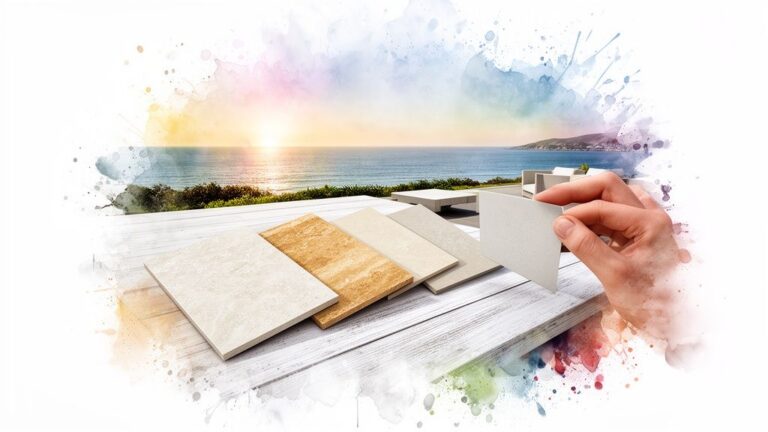
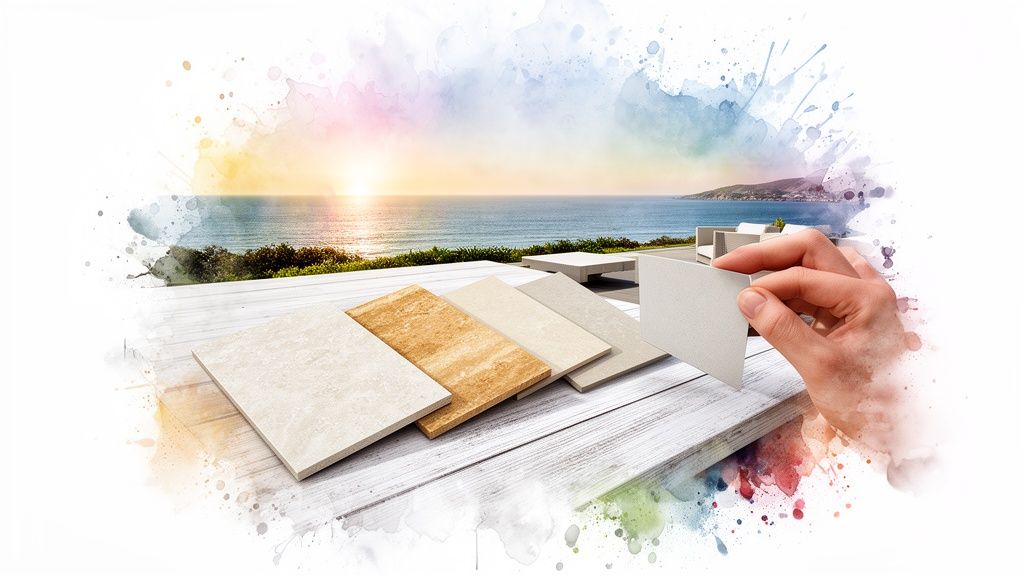
Picking the right patio stone for a coastal California home is a mix of finding a beautiful design and strong performance. The best options, like limestone, porcelain, and travertine, each offer something special. They are great for handling the challenges of salt air, fog, and bright sun. This guide will show you how each material performs, so you can create an outdoor space that is both beautiful and long-lasting.
Choosing the Right Patio Stone for Your Coastal Lifestyle
From the Monterey Peninsula to the Bay Area, we see homeowners investing more in outdoor living. It makes sense because a patio here is an extension of the home, not just for a few months a year. Choosing the right stone is key to creating an outdoor oasis that is both stunning and strong.
Embracing the Outdoor Living Trend
Across the Bay Area and the Central Coast, homeowners are putting more effort and money into their outdoor areas. Our mild winters and early spring flowers make fall and winter the perfect time to plan new patios, fire pits, or outdoor kitchens.
More people are choosing to renovate instead of move. This makes creating useful and beautiful outdoor areas a top priority. These spaces are now essential parts of the home, and the right material choice makes a big difference.
A great way to create a connected look is to think about how your stone fits into a larger Coastal Design Style. This helps tie the whole property together, from the front door to the back patio.
Finding the Ideal Stone for Your Home
At Carmel Stone Imports, we offer materials perfect for patios, pool areas, and garden paths in our unique climate. Our showrooms in Carmel, Sand City, and Palo Alto have experts who can give design advice for local coastal conditions. For more on different materials, our guide on the best pavers for patios is a great resource.
We’ve seen a big increase in outdoor projects, especially from coastal homeowners getting ready for spring. In our showrooms, customers are focused on adding value and comfort to their homes now, while demand is lower.
If you are planning an outdoor project, now is the time to look at stone options. Starting before the spring rush means you can avoid delays. Whether you need a durable, non-slip surface or a smooth transition from inside to outside, the design process starts now.
Understanding Coastal California's Unique Challenges
Choosing patio stone for a home in Carmel or Palo Alto is different from anywhere else. Our beautiful coastline, with its fog and sea breezes, presents unique challenges. These challenges can quickly damage the wrong material. Understanding them is the first step in picking the best patio stone for coastal California homes.
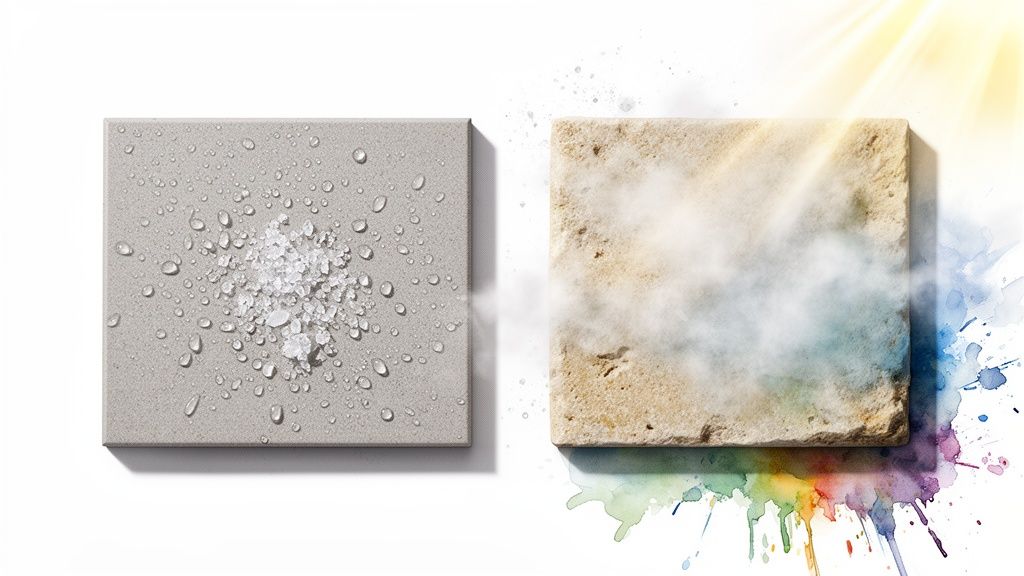
The salty air is a constant pressure that breaks down surfaces over time. This salt can get into porous stones, causing them to weaken and flake from the inside. It’s a slow process that the wrong stone will lose.
The Role of Porosity and Moisture
A big factor to consider is porosity—how much water a stone can absorb. On a foggy Monterey morning or after a rain, some stones act like a sponge. This makes them open to stains, mildew, and damage from changing temperatures.
Denser stones, however, naturally push water away. This makes them a smarter choice for our damp climate. This quality is a big reason why certain materials are recommended for patios in the Bay Area.
"The real test of an outdoor stone here isn't just how it looks on a sunny day. It's how it performs after a week of thick coastal fog. Low porosity is a must for a long life."
Denser materials do not let salt and moisture seep in. This protects your patio's look and structure for years.
Sun, Salt, and Temperature Swings
It’s not just about moisture. Our environment has other challenges you need to think about. From the bright sun of a Santa Cruz summer to cool nights on the Monterey Peninsula, your patio has to handle it all.
- UV Exposure: Constant sunlight can fade the color out of some materials, like low-quality concrete pavers. Natural stone holds its color well, gaining a rich look over time instead of fading.
- Salt Corrosion: Salt air is very damaging. It can wear away sealants and the surface of softer stones, leaving them looking pitted.
- Thermal Shock: The temperature can change a lot from day to night. Your patio material needs to expand and contract with these changes without cracking.
Understanding these ideas is important. It helps you know why certain materials are better for our coast. For a deeper look at materials that stand up to these conditions, check out our guide on the best natural stone for Bay Area outdoor living spaces. This is the knowledge you need to create an outdoor space that’s as strong as it is beautiful.
Limestone: A Timeless Choice for Natural Elegance
Limestone has a classic, sophisticated look that fits well with the Central Coast's natural beauty. Its soft colors and simple textures create a calm, luxurious outdoor space. It provides an organic warmth that is hard to find in other materials.
One of limestone’s best features for a California patio is its ability to stay cool in the sun. This makes it comfortable for bare feet even on the hottest days. It’s a key feature for any area around a pool.
Why Density and Porosity Matter in Coastal Settings
Not all limestone is the same, especially in our coastal area. To build a patio that lasts, you must choose a dense, low-porosity limestone. Porosity is how much moisture a stone can absorb. In the foggy air of the Monterey Peninsula, a porous stone is a problem.
Less dense limestone soaks up moisture, which can lead to stains or mildew. This water can also carry salt from the sea air deep into the stone, causing damage over time. This is why picking a high-density limestone is so important for your patio's beauty.
Performance and Safety Features
The right limestone also has great performance features for outdoor living. Many types have natural slip resistance, making them a safe choice for pool decks and walkways. Our guide to using limestone coping for a swimming pool has great tips for creating a safe and stylish poolside.
With more homeowners renovating, creating useful outdoor spaces is a big priority. Outdoor areas are now essential parts of the home, especially in a region like ours where year-round use is expected.
A well-chosen limestone paver defines an outdoor room. Its timeless look provides an elegant background that lets landscaping and furniture stand out.
Investing in a premium, dense limestone is an investment in your outdoor living area's beauty and long life. The color changes and small fossil patterns in each piece make your patio a unique work of art. This makes it a top choice and one of the best patio stone for coastal California homes.
Porcelain Pavers: The Modern Solution for Ultimate Durability
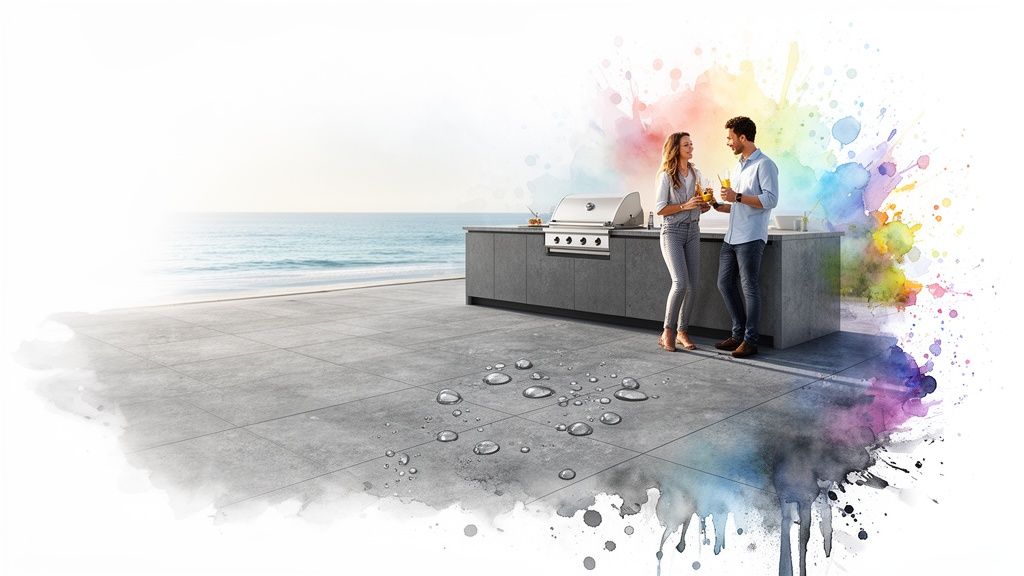
For homeowners who want top performance and modern style, porcelain pavers are a great choice. These are made for tough outdoor conditions, making them perfect for our coastal climate.
Their secret is in how they are made. With almost zero water absorption, porcelain is very resistant to mold, mildew, and stains. This also makes it safe from salt damage and fading from the sun.
Unmatched Durability for Coastal Living
Porcelain pavers are built for coastal life, from busy entertaining areas to poolside lounges. While many natural stones need regular sealing, porcelain's protection is built-in. This makes it a very low-maintenance option for busy homeowners from Palo Alto to Monterey.
This strength is why engineered collections are often seen as the best patio stone for coastal California homes. Their manufacturing process guarantees a luxury finish and almost no water absorption. This is very different from the 2-3% absorption rate you might find in some travertine.
What does this mean for you? Peace of mind. Spills or salty air can be wiped away with soap and water, with no fear of permanent stains.
Limitless Design Versatility
Porcelain offers amazing design options. Modern technology can create almost any look, giving homeowners total creative freedom. You can get the style you want without giving up the strength needed for a coastal home.
Porcelain’s ability to look like other materials is its design superpower. It lets you get a certain look—like wood or concrete—without the maintenance problems those materials have in a coastal setting.
You can have the look of wood without rot, or the sleek look of concrete without cracking. This makes it great for creating smooth indoor-outdoor transitions, which are popular in California.
Popular design options include:
- Realistic Wood Looks: Get the warmth of oak or walnut without worrying about warping or fading.
- Sleek Concrete Finishes: Create a modern look perfect for Bay Area homes, available in many shades.
- Natural Stone Replication: Enjoy the look of limestone or slate with the better performance of porcelain.
Natural Stone vs Porcelain Pavers
It helps to see them side-by-side. Natural stones have a unique beauty, but porcelain pavers offer a great mix of style and strength. Here's a quick comparison for a coastal patio.
| Feature | Natural Stone (Limestone, Travertine) | Porcelain Pavers |
|---|---|---|
| Water Absorption | Porous; needs sealing to prevent stains. | Almost non-porous; naturally resists stains, mold, and mildew. |
| Durability | Softer stones can scratch or chip. | Very dense and hard; highly resistant to scratches and heavy loads. |
| Stain Resistance | Can stain from spills like wine or oil. | Not affected by most common stains; spills are easy to clean up. |
| Fade Resistance | Can fade over time in the sun. | Color is part of the paver; very resistant to UV fading. |
| Maintenance | Needs periodic sealing and special cleaners. | Low maintenance; usually just needs soap and water. |
| Design Consistency | Each piece is unique with natural variations. | Uniform color and pattern for a consistent look. |
| Aesthetic Options | Limited to what is found in nature. | Almost limitless; can look like wood, concrete, and various stones. |
The choice depends on your priorities. If you love the unique character of natural stone, it's a timeless choice. But if you want a stylish, durable, and low-maintenance patio, porcelain is a smart investment. For more ideas, our guide on porcelain tile slabs has more information.
Travertine: A Classic Mediterranean Vibe for Your Patio
Travertine often reminds people of a sunny Mediterranean villa because of its warm, classic appeal. For many California homeowners, this is the exact look they want. Its natural texture and rich colors create an inviting atmosphere for outdoor living.
This stone doesn't just look good; it performs very well in our coastal settings. Formed in natural springs, travertine's surface has a sense of history. For homeowners on the Monterey Peninsula or in the Bay Area, it is a great choice for a luxurious and grounded outdoor space.
Built-in Performance for Coastal Climates
One of travertine’s most interesting features is its natural porosity. While this might sound like a weakness, in travertine, it’s a strength. The stone absorbs water quickly, creating a naturally slip-resistant surface. This is a must-have for pool areas and patios that get wet from morning fog.
This quality also allows the stone to "breathe." This helps it stay cooler under the California sun than many other materials, making it more comfortable for bare feet. Its structure also helps it resist cracks from temperature changes. To learn more, you can explore what makes travertine tile such a popular choice.
Lasting Value and Durability
High-quality travertine adds lasting beauty and value to any property. When you pick the right grade, it stands up well to a coastal environment. Here in coastal California, travertine is a top choice for luxury homes.
The U.S. natural stone market is expected to grow. Travertine is in high demand in coastal areas for its natural resistance to moisture and salt. You can see the full industry analysis from Grand View Research to learn more.
A travertine patio is a long-term investment in your home. It develops a beautiful patina over time, getting better with age.
Travertine’s timeless appeal comes from its authenticity. Each piece is unique, creating a rich, organic look. This is why designers use it to create warm and elegant outdoor spaces.
The different finishes available for travertine let you customize the look:
- Tumbled: This finish gives a rustic, aged look with soft edges and enhances slip-resistance.
- Honed: A smooth, matte finish that offers a more modern look while still being safe to walk on.
- Brushed: This finish creates a textured surface that highlights the stone's natural character.
By choosing the right grade and finish, travertine becomes one of the best patio stone for coastal California homes. It combines rustic elegance with the strength needed to last in our beautiful but demanding environment.
Bringing Your Coastal Patio Vision to Life
After learning about limestone, porcelain, and travertine, how do you choose? Picking the best patio stone for coastal California homes is about matching your vision with your lifestyle and home's style.
Your home's architecture is a good place to start. A modern home in the Bay Area might look great with large porcelain pavers. A classic Spanish-style home on the Monterey Peninsula may be perfect for warm, rustic travertine.
Aligning Stone with Your Lifestyle
Think about how you will use your patio. Will it be for parties and barbecues? An outdoor kitchen? Or a quiet space by the pool? The answer will help you decide which stone benefits are most important.
- For the Entertainer: The stain resistance and toughness of porcelain is a great choice for frequent gatherings.
- For the Sunbather: Light-colored limestone or travertine is perfect for a pool deck as they stay cool in the sun.
- For the Traditionalist: The simple elegance of limestone creates a classic look that never goes out of style.
This small decision tree can help you see how your taste points you toward the right cut and finish of travertine.

It’s a simple visual that breaks down the choice, making it clear whether a classic or contemporary style is the right path for your project.
Strategic Planning for a Seamless Project
Timing is important. If you are dreaming of a new outdoor space, now is the time to start looking at stone. This helps you avoid shortages that happen during the spring rush. Planning your project in the late fall or winter is a smart move because you will find better availability of materials.
Bringing an outdoor vision to life is about more than picking a pretty stone. It’s about creating a useful and beautiful extension of your home.
Once you’ve chosen the perfect stone, you can think about finishing touches. Elements like choosing and installing screens for patios can make a big difference in comfort. The best projects come from careful planning and good advice. By thinking about your home's style, your family’s needs, and our coastal climate, you can create a beautiful patio you’ll love for years.
Frequently Asked Questions
Here are answers to common questions about choosing patio stone for a coastal California home. This information can help homeowners and designers in the Bay Area and Monterey Peninsula.
What is the easiest patio stone to maintain for a coastal home?
Porcelain pavers are the easiest to maintain. Their surface is very dense, which means it resists stains, mold, and salt damage. While natural stone needs sealing, porcelain just needs simple cleaning with soap and water to look new.
Which stone stays coolest in the hot California sun?
Light-colored natural stones, like travertine and some types of limestone, stay the coolest. Their lighter shades reflect sunlight instead of absorbing it. This makes them more comfortable for bare feet, especially around a pool.
Can natural stone hold up to salt air?
Yes, but you have to choose the right kind. High-grade, dense limestone and premium travertine perform very well in coastal areas. They naturally resist the damage from salt and moisture, making them a durable choice.
How do I pick a stone that matches my home's style?
Let your home's architecture guide you. For a timeless look, limestone is a great choice. For a warm, Mediterranean feel, travertine is perfect. If you want more design options, porcelain offers many looks, from modern concrete to rustic wood.
What is the best slip-resistant option for a pool deck?
Both travertine and porcelain pavers are safe choices for wet areas. Travertine has a natural texture that provides good grip. Modern porcelain pavers can be made with a special high-traction finish. Either option gives you a beautiful and safe surface for around the pool.
Ready to find the perfect stone for your outdoor project? The team at Carmel Stone Imports offers a world-class selection of natural and engineered stone pavers.
Visit our showrooms in Carmel, Sand City, or Palo Alto to explore the ideal material for your dream patio. Contact us today for expert guidance.