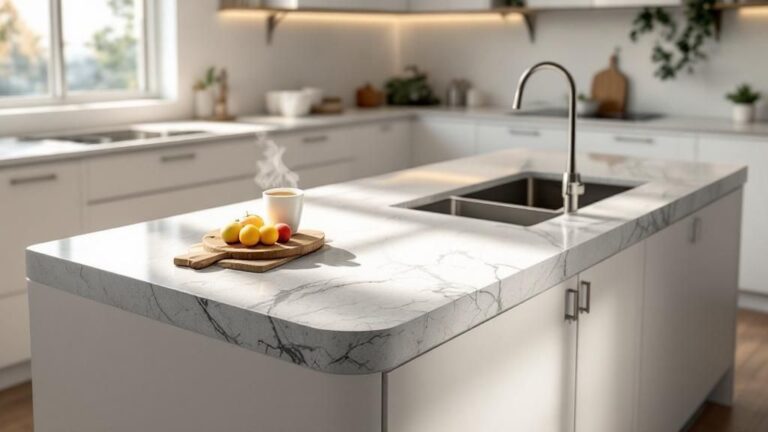
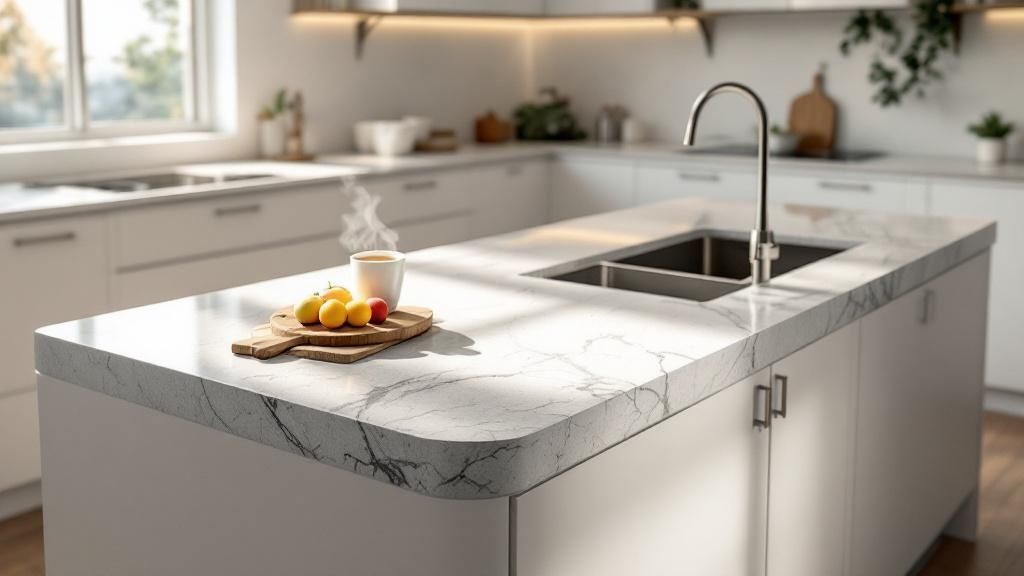
A granite island is more than just a place to work. It's a statement piece that is both durable and beautiful. For kitchens in California, these natural surfaces often become the true heart of the home. They are perfect for preparing meals and for gathering with friends and family.
Why a Granite Island Is the Heart of Your Kitchen
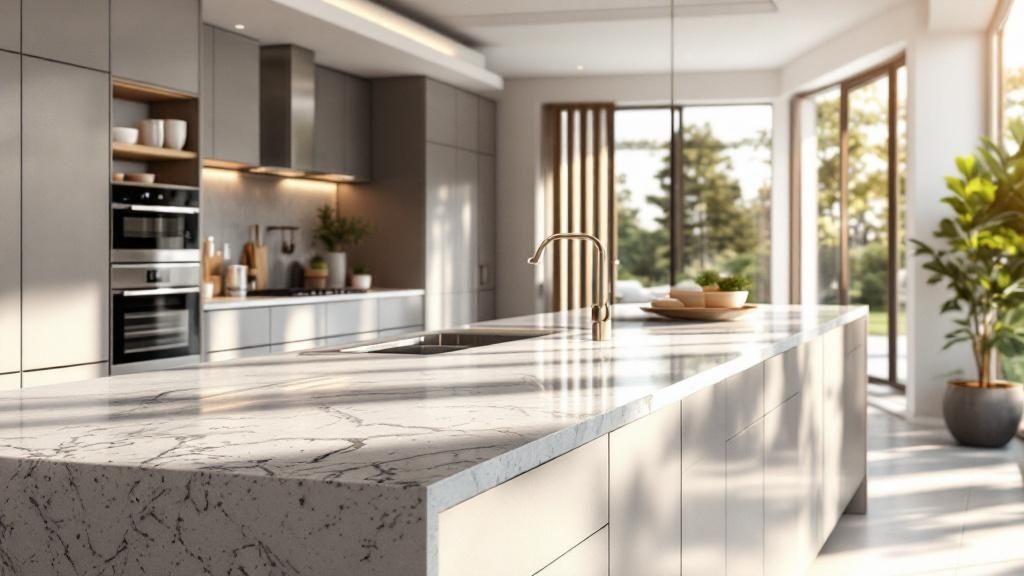
Think about your kitchen island. It's not just for chopping vegetables. It’s where you have your first coffee, where kids do homework, and where friends gather at parties.
The material you choose for your island sets the tone for the whole room. That’s why granite, a natural stone from deep within the earth, is such a great choice. It combines unique beauty with strength that few other materials can match.
The Unmatched Appeal of Natural Stone
Unlike man-made surfaces, every slab of granite is one-of-a-kind. Formed over millions of years, its patterns, mineral flecks, and colors tell a story. This ensures your kitchen island will be completely unique.
The demand for natural stone is strong. According to a Houzz study, natural stone is a top choice for countertops. Homeowners in places like Monterey and Palo Alto love its timeless appeal.
Choosing a granite island is an investment in natural art that adds character and value to your home.
Built for the Busiest Kitchens
In a busy home, the kitchen island must stand up to constant use. This is where granite really proves its worth, thanks to its amazing durability.
- Heat Resistance: Granite was formed by intense heat, so hot pots and pans won't scorch or crack it.
- Scratch Resistance: As one of the hardest natural stones, it resists scratches from knives and daily wear.
- Stain Resistance: When properly sealed, granite repels spills like wine, oil, and coffee, making cleanup easy.
This mix of beauty and toughness makes granite island countertops a smart, long-lasting solution. You can learn more in our guide on granite countertop styles.
Exploring Granite Colors and Patterns
Choosing a granite slab for your island is like picking a piece of art for your home. Each stone tells its own story with patterns and colors formed over millions of years. This variety means you can find the perfect granite for any style, from a modern Bay Area home to a rustic coastal retreat.
The beauty of granite is that no two slabs are exactly alike. This guarantees you a custom centerpiece for your kitchen. The stone's final look depends on the minerals present when it was formed, creating everything from subtle grains to bold, flowing veins.
This infographic shows the amazing variety available, from light tones to dark hues.
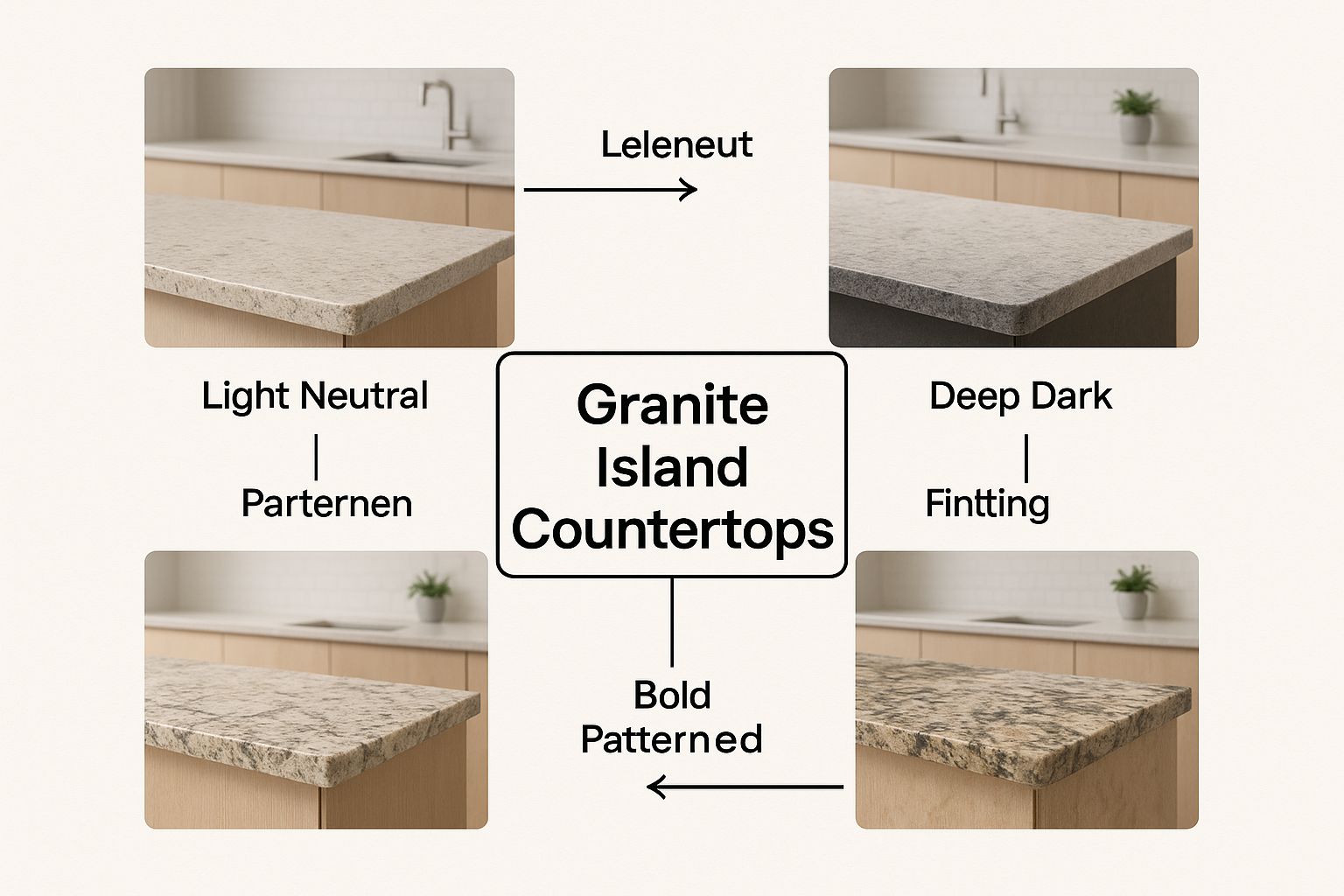
The right granite can either blend in or become the star of your kitchen. To help you choose, let's look at some popular color families.
Popular Granite Colors and Design Pairings
The number of choices can feel big, but most granites fall into a few color groups. This table shows some popular options and the designs they work best with.
| Granite Type | Primary Colors | Pattern Description | Best For Design Styles |
|---|---|---|---|
| River White | White, Gray, Red | Creamy white base with soft gray veins and small, deep red mineral flecks. | Coastal, Modern Farmhouse, Traditional |
| Black Galaxy | Black, Gold/Copper | Deep black stone with small, shimmering metallic flecks that look like stars. | Contemporary, Luxury, Glam |
| Ubatuba | Dark Green, Black | A deep, almost black green with subtle gold, brown, and green specks. | Traditional, Transitional, Eclectic |
| Colonial White | Off-White, Black | Soft off-white background with specks of black and smoky silver for a clean look. | Classic, Minimalist, Transitional |
| Blue Bahia | Blue, White, Brown | Striking deep blue stone with swirls and veins of white and brown. A true statement piece. | Bold, Artistic, Modern |
| Typhoon Bordeaux | Cream, Red, Brown | Dramatic swirls of deep red, cream, gray, and brown, creating a flowing, active pattern. | Mediterranean, Tuscan, Rustic |
This is just a starting point. The best way to find your perfect match is to see these stones in person at a Carmel Stone Imports showroom.
Light and Airy Granite Choices
Light-colored granite slabs are a great choice for making a kitchen feel bright and open. They reflect light well, which can make the space feel larger. These stones often have soft patterns that add texture without being too busy.
Popular options include:
- River White: Known for its creamy white base and soft gray veins. It creates a calm, elegant look perfect for a coastal California kitchen.
- Colonial White: This granite has a soft off-white background with specks of black and silver. It offers a clean look that pairs well with light or dark cabinets.
- Dallas White: A classic choice with a creamy white base and clusters of brown and gray minerals. Its gentle pattern is very versatile.
These lighter granites work well with white, gray, or natural wood cabinets. They create a timeless and sophisticated feel.
Dark and Dramatic Granite Slabs
For a bold, sophisticated look, dark granite offers depth and drama. These slabs often have shimmering mineral flecks that catch the light, adding a touch of luxury. Dark granite island countertops create a powerful anchor in a kitchen, contrasting beautifully with lighter cabinets.
Some popular dark granites are:
- Black Galaxy: A striking black stone filled with small, shimmering copper or gold flecks that look like a starry sky.
- Ubatuba: This granite has a deep green, almost black background with subtle gold, brown, and green specks. It’s a versatile choice for many styles.
- Black Pearl: Known for its semi-solid black color with flecks of silver, gold, and green. It offers a sleek look for modern designs.
Good lighting is key with dark granite. It helps bring out the stone's beautiful flecks and patterns.
Bold Patterns and Exotic Colors
If you want your island to be a conversation starter, look at exotic granites. These stones have sweeping veins, vibrant colors, and unique mineral patterns. They are works of art that bring energy and personality to a kitchen.
Choosing a patterned granite makes a big statement. Slabs like Typhoon Bordeaux, with its swirls of red and cream, or Blue Bahia, with its deep blue hues, can define your color scheme. Our showrooms in Carmel, Sand City, and Palo Alto have many of these exceptional slabs to match your style.
The Practical Benefits of Choosing Granite
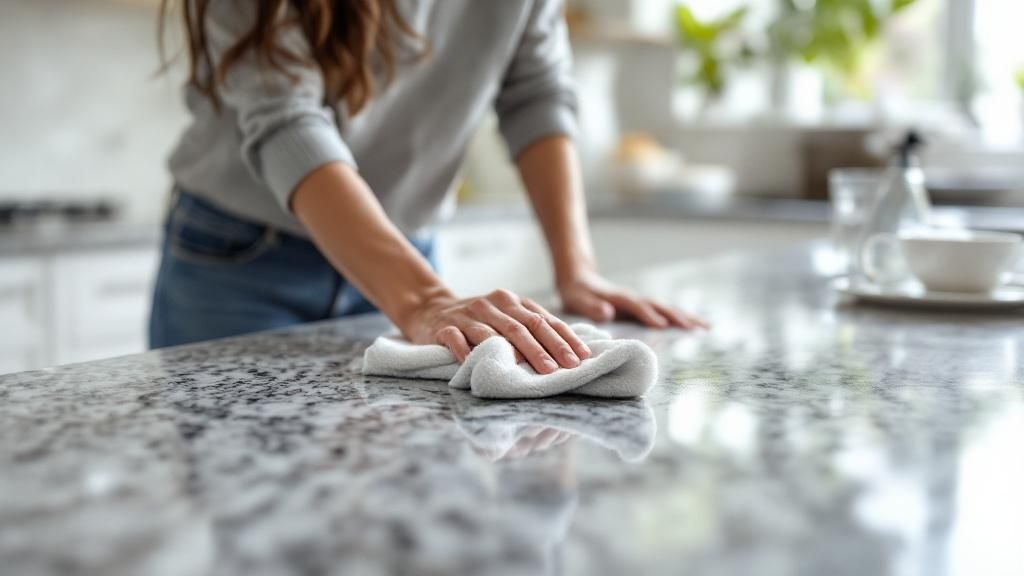
The beautiful colors of granite grab your attention first. But it's the stone's practical side that makes it a favorite for a busy kitchen island. A countertop in the heart of your home needs to be tough enough for daily life.
Granite is an igneous rock, formed under intense heat and pressure. This natural process makes it perfect for the demands of a modern kitchen.
Unmatched Durability for Everyday Life
The biggest benefit of a granite island is its incredible strength. It is one of the hardest natural materials on earth.
- Heat Resistance: You can place hot pots right on the counter without worrying about damage.
- Scratch Resistance: Granite is very hard to scratch. Knives and cookware won't leave marks, keeping it looking new for years.
- Longevity: With simple care, a granite island can last forever. Its timeless beauty and strength add lasting value to your home.
This strength is why the global countertop market is booming. A report from Fortune Business Insights shows a projected growth to USD 174.55 billion by 2030, as homeowners want surfaces that are both beautiful and built to last.
Simple Maintenance and Stain Protection
A common myth says natural stone is hard to maintain. While some stones are porous, granite is much more forgiving, especially when sealed. The sealing process creates an invisible shield against spills. This barrier stops liquids from soaking in, giving you time to wipe them up. A sealed granite countertop is a low-worry surface.
A Practical Investment Compared to Other Materials
When you compare granite to other materials, its benefits are clear.
- Versus Marble: Marble is beautiful but softer and more porous. It scratches and stains easily, making it high-maintenance for a kitchen.
- Versus Butcher Block: Wood countertops look warm but need regular oiling. They can also be damaged by scratches, burns, and water.
- Versus Laminate: Laminate is budget-friendly but can't handle heat or scratches like granite.
Granite offers top-tier durability without the constant upkeep of softer stones. For a deeper dive, look at our guide comparing granite vs. quartzite countertops.
How to Design Your Perfect Kitchen Island
Now for the fun part: turning your vision into a real plan. A great kitchen island is more than just a stone slab. It's a well-designed piece of furniture that improves your workflow and becomes the heart of your home.
First, think about how you will use the island. Will it be your main prep station? A breakfast bar? Or a gathering spot for parties? Your answer will shape its size, shape, and features.
Establishing the Right Size and Layout
Before you fall in love with a huge granite slab, measure your kitchen. A key rule of kitchen design is to leave enough space to move around the island easily.
Most designers recommend at least 42 inches of walkway on all sides. If you often have multiple cooks, 48 inches is even better.
Once you know your available space, think about the layout:
- Single-Level Islands: A large, flat surface is very versatile. It's perfect for meal prep or setting up a buffet. This clean look is popular in modern Bay Area homes.
- Multi-Level Islands: A split-level design creates different zones. You could have a lower section for seating and a higher bar for serving.
Choosing Functional Features and Fixtures
Your island's features give it personality. A well-planned island can house appliances and add storage. You might need to know how to install a kitchen sink if you plan to include one.
Other popular features to consider include:
- A built-in cooktop
- An under-counter microwave
- A wine fridge
- Pull-out trash bins
- Extra outlets for appliances
Selecting the Perfect Edge Profile
The edge profile is the shape of the countertop's edge. It's a small detail that makes a big difference.
Here are a few popular edge options:
- Eased Edge: Simple and modern. The corner is slightly rounded for a clean, squared look.
- Beveled Edge: This edge has a sleek 45-degree angle cut. It adds a touch of class.
- Bullnose Edge: A classic, fully rounded edge that’s smooth and safe for families.
- Ogee Edge: An elegant, S-shaped curve that brings a traditional, decorative feel.
The right edge should match your cabinet style and the granite's pattern. For ideas, look at these examples of remodeling with granite slabs. The team at Carmel Stone Imports can show you samples to help you choose.
Understanding Granite Countertop Costs
Budgeting for a new kitchen island can feel confusing. But once you know what affects the cost of a granite island countertop, it becomes much clearer. The total price includes the stone itself, the work to shape it, and the final installation.
Understanding these costs helps homeowners from Carmel to Palo Alto feel confident in their choices. We'll break down the factors so you can balance your dream design with your budget. The global demand for premium surfaces is growing, as you can discover countertop market insights on Fortune Business Insights.
The Granite Tier System Explained
Not all granite slabs cost the same. The industry uses a tier system to sort them based on rarity, origin, and pattern complexity.
- Entry-Level (Tier 1): These are common granites with simple patterns and consistent colors, like Ubatuba. They offer all the benefits of granite at a great value.
- Mid-Range (Tier 2-3): This category has more interesting veins and unique colors. Slabs like River White fit here, offering more visual appeal for a moderate price increase.
- Exotic & Luxury (Tier 4+): The highest tiers are for the rarest and most stunning slabs. Stones like Blue Bahia, with their dramatic patterns, are true luxury materials.
Fabrication and Edge Profile Costs
After you choose a slab, the next cost is fabrication. This is the skilled work of cutting the slab to your island’s exact size and making cutouts for sinks or cooktops.
Your choice of edge profile also affects the cost.
A simple eased edge is often included in the base price. More decorative options, like a bullnose or ogee edge, require more work and will increase the cost.
Installation and Final Touches
Finally, professional installation ensures your heavy slab is set perfectly. This is not a DIY job. It takes a team of experts to handle the weight and level the stone. The complexity of the job will influence this final cost.
Understanding these parts helps you make smart choices. You might choose a luxury granite with a standard edge to balance the budget. For more tips, check our article on how to choose countertops for your California home.
Simple Care to Keep Your Granite Looking New
Your granite island is built to last, and keeping it looking new is easy. A few simple habits will preserve its beauty for decades.
For daily care, be gentle. A soft cloth, warm water, and a drop of pH-neutral soap are all you need for wiping it down. This simple mix cleans spills without harming the protective sealant. Avoid harsh cleaners like vinegar or lemon juice, as they can wear down the sealant. For a full guide, see our post on how to clean kitchen countertops.
Knowing When to Reseal Your Granite
Modern sealants are great, but they don't last forever. There's a simple way to check if your granite needs to be resealed.
Put a few drops of water on the granite and let it sit for about 15 minutes. If the water beads up, the sealant is working. If it soaks in and leaves a dark spot, it’s time to reseal.
This easy test helps you stay ahead of problems. Resealing is a simple project that restores the stone's stain resistance.
Handling Spills and Preventing Damage
Accidents happen, but a sealed granite surface is very forgiving. The trick is to act quickly.
- Blot, Don’t Wipe: When you spill something, blot it up with a paper towel. Wiping can spread the mess.
- Use Trivets for Extreme Heat: While granite is heat-resistant, it's smart to use trivets for pans from the stove or oven. This prevents any risk of thermal shock.
- Use Cutting Boards: Your knives won't scratch granite, but cutting on the stone will dull your knives quickly. Always use a cutting board.
Frequently Asked Questions
Is Granite More Durable Than Quartz?
Both are great choices, but they have different strengths. Granite is a 100% natural stone, so every slab is unique and highly heat-resistant. Quartz is an engineered stone with a consistent look, but the resins in it can be damaged by extreme heat, giving granite an edge for hot pans.
How Often Do I Need to Seal My Granite Island?
Modern, high-quality sealants can last for years. You can do a simple water test once a year to check. If water beads up on the surface, your seal is fine. If it soaks in, it’s time to reseal.
Can I Put a Hot Pan Directly on Granite?
Yes, you can. Granite was formed by intense heat, so it can handle high temperatures from hot pans without scorching or cracking. However, using a trivet is always a good practice to protect your investment for the long term.
Does a Granite Island Increase My Home's Value?
Yes, it does. A beautiful granite island is a major selling point that adds style and function to a kitchen. According to a 2023 survey from Houzz, 63% of renovating homeowners choose to upgrade their kitchen islands, showing their importance to buyers.
What Is the Difference Between Granite and Marble?
Granite is an igneous rock, making it very hard, dense, and resistant to scratches and stains. Marble is a metamorphic rock that is softer and more porous. While beautiful, marble is more likely to scratch or etch from acidic liquids like lemon juice, making it higher-maintenance in a kitchen.
Ready to find the perfect centerpiece for your kitchen? The experts at Carmel Stone Imports are here to guide you through our stunning collection of granite slabs. Visit one of our showrooms in Palo Alto, Carmel, or Sand City, or contact us today for a personalized consultation.