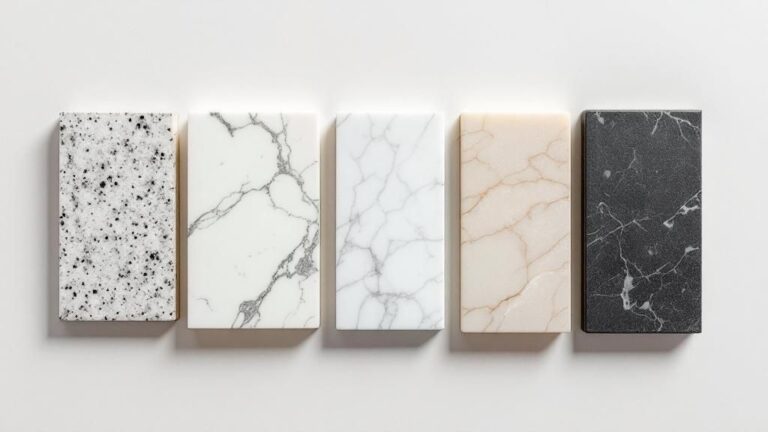

Choosing the right countertop is a defining decision in any kitchen or bathroom design, setting the tone for the entire space. This guide explores the most popular types of natural stone countertops, comparing seven distinct materials: granite, marble, quartzite, soapstone, travertine, slate, and limestone. Each slab, quarried directly from the earth, offers a unique story told through its distinct colors, veins, and mineral inclusions, ensuring an exclusive and luxurious foundation for your home.
This detailed comparison will help you confidently select a surface that aligns with your design vision and suits your lifestyle, whether you're creating a modern culinary hub in the Bay Area or a serene, spa-like bathroom in a coastal California home.
1. Granite Countertops
Granite is a timeless and dominant choice in the world of natural stone countertops, celebrated for its rugged durability and one-of-a-kind beauty. Formed from slowly cooled magma, this igneous rock is composed mainly of quartz and feldspar, giving it remarkable strength.
This unique visual appeal makes granite a centerpiece in any design, from the bustling kitchens of luxury hotels to sophisticated residential bathroom vanities. Its inherent hardness and resistance to scratches and heat make it a practical workhorse, ideal for high-traffic areas where performance is paramount.
Appearance and Characteristics
Granite's aesthetic is defined by its granular texture and wide spectrum of colors, ranging from deep, uniform blacks to intricate patterns with waves of color.
The finish can be tailored to suit your design vision. A polished finish creates a glossy, reflective surface that enhances color and depth, while a honed finish offers a matte, non-reflective look.
Durability, Maintenance, and Best Uses
Granite is one of the most durable natural stones available, making it a premier choice among the various types of natural stone countertops. It stands up exceptionally well to daily wear and tear.
- Heat Resistance: Granite is highly resistant to heat, easily withstanding hot pots and pans placed directly on its surface.
- Scratch Resistance: Its hardness makes it very difficult to scratch, though using cutting boards is always recommended.
- Maintenance: As a porous stone, granite requires sealing upon installation and periodically thereafter (typically every 1-3 years) to prevent staining.
This quick reference guide highlights granite's key performance metrics.
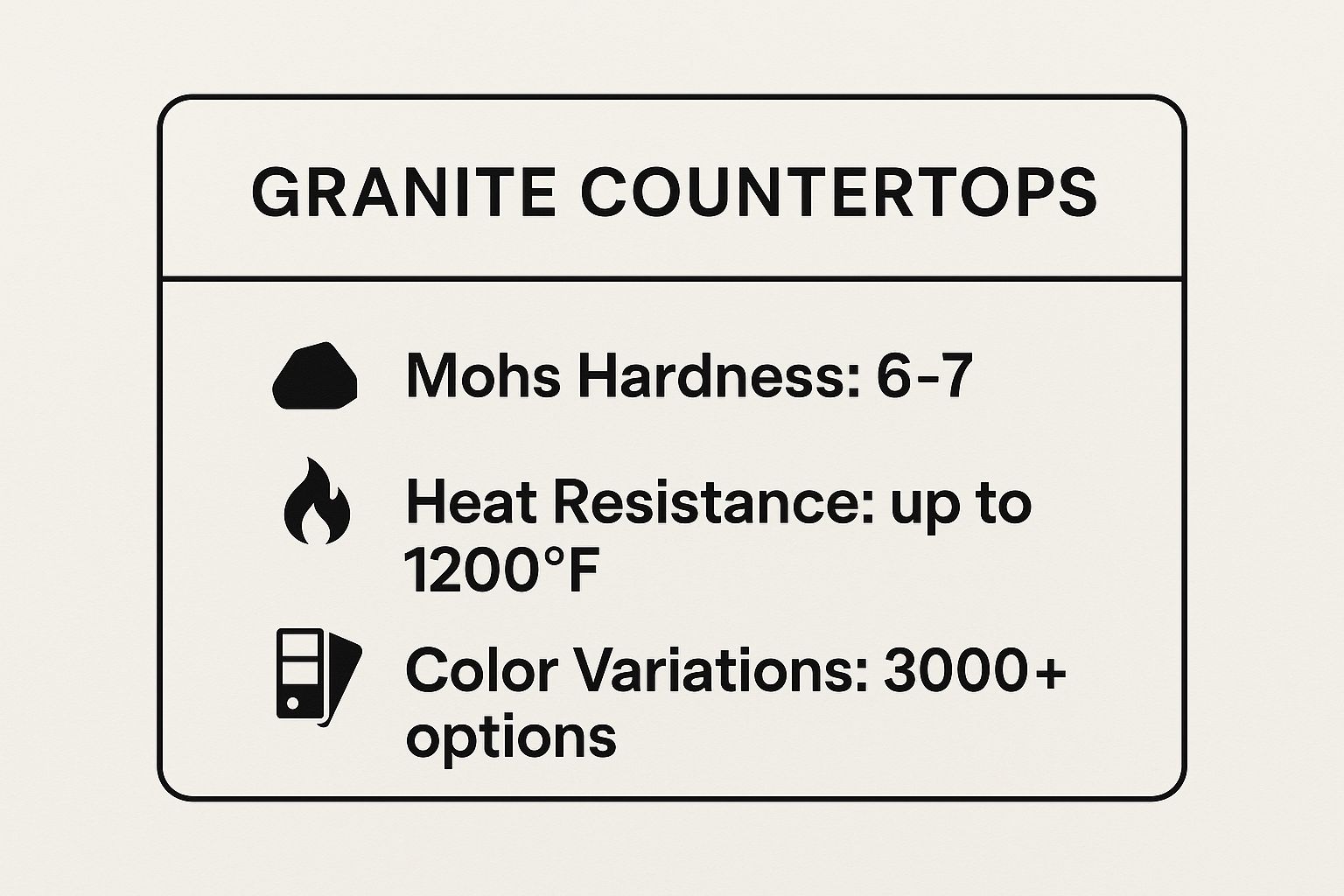
These figures confirm granite’s status as a high-performance material suitable for demanding applications like busy family kitchens. To further inform your decision, you can explore the cost, pros, and cons of granite countertops to see if it aligns with your project's budget.
2. Marble Countertops
Marble is the undisputed symbol of luxury and sophistication, prized for its classic elegance and luminous appearance. A metamorphic rock formed from limestone, marble is known for its soft, milky base colors and dramatic, flowing veins.
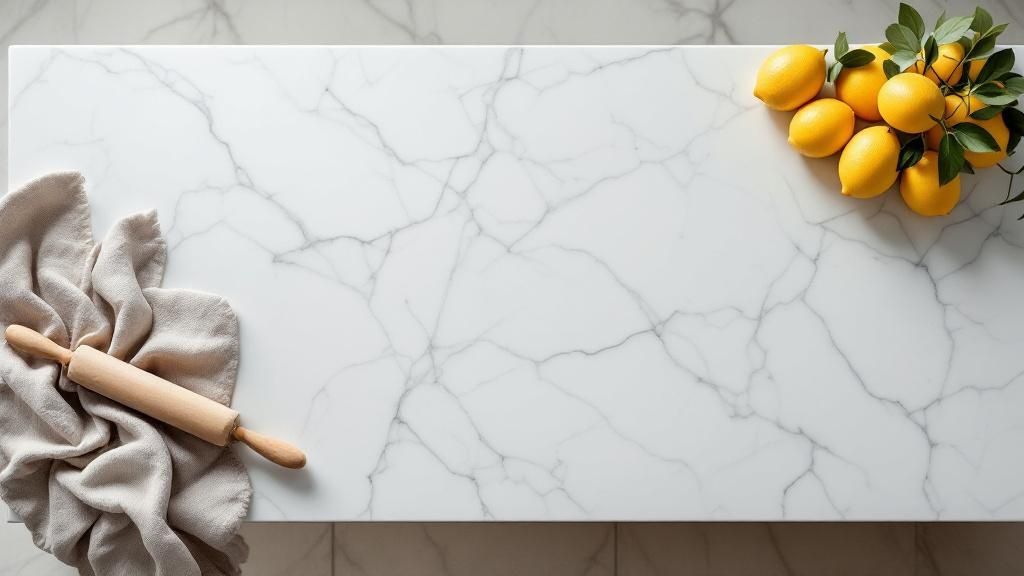
Its iconic beauty graces everything from historic kitchens to opulent bathrooms. Marble is particularly cherished by bakers because its surface remains naturally cool, which is ideal for working with dough.
Appearance and Characteristics
Marble's signature look is defined by its soft stone and distinctive, graceful veining, which can range from subtle to bold. Popular varieties like Carrara offer a classic white and grey palette, while Calacatta presents a whiter background with more dramatic veins.
A polished surface is highly reflective and makes the veining pop, while a honed or matte finish provides a velvety, soft look that is better at concealing minor scratches and etching.
Durability, Maintenance, and Best Uses
While beautiful, marble is a softer, more porous stone requiring diligent care. It is a material that ages and develops a patina over time, which many homeowners find adds to its character.
- Heat Resistance: Marble performs well against heat, though the use of trivets is always recommended to prevent discoloration.
- Scratch & Etch Susceptibility: As a calcium carbonate-based stone, marble is softer and susceptible to scratching and etching from acidic substances like lemon juice or wine.
- Maintenance: Sealing is critical and should be reapplied every 6-12 months. All spills must be wiped up immediately using a pH-neutral cleaner.
The edge profile you select can also enhance the stone's elegance; explore various edge options for countertops to find the perfect complement. Marble is best suited for spaces where aesthetics are the top priority, such as bathroom vanities, fireplace surrounds, and baking stations.
3. Quartzite Countertops
Quartzite is a natural metamorphic rock that offers a brilliant fusion of ethereal beauty and formidable strength. Formed when sandstone is subjected to immense heat and pressure, its sand grains fuse into an incredibly dense, durable stone.
This process gives quartzite its delicate, marble-like veining with robust, granite-like hardness, making it a coveted material for luxury applications. It is increasingly specified for modern Bay Area kitchen designs and high-end bathroom renovations where a sophisticated and resilient surface is required.
Appearance and Characteristics
Quartzite's primary allure is its striking resemblance to marble, featuring soft, flowing veins and a luminous quality. Its color palette is typically subtle, ranging from pure whites and soft grays to gentle beiges and blues.
A polished surface will amplify its luster, while a honed finish provides a contemporary, velvety matte look. It's crucial to distinguish true quartzite from softer stones; true quartzite will easily scratch glass due to its superior hardness.
Durability, Maintenance, and Best Uses
Quartzite is celebrated for its exceptional durability, often rivaling granite. Its dense structure provides excellent resistance to daily wear, making it a practical yet elegant choice.
- Heat Resistance: Forged under extreme heat, quartzite is highly resistant to high temperatures and will not be damaged by hot pans.
- Scratch Resistance: It is one of the hardest natural stones available, making it extremely difficult to scratch.
- Maintenance: Quartzite is porous and must be sealed upon installation and then periodically (usually annually) to protect against staining.
Because of its unique blend of beauty and brawn, quartzite is a premium choice for kitchen islands, bathroom vanities, and bar tops where you want to make a statement without sacrificing functionality.
4. Soapstone Countertops
Soapstone is a metamorphic rock prized for its unique, silky feel and antique charm. Composed primarily of talc, this dense and non-porous stone has been a staple for centuries in rustic farmhouse sinks and laboratory workbenches.
This stone is celebrated for the living finish it develops over time, acquiring a deep, rich patina that enhances its character. For those who appreciate a surface that tells a story, soapstone is an unparalleled option among the different types of natural stone countertops.
Appearance and Characteristics
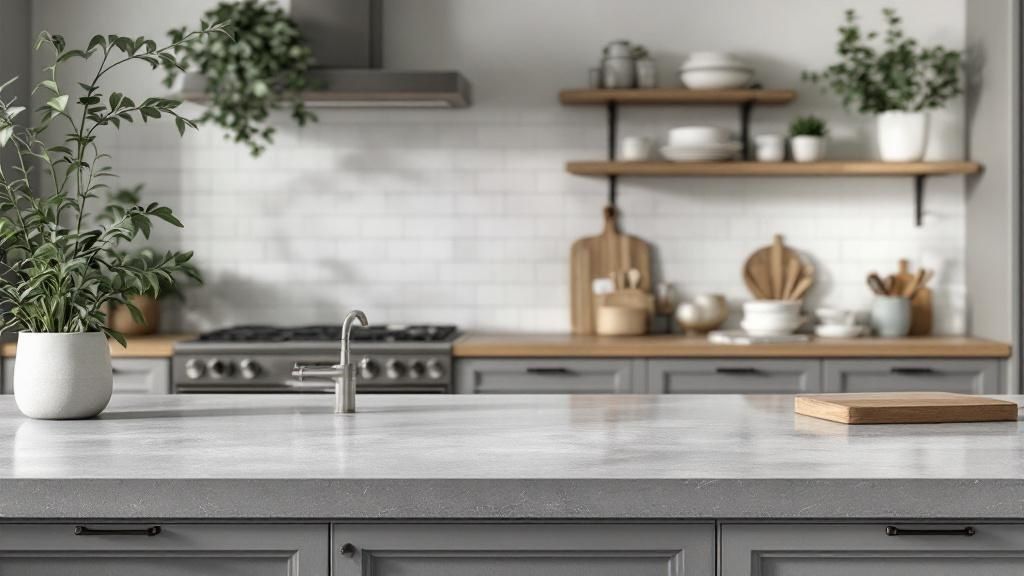
Soapstone's appearance is typically a milky, grayish-green or dark gray, often with subtle veining. Applying mineral oil or a specialty wax deepens the color dramatically to a rich charcoal or black, making the veining pop.
Most soapstone has a natural or honed finish that feels smooth and velvety. This makes it a perfect fit for traditional, farmhouse, and rustic interiors where a natural, touchable surface is desired.
Durability, Maintenance, and Best Uses
Soapstone’s durability is unique. While it is a softer stone susceptible to scratches, these marks are often seen as part of its charm and can be easily buffed out.
- Heat Resistance: Soapstone is virtually impervious to heat, handling hot pans directly from the stove without damage.
- Scratch Resistance: As a softer stone, it will scratch more easily than granite, but minor scratches can be buffed out with fine-grit sandpaper and mineral oil.
- Maintenance: Soapstone is naturally non-porous and does not require sealing. Cleaning is simple with just soap and water.
Soapstone's resilience to chemicals and bacteria makes it one of the most hygienic surfaces available. Its forgiving nature makes it ideal for hardworking family kitchens and any space where character and performance are equally valued.
5. Travertine Countertops
Travertine is a form of limestone known for its naturally pitted, fibrous appearance and warm, earthy color palette. It brings an immediate sense of old-world charm and rustic sophistication to any space.
While historically favored for flooring, travertine has found a place in modern homes as a unique countertop material. When properly filled and sealed, travertine can serve as a stunning and functional surface, perfect for designs inspired by Mediterranean villas.
Appearance and Characteristics
Travertine's aesthetic is defined by its characteristic voids and channels, which are typically filled with an epoxy or resin to create a smooth, solid surface. Colors are generally warm, ranging from soft ivories and creams to golden tans and rich walnuts.
A honed or matte finish is most common for travertine countertops, providing a smooth surface that helps conceal scratches. A polished finish creates a glossy look but is more susceptible to showing wear in high-traffic areas.
Durability, Maintenance, and Best Uses
Travertine is softer and more porous than stones like granite, requiring more diligent care. It is a calcium carbonate-based stone, making it reactive to acids like lemon juice and vinegar.
- Heat Resistance: Travertine offers good resistance to heat, though trivets are always recommended to protect the stone and its sealant.
- Scratch and Etch Resistance: It is a softer stone that can be scratched or etched by acidic substances.
- Maintenance: Sealing is critical and should be done upon installation and then resealed frequently (every 3-6 months in a busy kitchen).
Travertine is best suited for lower-traffic areas like bathroom vanities or decorative islands. Its elegance also graces dining spaces, as seen in Italian travertine dining tables. Proper installation is key, and you can learn more about templating for countertops on carmelimports.com to understand this crucial step.
6. Slate Countertops
Slate is a fine-grained metamorphic rock known for its sophisticated, dark tones and distinctive naturally cleft texture. As a countertop, it delivers a uniquely modern and industrial aesthetic, prized for its non-porous surface.
Its sleek, uniform appearance makes slate an excellent choice for contemporary spaces, from minimalist urban loft kitchens to high-end commercial bar tops. Slate offers a subtle, layered look that provides a matte, non-reflective finish, creating a dramatic and functional centerpiece.
Appearance and Characteristics
Slate’s signature look is defined by its deep, rich colors, which typically include shades of black, charcoal, and gray, with occasional hints of green or purple. The stone’s fine grain gives it a homogenous appearance.
While a natural cleft finish celebrates its organic texture, a honed finish creates a smooth, velvety surface that is easier to clean and provides a more refined, contemporary feel.
Durability, Maintenance, and Best Uses
Among the various types of natural stone countertops, slate is celebrated for its exceptional durability and low maintenance. Its low porosity makes it stand out.
- Stain Resistance: Slate is naturally non-porous, making it highly resistant to staining without requiring a sealant.
- Heat Resistance: Slate is completely heat-proof and will not be damaged by hot pots or pans.
- Maintenance: Slate is one of the easiest natural stones to maintain. It does not need periodic sealing and can be cleaned with mild soap and water.
These qualities make slate an excellent choice for hardworking surfaces in modern kitchens, minimalist bathrooms, and commercial settings where both style and simple upkeep are priorities.
7. Limestone Countertops
Limestone is a sedimentary rock that offers a soft, muted elegance, reminiscent of ancient European architecture and coastal estates. Formed primarily from calcium carbonate, its surface tells a story of natural history.
Its understated charm makes limestone a fitting choice for designs seeking a tranquil, timeless aesthetic, often seen in French country or Mediterranean-inspired spaces. While it is one of the softer types of natural stone countertops, its unique, creamy appearance delivers a serene beauty.
Appearance and Characteristics
Limestone’s aesthetic is defined by its consistent color palette, typically featuring shades of beige, cream, and soft white with minimal patterning. Its fossil-rich composition can sometimes reveal small shells and mineral deposits, adding character to each slab.
A honed finish provides a popular matte look that helps to camouflage minor etching, while a tumbled finish creates an aged, rustic appearance perfect for traditional designs.
Durability, Maintenance, and Best Uses
As a softer, more porous stone, limestone demands a higher level of maintenance. It is susceptible to scratching, staining, and etching from acidic substances.
- Heat Resistance: Limestone handles heat reasonably well, but trivets are always recommended.
- Scratch & Etch Resistance: It is a soft stone that will scratch and etch easily. Contact with acidic foods like citrus or wine will dull the surface.
- Maintenance: Limestone must be sealed frequently, often every 3 to 6 months. Use only pH-neutral cleaners designed for natural stone.
Due to its delicate nature, limestone is best suited for low-traffic applications like bathroom vanity tops or a fireplace surround. For homeowners prepared for its upkeep, limestone offers an unparalleled, classic elegance.
Natural Stone Countertops Comparison Guide
| Countertop Type | Implementation Complexity ???? | Resource Requirements ⚡ | Expected Outcomes ???? | Ideal Use Cases ???? | Key Advantages ⭐ |
|---|---|---|---|---|---|
| Granite Countertops | Moderate to high (heavy, requires professional install) ???????? | High (cost $40-$100/ft², needs sealing) ⚡ | Durable, heat & scratch resistant, unique patterns ????⭐ | Heavy kitchen use, luxury/resale focused ???? | Exceptional durability, wide color variety ⭐ |
| Marble Countertops | High (soft stone, frequent maintenance) ???????????? | High (cost $60-$120/ft², frequent sealing) ⚡ | Elegant, cool surface, susceptible to etching/stains ???? | Pastry/baking, upscale aesthetics ???? | Timeless beauty, cool surface for baking ⭐ |
| Quartzite Countertops | High (special fabrication tools, heavy) ???????? | High (cost $50-$120/ft², periodic sealing) ⚡ | Hard, durable, marble-like appearance with low maintenance ???? | Modern kitchens, heat/scratch resistant ???? | Harder than marble, durable, heat resistant ⭐ |
| Soapstone Countertops | Moderate (soft stone, easy repair, no sealing) ???? | Moderate (cost $70-$120/ft², mineral oil treatment) ⚡ | Heatproof, stain resistant, develops patina over time ???? | Rustic/farmhouse kitchens, low maintenance ???? | Never needs sealing, naturally antimicrobial ⭐ |
| Travertine Countertops | Moderate (porous, frequent sealing, filling holes) ???????? | Low (cost $15-$30/ft², high maintenance) ⚡ | Rustic, porous surface prone to staining, earth tones ???? | Decorative, rustic/mediterranean styles ???? | Affordable, unique rustic look ⭐ |
| Slate Countertops | Moderate (careful installation, occasional sealing) ???? | Moderate (cost $50-$80/ft²) ⚡ | Durable, low maintenance, dark color palette ???? | Contemporary/industrial kitchens ???? | Durable, stain/heat resistant, sophisticated look ⭐ |
| Limestone Countertops | High (soft, porous, frequent sealing) ???????????? | Low to moderate (cost $20-$40/ft²) ⚡ | Soft, elegant, prone to acid damage, subtle variations ???? | Low-use decorative, traditional styles ???? | Timeless elegance, affordable natural stone ⭐ |
Frequently Asked Questions
1. What is the most durable type of natural stone countertop?
Granite and quartzite are generally the most durable options. Both are extremely hard, resistant to scratches and heat, making them ideal for high-traffic kitchens in busy homes.
2. Which natural stone requires the least maintenance?
Soapstone and slate are excellent low-maintenance choices. Both are non-porous, meaning they don't require sealing to resist stains, and they clean up easily with just soap and water.
3. Can I use marble in a kitchen?
Yes, but with caution. Marble is softer and more prone to scratching and etching from acids (like lemon juice or wine) than granite. It's a great choice for homeowners who love the look of a "living" surface that develops a unique patina over time and are diligent about maintenance.
4. What's the difference between quartzite and quartz?
Quartzite is a 100% natural metamorphic rock quarried from the earth, celebrated for its unique veining and durability. Quartz, on the other hand, is an engineered surface made from crushed quartz crystals, resins, and pigments, offering consistent patterns and a non-porous finish.
5. Which stone is best for coastal California homes?
For a coastal aesthetic, lighter-colored stones like certain varieties of quartzite, marble, or limestone work beautifully. However, considering the potential for open windows bringing in salt air, a durable and less porous option like quartzite or a well-sealed granite is a practical choice that combines style with resilience.
Find Your Perfect Stone at Carmel Stone Imports
Choosing the right countertop is a decision that shapes the very soul of your kitchen or bathroom. From the unyielding strength of granite to the timeless, veined elegance of marble, your choice is a profound statement of style and a long-term investment in your home.
Understanding the distinct characteristics of the various types of natural stone countertops is the most critical step. You are selecting a functional partner for your home.
Key Takeaways for Your Stone Selection
- Match Lifestyle to Durability: A busy family kitchen in Palo Alto thrives with a resilient stone like granite or quartzite. A serene master bathroom in Monterey can be the perfect canvas for the delicate beauty of marble or soapstone.
- Embrace Maintenance: Natural stone is a living material. High-porosity stones like travertine demand diligent sealing, while harder stones like granite are more forgiving.
- See the Stone in Person: The true character of a natural stone slab can only be appreciated firsthand. Visiting a showroom is non-negotiable for understanding how light plays across its surface.
Your Actionable Next Steps
- Revisit Your Priorities: Rank what matters most to you: aesthetic impact, raw durability, maintenance level, or budget. This will narrow your options.
- Gather Inspiration and Samples: Bring paint swatches, cabinet doors, and flooring materials with you when you visit a stone yard to ensure a cohesive design.
- Consult with a Stone Expert: A professional at Carmel Stone Imports can answer nuanced questions about specific slabs, sourcing, fabrication, and installation.
Ultimately, selecting from the many types of natural stone countertops is about creating a connection between your home and the natural world. It’s an opportunity to install a one-of-a-kind piece of art that will serve as the backdrop for memories for years to come.
Ready to see these magnificent stones in person? The expert team at Carmel Stone Imports has curated one of California’s most extensive collections of premium natural stone slabs. Visit our showrooms in Carmel, Sand City, or Palo Alto to find the perfect surface that aligns with your design vision and lifestyle. Carmel Stone Imports is your partner in transforming your home with the timeless beauty of natural stone.