You can find quartz slabs that meet new safety standards at trusted stone suppliers who share details on what the material is made of. It's important to work with an expert who stocks modern, low-silica quartz. They can answer your questions about safety and sourcing to give you peace of mind.
Understanding the New Era of Quartz Safety
Recent news stories have made many homeowners ask: is quartz still a safe choice? The short answer is yes, but you have to choose the right kind. The concern is about the high amount of silica in older quartz slabs, which could harm the workers who cut and shape them.
In response, the stone industry has changed. Manufacturers now make safer, low-silica quartz, and good suppliers are choosing these modern materials. This change helps make sure the beautiful surfaces in our homes are made responsibly.
What the Data Says About New Rules
This safety conversation is very important in California. After health issues were linked to high-silica slabs, new rules were put in place. California is leading the way in making sure engineered stone is safer for workers.
In 2024, Australia banned high-silica engineered quartz. The U.S. is now feeling pressure to do the same. This has pushed manufacturers to create low-silica quartz, and many homeowners are looking at other options like porcelain or natural stone.
The Difference Between Old and New Quartz
Not all quartz is the same. It is a common misstep to assume all quartz slabs are created equal, but the amount of silica inside can be very different. Understanding this helps you make a smarter choice.
| Feature | Traditional High-Silica Quartz | Modern Low-Silica Quartz |
|---|---|---|
| Silica Content | Often 90-95% crystalline silica | Typically 10-40% silica, or 0% |
| Worker Safety Risk | High risk for workers during cutting | Much lower risk for workers |
| Regulations | Faces new rules and bans | Meets new safety standards |
| Availability | Being replaced by responsible suppliers | Found at forward-thinking suppliers |
The main point is that the industry has improved. Safer materials are now the standard for any good stone professional.
What This Means for Your Home Project
This does not mean you have to give up on your dream of quartz countertops. It just means you need to be a more informed buyer. You should ask about what is inside the slab, not just how it looks.
A common mistake is choosing a slab based only on its appearance without asking about its contents or where it came from.
Instead of just looking at color, ask direct questions. With more people renovating instead of moving, picking safe materials is a top priority. A good supplier will guide you to slabs that meet modern safety rules, making sure your home is both beautiful and safe for the future.
How to Check if a Quartz Slab is Safe
Knowing that safety standards have changed is the first step. The next step is to confirm a slab is safe before you buy it. This guide will help you make sure the material you choose is both beautiful and responsibly made.
You can avoid mistakes by looking beyond the surface. Ask for specific papers that prove a product meets the new low-silica rules. Think of it as doing homework for an important part of your home.
This simple chart can help you make a good decision when looking at different quartz slabs.
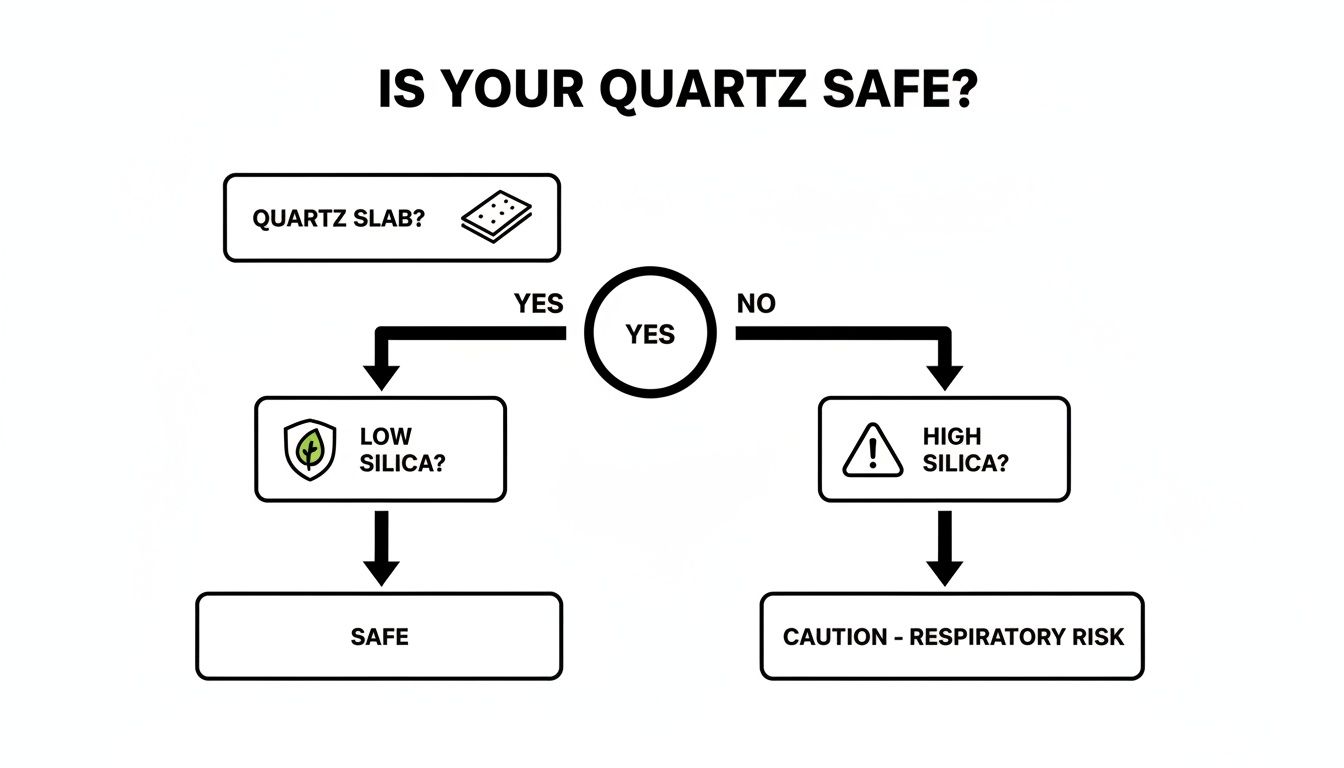
This picture makes it clear: finding out the silica content is the most important step. It helps ensure the quartz you pick meets today's safety standards.
Ask for the Right Paperwork
When you are ready to buy, ask for the product’s Safety Data Sheet (SDS). This document is the best way to see what a material is made of.
An SDS shows a detailed list of a material's ingredients, including the exact percentage of silica. A good supplier will give you this document for any product they sell. If a seller is hesitant to show you an SDS, that is a big warning sign.
Here are the key documents to ask for:
- Safety Data Sheet (SDS): This is your proof. It must clearly state the percentage of crystalline silica.
- Manufacturer’s Details: This sheet often gives extra information on the material's performance and makeup.
- Third-Party Certifications: Look for seals of approval from groups that test for material safety, like GreenGuard or NSF.
Understanding the official workplace exposure standard for respirable crystalline silica can also be helpful. It shows why it's so important for suppliers to provide safe materials.
Questions to Ask Your Supplier
Have a list of questions ready to get the real facts. A supplier you can trust will be happy to answer your questions clearly and honestly.
Your supplier should be your partner in safety. How willing they are to discuss silica content and provide documents shows their commitment to quality.
Before you decide, be sure to ask these questions:
- What is the silica percentage of this slab? Can you show me the Safety Data Sheet (SDS) to confirm it?
- Which brands here are low-silica options? This shows if they are sourcing safer products.
- Are you familiar with California's new safety regulations for engineered stone? This is a very important question for any project in California.
By asking these questions, you take control. You make sure the product you bring into your Monterey or Palo Alto home is as safe as possible.
Choosing a Supplier You Can Trust

When you ask, "where can i buy quartz slabs that meet new safety standards?", you will find that the supplier is as important as the slab. A good supplier is more than a seller; they are a partner in making sure your materials are safe.
Think of them as your guide. A trusted stone importer like Carmel Stone Imports works closely with the world's safest manufacturers. This helps them stay ahead of new safety rules and offer the latest low-silica products.
Their selection has already been checked for safety. You are starting with the best options available.
Why Honesty and Knowledge Matter
There is a big difference between a known expert and an online seller you don't know. An expert can explain the details of each slab and show you the paperwork to prove it is safe.
This kind of honest information gives you confidence in your decision. Without it, you might pick a slab for its looks alone, without knowing what's inside.
A great supplier empowers you with information; they don't hide it. Their ability to explain safety data is a sign of their commitment to you.
For homeowners in the Bay Area or on the Central Coast, local knowledge is a big help. A California supplier understands local design styles and is an expert on state safety rules. If you need help, here is how to choose the right natural stone supplier.
Carmel Stone Imports Cares About Safety
At Carmel Stone Imports, we carry a curated range of quartz slabs. Our team can walk you through which brands offer lower-silica options. We also help clients compare quartz with natural choices like quartzite or porcelain.
We want you to make an informed choice. Our team is here to provide guidance and answer all your questions about safety and materials.
We also help you think about other great options. If you have concerns, we can show you alternatives that might be a better fit for your needs.
- Porcelain: We can show you how modern porcelain slabs are a completely silica-free option with amazing durability and a clean, modern look.
- Natural Stone: We can also introduce you to the unique beauty of natural quartzite. It offers bold patterns and strong performance.
Choosing the right partner is about finding a guide. We can help you navigate this new world with confidence.
Exploring Stylish and Safe Alternatives
While new low-silica quartz is a great and safe material, this is a perfect time to explore other amazing surfaces. The best suppliers also carry beautiful alternatives that are naturally safe and just as stylish.
This is a chance to expand your design ideas. You might find a material that fits your vision even better, from modern Bay Area styles to the cozy feel of a Monterey coast home.
The Rise of Porcelain Slabs
Porcelain slabs have become a popular alternative for good reasons. They are made from natural minerals like clay that are heated to high temperatures. This process makes them completely free of crystalline silica, so they are a safe option from the start.
Porcelain also offers amazing design flexibility.
- Looks Like Anything: It can look just like marble, concrete, or even wood. It is also very strong and easy to clean.
- Very Durable: Porcelain is resistant to scratches, stains, and heat, making it great for a busy kitchen.
- UV Resistant: Porcelain will not fade in direct sunlight, which is perfect for bright kitchens in coastal California homes.
For a modern, clean look, porcelain is a great choice. You can learn more about the differences between sintered stone vs. quartz to see if it’s right for you.
The Timeless Beauty of Natural Stone
If you love the one-of-a-kind beauty that only nature can make, quartzite is a wonderful choice. It is a natural rock that is dug from the earth, not made in a factory. It does not have the same concerns as old, high-silica products.
Quartzite is known for its dramatic, flowing patterns. It often looks like marble but is as hard as granite. This makes it a great choice for homeowners in places like Palo Alto or Carmel who want a beautiful and strong centerpiece.
Each slab is a unique piece of art from the earth. This means your countertop will be truly one of a kind.
Your Local Source for Safe Slabs in California
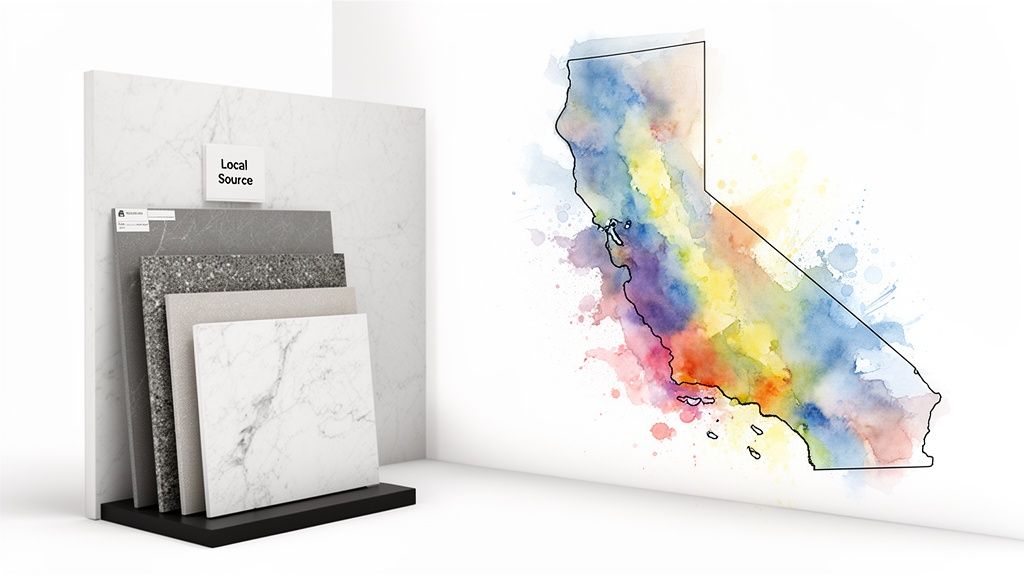 tile samples labeled 'Local Source' next to a colorful watercolor map of California.” />
If you're remodeling a kitchen in the Bay Area, Carmel, or the Central Coast, the answer to "where can i buy quartz slabs that meet new safety standards?" is close to home. Working with a local expert like Carmel Stone Imports has real benefits. A local supplier knows the specific safety rules for our area.
This local connection is a big advantage. For example, understanding California Prop 65 compliance is very important. A good California supplier will know all about these rules, giving you extra peace of mind.
The Benefit of Seeing Slabs in Person
Shopping online is easy, but it is not the best way to choose a countertop. Visiting a showroom in Palo Alto or Carmel lets you see the true color and feel of a slab up close.
When you see a slab in person, you can:
- See the True Color: Computer screens can change a slab's appearance. Seeing it in a showroom shows its real tones.
- Feel the Finish: You can touch a polished or textured finish. This helps you know how it will feel in your home.
- View the Whole Pattern: A small sample does not show the full design. Seeing the entire slab means no surprises later.
Visiting one of Carmel Stone’s showrooms helps you explore quartz and porcelain slab options in person. Their team can help you choose a surface that’s not only beautiful—but safe and future-proof.
A Team That Knows the Latest Standards
At Carmel Stone Imports, our team is always learning about the newest safety standards. We can show you our hand-picked collections of low-silica quartz and give you all the paperwork you need. We believe in giving clear answers so you feel good about your choice.
We can also help you compare new quartz with other great options like porcelain or natural quartzite. Our goal is to help you find a surface that is perfect for your California home for years to come. Our article on finding a good stone showroom near San Francisco can also help.
Frequently Asked Questions
Navigating the world of stone can seem complex right now. We have clear answers to some of the most common questions from homeowners.
Is quartz still a safe choice for my kitchen countertops?
Yes, it is a safe choice as long as you choose a modern low-silica option from a trusted supplier. The health concerns are related to older products and the risks they posed to workers, not the finished countertop in your home. By checking the slab’s contents before you buy, you can feel confident in your choice.
How can I tell if a quartz slab is low-silica?
The easiest way is to ask your supplier for the product’s Safety Data Sheet (SDS). This document lists the exact percentage of silica. A good supplier will have this information ready and will be happy to show you. If they cannot provide it, that is a major red flag.
Are there good alternatives if I want to avoid quartz?
Yes, there are many great alternatives that are beautiful and naturally safe. Porcelain slabs are a popular choice because they are silica-free, very durable, and come in many designs. Natural stones like quartzite also offer stunning, unique patterns and strong performance without the same concerns.
Why is buying from a local showroom better than online?
A local showroom lets you see the full slab in person, so there are no surprises with color or pattern. More importantly, you can talk to experts who understand local California safety rules. They can give you paperwork on the spot for any material you are considering.
Does "engineered stone" always mean high in silica?
No, not anymore. That term used to mean high-silica quartz, but today it also includes advanced materials like low-silica quartz and porcelain, which is silica-free. Because the term is broad, it is always best to ask for the specific makeup of any engineered stone you look at.
Ready to explore a curated selection of safe, beautiful surfaces for your home? The expert team at Carmel Stone Imports is here to guide you through our collections of low-silica quartz, porcelain, and natural stone. Visit one of our showrooms in Carmel, Palo Alto, or Sand City to find the perfect material for your project.